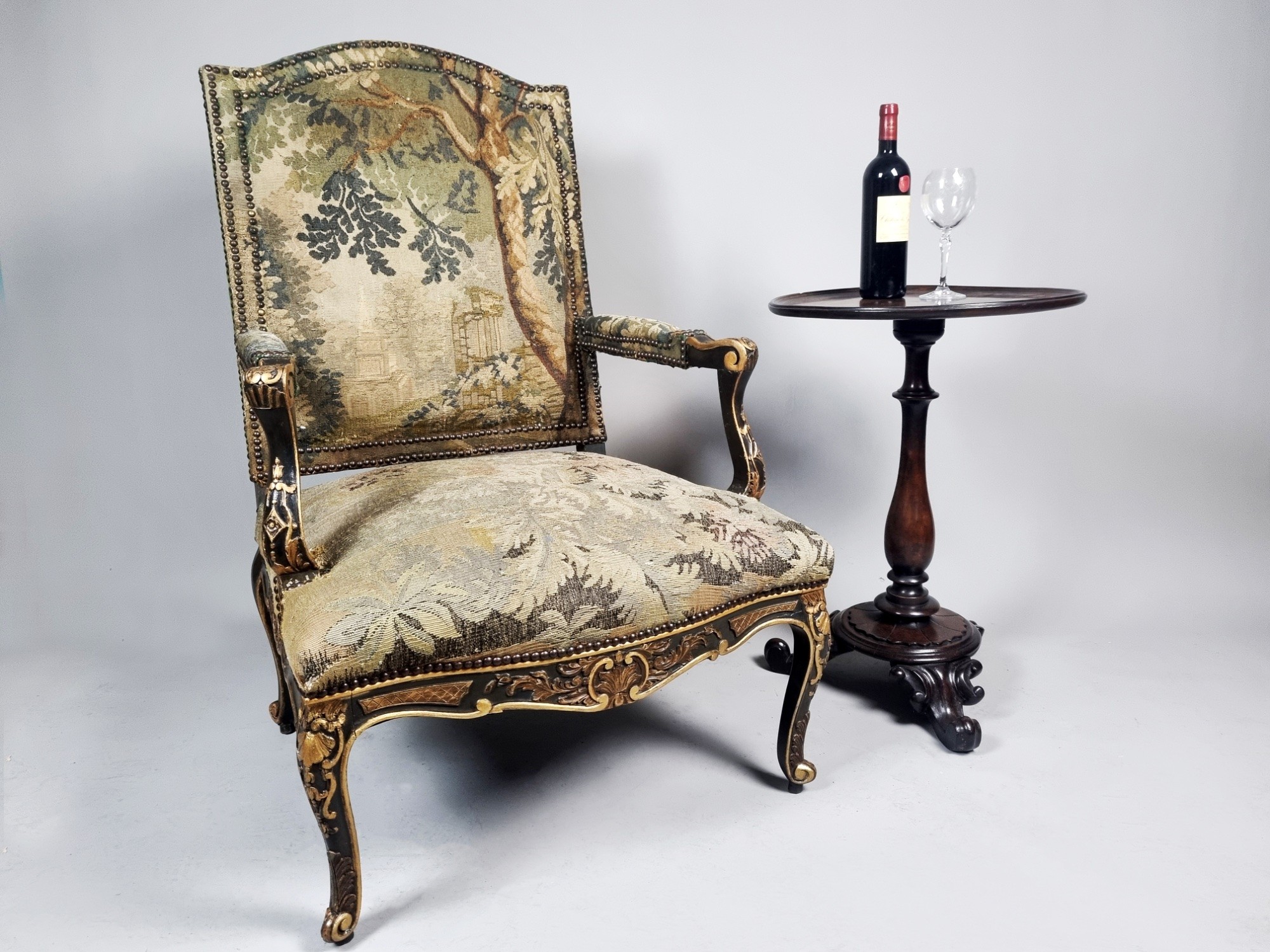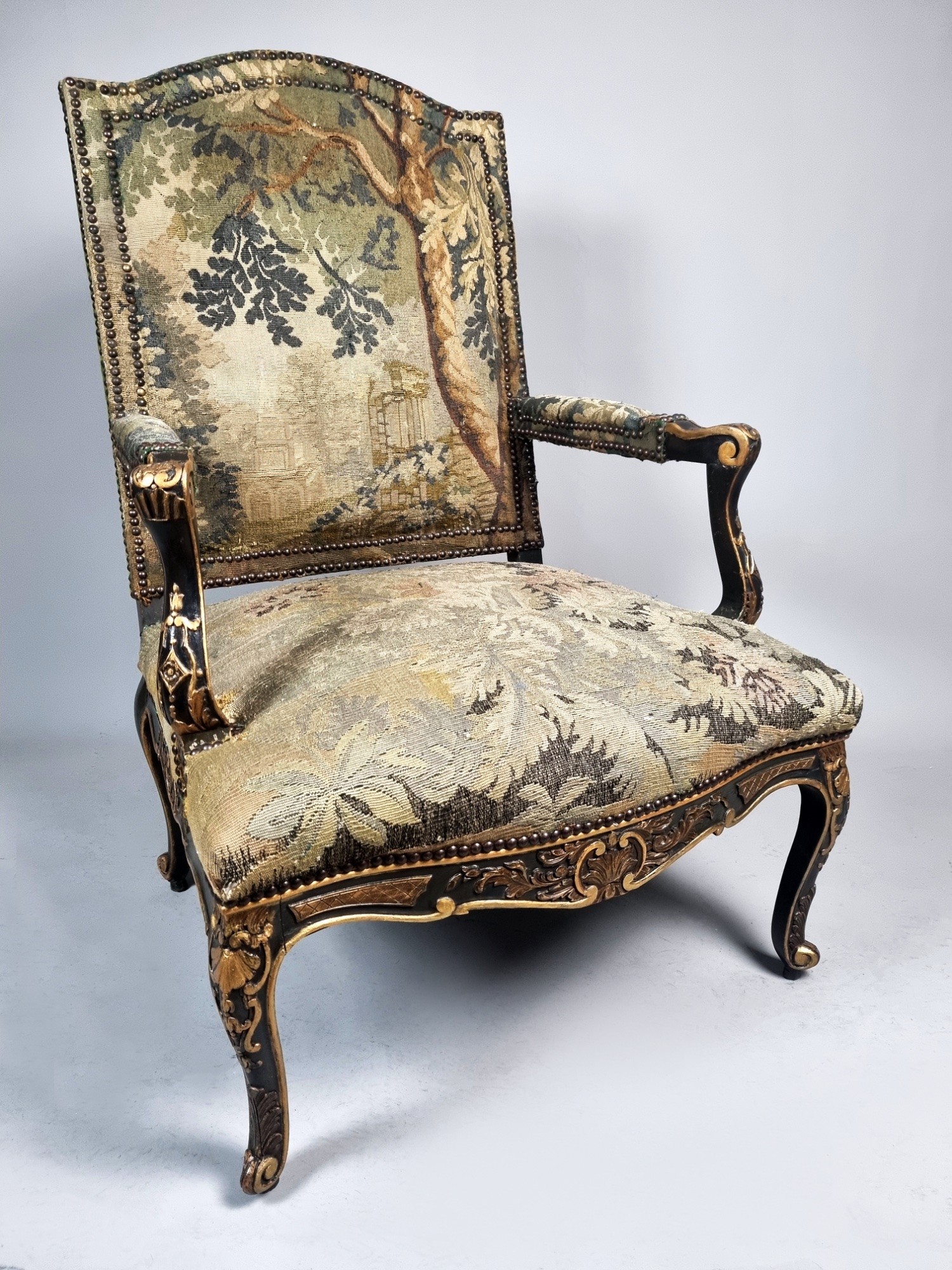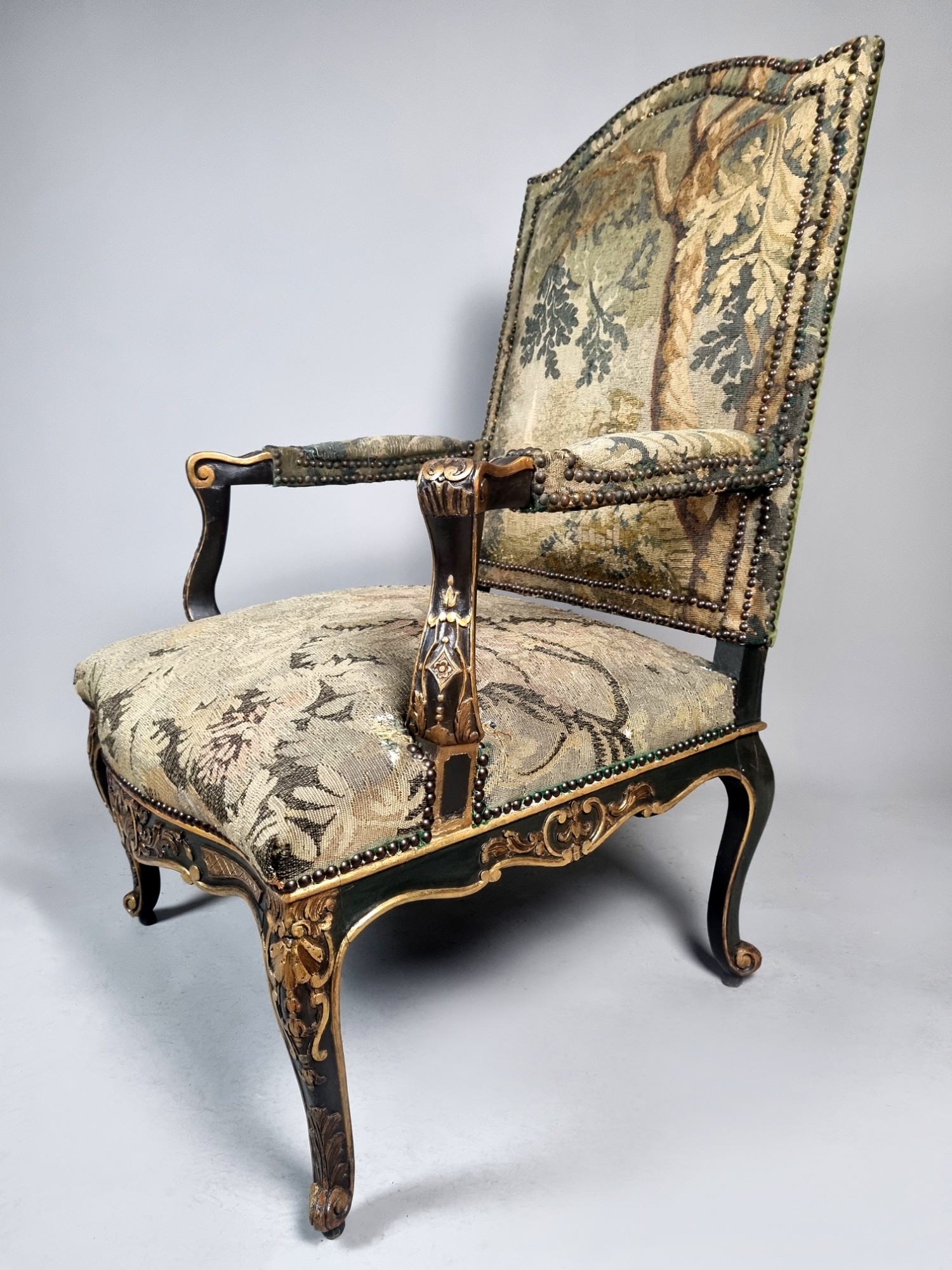
Webberley Antiques has dated this George III Gainsborough Chair to the 18th Century.
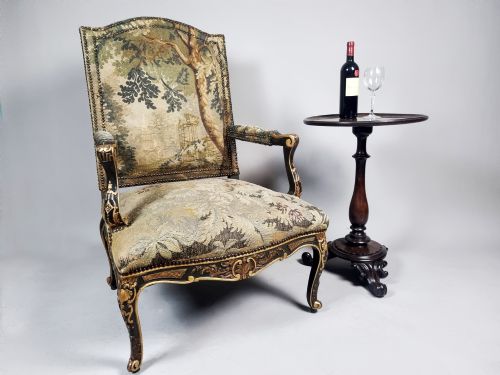
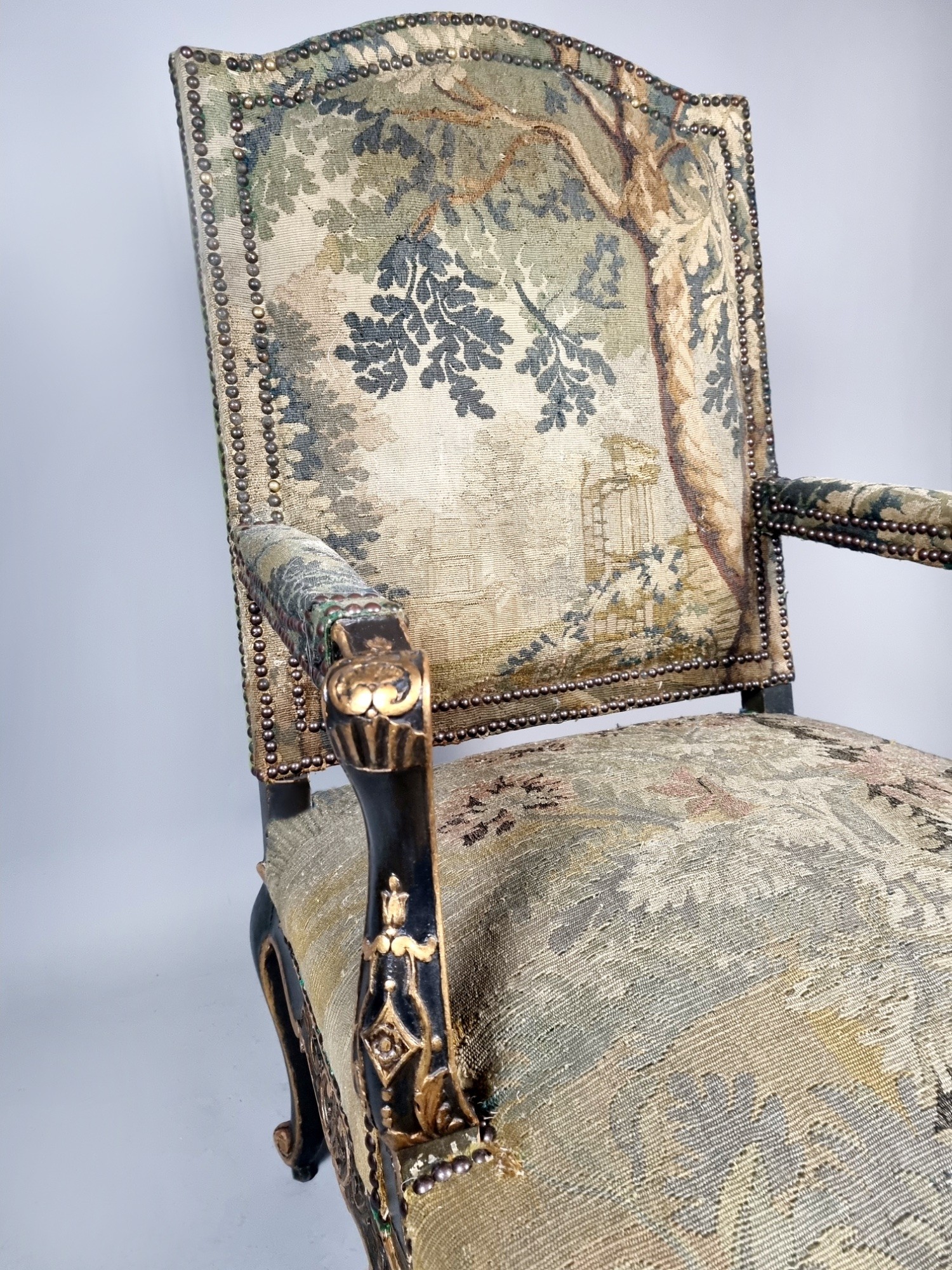
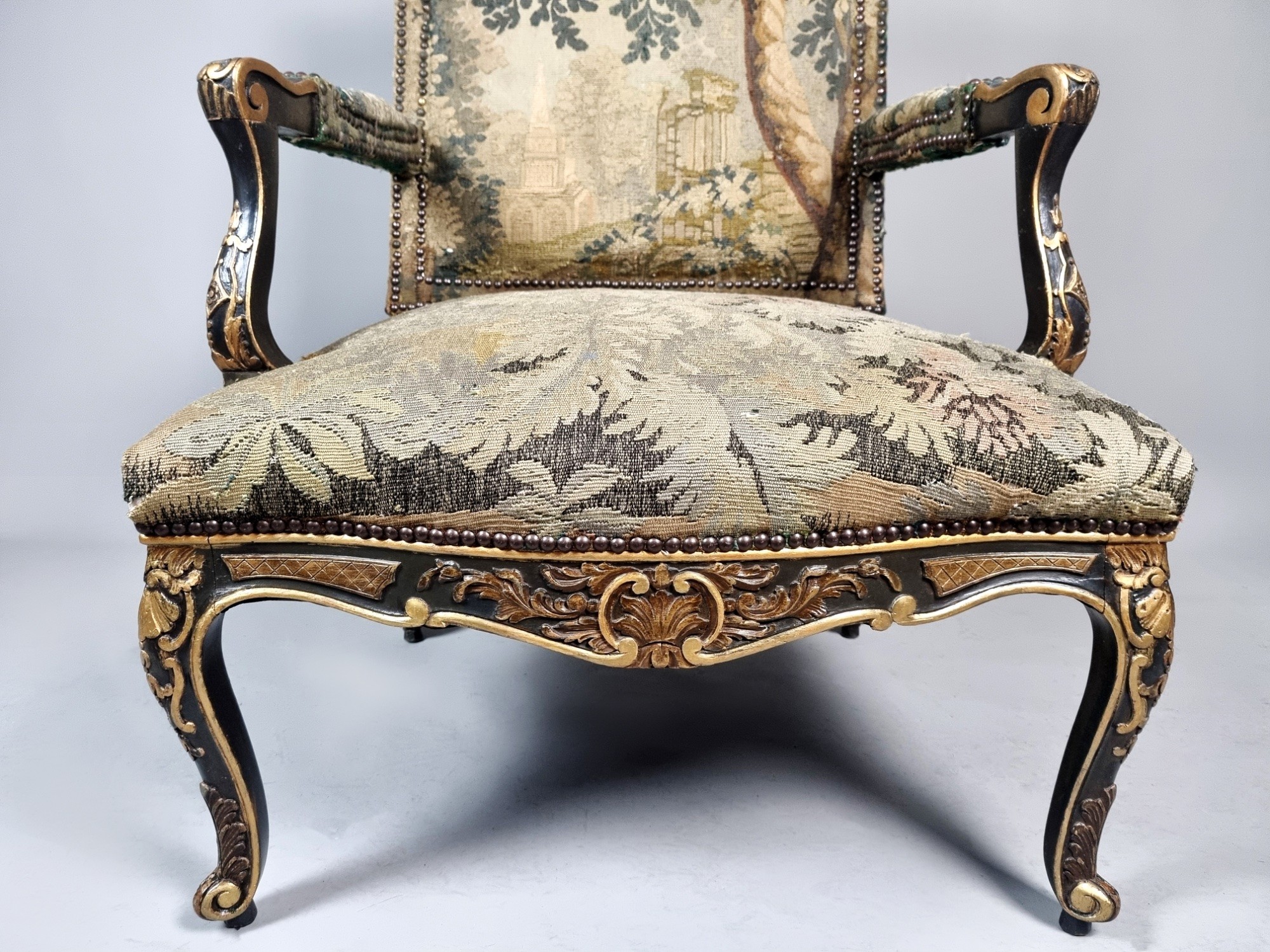
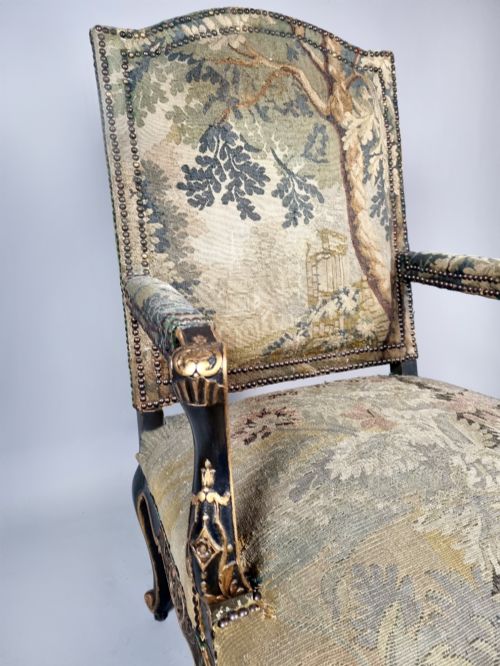
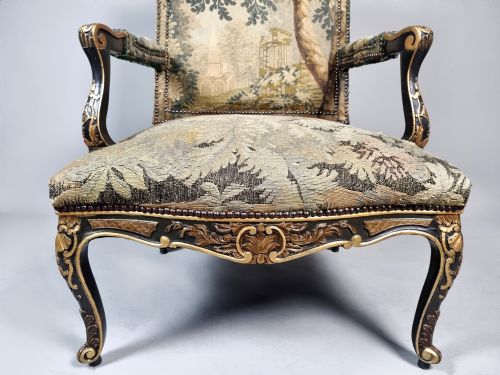
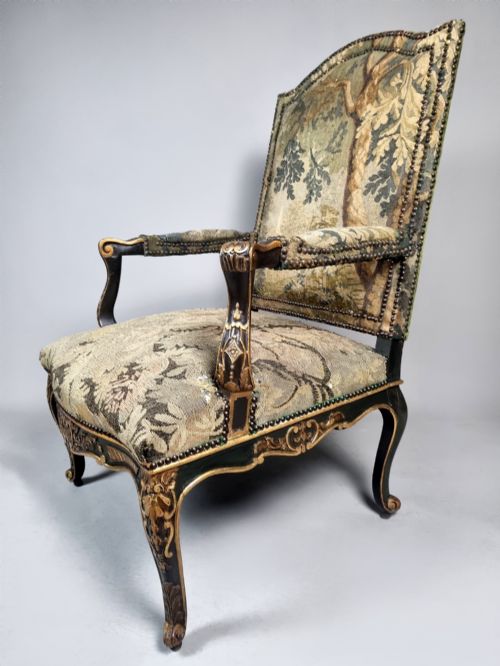
The upholstered back with serpentine top rail, over the similarly shaped seat, and the padded armrests supported on finely carved scrolled arms with cabochons. The painted show wood seat rails carved with scrolls, trelliswork and acanthus. The cabriole legs similarly decorated with acanthus leaves and cabochons, terminating in scrolled pegged feet.
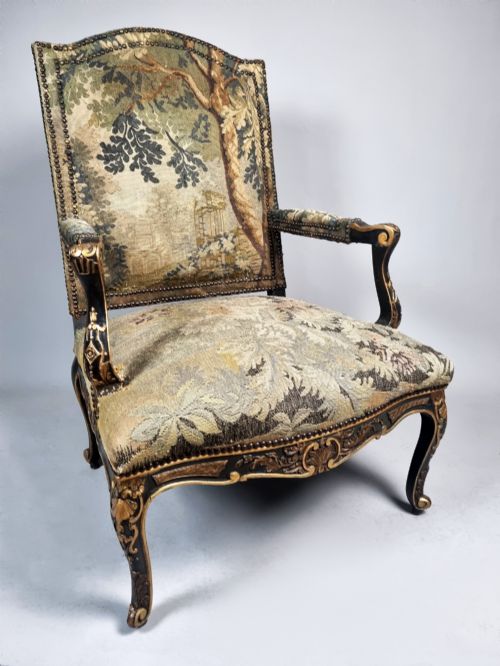
The carving exceptionally intricate and fine and the tapestry covers original and depicting a leafy landscape with distant ruins and oriental temple structures.
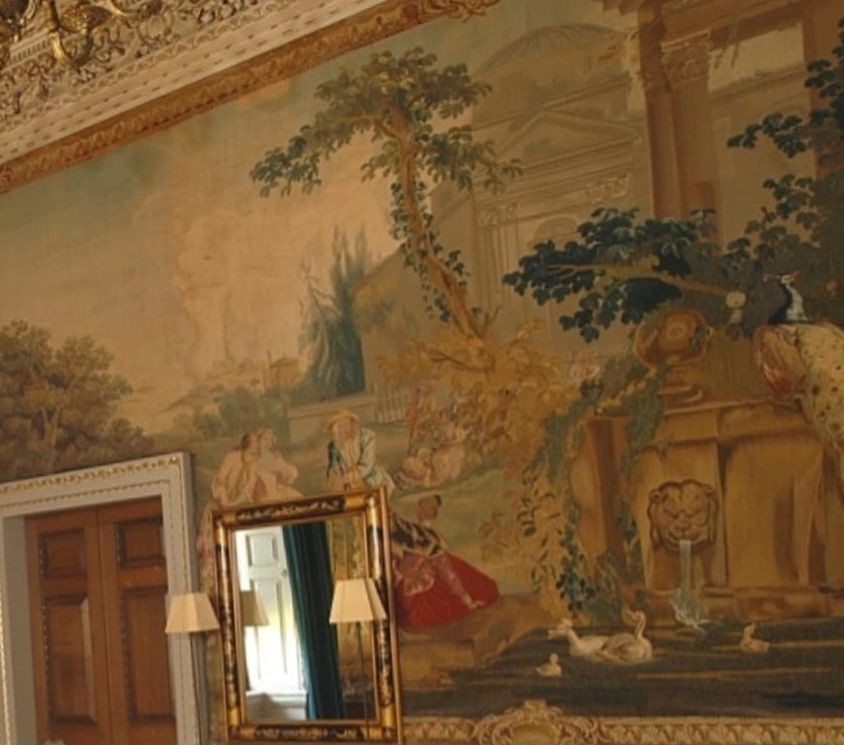
Paul Saunders’ clients were the wealthiest London and country houses and he was held by Royal Appointmentas ‘yeoman arras-worker to the Great Wardrobe’ and yeoman tapestry taylor.
His workshops, known as ‘The Royal Tapestry Manufactory’ contained a special ‘tapestry room’ and from 1755 until his death he was the main tapestry producer in London. After Saunders's death in 1771, his firm carried on until 1794 from his last premises in Charlotte (now Bloomsbury) Street with his eldest son, Hugh, and his clerk, John Bracken, forming a partnership.
Paul Saunders was apprenticed for seven years to Michael Bradshaw – who was almost certainly related to William Bradshaw and George Smith Bradshaw with whom Saunders later formed a partnership. Carlisle House on the east side of Soho Square was leased by Saunders and George Smith Bradshaw, described as ‘upholsterers of Greek Street’, in May 1753.
The British Chronicle, 30 September 1757 announced that ‘Mr. Paul Saunders of Sutton Street, Soho is appointed Tapestry Maker to His Majesty and on Thursday was sworn into office’. Saunders and Bradshaw's partnership had already been engaged in supplying tapestries to Holkham and Petworth, continuing William Bradshaw's established position in this field, although as was typical of most Soho Tapestry makers, the partners were primarily “upholders" (the 18th century term for upholsterers and decorators) and “cabinet makers”.
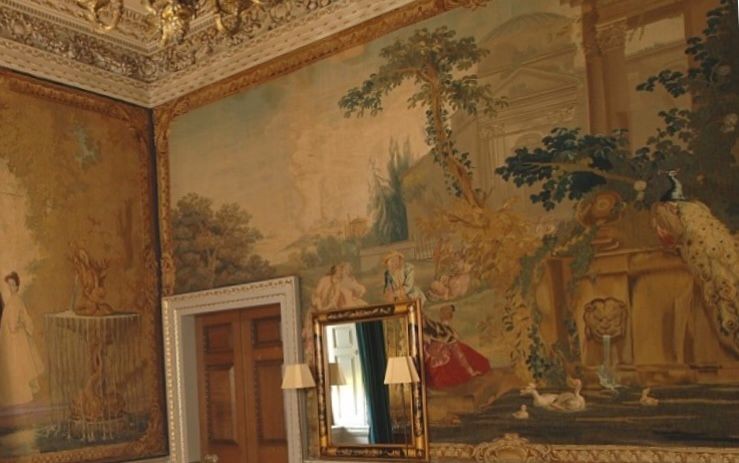
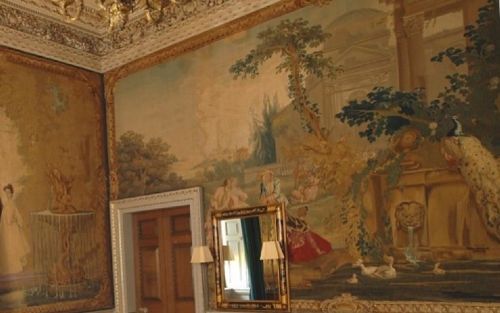
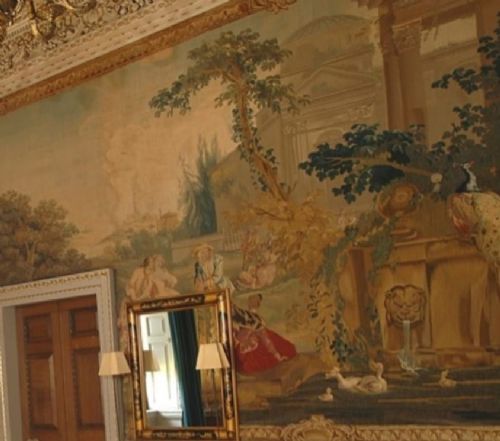
The dominant role in the tapestry side of the business seems to have been assumed by Saunders who rose to a position of prominence as a tapestry worker. Known for depictions of Oriental-style landscapes with soft trees and picturesque ruins, his most famous design is ‘The Pilgrimage to Mecca’ of which examples survive at Alnwick Castle, Petworth and Holkham.
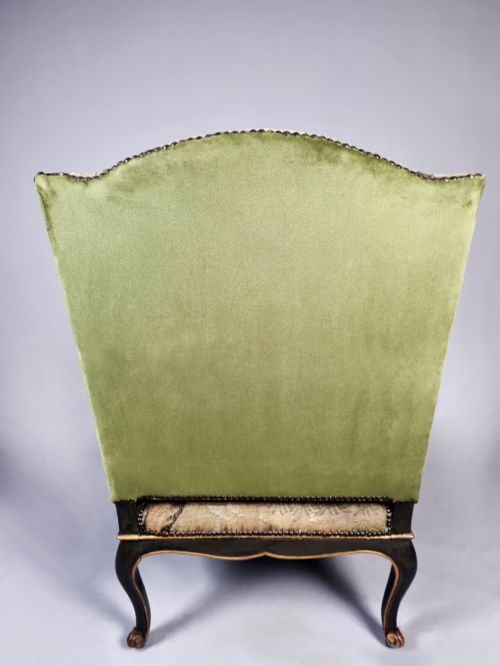
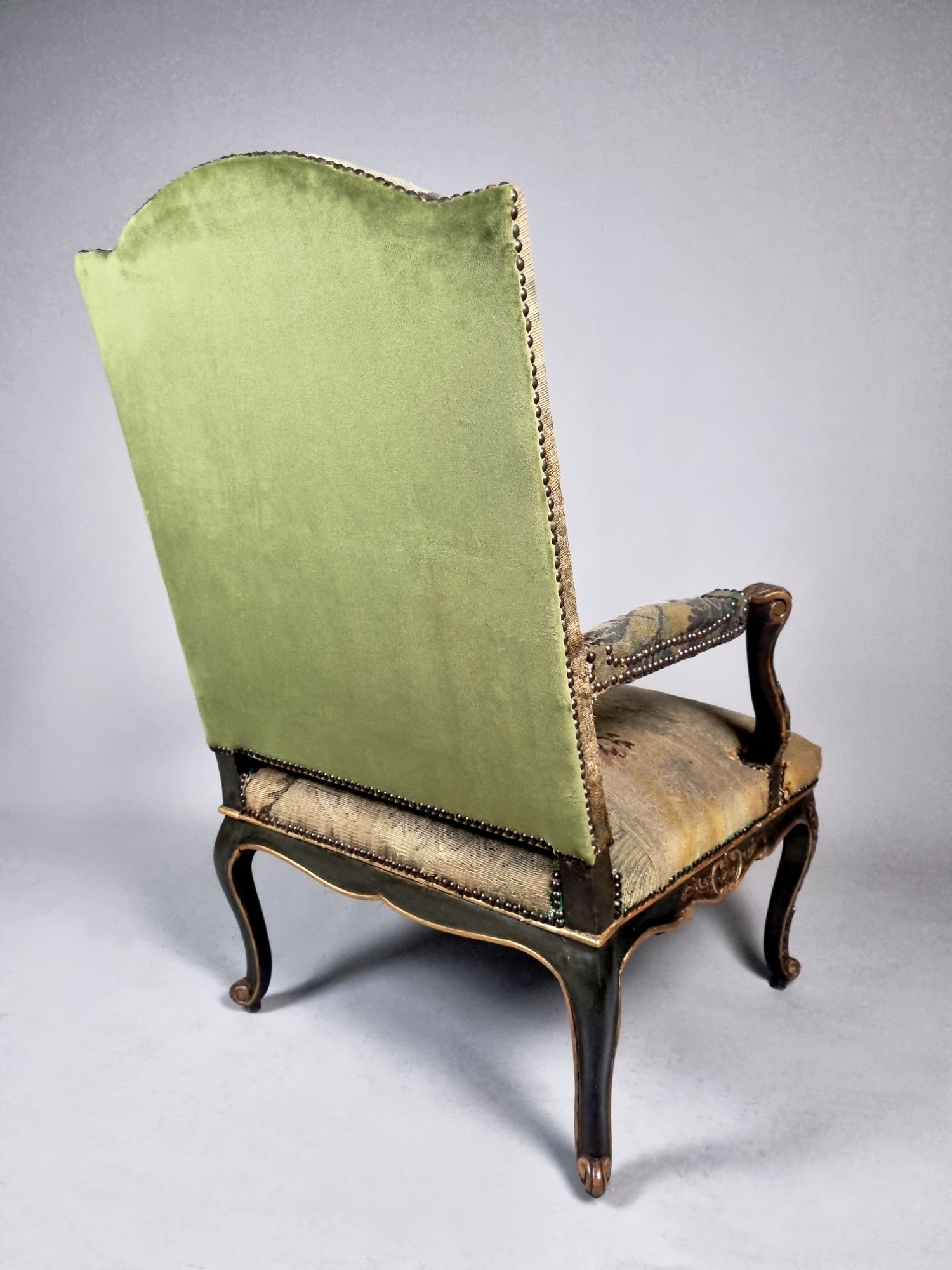
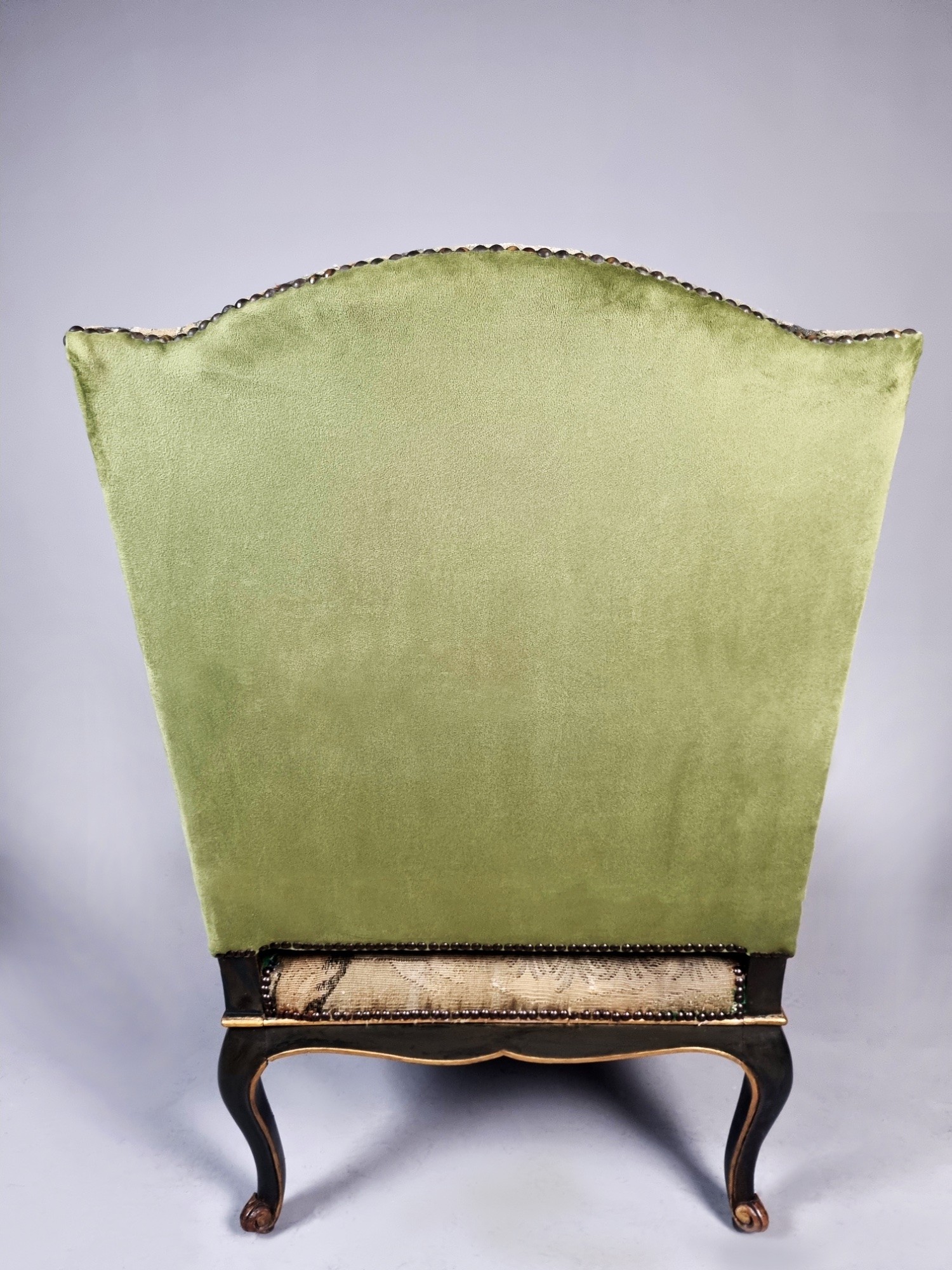
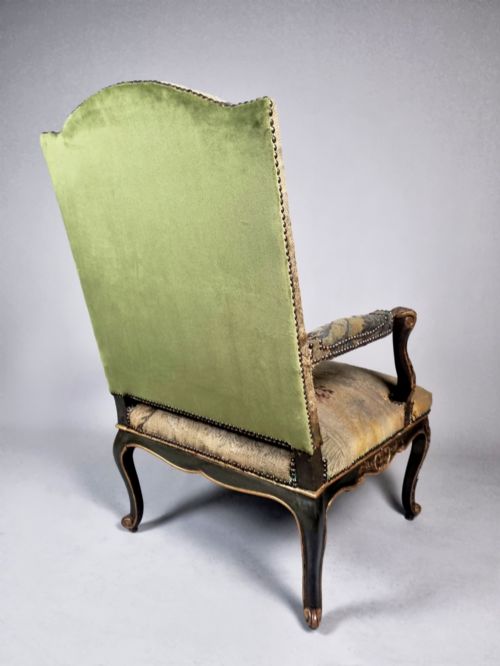
This amazing 18th century chair has survived for more than 250 years in superb original condition with only minor dings and tiny losses, light wear to the tapestry seat. Later green velvet fabric panel back.
The paint and gilding has been professional restored in places but with colour completely true to the original paintwork colours
and gilding (which remain visible) and which accentuate and compliment the beautiful colours of the tapestry.
Dimensions are:
Height: 42 inches, width 28 inches, depth 24 inches.
Height of seat from floor 17 inches, width between arms 22 inches, depth of seat (front to back) 24 inches.
Height of seat from back 28 inches. Width between arms 22 inches. Height of arms from floor 25 inches.
Webberley Antiques has dated this George III Gainsborough Chair to the 18th Century.
Specialists in 18th century and earlier furniture for more than 45 years
You can view the stock and full dealer information on the Webberley Antiques Profile Page
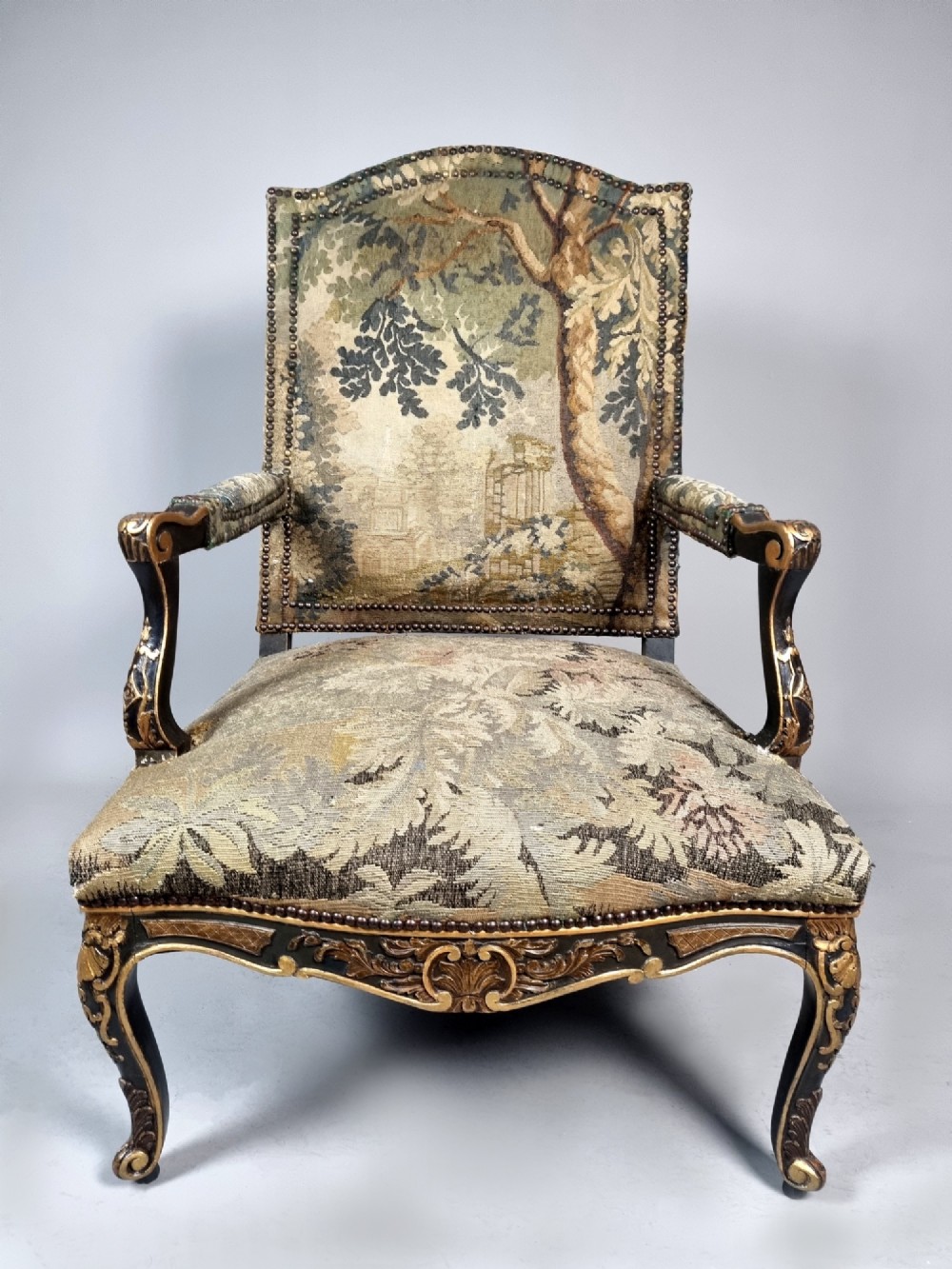
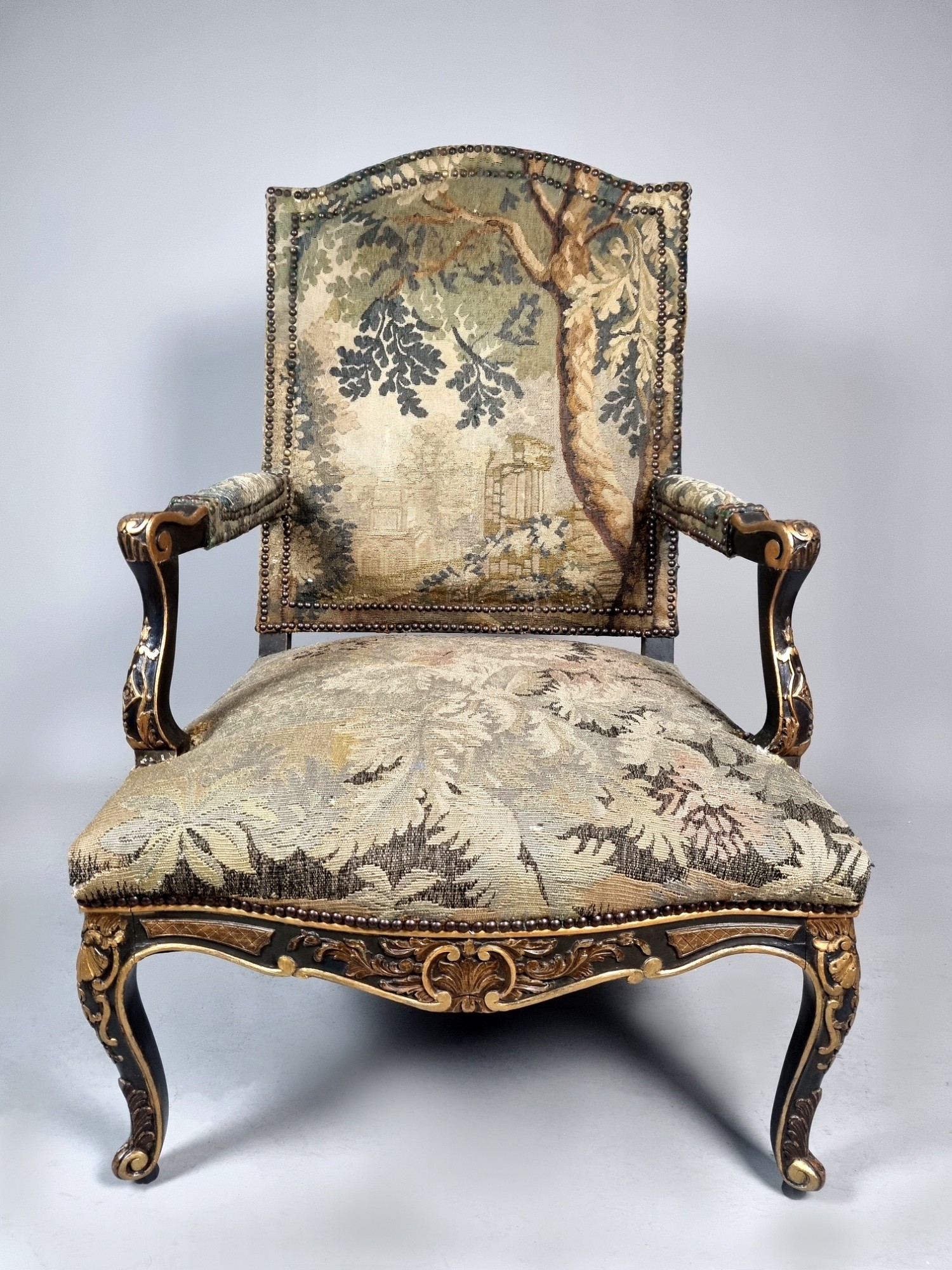
Important George III Period Carved and Painted Gainsborough Chair C. 1760