21,577  PAGES BROWSED TODAY PAGES TODAY 71  ANTIQUES UPLOADED TODAY NEW ARRIVALS
ID #SA1223935
SOLD
Email
Save
Exemplary 18th Century Welsh Hedge Chair
Webberley Antiques
sold SA1223935
Sorry, but this item has been sold.
Webberley Antiques

Webberley Antiques

Sellingantiques Verified Since Nov 2008
View Dealers Stock Page
  • About Us
    Specialists in 18th century and earlier furniture for more than 45 years
Id #SA1223935
PDF SHARE
SAVE

Exemplary 18th Century Welsh Hedge Chair

18th century
Description

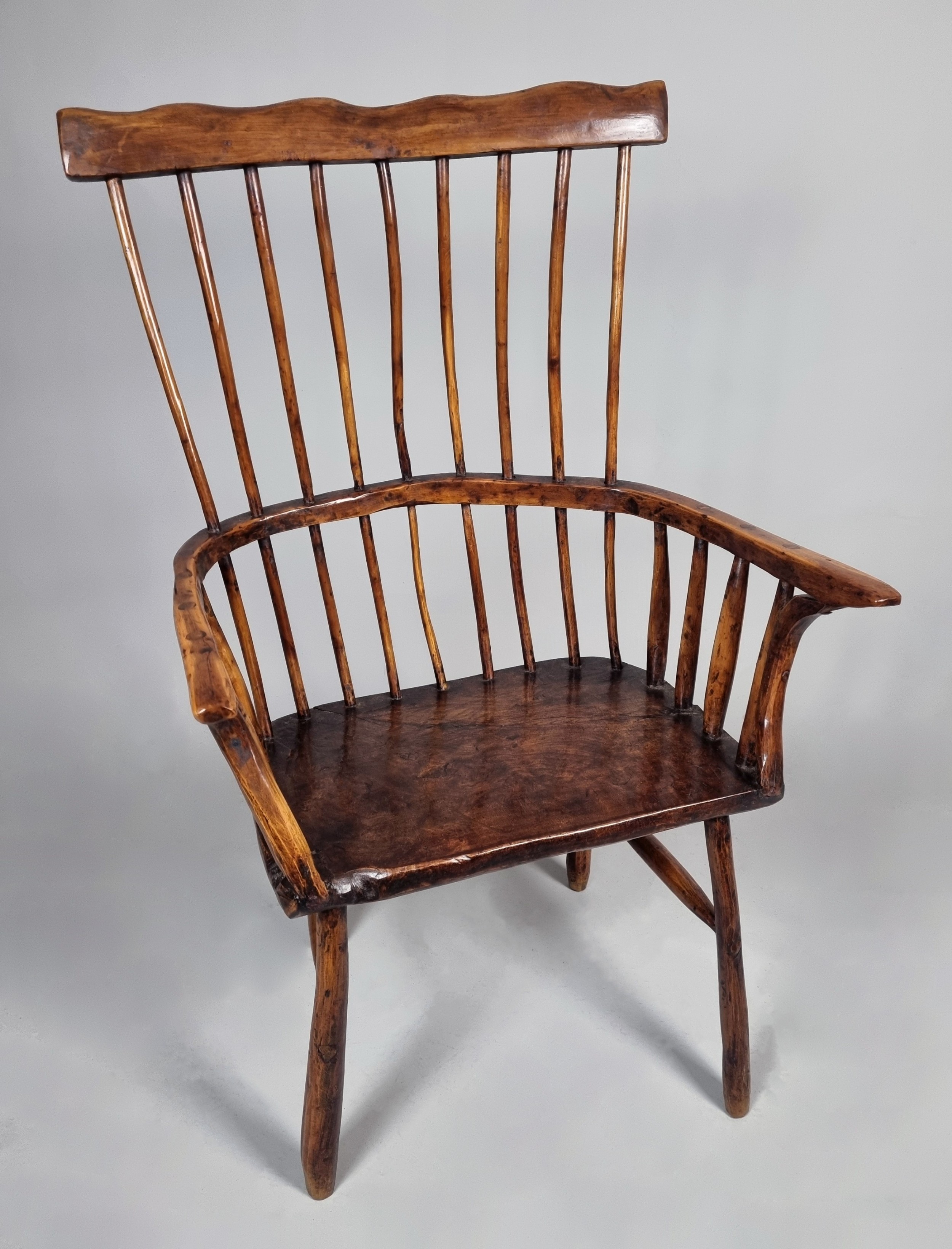
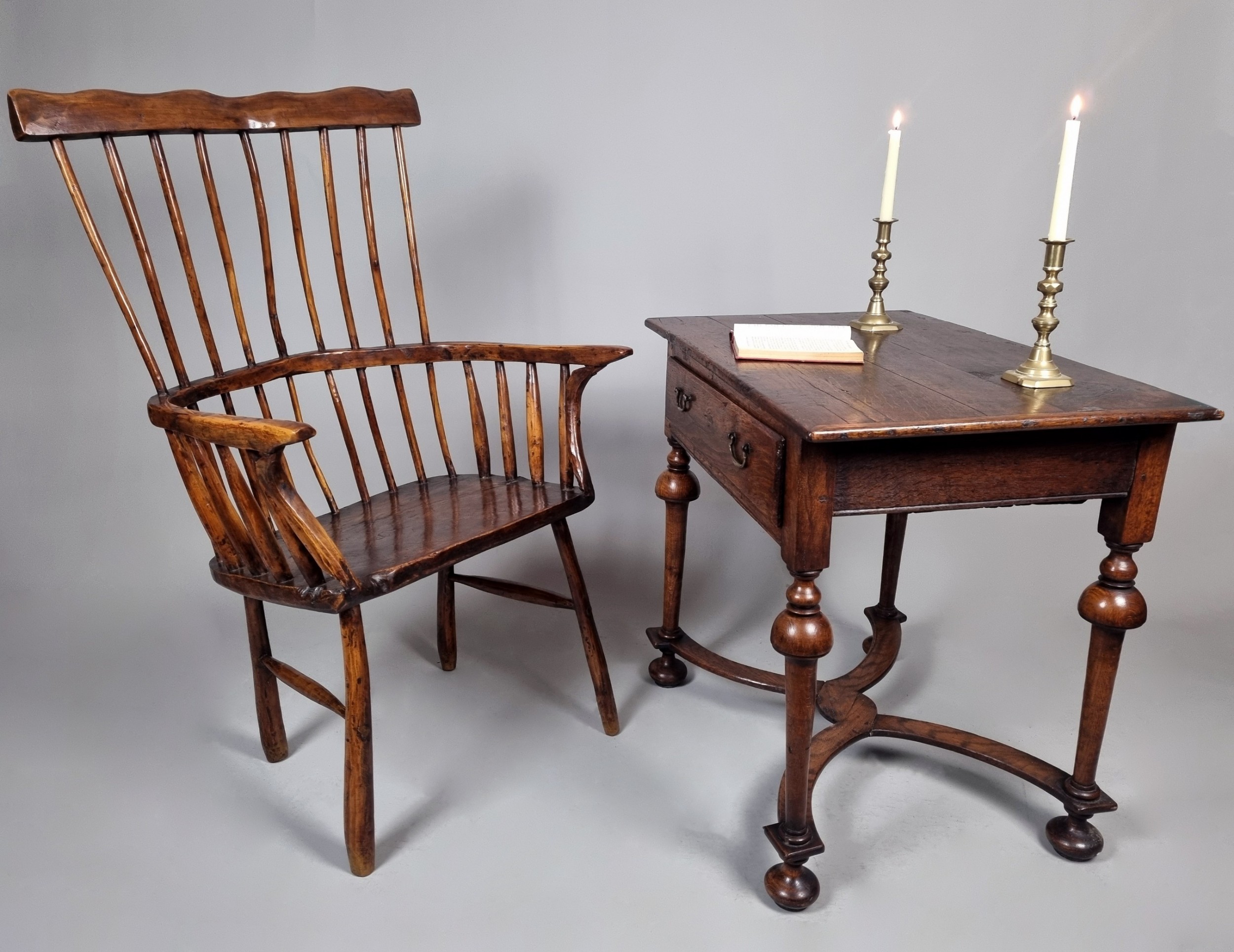
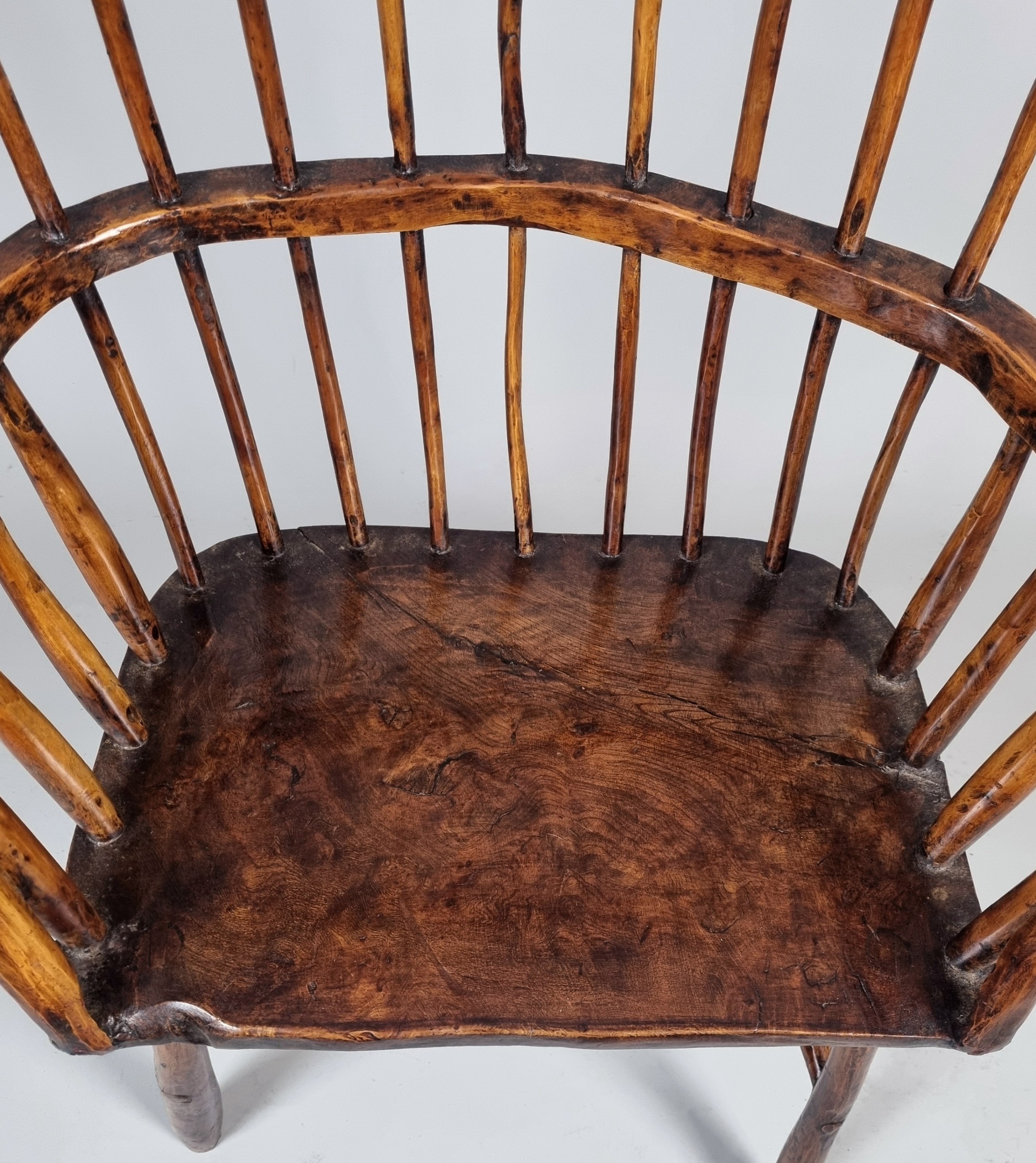
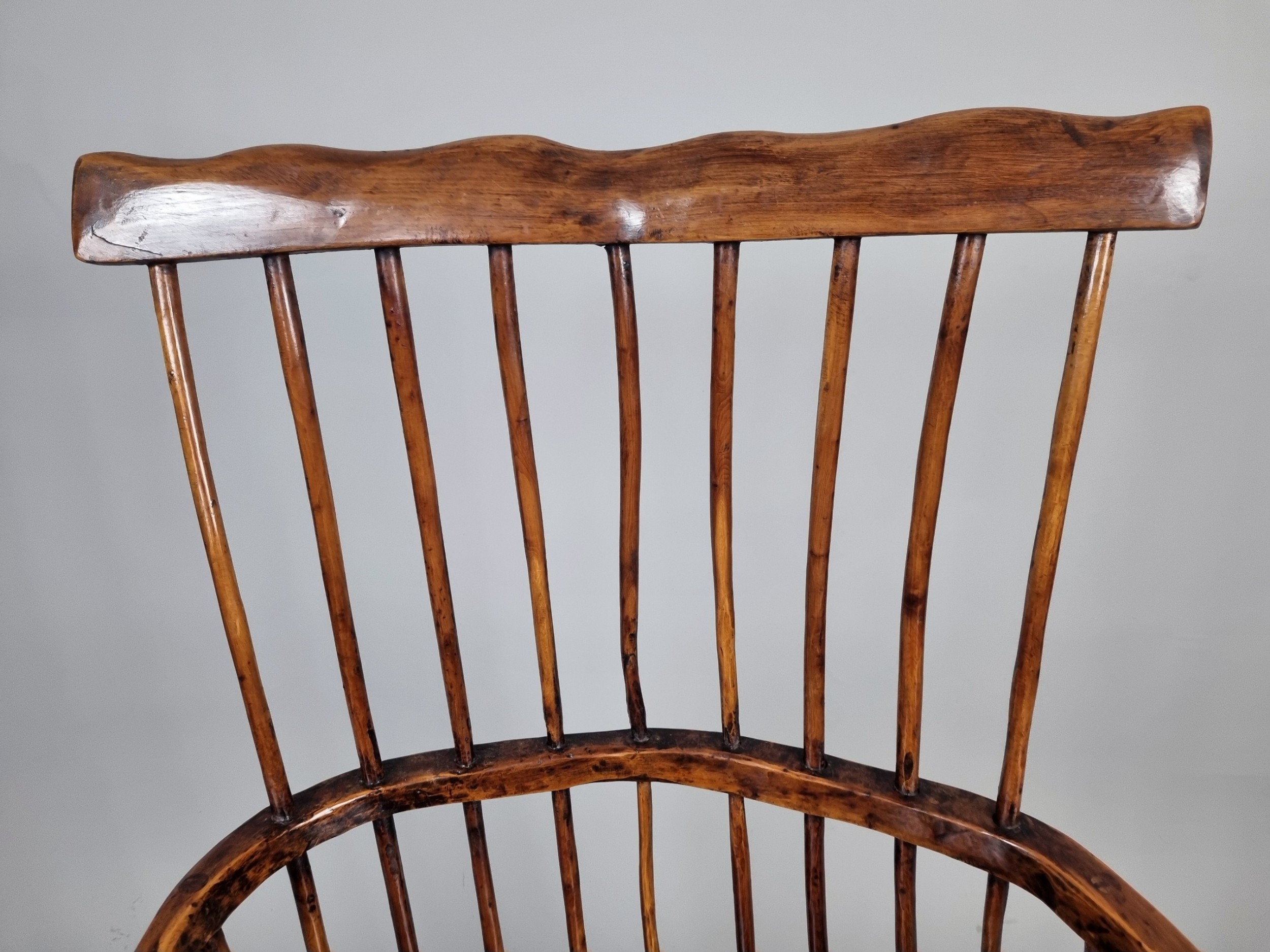
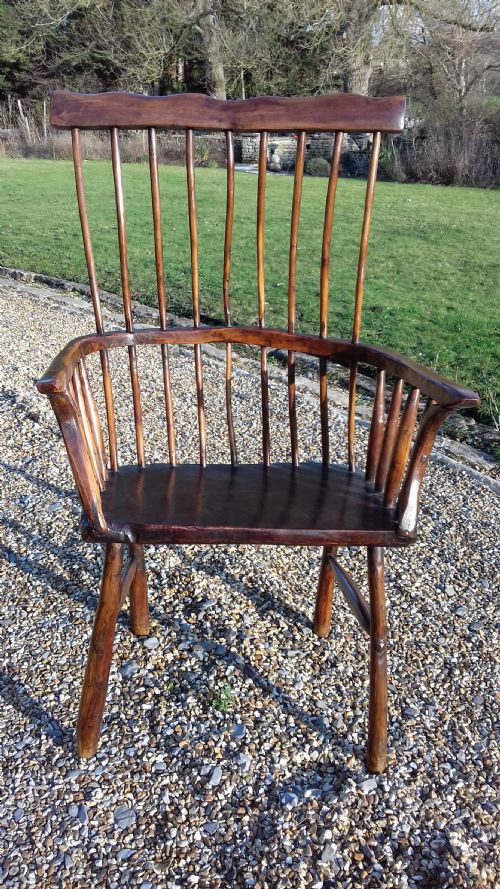
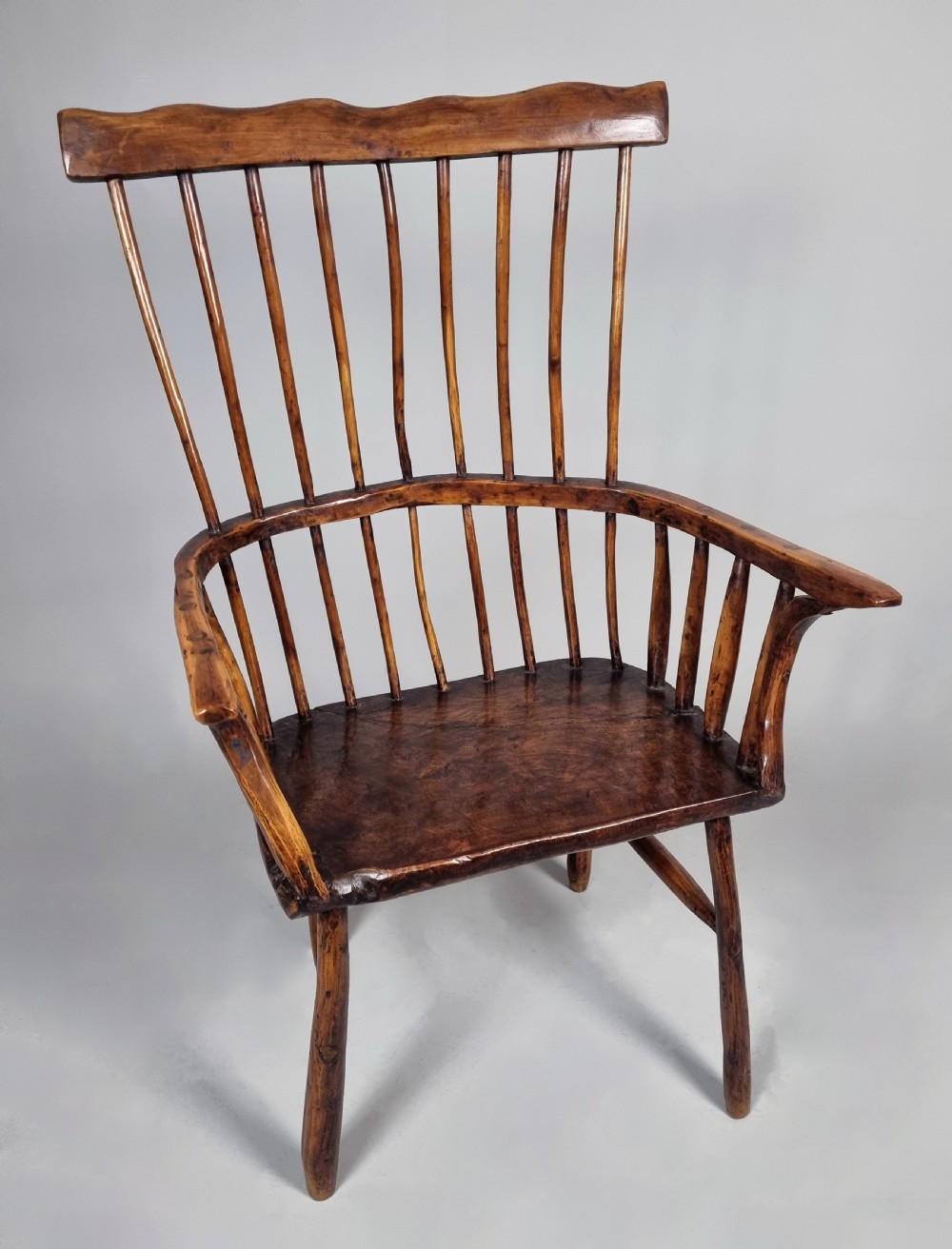
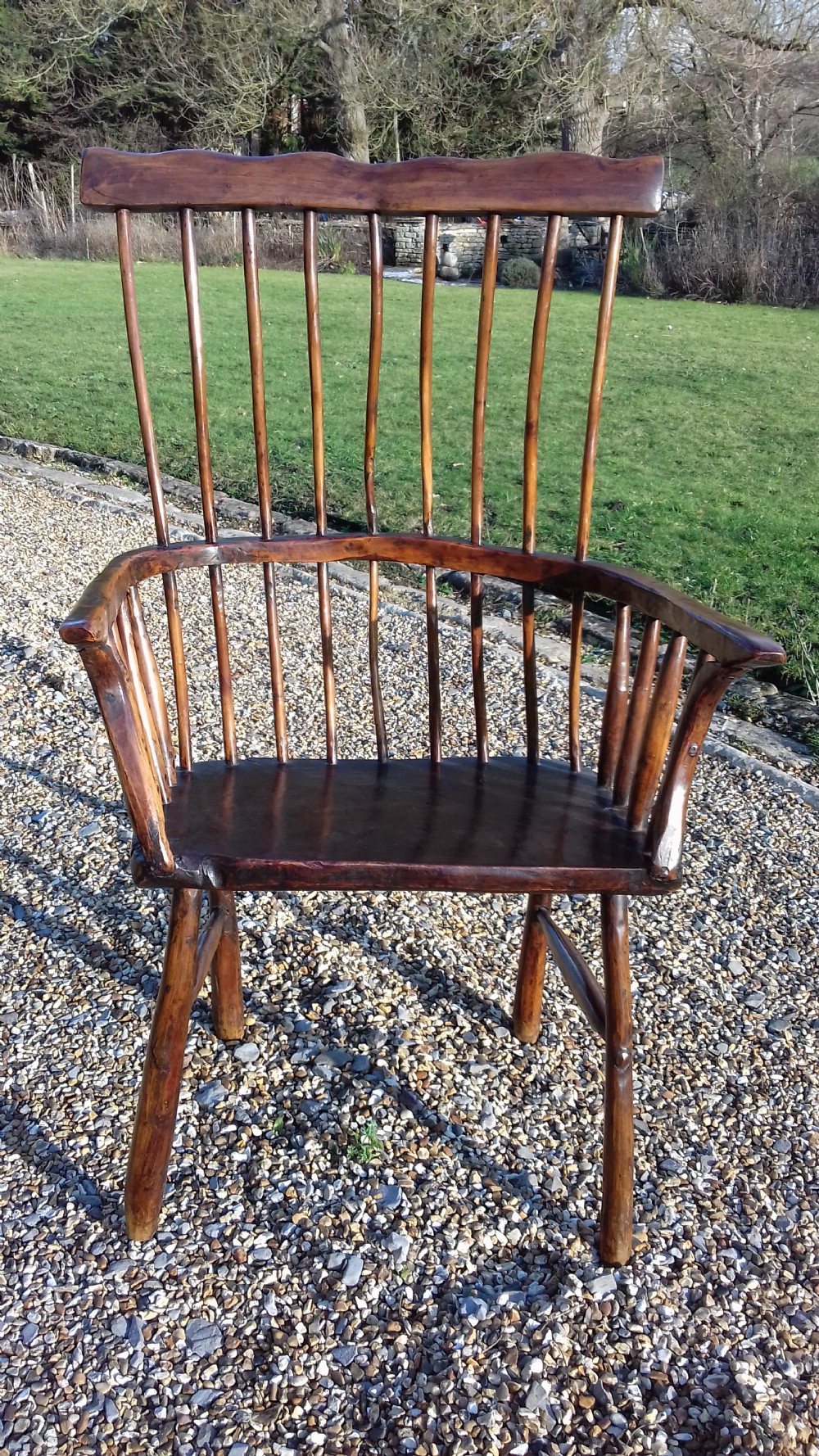
With a fantastic colour and rich patination, and in entirely original condition, this exceptional and rare 18th century combe back ‘hedge chair’ has a yew wood bow and comb crest rail and yew wood spindles, legs and stretchers. The seat is a thickly cut slab of burr and figured elm.

.

It is difficult to be precise about the origins of these primitive hedge chairs because so little was documented in the 1700s and they were made by itinerant bands of workers, such as wheelrights with basic hand held tools and honed carpentry skills, who travelled from village to village all over the country – wherever there was need for the work of making and repairing furniture, carts, ploughs, and cart wheels.

.

Landowners and wealthy farmers would employ them but records of the services provided and the sums paid are virtually non existent.

.

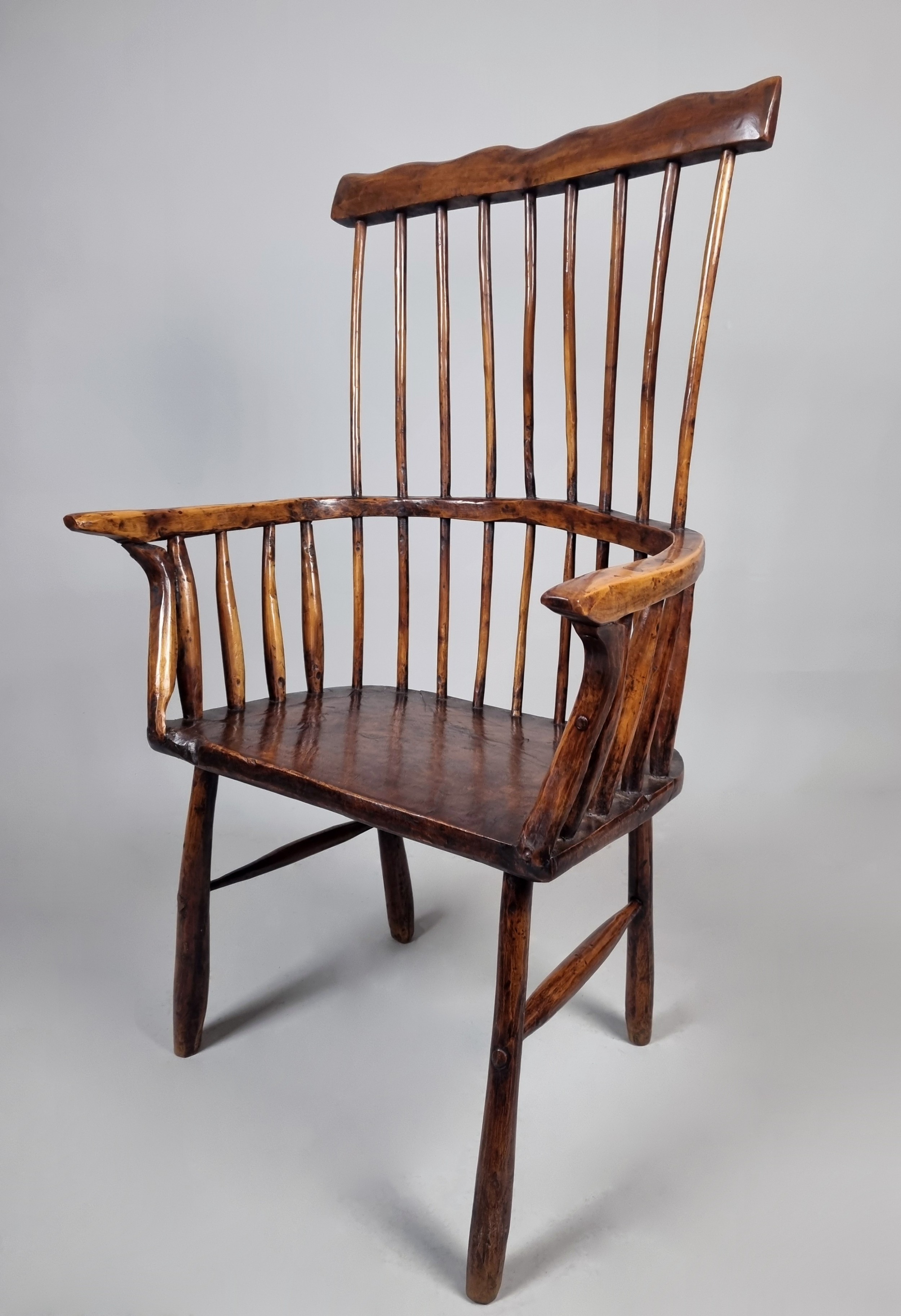
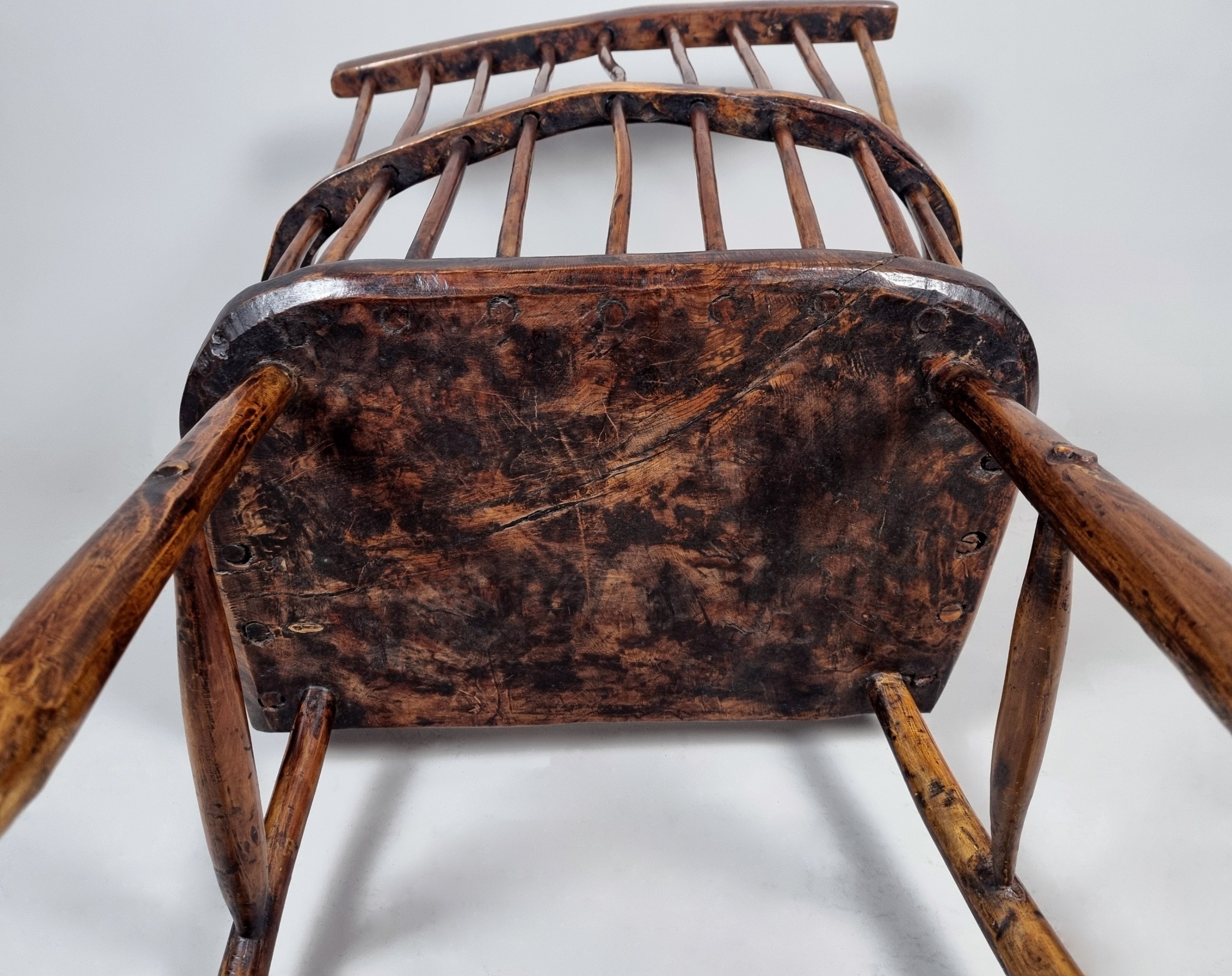
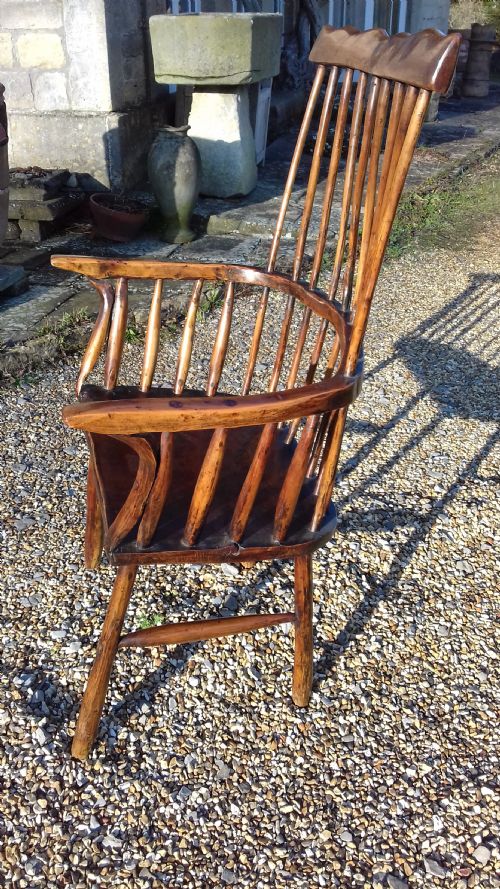
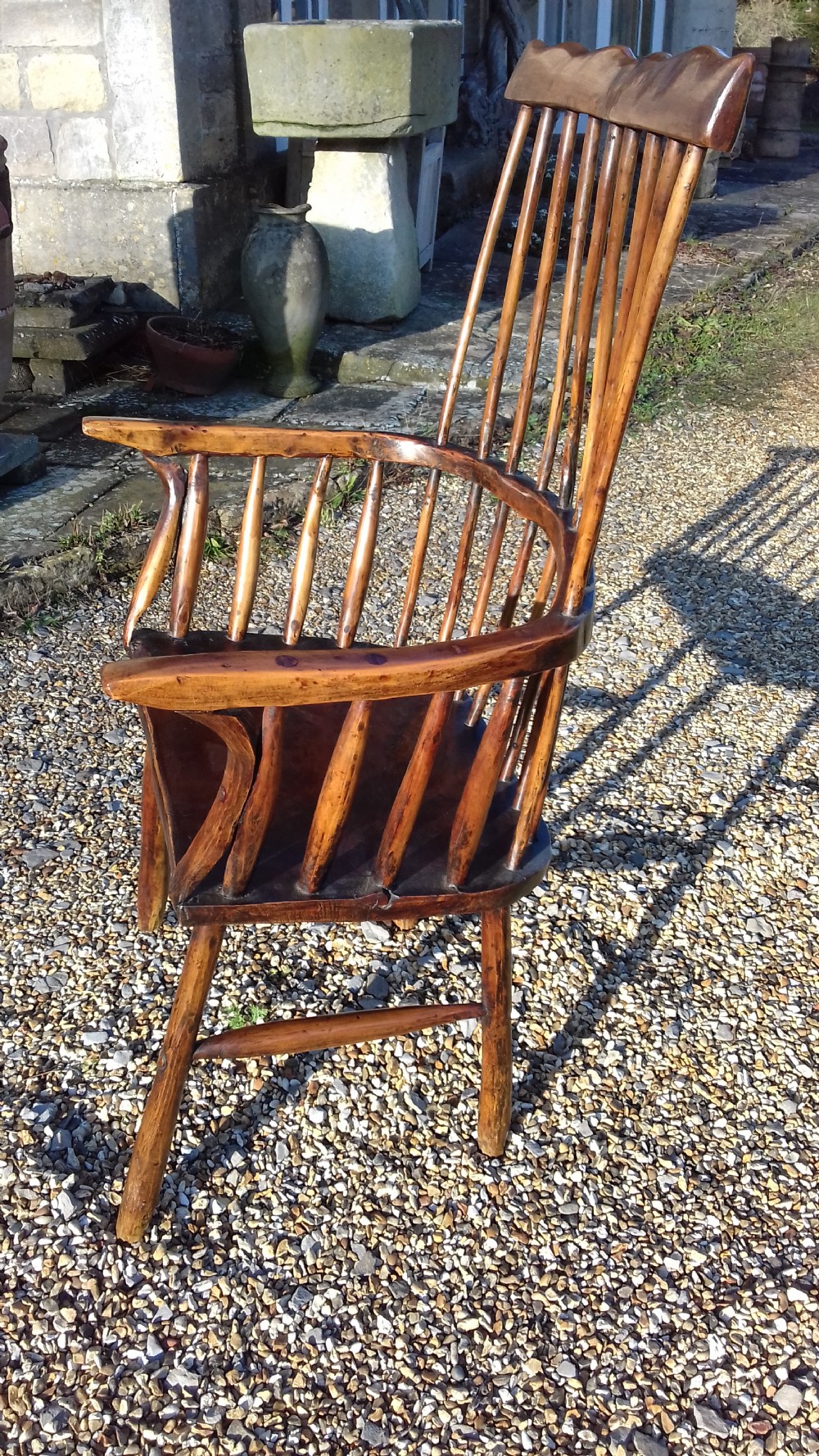
The undished seat of this chair is a single slab of elm worked with a hand held adze. The stretchers and legs were formed using a knife drawn over the timber to shape it, leaving each with an natural slighltly irregular natural shape. The yew bow rail was steamed and bent and, as here, these rails were rarely symmetrical and add to the natural charm of such early chairs.

.

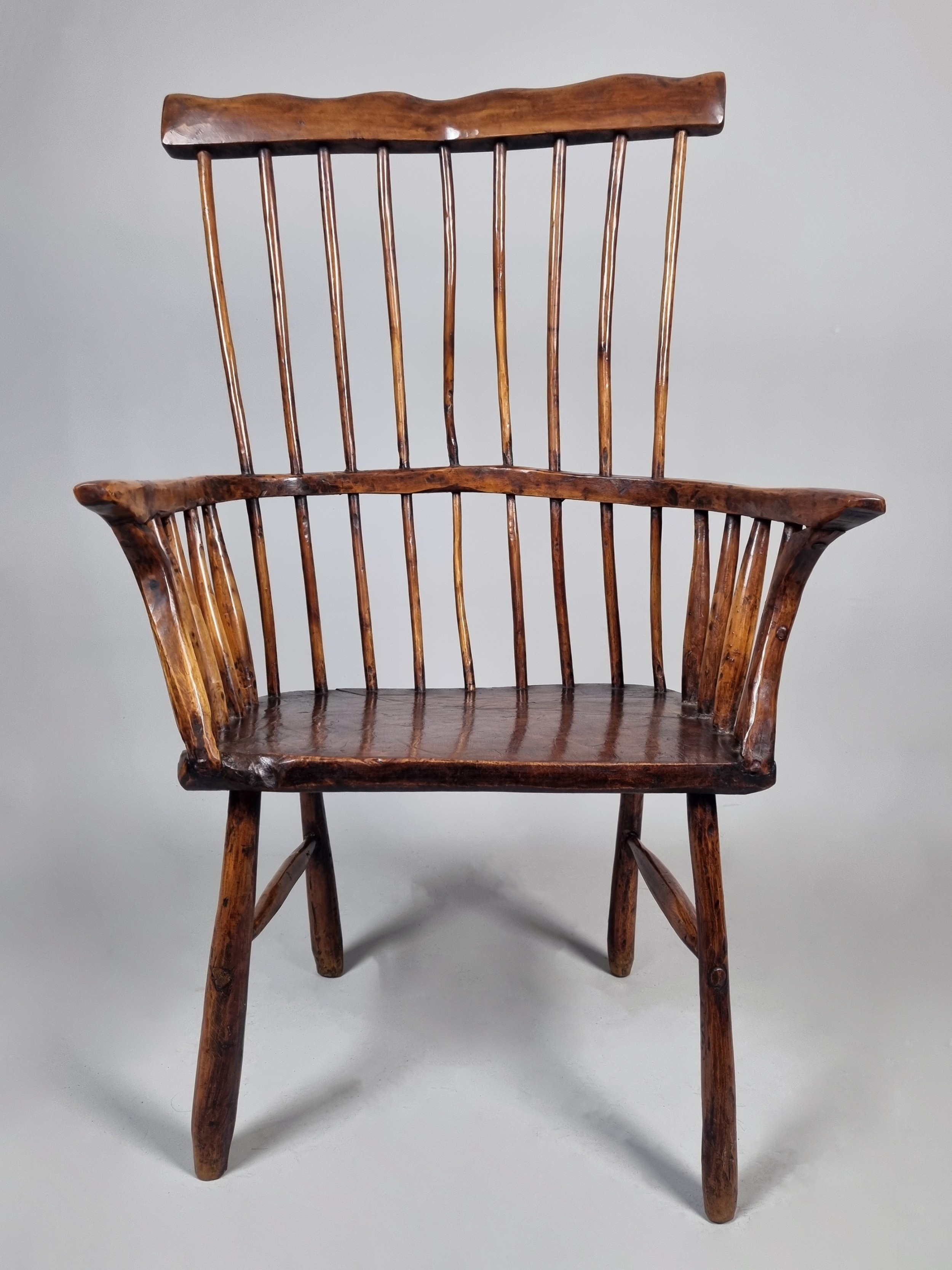
Although skilled and knowledgeable on joining, using and working different timbers there are no two hedge chairs the same, or sets of hedge chairs which match. The timbers were taken from the hedgerow and worked to make one piece and each piece is therefore entirely unique and individual.

.

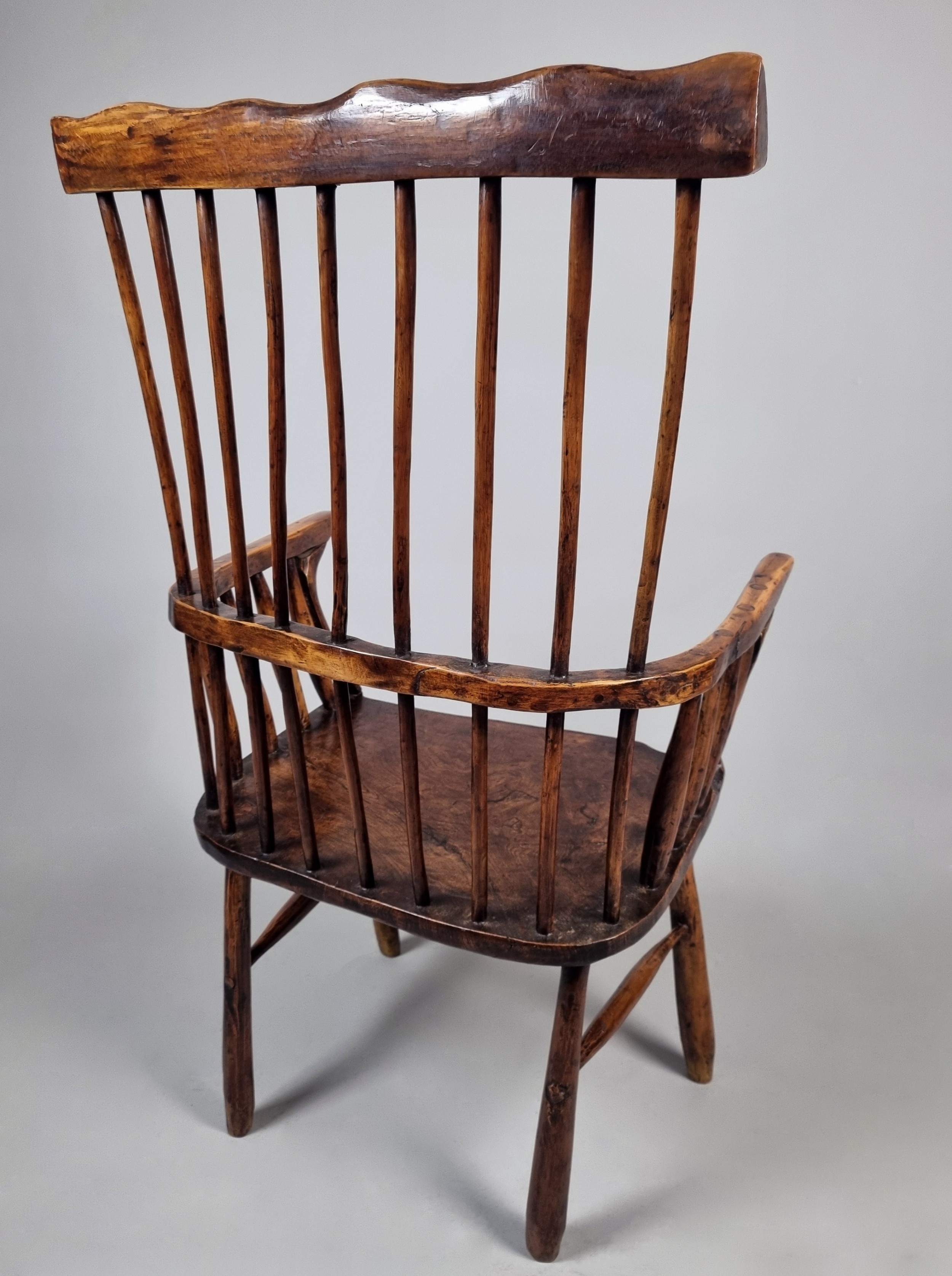
This chair is almost certainly Welsh as crescent arm bow supports are typically found on primitive 18th century chairs from Wales and the west country.

.

Original joints are all firm and tight with no creaks. The chair is comfortable and sturdy and heavy with no repairs or later elements - a beautiful example made by skilled hands in c. 1780.

.

Fresh to the market having been in the ownership of a passionate chair collector for many years, this chair is a ‘statement piece’, an example of 18th century ‘folk art’ and a rare and beautiful piece of primitive vernacular hedge furniture.

.

This chair is an extremely rare survivor in superb original condition, I doubt there is another of this colour, quality and condition anywhere on the market.

.

.

Dimensions are:

.

40.5 inches high 20.5 inches wide, and 16 inches deep.

.

The seat is 18 inches wide and 13.5 inches deep. The height of the back from the seat is 26 inches.

.

The height from floor to top of arms is 25 inches. The width between the arms is 21 inches.

Declaration

Webberley Antiques has dated this Primitive Welsh Stick Armchair to the 18th Century.
Reference Numbers
Sellingantiques Reference
SA1223935
Dealers Notes

I describe and photograph my pieces accurately and with the aim that on arrival each will exceed your expectations.

I operate a full refund guarantee and am always happy to give free, honest and friendly advice.

Description
With a fantastic colour and rich patination, and in entirely original condition, this exceptional and rare 18th century combe back ‘hedge chair’ has a yew wood bow and comb crest rail and yew wood spindles, legs and stretchers. The seat is a thickly cut slab of burr and figured elm.
fig 1. A primitive 18th-century Welsh stick armchair made from dark polished wood featuring a comb back, tapered stick spindles, and an organic curved frame.
fig 1. Exemplary 18th Century Welsh Hedge Chair

It is difficult to be precise about the origins of these primitive hedge chairs because so little was documented in the 1700s and they were made by itinerant bands of workers, such as wheelrights with basic hand held tools and honed carpentry skills, who travelled from village to village all over the country – wherever there was need for the work of making and repairing furniture, carts, ploughs, and cart wheels.
Landowners and wealthy farmers would employ them but records of the services provided and the sums paid are virtually non existent.
Webberley Antiques
fig 2. A primitive 18th-century Welsh stick armchair made from dark polished wood featuring a comb back, tapered stick spindles, and an organic curved frame.
fig 2. Exemplary 18th Century Welsh Hedge Chair

The undished seat of this chair is a single slab of elm worked with a hand held adze. The stretchers and legs were formed using a knife drawn over the timber to shape it, leaving each with an natural slighltly irregular natural shape. The yew bow rail was steamed and bent and, as here, these rails were rarely symmetrical and add to the natural charm of such early chairs.
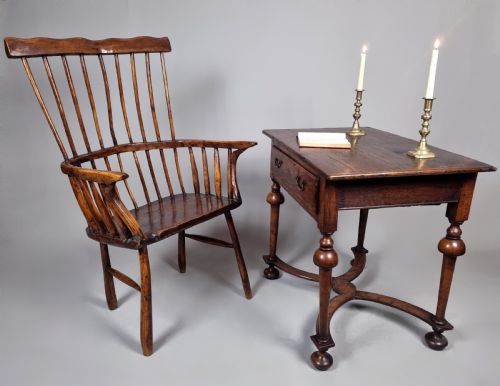
fig 3. A primitive 18th-century Welsh stick armchair made from dark polished wood featuring a comb back, tapered stick spindles, and an organic curved frame.
fig 3. Exemplary 18th Century Welsh Hedge Chair

Although skilled and knowledgeable on joining, using and working different timbers there are no two hedge chairs the same, or sets of hedge chairs which match. The timbers were taken from the hedgerow and worked to make one piece and each piece is therefore entirely unique and individual.
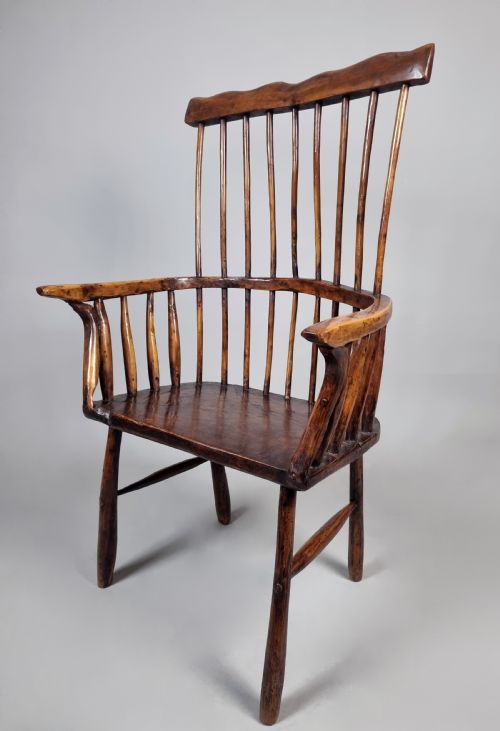
fig 4. A primitive 18th-century Welsh stick armchair made from dark polished wood featuring a comb back, tapered stick spindles, and an organic curved frame.
fig 4. Exemplary 18th Century Welsh Hedge Chair

This chair is almost certainly Welsh as crescent arm bow supports are typically found on primitive 18th century chairs from Wales and the west country.

Original joints are all firm and tight with no creaks. The chair is comfortable and sturdy and heavy with no repairs or later elements - a beautiful example made by skilled hands in c. 1780.
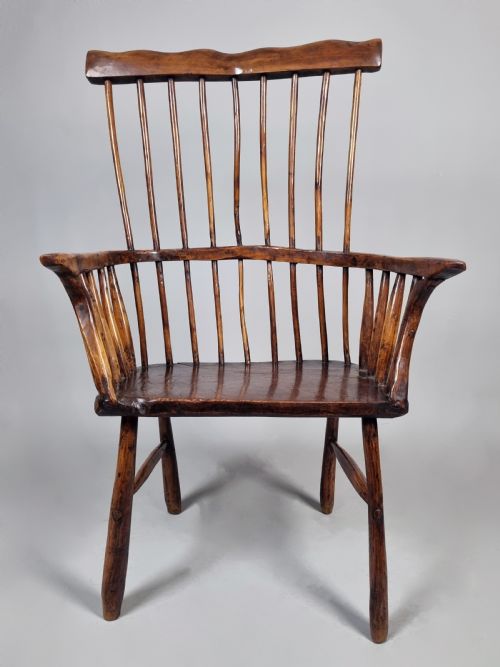
fig 5. A primitive 18th-century Welsh stick armchair made from dark polished wood featuring a comb back, tapered stick spindles, and an organic curved frame.
fig 5. Exemplary 18th Century Welsh Hedge Chair

Fresh to the market having been in the ownership of a passionate chair collector for many years, this chair is a ‘statement piece’, an example of 18th century ‘folk art’ and a rare and beautiful piece of primitive vernacular hedge furniture.
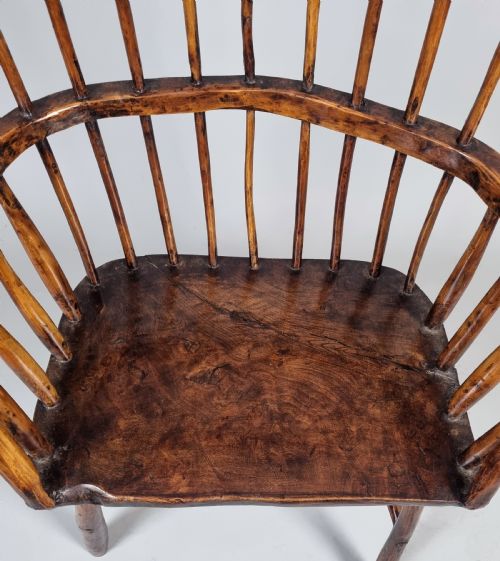
fig 6. A primitive 18th-century Welsh stick armchair made from dark polished wood featuring a comb back, tapered stick spindles, and an organic curved frame.
fig 6. Exemplary 18th Century Welsh Hedge Chair

This chair is an extremely rare survivor in superb original condition, I doubt there is another of this colour, quality and condition anywhere on the market.

Dimensions are:

40.5 inches high 20.5 inches wide, and 16 inches deep.

The seat is 18 inches wide and 13.5 inches deep. The height of the back from the seat is 26 inches.

The height from floor to top of arms is 25 inches. The width between the arms is 21 inches.

Date of Manufacture

Webberley Antiques has dated this Primitive Welsh Stick Armchair to the 18th Century.

Reference Numbers
Sellingantiques Ref
SA1223935
Webberley Antiques
Webberley Antiques
Sellingantiques verified Since Nov 2008

Specialists in 18th century and earlier furniture for more than 45 years

Dealer Profile

You can view the stock and full dealer information on the Webberley Antiques Profile Page
PDF SHARE
SAVE
A primitive 18th-century Welsh stick armchair made from dark polished wood featuring a comb back, tapered stick spindles, and an organic curved frame.
1 / 10
Archive I A primitive 18th-century Welsh stick armchair made from dark polished wood featuring a comb back, tapered stick spindles, and an organic curved frame.

Exemplary 18th Century Welsh Hedge Chair
Archive II A primitive 18th-century Welsh stick armchair made from dark polished wood featuring a comb back, tapered stick spindles, and an organic curved frame. View II
Archive III A primitive 18th-century Welsh stick armchair made from dark polished wood featuring a comb back, tapered stick spindles, and an organic curved frame. View III
Archive IV A primitive 18th-century Welsh stick armchair made from dark polished wood featuring a comb back, tapered stick spindles, and an organic curved frame. View IV
Archive V A primitive 18th-century Welsh stick armchair made from dark polished wood featuring a comb back, tapered stick spindles, and an organic curved frame. View V
Archive VI A primitive 18th-century Welsh stick armchair made from dark polished wood featuring a comb back, tapered stick spindles, and an organic curved frame. View VI
Archive VII A primitive 18th-century Welsh stick armchair made from dark polished wood featuring a comb back, tapered stick spindles, and an organic curved frame. View VII
Archive VIII A primitive 18th-century Welsh stick armchair made from dark polished wood featuring a comb back, tapered stick spindles, and an organic curved frame. View VIII
Archive IX A primitive 18th-century Welsh stick armchair made from dark polished wood featuring a comb back, tapered stick spindles, and an organic curved frame. View IX
Archive X A primitive 18th-century Welsh stick armchair made from dark polished wood featuring a comb back, tapered stick spindles, and an organic curved frame. View X
FURTHER BROWSING

Visitors also looked at these ⇣

Enlarged Archival View
Telephone 07765 233266
Location
East Sussex
United Kingdom

By appointment only.
Verified Since Nov 2008
Items For Sale 75
Items Sold 415
Webberley Antiques
Webberley Antiques
Verified Since Nov 2008
View Dealer Info
Location: East Sussex, United Kingdom, , By appointment only.
Verified
Nov 2008
For Sale
75
Sold
415
A primitive 18th-century Welsh stick armchair made from dark polished wood featuring a comb back, tapered stick spindles, and an organic curved frame.
Exemplary 18th Century Welsh Hedge Chair
Ref: SA1223935
A primitive 18th-century Welsh stick armchair made from dark polished wood featuring a comb back, tapered stick spindles, and an organic curved frame.
Detail View 1
Detail View 2
Detail View 3
Detail View 4
Detail View 5
Detail View 6
Detail View 7
Detail View 8
Detail View 9
Archival Detail
Every single antique dealer on our platform is individually approved by our internal team. We verify their professional trade history, ethical standards, and photographic quality to ensure a secure, high-standard buying environment. Upon joining, every dealer agrees to a strict 9-point code of conduct. While issues can occasionally arise, our dealers typically resolve them swiftly and directly with the buyer. In fact, since our founding in 2002, Sellingantiques has only had to step in to help resolve an issue on roughly five occasions—a true testament to the quality of our dealers and their dedication to your happiness.
Our dealers are highly experienced in packing and shipping fragile, high-value antiques. Because you are in direct contact with the dealer, you will be able to easily go through all available shipping and insurance options together to ensure your item arrives safely.
Antiques are the ultimate green purchase. By choosing historical pieces over newly manufactured goods, you completely eliminate the carbon footprint of modern mass production while preserving exceptional, timeless craftsmanship.

A Welsh hedge chair, also known as a stick chair, is a regional form of vernacular seating made in rural Wales using locally sourced timber, often gathered from hedgerows or woodlands. These chairs feature un-turned or hand-whittled spindles socketed directly into a thick wooden seat base.

These chairs were made using native hard woods such as ash, oak, and elm, with naturally curved branches selected for arms and crest rails. The timber was typically worked green using basic hand tools like drawknives and spokeshaves.

Authentic period pieces exhibit hand-carved wedged tenons visible through the seat and armbow, irregular spindle thickness, thick adzed seats, and deep naturally worn patination in areas of frequent contact.

A primitive stick chair works well as an accent piece in an entryway, alongside a fireplace hearth, or contrasted against clean modern lines in a contemporary living space to add historical texture.

Maintain historical timber furniture by keeping it away from direct heat sources and excessive humidity changes. Regular light dusting and an occasional application of natural beeswax polish will protect the surface finish without altering the patina.
items
Add keywords to the filter
Price
£100
£250000
Era
Movements
Material
Origin
Stock Location
Freshness
Online Payments
Categories