




A 2026 Guide by Sellingantiques
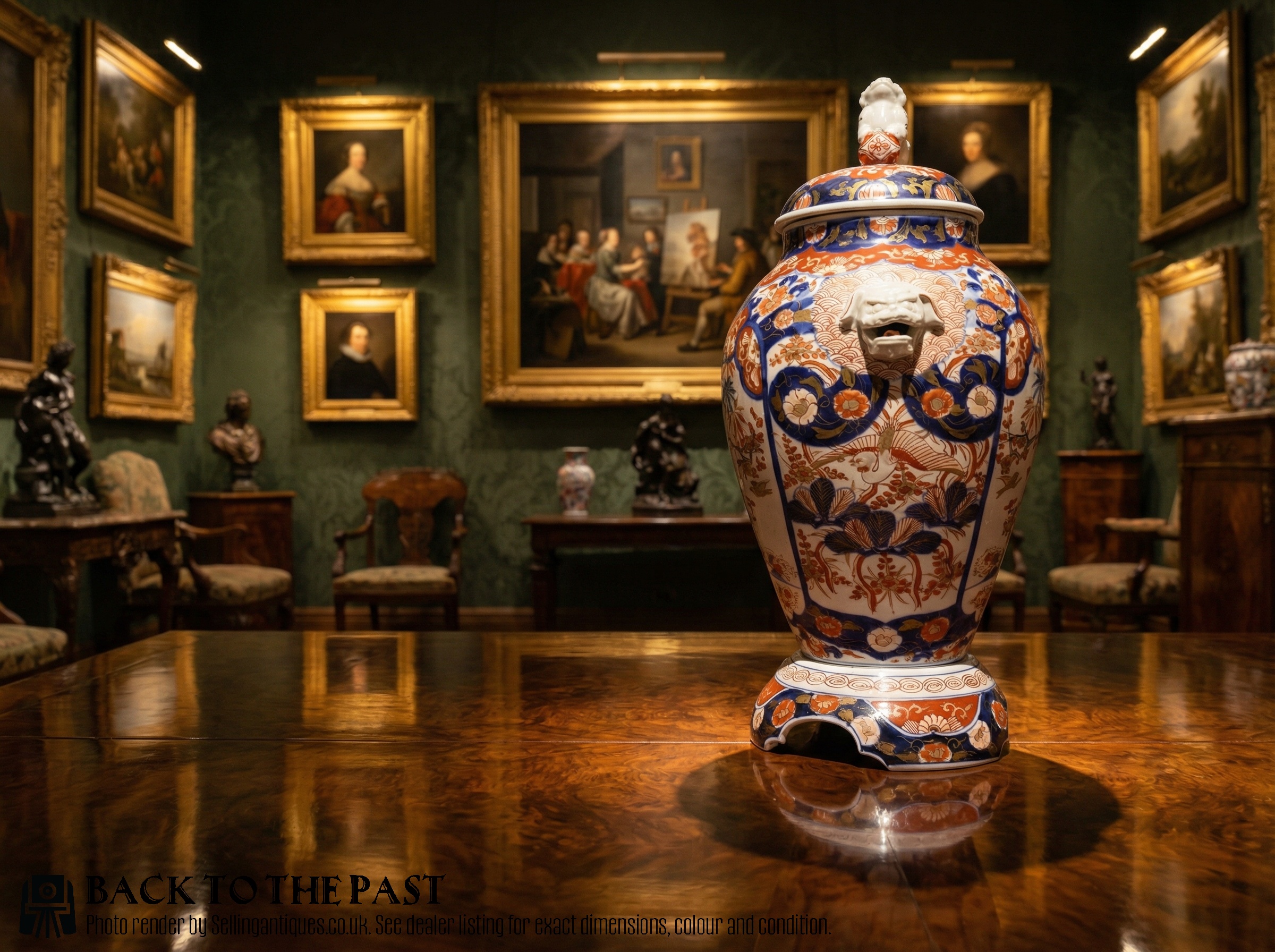
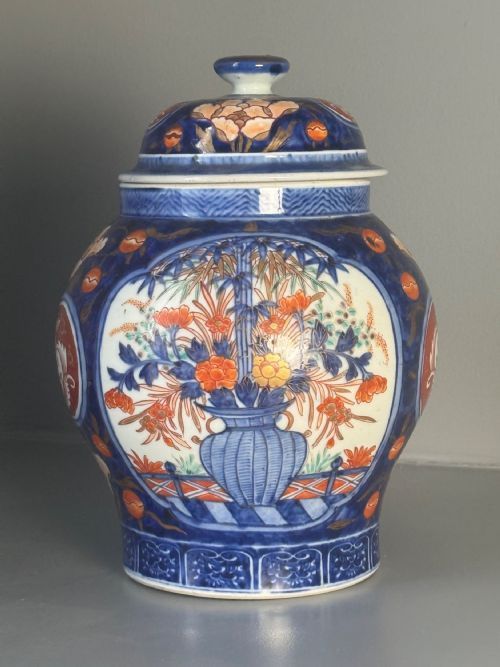
Rare 19th Century Japanese Imari Lidded Vase., 19th Century
Priced at £1,100 from Patrick Moorhead Antiques
European aristocratic households adopted these vessels during the late seventeenth century to mimic imported Asian porcelains.
You'll often find antique lidded vases in pairs or garnitures of three. Sets dominated mantelpieces throughout the Georgian period.
Mantel displays regularly placed a tall vase at the very centre. Owners flanked it with matching beakers.
Victorian tastes expanded the form into monumental floor pieces. Many earlier classical shapes grew heavier to suit darker rooms.
Sèvres produced elaborate soft-paste examples throughout the later eighteenth century. Their archives document numerous royal commissions for garniture sets.
Josiah Wedgwood established his Etruria works in 1769. His basalt and jasperware production lines included numerous variations of the classical urn form.
Royal Worcester focused heavily on painted porcelain vessels during the late Victorian era. Look for their distinct blush ivory grounds.
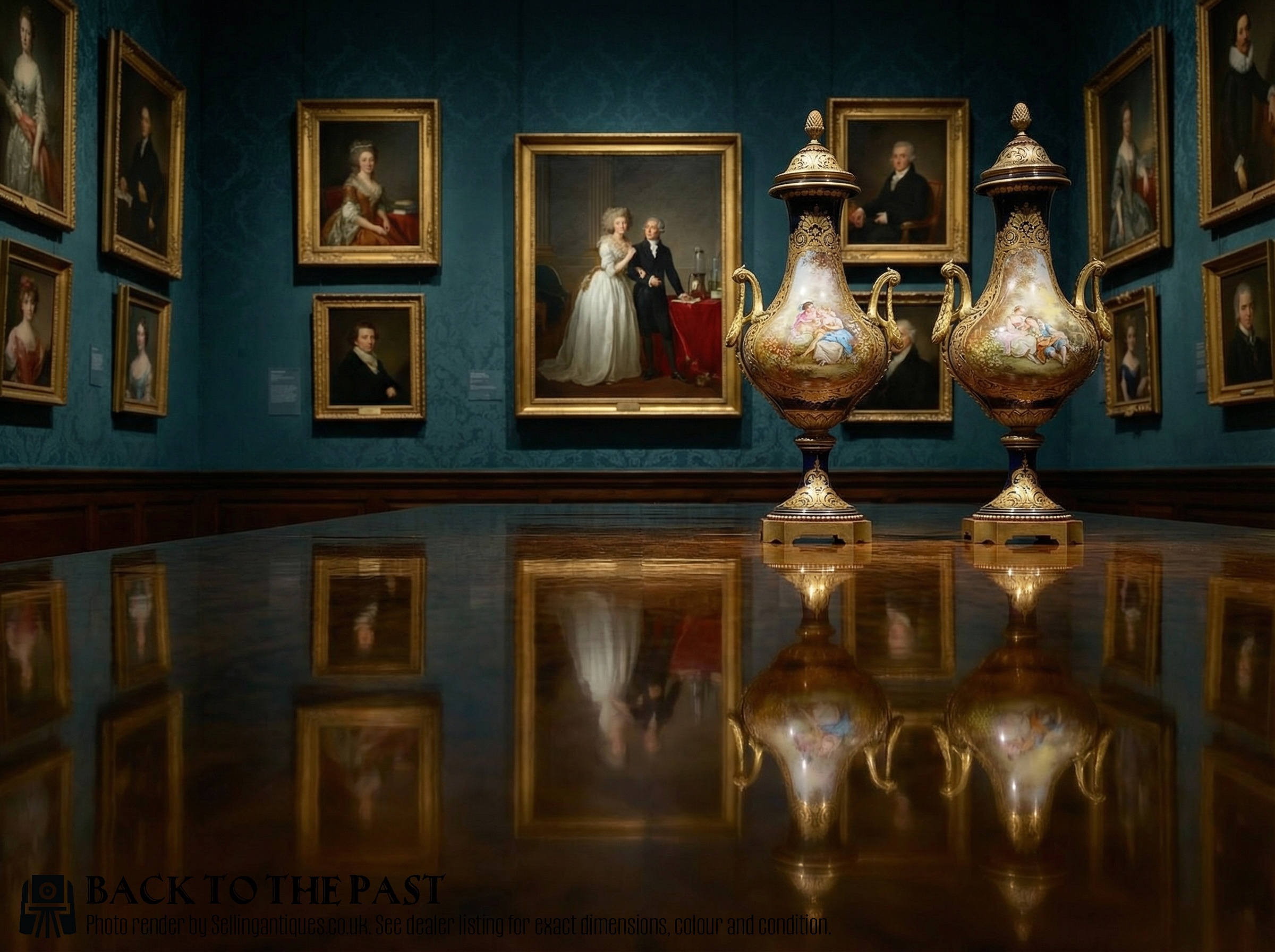
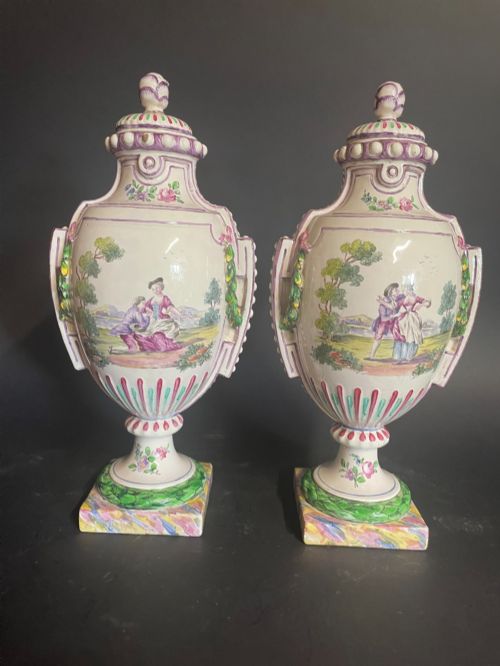
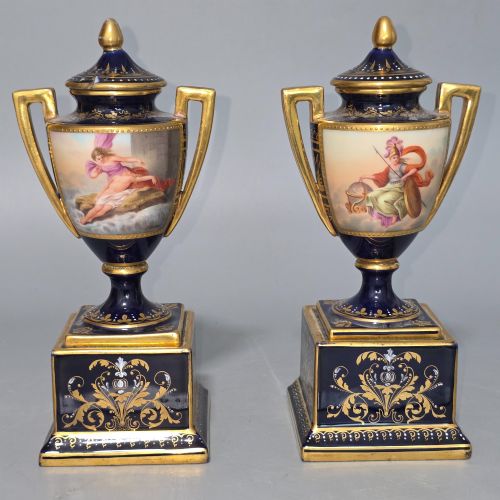
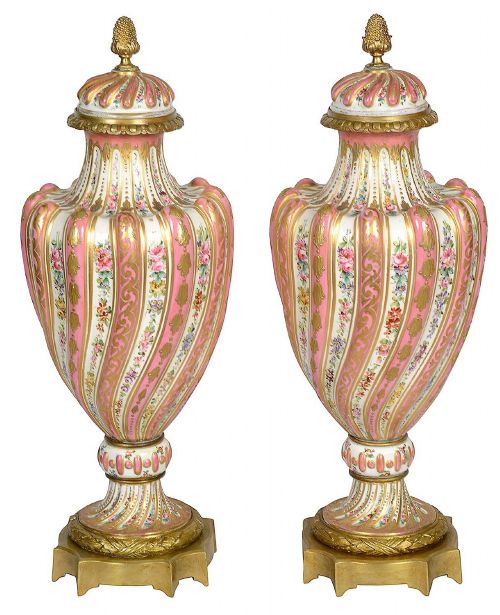
Pair Sevres Style Lidded Vases, C19th, 19th Century
Priced at £5,800 from Patrick Moorhead Antiques
The 2026 retail price guide for Antique Lidded Vases is drawn from a proprietary archive of over 1.1 million retail prices indexed by Sellingantiques since 2003. This guide relies exclusively on their own internal data; no external sources or auction records are used.
Analysing nearly 25 years of UK antique market history alongside current retail values, the data indicates that typical UK retail prices for Antique Lidded Vases range between £500 and £6,500. Entry-level prices generally fall under £500 and premium examples upwards of £6,500.
Finials act as the visual anchor. They sit right at the apex of the cover.
Inspect the seating ledge. The inner rim should drop down slightly to keep the cover from sliding off.
Twin handles flank the shoulders of many classical urn shapes. These rarely support weight and function purely as decoration.
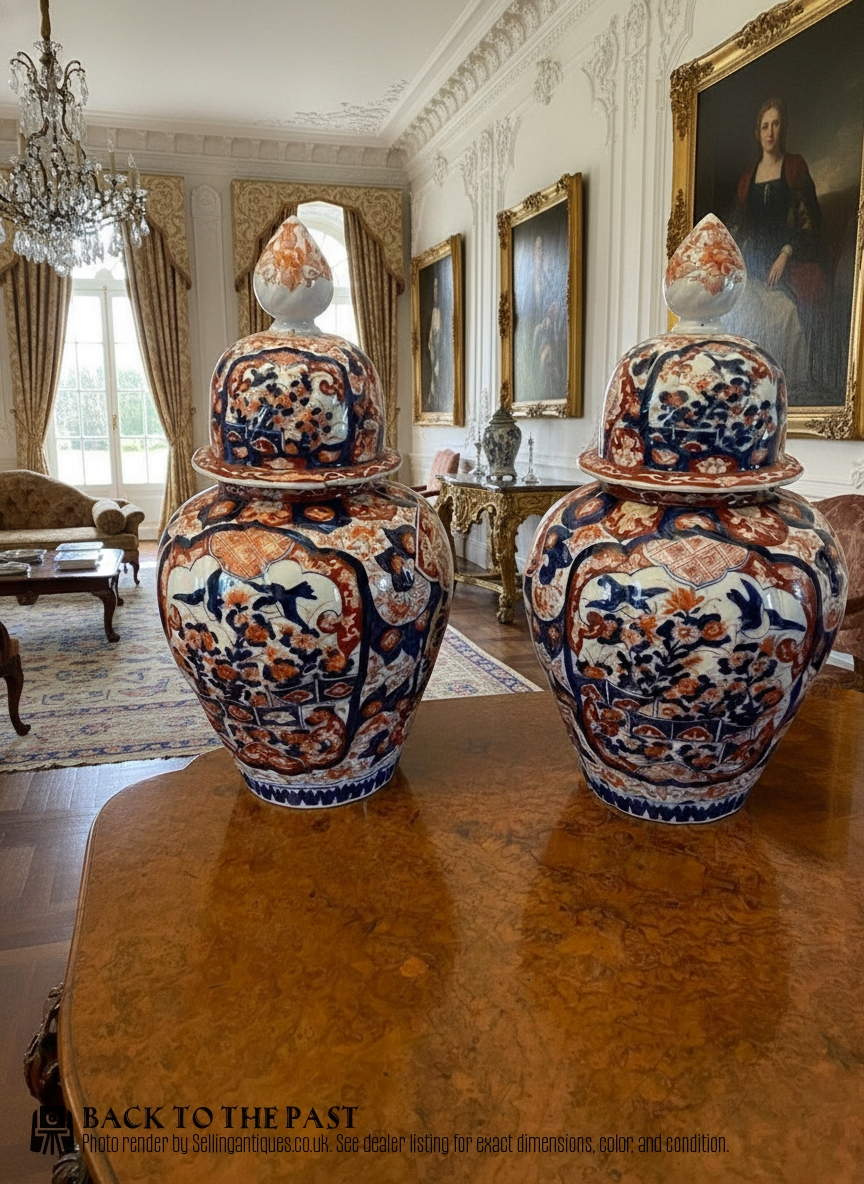
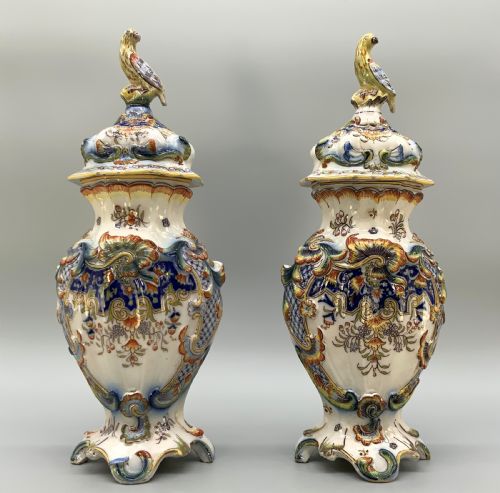
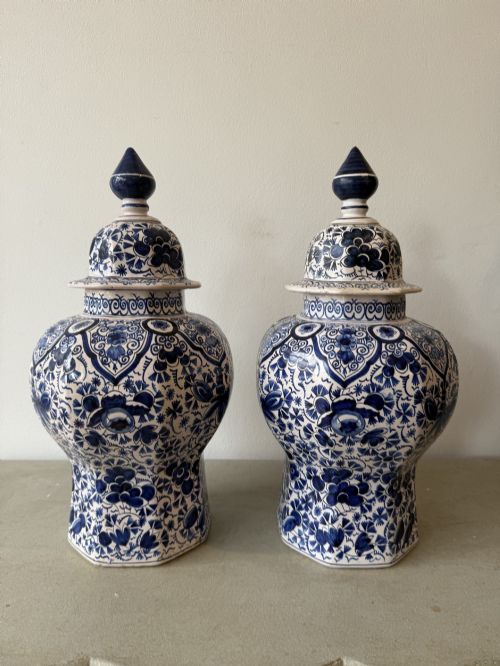
Fine Quality Pair of Antique Japanese Imari Lidded Vases, 1900
Priced at £1,250 from London City Antiques
Slip-casting allowed potteries to create complex fluted bodies. Artisans poured liquid clay into plaster moulds.
Turn the piece over to see the firing method. Heavy bases often retain grey marks from the kiln supports.
Hand-painted enamel reserves required multiple trips to the muffle kiln. Each colour fused at a slightly different temperature.
"Inner pierced grids sit hidden under the solid outer dome on potpourri models. These allow the scent to drift out when you lift the main cover."
"Some factories painted the interior of the lids with small floral sprigs. This gave the owner a private detail to enjoy when opening the piece."
Based on almost 25 years of Sellingantiques UK antique market data, Antique Lidded Vases appeared 674 times (out of 1,100,000 antiques) which gives it a rarity score of 87/100.
This score measures scarcity within the Sellingantiques archive only and is not a survey of the entire antiques market, so these statistics may not be indicative of the general availability of Antique Lidded Vases elsewhere.
Dust the surface lightly with a soft brush first. Loose dirt scratches the glaze if you wipe it dry with a cloth.
Wash glazed sections with lukewarm water and mild soap. Avoid soaking any unglazed bases or metal mounts.
Missing a cover breaks the visual symmetry of the original design. Most collectors look for complete sets when buying mantelpiece garnitures.
A single base still functions as a decorative urn. Some buyers use incomplete pieces as open vessels for dried flower arrangements.
Potpourri vases held dried petals and spices to scent a room. The designs feature small pierced holes to let the fragrance escape into the air.
Many have a solid outer lid covering a secondary pierced lid. You remove the outer layer only when you want to release the scent.
These were highly practical items in periods before modern sanitation. Households relied on strong botanicals to mask unpleasant odours.
The crusty white residue comes from hard water drying inside the metal. Generations of owners likely repurposed the piece to hold fresh cut flowers.
These vessels weren't meant to hold standing water. The metal reacts with the minerals over time and forms calcium deposits.
You can soften the buildup by wiping the interior with a damp cloth. Don't pour harsh chemical descalers into an antique vessel.
Please note: This Antique Lidded Vases guide and its associated pricing data are provided for general informational purposes only. It does not constitute formal financial, investment, or appraisal advice and should not be relied upon as the sole basis for any commercial activity, purchasing, or sales decisions. Sellingantiques.co.uk accepts no liability for any actions taken in reliance on this information. Always consult with a qualified professional or independent appraiser.
