


A 2026 Guide by Sellingantiques

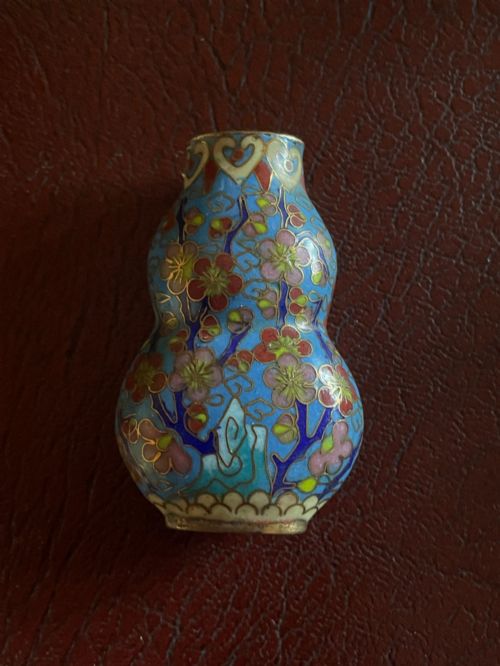
Pair of Small Antique Japanese Cloisonné Vases – Circa 1930, 1920
Priced at £155 from Kingsdown Antiques
Originating in the Near East, the enamelling technique moved steadily eastward along established trade routes.
Chinese artisans adopted the craft during the Ming dynasty and began producing early forms of antique cloisonne vases.
Look closely at Japanese examples from the Meiji period, as this era saw a massive boom in export production.
Peak output across both regions happened throughout the late nineteenth century to meet high Western demand.
Namikawa Yasuyuki operated in Kyoto during the Meiji period, creating vases noted for their complex wirework.
The Ando Cloisonne Company in Nagoya, founded in the late nineteenth century and still working today.
Bear in mind that most early Chinese wares lack maker marks, reflecting a trade built on anonymous workshop production.
The 2026 retail price guide for Antique Cloisonne Vases is drawn from a proprietary archive of over 1.1 million retail prices indexed by Sellingantiques since 2003. This guide relies exclusively on their own internal data; no external sources or auction records are used.
Analysing nearly 25 years of UK antique market history alongside current retail values, the data indicates that typical UK retail prices for Antique Cloisonne Vases range between £400 and £5,500. Entry-level prices generally fall under £400 and premium examples upwards of £5,500.
A network of exposed metal wire remains visible on the surface of antique cloisonne vases.
Intricate geometric borders often wrap around the neck and foot rims on traditional Chinese wares.
Notice the pitted surface of the enamel on older pieces where trapped air bubbles burst during the kiln firing.
Early craftsmen soldered thick wires onto heavy cast bronze bodies to create the earliest antique cloisonne vases.
Notice how the wirework becomes thinner and more elaborate as polishing wheels replaced manual stone grinding.
Later Japanese workshops developed methods to fire larger areas of background enamel without needing supportive wires to hold the paste.
"Multiple firings are required because the enamel paste shrinks as it melts in the kiln."
"Often polished with varying grades of stone to reveal the wire edges flush with the glass."
"Appreciate the base metal interiors, which were routinely counter-enamelled to manage tension during the heating process."
Based on almost 25 years of Sellingantiques UK antique market data, Antique Cloisonne Vases appeared 615 times (out of 1,100,000 antiques) which gives it a rarity score of 88/100.
This score measures scarcity within the Sellingantiques archive only and is not a survey of the entire antiques market, so these statistics may not be indicative of the general availability of Antique Cloisonne Vases elsewhere.
Dust the surface with a soft dry cloth. If dirt sits in the recesses, use a slightly damp cotton swab to lift the grime away.
Keep water away from any exposed metal rims or damaged areas. Moisture can seep under cracked enamel and cause the copper base to corrode.
Antique cloisonne vases are stable if kept in a dry environment with steady temperatures. Central heating is fine, provided the vase sits away from direct heat sources.
Sudden changes in temperature make the metal base expand and contract at a different rate to the glass enamel. This movement causes the surface to crack or flake off over time.
Avoid placing them on unstable high shelves. A fall will often dent the metal and shatter the surrounding enamel work.
That is a layer of counter-enamel applied to the interior walls.
Makers added this to balance the tension during firing. Without it, the copper body would warp as the exterior glass cooled and contracted.
Those little holes are called pitting and happen during the original making process. As the enamel paste melts in the kiln, trapped air bubbles rise to the surface and burst.
When the craftsman polishes the fired vase smooth with a grinding stone, those burst bubbles become exposed as tiny craters. They're a normal feature of the firing process.
Later Japanese workshops developed techniques to minimise this effect, but early Chinese wares routinely show pitting across their surfaces.
Please note: This Antique Cloisonne Vases guide and its associated pricing data are provided for general informational purposes only. It does not constitute formal financial, investment, or appraisal advice and should not be relied upon as the sole basis for any commercial activity, purchasing, or sales decisions. Sellingantiques.co.uk accepts no liability for any actions taken in reliance on this information. Always consult with a qualified professional or independent appraiser.
