




A 2026 Guide by Sellingantiques
Potters first developed these green-glazed wares in ancient China during the Shang dynasty. They evolved over centuries to imitate the prized appearance of real jade.
Look for Song and Yuan dynasty examples from the Longquan kilns. Production peaked during these periods before shifting towards Jingdezhen later on.
Export markets drove massive trade in antique celadon vases across Asia. Shards turn up along ancient maritime silk routes.
Japanese tea masters held them in high regard. Many pieces arrived in Japan during the Kamakura and Muromachi periods.
Individual craftsmen rarely signed their work. The trade operated through massive regional kiln complexes employing thousands of anonymous workers.
Longquan kilns in Zhejiang province dominated production for centuries. They shipped vast quantities down the Ou River to coastal ports.
Northern kilns like Yaozhou produced earlier wares. These tend to have carved floral motifs under a more olive-toned glaze compared to southern pieces.
The 2026 retail price guide for Antique Celadon Vases is drawn from a proprietary archive of over 1.1 million retail prices indexed by Sellingantiques since 2003. This guide relies exclusively on their own internal data; no external sources or auction records are used.
Analysing nearly 25 years of UK antique market history alongside current retail values, the data indicates that typical UK retail prices for Antique Celadon Vases range between £400 and £3,800. Entry-level prices generally fall under £400 and premium examples upwards of £3,800.
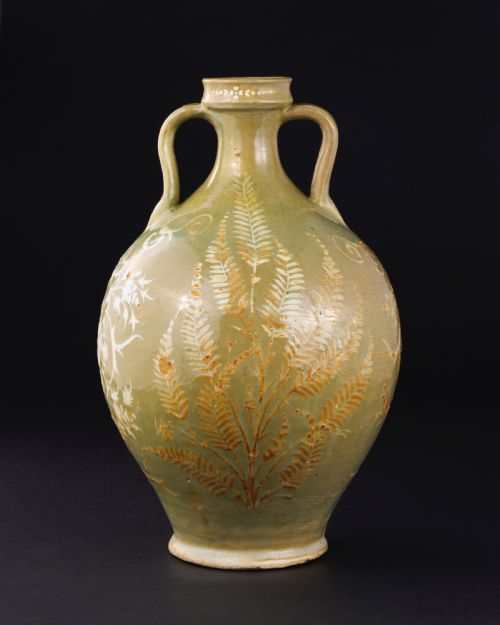
Glaze colours range from pale bluish-green to deep olive. The specific tone depends on kiln temperature and reduction atmosphere.
Surface decoration relies on carving or applied sprigging under the glaze. The green pools thickly in the recessed lines to highlight the design.
Shape defines the period. You frequently encounter mallet forms, baluster profiles and faceted octagonal bodies among antique celadon vases.
Early pieces were often coil-built and smoothed on a slow wheel. Later production shifted to throwing the clay directly on a fast potter's wheel.
Large vessels were thrown in separate sections. Potters luted the top and bottom halves together with clay slip before adding the glaze.
Firing took place in massive climbing dragon kilns built up hillsides. Controlling the reduction atmosphere inside these wood-fired tunnels required immense skill.
"The European name comes from a French play. A character named Céladon wore a distinctive pale green costume that reminded audiences of the imported ceramics."
"Middle Eastern royals treasured them for a specific myth. Court officials believed the green glaze would change colour or ring out if poisoned food touched it."
"Japanese tea masters frequently commissioned fitted wooden boxes for their prized vases. These boxes preserve the provenance and elevate the status of the vessel inside."
Based on almost 25 years of Sellingantiques UK antique market data, Antique Celadon Vases appeared 106 times (out of 1,100,000 antiques) which gives it a rarity score of 98/100.
This score measures scarcity within the Sellingantiques archive only and is not a survey of the entire antiques market, so these statistics may not be indicative of the general availability of Antique Celadon Vases elsewhere.
Crazing happens when the glaze and the clay body cool at different rates after firing. The tension creates a network of fine lines across the surface.
Some kilns encouraged this effect deliberately. In other pieces it develops naturally over decades of use and temperature changes.
Form dictates the period in many cases. Song dynasty pieces often feature elegant simple shapes like the mallet or subtle ribbed jars.
Later Ming and Qing dynasty potters favoured larger baluster forms. These later vessels often have heavily carved floral motifs under the glaze.
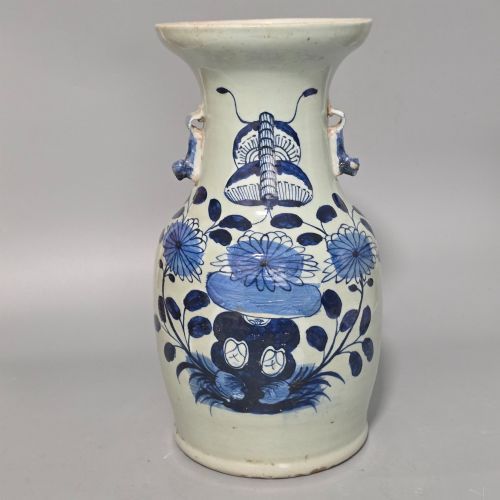
Look at the neck and base proportions. A flared neck with applied handles usually points to later export production.
The base sits directly on the kiln furniture during firing.
If the potters left liquid glaze on the bottom, the vessel would fuse permanently to the kiln floor.
The colour relies on iron oxide mixed into the glaze recipe. The final shade depends heavily on how the kiln master managed the fire.
A kiln starved of oxygen creates a reducing atmosphere, producing those prized bluish-green tones. If too much oxygen enters the chamber, the iron turns the glaze a darker olive.
Regional clay chemistry also plays a part. Different kiln sites dug their materials locally, resulting in distinct regional colour variations.
Please note: This Antique Celadon Vases guide and its associated pricing data are provided for general informational purposes only. It does not constitute formal financial, investment, or appraisal advice and should not be relied upon as the sole basis for any commercial activity, purchasing, or sales decisions. Sellingantiques.co.uk accepts no liability for any actions taken in reliance on this information. Always consult with a qualified professional or independent appraiser.
