


A 2026 Guide by Sellingantiques
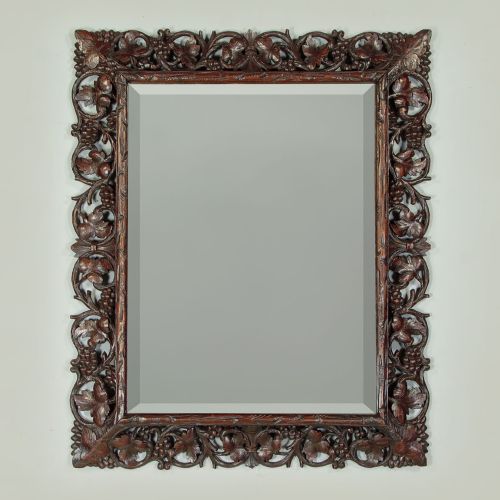
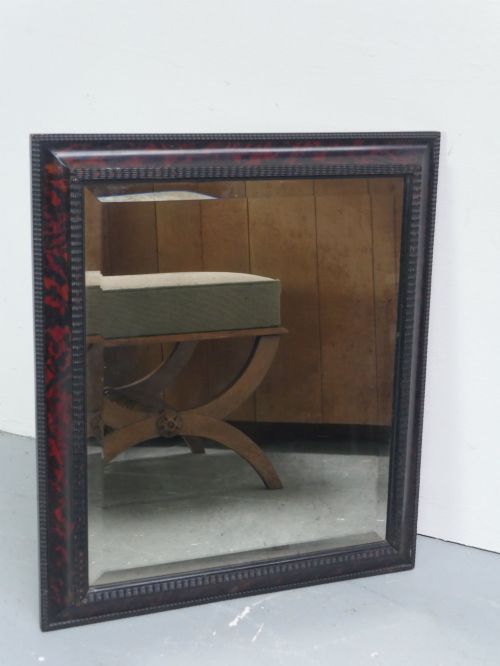
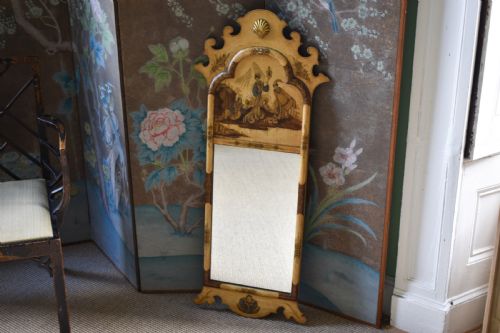
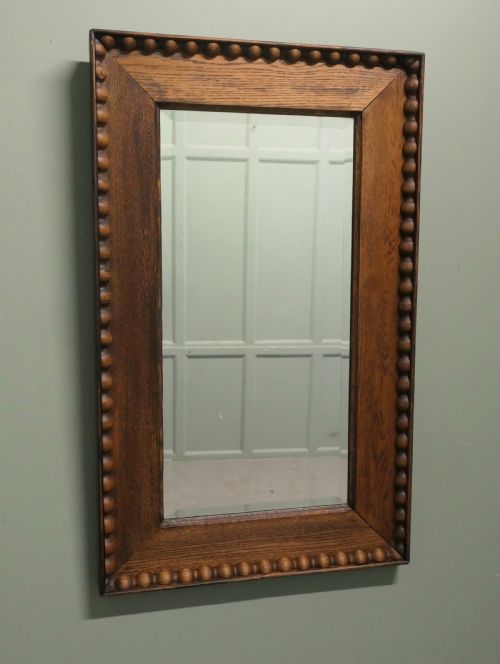
Edwardian Wall Mirror with Prints, Victorian
Priced at £414 from Elmgarden
King Edward VII reigned for just nine years, meaning true Edwardian mirrors belong strictly to the first decade of the twentieth century.
Mass production techniques were firmly established by this time, allowing glass plates to grow much larger than their Victorian predecessors.
Reacting against heavy nineteenth-century carved forms, designs shifted towards lighter, neoclassical revival styles favoured by the middle classes.
Consider the wider context of domestic lighting, where early electric bulbs replaced gas, creating new reflective requirements for wall spaces.
Maple & Co. produced thousands of these frames in London, usually stamped with their name or featuring a branded ivorine plaque on the reverse.
Waring & Gillow dominated the higher end of the market after merging in 1903, sending fine mahogany mirrors to grand hotels and townhouses.
Built mostly by anonymous regional cabinetmakers sourcing pre-silvered plates from large industrial glasshouses, leaving provincial examples without stamped identification.
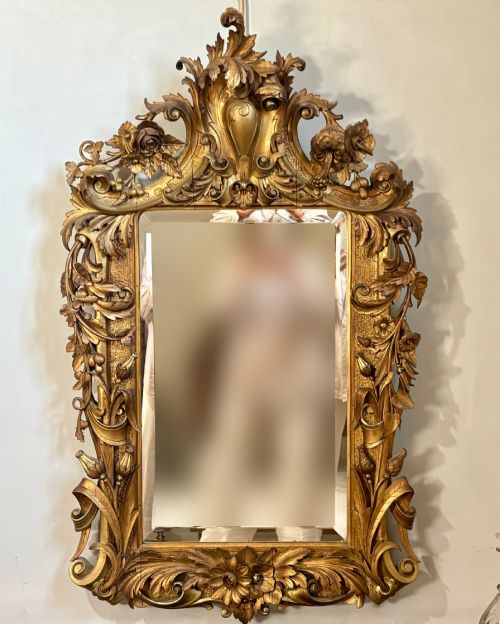
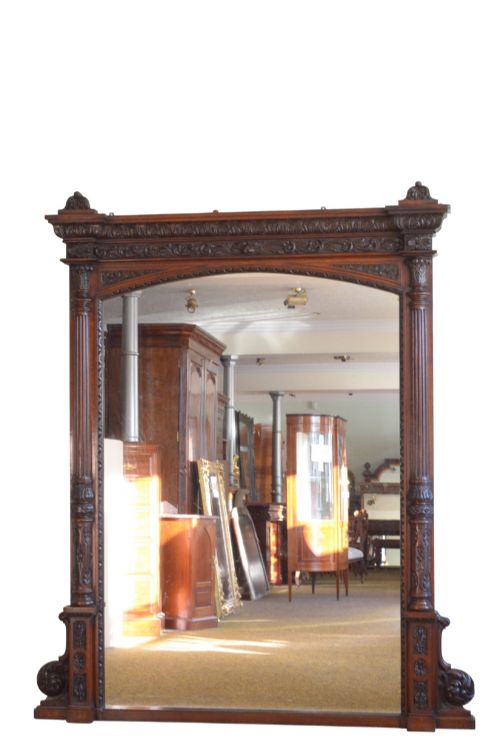
Exceptionally Fine Quality Pair of Late C19th/ Early C20th Edwardian Period Etched and Engraved Rectangular Glass Mirrors., Edwardian
Priced at £1,600 from M Lees and Sons
The 2026 retail price guide for Edwardian Mirrors is drawn from a proprietary archive of over 1.1 million retail prices indexed by Sellingantiques since 2003. This guide relies exclusively on their own internal data; no external sources or auction records are used.
Analysing nearly 25 years of UK antique market history alongside current retail values, the data indicates that typical UK retail prices for Edwardian Mirrors range between £300 and £1,500. Entry-level prices generally fall under £300 and premium examples upwards of £1,500.
Bevelled edges are almost standard on these pieces, refracting light and hiding the wooden frame rebate from the front view.
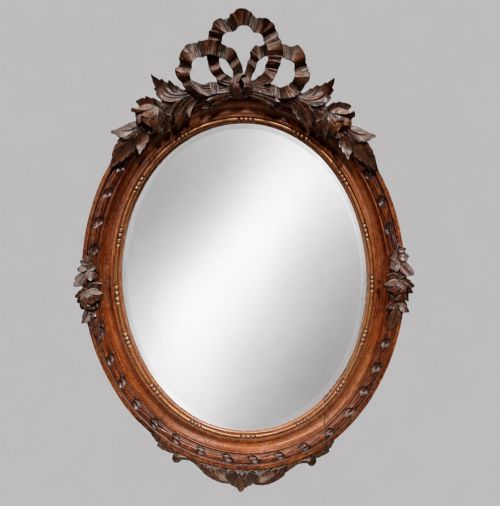
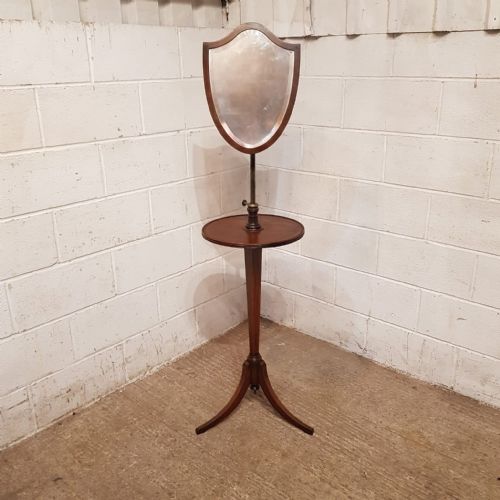
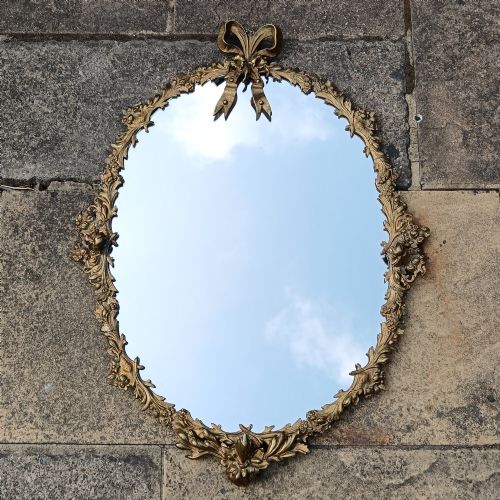
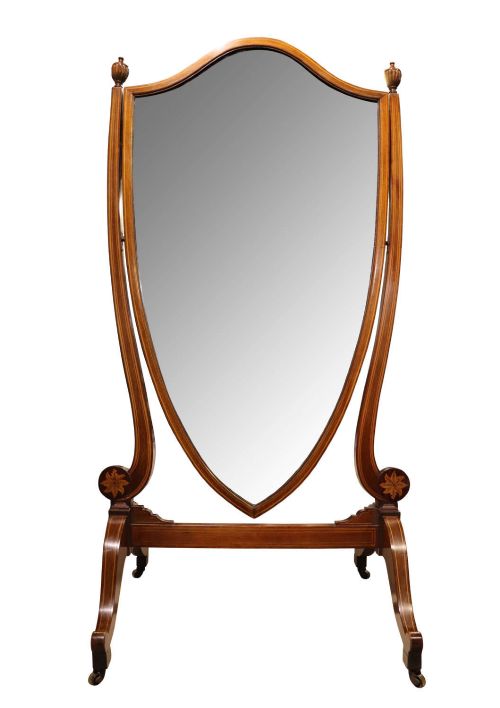
Oval and shield shapes occur frequently, matching the revival of Hepplewhite and Sheraton furniture patterns across the wider trade.
Check the pediment if it has one, as they tend to feature simple broken arches or small central urn finials.
Frame corners rely on basic mortise and tenon joints, though cheaper examples might use glued mitres reinforced with metal brackets.
High industrial veneering standards, achieved by pressing thin sheets of expensive timber over solid pine carcases using steam presses.
Examine the stringing to see narrow channels cut into the solid wood, holding tiny square strips of contrasting boxwood.
"Glass clarity improved dramatically during this decade, meaning these pieces offer a much sharper, truer reflection than older Georgian glass."
"Many flat oval frames were designed to be hung either horizontally or vertically, fitted with multiple brass rings on the backboard to allow choice."
"Surviving original glass often retains a distinctive heavy weight, adding reassuring stability to the item when mounted properly on a wall."
Based on almost 25 years of Sellingantiques UK antique market data, Edwardian Mirrors appeared 3097 times (out of 1,100,000 antiques) which gives it a rarity score of 54/100.
This score measures scarcity within the Sellingantiques archive only and is not a survey of the entire antiques market, so these statistics may not be indicative of the general availability of Edwardian Mirrors elsewhere.
Edwardian mirrors with their original plate glass carry substantial weight. The thick, bevelled plates used during this period are much heavier than modern float glass equivalents.
You must ensure your wall fixings are load-bearing. Plasterboard alone cannot take the strain without locating the studwork or using heavy-duty toggle fixings.
Those dark spots are known in the trade as foxing. They occur when damp reaches the silvering on the reverse of the plate, causing the chemical coating to break down and detach from the glass surface.
You cannot clean them away from the front. The only way to remove them is to have the glass stripped and re-silvered by a specialist. Most dealers prefer to leave the plate alone, as original foxing adds character and confirms the age of the piece.
Missing sections of boxwood stringing or satinwood crossbanding are routine jobs for a restorer. They cut new veneer to match the gap and glue it into the original channel.
Once the new timber is coloured back and polished, the repair blends into the surrounding frame. It is a simple fix that brings a tired piece back to life.
Leave the original backboards exactly as they are. Shrinkage splits in pine deal boards are a natural result of central heating drying out the timber over a century.
Taping them traps moisture and pulling them off destroys the historical integrity of the piece. If the glass feels loose, a restorer can add small wooden blocks inside the frame rebate to secure it without altering the original back.
Please note: This Edwardian Mirrors guide and its associated pricing data are provided for general informational purposes only. It does not constitute formal financial, investment, or appraisal advice and should not be relied upon as the sole basis for any commercial activity, purchasing, or sales decisions. Sellingantiques.co.uk accepts no liability for any actions taken in reliance on this information. Always consult with a qualified professional or independent appraiser.
