
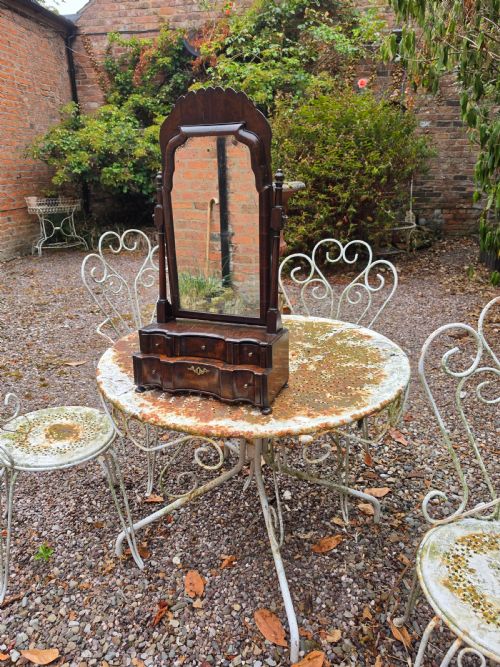



A 2026 Guide by Sellingantiques
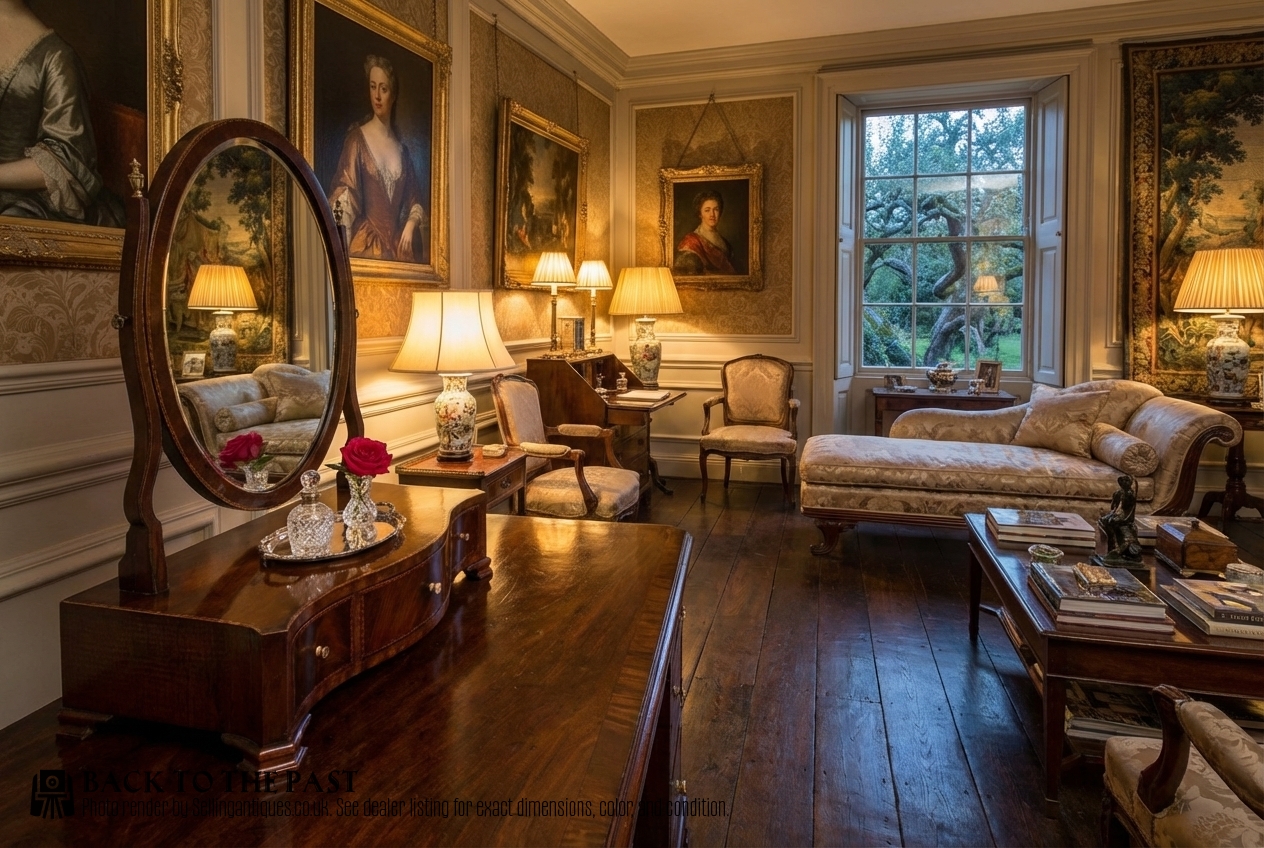
A Top Quality George III Sheraton Oval Serpentine Dressing Table Mirror C.1775, 18th Century
Priced at £1,725 from A Brookes
A necessity that grew alongside the rise of dedicated bedrooms in the late seventeenth century.
Trace the evolution from simple flat bases to elaborate miniature chests fitted with small drawers.
Antique dressing mirrors became common household items once glass making techniques improved significantly during the Georgian period, lowering the cost of plates.
Wealthy households often kept several of these across different bed chambers.
Provided daily function for the expanding middle classes who wanted practical bedroom furniture.
Thomas Chippendale supplied several japanned examples to great houses during the mid-eighteenth century.
Gillows of Lancaster produced high-quality variations throughout the Regency period. They often stamped the top edges of their drawers.
Most lack any signature, having been made anonymously by provincial craftsmen.
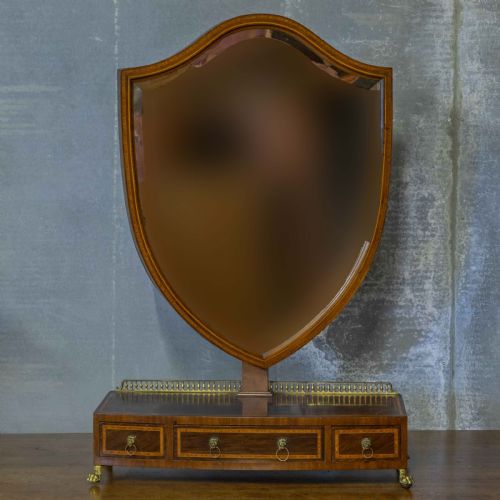
Antique Early 19th Century Georgian Mahogany Dressing Table Mirror – Fine Quality, 19th Century
Priced at £556 from Prior and Willis
The 2026 retail price guide for Antique Dressing Mirrors is drawn from a proprietary archive of over 1.1 million retail prices indexed by Sellingantiques since 2003. This guide relies exclusively on their own internal data; no external sources or auction records are used.
Analysing nearly 25 years of UK antique market history alongside current retail values, the data indicates that typical UK retail prices for Antique Dressing Mirrors range between £300 and £1,600. Entry-level prices generally fall under £300 and premium examples upwards of £1,600.
Most early bases contain tiny drawers intended for personal accessories.
Notice the brass finials and adjustment screws clamping the frame. These allow the glass to tilt and hold a specific angle.
Shield shapes typify the late eighteenth century, breaking away from the heavy rectangular forms of earlier decades.

Antique Victorian Quality Mahogany Swing Dressing Mirror, 1860
Priced at £645 from London City Antiques
Hand-cut dovetails secure the corners of the base drawers on Georgian pieces, demonstrating tight workshop tolerances.
Turn the mirror over to see the backboard. It usually consists of rough-sawn pine held in place by small brads.
Advanced veneering techniques allowed cabinetmakers to apply highly figured burr walnut across curved drawer fronts.
"Some Georgian bases lock with a single key that secures all the small drawers at once."
"Travelling versions exist with folding stands, designed to pack flat into a campaign trunk."
"The angle of the tilt allowed sitters to check their hairstyles without needing a full-length glass."
Based on almost 25 years of Sellingantiques UK antique market data, Antique Dressing Mirrors appeared 4240 times (out of 1,100,000 antiques) which gives it a rarity score of 43/100.
This score measures scarcity within the Sellingantiques archive only and is not a survey of the entire antiques market, so these statistics may not be indicative of the general availability of Antique Dressing Mirrors elsewhere.
Use a soft cotton cloth lightly dampened with water. Avoid modern chemical glass cleaners as they can seep behind the frame and damage the fragile silvering.
Dry the surface immediately with a second cloth. Leave the dark spots alone, as they aren't dirt and form part of the history.
The friction between the uprights and the frame has worn down over the years. This happens when the wooden pivots or brass tension screws lose their grip through decades of daily use.
You can often resolve this by tightening the brass knobs on the side. If it has wooden pivots, placing a small washer of thin leather between the frame and the upright provides enough grip to hold the angle.
Cabinetmakers designed these small compartments to store daily grooming accessories. They kept the dressing table tidy.
Some bases feature lockable central compartments. These provided a safe place to secure small personal items overnight.
Most antique dressing mirrors were made as separate, portable items. People moved them between different tables or chests depending on the light in the room.
During the late Victorian period, manufacturers began building chests with the glass permanently attached to the back. If you see a Georgian glass fixed to a chest, they're likely married together later.
Please note: This Antique Dressing Mirrors guide and its associated pricing data are provided for general informational purposes only. It does not constitute formal financial, investment, or appraisal advice and should not be relied upon as the sole basis for any commercial activity, purchasing, or sales decisions. Sellingantiques.co.uk accepts no liability for any actions taken in reliance on this information. Always consult with a qualified professional or independent appraiser.
