


A 2026 Guide by Sellingantiques
English makers developed these in the late seventeenth century, creating a form that spread quickly.
They started as practical seating for bedchambers, often positioned close to the hearth.
Look at eighteenth-century household inventories. You will frequently find early antique wing chairs listed as close-stools with concealed pans.
French provincial craftsmen adopted the basic shape later, calling them bergères à oreilles.
Some early designs incorporated ratchets. These allowed the sitter to drop the high back down into a sleeping position.
George Hepplewhite included several variations in his late eighteenth-century pattern books, standardising the swept wing profile.
Thomas Chippendale supplied these to wealthy clients, though his designs focus more on exposed wooden frames than fully upholstered shapes.
The 2026 retail price guide for Antique Wing Chairs is drawn from a proprietary archive of over 1.1 million retail prices indexed by Sellingantiques since 2003. This guide relies exclusively on their own internal data; no external sources or auction records are used.
Analysing nearly 25 years of UK antique market history alongside current retail values, the data indicates that typical UK retail prices for Antique Wing Chairs range between £900 and £3,500. Entry-level prices generally fall under £900 and premium examples upwards of £3,500.
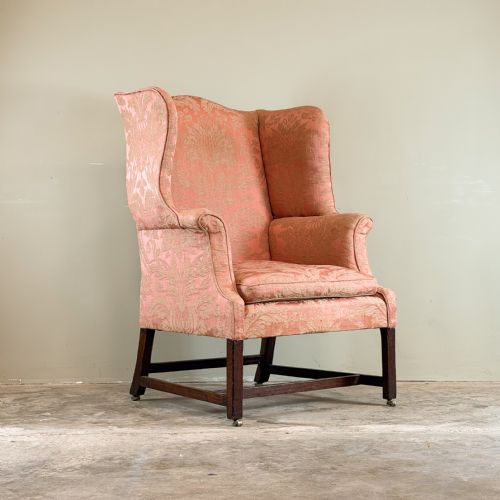
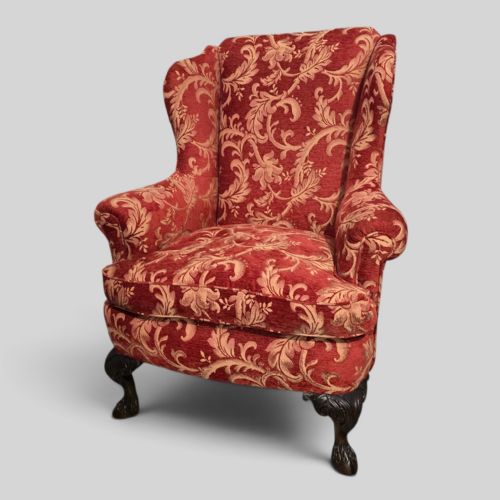
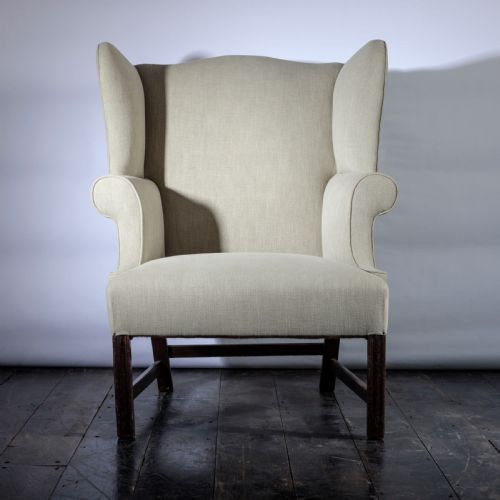
Projecting side wings are the defining element, curving smoothly into the armrests or stepping back sharply.
Seat cushions usually sit loose above the fixed upholstery of the frame.
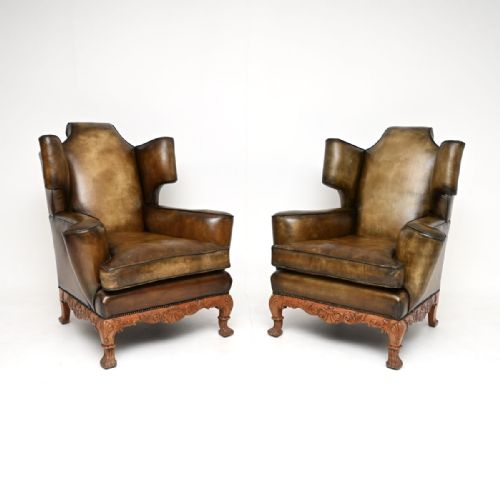
The back profile can be flat across the top, gently arched, or shaped with pronounced crests and shoulders.
Craftsmen built the carcase with heavy mortise and tenon joints, relying on wooden pegs to secure the high back frame.
Upholsterers historically tacked webs of canvas tightly across the seat, stuffing the gaps with curled horsehair or dried grass.
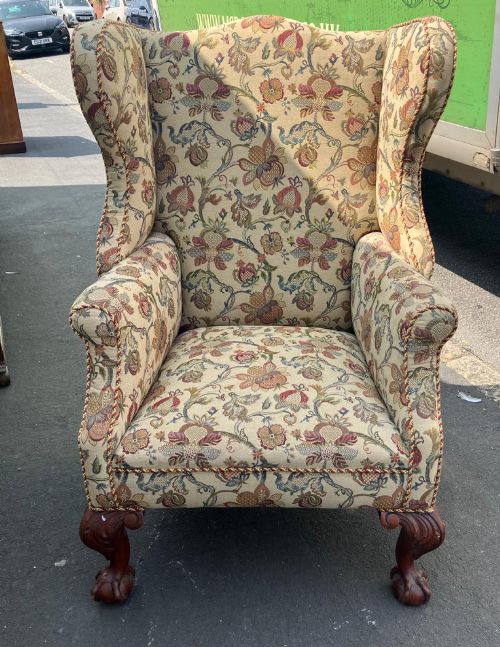
Notice the shape of the exposed front legs. Turners shaped early walnut examples on a lathe, while later mahogany cabriole legs required carving by hand.
"Many early frames still hold traces of their original covering fabrics trapped under layers of later tacks."
"Some regional cabinetmakers designed the side wings to detach easily for summer months."
"Upholsterers often left the wooden back framework entirely unfinished, leaving distinct tool marks visible centuries later."
Based on almost 25 years of Sellingantiques UK antique market data, Antique Wing Chairs appeared 3325 times (out of 1,100,000 antiques) which gives it a rarity score of 51/100.
This score measures scarcity within the Sellingantiques archive only and is not a survey of the entire antiques market, so these statistics may not be indicative of the general availability of Antique Wing Chairs elsewhere.
Most eighteenth-century frames were built to hold a loose squab cushion on top of a firm base deck.
Occasionally you find early examples designed for a fixed tight seat, but a loose cushion is standard for the period.
Oak is a dense timber. A well-built provincial chair takes two people to lift comfortably.
Beech frames are lighter but still heavy.
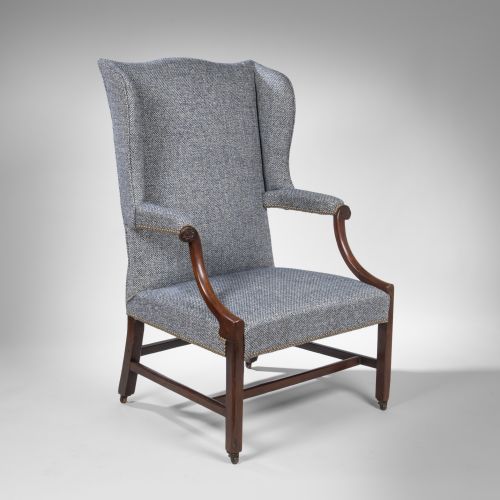
A flat crest rail often points to a slightly later date, becoming popular as styles shifted toward the end of the eighteenth century. You see this straight-line geometry in Hepplewhite and Sheraton designs.
Earlier chairs from the Queen Anne or Chippendale periods tend to feature swept, serpentine, or camel-back profiles. Craftsmen during those decades favoured sweeping curves across the crest and wings.
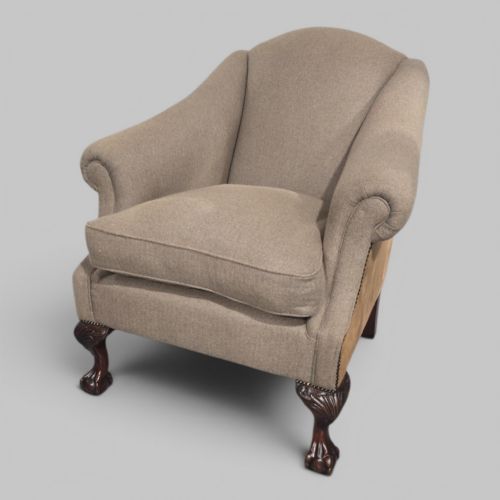
Foot styles connect more closely to the decade of production than the specific timber. Early eighteenth-century walnut chairs frequently stand on pad or club feet.
By the middle of the century, mahogany became the dominant choice for exposed timber. Craftsmen carved this denser wood into ball-and-claw feet with sharper detailing.
Tapered square legs usually follow later, showing up in mahogany or painted beech frames.
Please note: This Antique Wing Chairs guide and its associated pricing data are provided for general informational purposes only. It does not constitute formal financial, investment, or appraisal advice and should not be relied upon as the sole basis for any commercial activity, purchasing, or sales decisions. Sellingantiques.co.uk accepts no liability for any actions taken in reliance on this information. Always consult with a qualified professional or independent appraiser.
