




A 2026 Guide by Sellingantiques
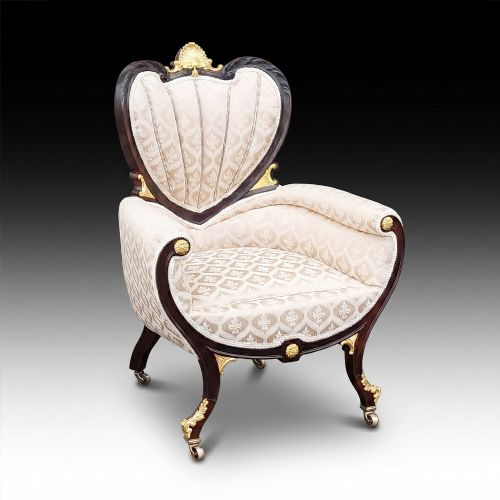
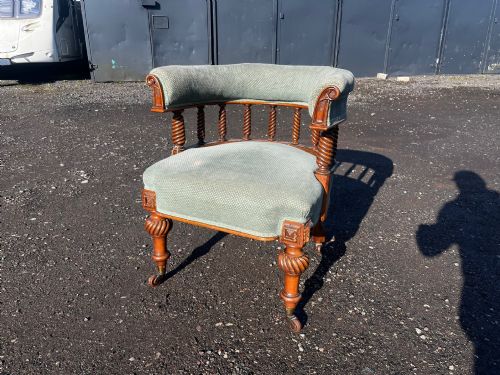
Victorian Tub Armchair, Victorian
Priced at £345 from Brookside Antiques
French cabinetmakers started developing the rounded back profile in the mid eighteenth century. You see them often in Louis XV seating.
English versions appeared soon after to furnish grand Georgian houses.
By the late nineteenth century, antique tub chairs were a staple in gentlemen's clubs. The low profile suited relaxed smoking and drinking.
Turn of the century hotel lounges adopted them widely to save space.
Howard & Sons produced some well-known tub models during the late nineteenth century. Their stamped brass castors are a reliable maker mark.
Gillows of Lancaster supplied earlier Georgian variations. They built them for aristocratic country houses across Northern England.
High Wycombe factories turned out thousands of these frames for London upholsterers.
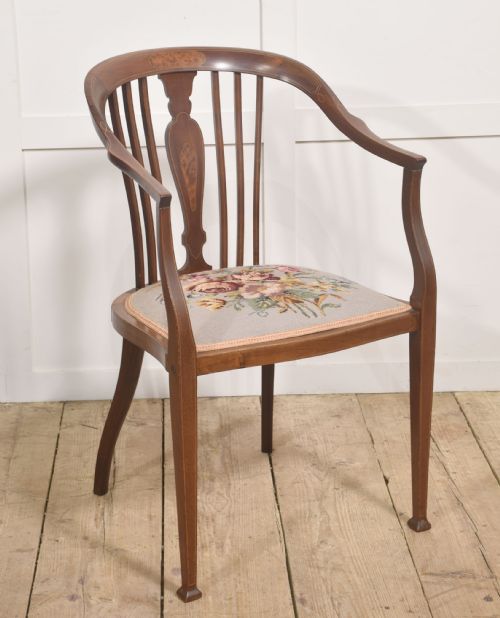
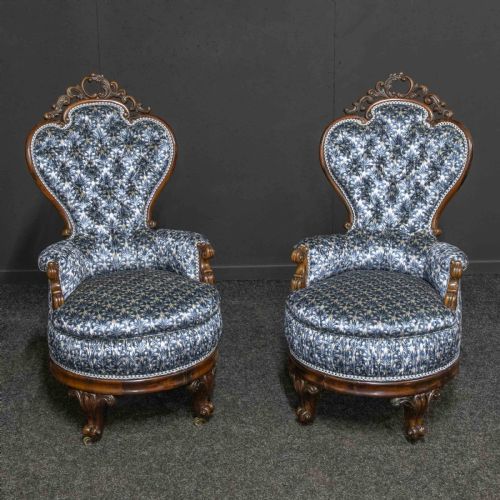
Inlaid Mahogany Tub Chair, Victorian
Priced at £295 from Brookside Antiques
The 2026 retail price guide for Antique Tub Chairs is drawn from a proprietary archive of over 1.1 million retail prices indexed by Sellingantiques since 2003. This guide relies exclusively on their own internal data; no external sources or auction records are used.
Analysing nearly 25 years of UK antique market history alongside current retail values, the data indicates that typical UK retail prices for Antique Tub Chairs range between £400 and £2,200. Entry-level prices generally fall under £400 and premium examples upwards of £2,200.
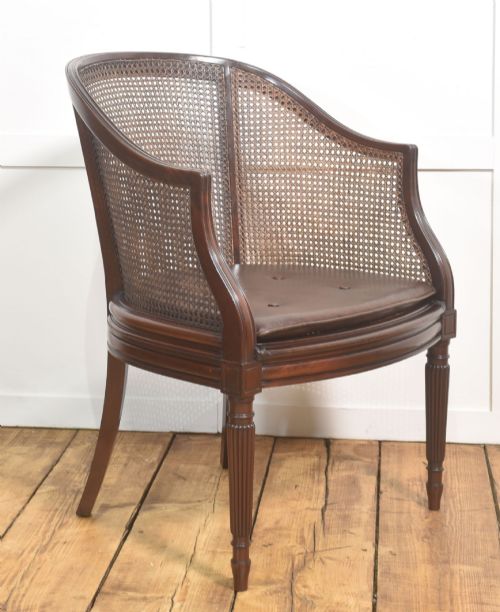
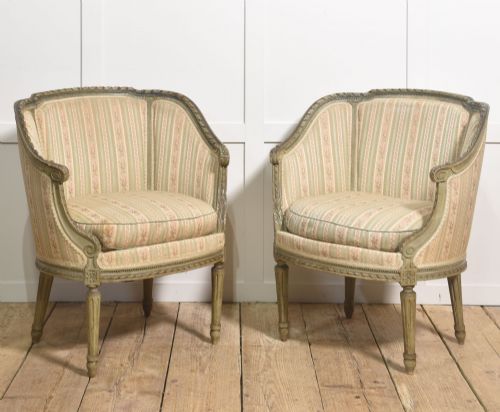
The backrest and arms form one continuous curving line. This unbroken sweep is the defining feature of antique tub chairs.
Low seat heights dictate the proportions. They were built for leaning back into.
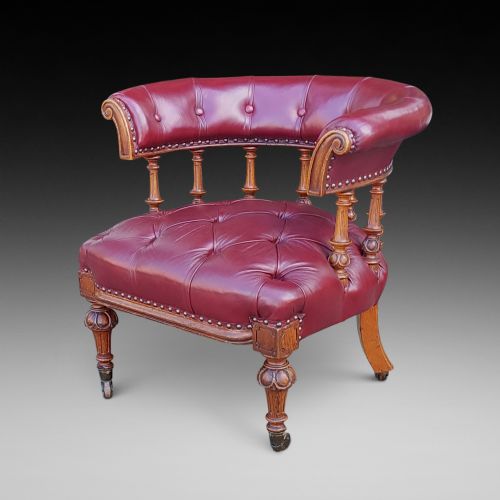
Notice the deep buttoning on many Victorian models. It anchors the stuffing on the curved inner back while adding visual depth.
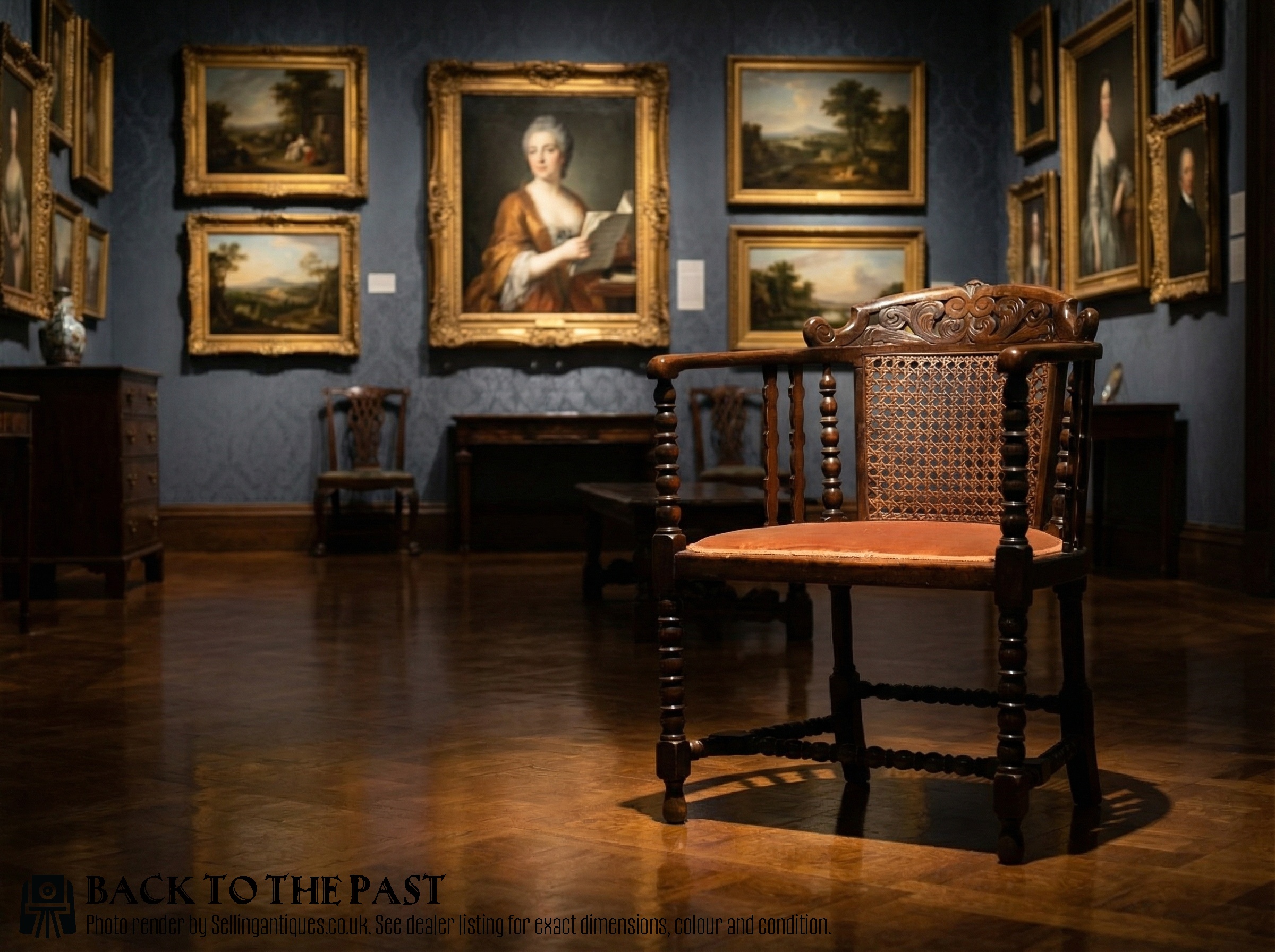
Antique Tub Chair, 19th Century
Priced at £185 from Deva Antiques
Bending the timber for the curved back required skilled steaming. Makers soaked ash or beech before clamping it to iron moulds to dry.
Jointing a circular wooden frame demands precise geometry from the maker.
Traditional upholstery takes heavy tension. Tradesmen stitched hessian to the seat frame before hand-tying the springs in a complex star pattern.
"Their low centre of gravity makes them stable. They sit firmly on uneven period floorboards without rocking."
"Compact footprints make these chairs suit modern flats rather well."
"Consider the discrete storage space hidden in some Edwardian examples. The seat occasionally lifts out to reveal a small compartment for needlework or slippers."
Based on almost 25 years of Sellingantiques UK antique market data, Antique Tub Chairs appeared 1785 times (out of 1,100,000 antiques) which gives it a rarity score of 70/100.
This score measures scarcity within the Sellingantiques archive only and is not a survey of the entire antiques market, so these statistics may not be indicative of the general availability of Antique Tub Chairs elsewhere.
Wipe them down with a slightly damp cloth first to lift off surface dust. Dry the wood straight away.
Apply beeswax polish sparingly with a soft duster. Leave it for twenty minutes before buffing it to a low shine.
The internal ties holding the coil springs in place often snap as the twine ages. This lets the springs tip over, creating hard lumps under the seat.
An upholsterer can open the base and retie the springs. They will lash them back into alignment without needing to replace the top fabric.
Yes, the frames take new fabrics well.
Avoid stiff synthetic leathers if the chair has deep buttoning. Heavy materials struggle to fold into the deep tufts.
This was a common setup for fireside seating. The front castors allowed a servant to lift the back slightly and wheel the chair closer to the hearth.
Keeping the back feet flat meant the chair would not roll backwards when the sitter shifted their weight.
Please note: This Antique Tub Chairs guide and its associated pricing data are provided for general informational purposes only. It does not constitute formal financial, investment, or appraisal advice and should not be relied upon as the sole basis for any commercial activity, purchasing, or sales decisions. Sellingantiques.co.uk accepts no liability for any actions taken in reliance on this information. Always consult with a qualified professional or independent appraiser.
