




A 2026 Guide by Sellingantiques
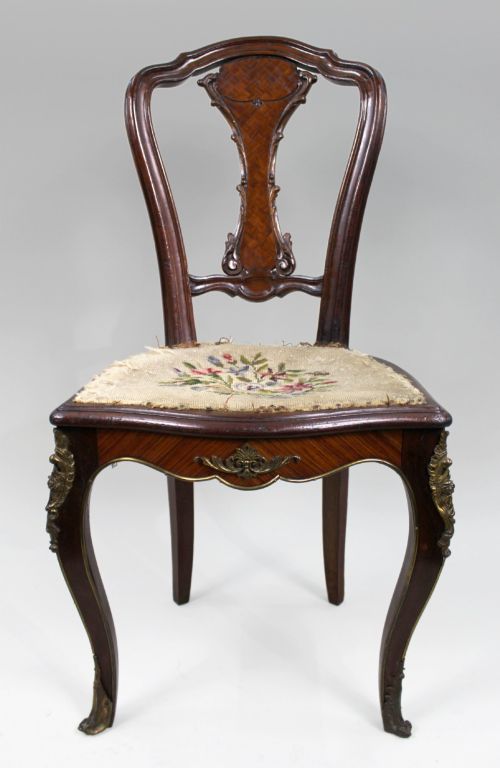
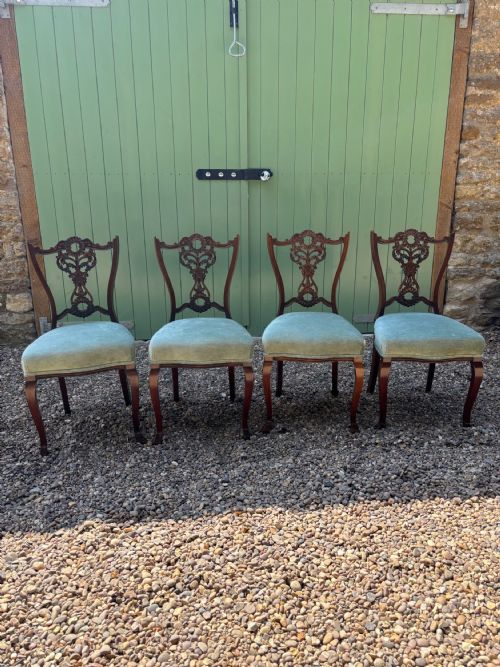
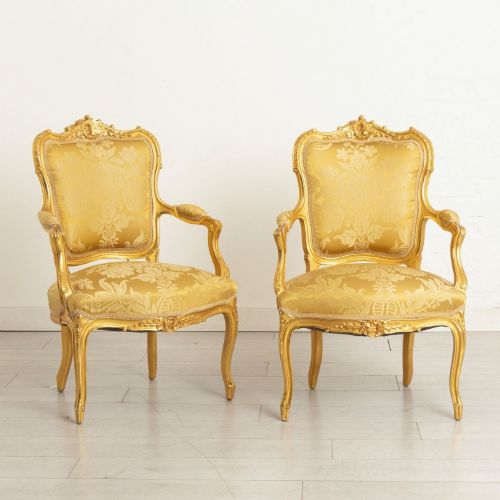
A Pair of Edwardian Antique Hand Stitched Tapestry Upholstered and Mahogany Stained Hall Side Occasional Salon Desk Office Bedroom Chairs. C.1900., Edwardian
Priced at £300 from CJ Antiques
Early examples were often reserved for guests. The master of the house took the armchair. Side chairs slowly became standard dining furniture by the eighteenth century.
Look at seating from the Georgian period. Sets of antique side chairs grew larger to match the grander dining tables.
Regional variations thrived before mass transit. Country makers adapted London designs using whatever local wood was stacked in the yard.
Victorian households needed extra seating for entertaining. Sets were ordered by the dozen for large dinner parties.
Thomas Chippendale supplied high-end sets from his St Martin's Lane workshop between 1754 and 1779. His documented chairs feature complex pierced splats.
Gillows of Lancaster stamped their seat furniture. They worked from 1730 into the nineteenth century, shipping well-made mahogany side chairs to London.
Provincial pieces rarely carry a maker's mark. You mostly have to judge them on the local style rather than a specific name.
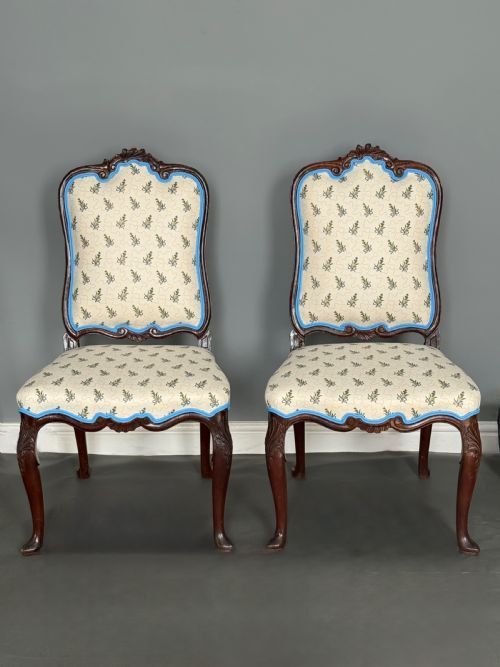
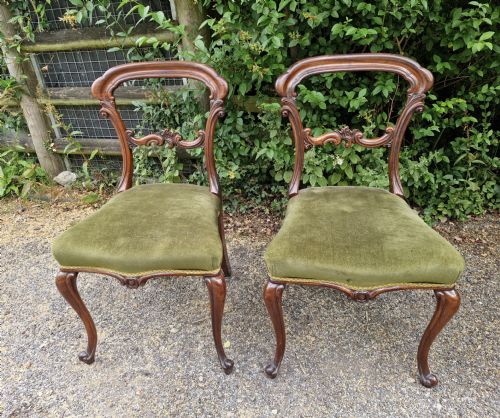
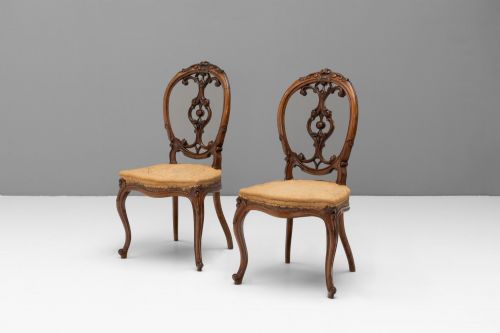
Pair of Irish George II Red Walnut Side Chairs., Georgian
Priced at £1,195 from Stuart Nicolson Antiques
The 2026 retail price guide for Antique Side Chairs is drawn from a proprietary archive of over 1.1 million retail prices indexed by Sellingantiques since 2003. This guide relies exclusively on their own internal data; no external sources or auction records are used.
Analysing nearly 25 years of UK antique market history alongside current retail values, the data indicates that typical UK retail prices for Antique Side Chairs range between £300 and £2,600. Entry-level prices generally fall under £300 and premium examples upwards of £2,600.
The back splat. It is the main identifier. A solid vase shape suggests earlier periods, while pierced ribbon backs point to later Georgian tastes.
Seat frames are built either as solid boards or open squares holding drop-in pads. Many antique side chairs mix solid frames with padded cushions.
Turn the chair upside down. Corner blocks glued inside the seat frame give the joints the rigidity they need.

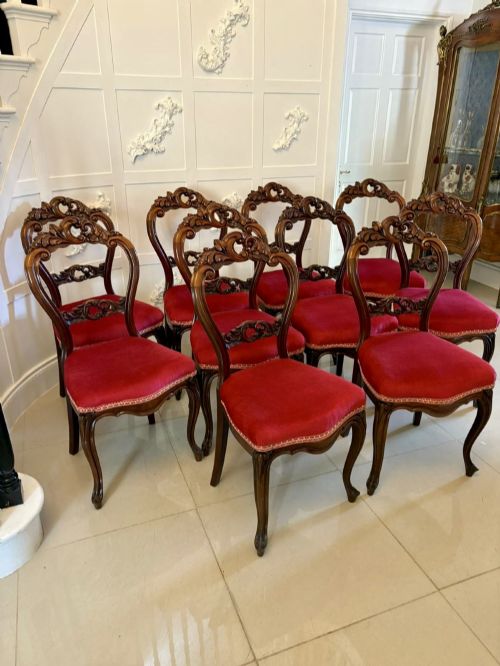
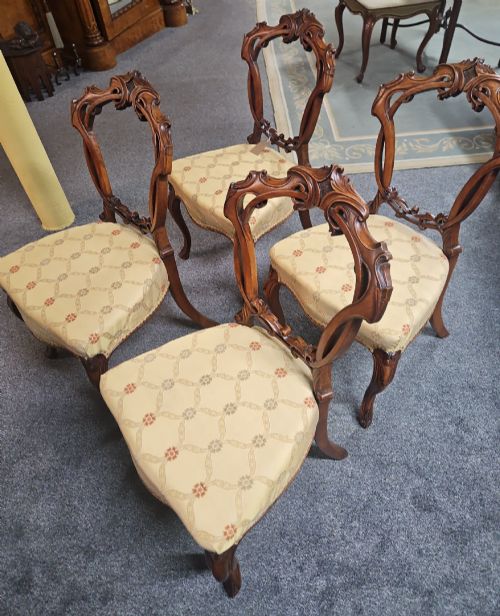
Pair of Antique Victorian Quality Carved Walnut Side Chairs
, 1860
Priced at £885 from London City Antiques
Mortise and tenon joints hold the main frame together. A square peg fits a square hole, glued tight and sometimes pinned with a wooden dowel.
Drop-in seats are built on separate pine frames. The upholsterer tacks the fabric to this frame, which simply rests inside the mahogany seat rails.
Hand-carving leaves tool marks on the hidden surfaces. Run your fingers behind the crest rail of an antique side chair to feel the gouge lines.
"Many sets were designed to match the room's panelling. The carvings echoed the plasterwork on the ceiling to create a unified interior scheme."
"Horsehair stuffing naturally repels pests. This is why original upholstered pads from the eighteenth century often survive intact beneath later fabric layers."
"The drop-in seat design allowed owners to change fabrics with the seasons. Summer cottons could swap out for winter wools without sending the frame away."
Based on almost 25 years of Sellingantiques UK antique market data, Antique Side Chairs appeared 5718 times (out of 1,100,000 antiques) which gives it a rarity score of 32/100.
This score measures scarcity within the Sellingantiques archive only and is not a survey of the entire antiques market, so these statistics may not be indicative of the general availability of Antique Side Chairs elsewhere.
Most date from a time when dining tables were slightly lower. The standard seat height usually hovers around eighteen inches from the floor.
Modern dining tables sit higher. If you pair older seats with a new table, you might find the proportions feel a little low.
Always repair the broken one. A set of six is a standard dining configuration, and keeping them together makes sense for daily use.
Any competent restorer can glue and clamp a split splat. It is a standard bench job. Keep the broken pieces safe in a bag until you get it to a workshop.
Start with a soft dust cloth. That is usually enough for weekly maintenance.
If the timber looks dry, apply a clear beeswax polish once or twice a year. Put a small amount on a rag, rub it in, and buff it off twenty minutes later.
Never use silicone sprays. They leave a cloudy film.
A slight creak is normal for wood responding to weight and temperature. A physical wobble is a different matter entirely.
If the joints move when you shake the frame, the animal glue has failed. Stop using the chair and take it to a restorer to be knocked apart and re-glued.
Ignoring a loose joint will snap the tenons.
Please note: This Antique Side Chairs guide and its associated pricing data are provided for general informational purposes only. It does not constitute formal financial, investment, or appraisal advice and should not be relied upon as the sole basis for any commercial activity, purchasing, or sales decisions. Sellingantiques.co.uk accepts no liability for any actions taken in reliance on this information. Always consult with a qualified professional or independent appraiser.
