
Antique High Back Chairs
A tall-backed seat, made either as a stick-built country Windsor, an upholstered wing chair for the fireside, or a carved back-stool for hall and dining use.
Antique High Back Chairs
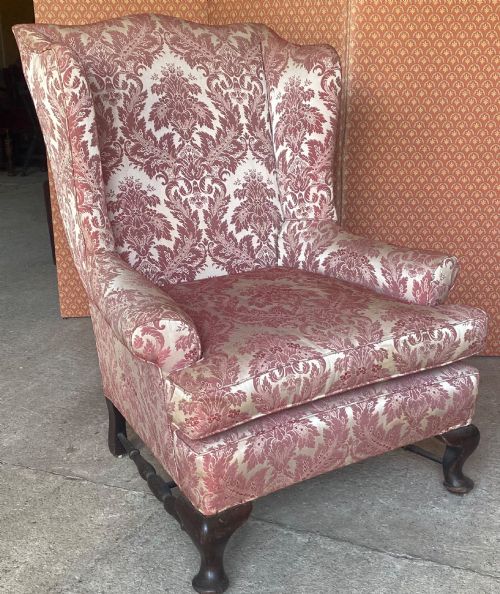
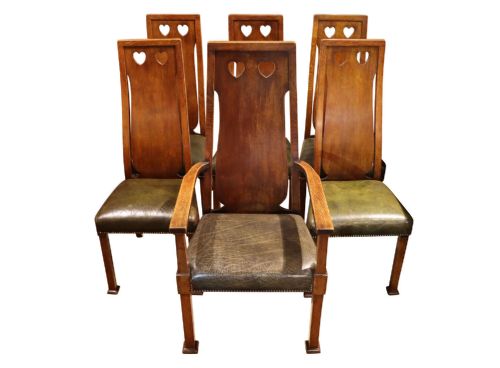
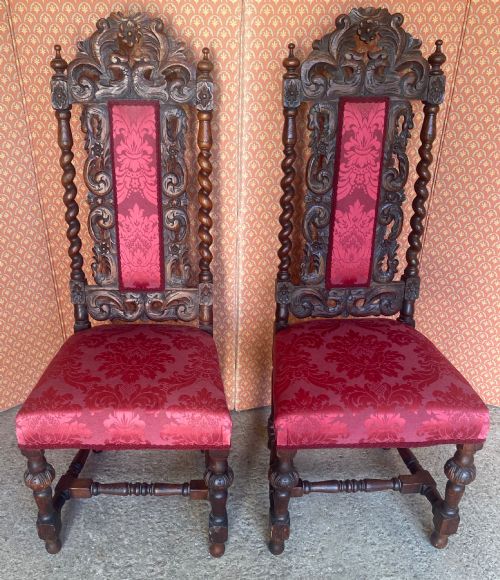
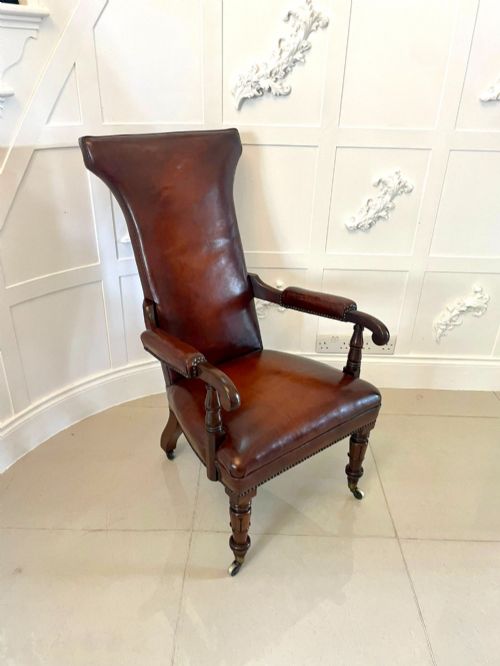
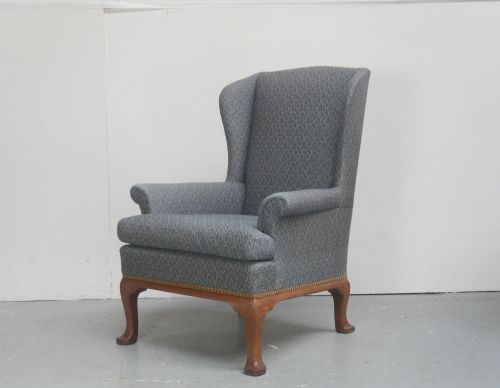
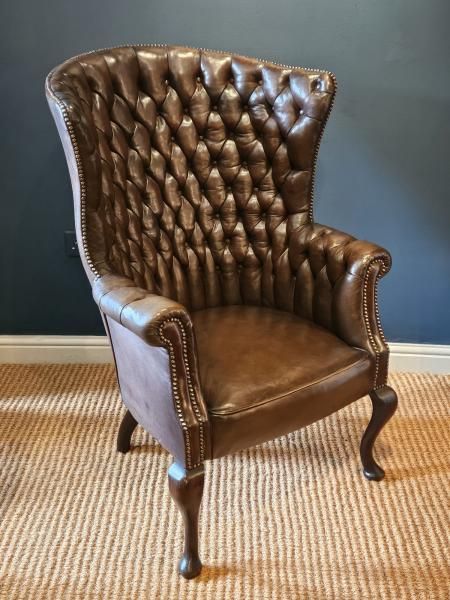
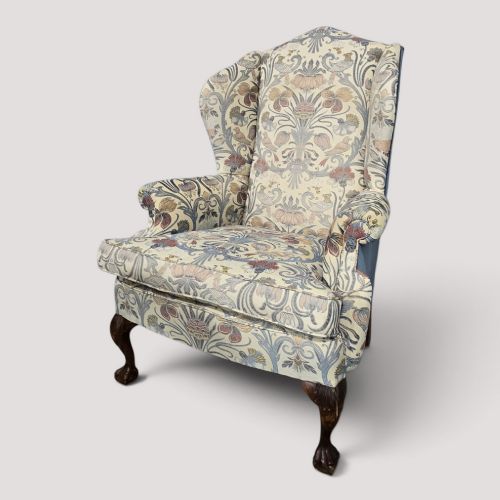
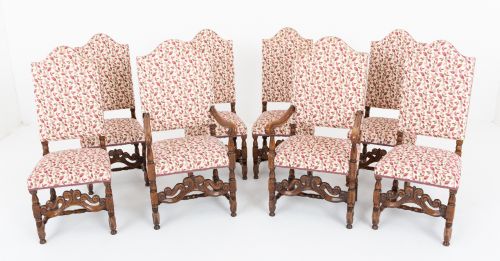
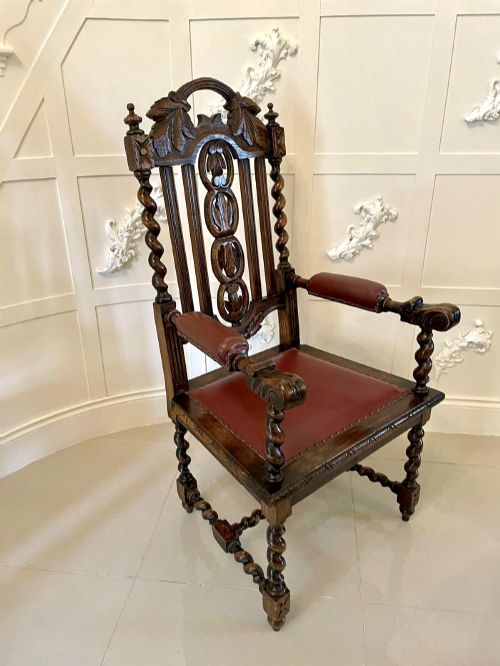
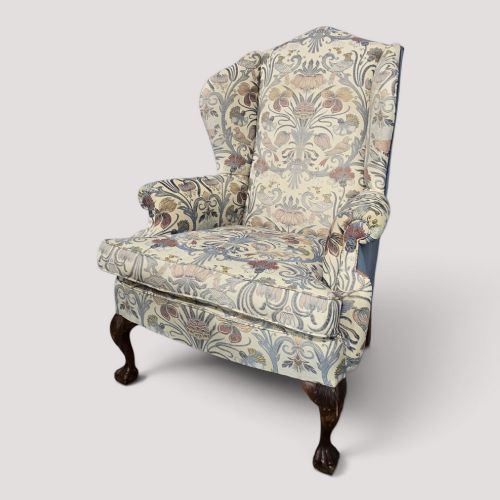
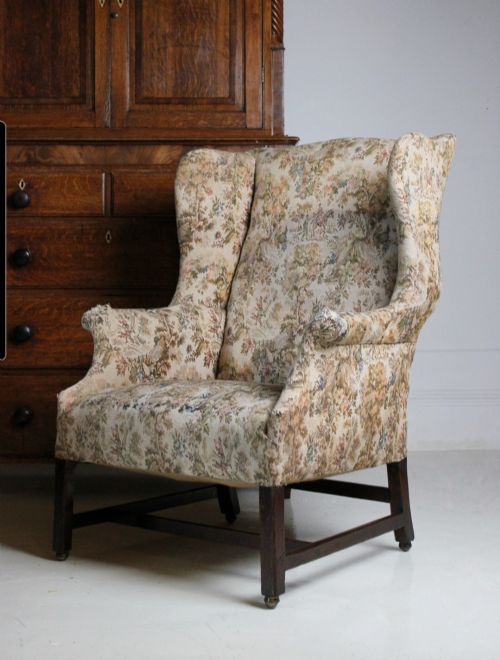
The heading covers three physically different chairs. Stick-built Windsors, where legs and back sticks socket into a solid shaped seat. Upholstered wing and library armchairs in walnut and mahogany. And carved or turned back-stools and dining chairs in oak and walnut, often arriving in pairs and sets rather than as singles.
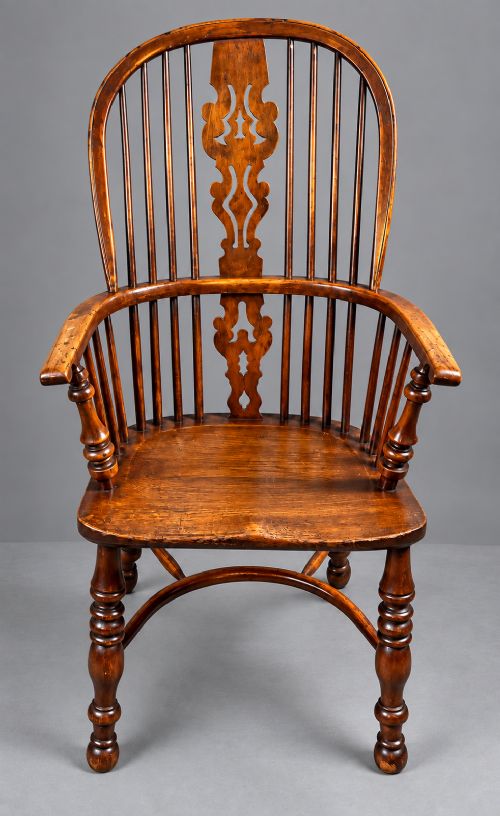
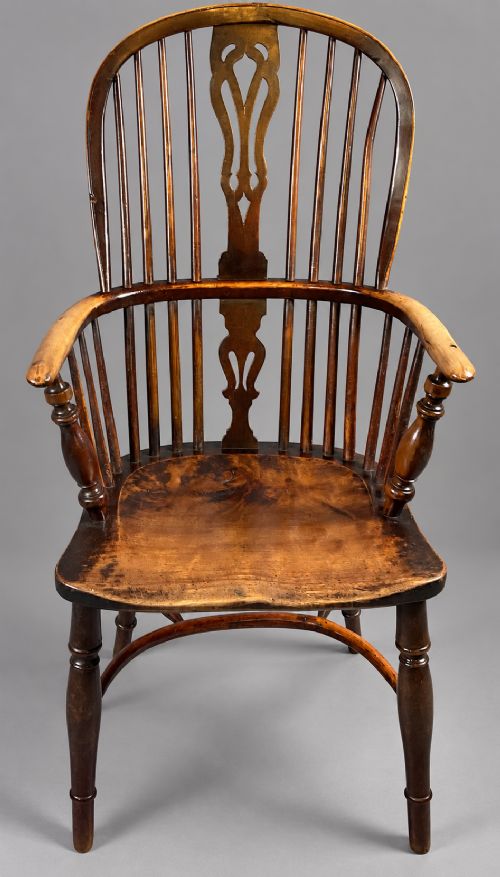
The Windsor is the largest single block, and a 19th-century high back Windsor armchair in ash and elm is the chair you'll meet most often. Yew is the upgrade timber, named in a good many titles on its own or as yew wood. Comb backs, hoop backs, crinoline stretchers and broad arms all turn up in the descriptions.
Timber gets stated more often than anything else, with walnut, oak, elm, yew, mahogany and ash leading the counts. Dates are usually given as an era rather than a year: 19th Century and Victorian dominate, so a century label is a broad claim, not a precise one. The 17th-century entries sit with the Carolean and Jacobean oak; the 1900s to 1920s entries sit with dining sets and wing chairs.
Tall backs became an English form in the later 17th century, when carved and caned back-stools signalled status in a hall or parlour and the upholstered wing chair followed as a draught-excluding fireside seat. Country workshops then gave the same tall back to kitchen and farmhouse use in stick-built form. A smaller seam runs through hall, throne, porters and masonic chairs, and the label occasionally stretches to box settles, a hall bench and a settee.
Where Value Sits
Timber does the heaviest lifting. Yew and burr yew sit at the top of the sampled range, with a set of eight burr yew broad arm Windsors as the highest-priced lot of all, and single yew Windsors landing several times above their ash-and-elm equivalents. Beech and stained softwoods sit at the other end, along with children's versions.
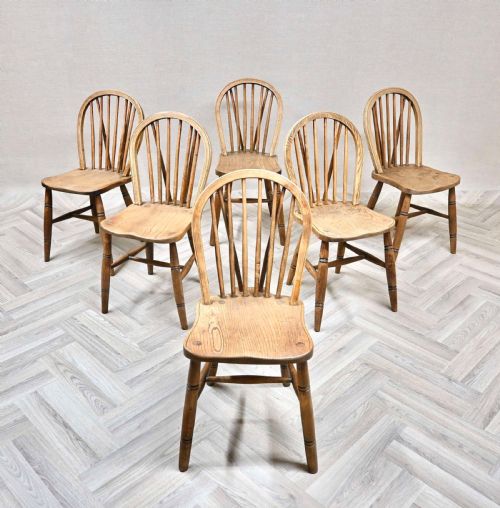
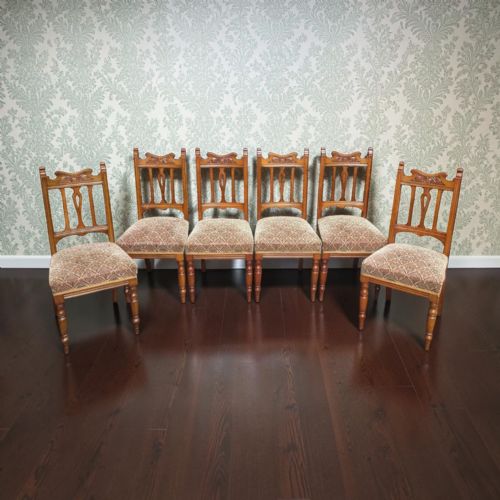
Number in the lot moves a listing as much as anything about the chair itself. Sets of six, eight, ten and twelve occupy the upper half of the range, and pairs are common enough to form their own habit in the titles. Singles cluster low, however good the chair. Sets here run long: twelve French walnut, twelve Dutch marquetry, and separate tens in oak, walnut and Windsor form.
After that it's decoration and identity. Carving lifts a chair, and giltwood, parcel-gilt and marquetry examples sit at the top. A workshop stamp or an attribution does the same, and so does a named region: Thames Valley, West Country, Lincolnshire, Nottinghamshire, Lancashire, Yorkshire, Welsh, Orkney and the Scottish Irvine Valley all appear as stated origins.
Antique High Back Chairs Retail Price Guide 2026
Typical UK retail prices for high back chairs, calculated from the Sellingantiques database of over a million retail prices indexed since 2003. This retail price guide relies exclusively on Sellingantiques data; no external sources or auction records are used, so the figures do not describe the wider market.
One-offs from the archive: a Windsor with snake-head carvings, a giant Philippine throne chair, a masonic porter's chair and a pair of child's correction chairs.
The Antique High Back Chairs Glossary
- Windsor
- A chair whose legs and back sticks socket into a solid shaped seat rather than into a jointed frame. The construction, not a shape or a place.
- Hoop back and comb back
- The two Windsor back shapes. A hoop is a steam-bent bow; a comb is a straight top rail laid across the tops of the sticks.
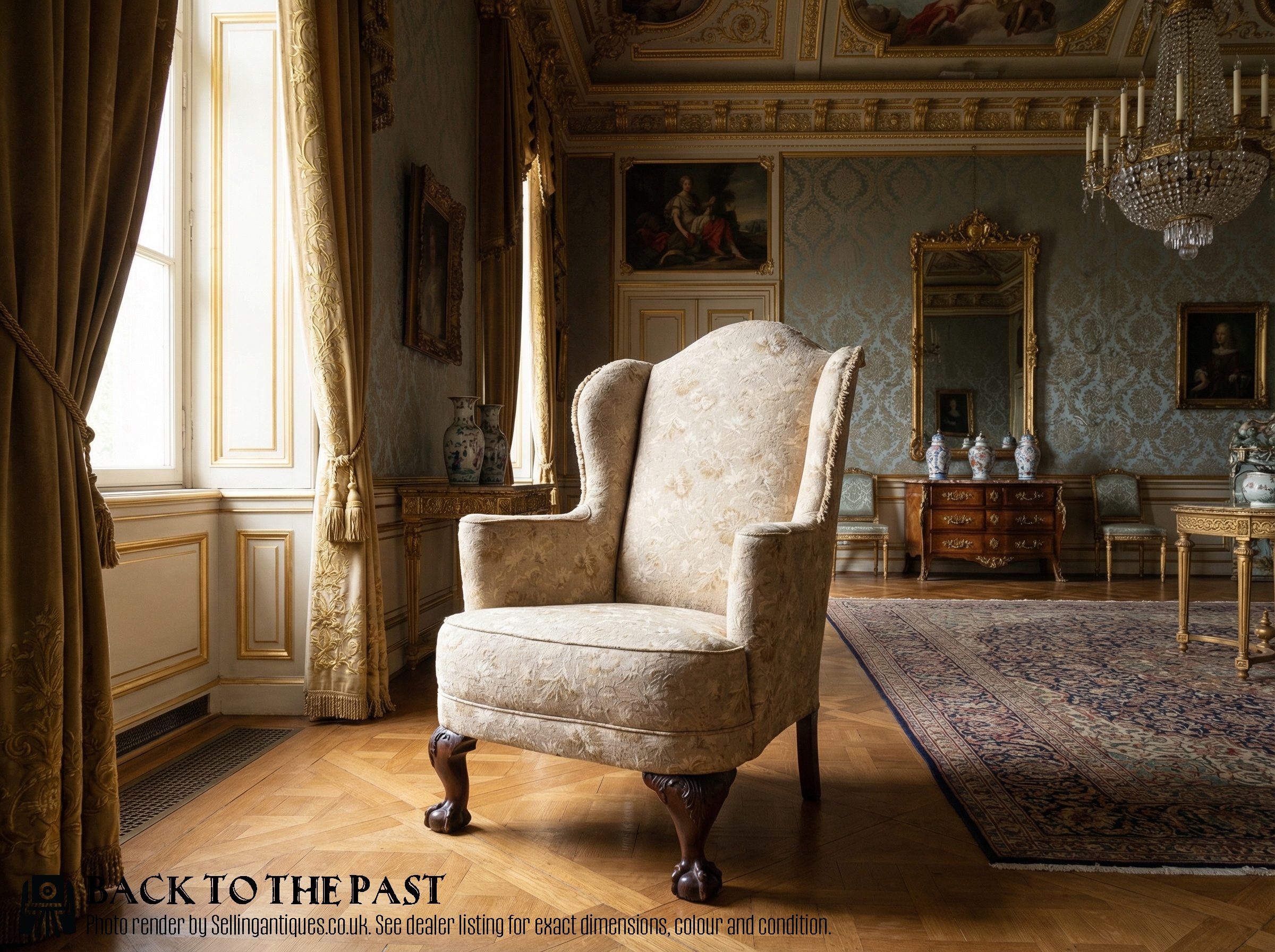
- Wing or wingback
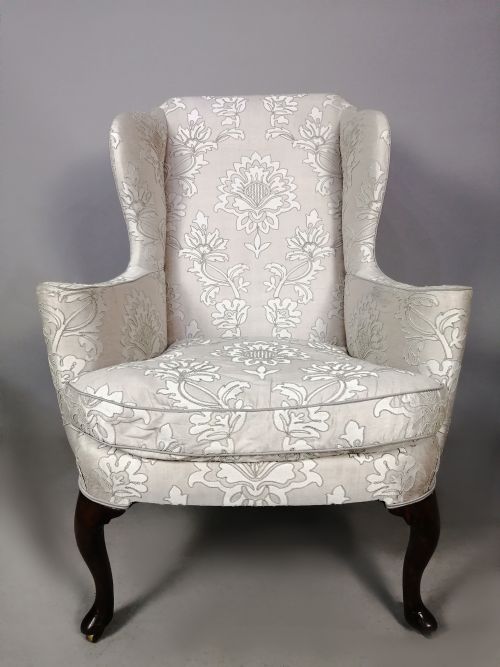
- An upholstered chair with panels flanking the head to block draughts. Turns up alongside library and fireside armchairs in the same group.
- Back stool
- An armless high-backed chair, the 17th-century form that sits behind the modern side chair. Common in the carved oak and walnut listings.
- Splat
- The flat central board in a chair back, often pierced or carved.
- Carver
- The armchair in a set of dining chairs, as against the single chairs it sits with.
Antique High Back Chairs: Frequently Asked Questions
What is a crinoline stretcher?
A curved hoop stretcher joining the front legs of a Windsor, named for the skirts it was shaped around.
It's one of several Windsor features named in titles on Sellingantiques, alongside comb backs, hoop backs and broad arms.
Which timbers turn up most often?
Timber is stated more often than any other attribute in these listings. Walnut and oak lead the counts, followed by elm, yew, mahogany and ash.
Ash and elm together are the standard Windsor combination. Yew is the timber that carries the top of the range, whether as yew or burr yew.
Are these chairs sold singly or in sets?
Both. Armchair leads the titles, but chairs and pair are close behind, so multiples are a regular part of the category.
Sets run to six, eight, ten and twelve, and about a fifth of listings are high back dining chairs, mostly Edwardian to 1920s.
How old are most high back chairs listed?
The dated field runs from 1700 to 1940. Nineteenth Century and Victorian are the two commonest tags, with 18th Century, 17th Century and Edwardian behind them.
Only a minority of listings carry a clean year, so a 19th Century label reads as a century-wide claim rather than a date.
What does broad arm mean on a Windsor?
A Windsor with unusually wide flat arms. Several titles single it out as a variant worth naming.
The highest-priced lot in the sample was a set of eight burr yew broad arm high back Windsor armchairs.
Do unusual or foreign examples appear?
Non-British chairs are the exception. Dutch marquetry, Portuguese, Italian, Spanish, Breton, Anglo-Indian, Ceylonese and Burmese examples each appear once or twice across hundreds of titles.
One-offs include a Windsor with snake-head carvings, a Philippine throne chair, a wicker porter's chair and an Orkney chair.
Around 87 high back chairs are listed a year on Sellingantiques, spread across 222 different dealers.