

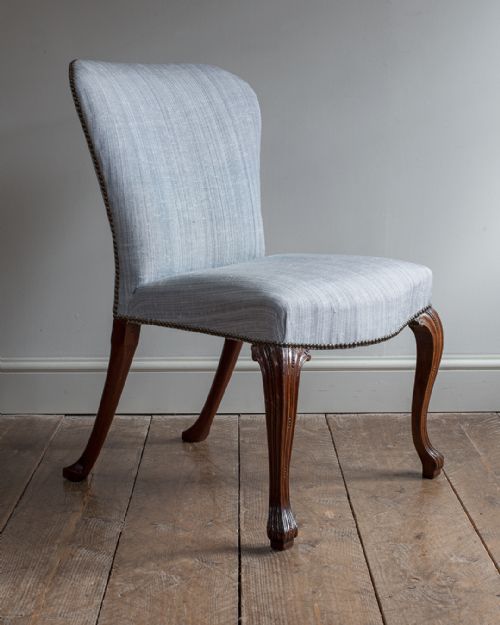
Antique Chippendale Chairs
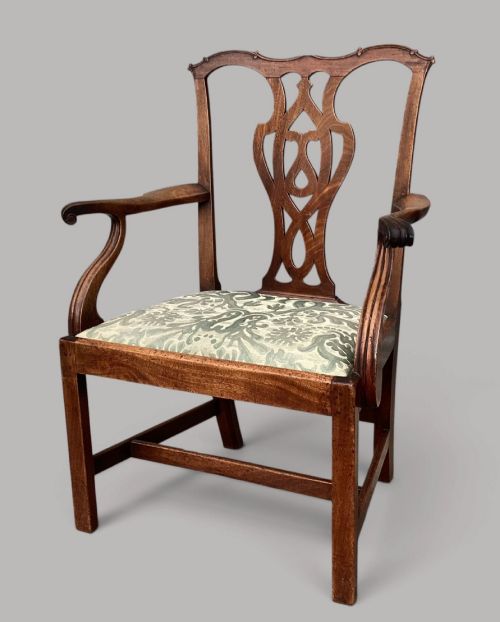
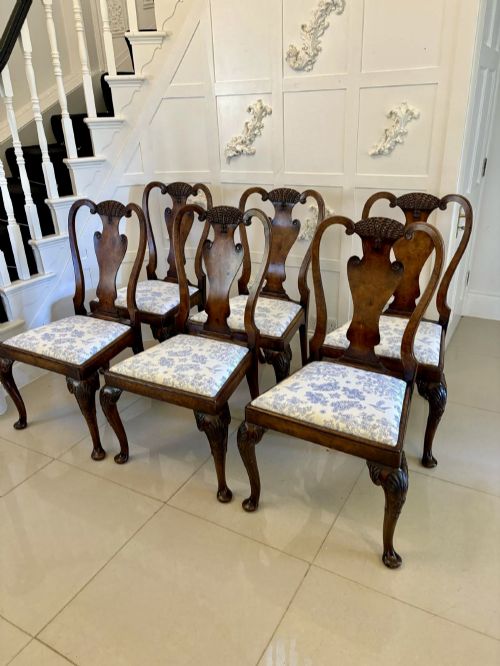
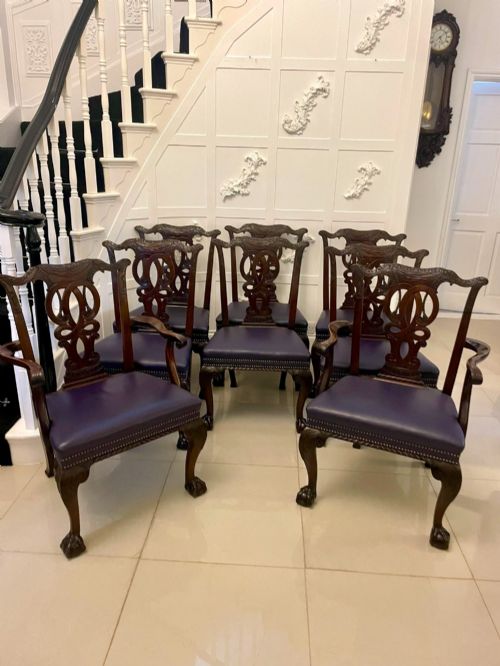
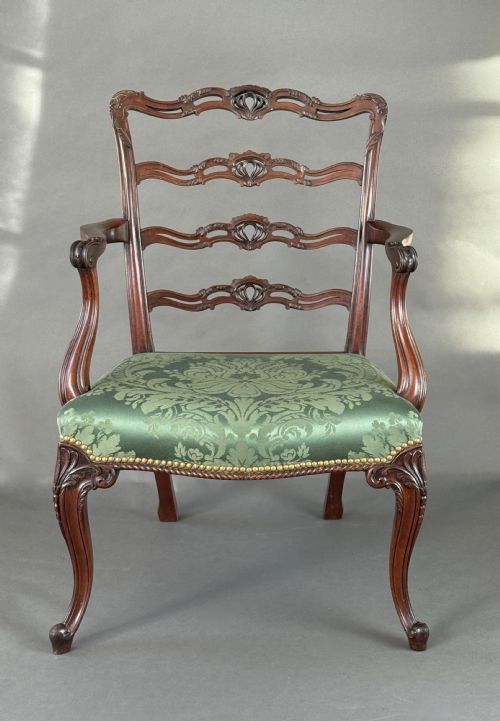
English chairs carved in an 18th-century London pattern-book idiom, pierced or ladder splat backs on square or cabriole legs, made for dining rooms, libraries and studies over nearly two centuries.
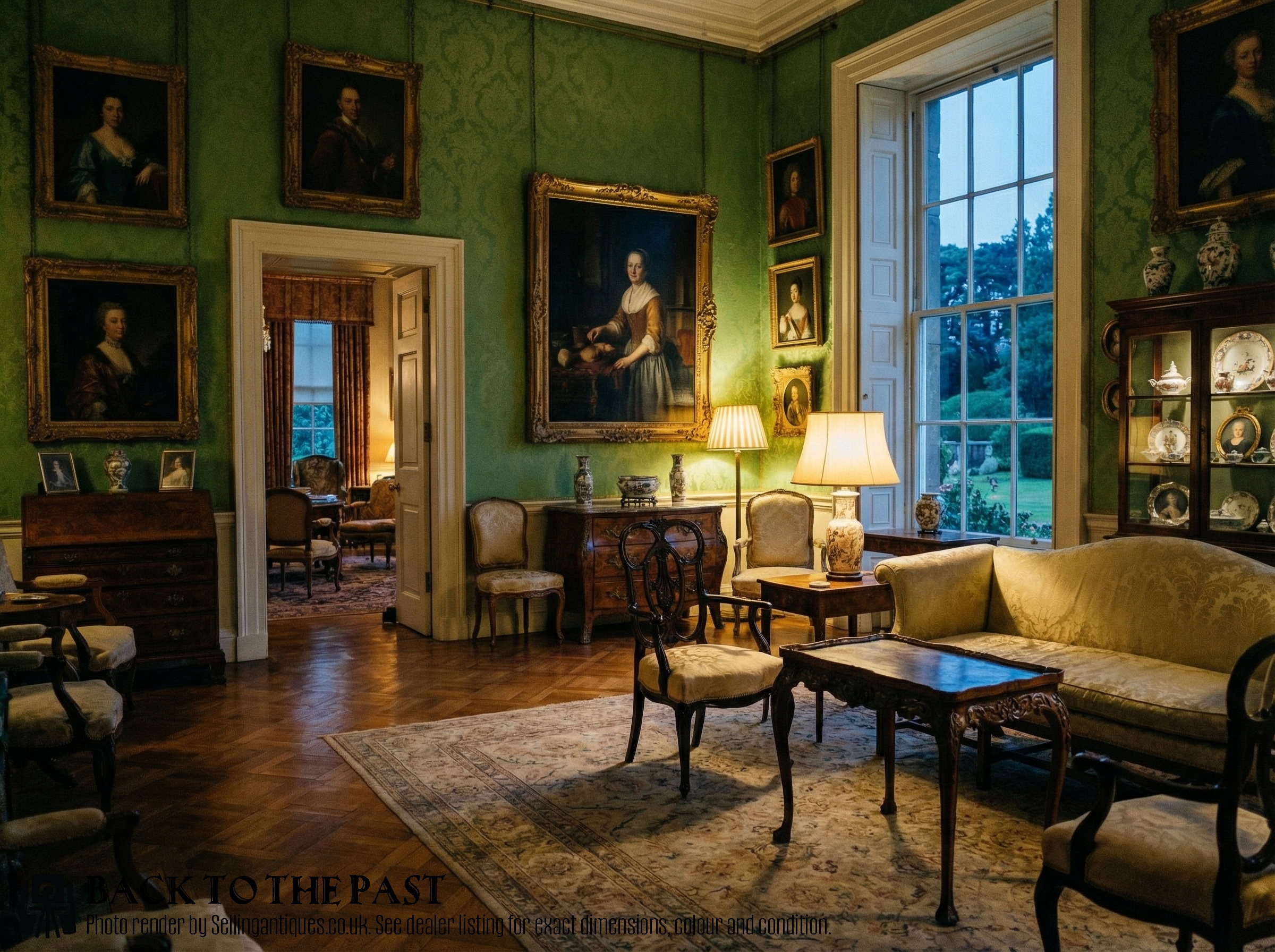
Antique Chippendale Chairs
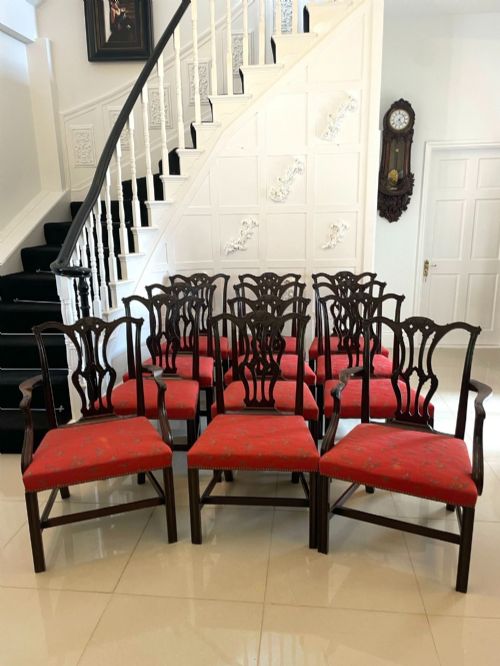
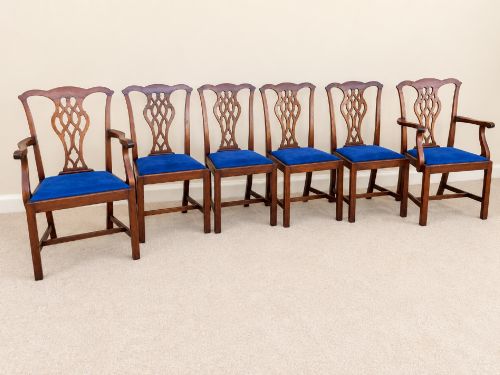
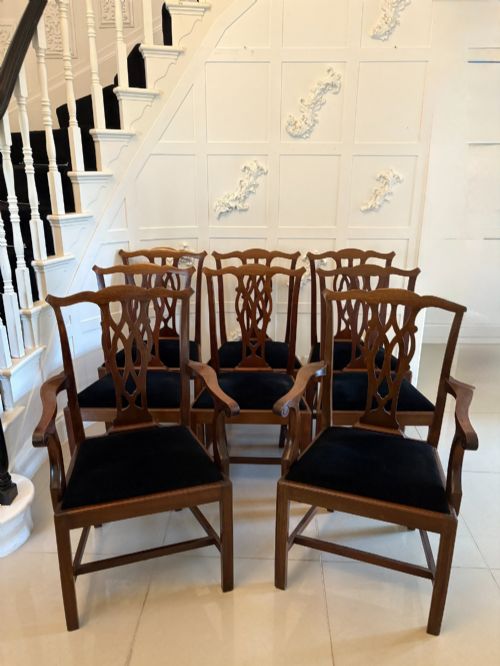
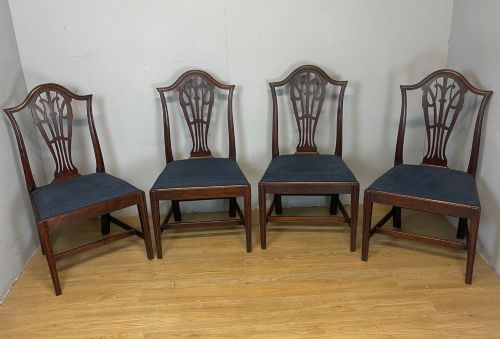
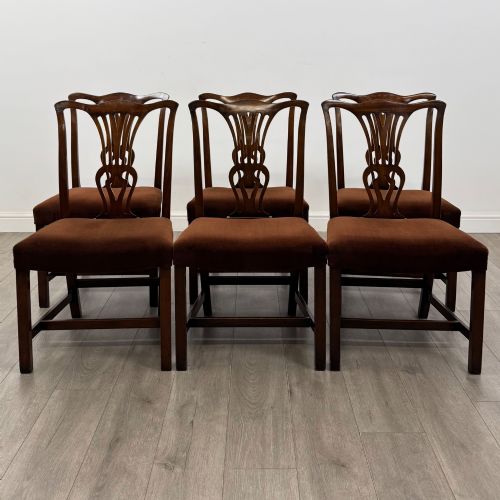
Mahogany dominates: 603 of 1,030 titles name it, and the most common thing you'll meet is a mahogany dining chair sold as part of a set. Dining chairs account for 371 titles, with set sizes stated constantly, sixes and eights most often, then fours.
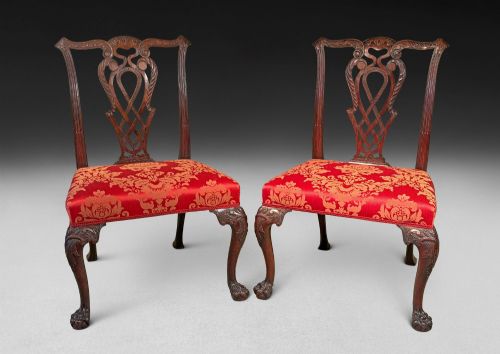
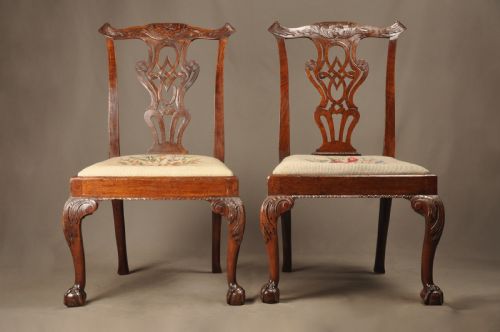
The design vocabulary came out of mid-18th-century London pattern books and gave English cabinetmakers a shared language: pierced splat backs, ribbon and ladder backs, Gothic and Chinese variants, square or cabriole legs. The forms were revived from the later 19th century and made in quantity.
That split runs right through the listings. Titles divide almost evenly between chairs described as period pieces or Georgian and chairs described as style, design, manner, taste or revival, made from the mid-19th century to the 1930s. Dealer dates run 1750 to 1930.
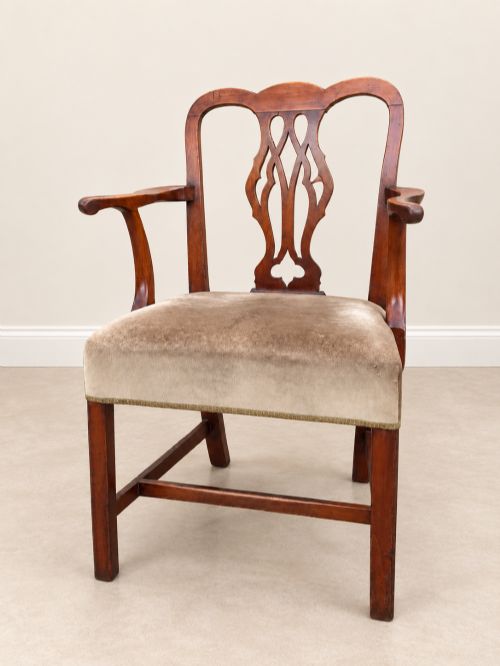
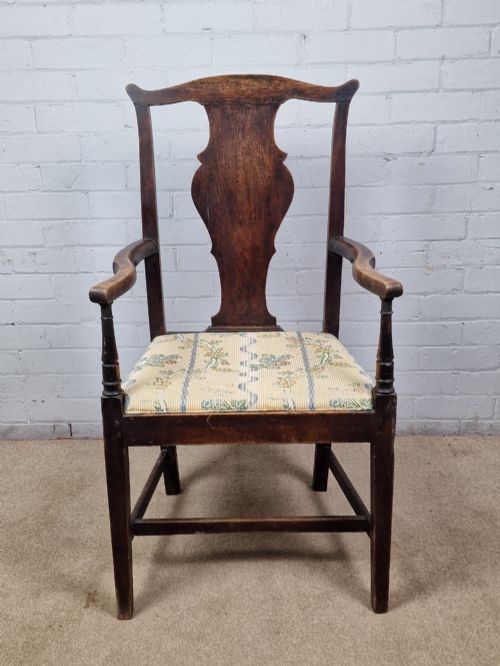
After the dining sets, the open armchair is the form you'll see most, listed as armchair, carver or elbow chair. Singles and pairs of side chairs make up another large block. Country versions in oak, elm, walnut and fruitwood turn up in smaller numbers.
Where The Range Sits
Set size does more work than anything else. Sets of twelve and fourteen, and one set of twenty-one, sit at the top of the sampled range, while single chairs and pairs fill the bottom. Whether carvers come with the singles matters too, which is why "6+2", "8+2" and "10 plus 2 carvers" recur through the upper half.
The period claim is the second lever. Titles that read "18th Century" or "George III" appear across the top, while revival, style and design titles concentrate in the middle. Live stock on Sellingantiques leans further towards the earlier claim than what has already sold.
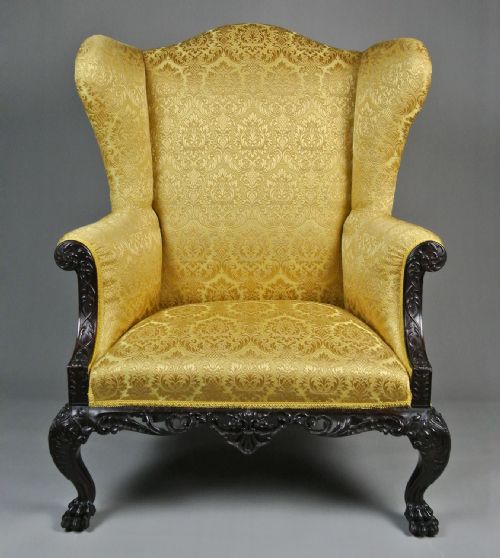
Timber and carving pull in the same direction. Mahogany is close to a default and dominates the upper end; oak, elm and fruitwood cluster in the cheaper country listings. "Carved" and "carved mahogany" gather in the upper half, as do the named specialist forms, library, Gainsborough and wing chairs.
Antique Chippendale Chairs Retail Price Guide 2026
Typical UK retail prices for chippendale chairs, calculated from the Sellingantiques database of over a million retail prices indexed since 2003. This retail price guide relies exclusively on Sellingantiques data; no external sources or auction records are used, so the figures do not describe the wider market.
Mahogany is close to a default in these titles on Sellingantiques, though oak, elm, walnut, fruitwood, satinwood, rosewood and japanned finishes all turn up.
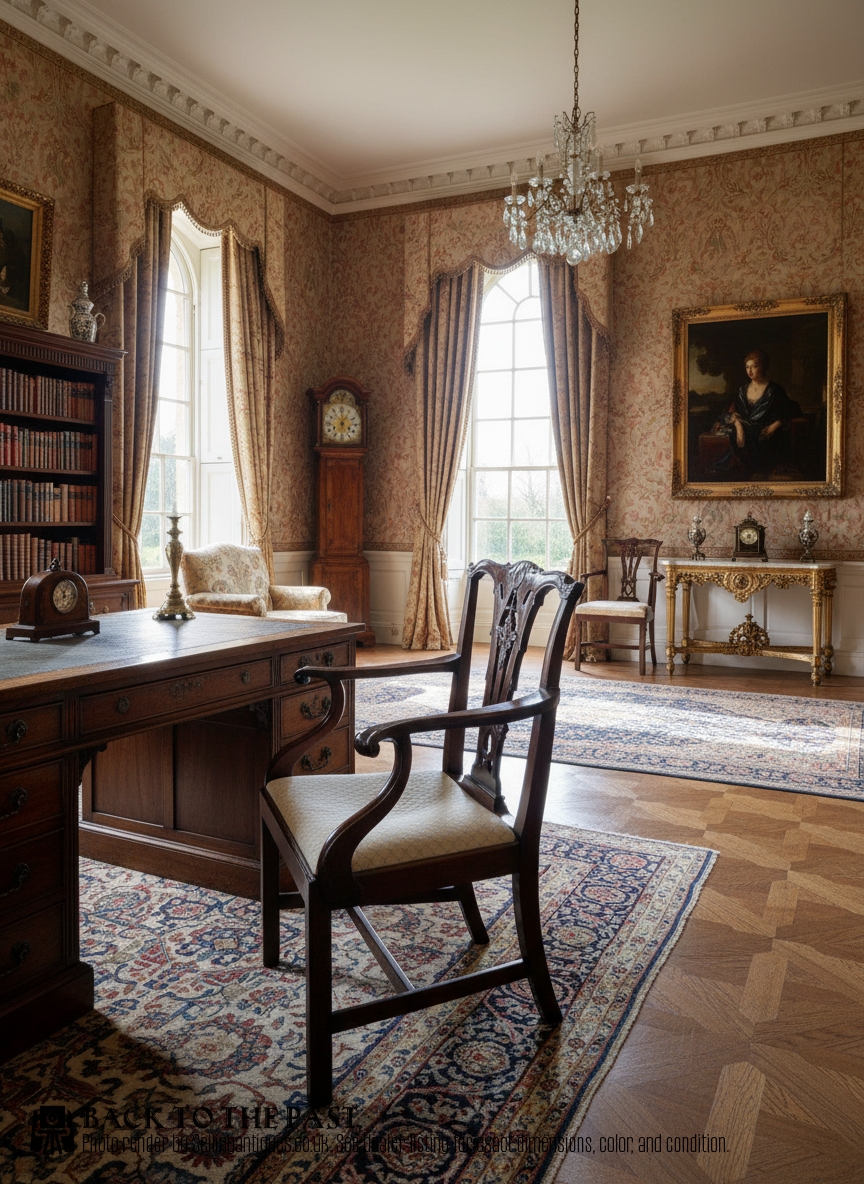
The Antique Chippendale Chairs Glossary
- Carver
- The armchair in a dining set, usually wider than the singles. It appears in 51 titles, and its presence in a set is stated as a selling point.
- Elbow chair
- Older English term for an open armchair, used in 46 titles. Often interchangeable with carver when the chair belongs to a dining set.
- Side chair
- An armless chair, sometimes called a single. "Side" appears in 73 titles, "side chairs" in 43, and these are the chairs a set is counted in.
- Splat
- The pierced central back panel, described in the listings as a pierced splat back. Its piercing is where most of the carved decoration sits.
- Ladderback
- Horizontal pierced back rails in place of a splat. It recurs across the listings as an alternative back treatment within the same idiom.
- Ribbon back
- Back carved as interlaced ribbons, also written ribband back. It turns up among the ribbon-back dining sets at the top of the range.
Antique Chippendale Chairs: Frequently Asked Questions
What does 6+2 mean in a chair listing?
It's set notation: six side chairs plus two carvers, the carvers being the armchairs. You'll also see 8+2 and "10 plus 2 carvers" written out in full.
The notation recurs through the upper half of the range, because sets with carvers sit above sets without.
Are these 18th century or later copies?
Both, in roughly equal measure. Titles divide almost evenly between chairs called period or Georgian and chairs called style, design, manner, taste or revival.
Dealer-entered dates run from 1750 to 1930, and the decade buckets cluster heavily around the revival: the 1900s, 1920s, 1890s and 1880s all carry substantial numbers.
A century label alone rarely tells you which end of that 180-year span a chair sits at.
Which timber is most common?
Mahogany, by a wide margin. It's named in 603 of 1,030 titles, and "mahogany dining" alone accounts for 130.
Oak, elm, walnut, fruitwood, satinwood, rosewood and japanned or painted finishes all appear, but in small numbers. The country listings are where the native timbers gather.
How large do the sets get?
Past the domestic norm. Beyond the usual sixes and eights, the archive holds sets of ten, twelve and fourteen, and one set of twenty-one.
Those larger sets occupy the highest sampled prices. Fours are common too, and singles and pairs are the most frequent form after dining sets.
What is a Gainsborough chair?
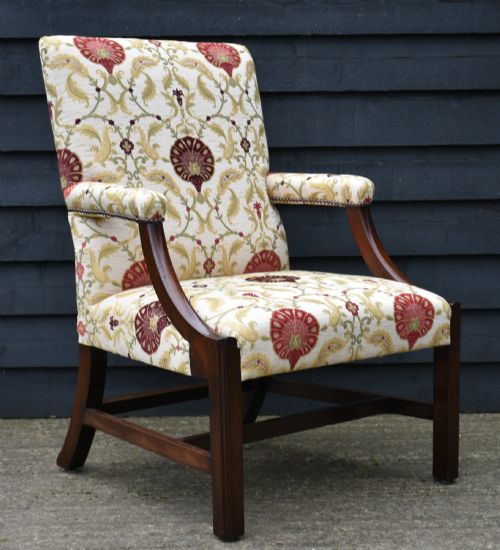
A broad upholstered open armchair with padded arms. The term appears in 36 titles, eighteen of them as "mahogany gainsborough".
It shows up repeatedly among the highest-priced examples, alongside library and wing armchairs.
How often do these come up for sale?
Around 103 come to market in a year on Sellingantiques, and 203 different dealers have listed them.
That makes it one of the widely traded chair patterns on the site, which is why set sizes, timbers and period claims vary as much as they do.