
A 2026 Guide by Sellingantiques
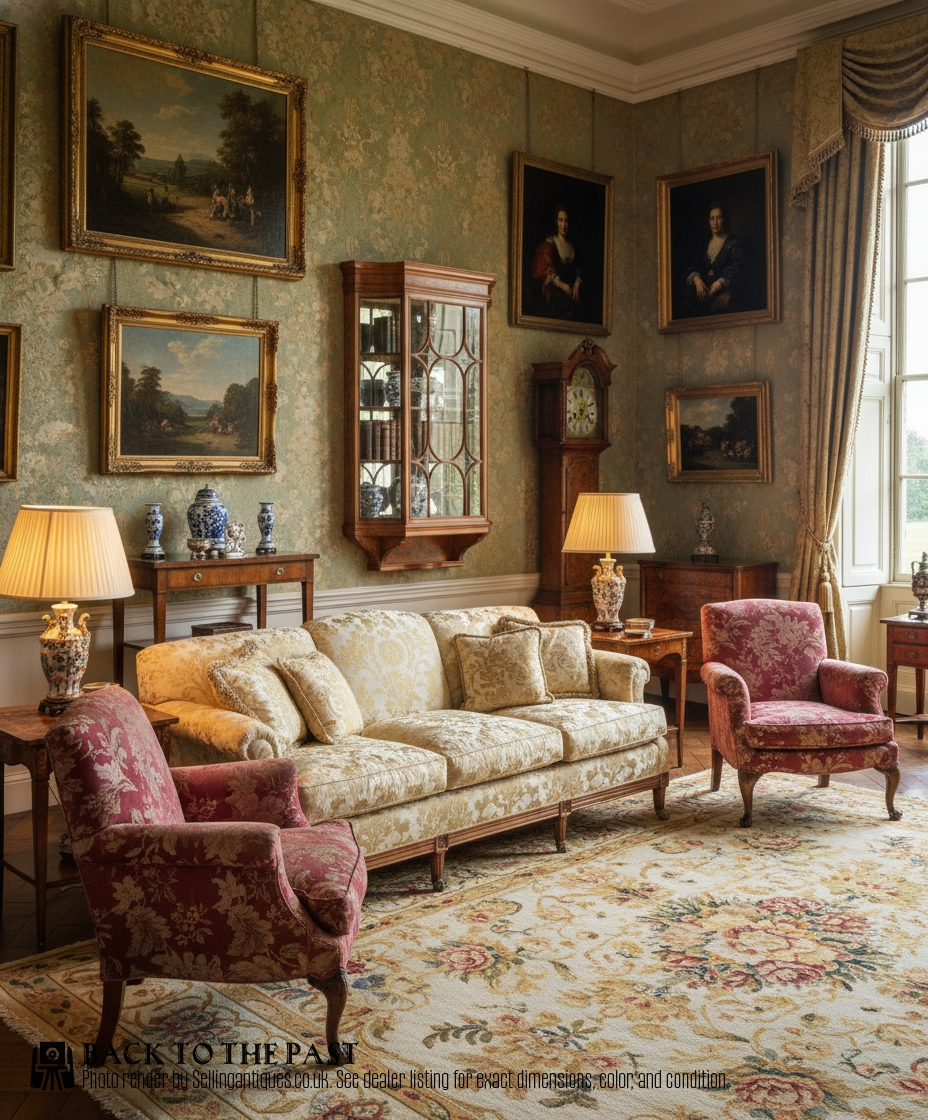
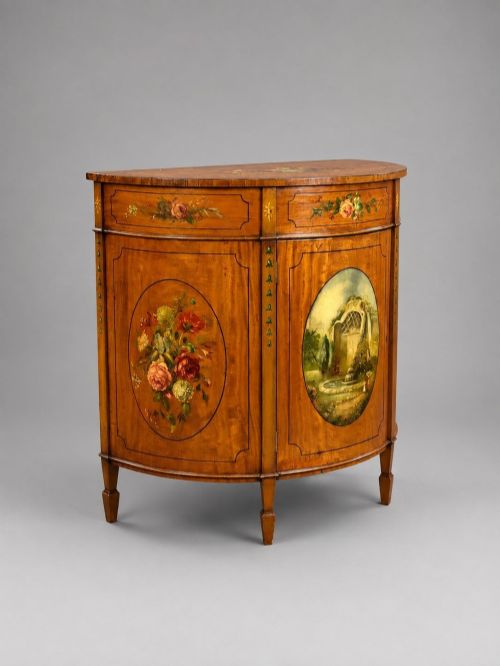
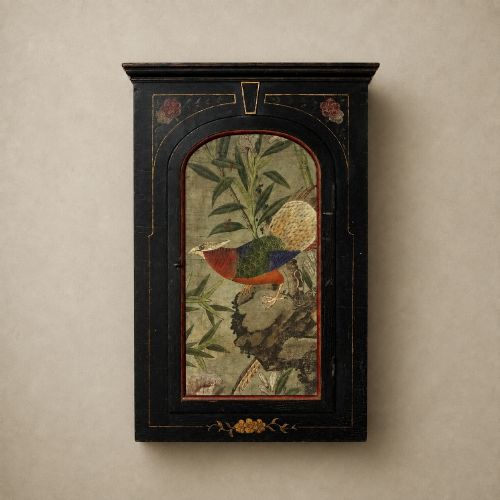
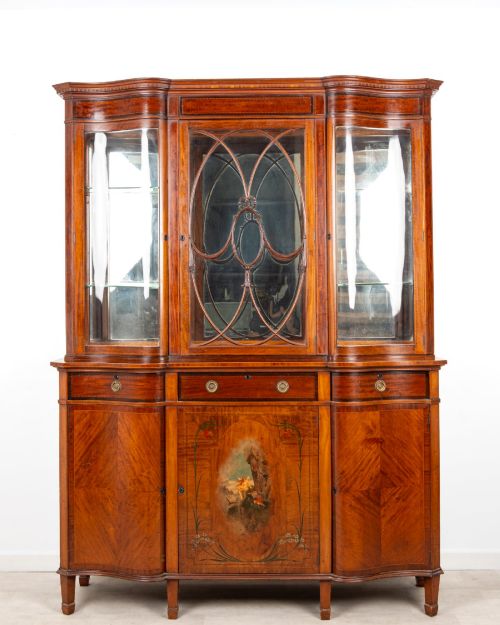
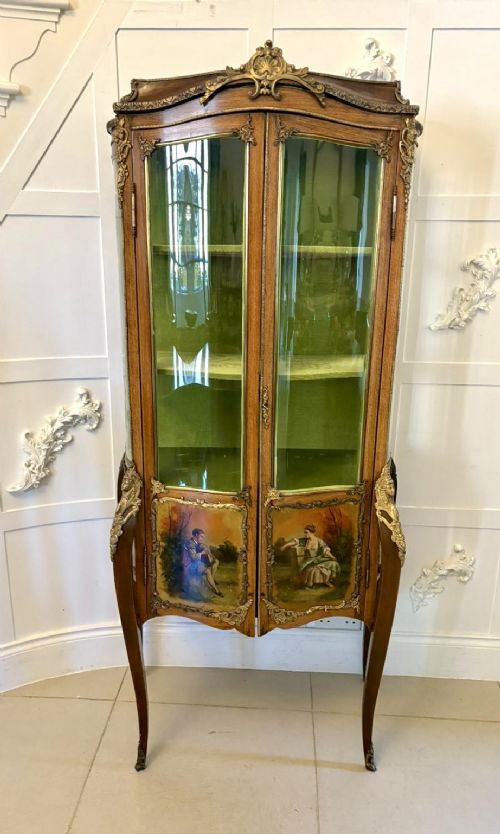
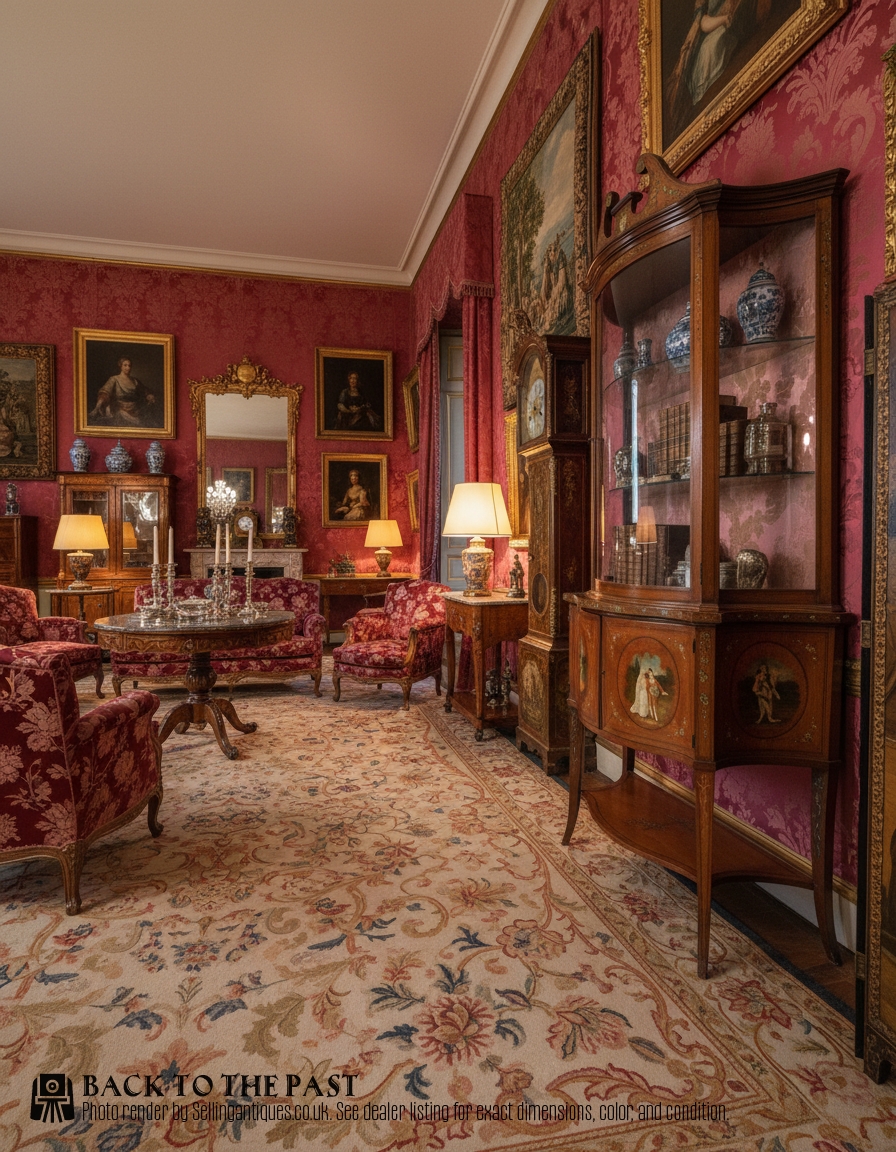
Large Painted Satinwood Wall Hanging Display Cabinet, 1910
Priced at £2,975 from Shackladys Antiques
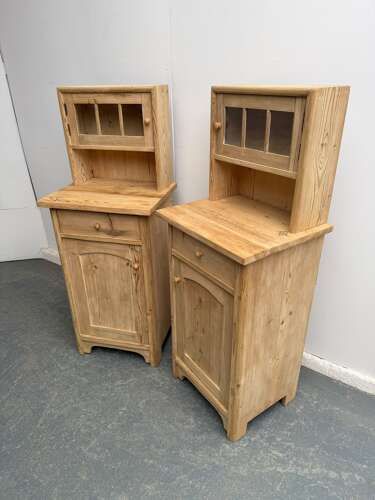
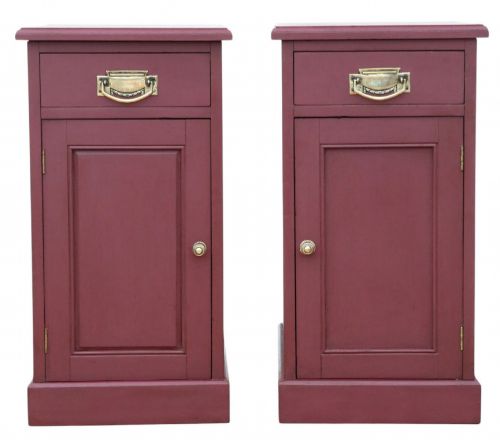
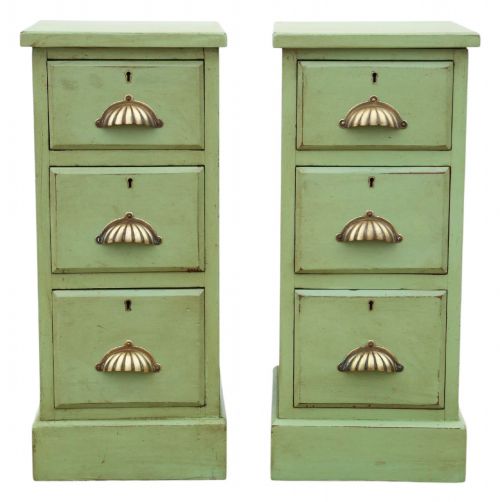
European rural communities embraced painted decoration to brighten dark interiors during the eighteenth and nineteenth centuries.
Look for variations in regional traditions. Swedish examples often lean towards paler blues and greys, while Bavarian output relies on bright floral motifs.
Most antique painted cabinets served as marriage gifts. Families commissioned them to hold a bride's trousseau.
Plain pine was cheap. The paint disguised the humble timber beneath and mimicked expensive veneers.
Individual craftsmen rarely signed these pieces. The rural tradition relied on local carpenters working alongside itinerant painters.
Regional styles act as the signature instead. The distinctive floral rosmålning of Telemark differs sharply from the geometric motifs of Halland.
Some urban decorators stamped their work. However, the vast majority of antique painted cabinets emerged from anonymous village workshops across Europe.
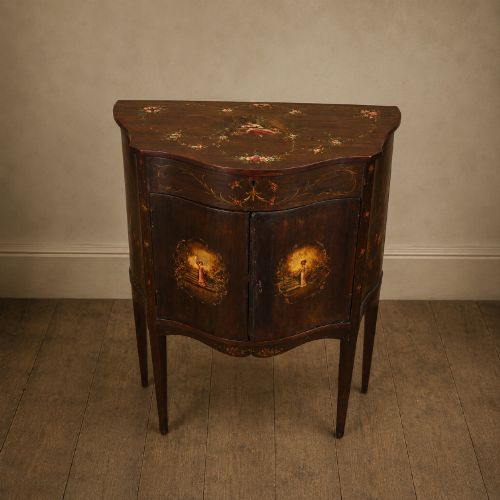
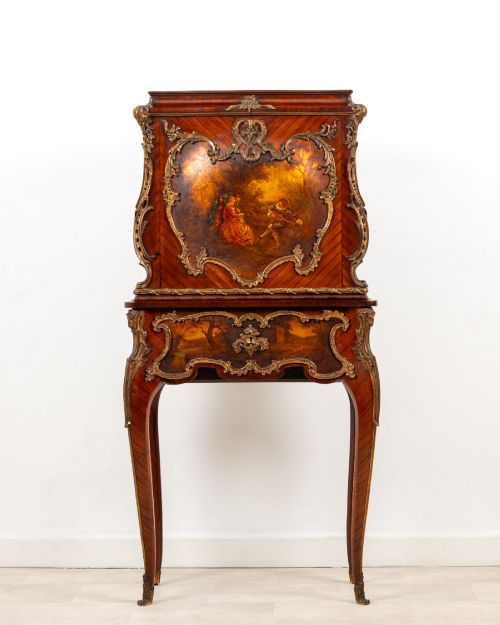
Antique 19th Century Satinwood Painted Cabinet on Stand, 19th Century
Priced at £2,600 from Lee Hawkins Antiques & Interiors
The 2026 retail price guide for Antique Painted Cabinets is drawn from a proprietary archive of over 1.1 million retail prices indexed by Sellingantiques since 2003. This guide relies exclusively on their own internal data; no external sources or auction records are used.
Analysing nearly 25 years of UK antique market history alongside current retail values, the data indicates that typical UK retail prices for Antique Painted Cabinets range between £500 and £3,900. Entry-level prices generally fall under £500 and premium examples upwards of £3,900.
Heavy panelled doors typically conceal fixed wooden shelving. You'll often find a pair of deep drawers set into the base section.
Large iron hinges support the doors. Snipe hinges or long strap hinges appear frequently on provincial antique painted cabinets.
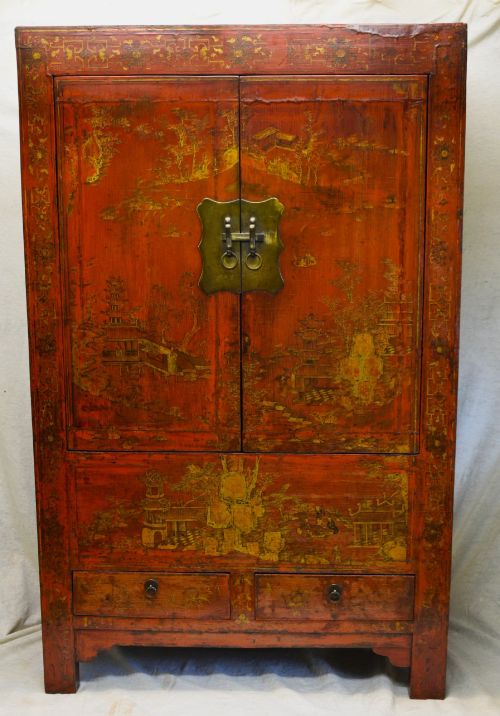
Surface decoration defines the piece. Expect faux marbling, graining or narrative scenes across the main front panels.
Early examples rely on simple plank construction. Carpenters nailed wide boards together before handing the shell to a decorator.
Frame and panel techniques became standard by the late eighteenth century. This allowed the softwood to expand without splitting the painted surface.
Look at the drawer linings. Hand-cut dovetails replaced crude rebated and nailed joints as provincial cabinetmaking improved.
"Many pieces fold flat for transport. Wooden wedges secure the main sections together, allowing a large cabinet to dismantle into flat panels."
"Secret compartments sometimes hide behind the cornice moulding. Craftsmen built shallow boxes into the roof space to conceal household documents."
"The paint often preserved the timber. Thick layers of gesso and pigment sealed the wood and deterred boring insects."
Based on almost 25 years of Sellingantiques UK antique market data, Antique Painted Cabinets appeared 3295 times (out of 1,100,000 antiques) which gives it a rarity score of 52/100.
This score measures scarcity within the Sellingantiques archive only and is not a survey of the entire antiques market, so these statistics may not be indicative of the general availability of Antique Painted Cabinets elsewhere.
It's a bad idea. The paint is the primary feature that gives an antique painted cabinet its context. Taking it back to bare pine destroys centuries of social history.
Stripping also reveals timber that wasn't meant to be seen. Carpenters used knotty, mismatched boards because they knew the painter would cover their work.
Direct sunlight will bleach the original pigments. Early organic and earth-based paints fade quickly when exposed to strong ultraviolet light, especially the blues and greens.
Temperature fluctuations in a conservatory cause structural issues. Heat bakes the timber, shrinking the fielded panels and cracking the gesso ground. Keep it in a room with stable humidity and weak natural light.
Dust it lightly with a dry, soft cloth. Moisture is the enemy of old unstable paint.
Don't use chemical cleaners or spray polishes. They dissolve the original protective size and strip away the fragile top layer of pigment.
Don't alter the original timber if possible. Wood breathes and expands with ambient moisture. The doors stick during wet weather because the pine absorbs humidity.
Try checking the levelling first. Uneven floors twist the carcase, which throws the door alignment out of square. Slipping a wedge under one foot often resolves the rubbing.
Please note: This Antique Painted Cabinets guide and its associated pricing data are provided for general informational purposes only. It does not constitute formal financial, investment, or appraisal advice and should not be relied upon as the sole basis for any commercial activity, purchasing, or sales decisions. Sellingantiques.co.uk accepts no liability for any actions taken in reliance on this information. Always consult with a qualified professional or independent appraiser.
