


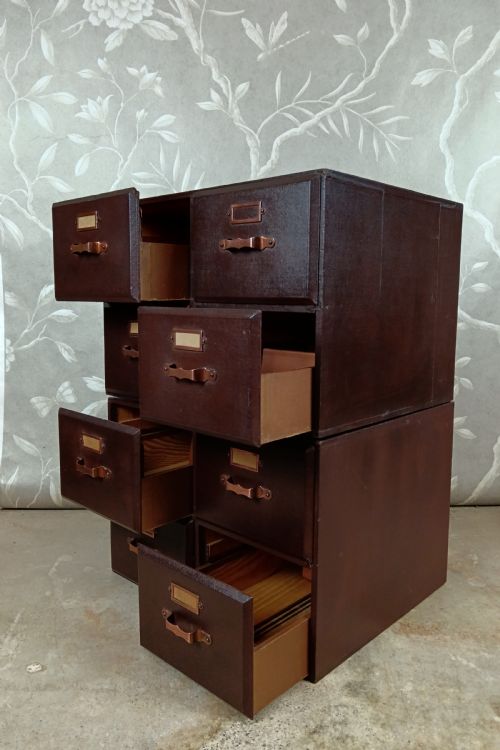

A 2026 Guide by Sellingantiques

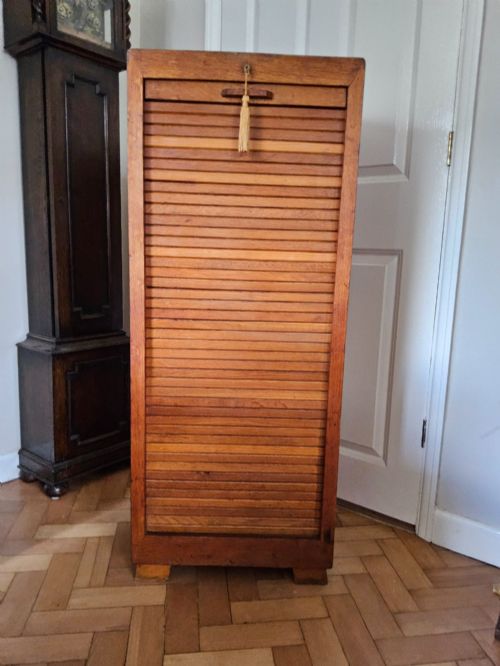
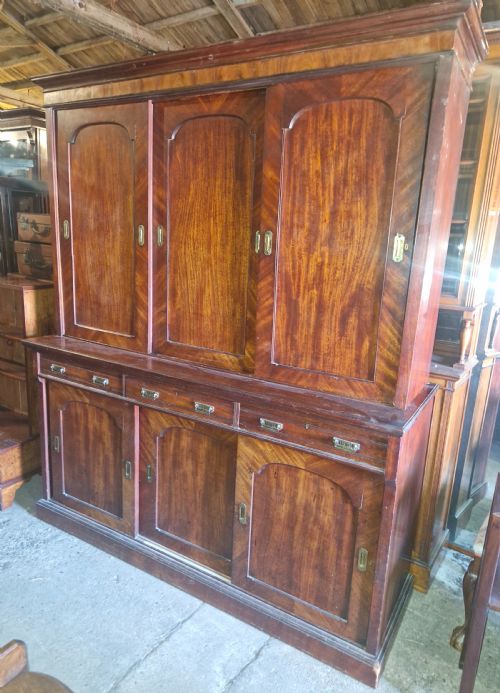
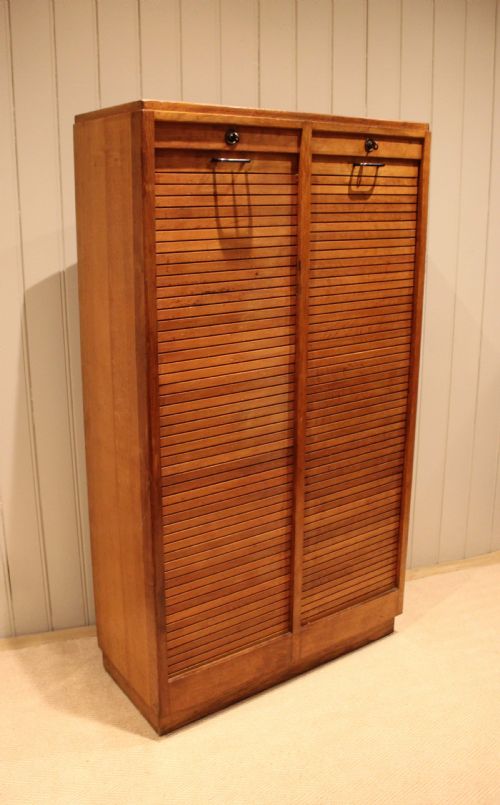
Oak Single Door Filing Cabinet, 19th Century
Priced at £845 from Shackladys Antiques
The shift to vertical filing changed office layouts in the late nineteenth century.
Early wooden examples on heavy plinths.
Look for modular stacking systems where firms bought a base unit and added sections as records grew.
The Globe-Wernicke Company dominated the market for stacking modular office furniture.
Amberg File and Index Company produced early letter files with patented indexing systems.
Look out for Yawman and Erbe. Their brass handles often carry a stamped monogram.
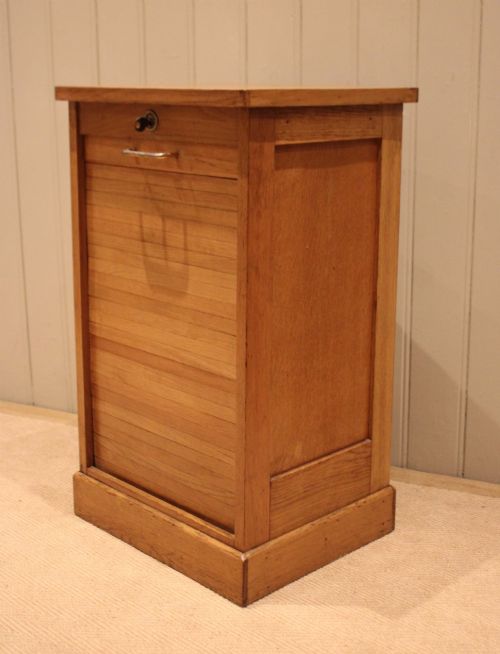
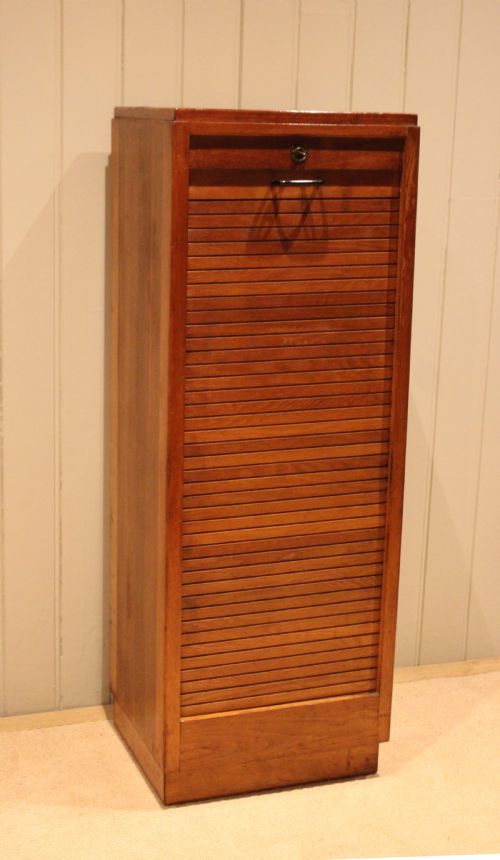
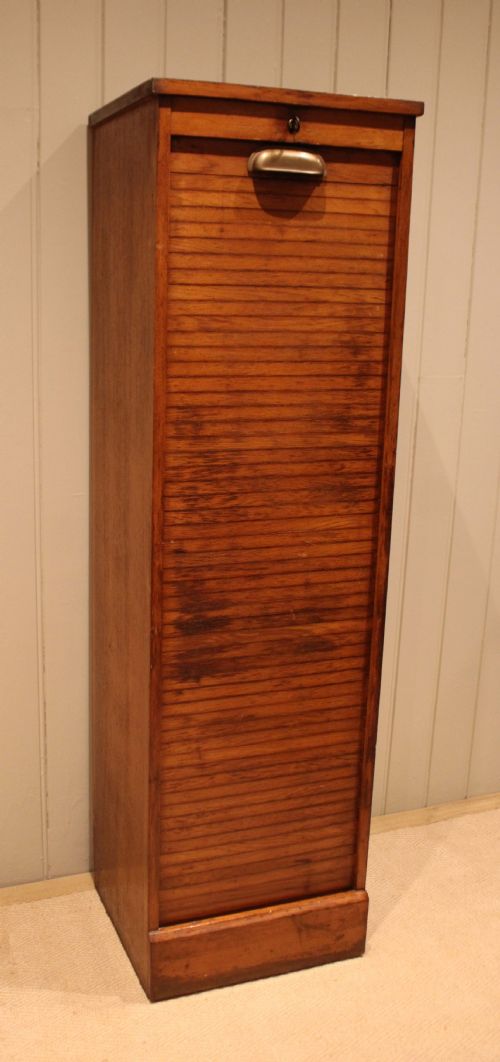
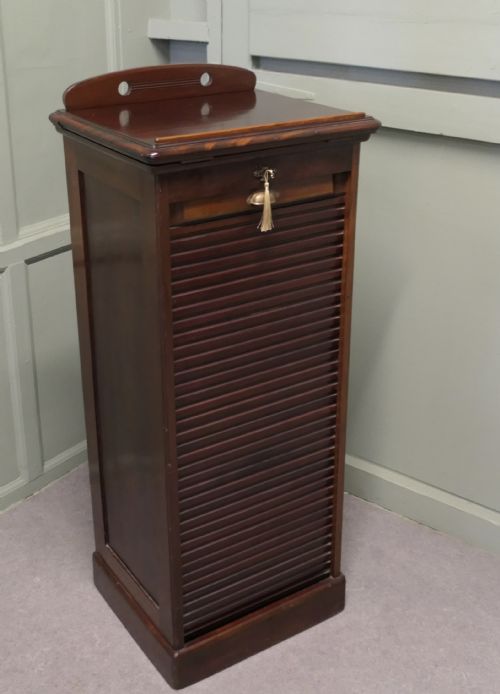
Early 20th Century Oak Tambour Front Filing Office Cabinet., 1910
Priced at £265 from Rupert Hitchcox Antiques
The 2026 retail price guide for Antique Filing Cabinets is drawn from a proprietary archive of over 1.1 million retail prices indexed by Sellingantiques since 2003. This guide relies exclusively on their own internal data; no external sources or auction records are used.
Analysing nearly 25 years of UK antique market history alongside current retail values, the data indicates that typical UK retail prices for Antique Filing Cabinets range between £400 and £1,300. Entry-level prices generally fall under £400 and premium examples upwards of £1,300.
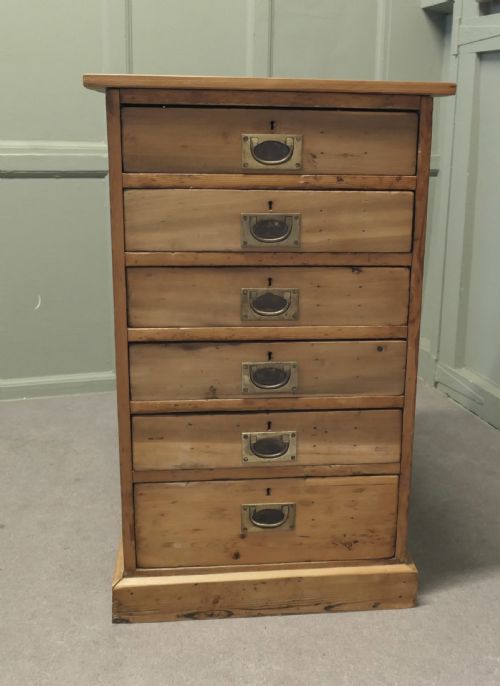
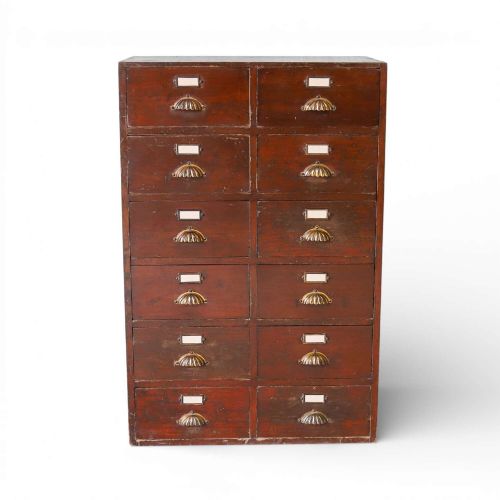
Check the drawer fronts for index card holders.
Deep drawers running on internal metal roller bearings to stop sagging.
Panelled sides reduce the overall weight of wooden versions.

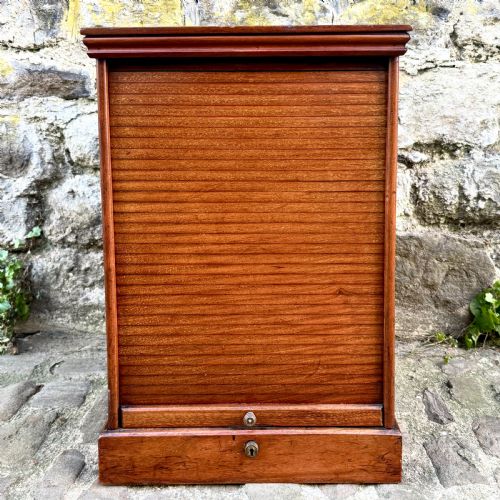
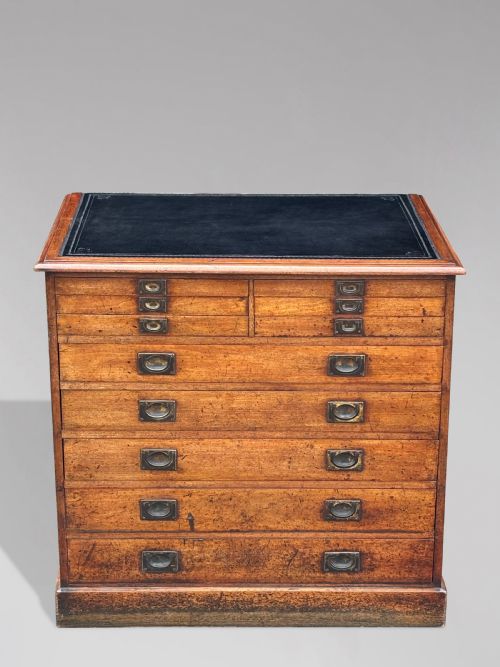
Amberg’s Patent Cabinet Letter File, 1900
Priced at £1,150 from Ropeworks Antiques
Inspect the drawer boxes for hand-cut dovetails. The joint withstands the sheer force of yanking open heavy paper files.
Frame and panel construction dominates wooden antique filing cabinets. The floating panels allow the wood to expand without cracking.
Steel folded over a wire core replacing wood in the nineteen twenties. Spot welding held the heavy metal carcase together.
"Standardisation meant a business could buy matching sections decades apart. The interlocking joints remained exactly the same size."
"Clever modular bases housing hidden storage compartments. Companies kept spare index cards behind a hinged false skirting board."
Based on almost 25 years of Sellingantiques UK antique market data, Antique Filing Cabinets appeared 1409 times (out of 1,100,000 antiques) which gives it a rarity score of 75/100.
This score measures scarcity within the Sellingantiques archive only and is not a survey of the entire antiques market, so these statistics may not be indicative of the general availability of Antique Filing Cabinets elsewhere.
You won't find internal rails for hanging folders in most antique filing cabinets. The drawers were built for manila folders resting directly on the wooden bottom.
You can sometimes fit a modern wire frame insert inside the drawer. Measure the internal width first because early century sizes vary slightly from standard modern formats.
Heavy enough to require two strong people. They aren't easy to lift safely.
Take the drawers out before trying to shift the carcase. It protects the internal runners from damage.
Those sliding pieces are called follower blocks. Without them your folders will slump backwards when the drawer is only half full.
They don't turn up loose often. Alternatively you can just pack the back of the drawer with an empty box to keep your active files upright.
That green crust is verdigris. It forms when brass reacts with moisture and oils over many years of handling.
Take the handles off the drawer front first. Warm soapy water and a soft brush shifts the worst of the buildup without scratching the underlying metal.
Please note: This Antique Filing Cabinets guide and its associated pricing data are provided for general informational purposes only. It does not constitute formal financial, investment, or appraisal advice and should not be relied upon as the sole basis for any commercial activity, purchasing, or sales decisions. Sellingantiques.co.uk accepts no liability for any actions taken in reliance on this information. Always consult with a qualified professional or independent appraiser.
