
A 2026 Guide by Sellingantiques
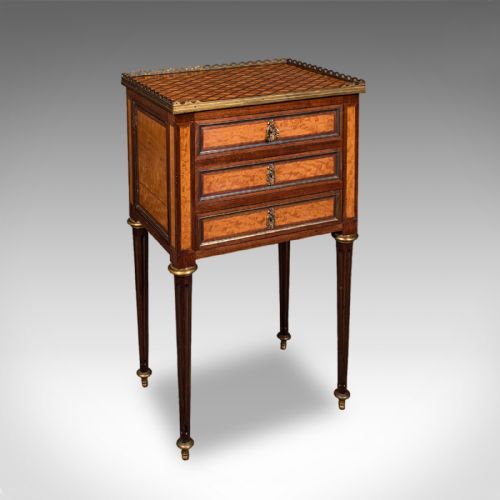
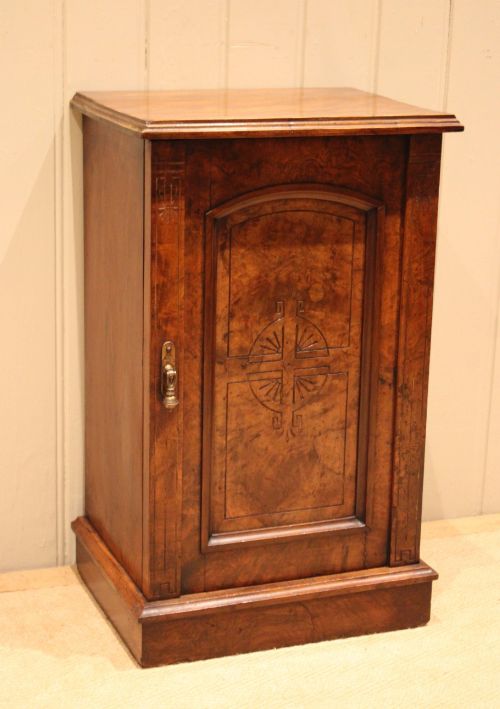
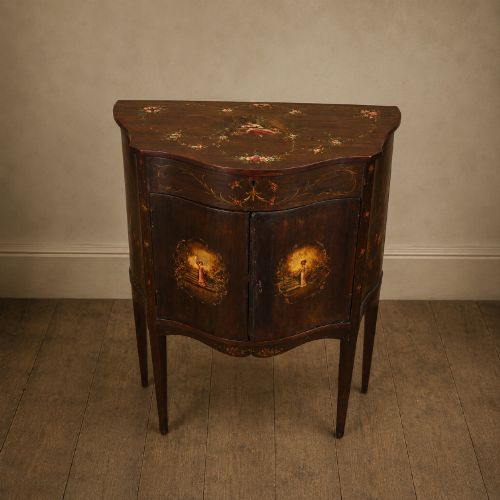
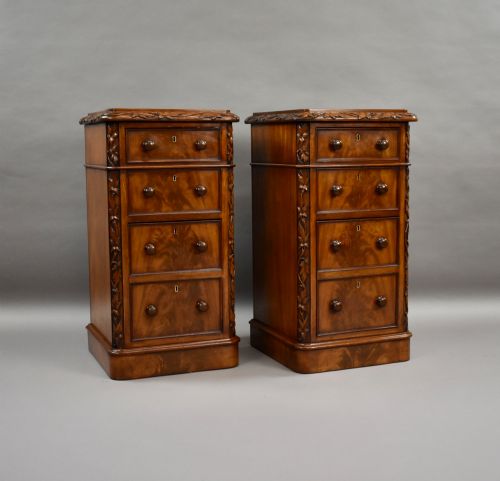
French Mahogany & Ormolu Bedside Cabinet., 1880
Priced at £695 from Tim Saltwell Antiques
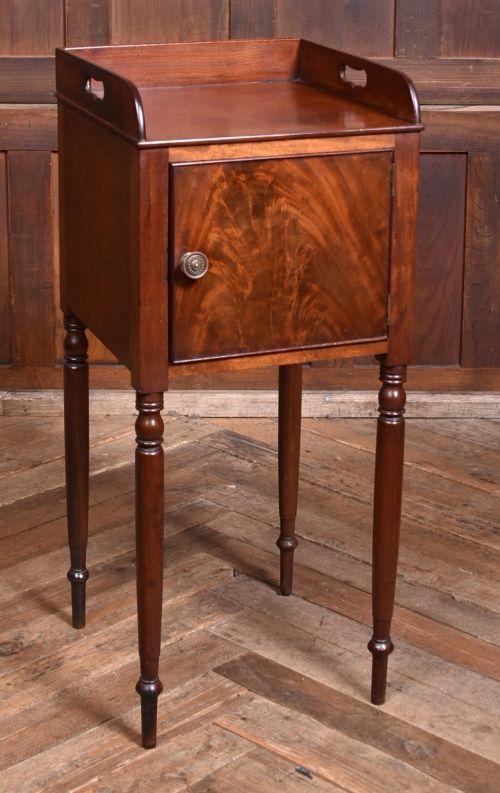
Early versions were often called pot cupboards. They kept necessary nighttime items close at hand before indoor plumbing existed, providing discreet storage in draughty bedchambers.
Look at Victorian examples to see how the form shifted towards heavier proportions.
Transitioning into the twentieth century brought sleeker profiles, shaking off the need to hide washbasins and large porcelain ewers behind thick doors.
By the late eighteenth century, certain affluent households began pairing them as flanking pieces for larger beds, though single units remained the standard setup.
Gillows of Lancaster produced hundreds of these during the late eighteenth and nineteenth centuries. You'll often find their discrete maker's stamp pressed onto the top edge of the drawer front.
Holland & Sons supplied mahogany pot cupboards to various royal households.
Regional joiners made the vast majority of antique bedside cabinets. These unknown craftsmen adapted London pattern books to suit local provincial tastes using native timbers.
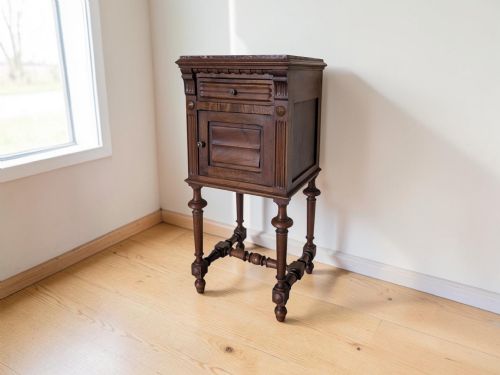
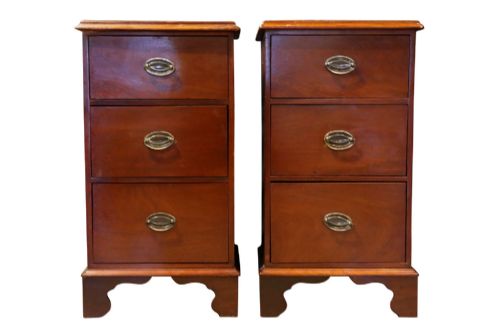
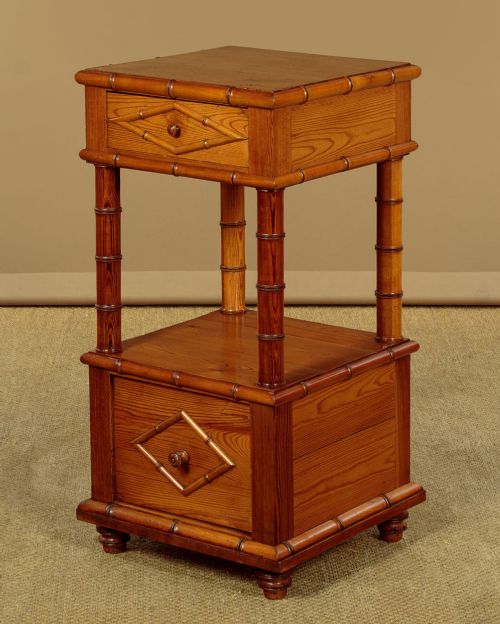
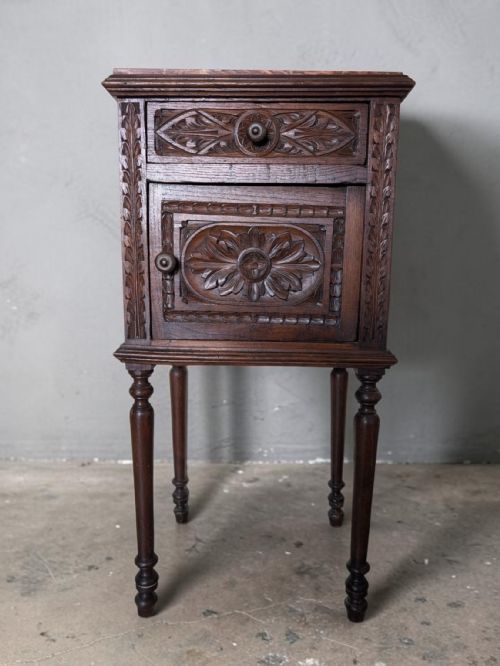
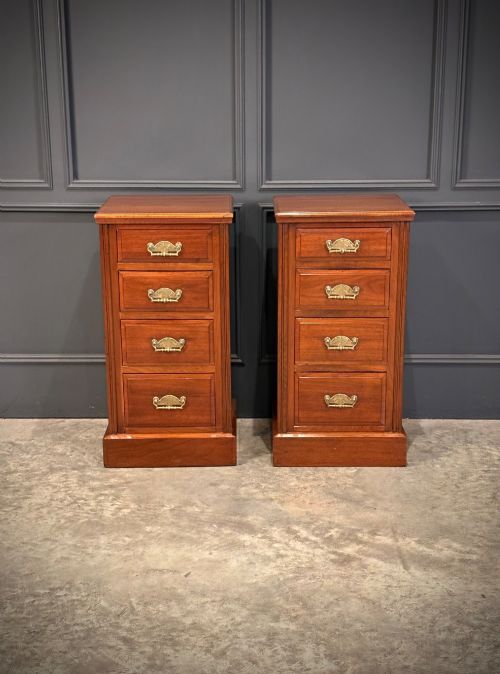
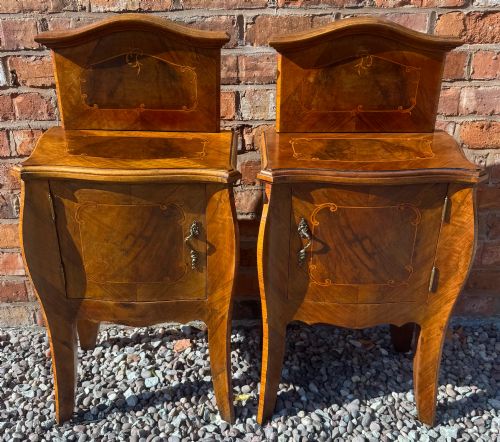
Pair of French Walnut Bedside Cabinets, 1900
Priced at £775 from Philip Hunt Antiques
The 2026 retail price guide for Antique Bedside Cabinets is drawn from a proprietary archive of over 1.1 million retail prices indexed by Sellingantiques since 2003. This guide relies exclusively on their own internal data; no external sources or auction records are used.
Analysing nearly 25 years of UK antique market history alongside current retail values, the data indicates that typical UK retail prices for Antique Bedside Cabinets range between £400 and £1,500. Entry-level prices generally fall under £400 and premium examples upwards of £1,500.
A single panelled door is the most common arrangement, sometimes sitting beneath a shallow frieze drawer intended for spectacles or a pocket watch.
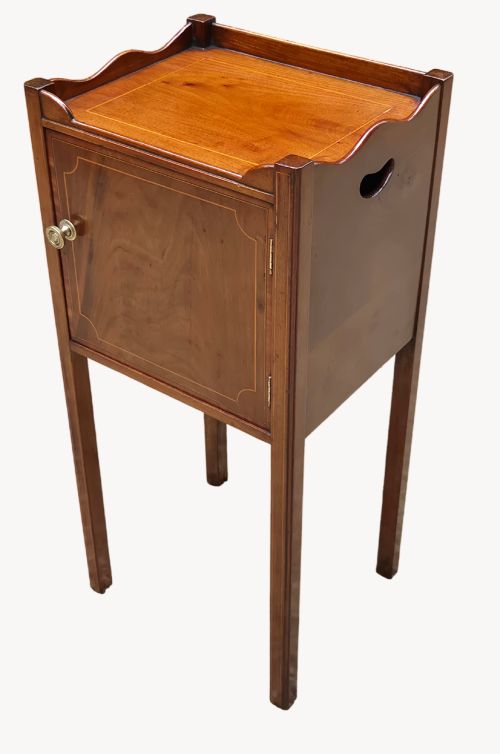
Raised galleries around the top edge stopped candles and water jugs from slipping off in the dark.
Watch for plinth bases on heavier nineteenth-century examples. Earlier classical models tend to stand on swept bracket feet or turned legs.
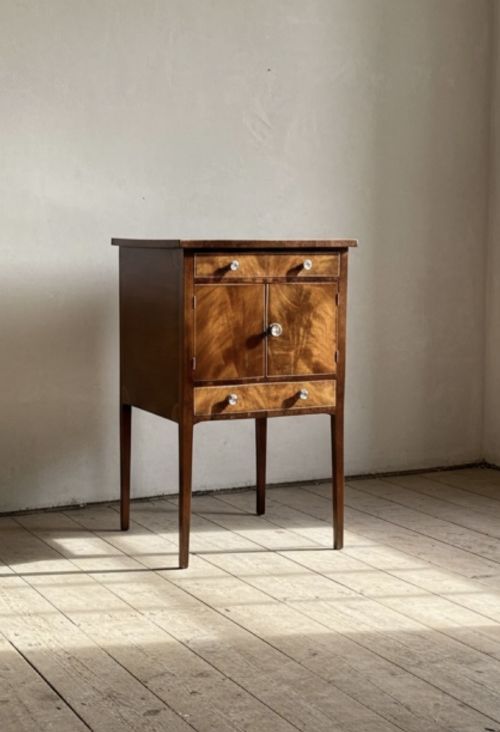
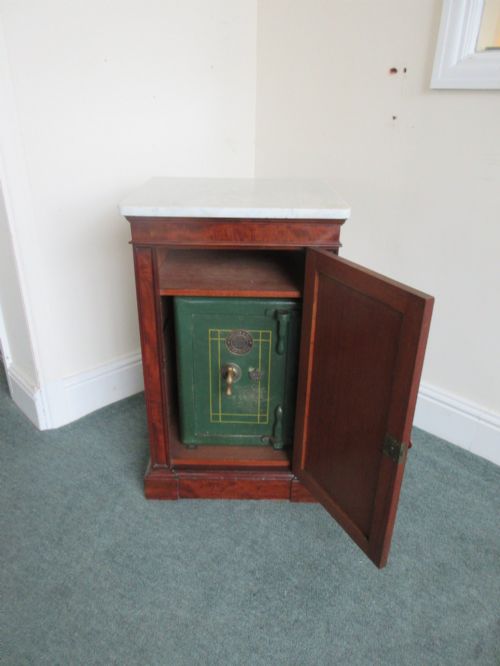
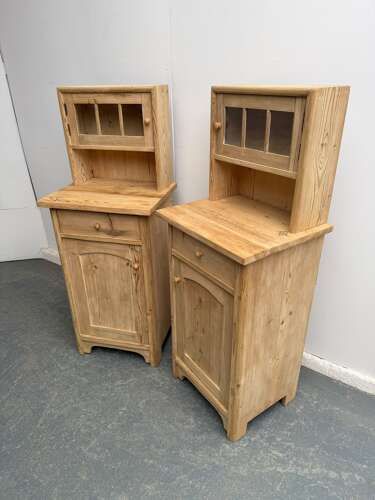
Excellent Quality Walnut Cabinet, 1920
Priced at £495 from Fernyhough Antiques Ltd
Hand-cut dovetails secure the drawer corners on older pieces. You can spot the slight irregularities left by the individual cabinetmaker.
Mortise and tenon joints frame the doors. This traditional method allows the central timber panel to expand and contract with the seasons without splitting the wood.
Expect to find internal wooden runners screwed or glued inside the main case to support the sliding drawer boxes.
"Some Georgian designs feature false drawer fronts that actually pull out as a single deep commode step."
"Marble tops were added to French examples to provide a durable, wipeable surface for hot drinks and medicines."
"Bedside pairs are quite rare before the Edwardian era. Single beds or shared central tables were more customary in older homes."
Based on almost 25 years of Sellingantiques UK antique market data, Antique Bedside Cabinets appeared 10274 times (out of 1,100,000 antiques) which gives it a rarity score of 13/100.
This score measures scarcity within the Sellingantiques archive only and is not a survey of the entire antiques market, so these statistics may not be indicative of the general availability of Antique Bedside Cabinets elsewhere.
Most sit between thirty and thirty-six inches high. This aligns well with older, deeper mattresses and tall bed frames.
Lower twentieth-century examples match the drop in bed heights that happened around the Art Deco period. You just need to measure your mattress height before deciding what fits.
True matched pairs with left and right opposing hinges are rare in the nineteenth century. Most antique bedside cabinets were made as single items for a room.
When you find a pair with hinges on the same side, they were likely constructed as a batch by the same workshop. Opposing doors only became standard factory practice when matching bedroom suites gained popularity in the Edwardian period.
Stripping and painting destroys the historic finish. Polish and patina take decades to build up.
If the surface is badly damaged, traditional wax is the better route.
Odours get trapped inside small enclosed spaces over decades. Start by leaving the door open in a dry, well-ventilated room for a few days to let fresh air circulate.
Wiping the unpolished interior wood with a lightly damp cloth can lift surface dust. Placing a small bowl of bicarbonate of soda inside the carcase for a week helps absorb lingering smells safely.
Don't use harsh modern chemical sprays. They can damage the dry timber and leave an artificial scent that clashes with the furniture.
Please note: This Antique Bedside Cabinets guide and its associated pricing data are provided for general informational purposes only. It does not constitute formal financial, investment, or appraisal advice and should not be relied upon as the sole basis for any commercial activity, purchasing, or sales decisions. Sellingantiques.co.uk accepts no liability for any actions taken in reliance on this information. Always consult with a qualified professional or independent appraiser.
