

Antique Writing Slopes
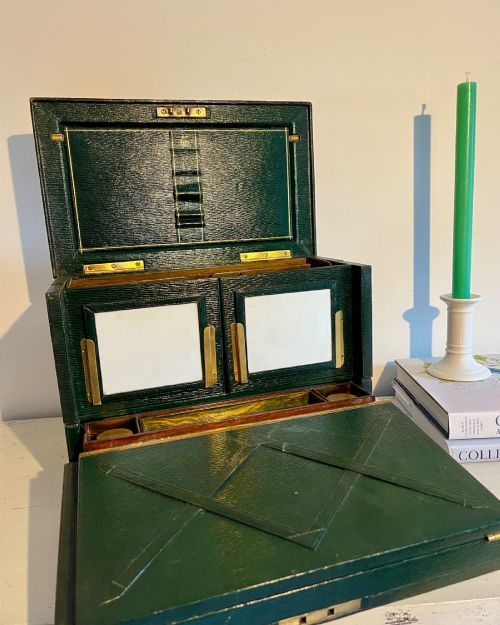
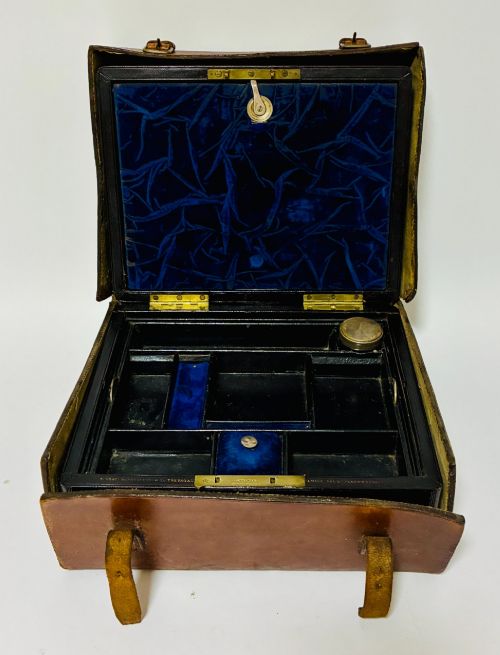
A writing slope is a portable, lockable wooden box whose lid opens out into a leather-covered sloped surface, fitted inside with ink wells, pen trays and compartments for paper, made for writing letters away from a fixed desk.

Antique Writing Slopes
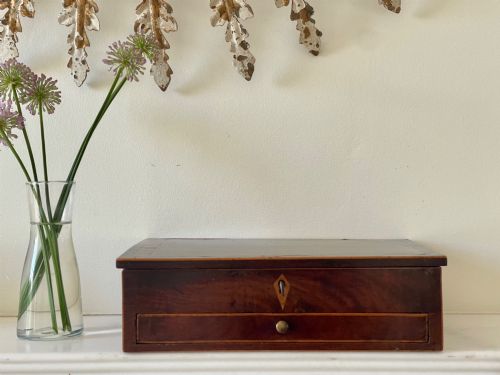
The form belongs to the 18th and 19th centuries: a box you could carry, lock and set on any table, with wells for ink, space for paper and often small drawers hidden behind the writing well. Fixed desks and, later, typewriters ended the need for them.
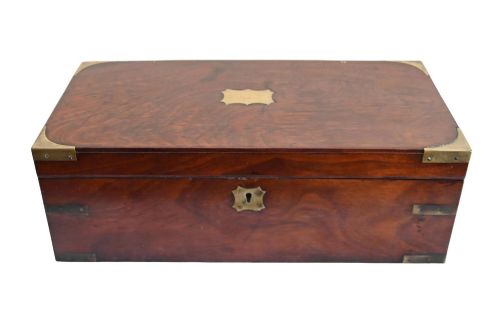
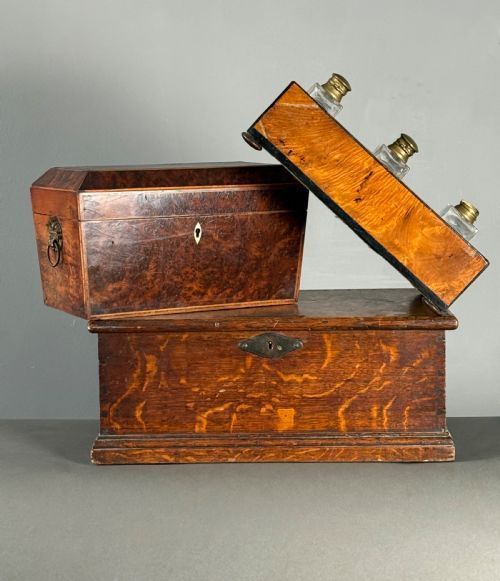
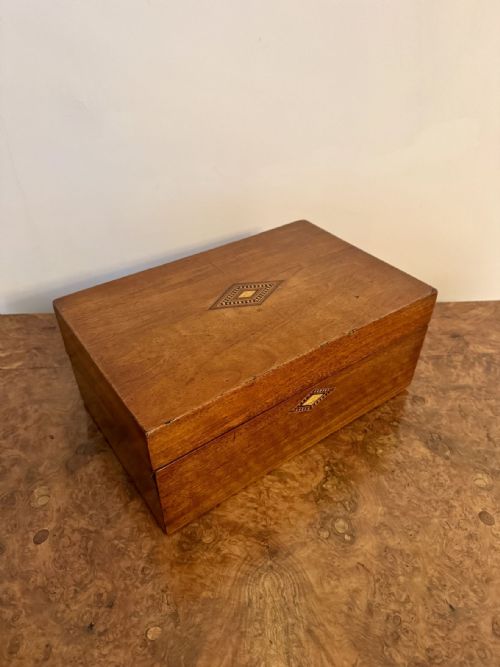
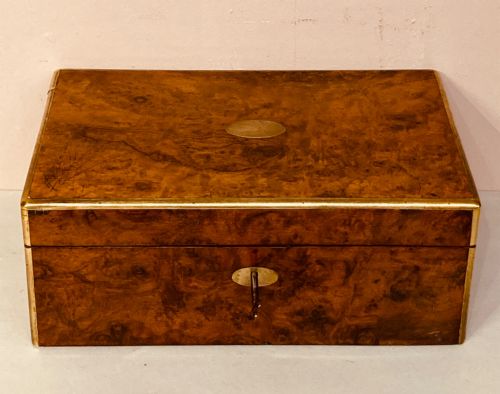
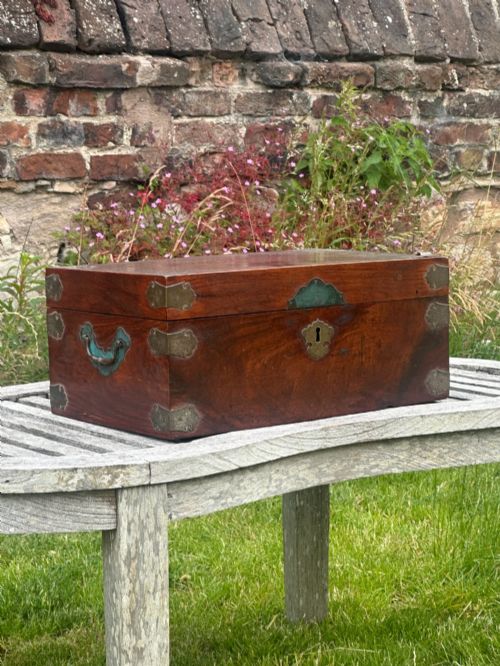
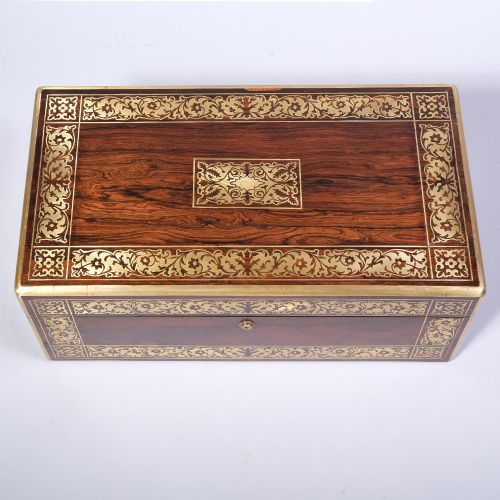
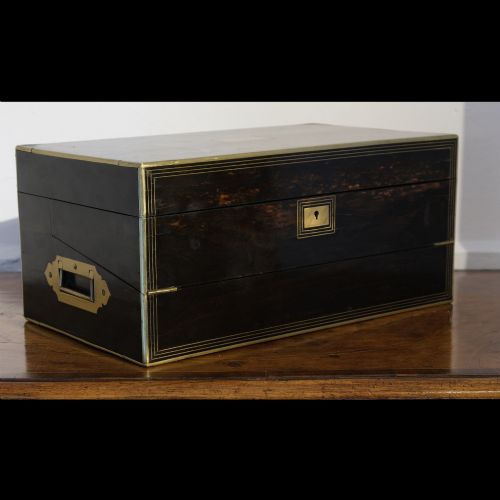
What dominates on Sellingantiques is the 19th-century English veneered box. Walnut is the defining timber, in 192 of 687 listings, with rosewood, mahogany, coromandel and oak behind it. Brass turns up in 159 titles, either as binding over the corners and edges or as lines and scrollwork let into the veneer. The single commonest pattern is a Victorian walnut slope, brass bound or in burr, sitting in the lower middle of the range.
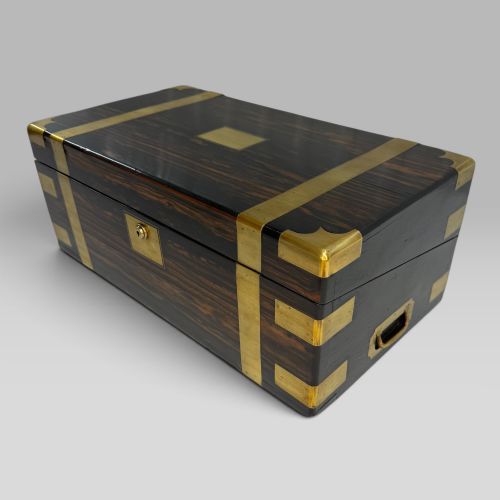
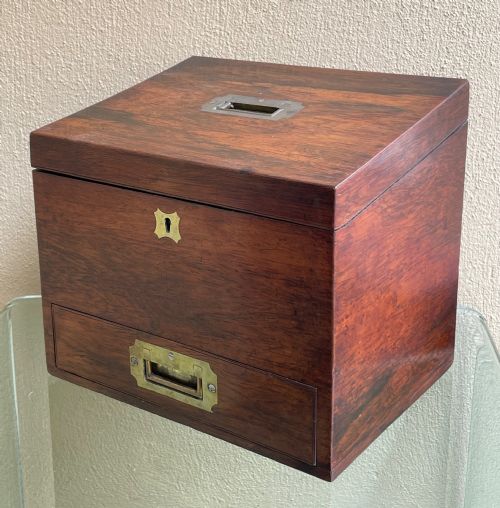
Campaign and military slopes are the second strand, with campaign in 106 titles and military in 23. These were built for travel: reinforced construction, brass at the corners, and titles naming officers and captains. Alongside them sit decorative and colonial pieces, Tunbridge ware mosaic in 26 titles, mother-of-pearl inlay, and Anglo-Indian work in a dozen more.
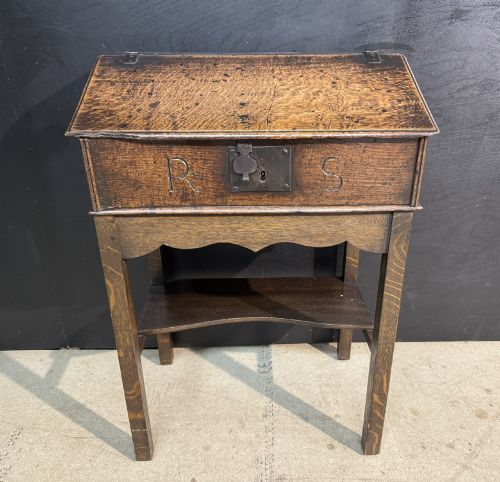
Dating is broad rather than precise. Victorian accounts for 280 listings and "19th Century" another 119, against only 147 carrying a clean year. Where decades are given they bunch in the middle of the century, the 1850s alone supplying 38. Georgian and Regency together make up around 90. The category heading also carries stationery cabinets, correspondence and despatch boxes, oak bible and desk boxes and a few lap desks, which are desktop forms rather than slopes.
What Separates Them
Timber and figure do most of the work. Burr walnut, named in 69 titles, and figured walnut in 25, sit consistently in the upper half of the range, as does coromandel, the dense striped timber used for showier boxes. Plain walnut and plain oak slopes with nothing else said about them sit at the bottom.
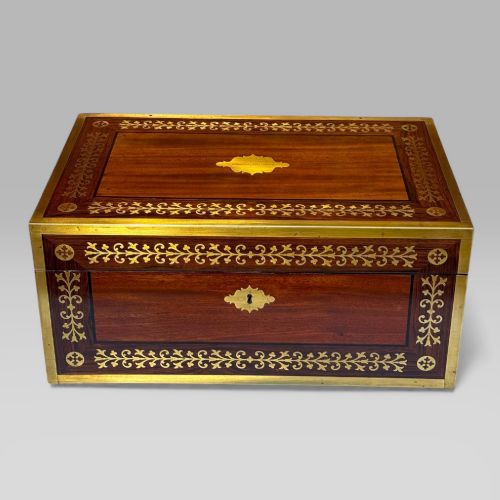
Brass pushes a slope upward, whether it is binding fitted over the edges or inlay set flush into rosewood. Brass-inlaid Regency rosewood and brass-bound campaign boxes recur through the upper part of the range. So does fitted complexity: secret drawers are named in 53 titles and appear at every level, but candle sconces, sovereign sections, bi-fold surfaces and metamorphic actions belong to the top.
Association and decoration raise the ceiling further. Titles naming an officer, a captain or a regiment concentrate high in the range. So do Tunbridge mosaic boxes carrying identified views, and marquetry or mother-of-pearl work where the decoration is the point. At the far edge sit one-off colonial pieces, vizagapatam antler inlay, reeded Ceylonese ebony, Japanese lacquer, each appearing once across the whole archive.
Antique Writing Slopes Retail Price Guide 2026
Typical UK retail prices for writing slopes, calculated from the Sellingantiques database of over a million retail prices indexed since 2003. This retail price guide relies exclusively on Sellingantiques data; no external sources or auction records are used, so the figures do not describe the wider market.
The top sale of the last year on Sellingantiques was a 19th century Chinese camphor wood and ebonised writing slope, in February 2026.
The Antique Writing Slopes Glossary
- Writing slope
- A hinged box whose lid opens flat into a sloped writing surface, usually leather-lined, with wells and compartments inside.
- Brass bound
- Corners and edges protected with fitted brass strips or mounts, named in 101 of the titles in this category.
- Brass inlaid
- Brass lines or scrollwork let flush into the veneer rather than applied over the surface. Common on Regency rosewood.
- Secret drawers
- Small drawers or compartments concealed behind or beneath the writing well, named in 53 titles and found at every level.
- Burr walnut
- Veneer cut from a burr growth on the tree, giving swirled, knotted figure. In 69 titles, and consistently priced above plain walnut.
- Tunbridge ware
- Mosaic banding built up from bundles of coloured woods sliced across the grain, a Kentish speciality named in 26 titles.
- Bi-fold slope
- A slope whose writing surface opens out twice for extra length. Turns up only a handful of times, usually among campaign pieces.
Antique Writing Slopes: Frequently Asked Questions
What wood are most writing slopes made from?
Walnut is the defining timber, appearing in 192 of 687 listings, with burr walnut in 69 of those and figured walnut in 25.
Rosewood, mahogany, coromandel and oak follow. Coromandel, a dense striped timber from the ebony family, tends to appear on the showier boxes.
Why do listings say Victorian rather than a year?
Dealers here lean on broad period labels. Victorian covers 280 listings and "19th Century" another 119, while only 147 of 687 carry a clean year.
Where decades are named they cluster mid-century, so Victorian in this category usually means somewhere between 1840 and 1890.
How common are secret drawers?
They're named in 53 titles, roughly one slope in thirteen. Most are small drawers or compartments sitting behind or beneath the writing well.
They turn up at every level, from modest walnut boxes upward, so their presence alone doesn't place a slope at the top of the range.
What is a campaign writing slope?
One built for military travel: reinforced construction, brass at the corners and edges, often flush handles. Campaign appears in 106 titles and military in 23.
The same strand carries the unusual mechanics, including bi-fold and roll-top surfaces and metamorphic lap desks, which appear only a handful of times.
Are stationery cabinets the same thing?
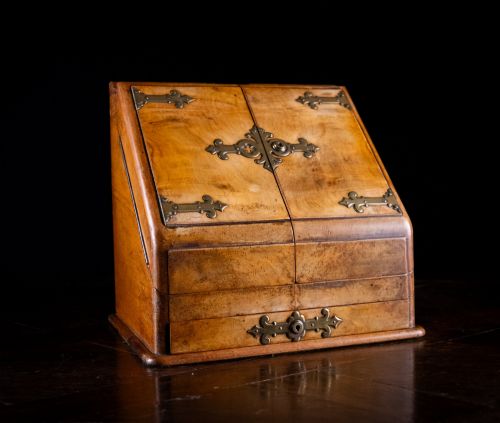
No. A stationery cabinet is a desktop fall- or drop-front case for paper and envelopes, without the sloped opening surface.
They're filed alongside slopes on Sellingantiques, together with correspondence and despatch boxes, oak bible boxes and a few lap desks. They form a larger share of current stock than of the archive.
Do writing slopes carry maker's names?
Rarely as a pattern. Retailer names surface in the odd listing, appearing once or twice each rather than running through the category.
What listings do name is the lock. A Bramah patent lock gets mentioned as a selling point in several titles.