



Antique Music Boxes
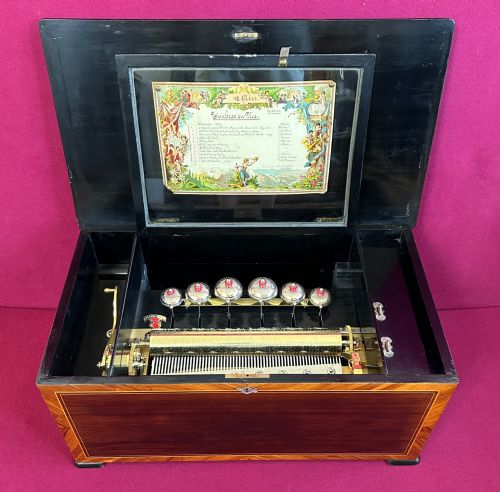
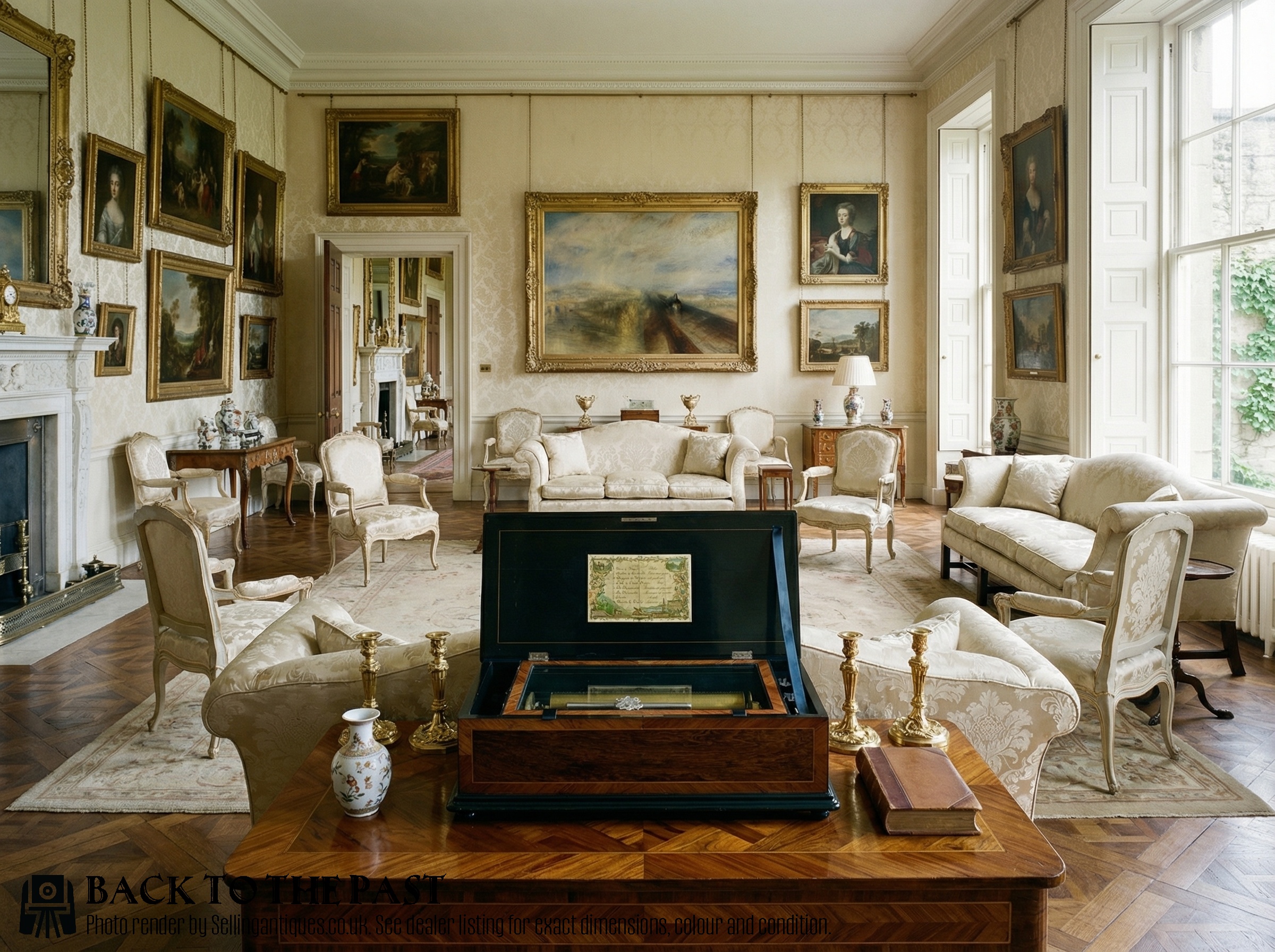
A pinned brass cylinder plucking a tuned steel comb inside a wooden case, wound by key or lever, playing a stated number of airs for the Victorian drawing room.
Antique Music Boxes
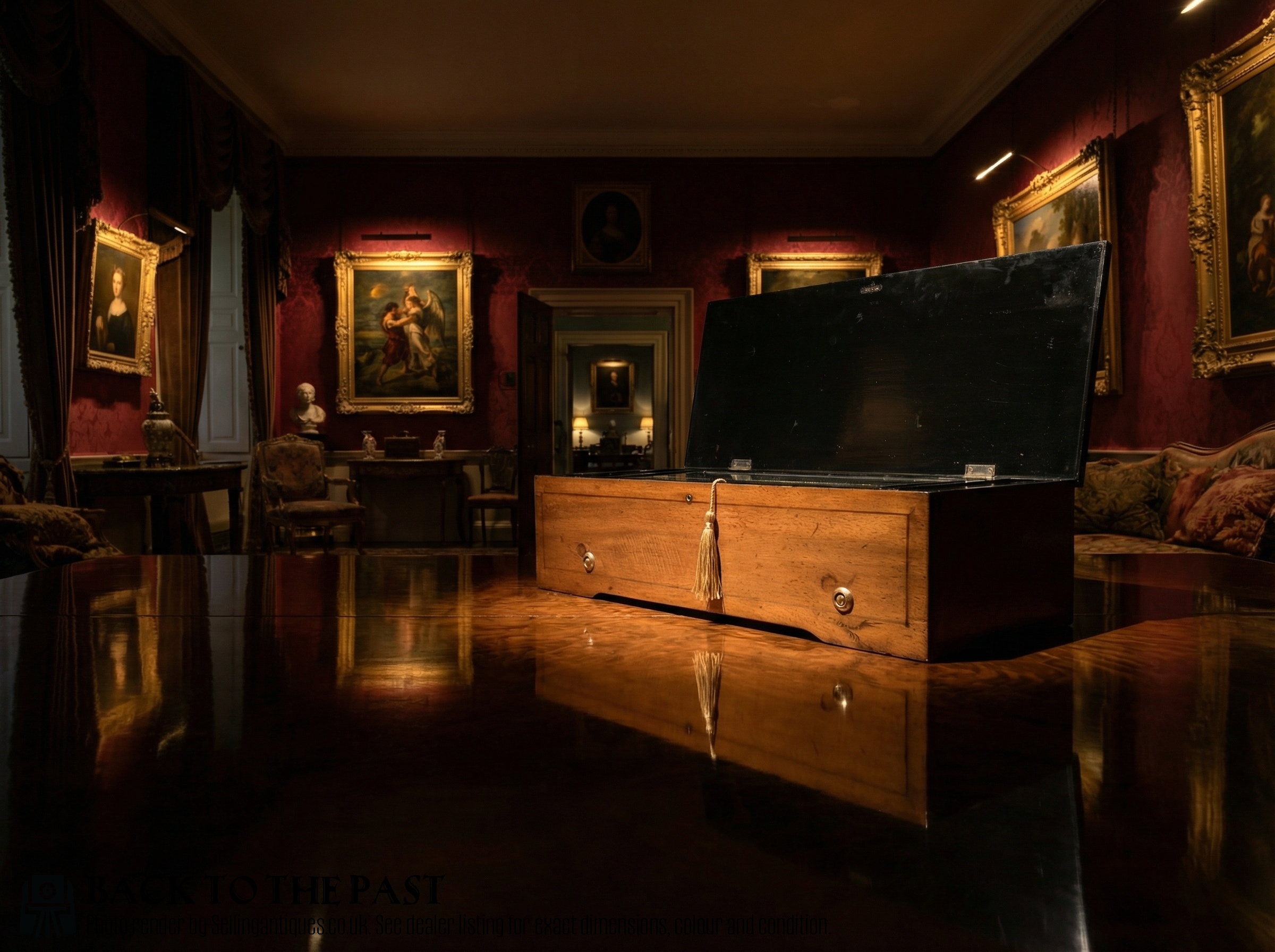
Cylinder musical boxes came out of Switzerland around the turn of the 19th century, first as movements inside watches and snuffboxes, then as free-standing cased boxes for entertainment at home. Disc-playing machines, with interchangeable perforated tune sheets, followed later in the century.
The Swiss cylinder box of the mid-to-late 19th century dominates what comes to market on Sellingantiques. Titles lean on the same handful of facts: origin, case timber and the tune count. "Victorian" appears in roughly a third of titles, "Swiss" in a quarter, with "cylinder" and "airs" close behind. Tune counts named run four, six, eight, ten, twelve and twenty.
Below the plain airs box sit two smaller groups. Bells boxes, with bells mounted above the bedplate and often struck by figural strikers, turn up in eight titles, sometimes as three bells, sometimes six, once with drums as well. Small jewellery, cigar and novelty boxes carrying a modest movement cluster at the bottom of the range.
Dating is broad rather than precise. Only 23 of 94 listings carry a clean year, while Victorian accounts for 50 and "19th Century" for another 16. "Circa 1875" recurs across dozens of titles, which makes it a house convention more than a firm attribution. Disc machines, a singing bird box and a juke box appear as one-offs.
Where The Range Splits
Tune count is the first divider. Four- and six-air boxes run through the lower and middle of the range, while ten, twelve and twenty air movements gather at the top. A twelve-air box by a named Swiss maker sits near the highest end of the sampled listings.
Added effects push a box upward. Bells are the commonest extra, and drums-and-bells, harp, piccolo and zither arrangements and boxes described as orchestral all sit in the upper half. Size works the same way: "large", "extra large" and "fine large" recur high up, "of small size" at the modest end.
Then the case. Rosewood with inlay, burr yew, marquetry and coromandel are named on the better boxes, while plain and undescribed cases carry the cheaper listings. A named maker on the bedplate lifts a box again, which is why the tune sheet and the stamp get quoted in titles when they are there.
Antique Music Boxes Retail Price Guide 2026
Typical UK retail prices for music boxes, calculated from the Sellingantiques database of over a million retail prices indexed since 2003. This retail price guide relies exclusively on Sellingantiques data; no external sources or auction records are used, so the figures do not describe the wider market.
"Circa 1875" is the single most quoted date across music box titles on Sellingantiques, recurring across dozens of them.
Nicole Freres
The Antique Music Boxes Glossary
- Air
- One melody on the cylinder; titles state the count, running from four up to twenty in this category.
- Cylinder
- The pinned brass barrel that plucks the comb, and the standard mechanism throughout.
- Comb
- The tuned steel plate whose teeth are plucked to sound the notes.
- Bells in view
- Bells mounted visibly above the bedplate, usually struck by figural strikers; also written "bells in sight".
- Zither
- A tissue or paper attachment held against the comb, giving a buzzing, mandolin-like tone.
- Serial number
- Movement number stamped on the bedplate, quoted in one title in the whole archive.
Antique Music Boxes: Frequently Asked Questions
How many come up for sale each year?
About eleven reach the market on Sellingantiques in a year, spread across some thirty-five different dealers.
No single dealer defines the category, so the descriptions vary in what they choose to tell you.
What does the number of airs mean?
An air is one melody pinned on the cylinder. Titles state the count, and sampled boxes run four, six, eight, ten, twelve and twenty.
The lower counts spread through the modest and middle listings. Ten, twelve and twenty gather toward the top.
Why is circa 1875 quoted so often?
It recurs across dozens of titles, making it the most quoted date in the archive. It reads as a shared convention among dealers for a mid-to-late Victorian box.
Only 23 of 94 listings carry a clean year at all. The rest sit under Victorian or "19th Century".
The dated field stretches from 1750 to 1950, but those ends are single outliers.
Which case timbers turn up?
Rosewood and walnut lead, with burr yew, amboyna, coromandel and beech also named in titles.
Inlay and marquetry are cited on the better examples, while the cheaper listings often leave the case undescribed.
Are all of them cylinder boxes?
The bulk are. A pinned cylinder and comb is the standard mechanism across the category.
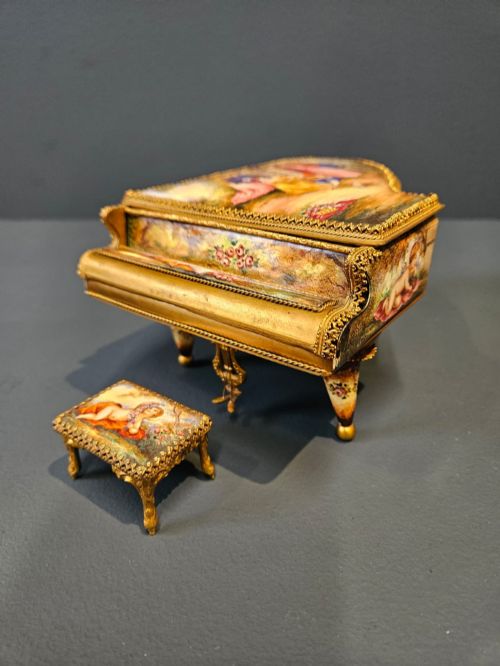
A small number are not: a Symphonion, a box with eleven discs, an Austrian enamel and ormolu piano box, a singing bird box, a 1950s juke box. Each appears once.
What do bells add to a box?
Bells sit above the bedplate and are struck as the cylinder turns, often by figural strikers. Titles describe three bells, six bells, "bells in view" and "bells in sight".
They are the commonest extra, in eight titles, and once combined with drums. Boxes with them sit in the upper half of the range.