

Antique Mahogany Boxes
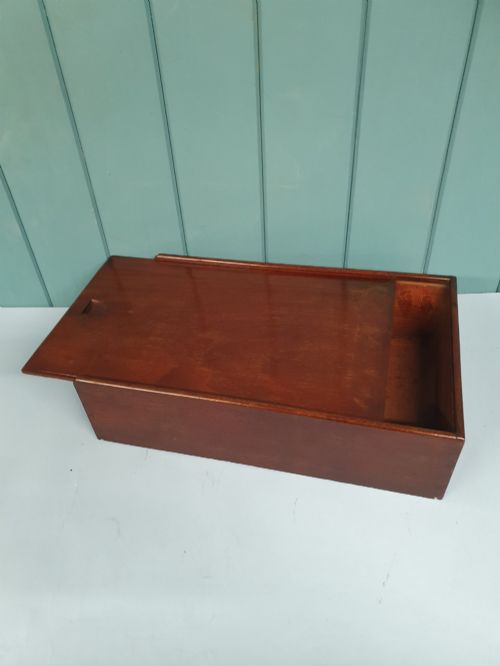
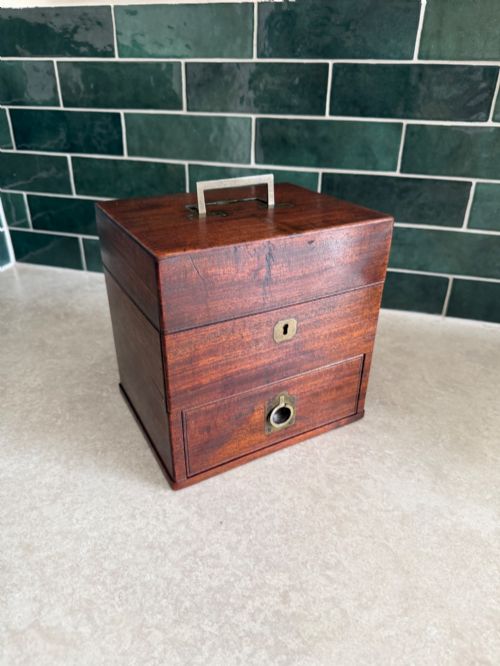
Small mahogany-cased boxes made in Britain from the mid-18th century onwards, built to hold and lock away the things worth locking away: tea, cutlery, candles, writing materials, medicines and jewellery.
Antique Mahogany Boxes
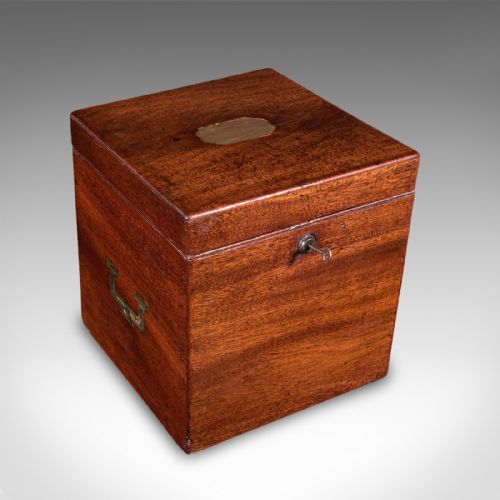
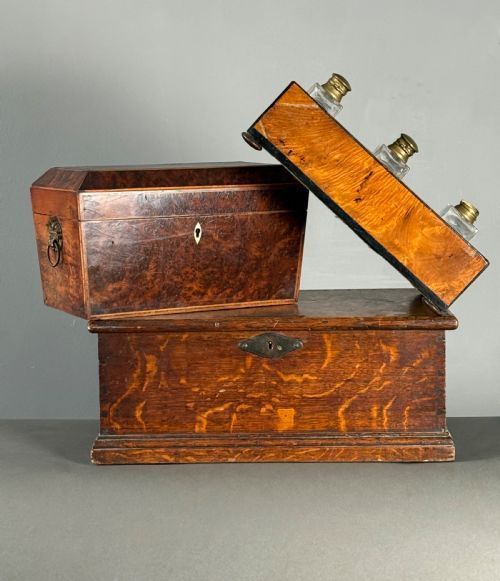
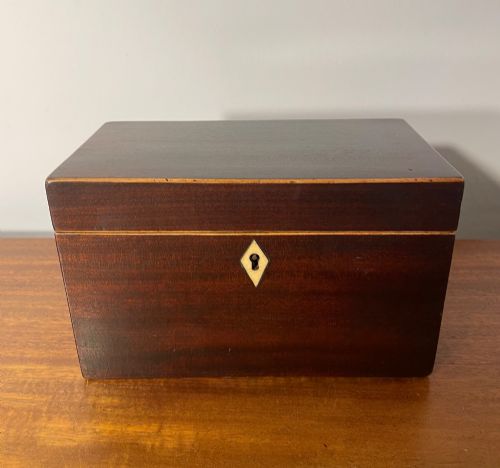
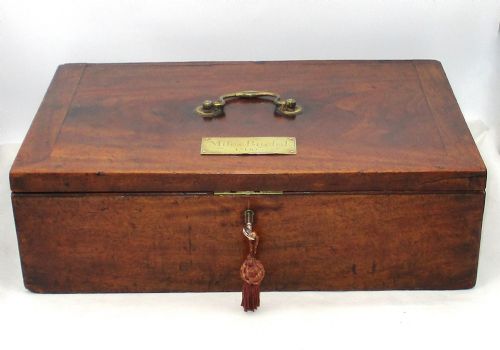
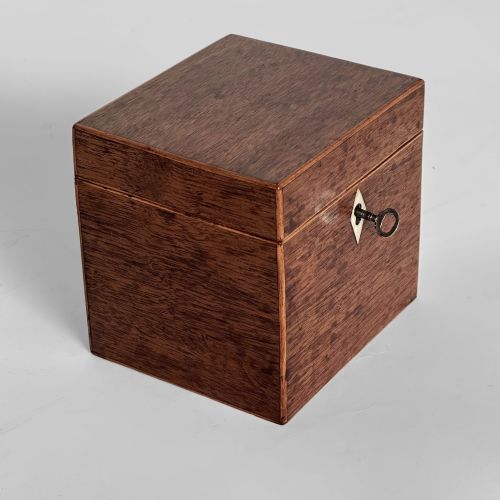
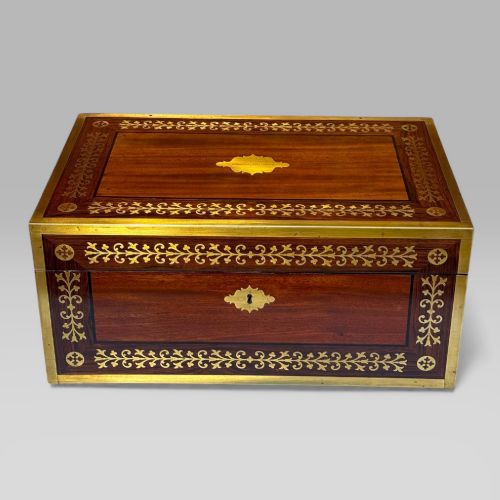
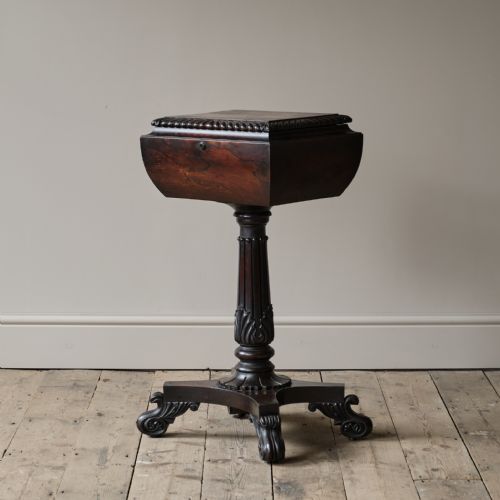
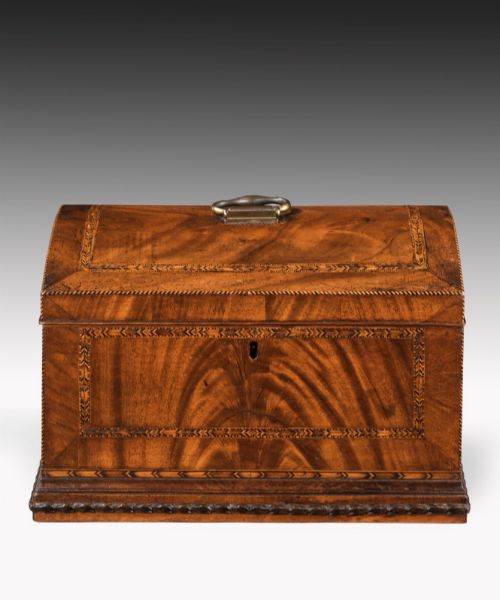
The heading covers a wide family of lidded mahogany containers, veneered or solid, sold as boxes rather than furniture. Line and star inlay runs through them, and brass binding or brass inlay turns up throughout. Sizes go from stamp boxes and snuff shoes of a few inches to teapoys, cellarets and boxes on stands that sit on the floor.
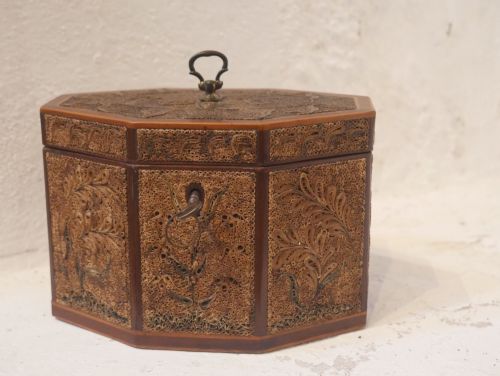
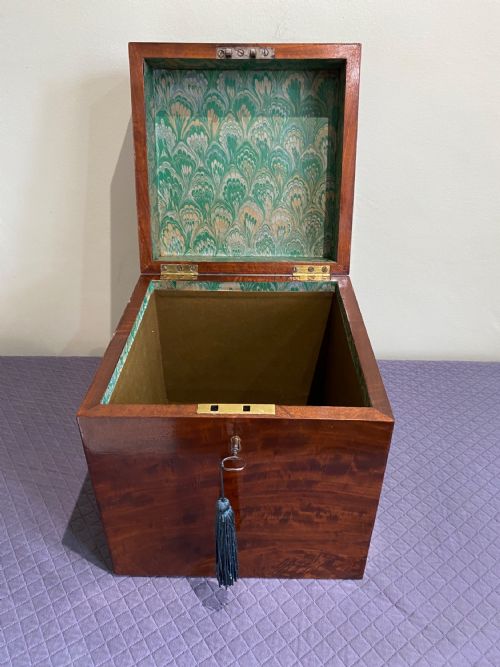
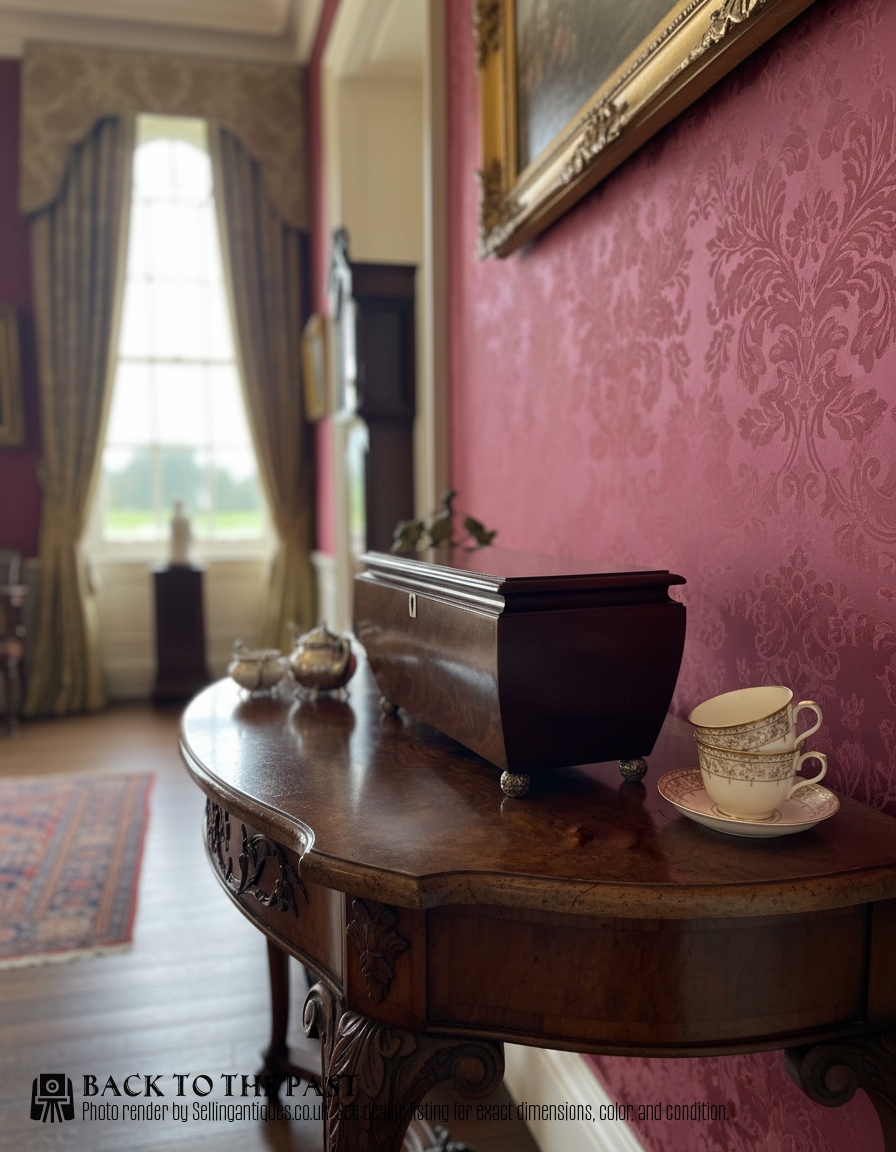
The tea caddy is the single biggest form, about a quarter of everything listed on Sellingantiques. It comes as a single compartment, as twin and triple-lidded chests, and in sarcophagus, oval, octagonal, hexagonal, bombé and serpentine shapes. Some are described as complete with their canisters or mixing bowl. Writing slopes and writing boxes are next, roughly one in eight, many of them brass-bound campaign pieces, some with secret drawers.
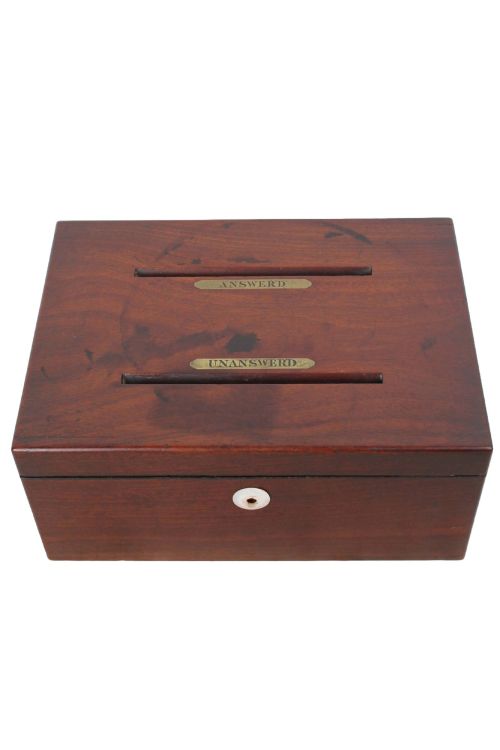
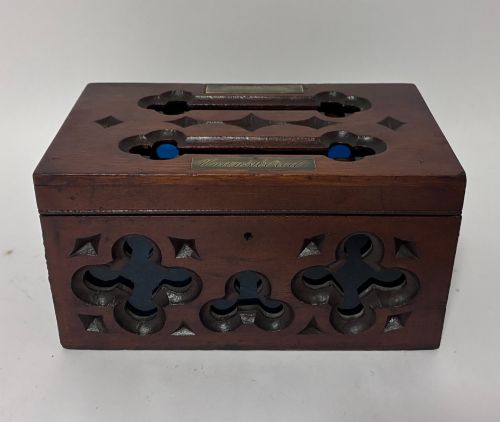
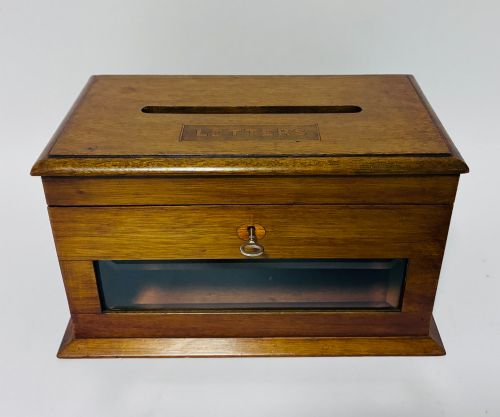
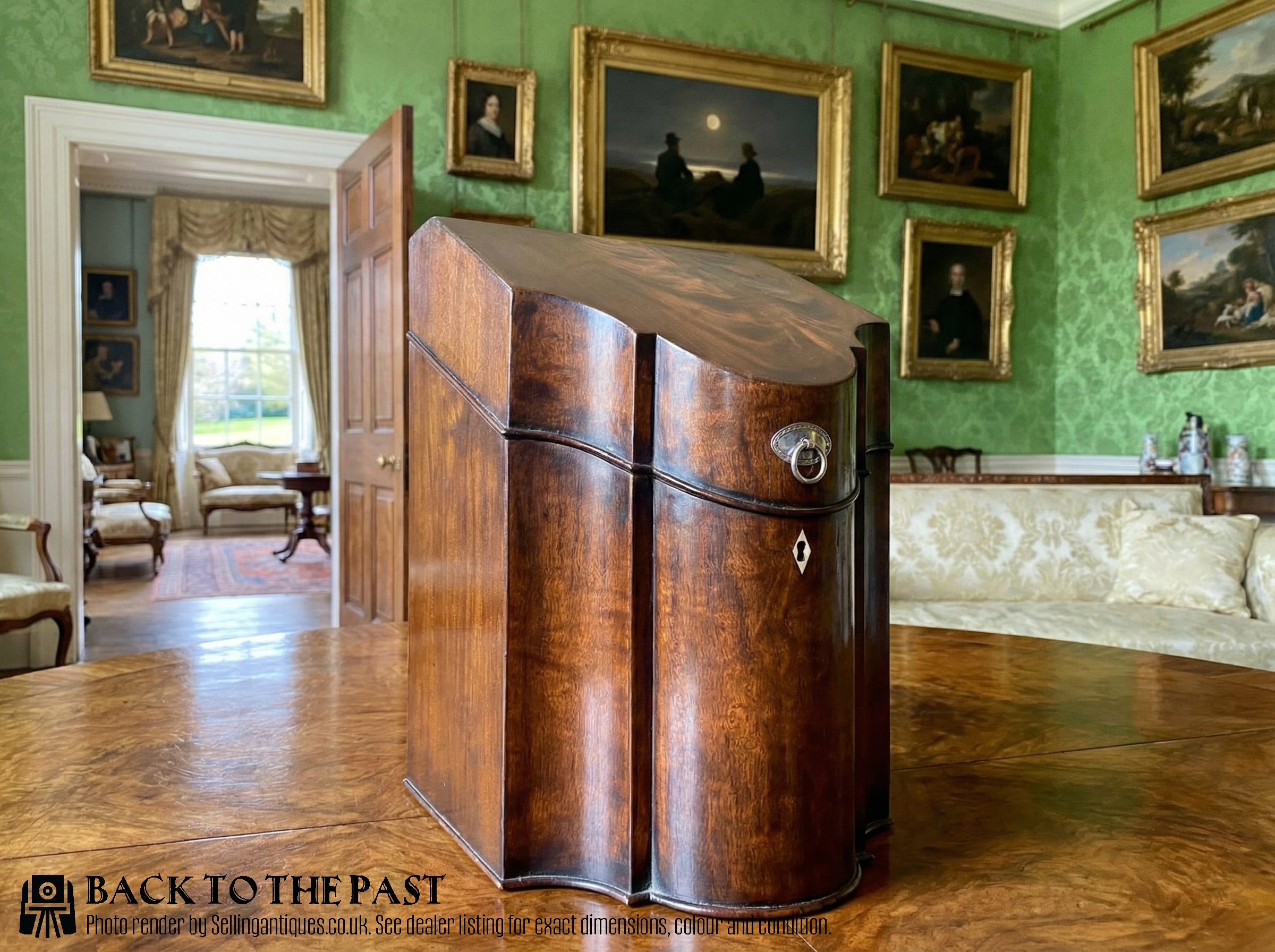
Knife and cutlery boxes are a smaller population but a loud one: serpentine and bow fronts, silver mounts, matched pairs and lidded urns. Campaign and travelling boxes overlap with the slopes, and take in gent's boxes, jewellery boxes, decanter and pistol cases. The tail is domestic and trade work: apothecary, candle, salt, spice, sewing, stationery, artist's and games boxes, ballot and post boxes, and treen snuff shoes.
Dating is loose. Dealers file these under period labels far more often than years, with Georgian by a wide margin the commonest, then 19th Century and Victorian. Where clean years appear they run from 1700 to 1930, and the odd listing carries a period label that argues with its title, so read the period field as shorthand. The field is overwhelmingly English; a Chinese hongmu travelling box or a Dutch tobacco barrel is the exception.
What Sets Them Apart
Form and pairing do most of the work. Matched Georgian knife boxes and lidded cutlery urns sit at the very top of the range, and the word pair in a title usually means one of those. Single small boxes, whatever they were made to hold, sit at the other end. Shape complexity pulls the same way: sarcophagus, bombé, serpentine, oval, octagonal and hexagonal outlines recur among the stronger pieces, and large beats small.
Decoration separates the rest. Star and conch-shell inlay, moth inlay, boxwood lines, satinwood and ebony stringing, crossbanding and silver mounts all cluster well above plain carcases. Brass counts too, both as inlay and as binding on the corners and edges of campaign and travelling boxes. Timber figure matters alongside it, with flame and flamed mahogany named often, and fiddle back, quilted, bur yew, amboyna, tulipwood and partridge wood appearing on the better work.
Then there's the inside. A caddy with its original canisters, an apothecary box with its bottles, a slope with its fitted interior intact, a cutlery box still holding cutlery: only a dozen or so listings describe a box as complete, and that word carries weight when it appears. A secret drawer is worth naming for the same reason.
Antique Mahogany Boxes Retail Price Guide 2026
Typical UK retail prices for mahogany boxes, calculated from the Sellingantiques database of over a million retail prices indexed since 2003. This retail price guide relies exclusively on Sellingantiques data; no external sources or auction records are used, so the figures do not describe the wider market.
Tea caddies are the backbone of the mahogany box archive on Sellingantiques: 224 titles carry the phrase, in ovals, octagons, hexagons and sarcophagus shapes.
The Antique Mahogany Boxes Glossary
- Tea caddy
- A lidded box for loose tea, either a single compartment or divided into two or three lidded canisters.
- Writing slope
- A box that opens into a sloping leather- or baize-covered writing surface, usually with ink and pen wells inside.
- Knife box
- A slope-topped or urn-shaped case with a slotted interior for cutlery, often made and sold as a pair.
- Brass bound
- Corners and edges strapped in brass for strength in travel, almost always on campaign and travelling pieces.
- Sarcophagus
- A caddy or work box with outward-sloping sides and a stepped lid, taking its shape from a classical tomb.
- Teapoy
- A caddy raised on its own pillar and base, standing as a small piece of furniture rather than sitting on one.
Antique Mahogany Boxes: Frequently Asked Questions
Which form is most common?
The tea caddy, by a distance. Around a quarter of the listings on Sellingantiques are caddies, appearing as singles, twins and triples, and in oval, octagonal, hexagonal, bombé and sarcophagus shapes.
Writing slopes and writing boxes come second, at roughly one in eight. Knife and cutlery boxes are third.
What does campaign mean on a mahogany box?
It means the box was built to travel with an officer or traveller. Brass binding on the corners and edges, flush handles and sturdy construction are the marks of it.
The word appears in a good number of titles, and it overlaps heavily with the writing slopes. Gent's boxes, jewellery boxes, decanter cases and pistol cases turn up in the same group.
Are these boxes usually signed or stamped?
No maker's name recurs across the category. Listings are described by form, shape, timber and decoration rather than by workshop.
Where a name does appear it stands alone, on a single piece, rather than pointing to a house style you'd meet again.
How reliable are the dates given in listings?
Only a minority of listings carry a clean year. The rest use period labels, with Georgian much the commonest, then 19th Century and Victorian.
Where years are given they spread from 1700 to 1930, and the decade groupings are thin and scattered. A handful of entries carry a period label that doesn't match the title, so the field reads as dealer shorthand.
Do knife boxes come as pairs?
They're the form most often sold that way. Matched Georgian pairs and lidded cutlery urns occupy the very top of the range.
Serpentine and bow fronts are usual on them, and silver mounts appear on some. Singles turn up too, and sit lower.
What unusual shapes turn up in this category?
Snuff takes odd forms: carved snuff shoes and high-heeled snuff boots, one measured at 110mm, plus a bellows-shaped snuff box.
Beyond those, the samples throw up a funnel-shaped club voting box, a coopered money box, a four-section spice tower, a counter-top needle box for a haberdasher, a running-board tool box for a motor car and a free-standing hotel post box.