23,571  PAGES BROWSED TODAY PAGES TODAY • 112 ANTIQUES UPLOADED TODAYNEW ARRIVALS
GIFTS
112 ITEMS ADDED TODAY
Sort Order
Items Per Page
Antiques dealer?
Join as a Seller
Browse Categories
Sort order
Relevant Links
Items per page
ID #SA1164373
SOLD
Email Phone
Save
18th-century Welsh Painted Sycamore Child’s Commode Chair
Sold by Whites Antiques
sold SA1164373
Sorry, but this item has been sold.
Whites Antiques

Whites Antiques

Sellingantiques Verified Since May 2023
Browse dealers 131 items
  • About Us
    White's antiques collective is the perfect resource for both trade and private clients
Id #SA1164373
PDF SHARE
SAVE

18th-century Welsh Painted Sycamore Child’s Commode Chair

18th century
Sold 4 December 2025 · Whites Antiques
This “18th-century Welsh Painted Sycamore Child’s Commode Chair” found a buyer.

It was listed by Whites Antiques. Sold pieces stay on Sellingantiques as a record of what has passed through, and the next one is rarely far away.

Description

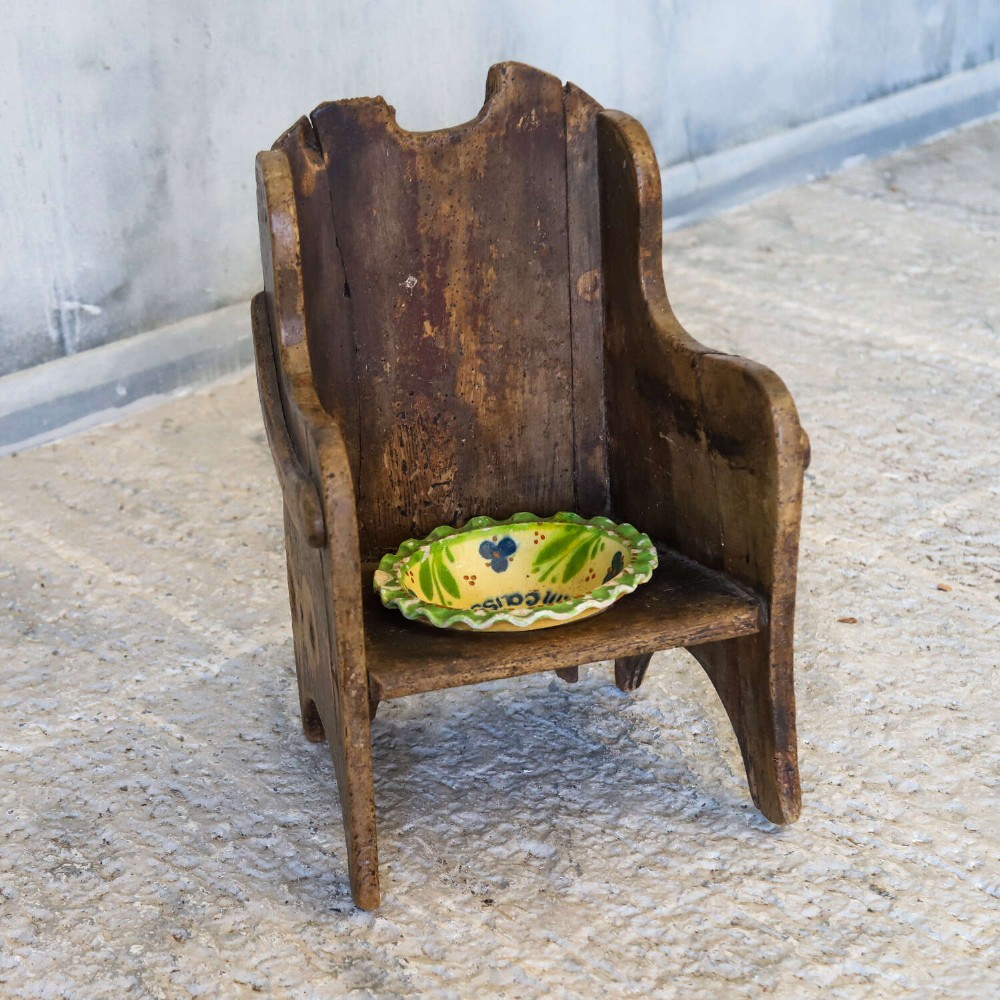
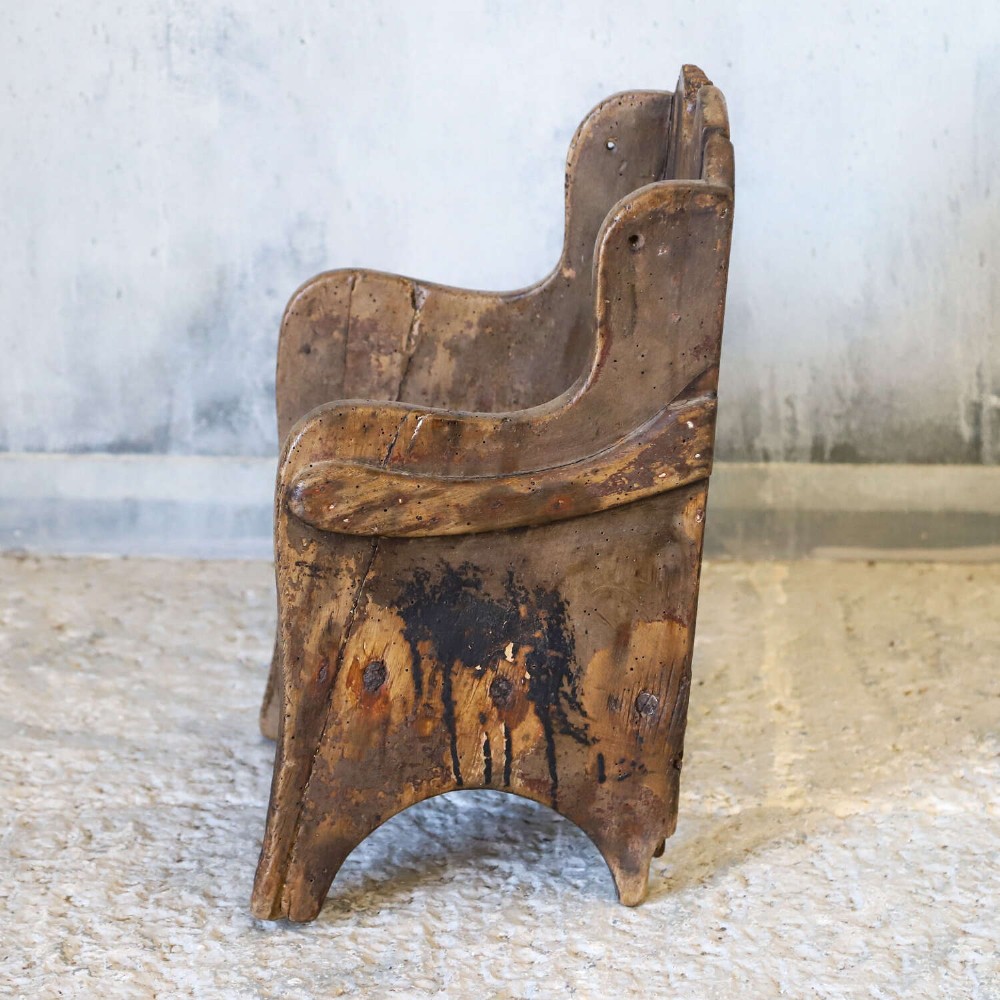
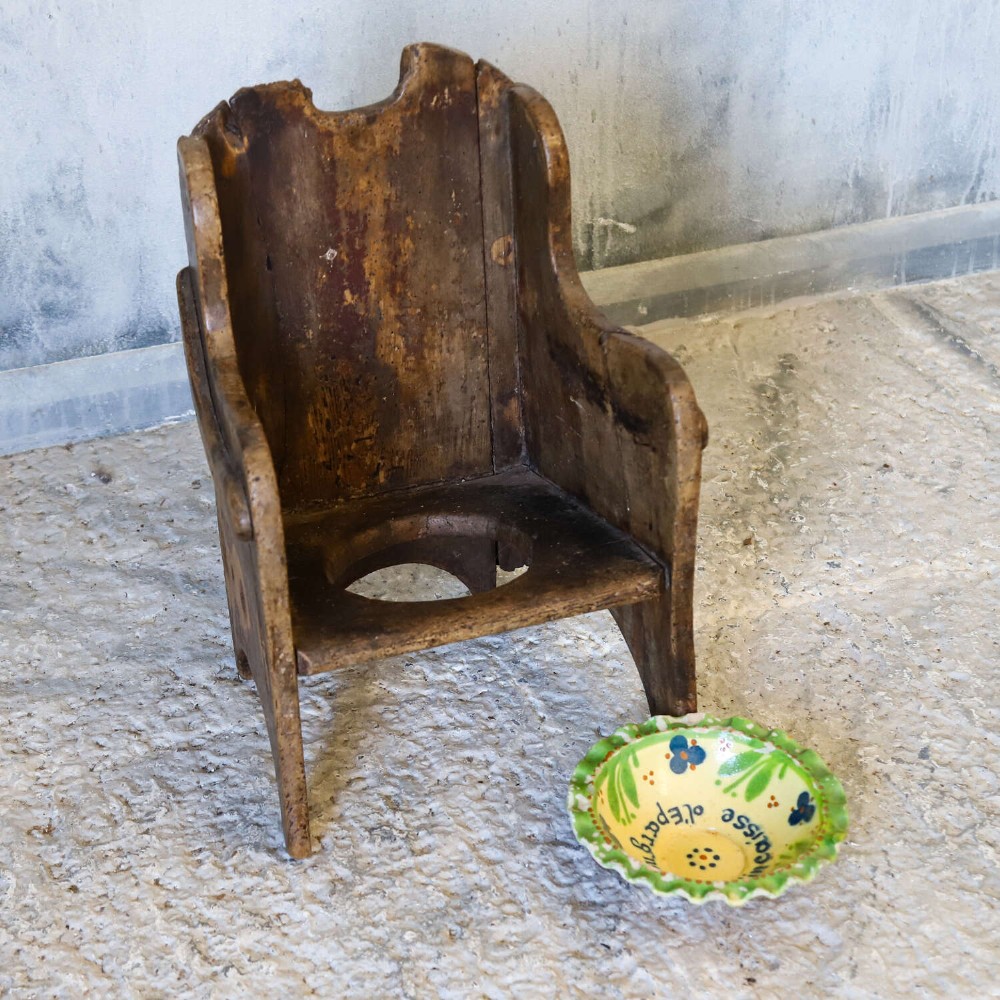
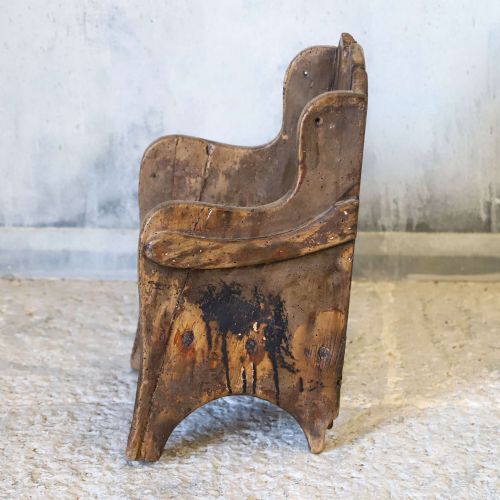
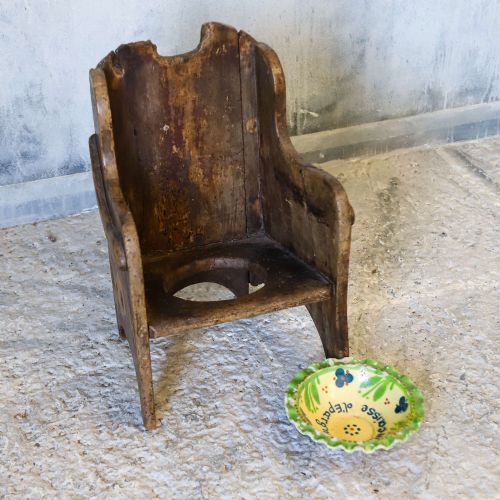
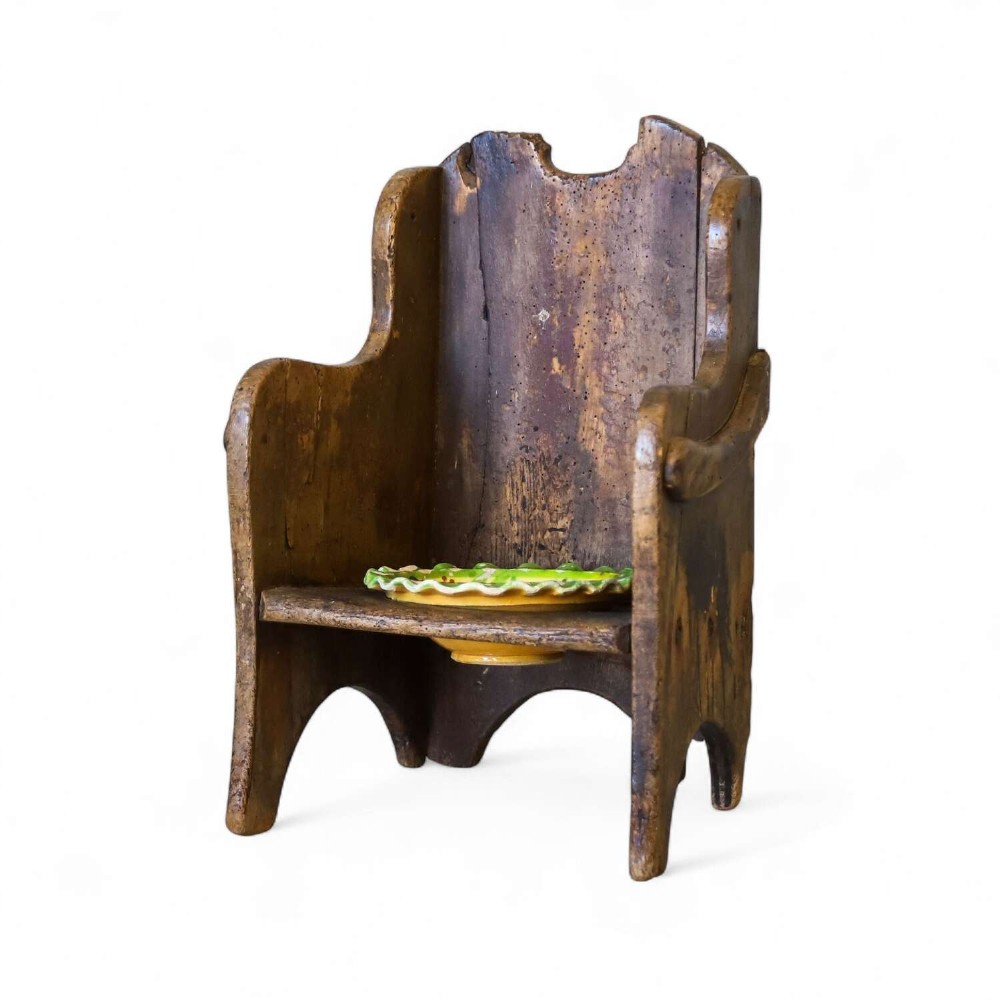
A rare and charming survivor from 18th-century North Wales - a primitive boarded child’s commode chair in painted sycamore, full of rustic character and social history.

Date: 18th century

Origin: North Wales, United Kingdom
Material: Painted sycamore

Construction: Primitive boarded form with integral arms and high backrest

Finish: Original or early painted surface with age-worn patina

Condition: Structurally sound; surface wear and marks consistent with age and use
Dimensions: H: 50cm (19.7") | W: 34cm (13.4") | D: 27cm (10.6")

Delivery: Not included - please use the Request Delivery Quote feature before completing your order

Heritage & Craftsmanship

This modest yet evocative piece would once have been a familiar sight in rural Welsh homes. Made from sycamore boards - a timber valued for its durability and resistance to staining - it was built for daily use, yet retains a quiet dignity in its simple lines and honest construction. The painted finish, now softly worn, adds to its charm and authenticity.
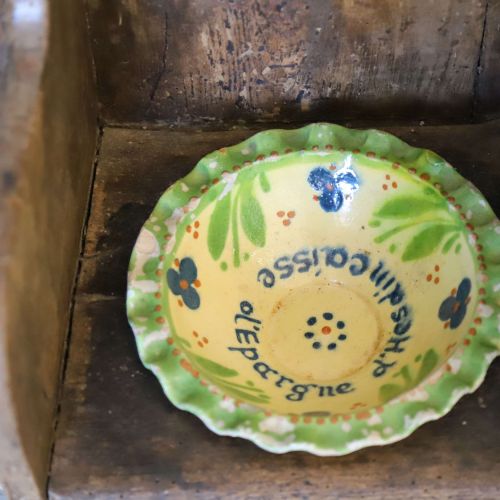
Children’s commodes of this period rarely survive, as they were often discarded once outgrown. This example’s survival for over two centuries is a testament to the quality of its making and the care it has received.
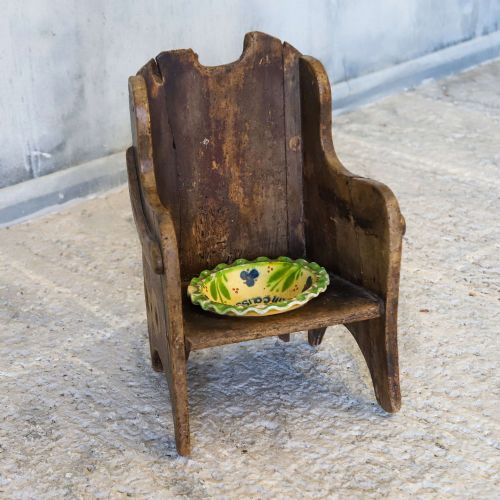
Visual Details

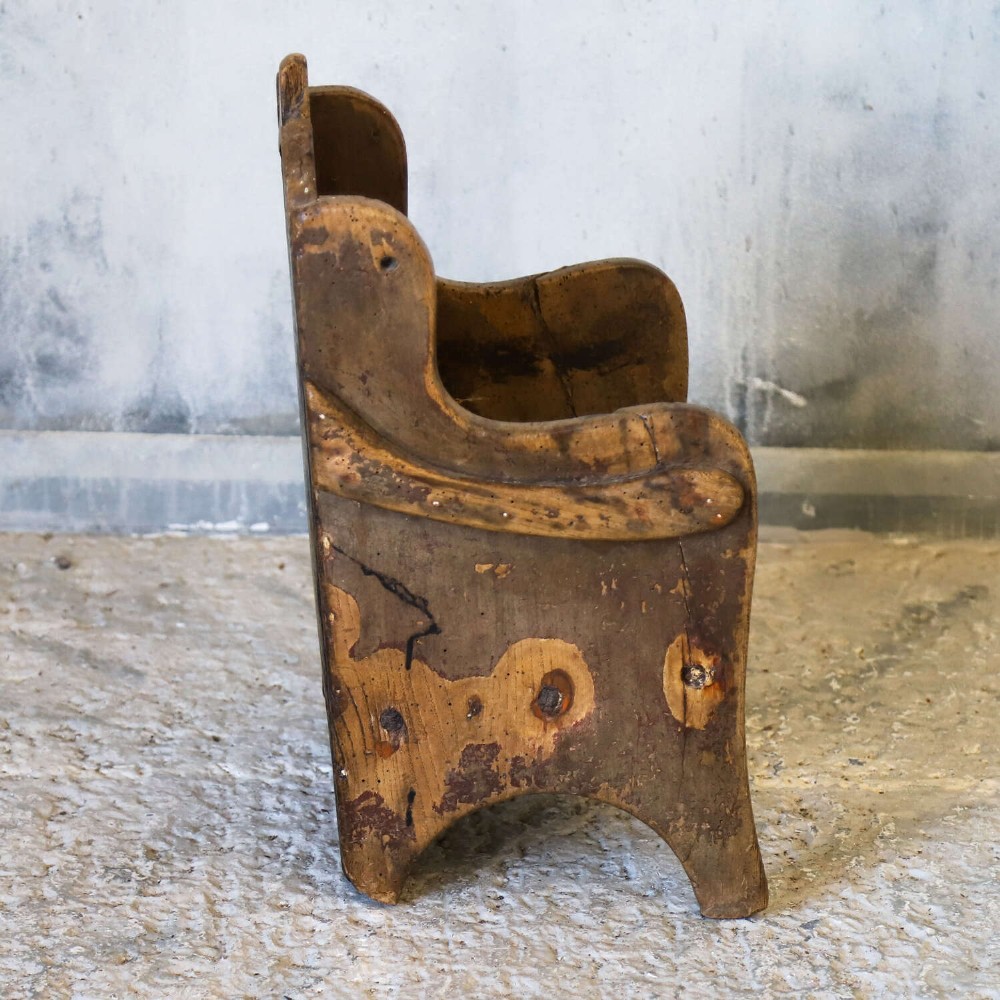
The high back and shaped arms give the chair a distinctive silhouette, while the painted surface has mellowed to a pleasing, time-softened patina. The wear patterns tell the story of generations past, making it as much a piece of folk art as a functional object.
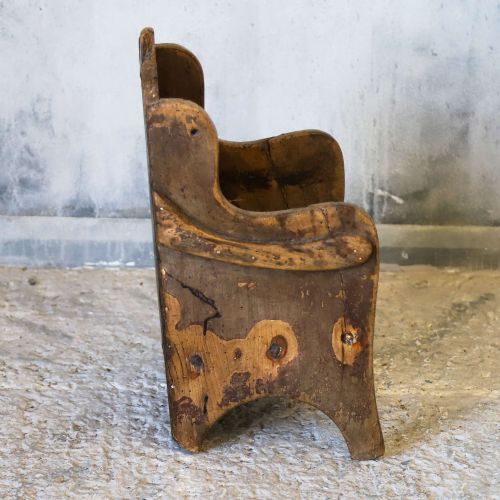
Styling Suggestions

Today, this commode chair makes a fascinating decorative accent - perfect in a country kitchen, hallway, or nursery-themed display. It could be styled with a potted plant, used as a stand for folded linens, or simply appreciated as a conversation piece that bridges the gap between furniture and social history.
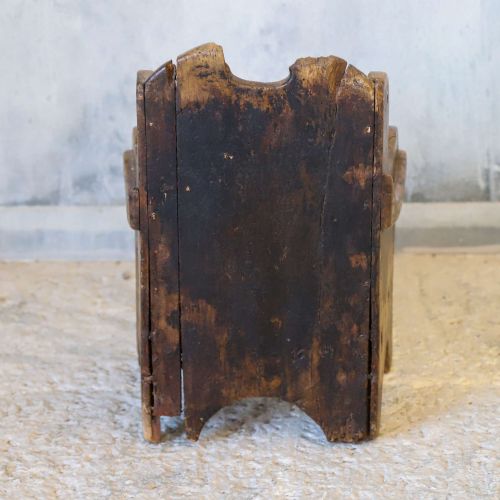
Sustainable Style

Choosing antique furniture preserves traditional craftsmanship, reduces waste, and brings authentic history into your home.

Purchase with Confidence

Transparent Condition Details: Please examine all photographs carefully for a complete understanding of each item’s condition. These images form a crucial part of our detailed condition report, offering clear insights into the craftsmanship, patina, and quality of this piece.
Trusted Heritage: We are an established and successful business with many happy clients from both trade and private sectors. You are warmly invited to visit our beautiful showroom and shop in West Sussex to experience our collection firsthand.
Delivery: We do not include delivery in our prices, as this depends on factors such as location and access. Options include:

Arrange your own collection from our address

Use the Request Delivery Quote feature on the listing

Email us for combined delivery quotes if purchasing multiple items

Use Proovia Delivery who provide a two-person service

Export/Worldwide Shipping: Please request a quotation from any of the following, quoting the item link:

Alan Smith Europe: info@alansmitheurope.com

Charlie Godwin: guildford@packsend.co.uk

Neil Curl Transport: neil@neilcurltransport.co.uk

Simon Hall Limited: exportdesk@simonhalllimited.com

Date of Manufacture

Whites Antiques has dated this Antique Sycamore Commode Chair to the 18th Century.

Physical Dimensions
Height
50cm (19.69")
Width
34cm (13.39")
Depth
27cm (10.63")
Reference Numbers
Sellingantiques Reference
SA1164373
Dealers Internal Reference
BR052
Dealers Notes

We do not include delivery in our prices as this is dependent upon many factors such as whether it is mainland or overseas. The following options are available to you:-

• You can arrange your own collection from our address

• You can fill in the delivery request option

• You can email us for further information if there is more than one item

• Proovia Delivery offer a 2 man delivery system

Description
A rare and charming survivor from 18th-century North Wales - a primitive boarded child’s commode chair in painted sycamore, full of rustic character and social history.

Date: 18th century

Origin: North Wales, United Kingdom

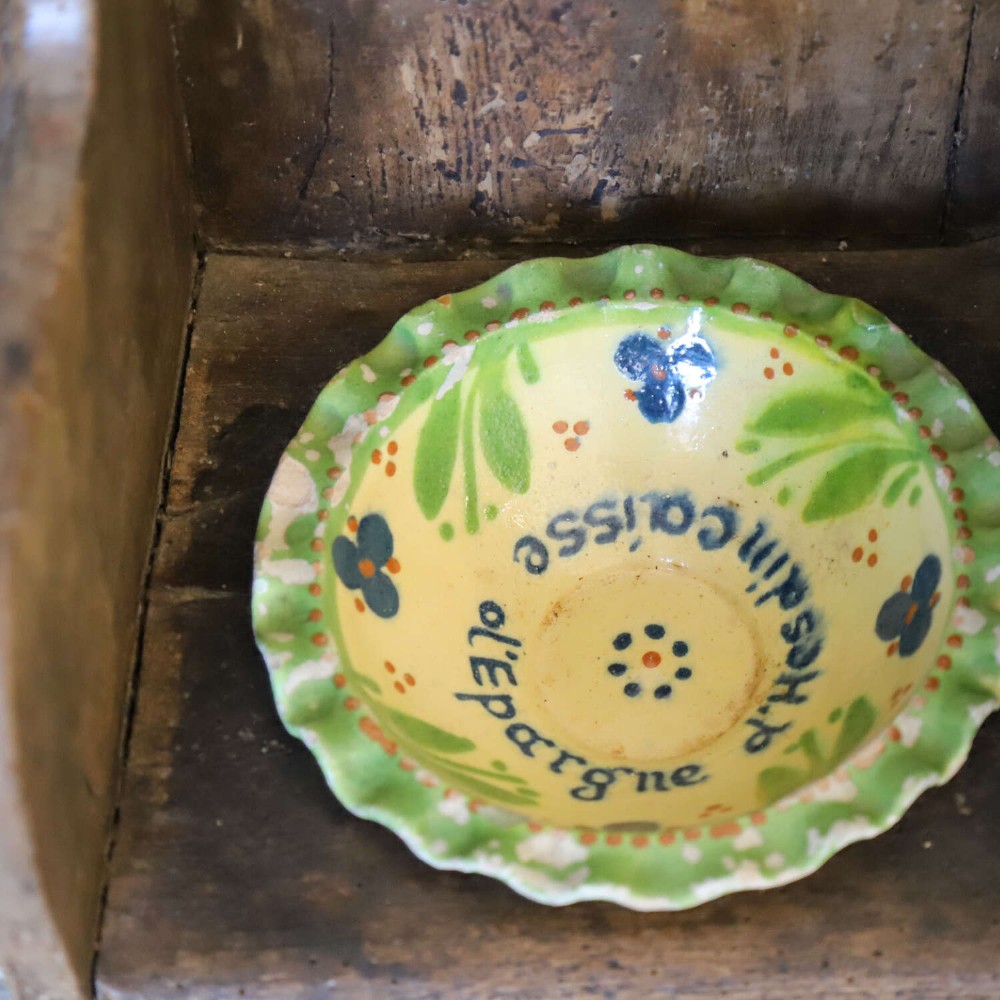
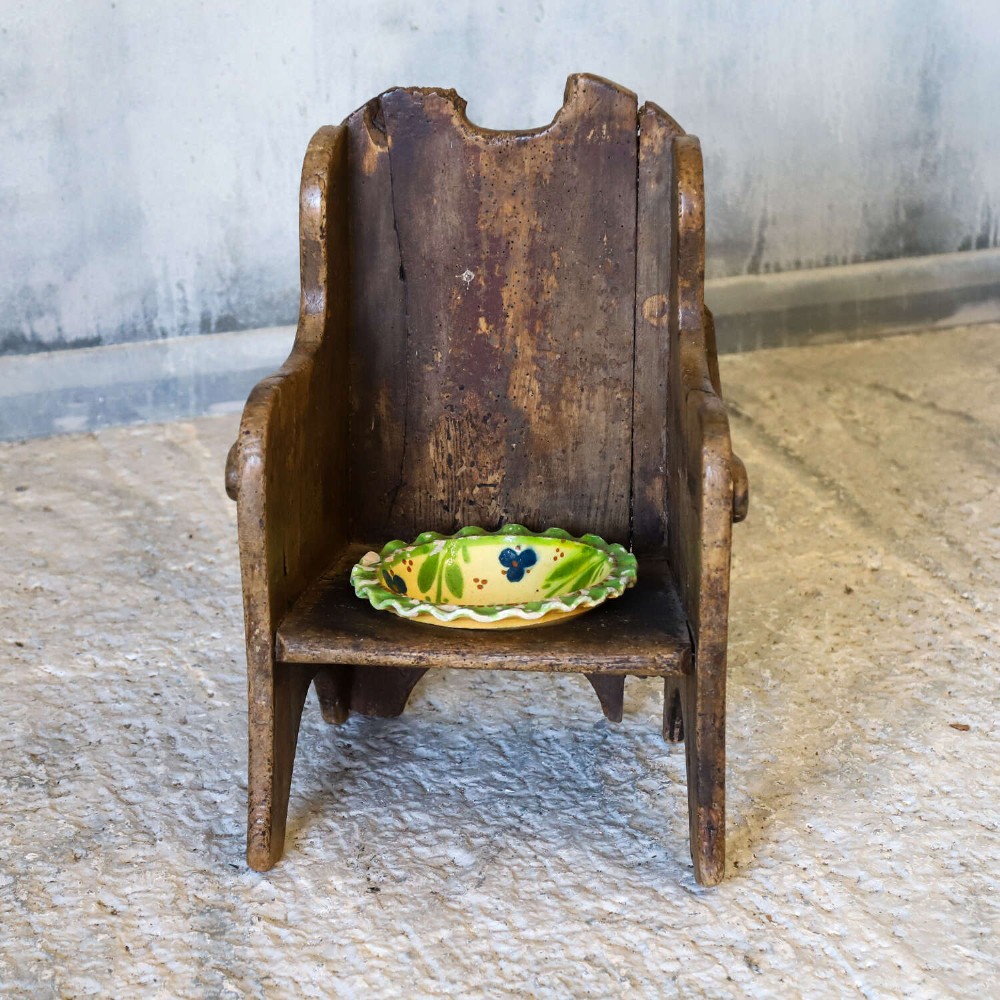
fig 1. An 18th-century wooden childs commode chair with a high back, shaped arms, and an integrated ceramic chamber pot resting in the seat.
fig 1. 18th-century Welsh Painted Sycamore Child’s Commode Chair

Material: Painted sycamore

Construction: Primitive boarded form with integral arms and high backrest

Finish: Original or early painted surface with age-worn patina

Condition: Structurally sound; surface wear and marks consistent with age and use

fig 2. An 18th-century wooden childs commode chair with a high back, shaped arms, and an integrated ceramic chamber pot resting in the seat.
fig 2. 18th-century Welsh Painted Sycamore Child’s Commode Chair

Dimensions: H: 50cm (19.7") | W: 34cm (13.4") | D: 27cm (10.6")

Delivery: Not included - please use the Request Delivery Quote feature before completing your order

Heritage & Craftsmanship

This modest yet evocative piece would once have been a familiar sight in rural Welsh homes.

“
Made from sycamore boards - a timber valued for its durability and resistance to staining - it was built for daily use, yet retains a quiet dignity in its simple lines and honest construction.
Whites Antiques

The painted finish, now softly worn, adds to its charm and authenticity.

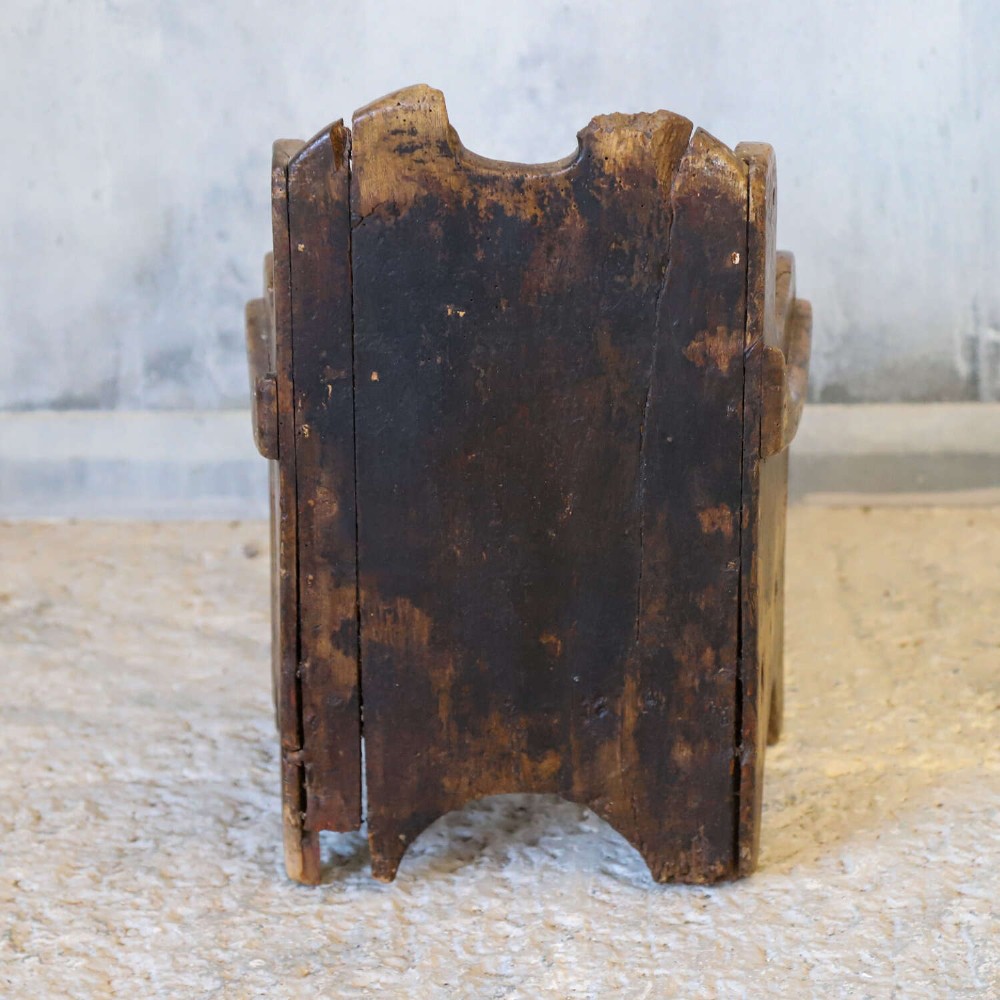
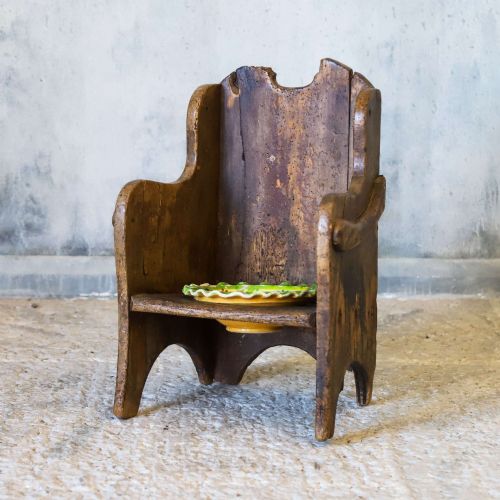
fig 3. An 18th-century wooden childs commode chair with a high back, shaped arms, and an integrated ceramic chamber pot resting in the seat.
fig 3. 18th-century Welsh Painted Sycamore Child’s Commode Chair

Children’s commodes of this period rarely survive, as they were often discarded once outgrown. This example’s survival for over two centuries is a testament to the quality of its making and the care it has received.

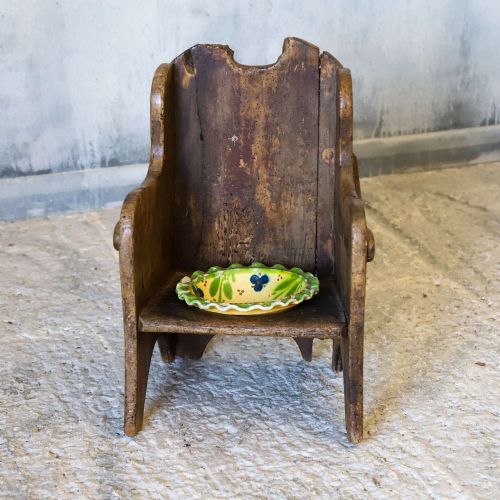
fig 4. An 18th-century wooden childs commode chair with a high back, shaped arms, and an integrated ceramic chamber pot resting in the seat.
fig 4. 18th-century Welsh Painted Sycamore Child’s Commode Chair

Visual Details

The high back and shaped arms give the chair a distinctive silhouette, while the painted surface has mellowed to a pleasing, time-softened patina. The wear patterns tell the story of generations past, making it as much a piece of folk art as a functional object.

fig 5. An 18th-century wooden childs commode chair with a high back, shaped arms, and an integrated ceramic chamber pot resting in the seat.
fig 5. 18th-century Welsh Painted Sycamore Child’s Commode Chair

Styling Suggestions

Today, this commode chair makes a fascinating decorative accent - perfect in a country kitchen, hallway, or nursery-themed display. It could be styled with a potted plant, used as a stand for folded linens, or simply appreciated as a conversation piece that bridges the gap between furniture and social history.

fig 6. An 18th-century wooden childs commode chair with a high back, shaped arms, and an integrated ceramic chamber pot resting in the seat.
fig 6. 18th-century Welsh Painted Sycamore Child’s Commode Chair

Sustainable Style

Choosing antique furniture preserves traditional craftsmanship, reduces waste, and brings authentic history into your home.

Purchase with Confidence

Transparent Condition Details: Please examine all photographs carefully for a complete understanding of each item’s condition. These images form a crucial part of our detailed condition report, offering clear insights into the craftsmanship, patina, and quality of this piece.

fig 7. An 18th-century wooden childs commode chair with a high back, shaped arms, and an integrated ceramic chamber pot resting in the seat.
fig 7. 18th-century Welsh Painted Sycamore Child’s Commode Chair

Trusted Heritage: We are an established and successful business with many happy clients from both trade and private sectors. You are warmly invited to visit our beautiful showroom and shop in West Sussex to experience our collection firsthand.

fig 8. An 18th-century wooden childs commode chair with a high back, shaped arms, and an integrated ceramic chamber pot resting in the seat.
fig 8. 18th-century Welsh Painted Sycamore Child’s Commode Chair

Delivery: We do not include delivery in our prices, as this depends on factors such as location and access. Options include:

Arrange your own collection from our address

Use the Request Delivery Quote feature on the listing

Email us for combined delivery quotes if purchasing multiple items

Use Proovia Delivery who provide a two-person service

Export/Worldwide Shipping: Please request a quotation from any of the following, quoting the item link:

Alan Smith Europe: info@alansmitheurope.com

Charlie Godwin: guildford@packsend.co.uk

Neil Curl Transport: neil@neilcurltransport.co.uk

Simon Hall Limited: exportdesk@simonhalllimited.com

Date of Manufacture

Whites Antiques has dated this Antique Sycamore Commode Chair to the 18th Century.

Height
50cm (19.69")
Width
34cm (13.39")
Depth
27cm (10.63")
Reference Numbers
Sellingantiques Ref
SA1164373
Dealers Internal Ref
BR052
Whites Antiques
Whites Antiques
Sellingantiques verified Since May 2023

White's antiques collective is the perfect resource for both trade and private clients

Dealer Profile

You can view the stock and full dealer information on the Whites Antiques Profile Page
PDF SHARE
SAVE
An 18th-century wooden childs commode chair with a high back, shaped arms, and an integrated ceramic chamber pot resting in the seat. SOLD6+ MONTHS AGO
1 / 9
Archive I An 18th-century wooden childs commode chair with a high back, shaped arms, and an integrated ceramic chamber pot resting in the seat. SOLD6+ MONTHS AGO

18th-century Welsh Painted Sycamore Child’s Commode Chair
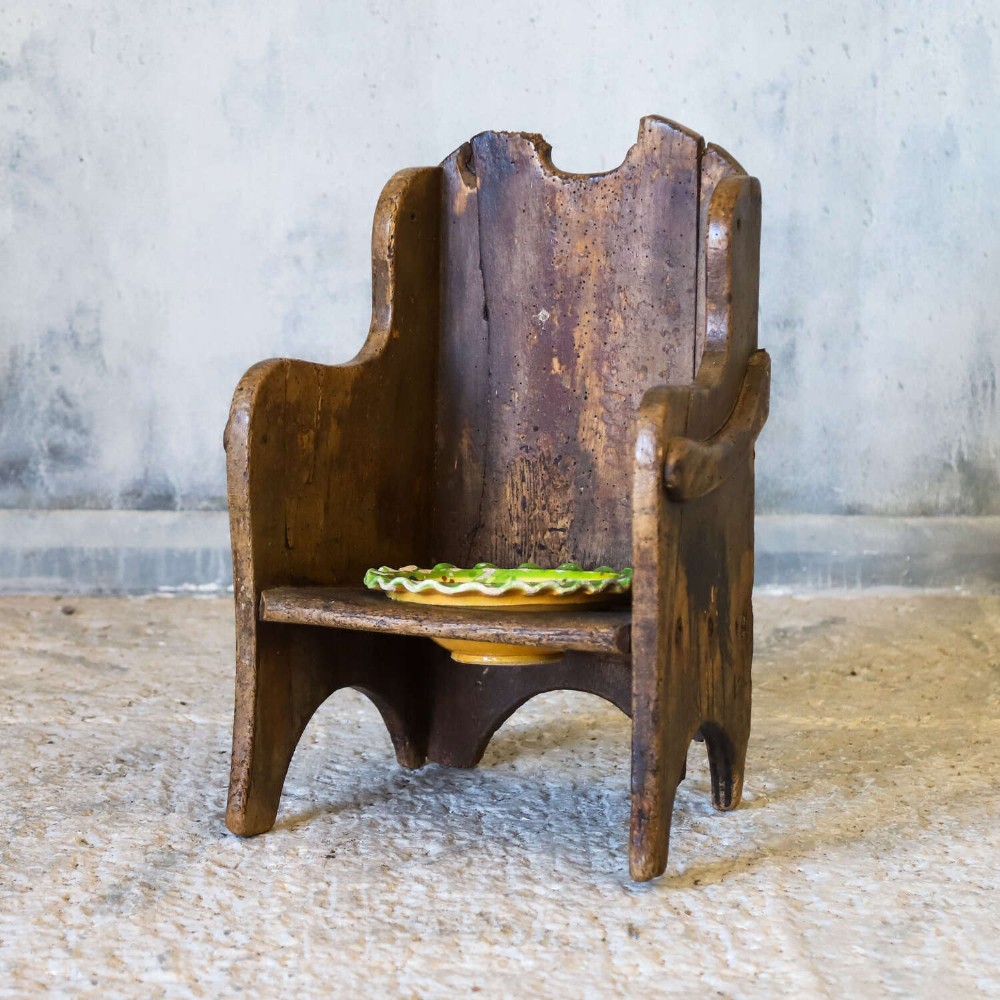
Archive II An 18th-century wooden childs commode chair with a high back, shaped arms, and an integrated ceramic chamber pot resting in the seat. View II
Archive III An 18th-century wooden childs commode chair with a high back, shaped arms, and an integrated ceramic chamber pot resting in the seat. View III
Archive IV An 18th-century wooden childs commode chair with a high back, shaped arms, and an integrated ceramic chamber pot resting in the seat. View IV
Archive V An 18th-century wooden childs commode chair with a high back, shaped arms, and an integrated ceramic chamber pot resting in the seat. View V
Archive VI An 18th-century wooden childs commode chair with a high back, shaped arms, and an integrated ceramic chamber pot resting in the seat. View VI
Archive VII An 18th-century wooden childs commode chair with a high back, shaped arms, and an integrated ceramic chamber pot resting in the seat. View VII
Archive VIII An 18th-century wooden childs commode chair with a high back, shaped arms, and an integrated ceramic chamber pot resting in the seat. View VIII
Archive IX An 18th-century wooden childs commode chair with a high back, shaped arms, and an integrated ceramic chamber pot resting in the seat. View IX
Enlarged Archival View
Telephone 07717 321455
Location
Unit 10 The Vinery
Arundel Road
Poling
West Sussex
BN18 9PY
United Kingdom
Verified Since May 2023
Items For Sale 131
Items Sold 449
Whites Antiques
Whites Antiques
Verified Since May 2023
View Dealer Info
Location: Unit 10 The Vinery, Arundel Road, Poling, West Sussex, BN18 9PY, United Kingdom
Verified
May 2023
For Sale
131
Sold
449
An 18th-century wooden childs commode chair with a high back, shaped arms, and an integrated ceramic chamber pot resting in the seat.
18th-Century Welsh Painted Sycamore Child’s Commode Chair
Ref: SA1164373
An 18th-century wooden childs commode chair with a high back, shaped arms, and an integrated ceramic chamber pot resting in the seat.
Detail View 1
Detail View 2
Detail View 3
Detail View 4
Detail View 5
Detail View 6
Detail View 7
Detail View 8
Archival Detail
Every single antique dealer on our platform is individually approved by our internal team. We verify their professional trade history, ethical standards, and photographic quality to ensure a secure, high-standard buying environment. Upon joining, every dealer agrees to a strict 9-point code of conduct. While issues can occasionally arise, our dealers typically resolve them swiftly and directly with the buyer. In fact, since our founding in 2002, Sellingantiques has only had to step in to help resolve an issue on roughly five occasions—a true testament to the quality of our dealers and their dedication to your happiness.
Our dealers are highly experienced in packing and shipping fragile, high-value antiques. Because you are in direct contact with the dealer, you will be able to easily go through all available shipping and insurance options together to ensure your item arrives safely.
Antiques are the ultimate green purchase. By choosing historical pieces over newly manufactured goods, you completely eliminate the carbon footprint of modern mass production while preserving exceptional, timeless craftsmanship.
Written by Sellingantiques from the dealer’s photographs and listing
  • ObjectChildrens Chairs
  • Period18th century
  • StyleWelsh Country
  • MaterialSycamore, Earthenware
  • ColourWarm Brown
  • MotifsHigh shaped backrest, Integrated seat aperture, Scythe cut-out skirt, Curved armrests
  • SizeH 50 cm (20 in) x W 34 cm (13 in) x D 27 cm (11 in)

A childs commode chair is a piece of historic miniature furniture designed for toilet training, featuring a hollowed seat or aperture to hold a chamber pot beneath.

These chairs were typically constructed from domestic hardwoods native to Britain, most commonly sycamore, oak, ash, or elm, utilizing traditional pegged and joined carpentry.

Authentication relies on examining tool marks, timber shrinkage, historic surface wear, handmade iron fixings or wooden pegs, and the construction techniques consistent with regional 18th-century cabinet making.

This type of antique piece functions effectively as a sculptural display object in a living room, hallway, or bedroom, often styled with dried botanicals or left empty to highlight its historical form.

Preservation requires keeping the item away from direct sunlight and excessive heat fluctuations, dusting gently with a dry cloth, and avoiding chemical polishes that might degrade historic painted or waxed surfaces.
items
Add keywords to the filter
Price
£100
£250000
Era
Period
Style
Material
Origin
Stock Location
Recently Added
Online Payments
Categories