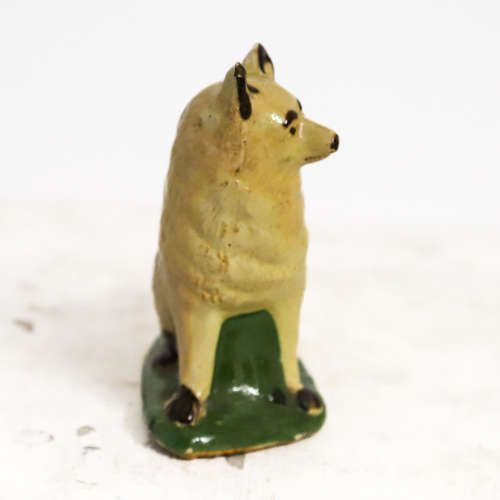
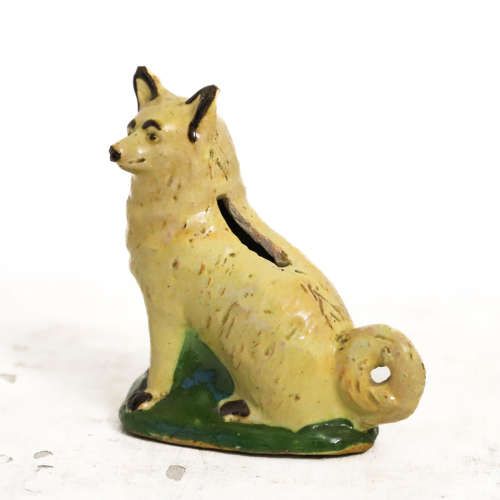
Whites Antiques has dated this piece to the 1900s.
French circa 1900
Ceramic
Distinctive and Characterful expression
W: 15cm (5.9") H: 15cm (5.9") D: 7cm (2.8")
This sweet little dog’s distinctive and characterful visage adds a touch of whimsy to this functional item.
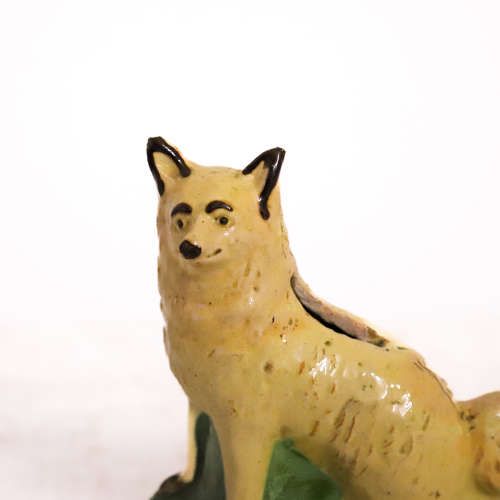
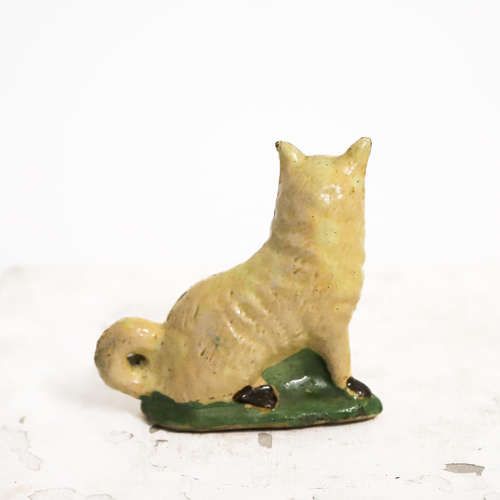
If you’re a collector or simply appreciate unique pieces, this Canine Money Box would make a delightful addition to your home décor.
(1) The concept of money boxes can be traced back to ancient Greece and Rome, where they were used to store coins and other small valuables. During the Middle Ages, money boxes became more common, often taking the form of ceramic or wooden vessels with a slot or hole for inserting coins. These early money boxes served as practical containers for saving money until it was needed. However, once the funds were required, the box had to be broken to access the coins, rendering it unusable thereafter.
Interestingly, the term “piggy bank” is widely associated with these coin containers. The name likely originated in Germany, where pigs were revered as symbols of good fortune. The oldest known German piggy bank dates back to the 13th century and was discovered during construction work in Thuringia. Over time, piggy banks have become pedagogical tools, teaching children the rudiments of thrift and saving. They are usually made of ceramic or porcelain, and some even incorporate electronic systems to calculate the amount of money deposited.
So, next time you drop a coin into your piggy bank, remember that you’re continuing a tradition that spans centuries.
Whites Antiques has dated this piece to the 1900s.
White's antiques collective is the perfect resource for both trade and private clients
You can view the stock and full dealer information on the Whites Antiques Profile Page
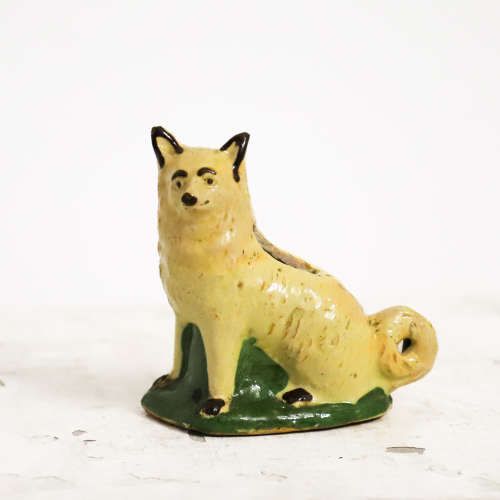
French 1900 Delightful Canine Money Box