



A 2026 Guide by Sellingantiques
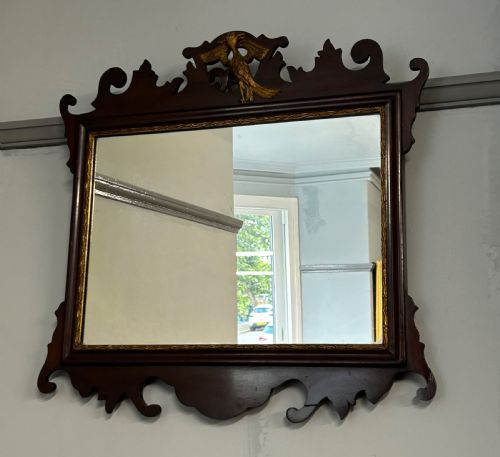
Antique Victorian Quality Mahogany Dressing Table Mirror
, 1860
Priced at £625 from London City Antiques
Demand for antique mahogany mirrors grew as trade routes expanded in the early eighteenth century.
Georgian homes relied on reflective surfaces. Placing them opposite windows pulled daylight deep into a parlour.
By the 1750s, this dark wood dominated London trade catalogues.
Victorian makers scaled things up. Plate glass improvements meant larger sheets without those distinctive early joins.
Thomas Chippendale supplied several ambitious mirrors in the 1760s. His designs pushed the carving capabilities of the wood.
Gillows of Lancaster sent plain, well-proportioned dressing glasses to London. Their stamp sometimes survives on the base.
Provincial workshops produced the vast majority. Unsigned frames dominate the market for antique mahogany mirrors today.

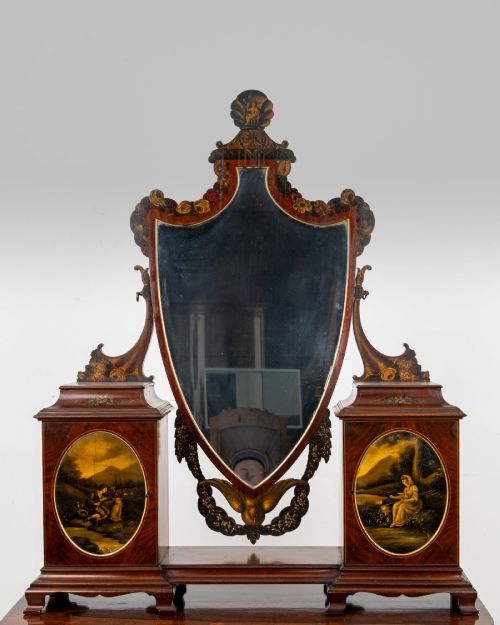
Large Antique Victorian Mahogany and Marble Topped Swing Mirror, 1860
Priced at £1,095 from London City Antiques
The 2026 retail price guide for Antique Mahogany Mirrors is drawn from a proprietary archive of over 1.1 million retail prices indexed by Sellingantiques since 2003. This guide relies exclusively on their own internal data; no external sources or auction records are used.
Analysing nearly 25 years of UK antique market history alongside current retail values, the data indicates that typical UK retail prices for Antique Mahogany Mirrors range between £300 and £1,700. Entry-level prices generally fall under £300 and premium examples upwards of £1,700.
Fretwork outlines distinguish many mid-century examples. Often cut from solid planks, these crests break up the heavy rectangular shape.
Parcel-gilt details highlight inner edges. A thin slip of gold leaf sits just next to the glass.
Check the pediment. Architectural shapes like swan necks feature heavily on formal pieces.
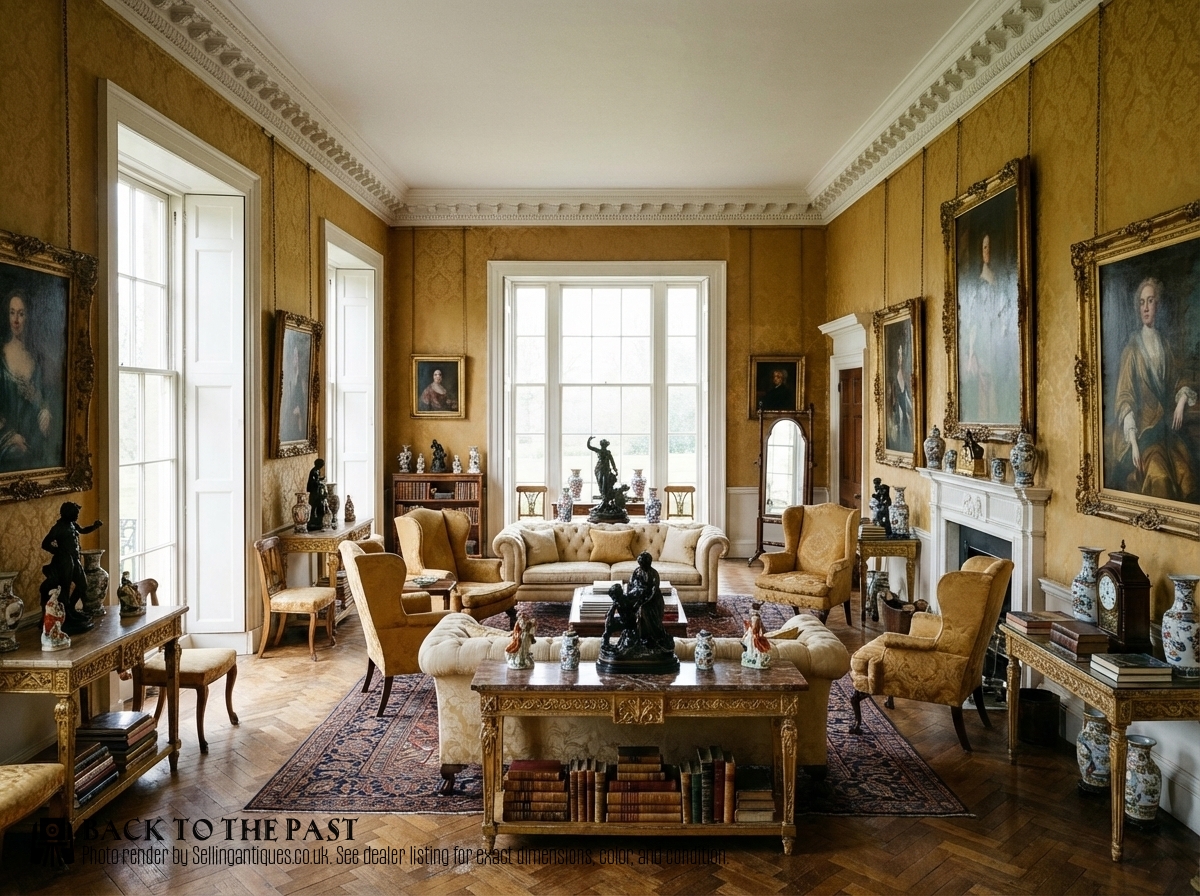
Regency Mahogany Cheval Mirror, Regency
Priced at £3,450 from Baggott & Co.
Hand-sawn veneers laid over pine frames became standard practice. This allowed makers to match grain patterns down the sides.
Mortise and tenon joints secure the structural corners. Wooden pegs lock the frames tightly together without iron nails.
Turn a dressing glass sideways. You'll often spot hand-cut dovetails joining the small drawer linings in the base.
"They didn't waste good timber. A small wall glass absorbed the offcuts from large cabinet commissions effectively."
"Old glass retains a warm tint. The slight impurities in eighteenth-century sand give the reflection a softer tone."
"Some frames feature hidden compartments. Small bases on dressing tables occasionally house secret drawers for rings."
Based on almost 25 years of Sellingantiques UK antique market data, Antique Mahogany Mirrors appeared 5825 times (out of 1,100,000 antiques) which gives it a rarity score of 31/100.
This score measures scarcity within the Sellingantiques archive only and is not a survey of the entire antiques market, so these statistics may not be indicative of the general availability of Antique Mahogany Mirrors elsewhere.
Resilvering old glass destroys the historic mercury backing. Most buyers want the original cloudy plate, even if the reflection is compromised.
If the glass is illegible, some people place a modern mirror cut to size behind the original. It preserves the old plate while giving you a usable surface.
The grain runs across the shape rather than along it, making the wood fragile. A good restorer can glue the break and patch any missing timber.
They'll often apply a linen or canvas strip to the back of the repair. It reinforces the joint without showing from the front.
Leaving it broken isn't a problem. A clean break tells the story of its use and bothers very few buyers.
A dry duster does most of the work.
Apply clear beeswax once a year. Avoid spray polishes.
Antique frames rarely retain their original fixings. Don't screw standard eyelets directly into the backboards, as the thin pine splits easily.
Fix heavy-duty mirror plates to the thickest part of the solid frame instead. You screw these metal plates into the side of the uprights.
Plasterboard walls require specialised rawlplugs. The weight of the glass alone pulls standard screws straight out of modern dry-lining.
Please note: This Antique Mahogany Mirrors guide and its associated pricing data are provided for general informational purposes only. It does not constitute formal financial, investment, or appraisal advice and should not be relied upon as the sole basis for any commercial activity, purchasing, or sales decisions. Sellingantiques.co.uk accepts no liability for any actions taken in reliance on this information. Always consult with a qualified professional or independent appraiser.
