
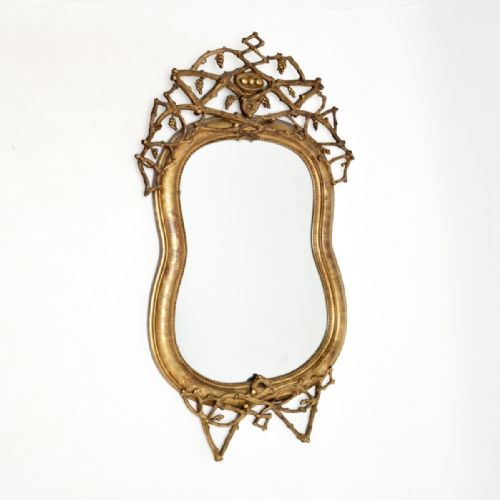
A 2026 Guide by Sellingantiques

Victorian Gilt Convex Mirror, Victorian
Priced at £495 from In A Nutshell Antiques and Interiors
Early examples from the late seventeenth century mirrored French tastes before English craftsmen developed distinct national styles.
Look at the development of glassmaking. It influenced the size of antique gilt mirrors because casting large plates only became reliable later on.
Tax on glass meant Georgian mirrors sometimes used multiple smaller plates joined by glazing bars instead of one large sheet.
Victorian production methods eventually allowed for much heavier frames.
John Linnell produced elaborate Rococo designs during the mid-eighteenth century. His surviving sketches match several documented frames.
Thomas Johnson published influential pattern books in the 1750s. Carvers across the country adopted his rural motifs and asymmetrical scrolling foliage.
Identifying regional workshops is difficult. Most carvers rarely signed their work or attached trade labels to the backboards.
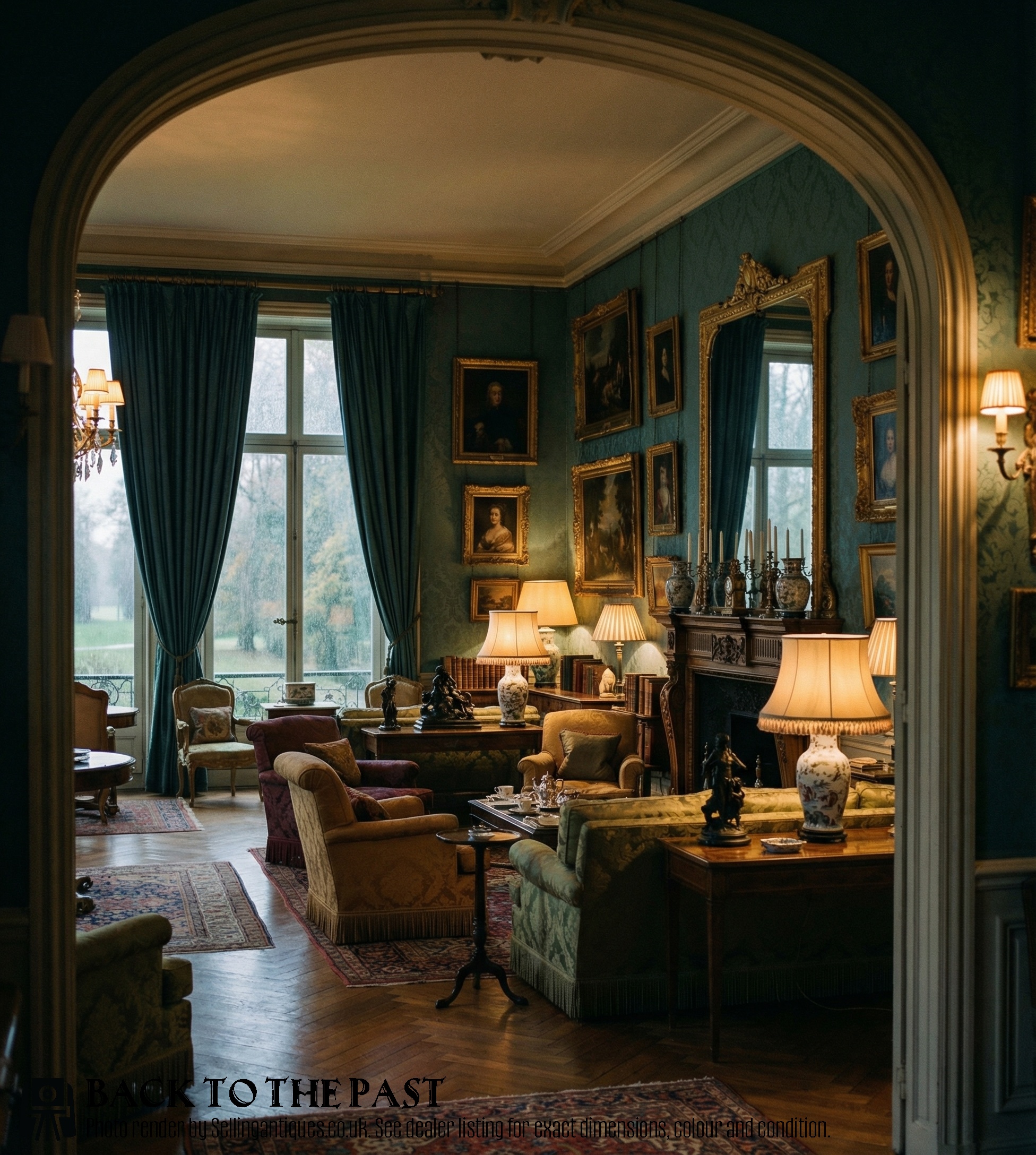
Victorian Gilt Overmantle Mirror, 1880
Priced at £1,350 from Lorna Byskou
The 2026 retail price guide for Antique Gilt Mirrors is drawn from a proprietary archive of over 1.1 million retail prices indexed by Sellingantiques since 2003. This guide relies exclusively on their own internal data; no external sources or auction records are used.
Analysing nearly 25 years of UK antique market history alongside current retail values, the data indicates that typical UK retail prices for Antique Gilt Mirrors range between £600 and £2,600. Entry-level prices generally fall under £600 and premium examples upwards of £2,600.
Crestings sit at the top of the frame. They often feature carved eagles or trailing acanthus leaves.
The contrast between matte and burnished gold highlights the carved relief on antique gilt mirrors.
Plate glass itself tells a story. Look for a shallow bevel following the shape of the frame on early eighteenth-century pieces.
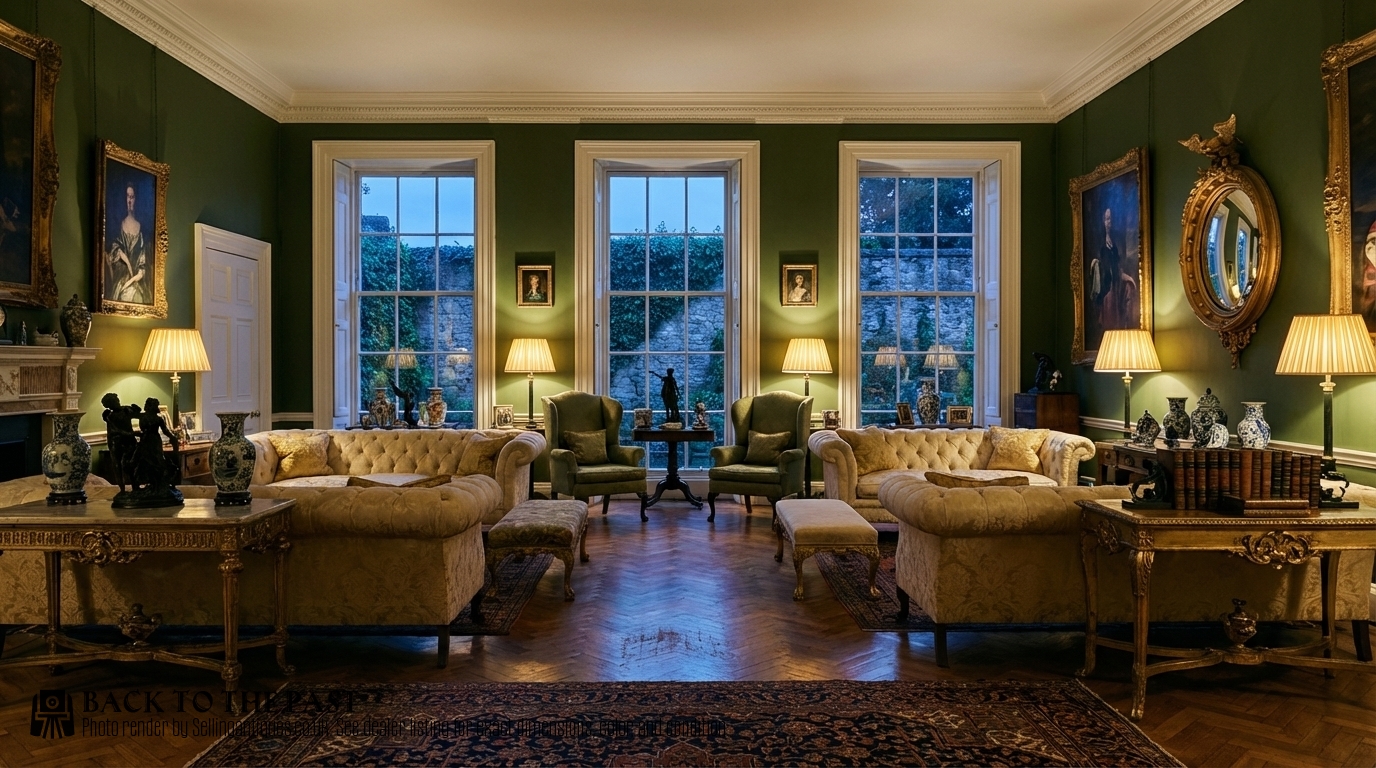
Convex Mirror, 19th Century
Priced at £2,995 from Midwinter Antiques
Early frames were carved directly into the solid wood. Craftsmen spent weeks cutting away material to reveal the finished profile.
The introduction of compo late in the eighteenth century changed construction. Wire armatures were now needed to support projecting classical urns.
Water gilding requires skill and precise timing. The gold leaf must be laid onto a wet surface before being polished with an agate stone.
"The bevels on eighteenth-century plates were ground by hand. This gives them a slightly irregular edge that catches light differently to modern machine cuts."
"Turn a period frame around and you might spot scorch marks. Candles in sconce arms routinely singed the protruding carved details."
"Different gold alloys created intentional colour shifts. Craftsmen laid green gold and yellow gold side by side to pick out specific floral elements."
Based on almost 25 years of Sellingantiques UK antique market data, Antique Gilt Mirrors appeared 13051 times (out of 1,100,000 antiques) which gives it a rarity score of 7/100.
This score measures scarcity within the Sellingantiques archive only and is not a survey of the entire antiques market, so these statistics may not be indicative of the general availability of Antique Gilt Mirrors elsewhere.
Re-gilding should be a last resort. Touching up small areas of loss with matching gold leaf or bronze powder is standard practice and preserves the original patina.
Stripping a frame back to bare wood destroys the historic gesso layers. A restorer can usually consolidate flaking areas with rabbit skin glue before addressing the missing chips.
Constant central heating dries out antique furniture. The pine carcase shrinks as it loses moisture, which forces the rigid gesso layer to crack or flake off.
Try to avoid hanging these pieces directly over a working radiator or in direct sunlight. If the room is bone dry, introducing some ambient humidity helps keep the joints stable over time.
They weigh a considerable amount. Period glass is thick and the solid timber backboards add significant bulk.
Always use heavy-duty fixings driven directly into masonry or a wall stud. Picture wire and standard hooks are rarely adequate for large nineteenth-century examples.
Those dark spots are not dirt. They are areas where the tin and mercury backing has broken down and detached from the glass.
You cannot clean them away without stripping the historic mirror backing. Most collectors prefer to leave this degradation alone as part of the natural ageing process.
Re-silvering a period plate requires specialist chemical handling and alters the character of the mirror. It is usually better to accept the clouded areas.
Please note: This Antique Gilt Mirrors guide and its associated pricing data are provided for general informational purposes only. It does not constitute formal financial, investment, or appraisal advice and should not be relied upon as the sole basis for any commercial activity, purchasing, or sales decisions. Sellingantiques.co.uk accepts no liability for any actions taken in reliance on this information. Always consult with a qualified professional or independent appraiser.
