
A 2026 Guide by Sellingantiques
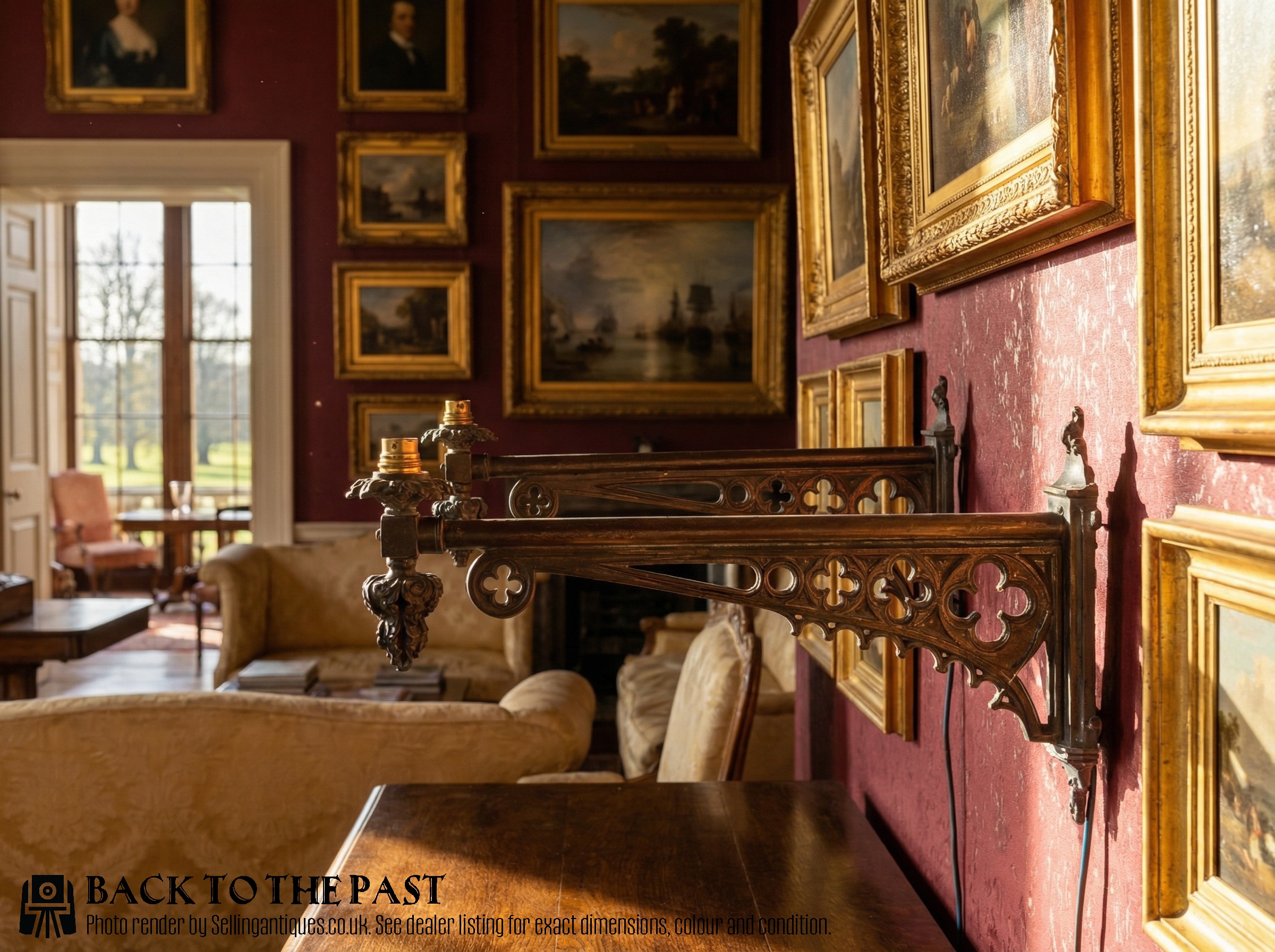
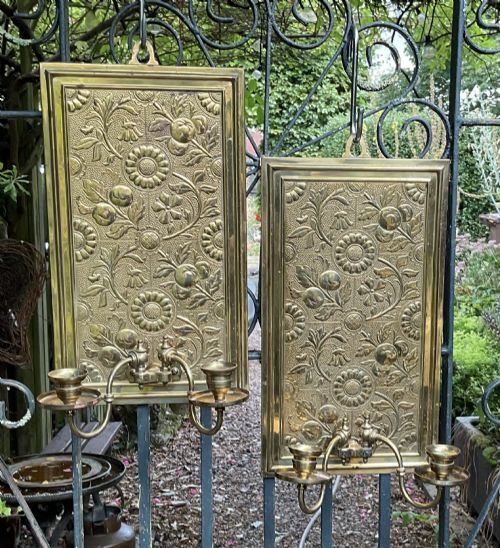
Pair of Victorian Wall Light Brackets, Victorian
Priced at £875 from Blank Canvas Antiques
Gas became standard in townhouses during the middle of the century. Homeowners installed wall brackets and ceiling fixtures connected to early mains supply.
Oil lamps remained essential for rural homes and specific rooms well into the late nineteenth century.
The shift towards electricity began in the 1880s. Bare bulbs often featured heavily, since early adopters wanted to show off the new technology.
Look at the transition pieces. Combination fixtures holding both gas jets and electric wiring appear frequently, hedging bets on which system would win out.
F. & C. Osler supplied large glass chandeliers throughout the era. They operated in Birmingham and exported heavily to India.
Messenger & Sons stamped many fittings. They produced gas brackets and oil burners from their Broad Street works from the 1830s onwards.
Hinks & Son patented the duplex burner in 1865. You frequently find their twin-wick mechanism on better table lamps.
The 2026 retail price guide for Antique Victorian Lighting is drawn from a proprietary archive of over 1.1 million retail prices indexed by Sellingantiques since 2003. This guide relies exclusively on their own internal data; no external sources or auction records are used.
Analysing nearly 25 years of UK antique market history alongside current retail values, the data indicates that typical UK retail prices for Antique Victorian Lighting range between £300 and £1,700. Entry-level prices generally fall under £300 and premium examples upwards of £1,700.
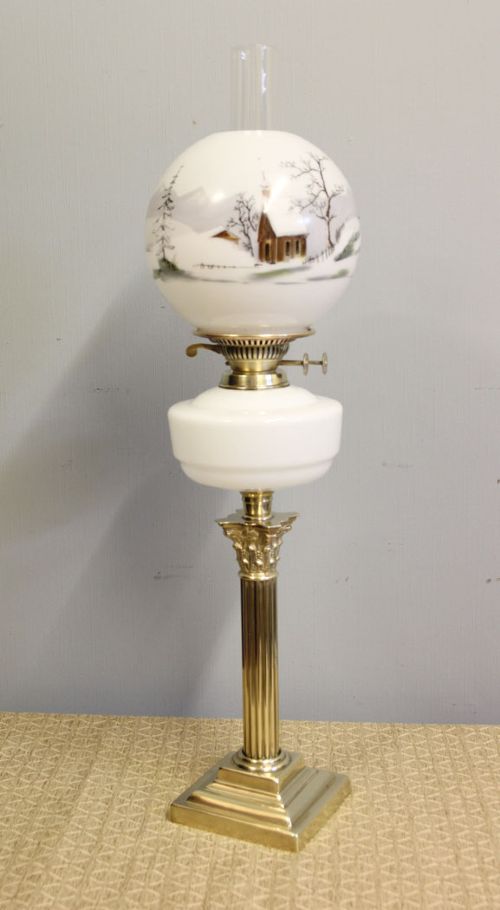
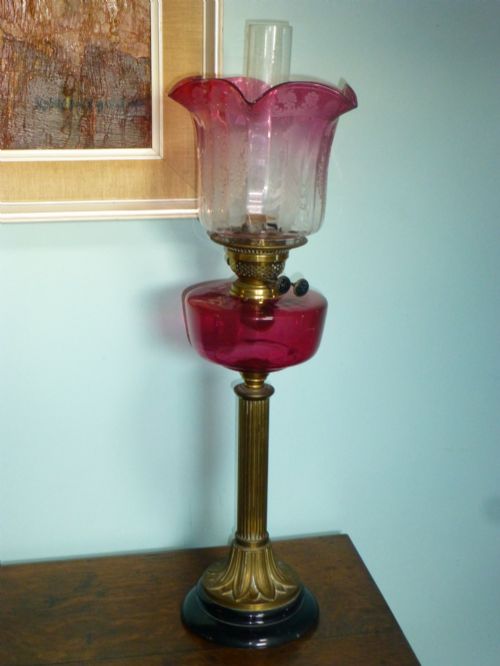
Burners form the functional core of an oil lamp. Many retain the winding wheels used to raise the cotton wicks.
Check the gas taps on chandeliers. These keys remain attached to the arms even when converted to modern electric use.
Counterweights feature on pull-down pendants. A central ceramic ball or heavy brass reservoir allowed users to adjust the height over a table.
Casting was the standard method for heavy arms. Molten brass poured into sand moulds created intricate scrollwork that required hand finishing.
Spinning shaped the hollow bodies. Craftsmen forced flat sheets of brass against a wooden form on a lathe to make domes and galleries.
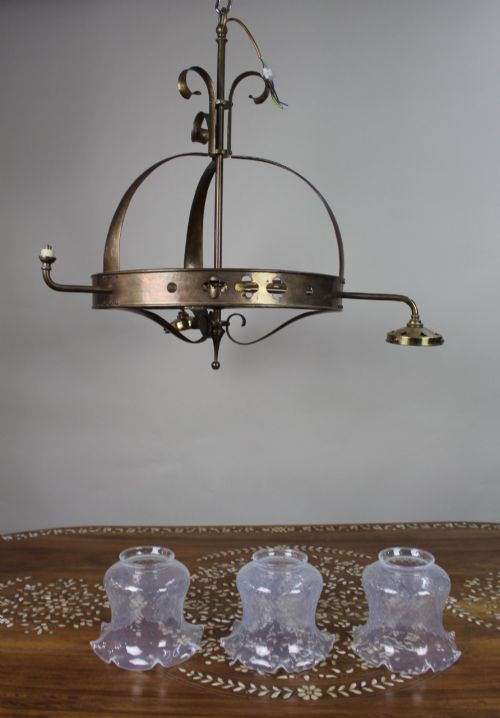
Acid etching left patterns on the glass shades. Workers coated the glass in wax, scratched a design, and bathed it in hydrofluoric acid.
"Coloured shades served a dual purpose. They masked the harsh glare of gas flames and cast a warm glow on the faces of dinner guests."
"Many heavy ceiling fittings use intricate internal pulleys. The chains run smoothly through hollow arms to balance the weight of the central shade."
"The duplex burner design increased light output significantly. Twin flat wicks side-by-side drew more air and created a much brighter, more stable flame."
Based on almost 25 years of Sellingantiques UK antique market data, Antique Victorian Lighting appeared 5241 times (out of 1,100,000 antiques) which gives it a rarity score of 35/100.
This score measures scarcity within the Sellingantiques archive only and is not a survey of the entire antiques market, so these statistics may not be indicative of the general availability of Antique Victorian Lighting elsewhere.
Yes, electricians convert them frequently. The hollow tubes originally designed to carry gas make excellent conduits for running modern electrical flex.
Professionals add small discreet fittings to the original gas jets. This keeps the antique structure intact while making it safe and usable for today.
Modern lamp oil works fine in most old paraffin burners. The fuel sits in the font and draws up the cotton wick exactly as it did in the nineteenth century.
Check the font for leaks first. Fill it and let it sit on some newspaper overnight. If the base remains dry, the tank is sound.
Keep the wick trimmed straight across. A jagged wick causes an uneven flame that might crack the glass chimney above it.
Wash them in lukewarm soapy water. Avoid sudden temperature changes to prevent cracking.
Dry the glass immediately with a soft cloth.
The cog wheels inside the burner often seize up from dried fuel residue. Old paraffin turns into a sticky varnish over the decades, locking the small metal teeth.
Soak the entire metal burner unit in a mild degreaser. Once the old residue softens, the wheels usually turn freely again.
Sometimes the wick itself is too thick. If a previous owner forced an oversized modern wick into the slot, it jams the mechanism.
Please note: This Antique Victorian Lighting guide and its associated pricing data are provided for general informational purposes only. It does not constitute formal financial, investment, or appraisal advice and should not be relied upon as the sole basis for any commercial activity, purchasing, or sales decisions. Sellingantiques.co.uk accepts no liability for any actions taken in reliance on this information. Always consult with a qualified professional or independent appraiser.
