
A 2026 Guide by Sellingantiques
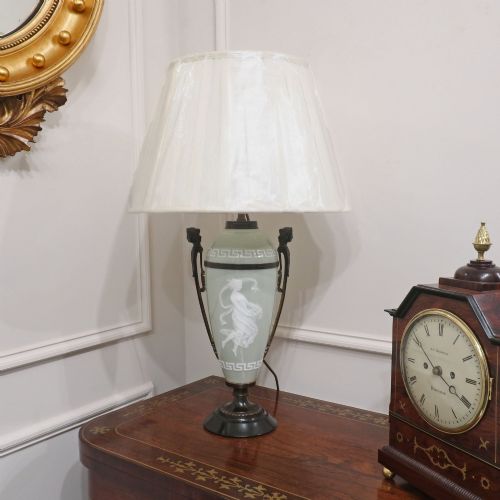
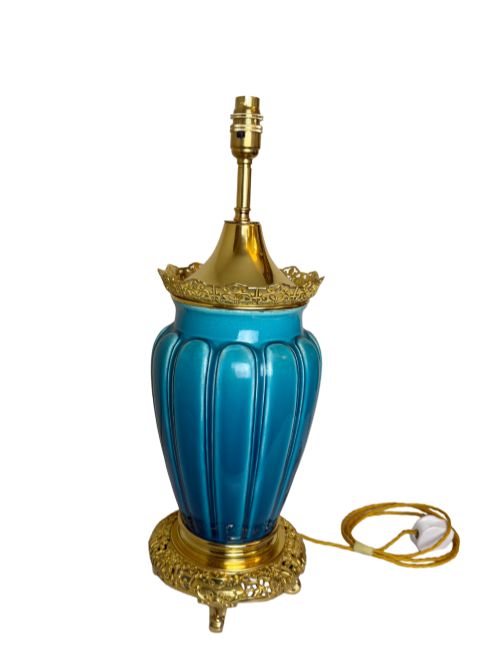
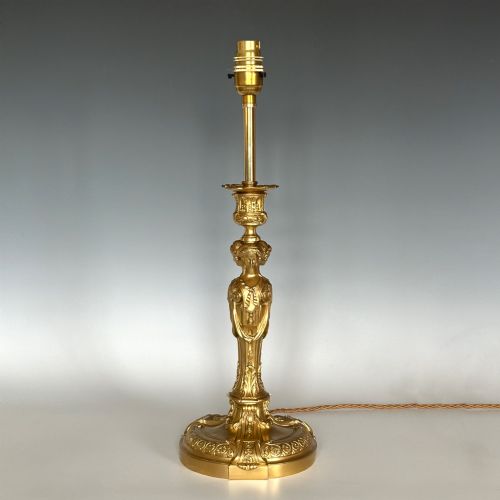
Green Toleware and Brass Triple Bouillotte Desk Lamp from France, 1900
Priced at £960 from Elmgarden
Oil and gas fixtures gave way to electricity at the end of the nineteenth century.
Early antique desk lamps often adapted existing gas fittings for the new carbon filament bulbs.
Check the patents stamped on the joints. They track the race to build a lamp that stayed exactly where you pulled it.
Offices required focused light for ledger work before overhead electric lighting became standard.
Dugdills took out early patents for articulated joints. Their lamps feature distinctive exposed cog mechanisms and heavily stamped maker marks.
Herbert Terry and Sons launched the Anglepoise in the early thirties. They used constant tension springs originally designed for vehicle suspension.
Faries Manufacturing operated out of Illinois. They produced jointed brass task lighting that often clamped directly to the desk edge.

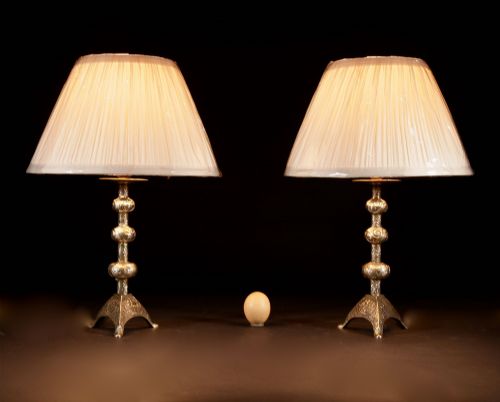
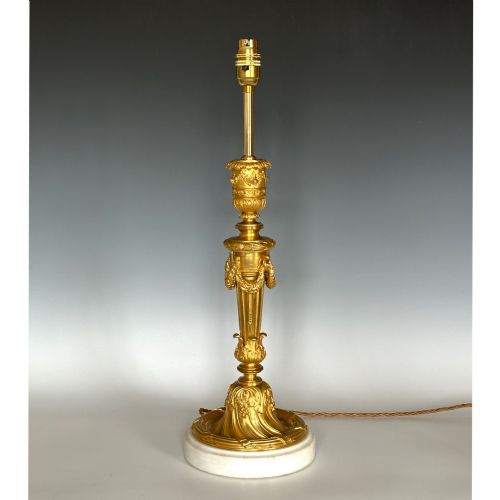
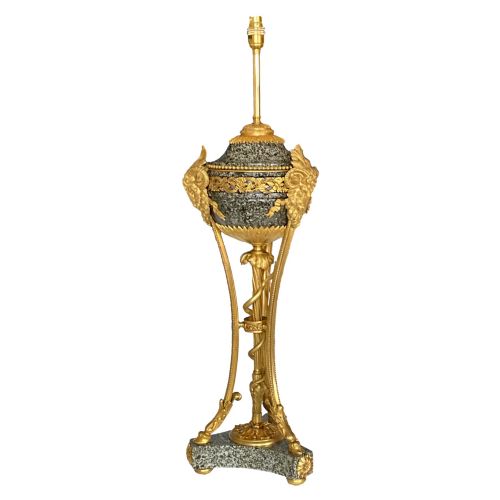
Old Silver Plated French Triple Bouillotte Desk Lamp, 1880
Priced at £1,020 from Elmgarden
The 2026 retail price guide for Antique Desk Lamps is drawn from a proprietary archive of over 1.1 million retail prices indexed by Sellingantiques since 2003. This guide relies exclusively on their own internal data; no external sources or auction records are used.
Analysing nearly 25 years of UK antique market history alongside current retail values, the data indicates that typical UK retail prices for Antique Desk Lamps range between £300 and £1,500. Entry-level prices generally fall under £300 and premium examples upwards of £1,500.
Adjustable arms allow the user to pull the light source close to the paper.
Some feature articulated joints with tightening keys. Others rely on a flexible tube wrapped in coiled brass wire.
Heavy bases are non-negotiable. Without substantial weight at the bottom, an extended arm pulls the fixture straight over.
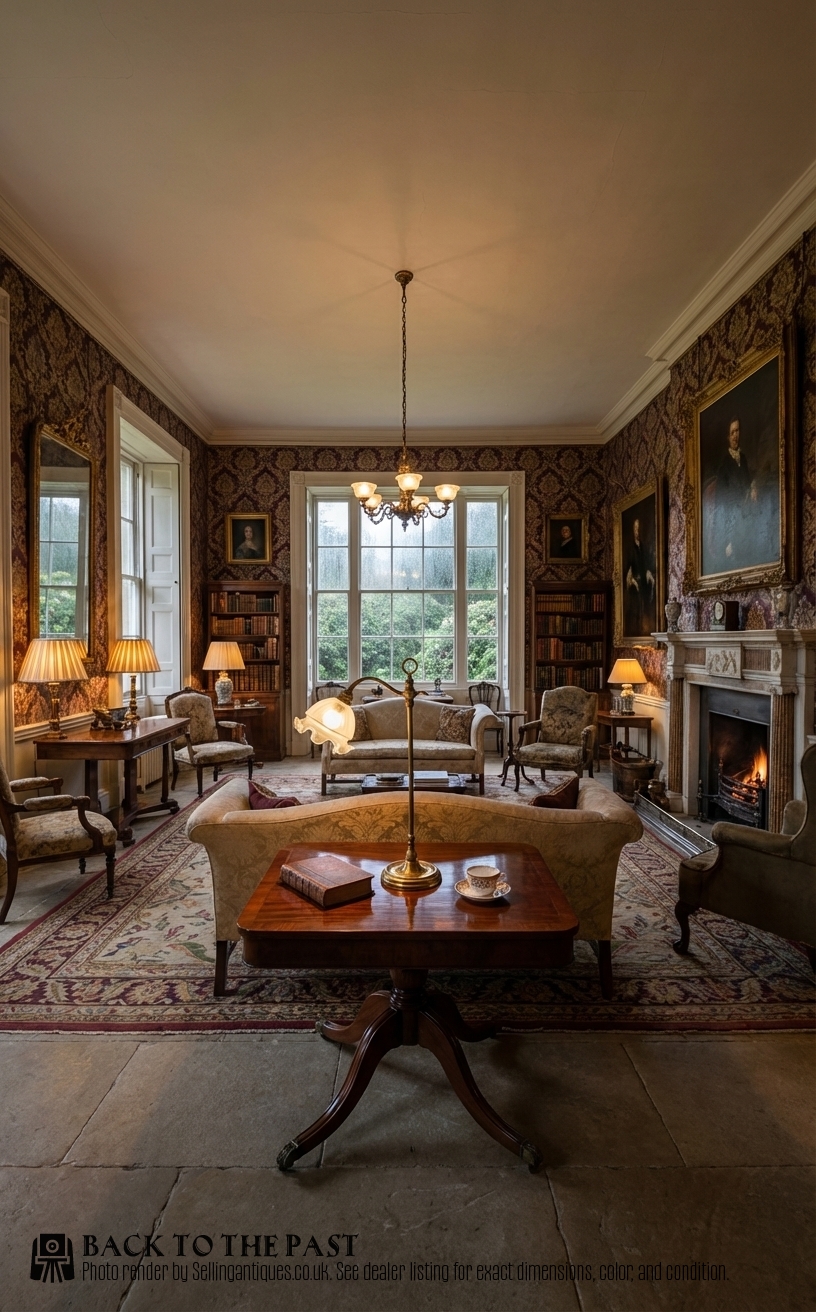
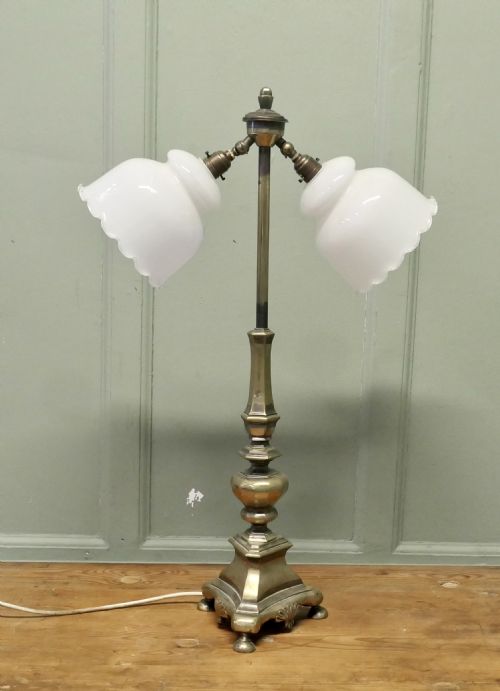
An Edwardian Adjustable Brass Lamp, Edwardian
Priced at £380 from Drennan & Sturrock Ltd
Machined brass joints replaced simple friction hinges. Makers needed better ways to hold the weight of heavy glass shades securely.
Look closely at early springs. The transition from crude tension coils to calibrated constant-tension systems changed how these moved.
Spun metal shades became common when manufacturers realised they bounced heat away from the user better than heavy glass.
"Many early green shades reflect light as white. The inner layer of cased glass prevented colour distortion on documents."
"Industrial machinists used similar articulated frames. They just bolted them to workbenches instead of heavy desk bases."
"Some counterweight models hide lead inside small decorative brass balls. This keeps the arm balanced in mid-air."
Based on almost 25 years of Sellingantiques UK antique market data, Antique Desk Lamps appeared 2096 times (out of 1,100,000 antiques) which gives it a rarity score of 66/100.
This score measures scarcity within the Sellingantiques archive only and is not a survey of the entire antiques market, so these statistics may not be indicative of the general availability of Antique Desk Lamps elsewhere.
Most of them do. Original cloth-covered flex degrades over time and the internal rubber insulation turns brittle and cracks.
You need to check the brass bulb holders too. The old cardboard heat sleeves inside them often perish, causing the metal casing to become live.
Modern three-core braided flex looks the part and includes an earth wire. An electrician can run this through the original arms.
Those springs live under constant tension. After decades left in the same position, they stretch and lose their memory.
You can sometimes fix the droop by adjusting the friction blocks at the joints. Tightening the pivot nuts slightly gives tired springs less work to do.
If that fails, replacement springs are easy to source. Swapping them out restores the original balance.
British and European models mostly take standard bayonet cap bulbs. American imports usually require Edison screw fittings.
LED bulbs run cold. This protects fragile old glass shades from the heat stress that caused earlier examples to crack.
Leave the surface alone. That mottled finish is often an intentional chemical patina applied in the factory, known as bronzing or oxidising.
Makers used these dark finishes so the bright brass wouldn't glare in the eyes of someone trying to read.
Polishing strips away a century of protective oxidation. You end up with a harsh object that looks out of place.
Please note: This Antique Desk Lamps guide and its associated pricing data are provided for general informational purposes only. It does not constitute formal financial, investment, or appraisal advice and should not be relied upon as the sole basis for any commercial activity, purchasing, or sales decisions. Sellingantiques.co.uk accepts no liability for any actions taken in reliance on this information. Always consult with a qualified professional or independent appraiser.
