


A 2026 Guide by Sellingantiques
Tall stands for light date back centuries in Europe. Antique torcheres became popular in wealthy British households during the late seventeenth century.
They moved light sources away from walls. Placing candles on tables took up space, so a dedicated stand solved the problem.
Early Georgian houses relied on these tall structures for evening gatherings.
Look at the shift from heavy baroque carving to lighter neoclassical designs. Tastes changed rapidly across the eighteenth century.
Thomas Chippendale published intricate designs for these stands in his Director. His workshop produced them with elaborately carved rococo tripods for wealthy clients.
Robert Adam drew neoclassical torcheres to match specific room schemes. They often featured ram heads and draped swags.
Much of the surviving trade output comes from unrecorded regional cabinetmakers.
The 2026 retail price guide for Antique Torcheres is drawn from a proprietary archive of over 1.1 million retail prices indexed by Sellingantiques since 2003. This guide relies exclusively on their own internal data; no external sources or auction records are used.
Analysing nearly 25 years of UK antique market history alongside current retail values, the data indicates that typical UK retail prices for Antique Torcheres range between £300 and £3,300. Entry-level prices generally fall under £300 and premium examples upwards of £3,300.
A small circular or octagonal top sits on a tall central shaft. This platform has to be flat.
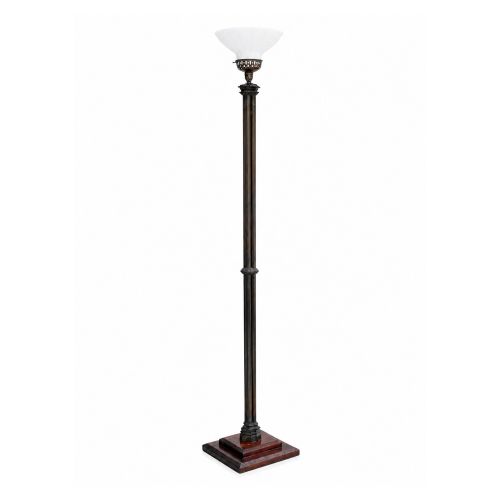
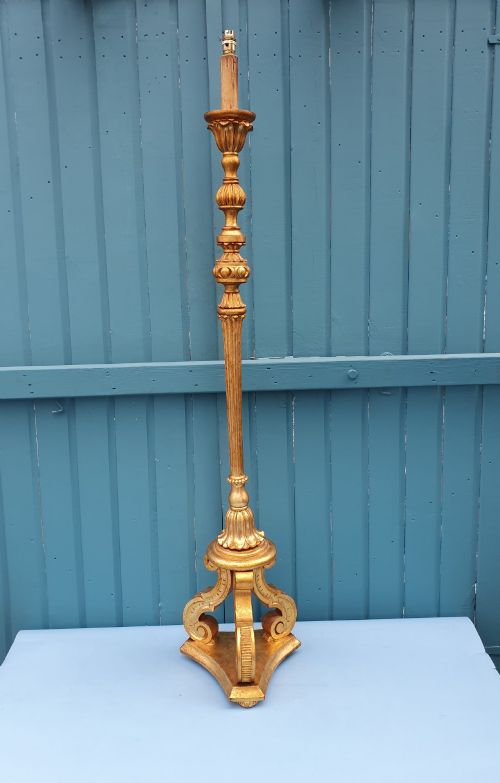
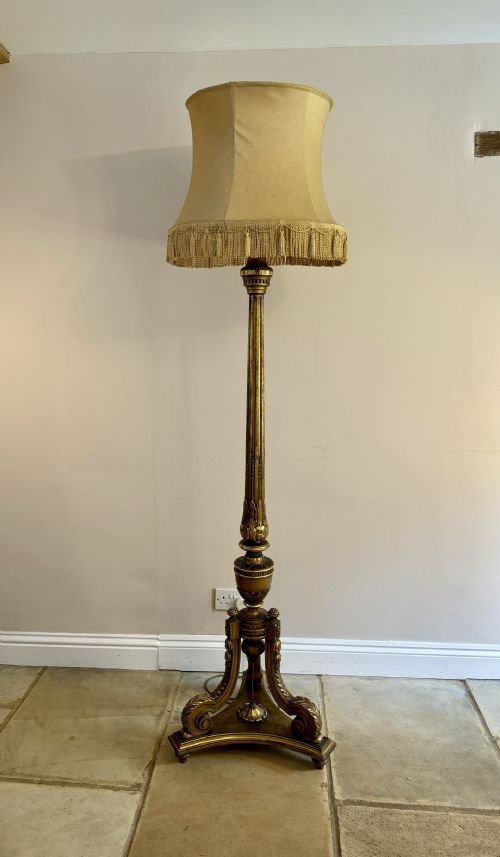
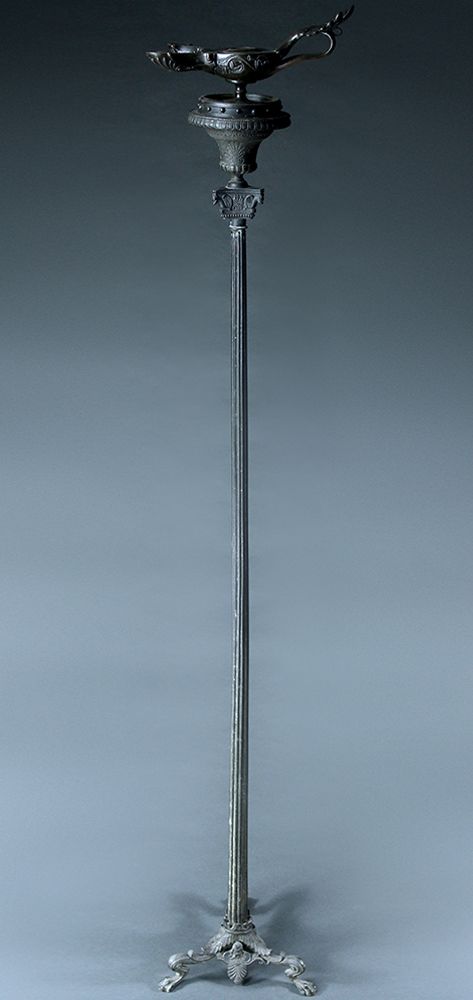
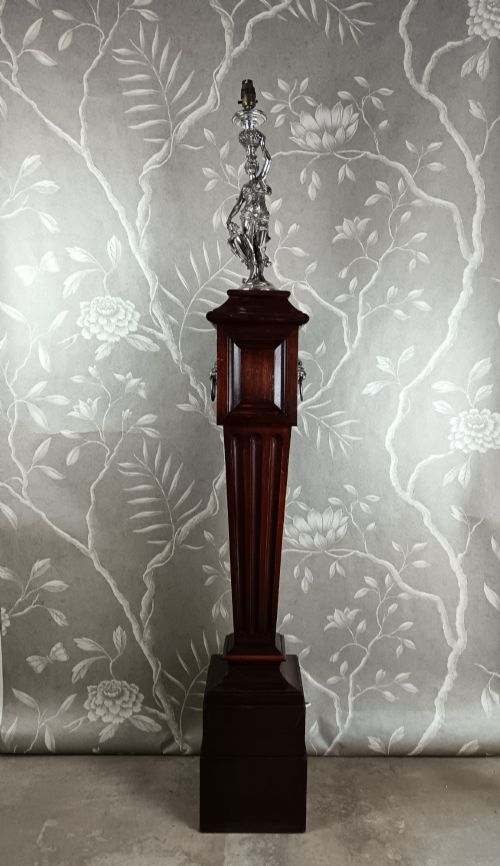
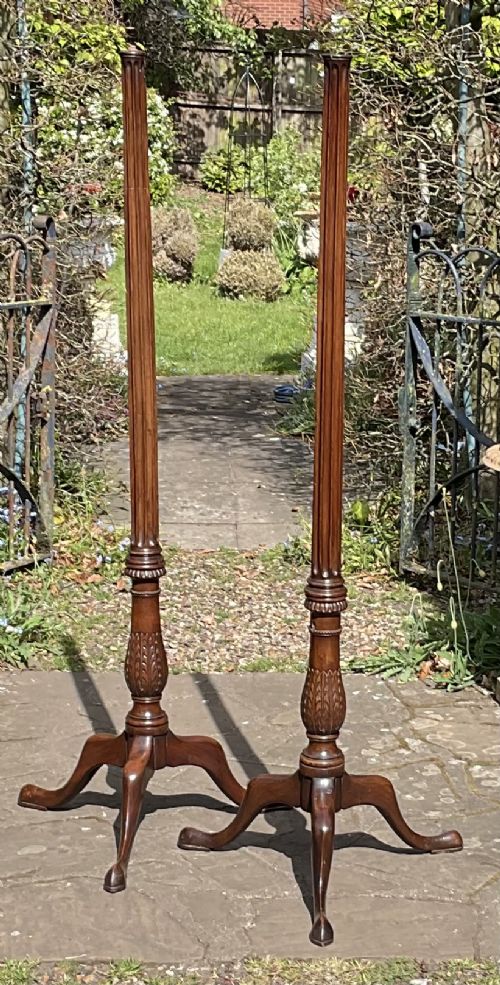
The stem dictates the overall style. Some are simple fluted columns, while others mimic tripod table bases stretched vertically.
Check the feet. Three out-splayed legs give stability against knocking on uneven floors.
Turners shaped the central stems on a lathe. Long sections required precise centering to avoid a wobble.
Hand-carved tripod legs. Carvers worked on these separately before jointing. Sliding dovetails connect the legs to the pillar base.
Notice the application of gesso on gilt examples. Craftsmen layered this chalk and glue mixture to create a smooth surface prior to gilding.
"Many tall stands now used for ferns or busts started life solely for lighting."
"You'll sometimes find them made in matching pairs to flank a fireplace."
"Some elaborate versions incorporate hidden metal rods. These run right through the timber stem to add structural rigidity."
Based on almost 25 years of Sellingantiques UK antique market data, Antique Torcheres appeared 1110 times (out of 1,100,000 antiques) which gives it a rarity score of 80/100.
This score measures scarcity within the Sellingantiques archive only and is not a survey of the entire antiques market, so these statistics may not be indicative of the general availability of Antique Torcheres elsewhere.
Most eighteenth-century English stands are mahogany or walnut. Mahogany became the standard choice because its tight grain took crisp carving well without splitting along the edges.
Provincial pieces often use locally sourced oak or fruitwood. Grander giltwood examples usually rely on softer woods like pine as a base. Pine accepted the thick gesso preparation much easier than hardwoods.
You'll often see stands where the raised edge is missing. Delicate pierced galleries were easily damaged by shifting candlesticks.
Restoration is straightforward. A cabinetmaker can match the timber and turn a replacement to fit the groove.
The distinction comes down to age and the top surface.
True antique torcheres were built for lighting. If the piece dates to the eighteenth or early nineteenth century, it was almost certainly a candle stand. The Victorians later adopted the form for potted ferns.
Check the top platform. A solid piece of fine timber with scorch marks points to lighting. A metal liner or severe water damage suggests it held plants.
Wobbly tripod bases are a common issue. The legs attach to the central pillar using sliding dovetail joints. Over decades of changing humidity, hide glue dries out and the joint loosens.
Don't use modern expanding glues or metal brackets. A restorer will knock the joint apart and clean the old residue. They then re-set it with traditional animal glue. This secures the stand without harming the finish.
Please note: This Antique Torcheres guide and its associated pricing data are provided for general informational purposes only. It does not constitute formal financial, investment, or appraisal advice and should not be relied upon as the sole basis for any commercial activity, purchasing, or sales decisions. Sellingantiques.co.uk accepts no liability for any actions taken in reliance on this information. Always consult with a qualified professional or independent appraiser.
