


A 2026 Guide by Sellingantiques
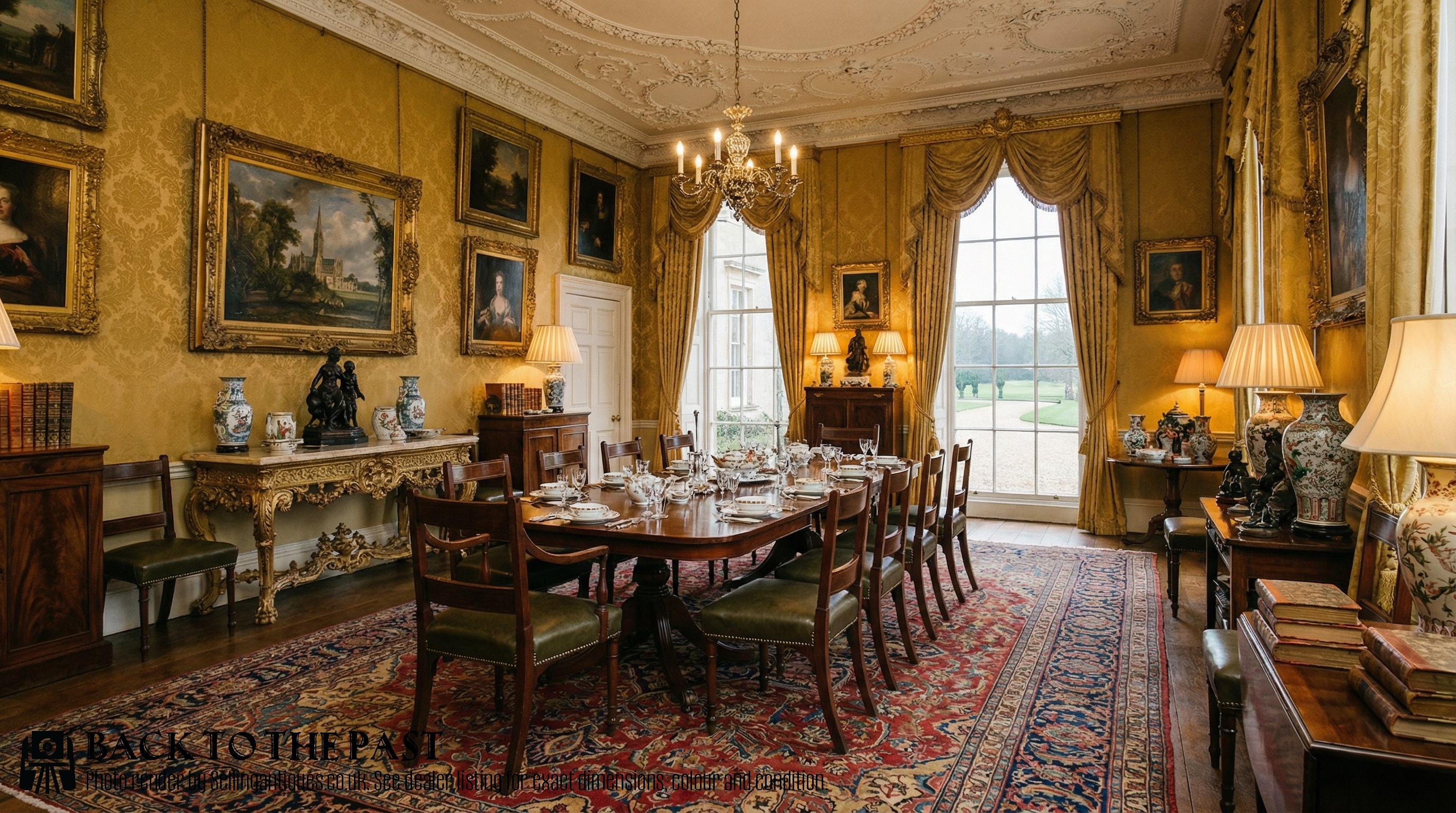
Set of Twelve George III Mahogany & Inlaid Dining Chairs Attributed to Gillows, Georgian
Priced at £9,600 from The Antique Furniture Company
Introduced early in the eighteenth century, this heavy wood slowly replaced walnut in fashionable households.
Taxation changes on imported colonial timber in 1733 made antique mahogany chairs viable for provincial cabinet-makers working outside London, fuelling middle-class demand.
Look at pattern books from the period. They drove the shift from heavy Palladian seating to lighter neoclassical forms, spreading London tastes to regional joiners.
Demand surged through the Georgian era. Workshops produced uniform sets rather than single seating commissions to fill growing dining rooms.
Thomas Chippendale supplied high-status clients. His intricate antique mahogany chairs are documented through detailed workshop invoices from St Martin's Lane.
Gillows of Lancaster stamped their name on some seating. They dominated the northern trade and supplied large country houses.
Most ordinary seating carries no maker's mark at all. They rely on generic patterns circulated among anonymous regional joiners.
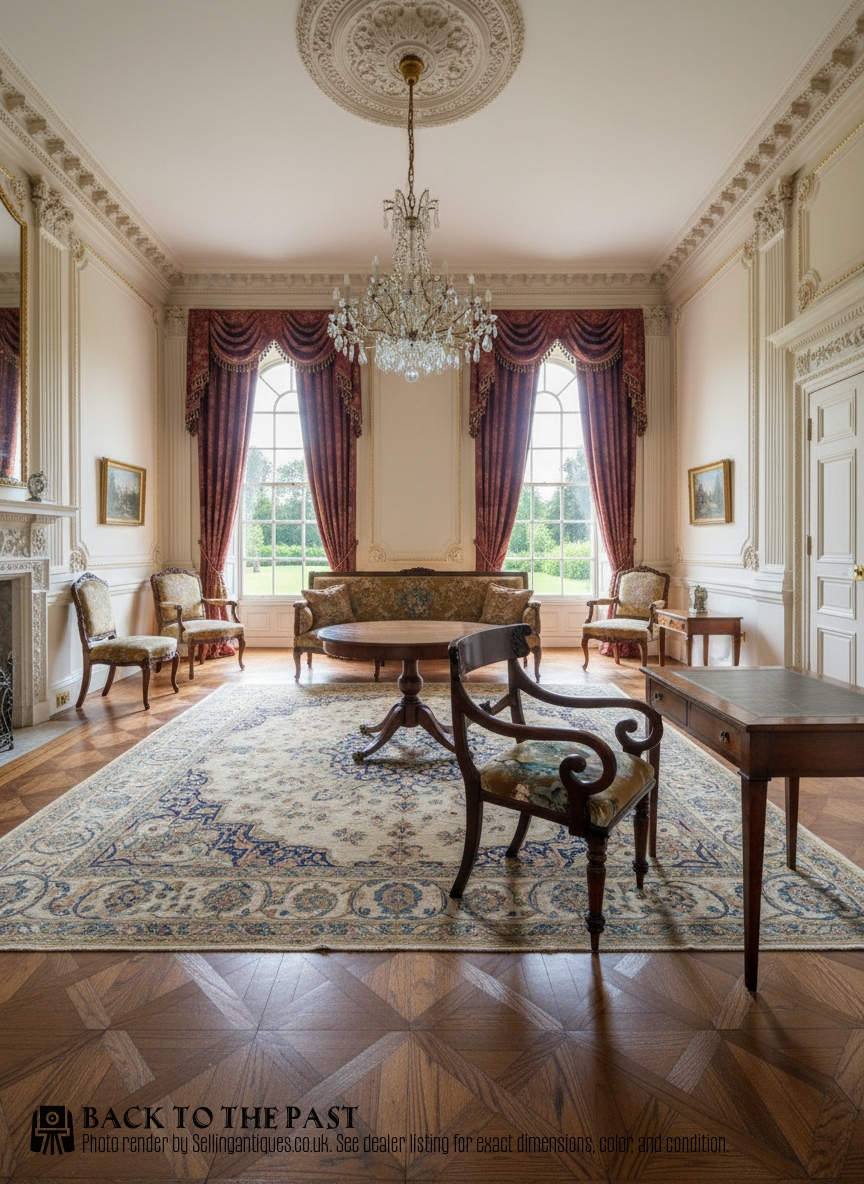
Antique Regency Quality Mahogany Desk Chairs
, 19th Century
Priced at £925 from London City Antiques
The 2026 retail price guide for Antique Mahogany Chairs is drawn from a proprietary archive of over 1.1 million retail prices indexed by Sellingantiques since 2003. This guide relies exclusively on their own internal data; no external sources or auction records are used.
Analysing nearly 25 years of UK antique market history alongside current retail values, the data indicates that typical UK retail prices for Antique Mahogany Chairs range between £500 and £3,300. Entry-level prices generally fall under £500 and premium examples upwards of £3,300.
Carved splats define the back rest. Look for interlaced ribbons, Gothic arches or simple pierced vase shapes depending on the decade.
Drop-in seats often appear on early Georgian seating. They rest squarely on internal corner blocks.
Turn the piece upside down. You will frequently see peg joints securing the tenons on sturdy provincial examples, hammered in from the back face.

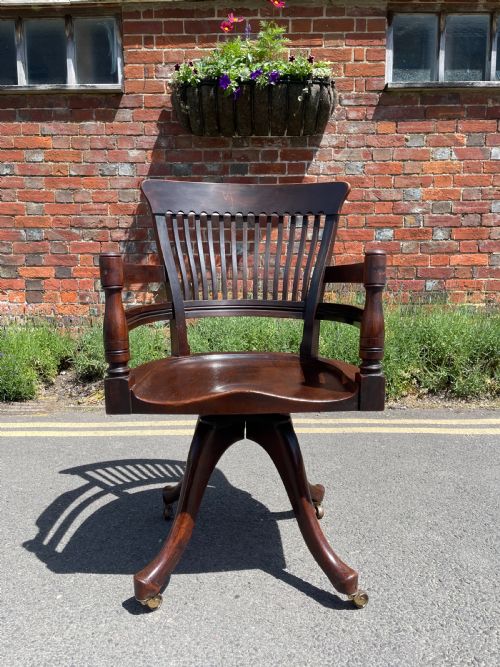
Early 20th Century Mahogany Desk Chair, 1920
Priced at £1,650 from Martlesham Antiques
Mortise and tenon joints hold the main carcase together. Joiners pinned them with wooden dowels that shrink unevenly over time.
Hand-cut dovetails rarely appear on standard frames, though some makers used them on hidden cross-stretchers.
Notice the carving finish. Craftsmen used dozens of gouges to shape the cresting rails straight from the solid timber block.
"Sunlight fades this dark wood to a pale golden brown over the decades. It creates a sought-after surface patina."
"Horsehair stuffing in the original drop-in seats breathes naturally. It offers a firm and comfortable cushion for modern use."
"Dense grain structures allow carvers to leave thin webs of wood in the back splats without the timber snapping."
Based on almost 25 years of Sellingantiques UK antique market data, Antique Mahogany Chairs appeared 20216 times (out of 1,100,000 antiques) which gives it a rarity score of 2/100.
This score measures scarcity within the Sellingantiques archive only and is not a survey of the entire antiques market, so these statistics may not be indicative of the general availability of Antique Mahogany Chairs elsewhere.
You have to knock the joint apart and clean out the old hide glue. It dries into a hard crust over time. Scrape it back to bare wood.
Reassemble the joint using fresh animal glue and clamp it tight overnight. Synthetic wood glue ruins the porous surface and makes future repairs much harder.
Many early examples lose an inch or two from the bottom of their legs. People dragged them across stone floors for decades. Dampness rots the ends, and later owners just saw the damage off cleanly.
Castors were standard on some later heavy seating, adding height back. If your set lacks castors, you might consider having discrete brass cups fitted to raise the seat height.
Wool damask or horsehair cloth suits the period best. They wear well and hide minor stains.
Avoid thin modern synthetics. The tension of the webbing pulls them out of shape around the corners.
Late Victorian restorers often applied thick layers of polish or tinted varnish over earlier surfaces. It obscures the crispness of the original carved details.
Stripping involves harsh solvents that bleach the underlying timber. A restorer can wash back the thickest layers of old polish using a mild solvent mix without disturbing the wood below.
Please note: This Antique Mahogany Chairs guide and its associated pricing data are provided for general informational purposes only. It does not constitute formal financial, investment, or appraisal advice and should not be relied upon as the sole basis for any commercial activity, purchasing, or sales decisions. Sellingantiques.co.uk accepts no liability for any actions taken in reliance on this information. Always consult with a qualified professional or independent appraiser.
