


A 2026 Guide by Sellingantiques
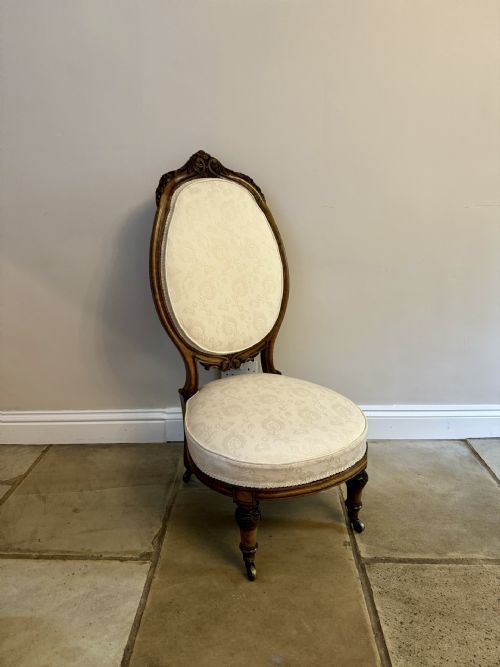
Quality Antique Victorian Walnut Carved Ladies Chair
, 1860
Priced at £745 from London City Antiques
Victorian drawing rooms dictated strict seating rules. Antique ladies chairs emerged as a specific form during this era to match changing dress fashions.
Earlier centuries rarely differentiated seating by gender. You find a few Georgian examples, but the explosion of distinct designs happened later.
Look at the crinoline trend. The massive skirts meant you couldn't sit down in a chair with arms.
Edwardian versions became slightly taller and less ornate. The trade moved away from heavy carving towards lighter mahogany and satinwood frames.
Some regional cabinetmakers kept producing heavy ash nursing chairs long after London tastes moved to lighter woods.
Howard & Sons produced renowned easy chairs for women from the mid-nineteenth century onwards. Their stamped frames remain highly sought after.
Gillows of Lancaster documented many smaller nursing and boudoir chairs in their pattern books throughout the Victorian period.
Keep an eye out for impressed maker marks on the back legs. Most antique ladies chairs, however, were made by anonymous provincial workshops.
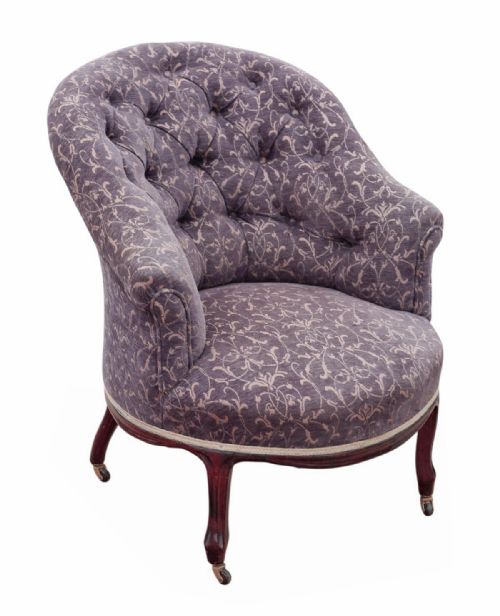
Antique Victorian Mahogany Ladies Chair, 1860
Priced at £1,295 from London City Antiques
The 2026 retail price guide for Antique Ladies Chairs is drawn from a proprietary archive of over 1.1 million retail prices indexed by Sellingantiques since 2003. This guide relies exclusively on their own internal data; no external sources or auction records are used.
Analysing nearly 25 years of UK antique market history alongside current retail values, the data indicates that typical UK retail prices for Antique Ladies Chairs range between £300 and £1,500. Entry-level prices generally fall under £300 and premium examples upwards of £1,500.
Low seat heights define the category. Most sit several inches lower than a standard dining or library chair.
Notice the lack of arms. This allowed wide skirts to drape properly and kept needlework frames close to the body.
Cabriole front legs often finish in small ceramic castors, allowing the frame to glide smoothly over thick carpets.
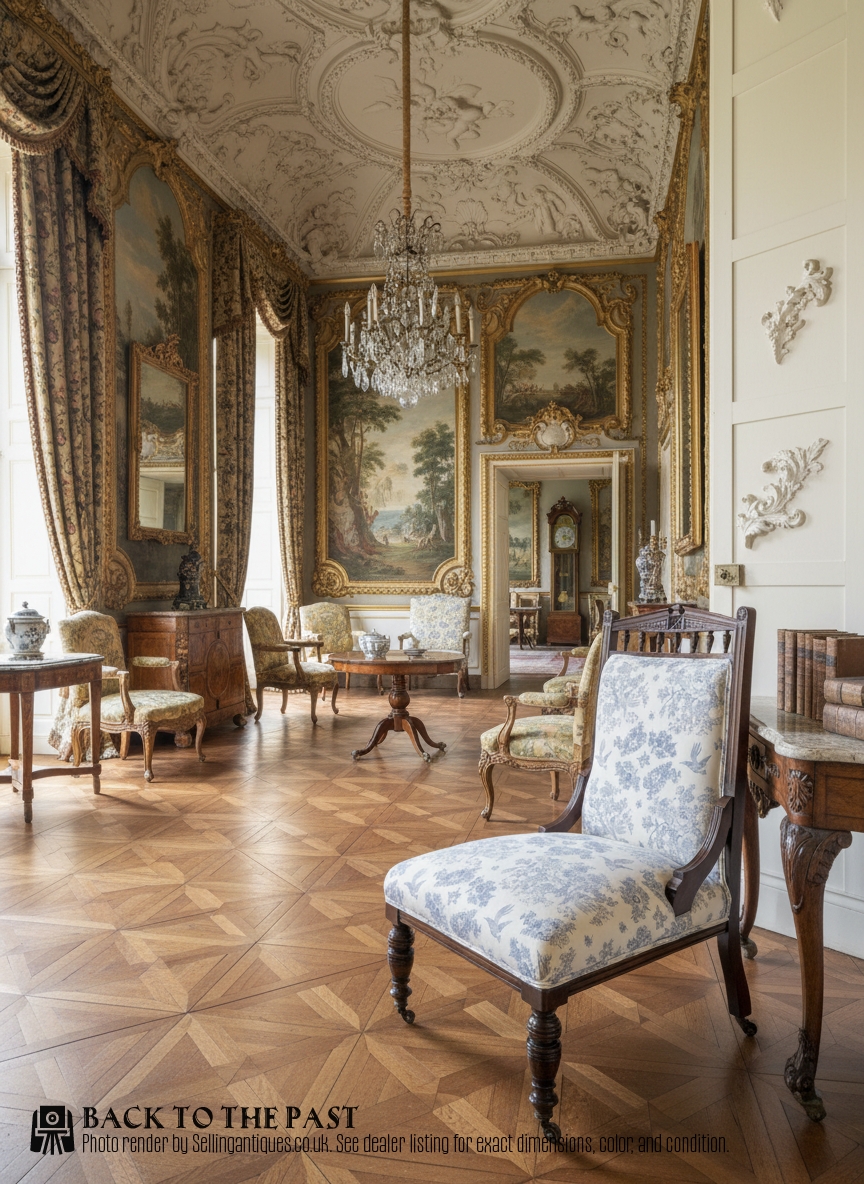
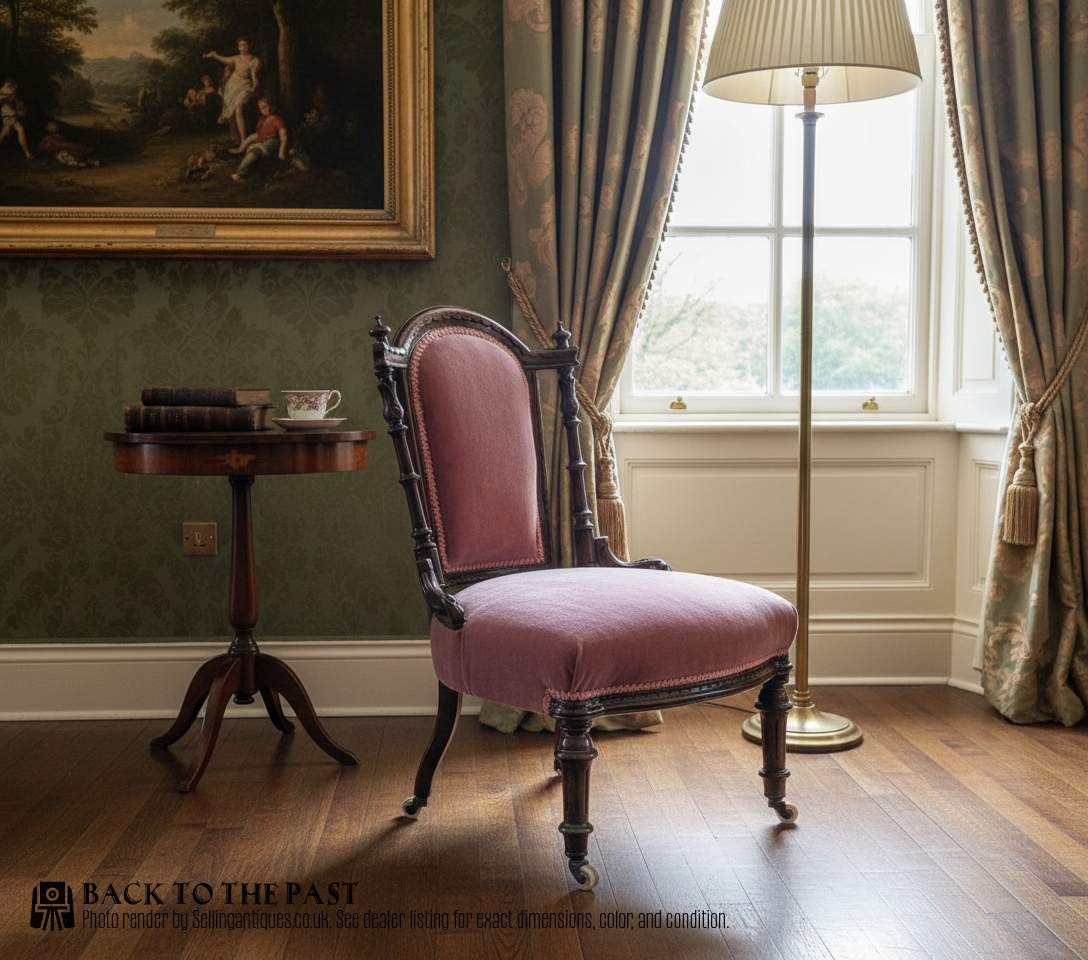
Antique Carved Walnut Ladies Chair, 1880
Priced at £1,085 from London City Antiques
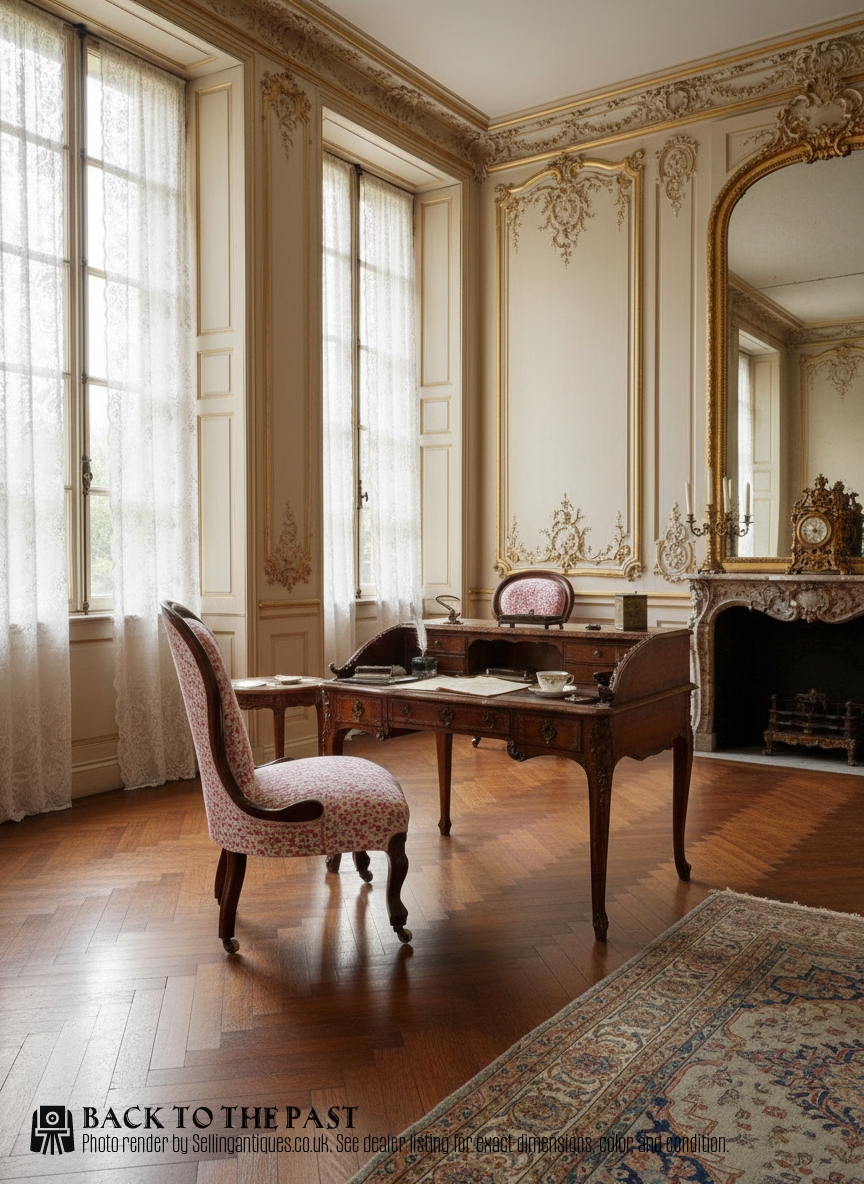
Balloon backs replaced straight rectangular frames in the 1840s. Makers steamed and bent the wood into continuous smooth curves.
Dowel joints eventually superseded traditional mortise and tenon construction when later factory production demanded faster assembly times.
Notice how early examples have exposed wooden seat rails. Later designs wrapped the fabric right over the edges for a softer look.
"Many featured subtle lumbar supports. The curved backs naturally followed the human spine better than formal dining seating."
"You might find hidden pockets tacked under the seat base. These fabric pouches turn up occasionally on earlier nursing models."
"Their low profile kept the sitter closer to the floor, which helped avoid draughts in older houses with large sash windows."
Based on almost 25 years of Sellingantiques UK antique market data, Antique Ladies Chairs appeared 613 times (out of 1,100,000 antiques) which gives it a rarity score of 88/100.
This score measures scarcity within the Sellingantiques archive only and is not a survey of the entire antiques market, so these statistics may not be indicative of the general availability of Antique Ladies Chairs elsewhere.
Use a soft brush attachment on your vacuum first. This pulls out decades of dust without damaging fragile silk or wool threads.
Avoid liquid cleaners on old fabrics. If the cover is heavily soiled, a specialist textile conservator can advise on dry methods.
Yes, that is normal practice for this period. Makers usually fitted expensive ceramic castors only to the front legs where they bore the shifting weight of the sitter.
The back legs sweep downwards and simply glide on the floorboards. Adding back castors would alter the pitch of the seat, making it uncomfortable.
Any good upholsterer will strip the old cover and apply modern fabric. Velvet or plain linen suits the frames well.
Just ask them to keep the original horsehair stuffing. It holds the firm shape much better than foam.
A slight flex is common with seating from this era. The frames were built to be lightweight and the slender waists of the balloon backs naturally have a bit of give.
However, a sharp creak usually points to dry joints at the seat rail. Animal hide glue becomes brittle over a century, allowing the dowels to rub.
Have a cabinetmaker check the main joints. Injecting warm hide glue usually secures the frame without needing a full strip down.
Please note: This Antique Ladies Chairs guide and its associated pricing data are provided for general informational purposes only. It does not constitute formal financial, investment, or appraisal advice and should not be relied upon as the sole basis for any commercial activity, purchasing, or sales decisions. Sellingantiques.co.uk accepts no liability for any actions taken in reliance on this information. Always consult with a qualified professional or independent appraiser.
