


A 2026 Guide by Sellingantiques
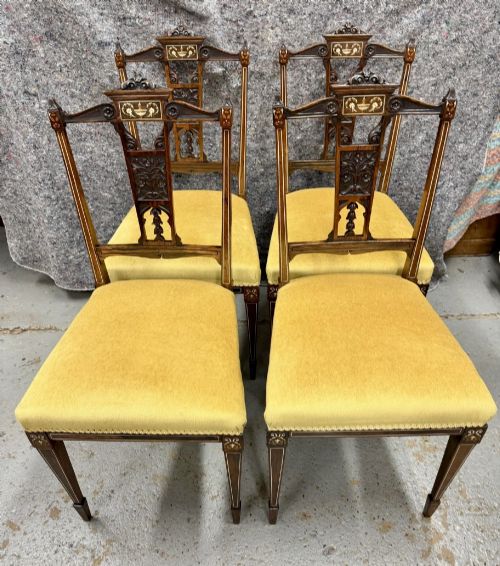
Pair of Victorian Inlaid & Marquetry Chairs, Victorian
Priced at £395 from Brookside Antiques
Detailed marquetry work on seating. It expanded during the late seventeenth century across Europe.
Dutch craftsmen brought advanced floral inlay techniques to England following the Restoration.
Check the overall form. Earlier antique inlaid chairs often feature high backs and rigid profiles suited to wall placement.
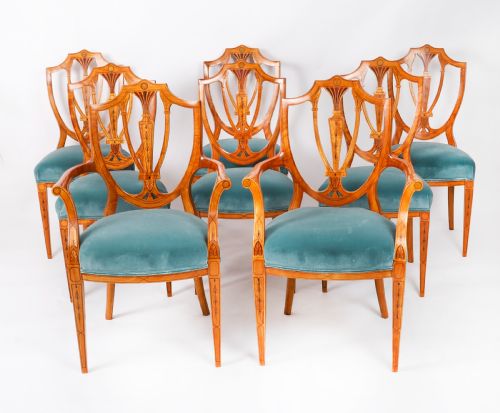
Neoclassical tastes later shifted the focus towards lighter frames decorated with classical urns.
Gerrit Jensen supplied detailed marquetry seating to the English royal household during the late seventeenth century.
John Linnell produced refined neoclassical chairs with detailed inlaid patterns in London between 1760 and 1796.
Regional tradesmen. You find basic starbursts and shell motifs on provincial elm chairs.
Fine Quality Antique Mahogany Inlaid Desk Chair
, 1900
Priced at £1,085 from London City Antiques
The 2026 retail price guide for Antique Inlaid Chairs is drawn from a proprietary archive of over 1.1 million retail prices indexed by Sellingantiques since 2003. This guide relies exclusively on their own internal data; no external sources or auction records are used.
Analysing nearly 25 years of UK antique market history alongside current retail values, the data indicates that typical UK retail prices for Antique Inlaid Chairs range between £300 and £2,400. Entry-level prices generally fall under £300 and premium examples upwards of £2,400.
Flush surfaces are expected. The decorative elements sit level with the surrounding primary timber.
Symmetry across the backrest. Splats often display mirrored floral sprays or geometric banding.
Thin strips of pale wood outline the structural shapes. These borders define the edges of legs and seat rails.
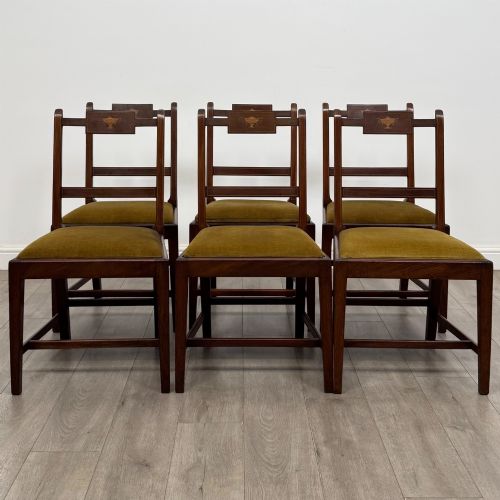
Pair of Regency Faux Rosewood and Brass Inlaid Chairs, Regency
Priced at £295 from I M Chaney Antique Furniture
Early makers cut individual recesses into the solid frame using chisels before gluing the decorative pieces in place.
Veneer techniques. These later allowed craftsmen to assemble the entire pattern flat before applying it to the carcase.
Shading was achieved by dipping the edges of boxwood pieces into hot sand to create depth.
"Makers used natural dyes from plants and insects to turn basic woods green or red before setting them."
"Botanical records. Craftsmen copied specific regional flowers from contemporary gardening books."
"The complex geometric bands on early nineteenth-century examples were glued into solid blocks and sliced thinly across the grain."
Based on almost 25 years of Sellingantiques UK antique market data, Antique Inlaid Chairs appeared 2308 times (out of 1,100,000 antiques) which gives it a rarity score of 63/100.
This score measures scarcity within the Sellingantiques archive only and is not a survey of the entire antiques market, so these statistics may not be indicative of the general availability of Antique Inlaid Chairs elsewhere.
Keep away from liquid metal polishes. They turn the old glue black.
Use a dry jeweller's cloth instead.
A qualified restorer can replace the missing sections. They'll cut new pieces of boxwood or sycamore to match the existing recesses.
Matching the old colour takes time. The restorer has to tone down the fresh timber so it blends with the aged carcase around it.
Don't attempt to fill the gaps with modern wood filler. It ruins the surface and makes professional repair much harder later.
They make maintenance easier. You can lift them out and send them to an upholsterer without moving the whole chair.
Most antique inlaid chairs from the eighteenth century were built this way. It prevented damage to the delicate woodwork during re-covering.
Sunlight bleaches natural wood dyes over time. The bright greens and reds originally used in floral marquetry fade when left near a south-facing window.
Dirt and old wax also obscure the contrast. A gentle clean by a professional often reveals more variation in the timber than you initially thought was there.
Please note: This Antique Inlaid Chairs guide and its associated pricing data are provided for general informational purposes only. It does not constitute formal financial, investment, or appraisal advice and should not be relied upon as the sole basis for any commercial activity, purchasing, or sales decisions. Sellingantiques.co.uk accepts no liability for any actions taken in reliance on this information. Always consult with a qualified professional or independent appraiser.
