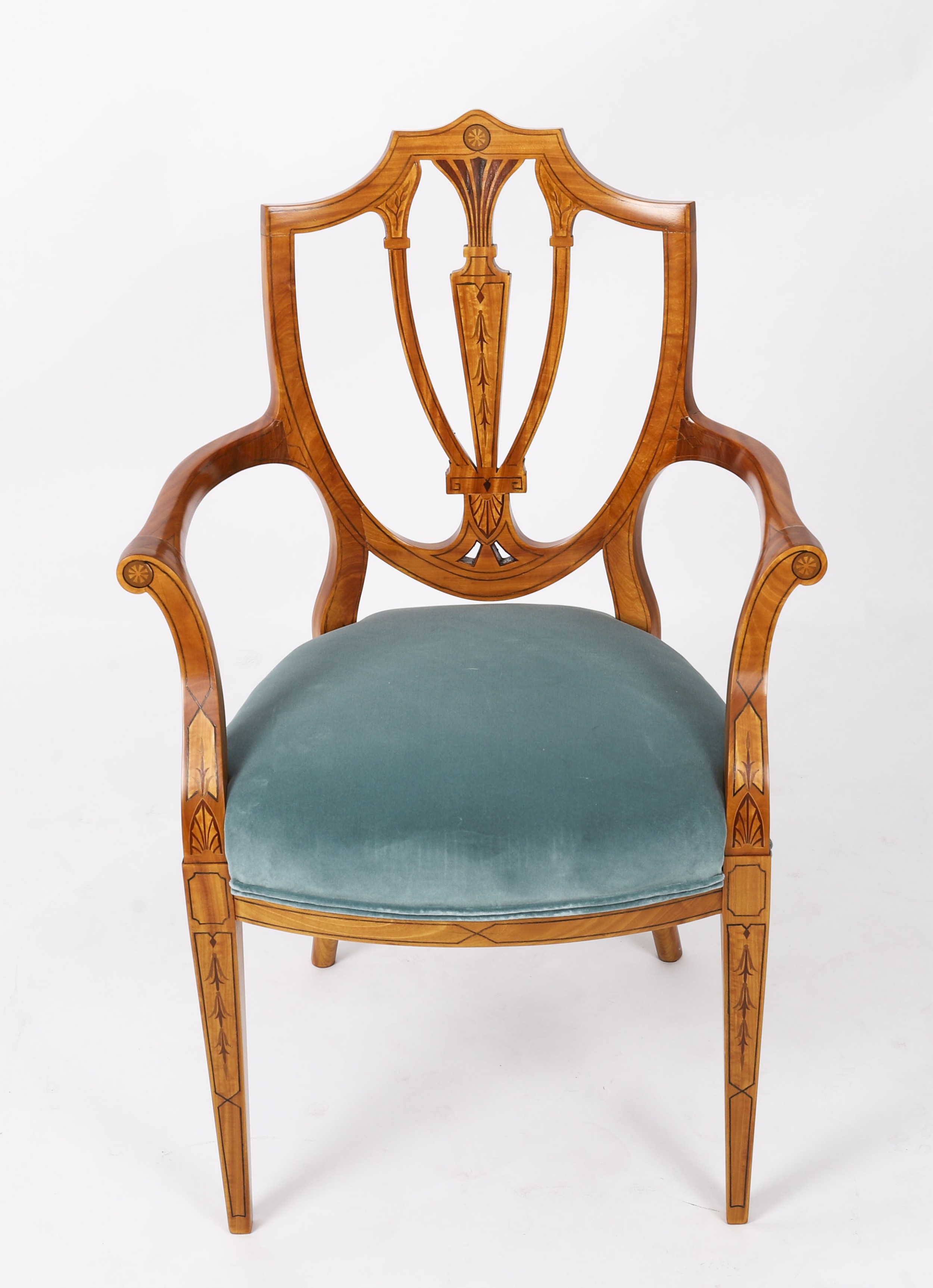
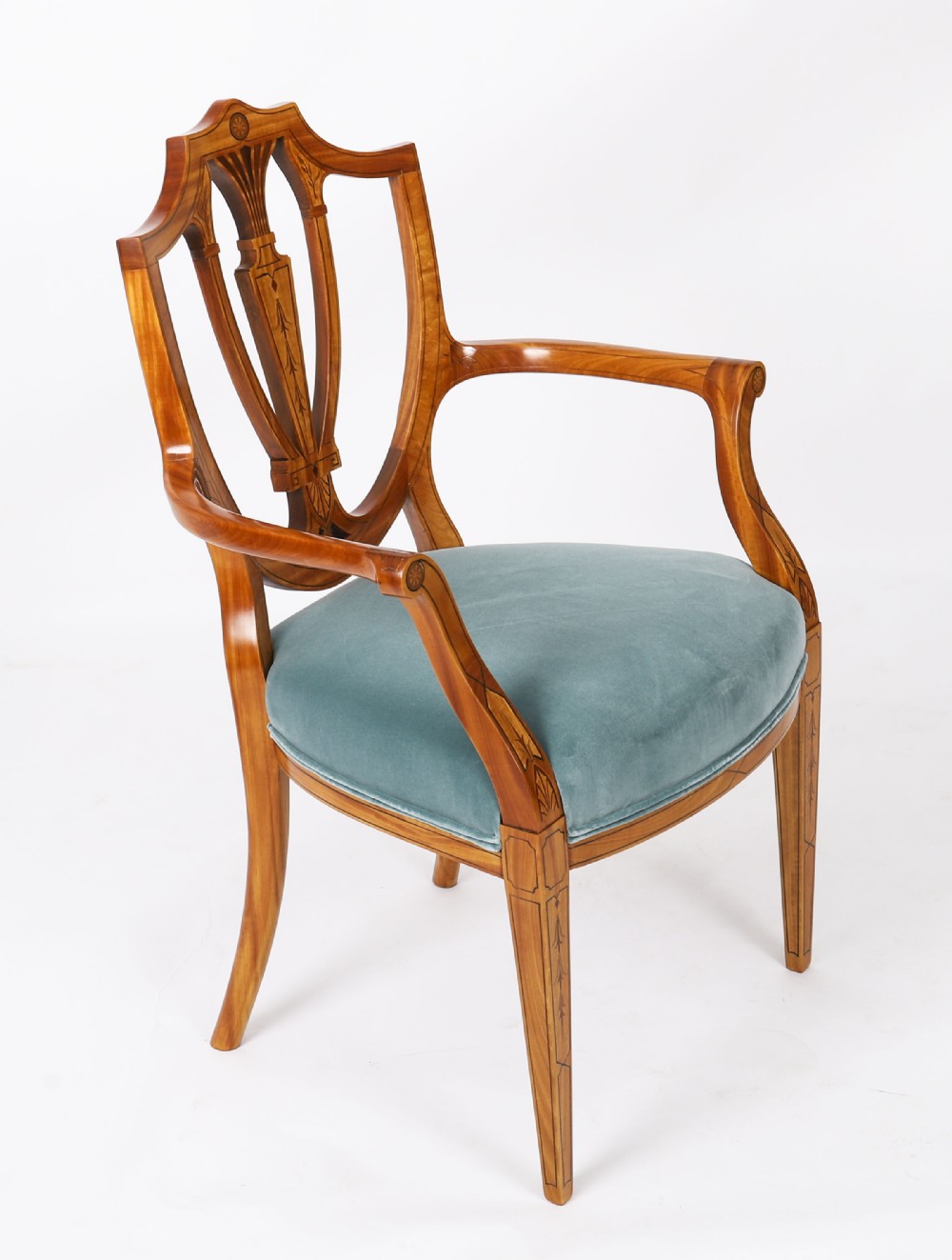
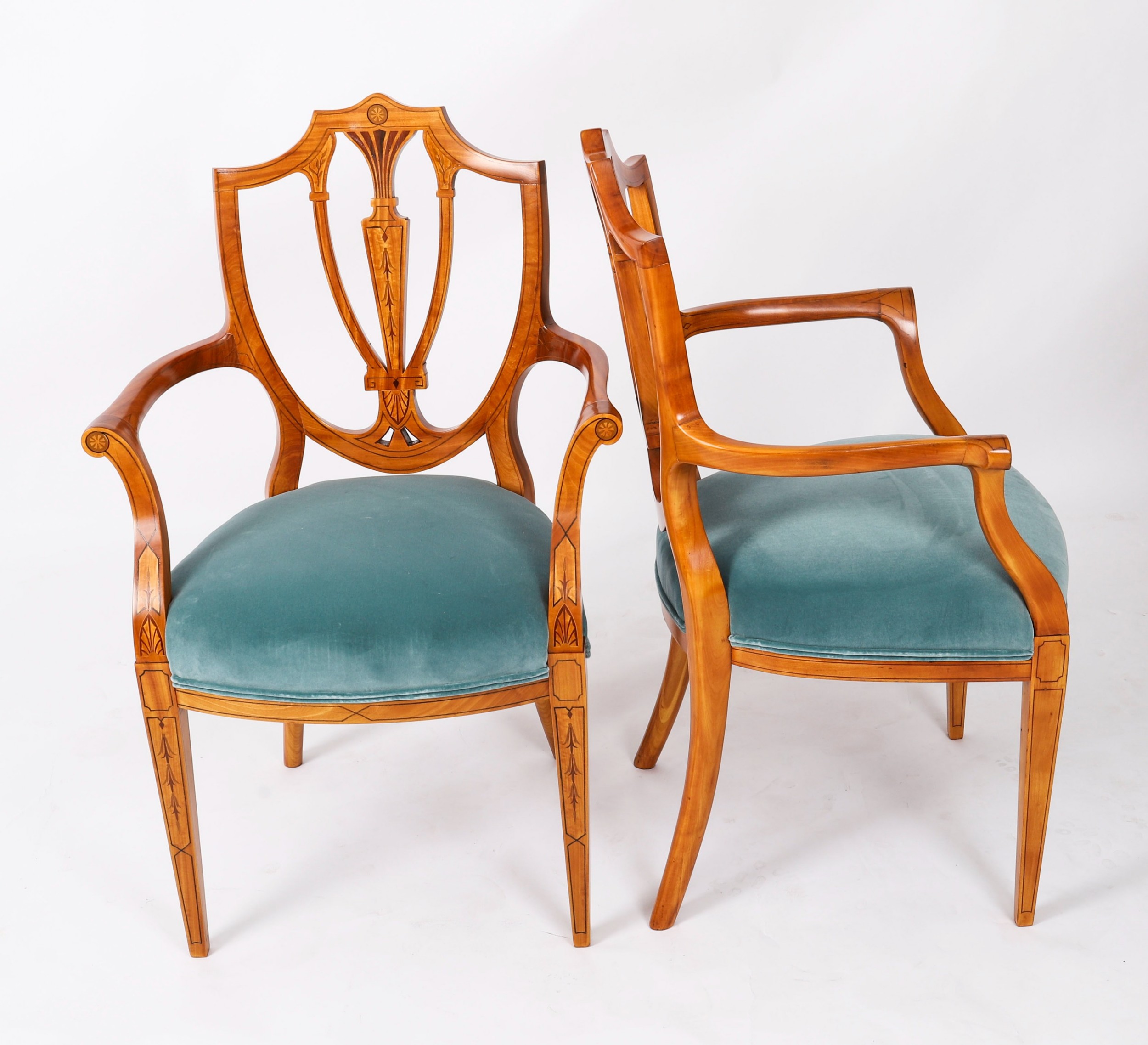
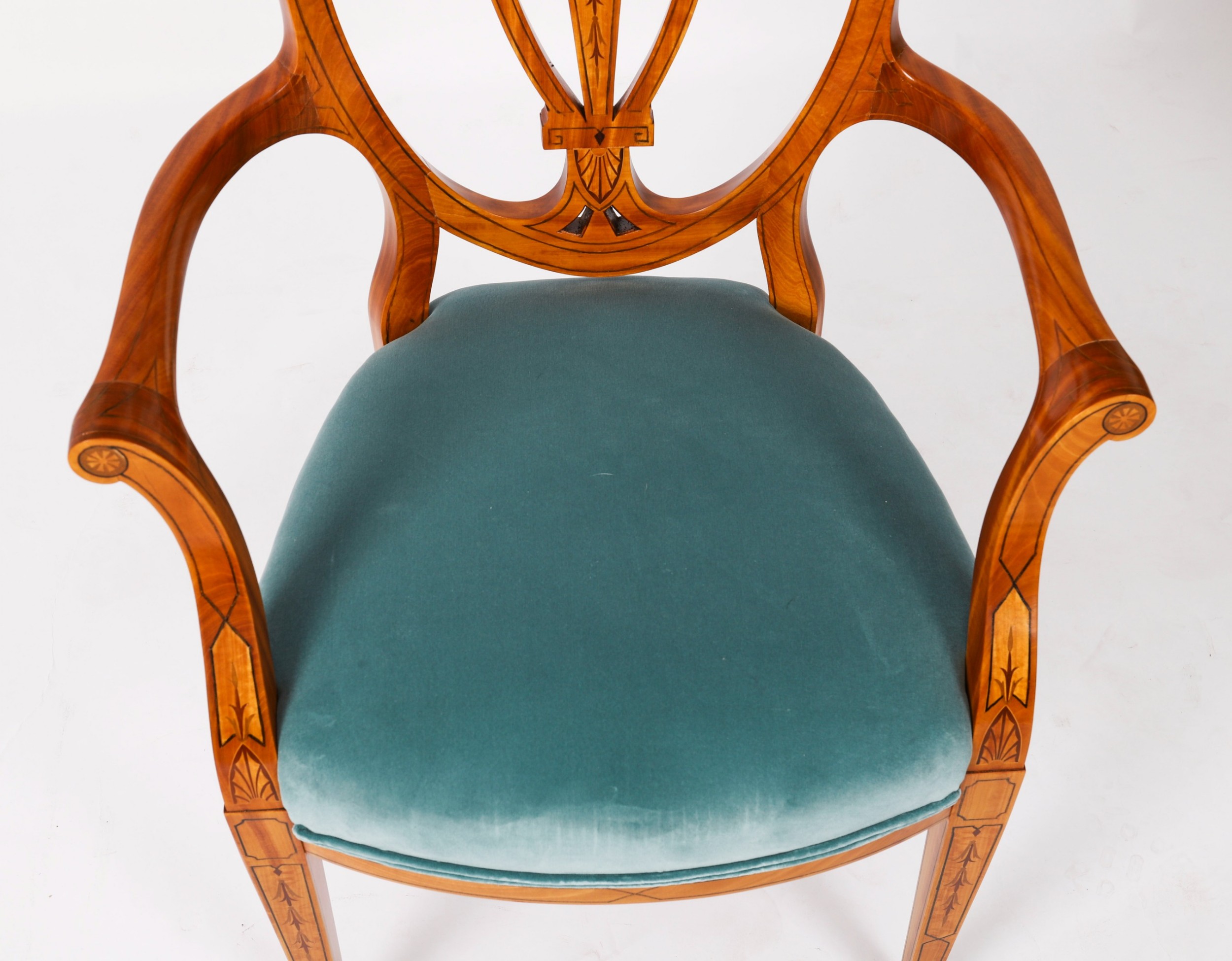
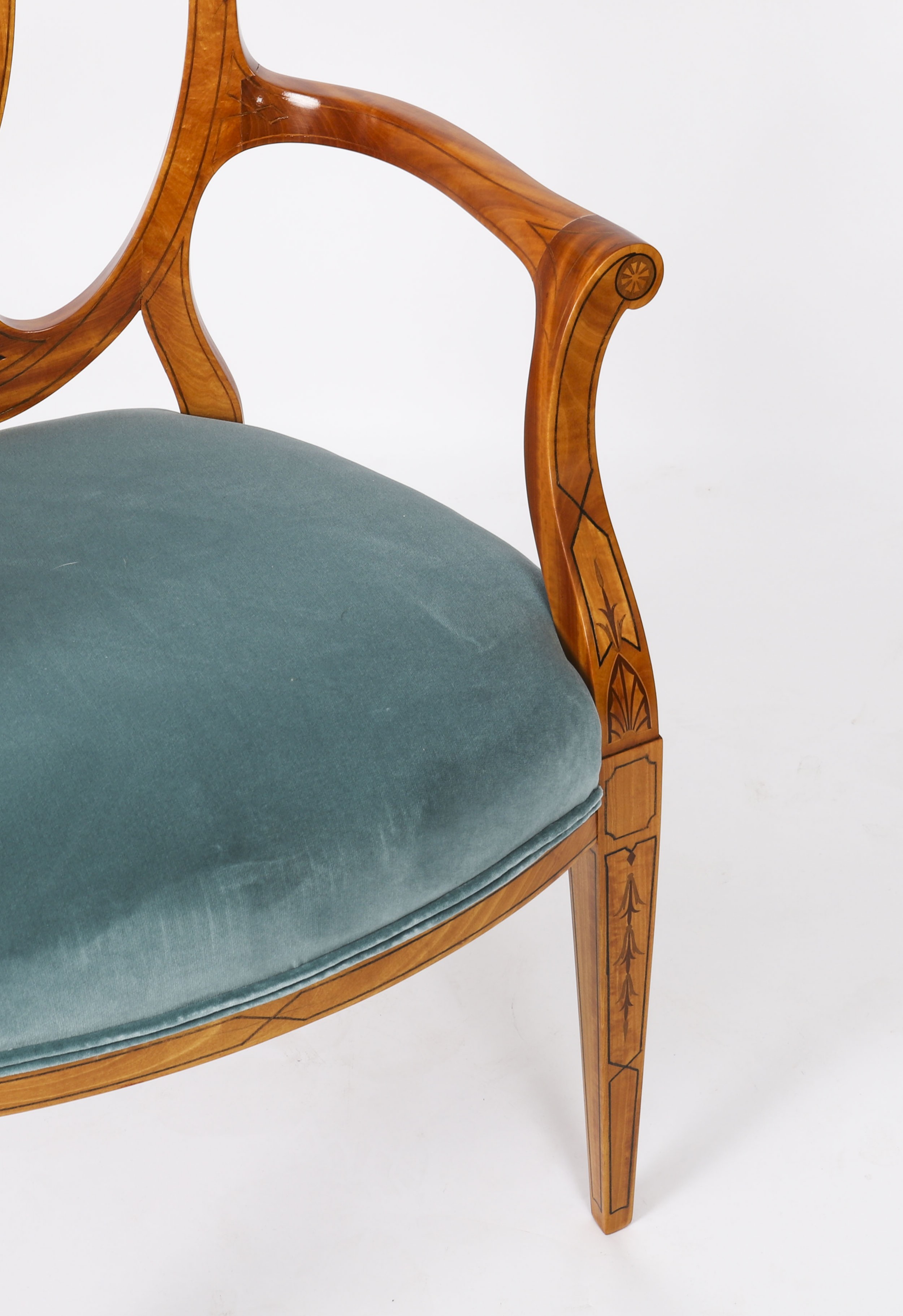
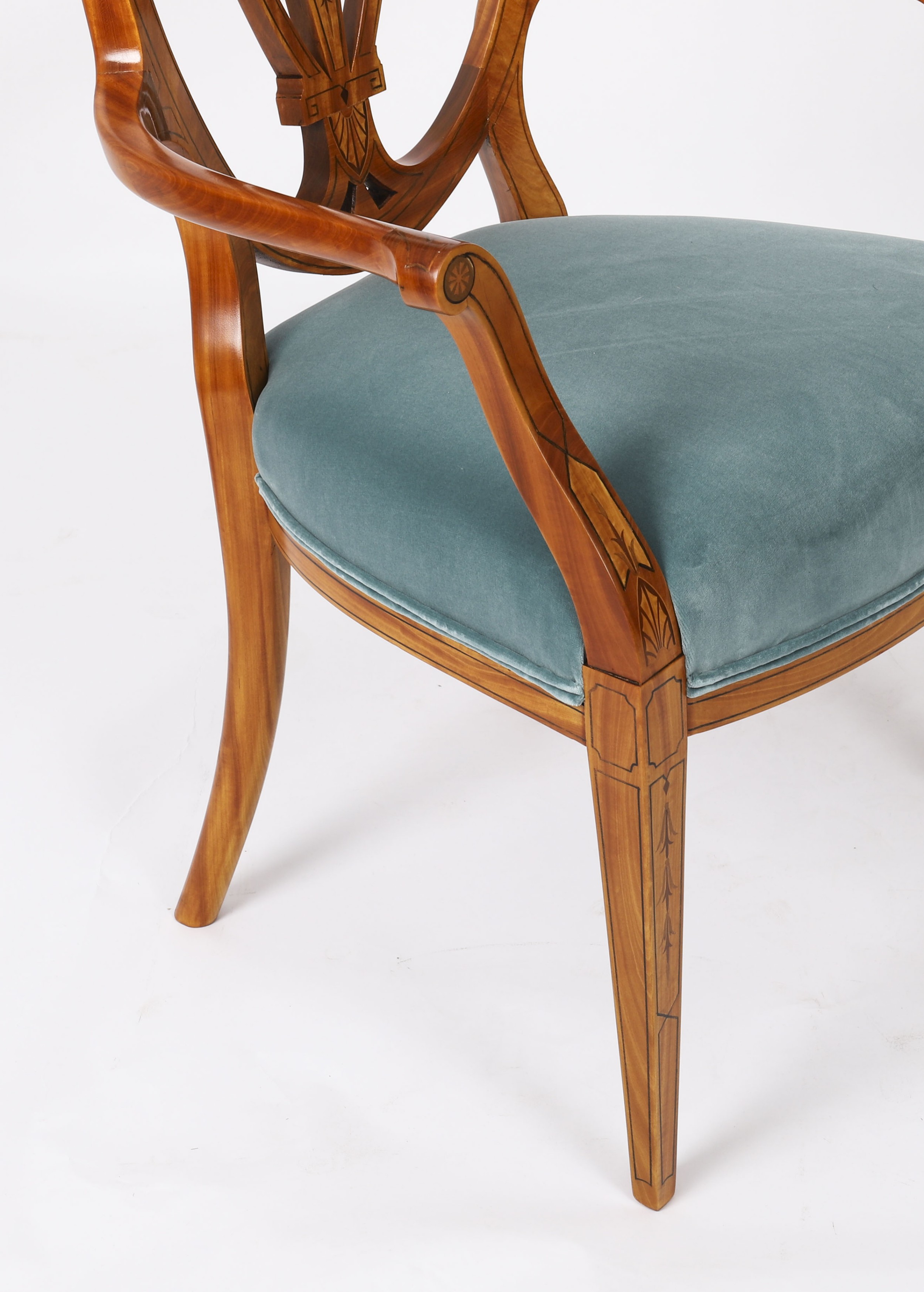
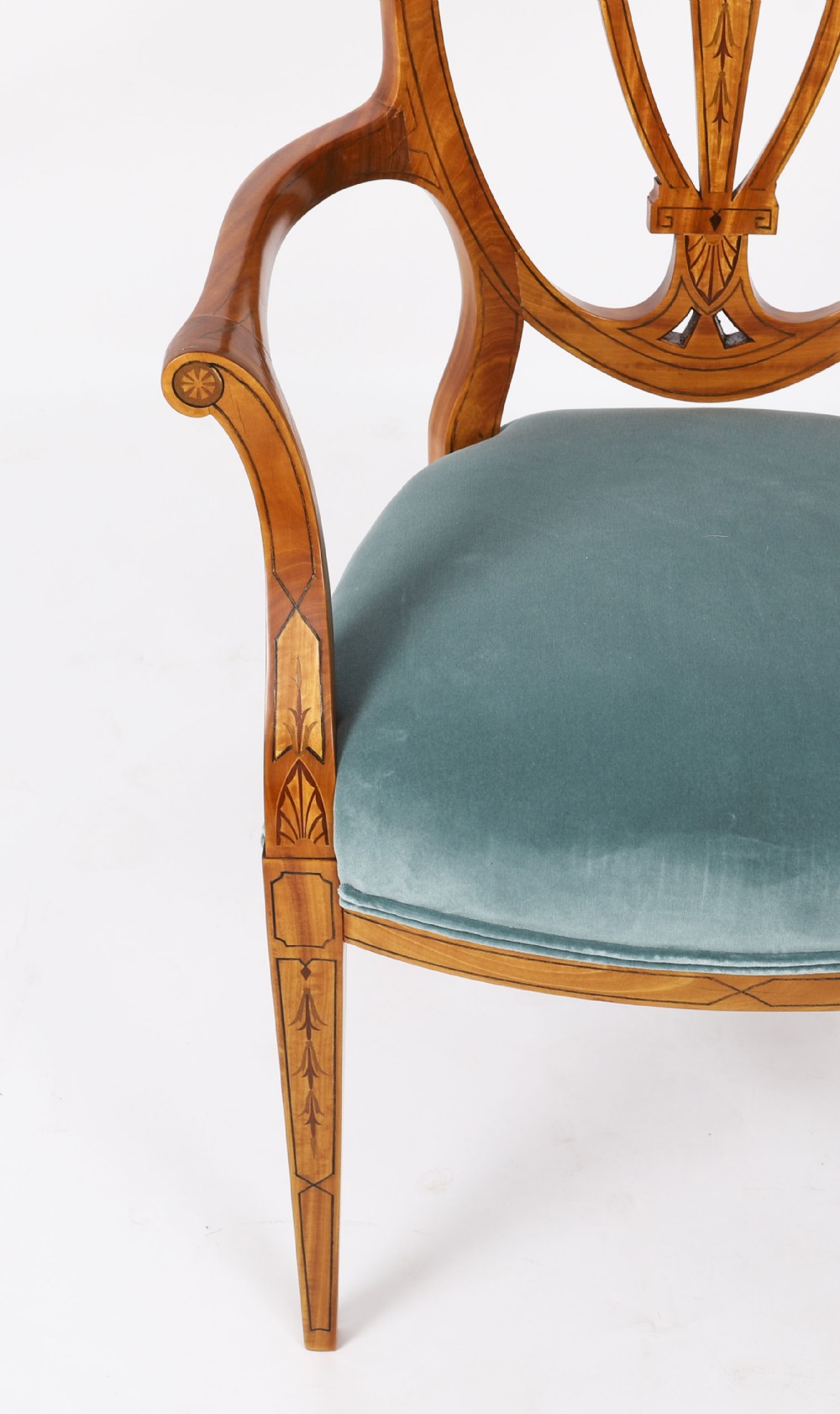
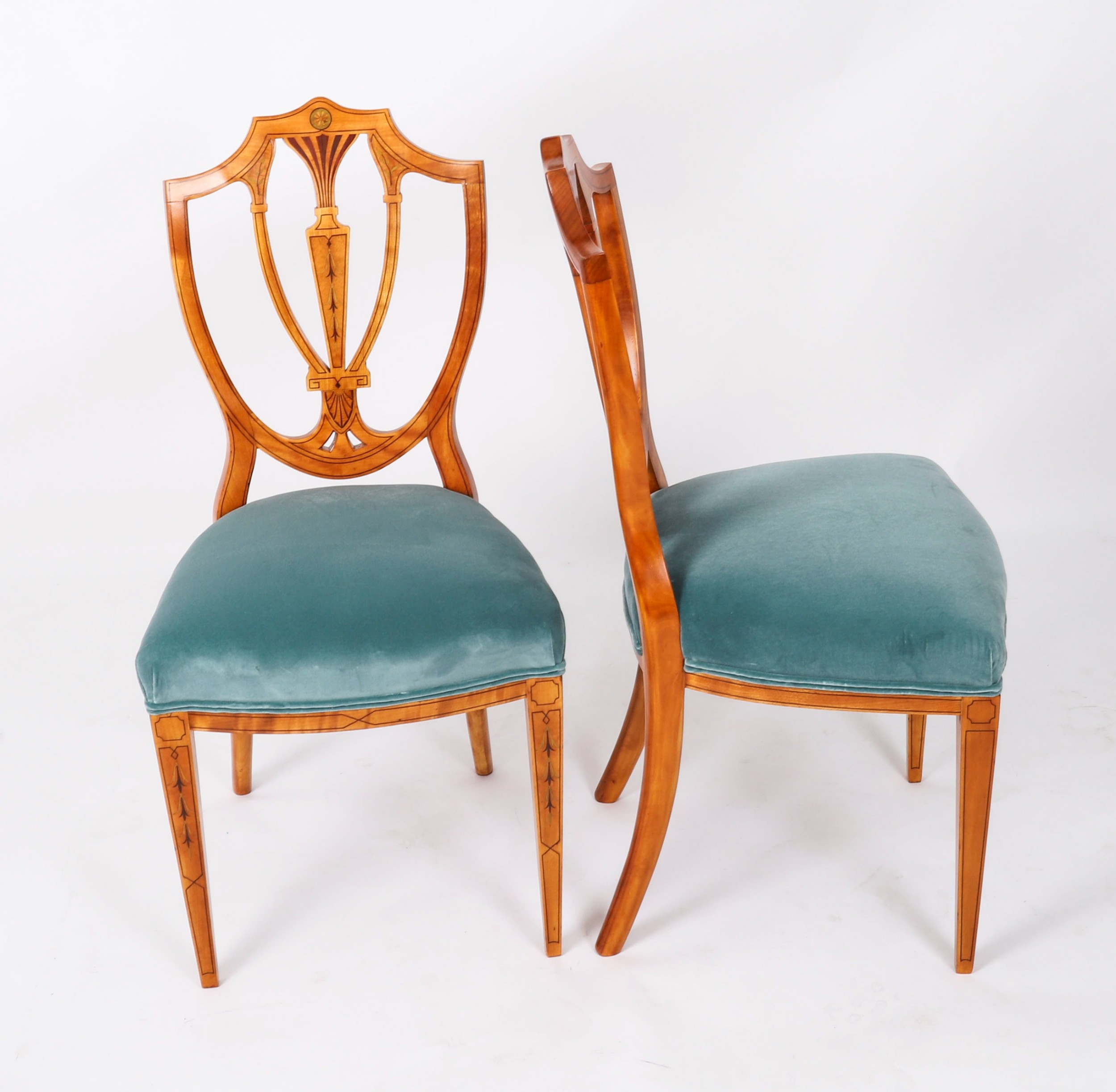
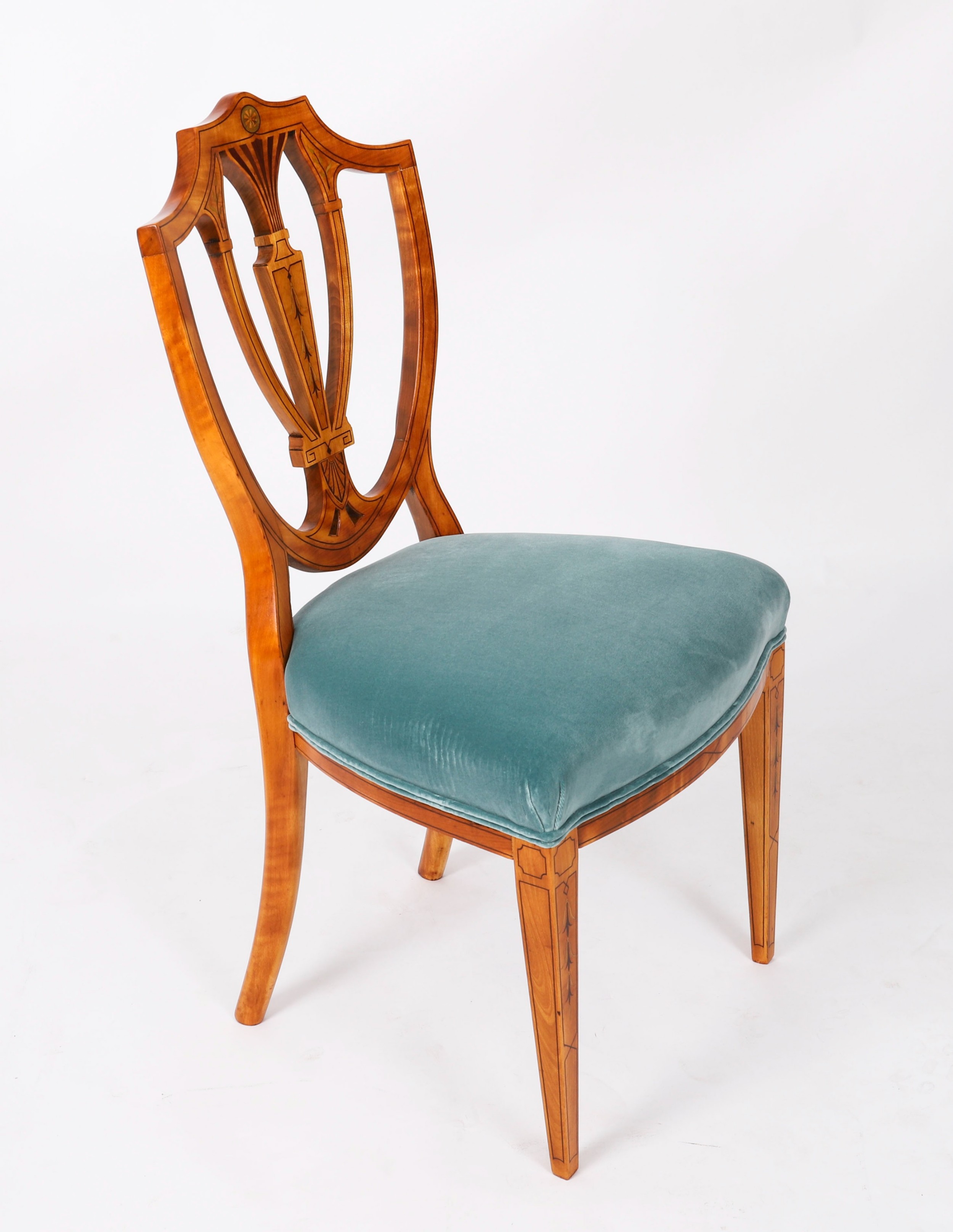
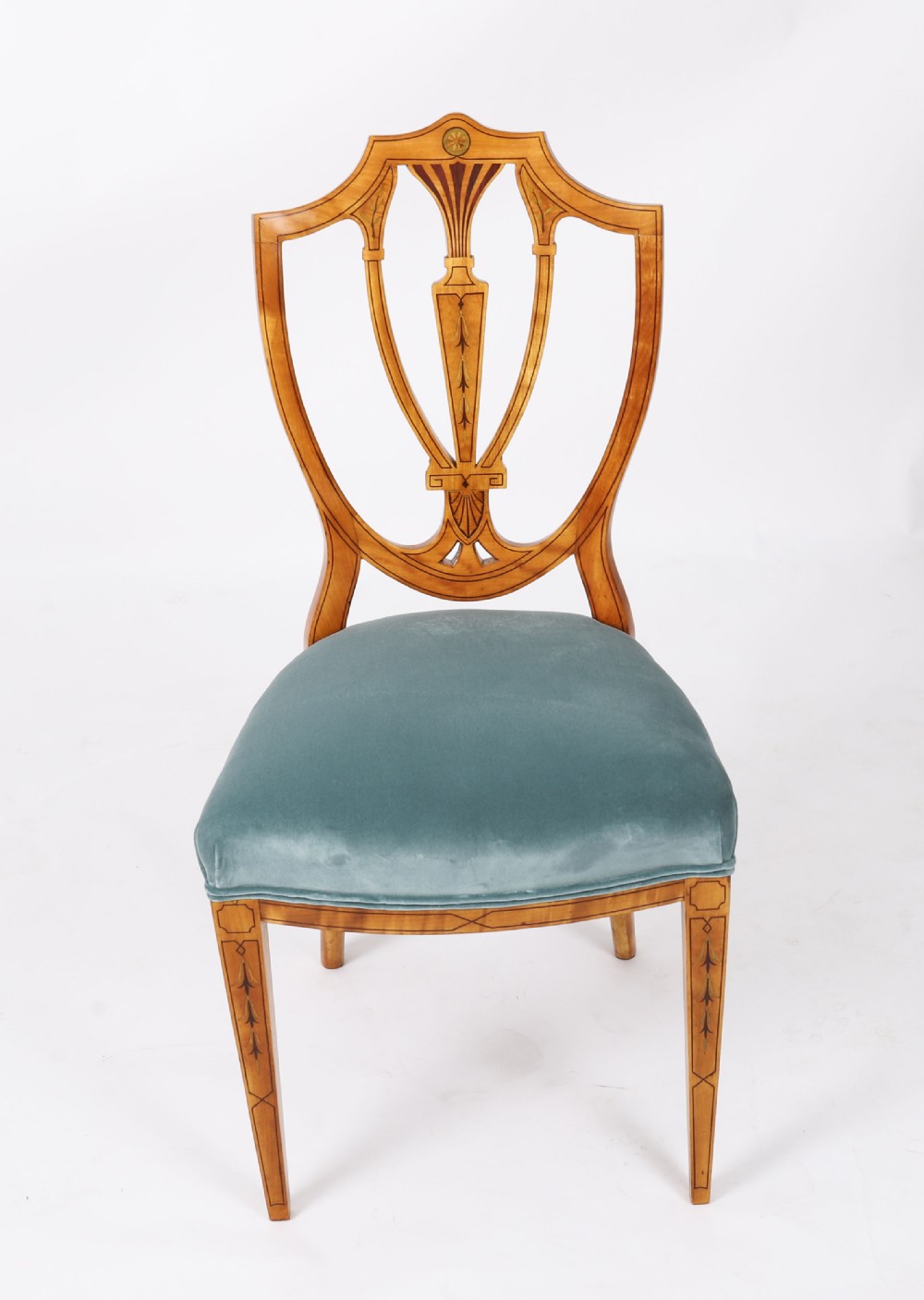
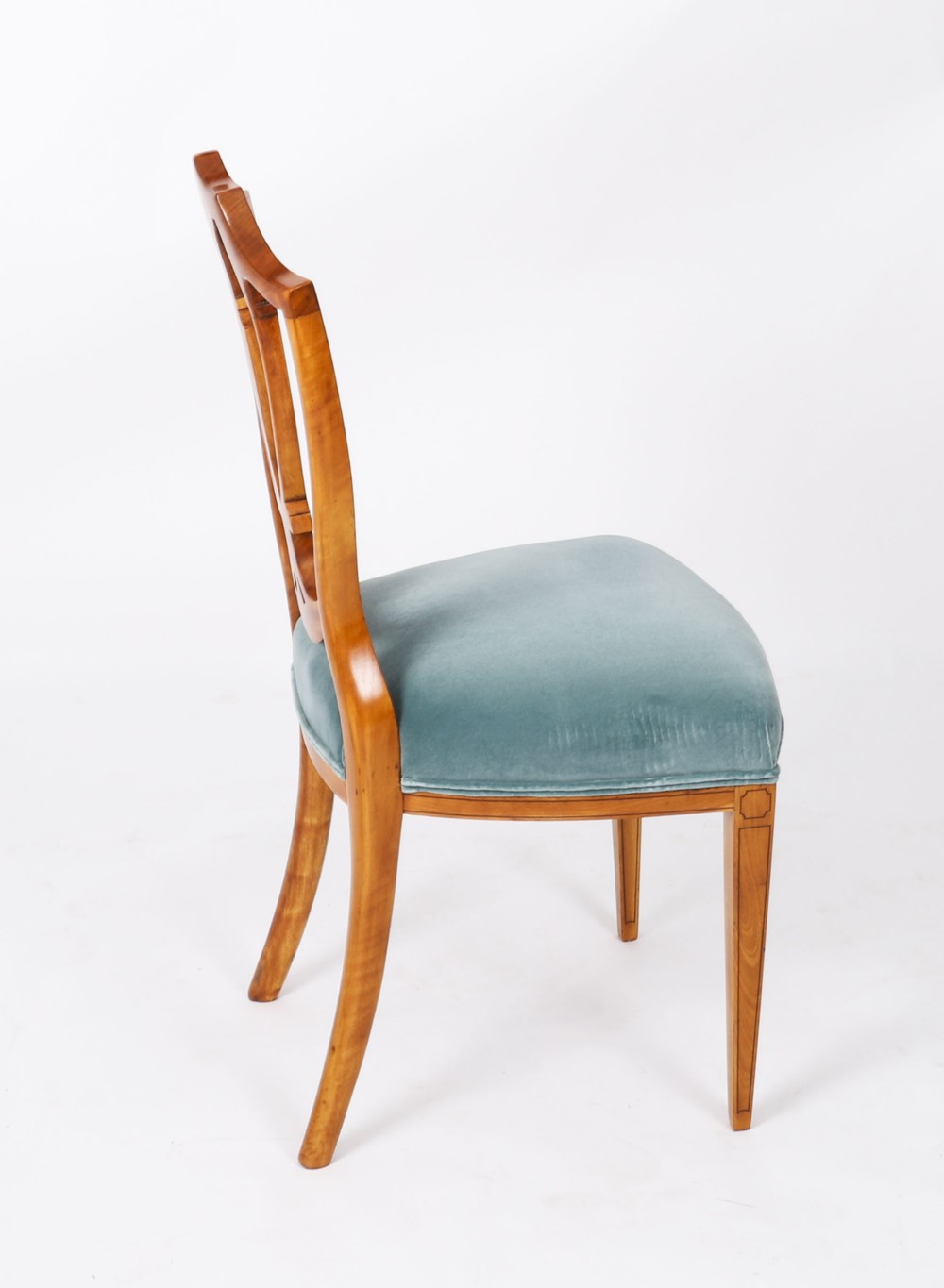
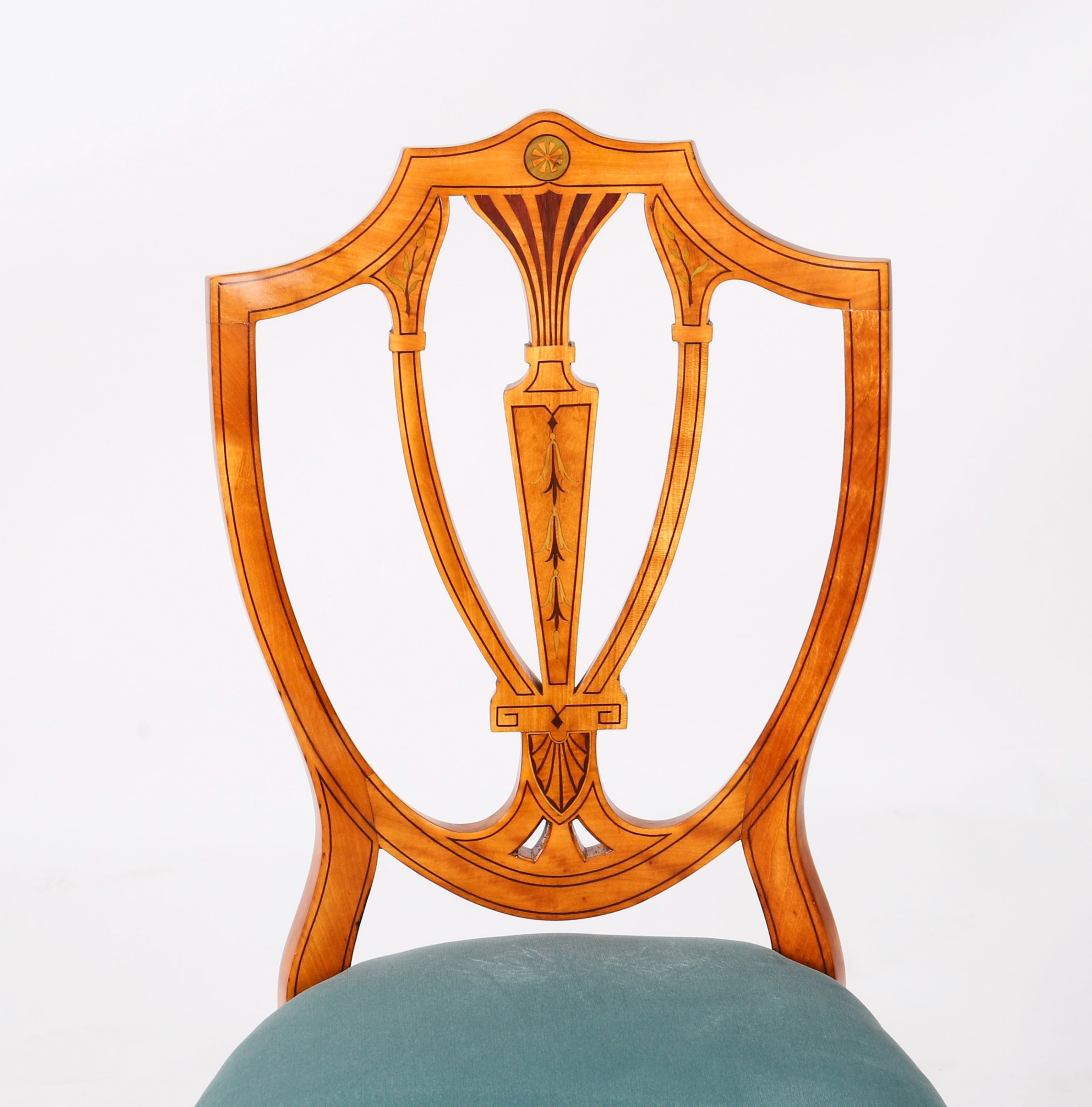
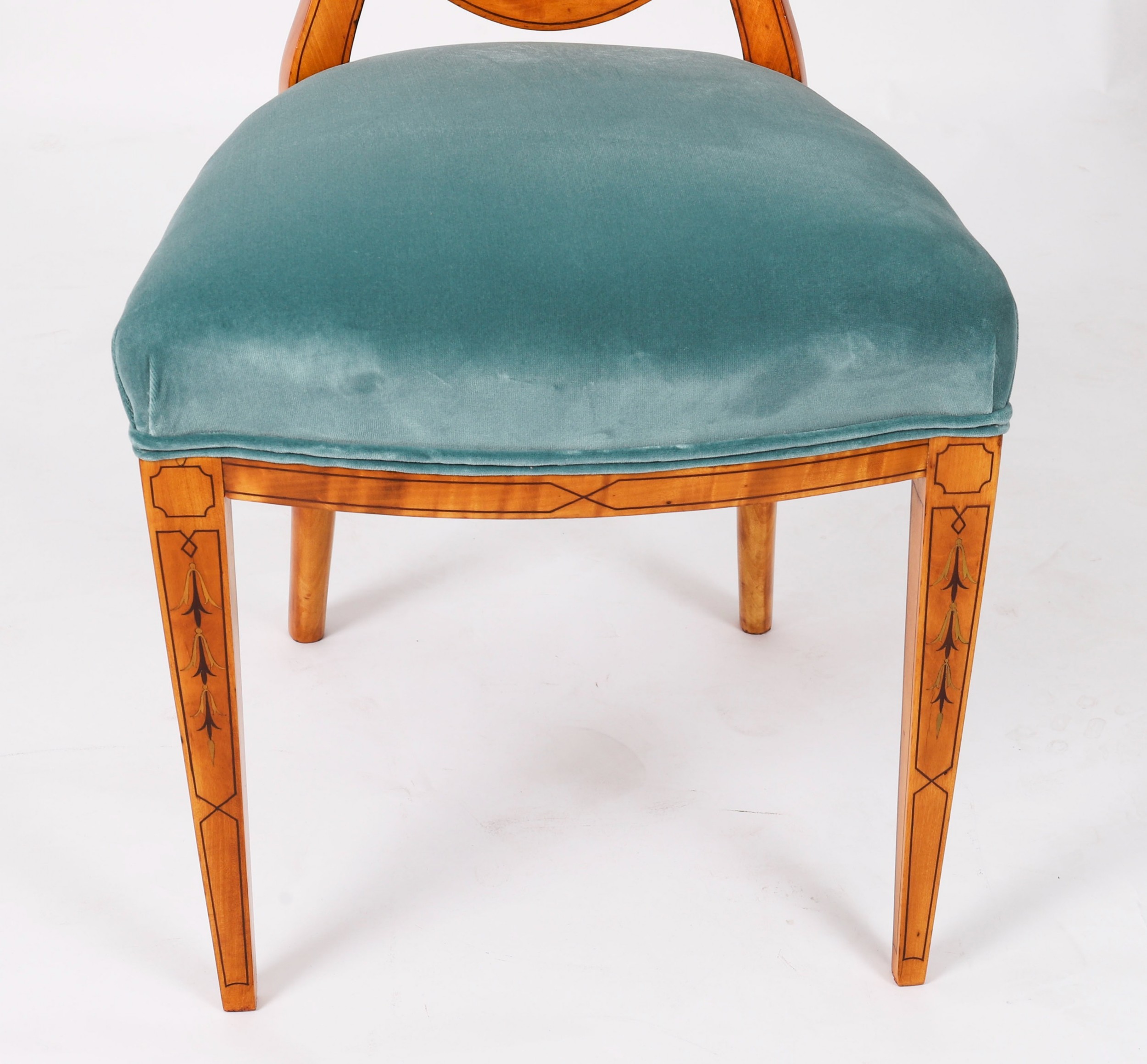
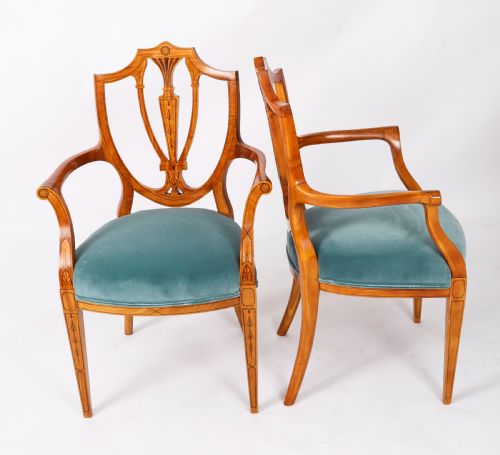
Regent Antiques has dated these Satinwood Shieldback Dining Chairs to the 1880s.
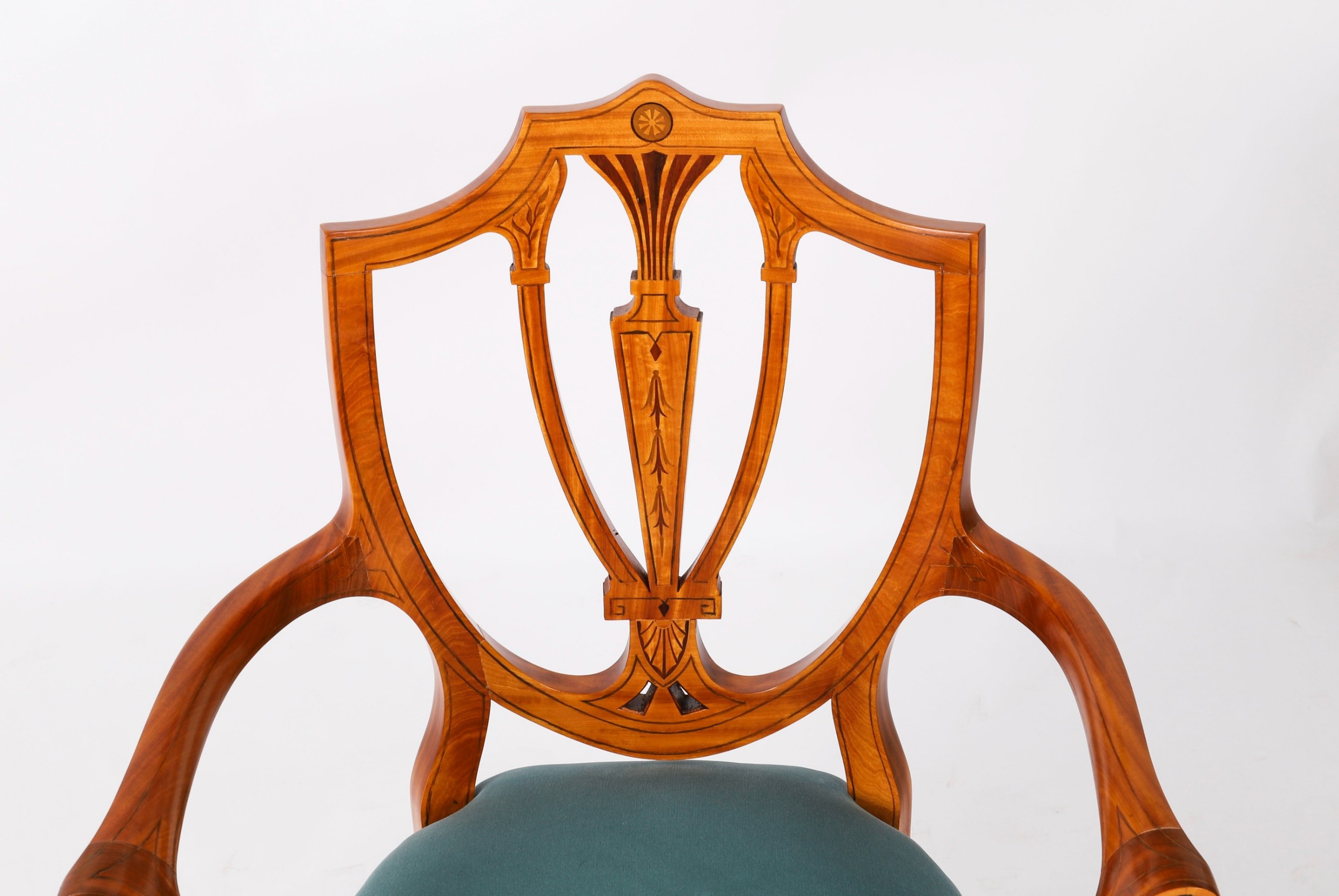
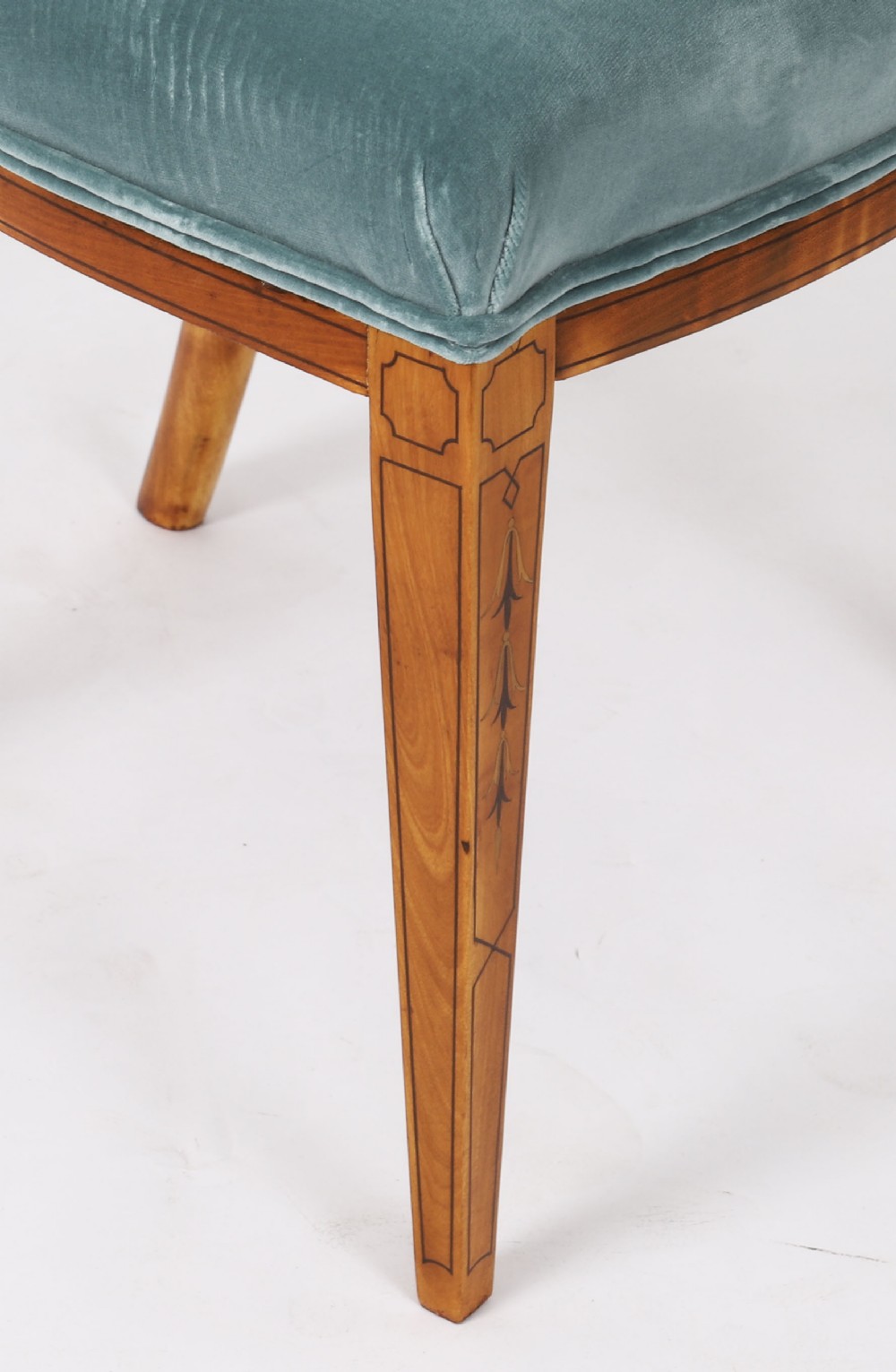
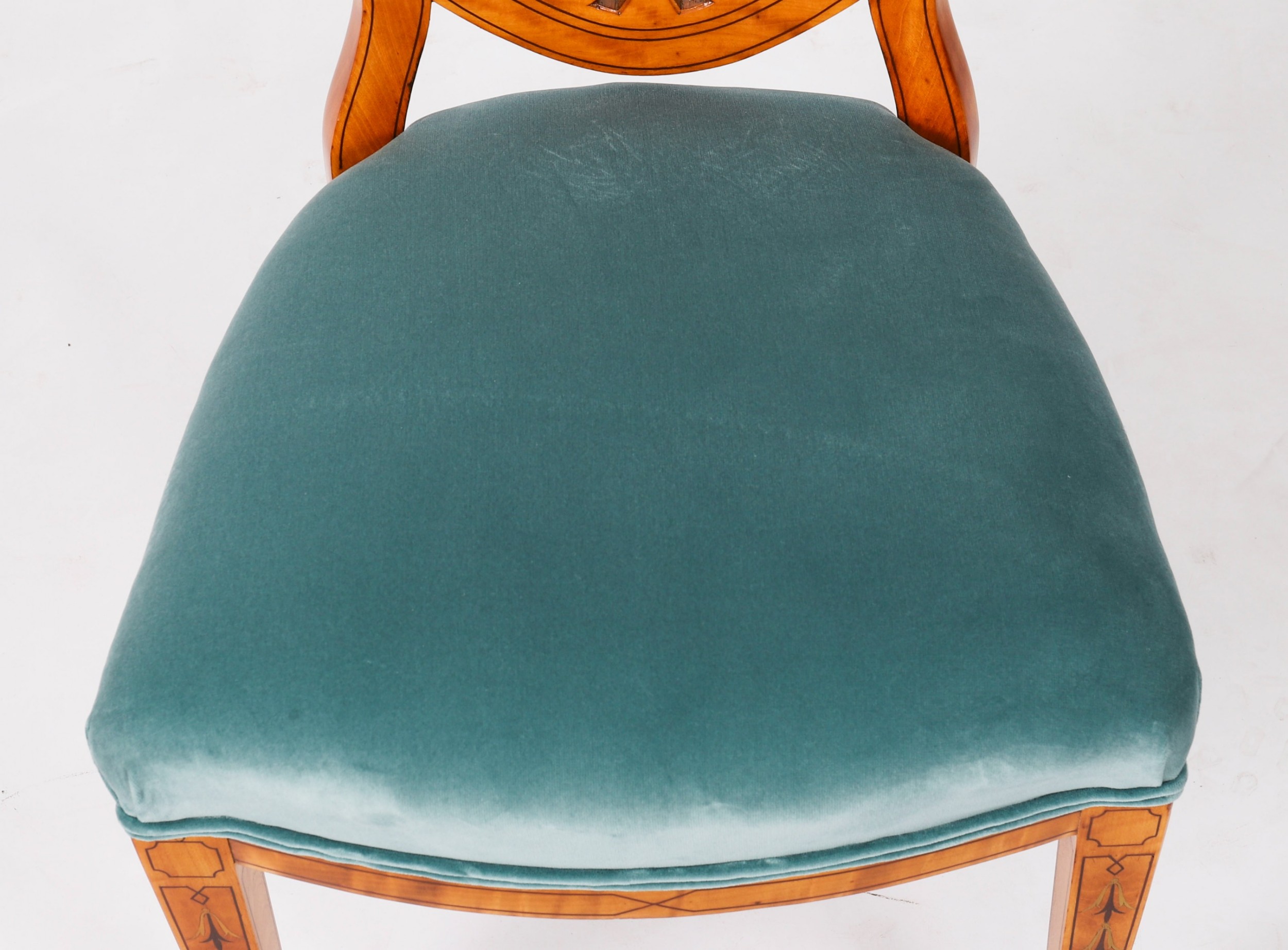
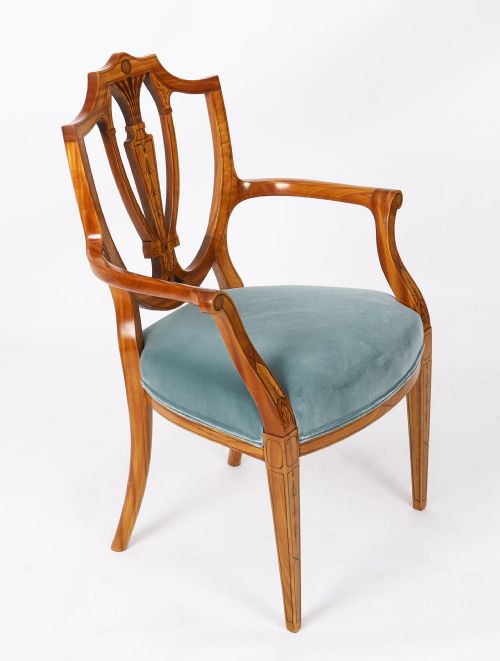
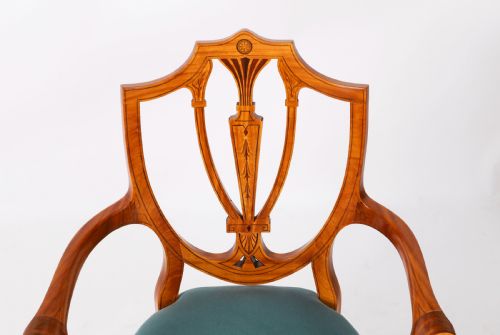
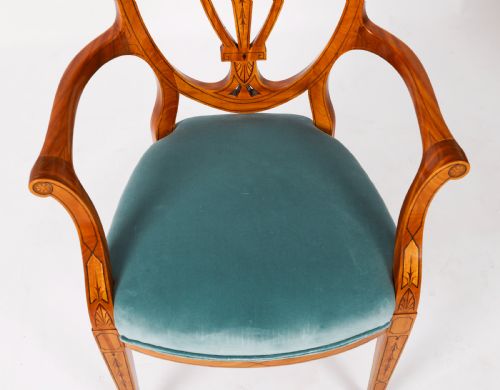
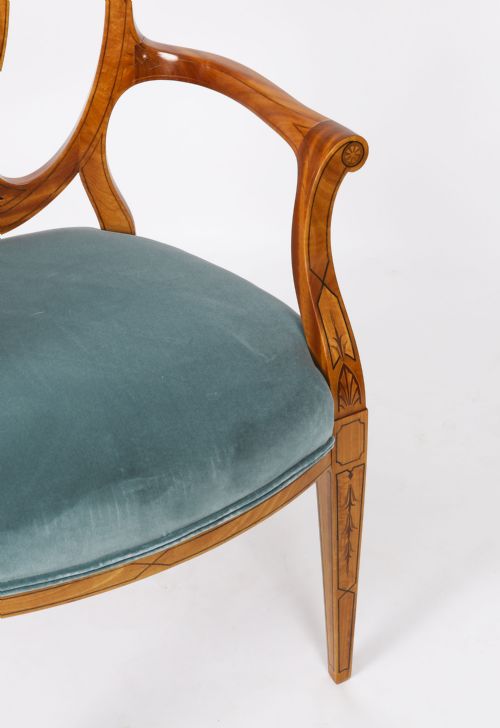
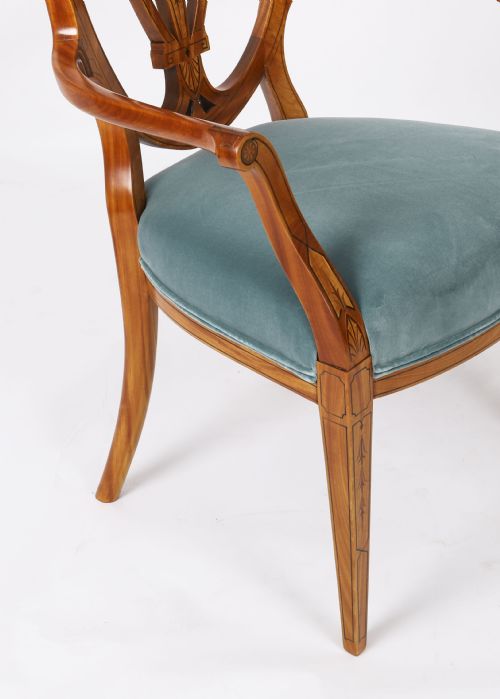
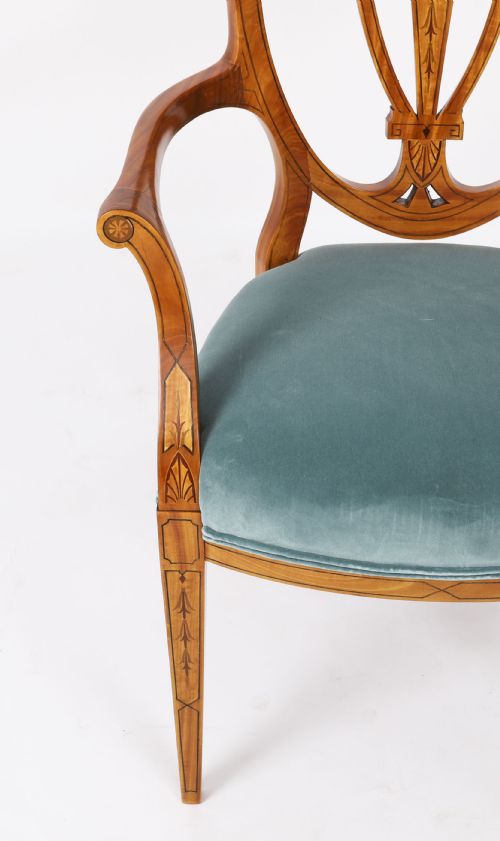
These chairs have been masterfully crafted in beautiful, solid satin wood with wheat sheaf decoration inlaid with trailing bell flowers, typical of the Hepplewhite style, and raised on tapered square-section legs.
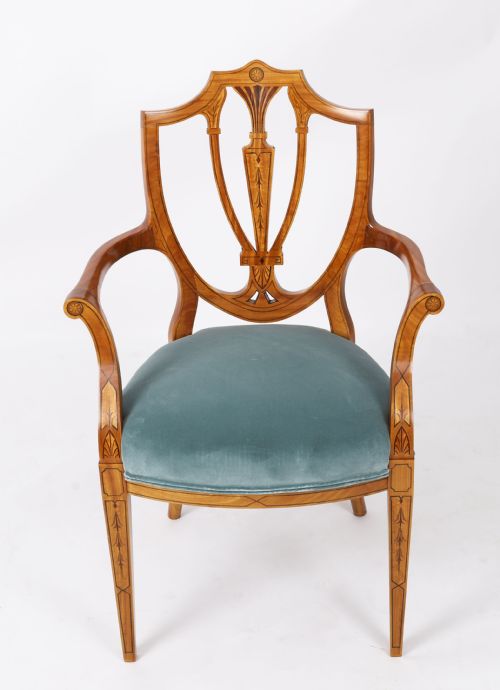
Transform the fine dining experience in your home with this antique set of dining chairs fit for a king.
Condition:
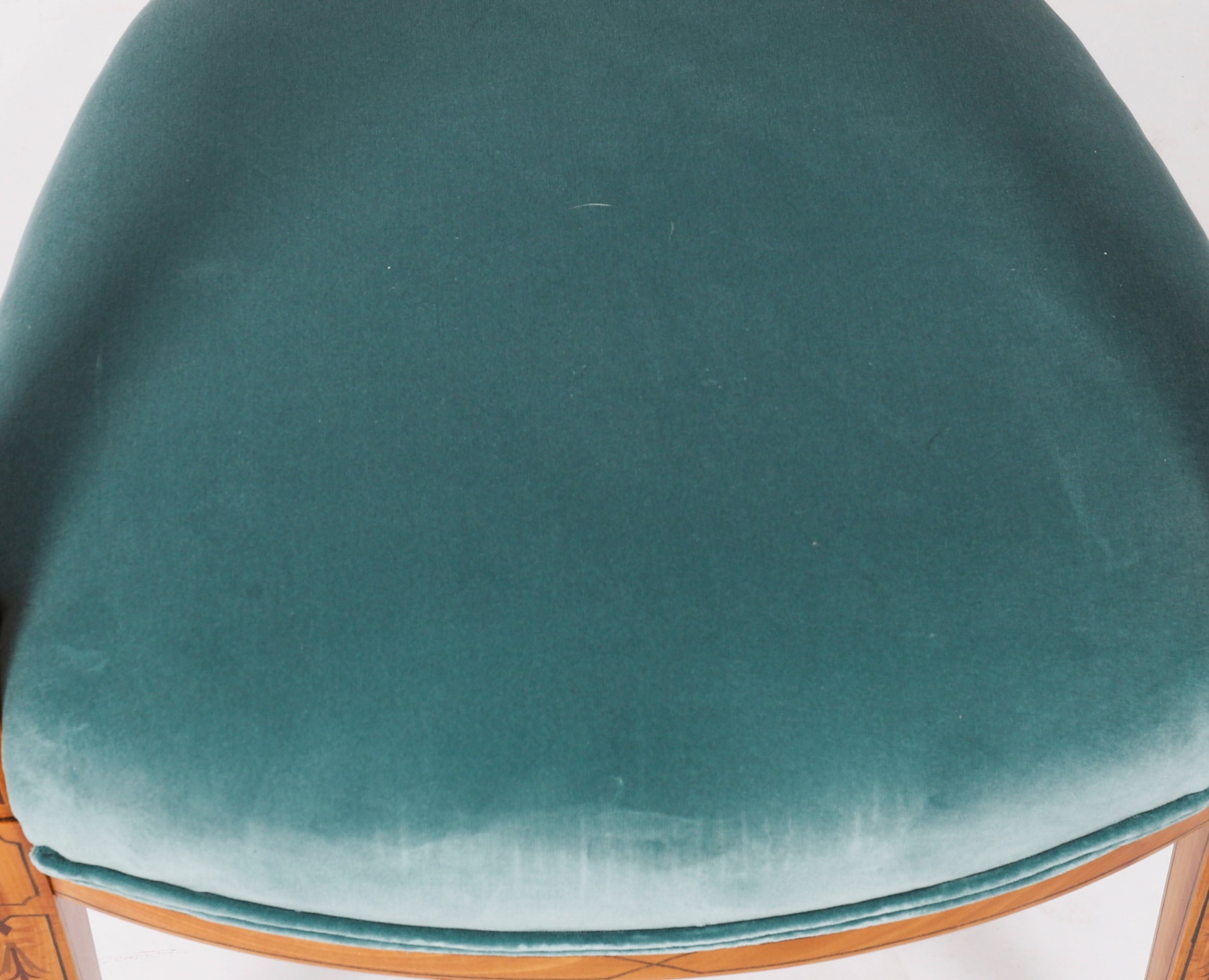
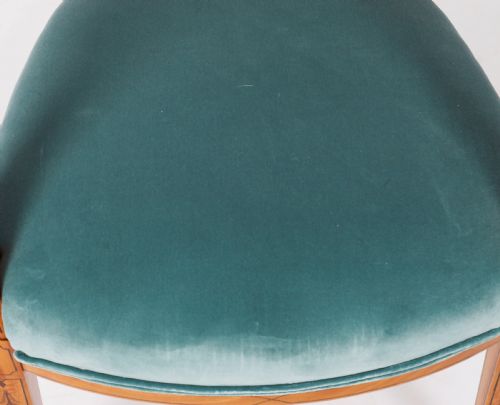
In excellent condition, having been beautifully cleaned, polished, waxed and reupholstered in our workshops, please see photos for confirmation.
Dimensions in cm:
Height 94 cm x Width 61 cm x Depth 54 cm - Armchairs
Height 93 cm x Width 45 cm x Depth 49 cm - Side chairs
Height 47 cm - Seat height
Dimensions in inches:
Height 3 feet, 1 inch x Width 2 foot x Depth 1 foot, 9 inches - Armchairs
Height 3 feet, 1 inch x Width 1 foot, 6 inches x Depth 1 foot, 7 inches - Side chairs
Height 1 foot, 6 inches - Seat height
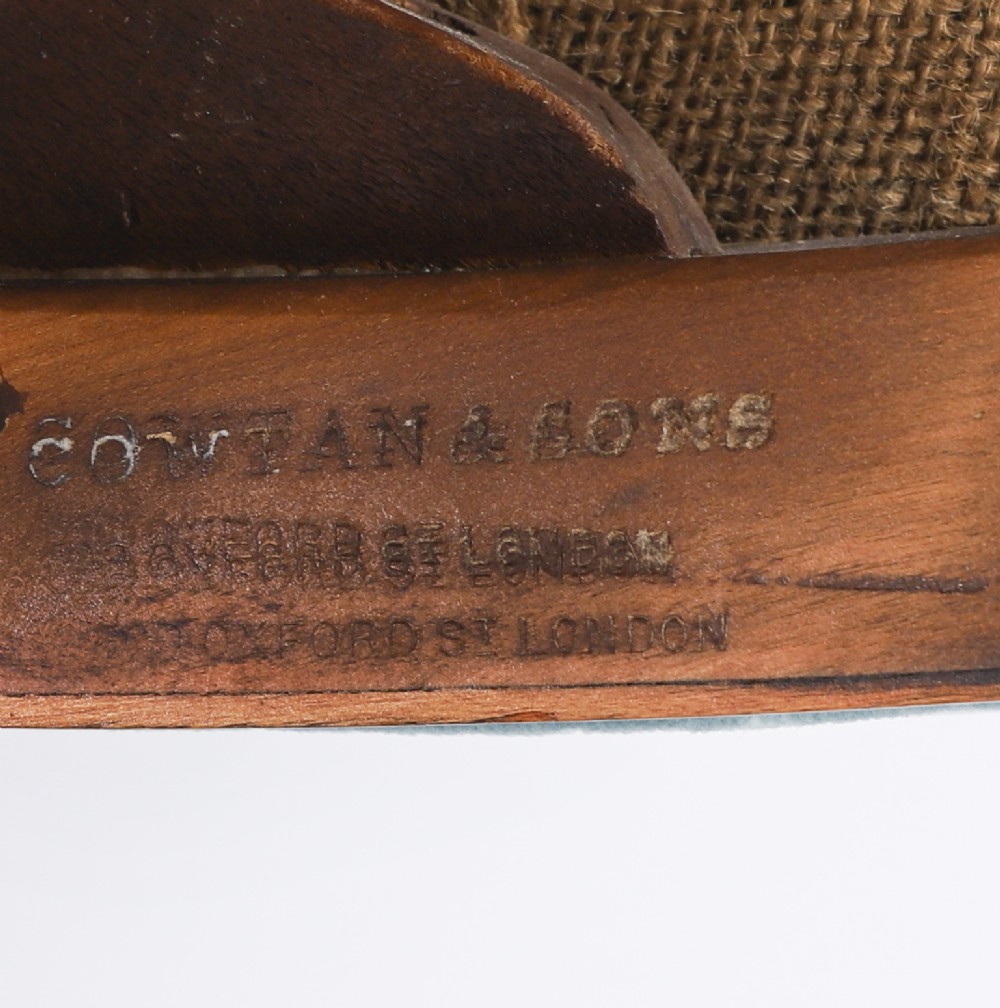
Messrs Cowtan and Sons Ltd
were high-class decorators, upholsterers and cabinet-makers of West Halkin Street Galleries, Belgrave Square SW1. They were established in 1790.
Messrs Cowtan and Sons Ltd were high-class decorators, upholsterers and cabinet-makers of West Halkin Street Galleries, Belgrave Square, SW1. They were established in 1790.
Records of Cowtan and Sons Limited, decorators and upholsterers, 1881-1959. The records consist of ledgers and accounts rendered to customers.
Satin wood
is a hard and durable wood with a satinlike sheen, much used in cabinetmaking, especially in marquetry. It comes from two tropical trees of the family Rutaceae (rue family). East Indian or Ceylon satin wood is the yellowish or dark-brown heartwood of Chloroxylon swietenia.
The lustrous, fine-grained, usually figured wood is used for furniture, cabinetwork, veneers, and backs of brushes. West Indian satin wood, sometimes called yellow wood, is considered superior. It is the golden yellow, lustrous, even-grained wood found in the Florida Keys and the West Indies.
It has long been valued for furniture. It is also used for musical instruments, veneers, and other purposes. Satin wood is classified in the division Magnoliophyta, class Magnoliopsida, order Sapindales, family Rutaceae.
George Hepplewhite
(1727 - 1786) was a cabinetmaker. He is regarded as having been one of the "big three" English furniture makers of the 18th century, along with Thomas Sheraton and Thomas Chippendale.
There are no pieces of furniture made by Hepplewhite or his firm known to exist but he gave his name to a distinctive style of light, elegant furniture that was fashionable between about 1775 and 1800 and reproductions of his designs continued through the following centuries. After he died in 1786, the business was continued by his widow, Alice. In 1788, she published a book with about 300 of his designs, The Cabinet Maker and Upholsterers Guide, with two further editions published in 1789 and 1790.
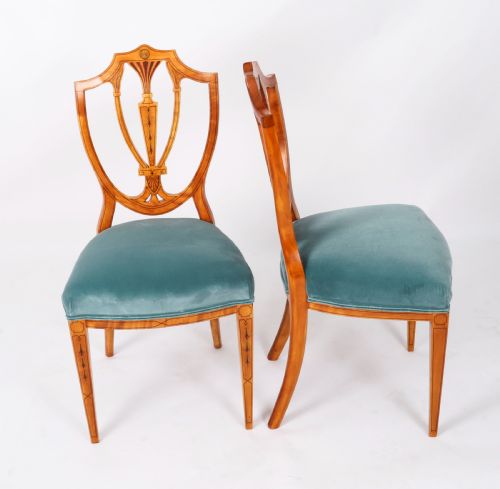
Hepplewhite produced designs that were slender, more curvilinear in shape, and well-balanced. There are some characteristics that hint at a Hepplewhite design, such as shorter, more curved chair arms, straight legs, and shield-shaped chair backs, all without carving. The design would receive ornamentation from paint and inlays used on the piece.
Our reference: A4734
Regent Antiques has dated these Satinwood Shieldback Dining Chairs to the 1880s.
We specialise in english and continental furniture, silver, porcelain and decorative items.
You can view the stock and full dealer information on the Regent Antiques Profile Page
Regent Antiques is a registered member of LAPADA CINOA
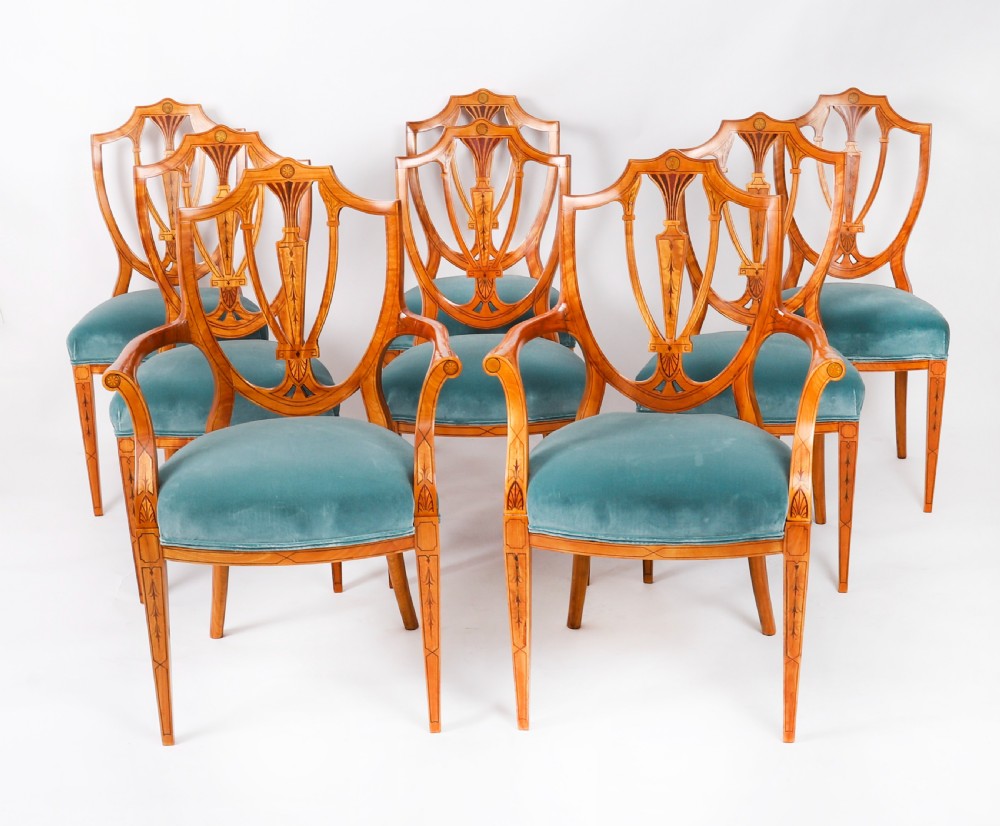
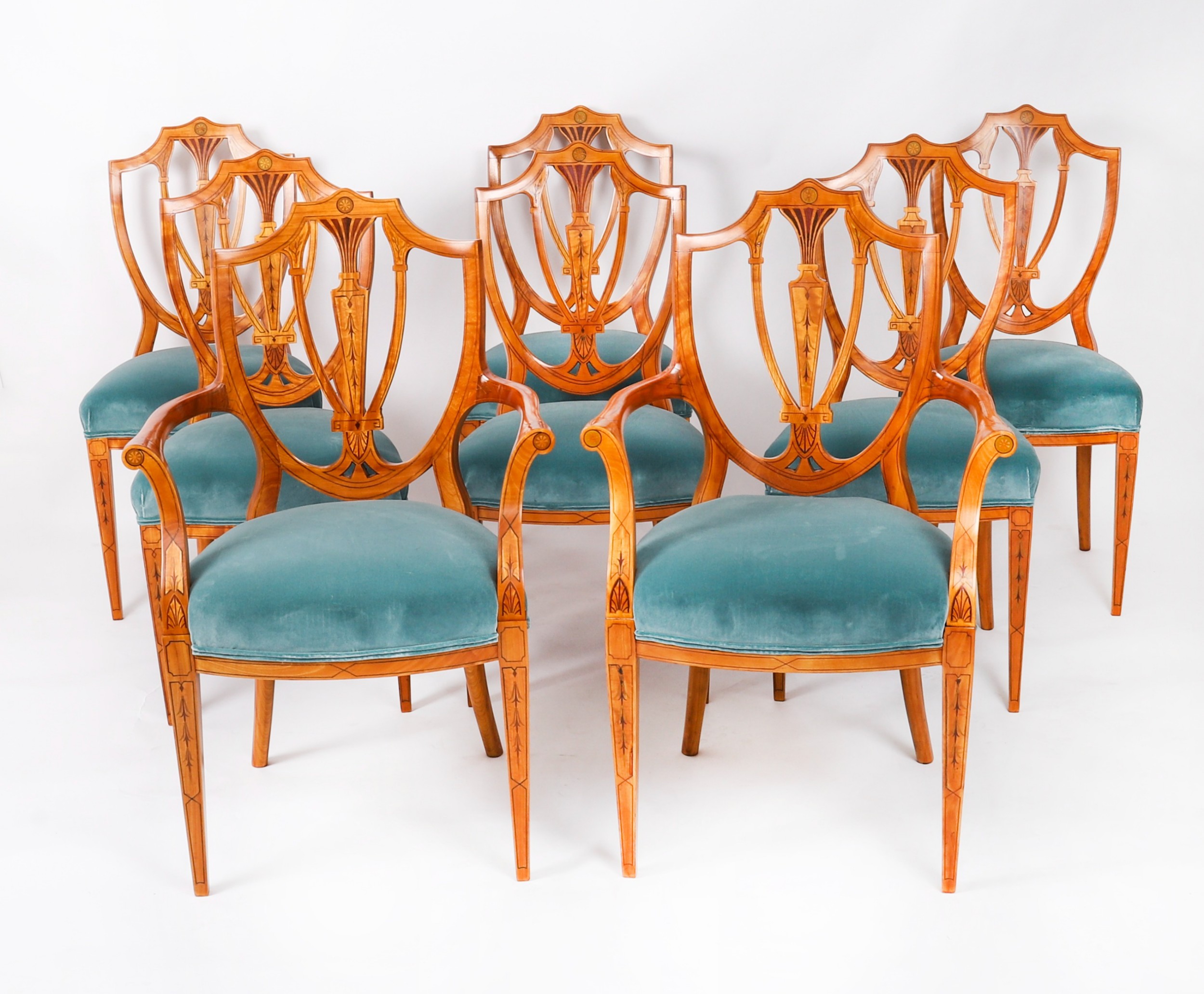
Antique Set 8 Shieldback Satin Wood Dining Chairs Cowtan & Sons 19th C