
Antique Dining Chairs
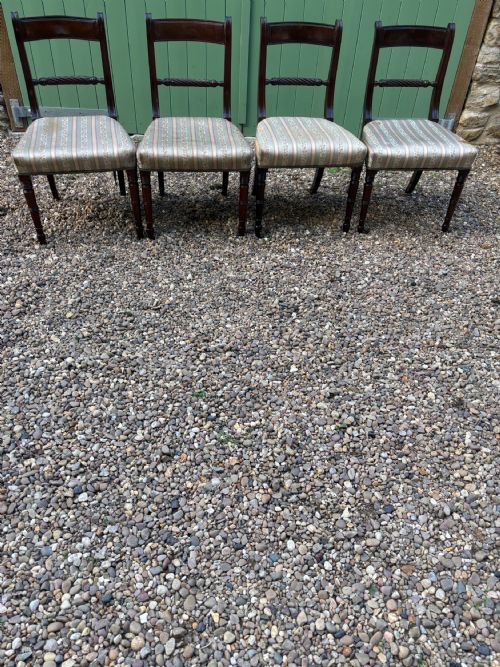
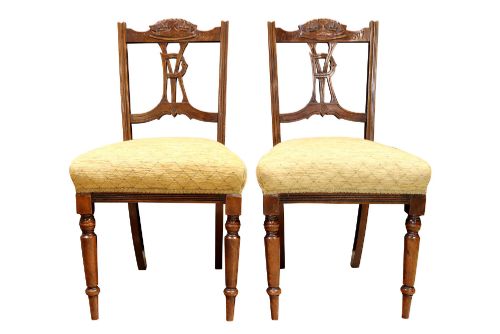
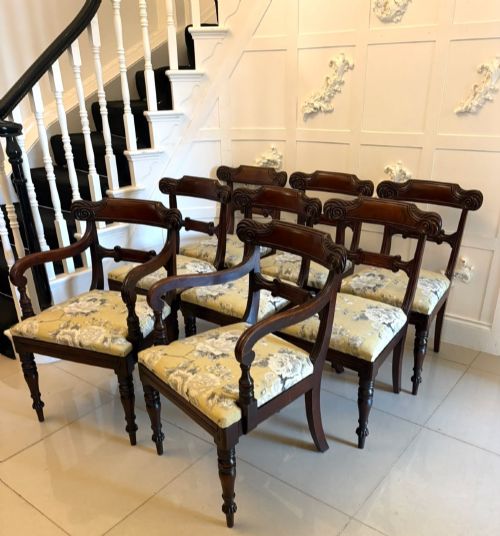
Sets of armless chairs made for use at table, sold as sixes, fours, eights or pairs, and in Britain mostly cut from mahogany.
Antique Dining Chairs
Chairs made specifically for eating at table became a distinct type in Britain in the 18th century, when dining rooms separated from general living space and sets were ordered to go with a table. Through the 19th century they were turned out in matched sets by town cabinet shops and country workshops alike.
The unit of sale is the set, not the chair. Nine in ten titles on Sellingantiques carry the plural, and sixes lead, ahead of fours and eights, with pairs behind them. Mahogany is named in nearly two-fifths of all titles, more than oak, walnut and rosewood put together, and Victorian is the commonest period word.
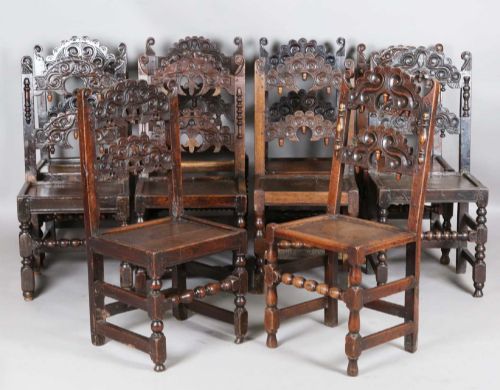
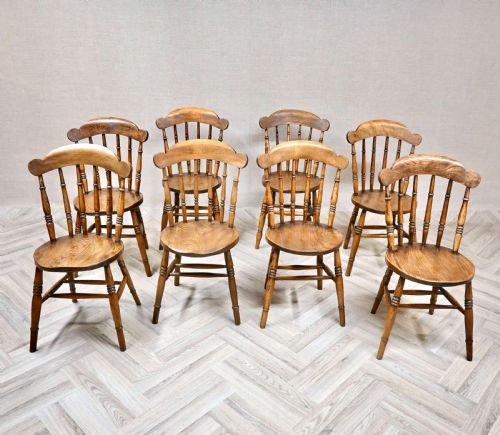
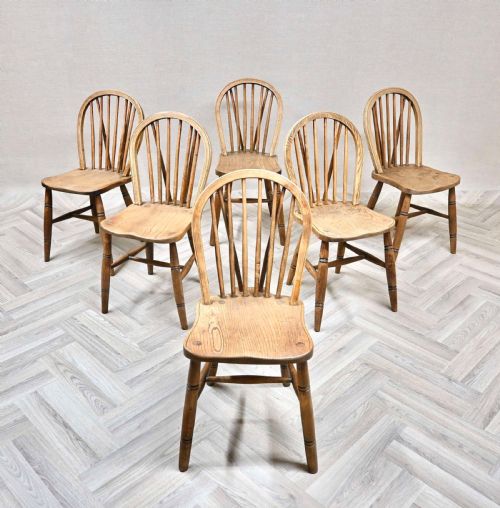
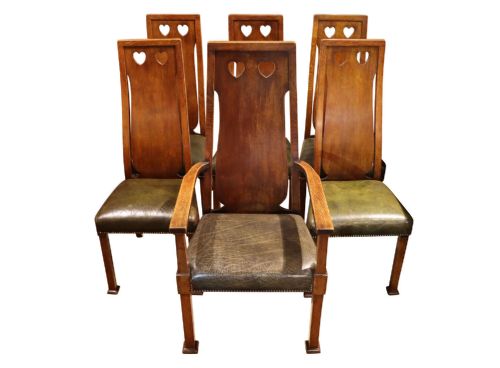
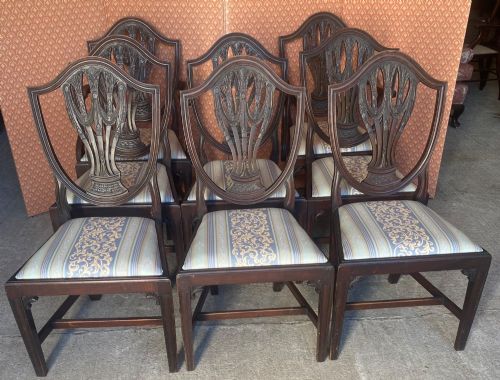
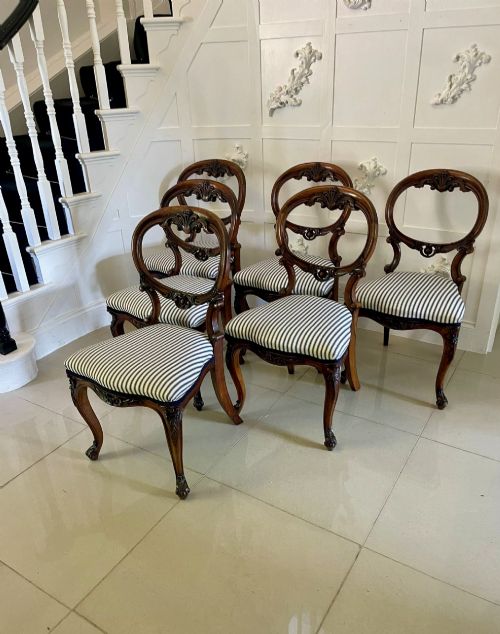
Roughly half the category is polished hardwood town chairs, where the balloon back is the one named back shape to reach any real share and shield, bar, spoon and spear-point backs sit beneath it. Around a fifth are country and kitchen chairs: Windsor, ladderback, spindle and lath backs, elm and ash frames, rush and penny seats. Oak Arts and Crafts and early-oak sets make up something like one in eight.
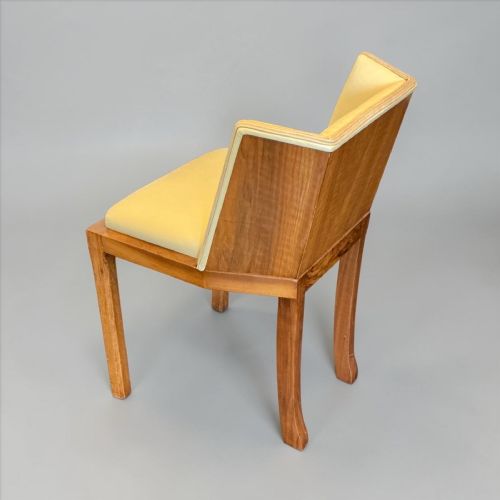
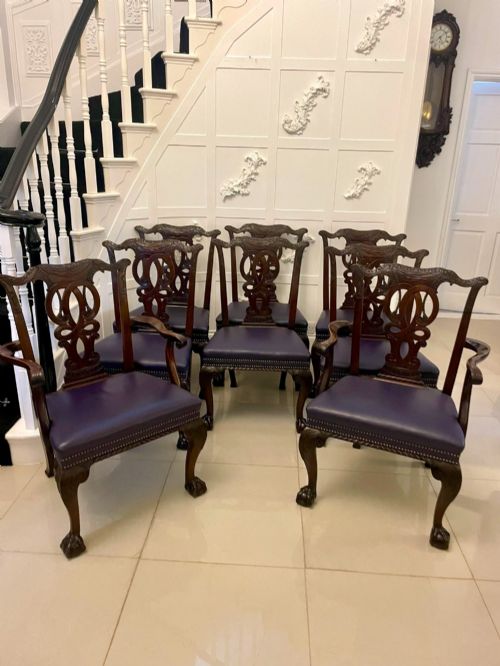
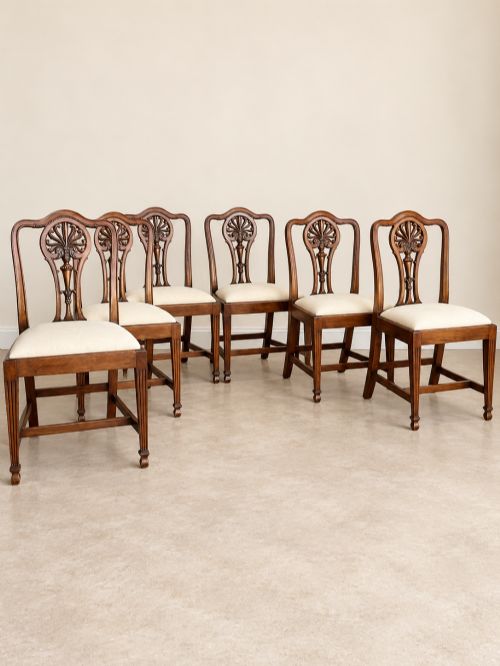
A substantial minority, perhaps a quarter, are revival sets made between about 1890 and 1940 and titled Chippendale style, Hepplewhite style, Queen Anne style or Georgian revival. Dating is loose across the whole category: only a minority of listings carry a clean year, and the commonest entry of all is the deliberately vague 19th Century. Read Victorian, Georgian and Regency in a title as a band rather than a date.
What Sets Them Apart
Set size is the great divider. The range runs from single chairs and pairs at the bottom, through the sixes that form the middle, up to tens, twelves, fourteens, sixteens and eighteens, with a set of twenty Scottish Victorian mahogany chairs among the longest recorded. The top of the range is occupied almost entirely by long sets, and adding chairs to a set pushes harder than almost anything else.
Timber and figure do the next most work. Figured mahogany, rosewood and burr walnut sit high, along with satinwood and the flamed and Cuban mahoganies; beech, elm and ash kitchen sets cluster low. Carving and inlay lift a set again, with brass inlay, marquetry and shell inlay appearing in the upper part of the range.
Then there's the question of period against copy. Titles separate George III period and Regency period chairs from the style and revival sets concentrated in the 1900s to 1930s buckets, and the distinction holds in price. Dealers also flag whether a set was made together, since a true set of eight is a different proposition from a matched or harlequin one assembled from similar chairs.
Antique Dining Chairs Retail Price Guide 2026
Typical UK retail prices for dining chairs, calculated from the Sellingantiques database of over a million retail prices indexed since 2003. This retail price guide relies exclusively on Sellingantiques data; no external sources or auction records are used, so the figures do not describe the wider market.
Among the one-offs to come through: a single Indian ebony chair, and a group of twenty-two 1930s school chairs.

Gillows·Heals·Waring·Epstein
The Antique Dining Chairs Glossary
- Carver
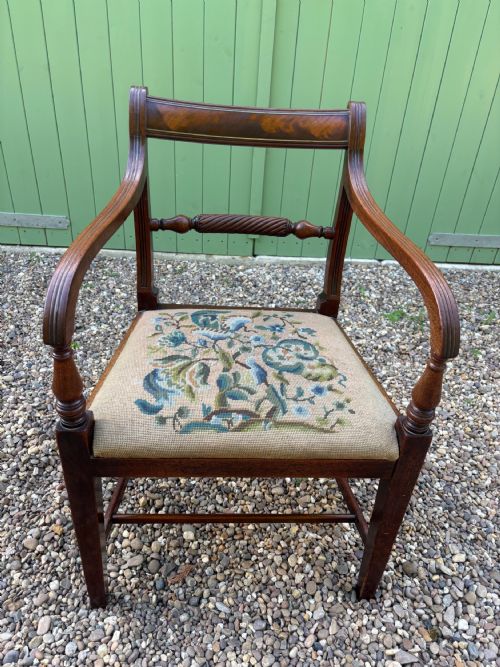
- The armchair in a set, usually placed at the head of the table. Listings often write it as a count, as in six plus two.
- Side chair
- An armless chair, which is what the bulk of a dining set consists of. The phrase turns up in a few hundred titles.
- Drop-in seat
- An upholstered seat frame that lifts out of the chair rails, as against an overstuffed or stuff-over seat, where the covering is taken over the rails.
- Balloon back
- The rounded, waisted Victorian back, and the single most-named back shape in the category. Shield, bar and spoon backs are the neighbouring shapes.
- Harlequin set
- Chairs of similar but not identical make, brought together as a set. A matched set is the same idea; a true set was made together from the start.
- Sabre leg
- The outward-curving front leg found through Regency mahogany chairs. The splat is the flat central upright in the back, often pierced or carved.
Antique Dining Chairs: Frequently Asked Questions
How many chairs are usually in a set?
Six is the commonest number by some way, with fours and eights behind it and pairs behind those. Single chairs turn up too.
Beyond eight the numbers keep going. The samples include sets of ten, twelve, fourteen, sixteen and eighteen, plus one set of twenty.
What timber are most of them made from?
Mahogany, named in close to two-fifths of titles. Oak is next, then walnut, rosewood, elm and ash.
The timber tends to follow the type. Polished hardwoods belong to town chairs; elm, ash and beech belong to the country and kitchen end.
Does a Chippendale style set mean it's 18th century?
No. Chippendale, Hepplewhite, Queen Anne and Sheraton work as style words in these titles, describing the pattern rather than the date.
Sets carrying those words sit largely in the 1900s to 1930s dated buckets. Titles that mean the earlier thing tend to say George III period or Regency period instead.
What counts as a country dining chair?
Windsor, ladderback and spindle back chairs, with rush, elm or penny seats, made in workshops that carried on older vernacular forms while town shops followed fashion.
They come with their own geography. Lancashire, Thames Valley, Ormskirk, Yorkshire, North Wales and East Anglia each surface in titles, though only in ones and twos.
Are there many foreign sets in this category?
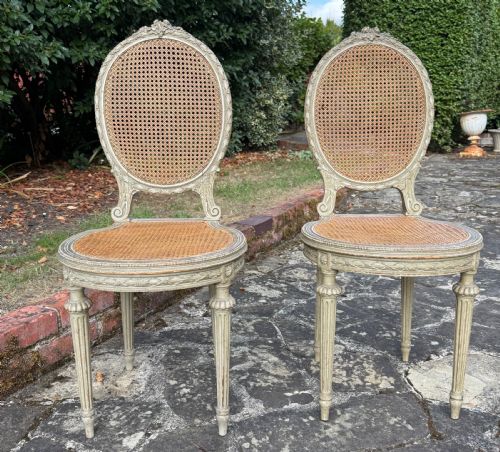
Not many. French is the only Continental origin common enough to register in the term counts at all.
Everything else is scattered singletons: Swedish painted, Biedermeier birch, Dutch marquetry, Italian walnut, Portuguese, Spanish leather and Anglo-Indian sets have all passed through.
How old are the oldest ones on Sellingantiques?
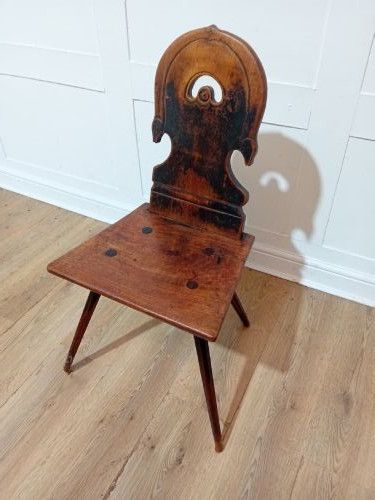
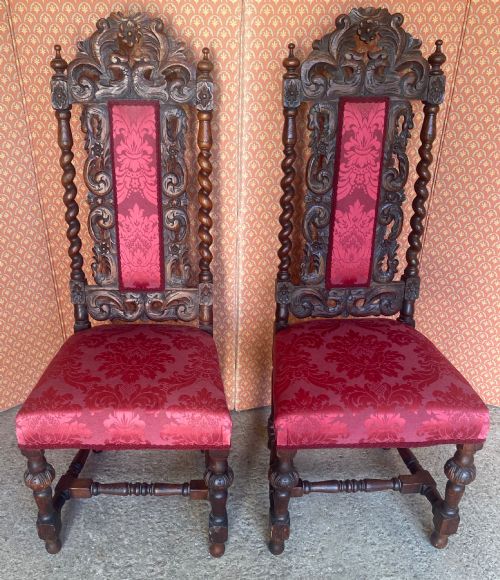
The dated field starts at 1700, but 17th-century oak has come through, including a Yorkshire wainscot armchair dated to the 1630s and a Charles II side chair.
At the other end the field runs to 1960. Around 660 chairs and sets are listed in a year, across 344 dealers.