
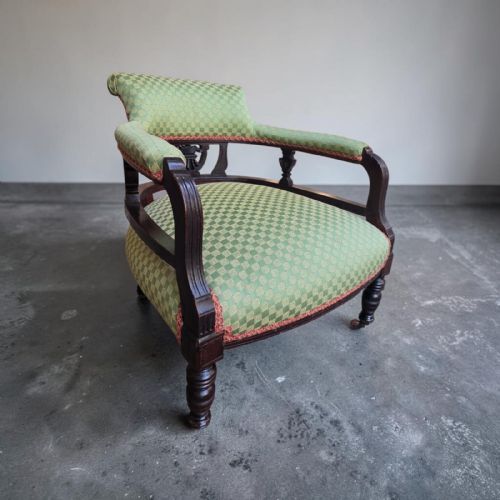


A 2026 Guide by Sellingantiques
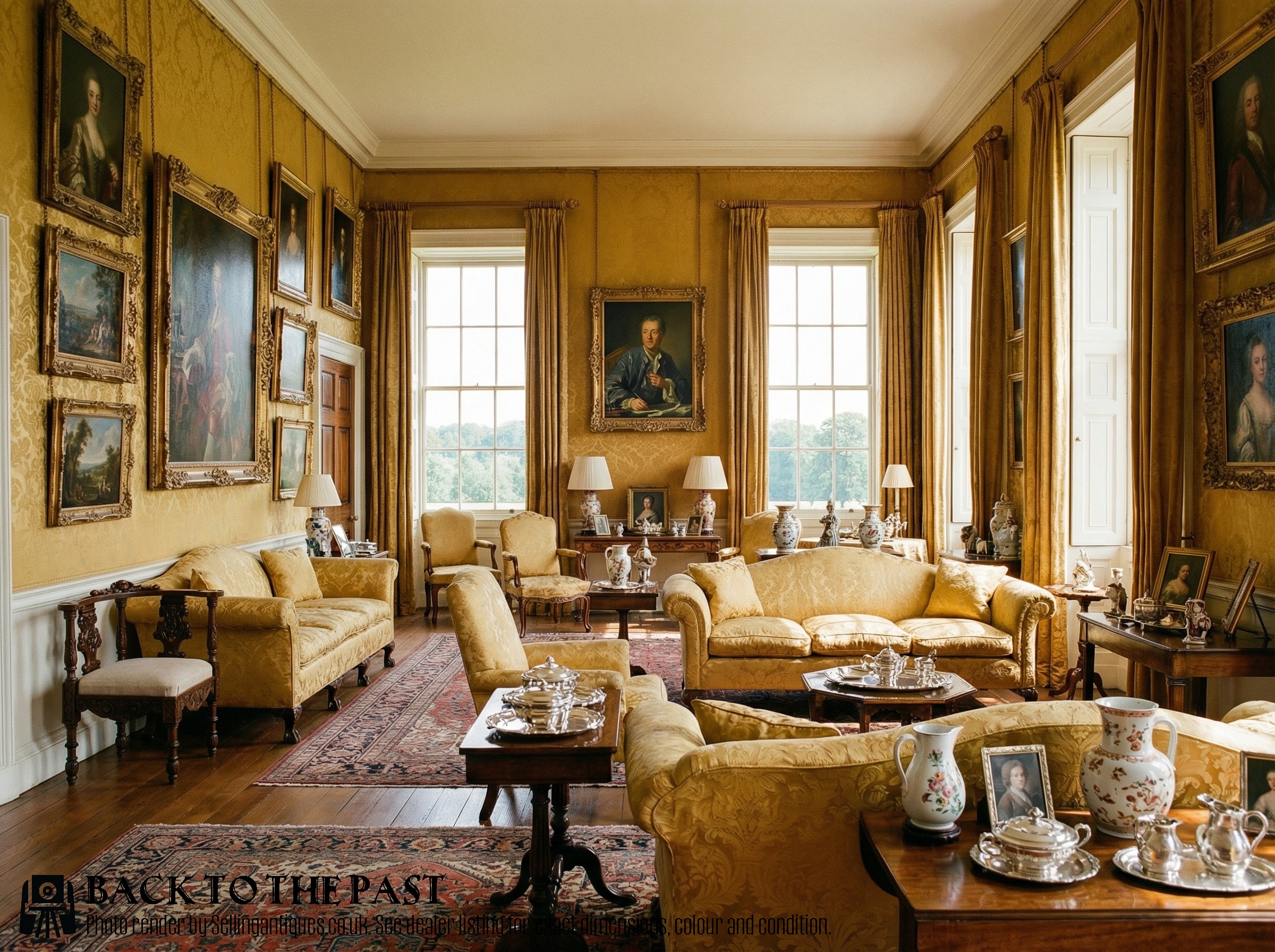
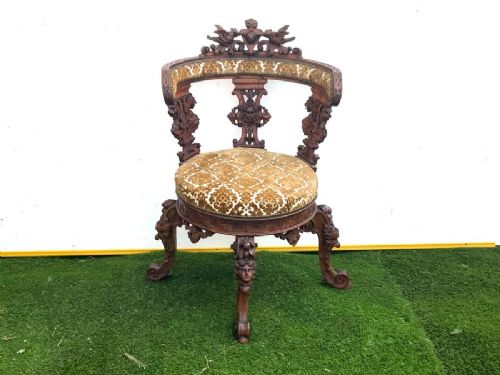
A Lovely Carved Italian Walnut Figural Corner Chair, C.1860, 19th Century
Priced at £830 from Marlborough Antiques & Interiors
First appearing in the early eighteenth century. They evolved as rooms became more specialised and furniture started moving away from the walls into active use.
Gentlemen often favoured antique corner chairs for reading or writing. The low back and deep seat offered a relaxed posture during long periods at a table.
Sometimes called roundabout chairs in America. Regional variations quickly developed across provincial England and the colonies.
Look at the legs. A lot of early Georgian examples have a heavily carved front leg while the three back legs remain plain.
Usage shifted gradually. By the late Victorian period they were largely decorative parlour pieces rather than functional desk seating.
Few antique corner chairs carry a maker's stamp. The vast majority were produced by anonymous provincial workshops scattered across rural England.
London cabinetmaker Giles Grendey is documented making elaborate examples during the 1730s. His pieces often feature complex carved details and japanned finishes.
Distinctive turned elements point to regional traditions. Thames Valley bodgers produced heavy ash variations well into the nineteenth century.
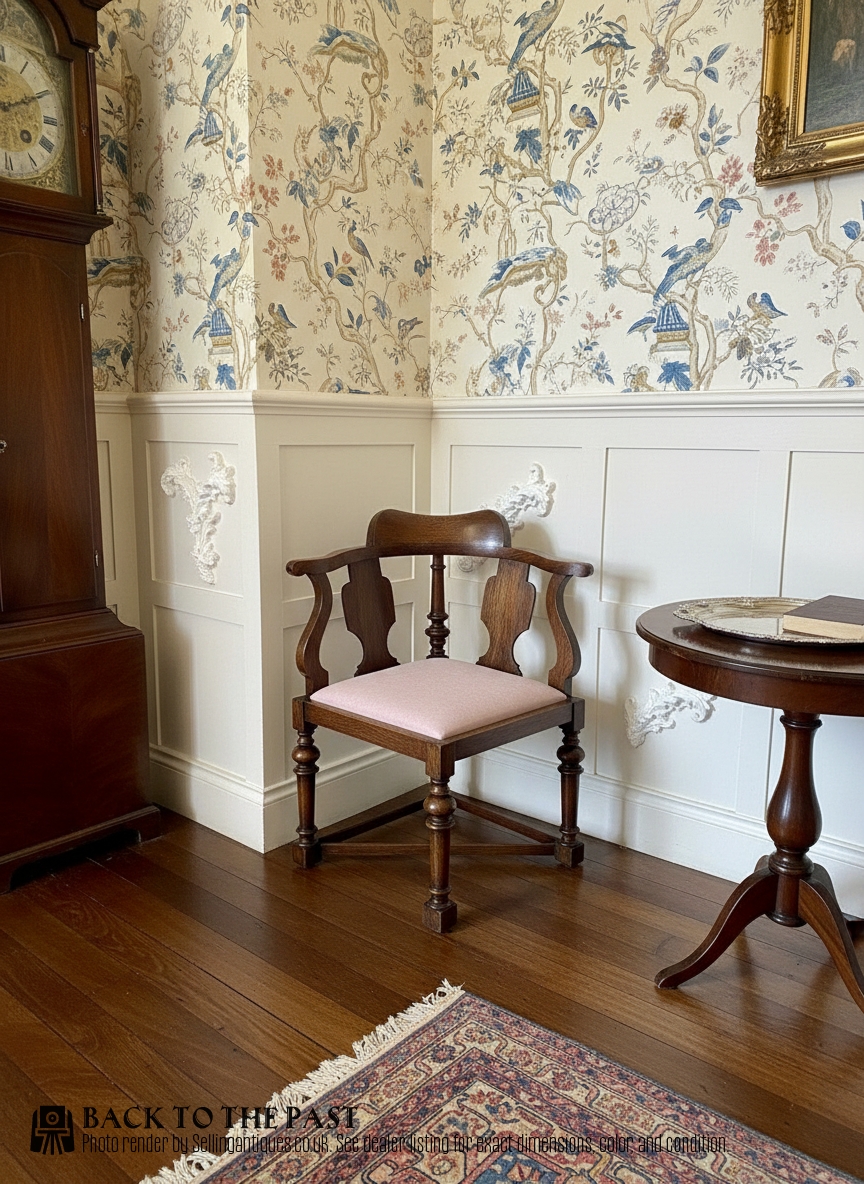
Unusual Antique Victorian Oak Corner Chair, 1860
Priced at £785 from London City Antiques
The 2026 retail price guide for Antique Corner Chairs is drawn from a proprietary archive of over 1.1 million retail prices indexed by Sellingantiques since 2003. This guide relies exclusively on their own internal data; no external sources or auction records are used.
Analysing nearly 25 years of UK antique market history alongside current retail values, the data indicates that typical UK retail prices for Antique Corner Chairs range between £300 and £1,400. Entry-level prices generally fall under £300 and premium examples upwards of £1,400.
The diamond seat layout dictates the structure. One leg points directly forward, two sit at the sides, and the fourth anchors the back corner.
A continuous U-shaped armrest wraps around the sitter. This top rail is usually built from three separate sections joined smoothly at the back.
Splats sit between the armrest and the seat. There are nearly always two of them, separated by the rear corner post on most antique corner chairs.

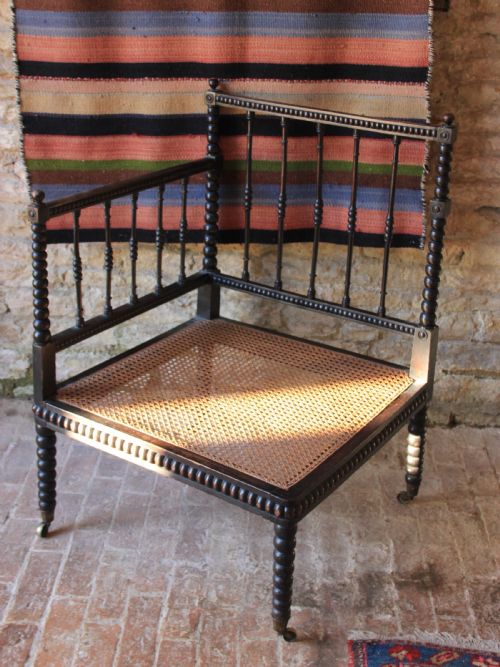
Ladies & Gents Pair of 19thc 'Old Saxon' Turned Oak Chairs, Victorian
Priced at £985 from Andros Antiques
Mortise and tenon joints secure the seat rails to the legs. This traditional woodworking method provides the massive sheer strength required for an asymmetrical chair.
Hand-cut dovetails often lock the armrest sections together. Cabinetmakers concealed these joints beneath the curved surface of the top rail.
Turning shaped the legs on simpler provincial antique corner chairs. A lathe allowed craftsmen to create rapid baluster profiles from solid timber.
"The low wraparound armrest gives good support. It allows a sitter to shift their weight in multiple directions without losing back support."
"They fit into tight awkward spaces neatly. The right-angled back tucks flush into corners where a standard square chair would jut out."
"Men wearing long heavy coats or carrying swords found the open front corners far easier to manage. The design works well with bulky clothing."
Based on almost 25 years of Sellingantiques UK antique market data, Antique Corner Chairs appeared 834 times (out of 1,100,000 antiques) which gives it a rarity score of 85/100.
This score measures scarcity within the Sellingantiques archive only and is not a survey of the entire antiques market, so these statistics may not be indicative of the general availability of Antique Corner Chairs elsewhere.
Most Georgian antique corner chairs originally had drop-in seats covered in leather or worsted wool. These tough materials survived the daily friction of a working desk chair.
Later Victorian examples often received softer fabrics. Upholsterers used floral tapestries or silk damask to match the prevailing fashion for cluttered parlours.
You can recover a drop-in seat easily. The wooden inner frame lifts out, making it simple to strip back the old webbing and tack on a new cover.
The low back is a standard design feature of an antique corner chair. They were built to support the lower spine and elbows rather than the shoulders.
Adults used them as desk chairs. The low rail stops the sitter from slouching back, encouraging an upright posture for writing while allowing free movement of the arms.
Cabinetmakers often focused their decorative efforts on the single front leg because it was the only one clearly visible when the chair faced into a room.
The three back legs remained plain to save time. When tucked into a corner, these rear supports were hidden in shadow.
Solid wooden seats are very common on provincial antique corner chairs. Rural makers working in oak or ash turned out thousands of these hard-seated variations for farmhouses and taverns.
Sitters often added a loose squab cushion for comfort. These flat pads tied onto the uprights and could be shaken out or replaced when they wore thin.
Please note: This Antique Corner Chairs guide and its associated pricing data are provided for general informational purposes only. It does not constitute formal financial, investment, or appraisal advice and should not be relied upon as the sole basis for any commercial activity, purchasing, or sales decisions. Sellingantiques.co.uk accepts no liability for any actions taken in reliance on this information. Always consult with a qualified professional or independent appraiser.
