


A 2026 Guide by Sellingantiques
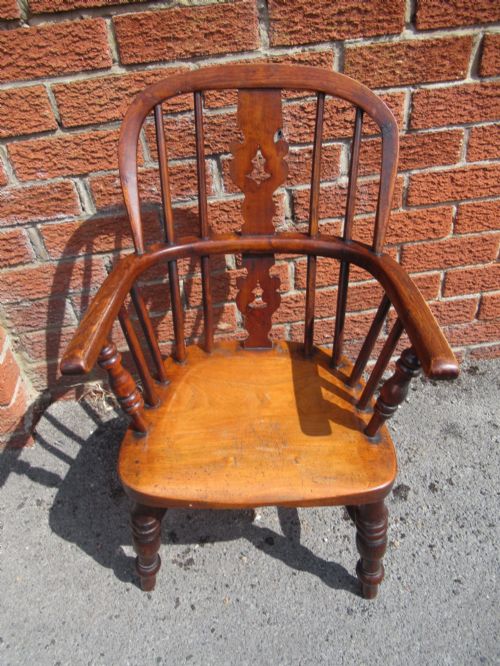
Victorian Walnut Childs Chair, Victorian
Priced at £696 from Tim Saltwell Antiques
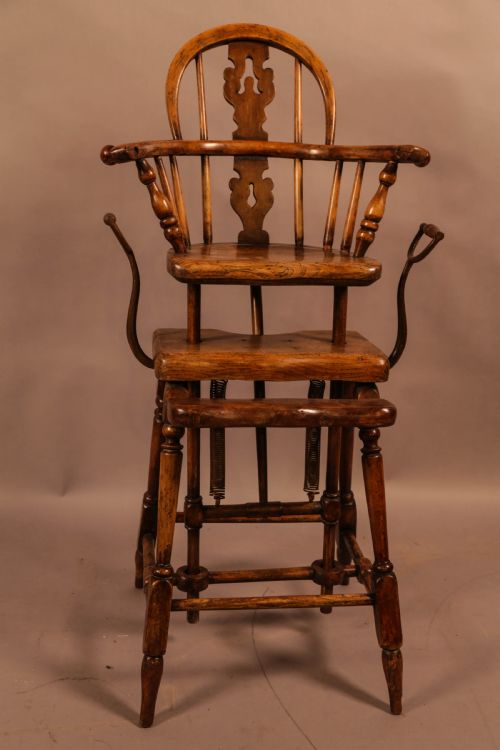
Early antique childs chairs often mirrored the exact proportions of adult furniture. High chairs sometimes featured a detachable base.
Look for a shift in scale during the nineteenth century. Seat heights dropped closer to the floor as nursery routines changed.
Regional variations thrived before mass production. Windsor chair makers in Buckinghamshire turned out thousands of miniature frames alongside their standard stock.
Demand grew rapidly as middle-class households began setting aside dedicated rooms solely for children.
Thonet stamped their bentwood antique childs chairs heavily from the mid-nineteenth century. They produced miniature rockers and high chairs in beech.
Gillows of Lancaster supplied high-end mahogany examples. Their pattern books show neat caned seats on turned legs.
American factories like Heywood Brothers shipped wicker and rattan nursery seating widely.
Childs Chair Upholstered in Buttoned Leather, Rosewood Carved and Turned Frame, C 1840, 19th Century
Priced at £1,295 from Robert Belcher Antiques
The 2026 retail price guide for Antique Childs Chairs is drawn from a proprietary archive of over 1.1 million retail prices indexed by Sellingantiques since 2003. This guide relies exclusively on their own internal data; no external sources or auction records are used.
Analysing nearly 25 years of UK antique market history alongside current retail values, the data indicates that typical UK retail prices for Antique Childs Chairs range between £200 and £800. Entry-level prices generally fall under £200 and premium examples upwards of £800.
Footrests span the front legs on most high versions. Some slide in grooves, others are fixed solid.
Check the arm supports. They bow outwards on windsor types to give a child room to wriggle.
Retaining bars often plug into the armrests. Holes where a wooden peg once secured the child are a standard detail.

Unusual Antique Art Nouveau Quality Mahogany Inlaid Child’s Chair, 1900
Priced at £985 from London City Antiques
Traditional turners shaped the legs on a pole lathe while the timber was still green. As the wood dried, the joints locked tight.
Steaming allowed beech poles to be bent into continuous curves. This process eliminated the need for weak mortise and tenon joints in the back hoop.
Notice the rush seats on ladderback versions. Weavers twisted marsh grass into cords and wrapped them tightly over the four seat rails.
"Some high chairs convert into a low cart. A hinge drops the tall base horizontally, resting it on small cast iron wheels."
"Tiny proportions required great skill from the craftsmen. Cutting miniature dovetails or turning slender spindles tested a maker more than a full-size carcase."
"You can find clever adjustable footrests on Victorian models. They track up and down to match a growing child."
Based on almost 25 years of Sellingantiques UK antique market data, Antique Childs Chairs appeared 1793 times (out of 1,100,000 antiques) which gives it a rarity score of 70/100.
This score measures scarcity within the Sellingantiques archive only and is not a survey of the entire antiques market, so these statistics may not be indicative of the general availability of Antique Childs Chairs elsewhere.
Most antique childs chairs are robust enough for daily use. The joints on country pieces were built to withstand heavy handling in busy farmhouses.
Always check the frame for wobble before putting a child in one. A loose leg can be glued, but weak spindles might snap if leaned on.
Low seats were often designed for the nursery rather than the dining room. Children sat in them by the fire, away from the main adult furniture.
They pair well with low nursery tables from the same period. Some were simply standard chairs with the legs sawn down later in life. Look at the feet to see if the turning ends abruptly.
Dust them with a dry cloth. Apply clear beeswax polish yearly to feed the timber.
Avoid spray polishes. Water damages old animal glues and strips the original finish.
Those holes usually held a retaining bar. A turned wooden rod slid through the arms to keep the child from falling forward out of the seat.
Trays are less common on early pieces. Children ate from the main table, so the chair simply needed to secure them at the right height.
Please note: This Antique Childs Chairs guide and its associated pricing data are provided for general informational purposes only. It does not constitute formal financial, investment, or appraisal advice and should not be relied upon as the sole basis for any commercial activity, purchasing, or sales decisions. Sellingantiques.co.uk accepts no liability for any actions taken in reliance on this information. Always consult with a qualified professional or independent appraiser.
