


A 2026 Guide by Sellingantiques
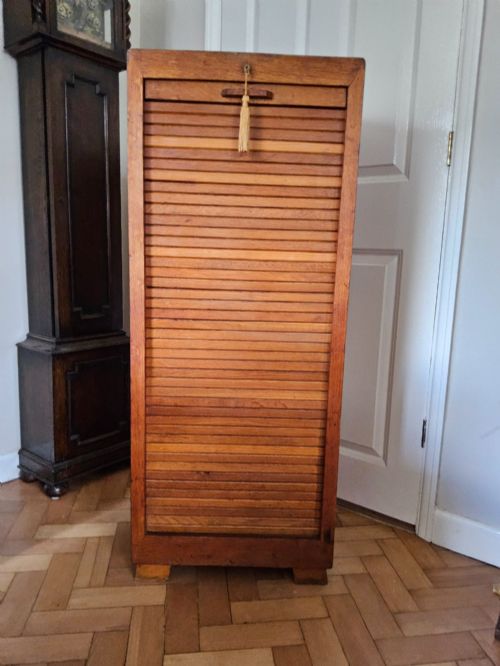
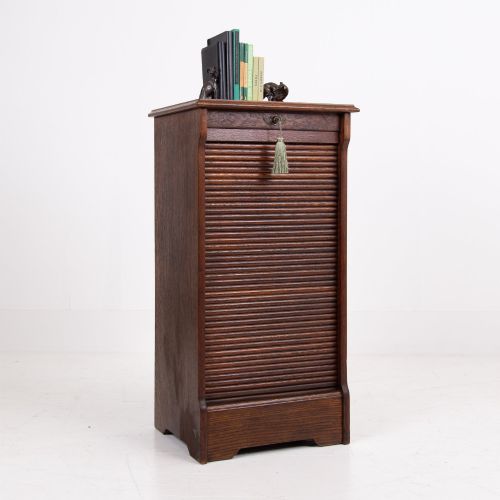
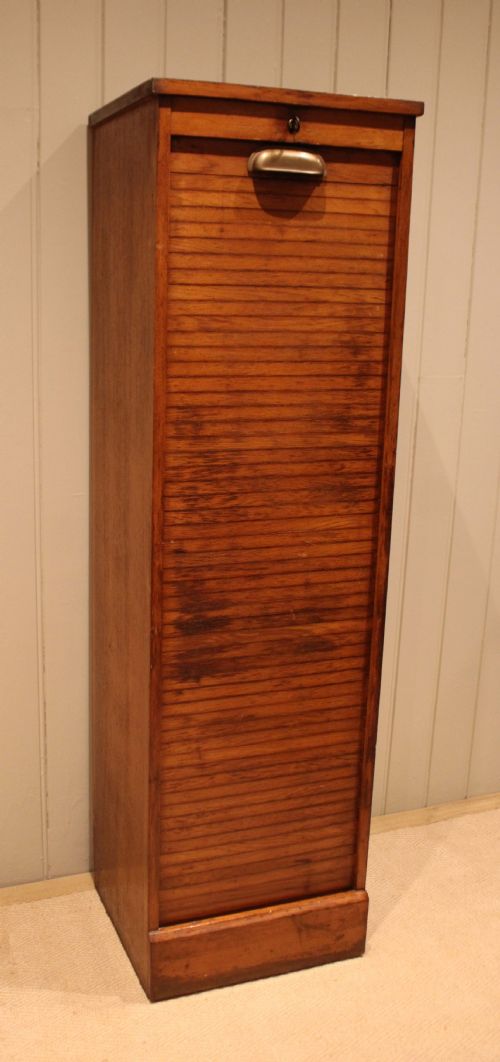
Edwardian Pine Office Cabinet, 1900
Priced at £395 from Rupert Hitchcox Antiques
They developed in late eighteenth-century France to hide untidy desk surfaces.
The mechanism quickly crossed the Channel. British cabinetmakers adopted the form for office furniture during the Georgian period.
By the late nineteenth century commercial production scaled up. These cabinets became standard fixtures in banks and railway offices.
You find them mostly in two forms. Small desktop boxes for letters and large freestanding units for heavy ledgers.
Jean-Henri Riesener made highly decorated tambour pieces in Paris during the late eighteenth century.
London firms like Gillows produced custom variations in the early nineteenth century.
Later office supply companies dominated the market. Lebus and Shannon Document File Co turned out thousands of oak examples around 1900.
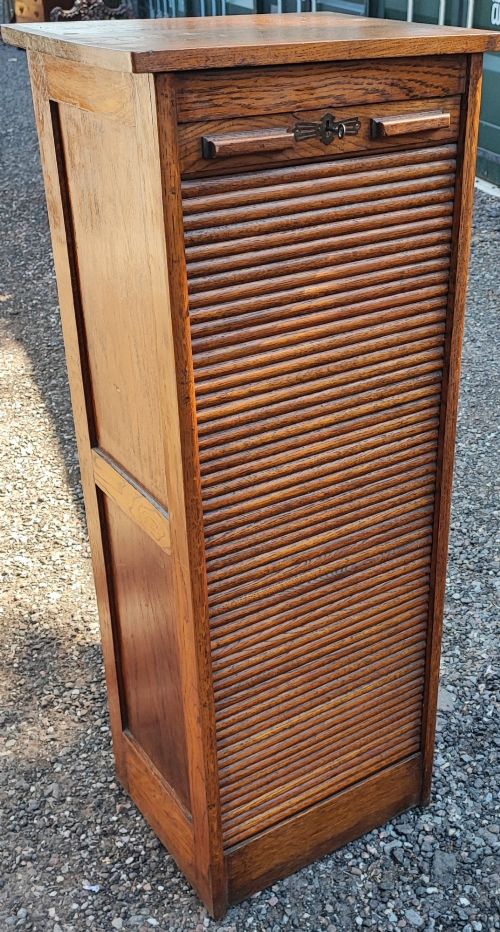
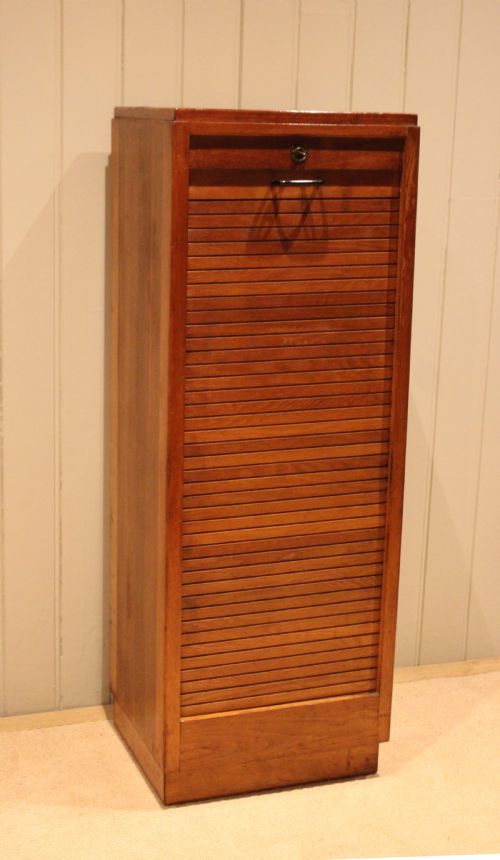
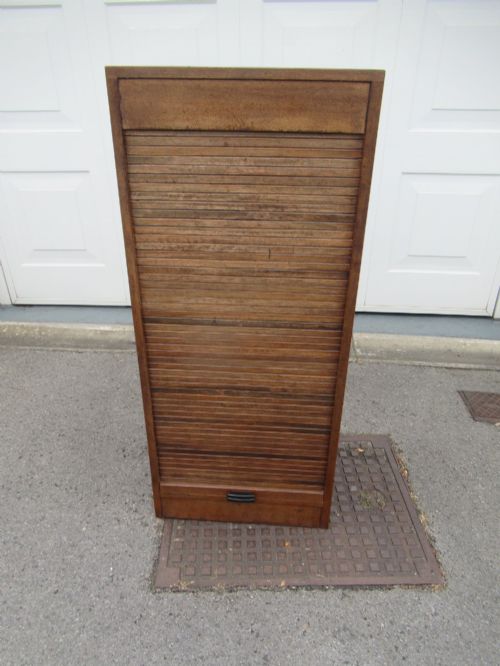
Early 20th Century Oak Tambour Front Filing Office Cabinet., 1910
Priced at £265 from Rupert Hitchcox Antiques
The 2026 retail price guide for Antique Tambour Cabinets is drawn from a proprietary archive of over 1.1 million retail prices indexed by Sellingantiques since 2003. This guide relies exclusively on their own internal data; no external sources or auction records are used.
Analysing nearly 25 years of UK antique market history alongside current retail values, the data indicates that typical UK retail prices for Antique Tambour Cabinets range between £400 and £1,300. Entry-level prices generally fall under £400 and premium examples upwards of £1,300.
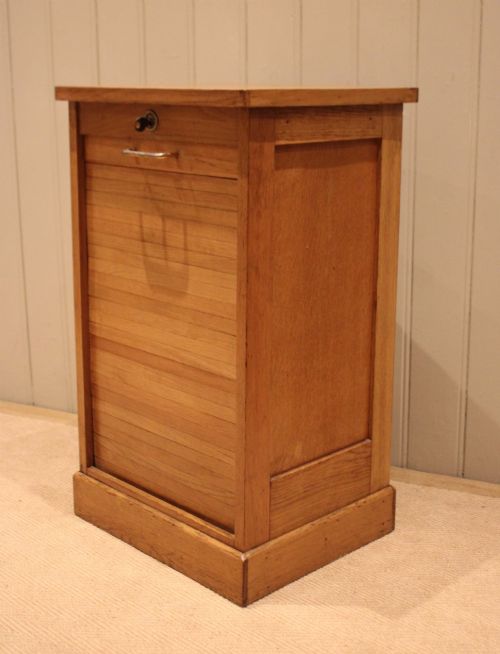
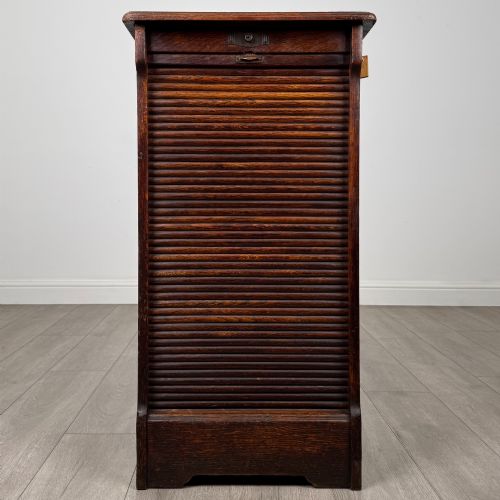
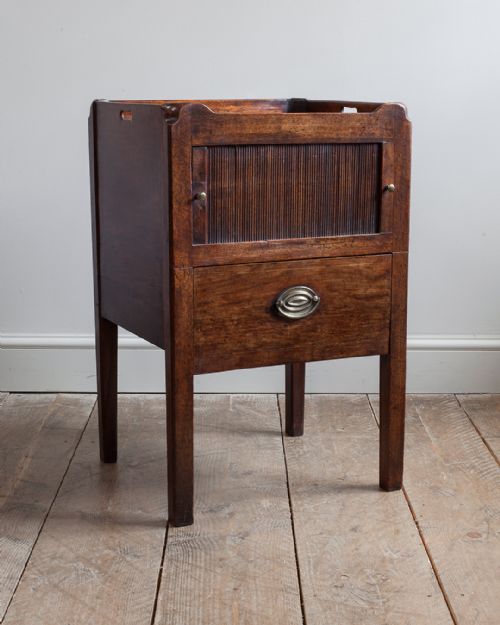
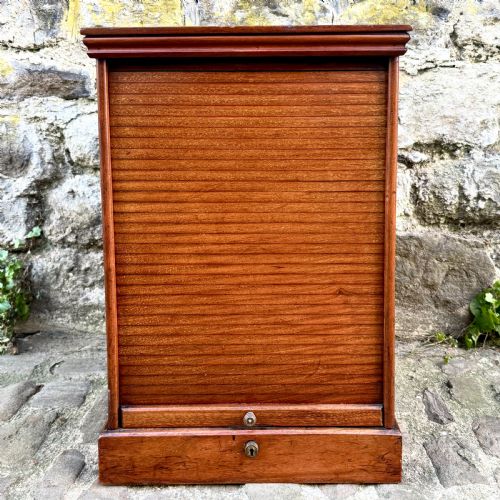
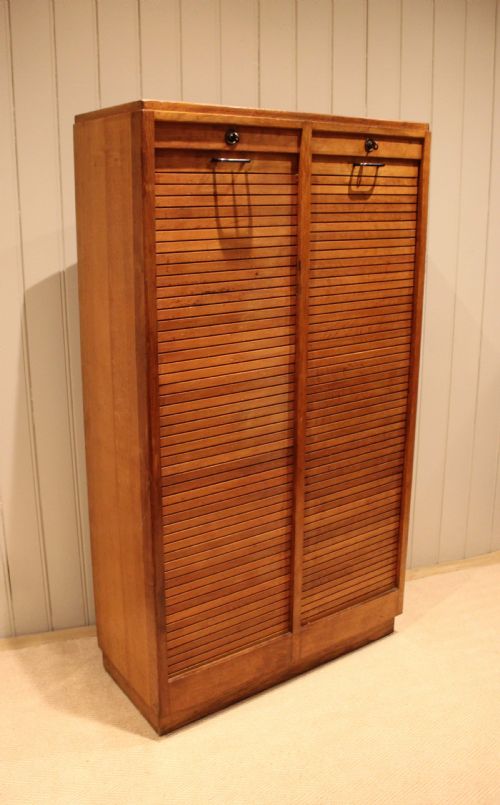
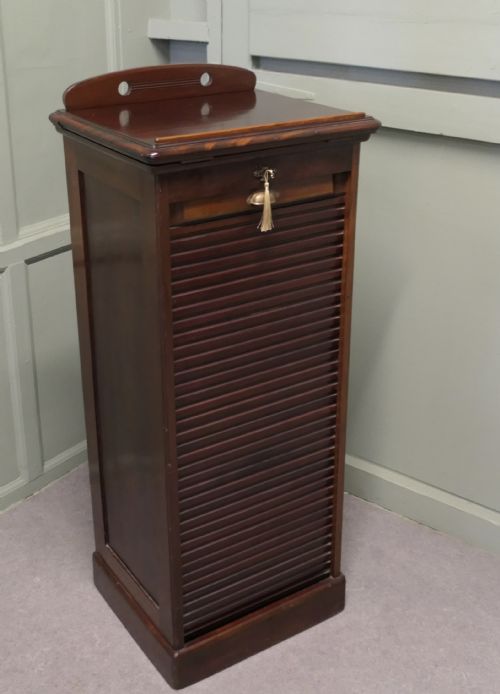
Look at the door itself. A continuous sheet of thin wooden slats tracks along routed grooves in the side panels.
Most feature a central locking mechanism. Pushing the curtain all the way down usually engages a spring catch at the base.
Fitted interiors are common. You often find a grid of small cubby holes designed for sorting incoming mail or daily ledgers.
Cabinetmakers cut individual slats precisely. The edges had to meet flush so the closed door presented a flat surface.
Glue formulation was critical. Animal hide glue secured the slats to the linen backing while remaining flexible enough to bend.
Routing the tracks required skill. Hand tools gouged out the continuous channels before router planes finished the depth.
"The flexible door design is a space saver. It retracts into the carcase so you need no clearance for swinging hinges."
"Many early examples hide secret compartments. Small false bottoms occasionally sit under the central pigeonholes."
"Tambour translates directly to drum in French. It refers to the cylindrical shape the door forms when rolled away."
Based on almost 25 years of Sellingantiques UK antique market data, Antique Tambour Cabinets appeared 641 times (out of 1,100,000 antiques) which gives it a rarity score of 88/100.
This score measures scarcity within the Sellingantiques archive only and is not a survey of the entire antiques market, so these statistics may not be indicative of the general availability of Antique Tambour Cabinets elsewhere.
Do not wet the canvas backing under any circumstances. Moisture degrades the animal hide glue holding the slats to the fabric and will cause the tambour door to fall apart.
Instead, use a soft brush attachment on a vacuum cleaner. Keep the suction low and run it lightly over the fabric to lift loose surface dust.
The slats have likely jumped the track. Look closely at the side channels to see if one wooden strip has wedged itself at an angle.
Applying wax to the grooves sometimes helps. A block of beeswax rubbed into the exposed tracks provides lubrication. If the canvas is stiff, the whole back panel might need removing to ease the door out and reset it.
Yes, a cabinetmaker can cut matching slats to replace missing ones.
The repair usually involves stripping the door down to apply new canvas.
Many late nineteenth-century office cabinets feature an integrated locking system. A mechanism at the back of the carcase drops a wooden bar down when the main door shuts.
This bar slots into notches on the back of each drawer. It means closing the tambour curtain secures every drawer simultaneously without needing individual locks.
Please note: This Antique Tambour Cabinets guide and its associated pricing data are provided for general informational purposes only. It does not constitute formal financial, investment, or appraisal advice and should not be relied upon as the sole basis for any commercial activity, purchasing, or sales decisions. Sellingantiques.co.uk accepts no liability for any actions taken in reliance on this information. Always consult with a qualified professional or independent appraiser.
