



A 2026 Guide by Sellingantiques

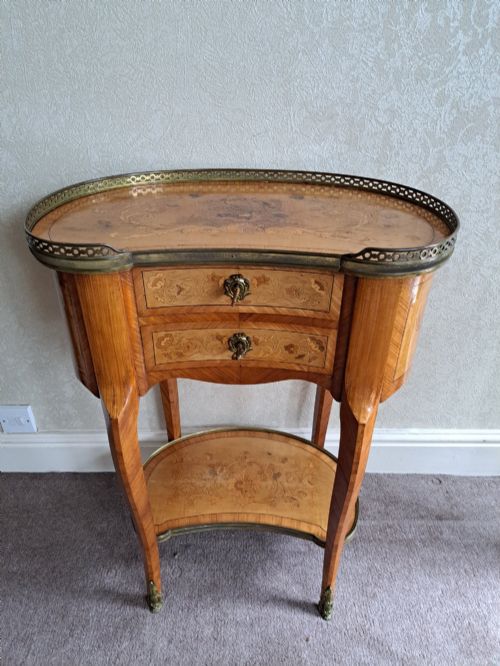
Tall French Walnut Side Cabinet, 19th Century
Priced at £775 from Elmgarden
Drawing rooms needed storage that didn't dominate the space. Side cabinets emerged in the late eighteenth century as a formal solution.
Keep in mind that early versions often flanked a chimney breast. They filled awkward alcoves while providing a uniform surface.
Later Victorian households used them across dining rooms and libraries. The form adapted to hold everything from sheet music to folded linen.
Regency cabinet makers frequently paired these pieces. Finding a surviving matching pair today is quite uncommon.
Gillows of Lancaster and London supplied numerous mahogany side cabinets. Their stamp sometimes appears on the top edge of a drawer.
Thomas Chippendale produced elaborate versions for aristocratic houses. His documented commissions feature intricate marquetry and heavy ormolu mounts.
Regional tradesmen built most of the surviving examples. These provincial cabinet makers relied on pattern books rather than inventing new forms.
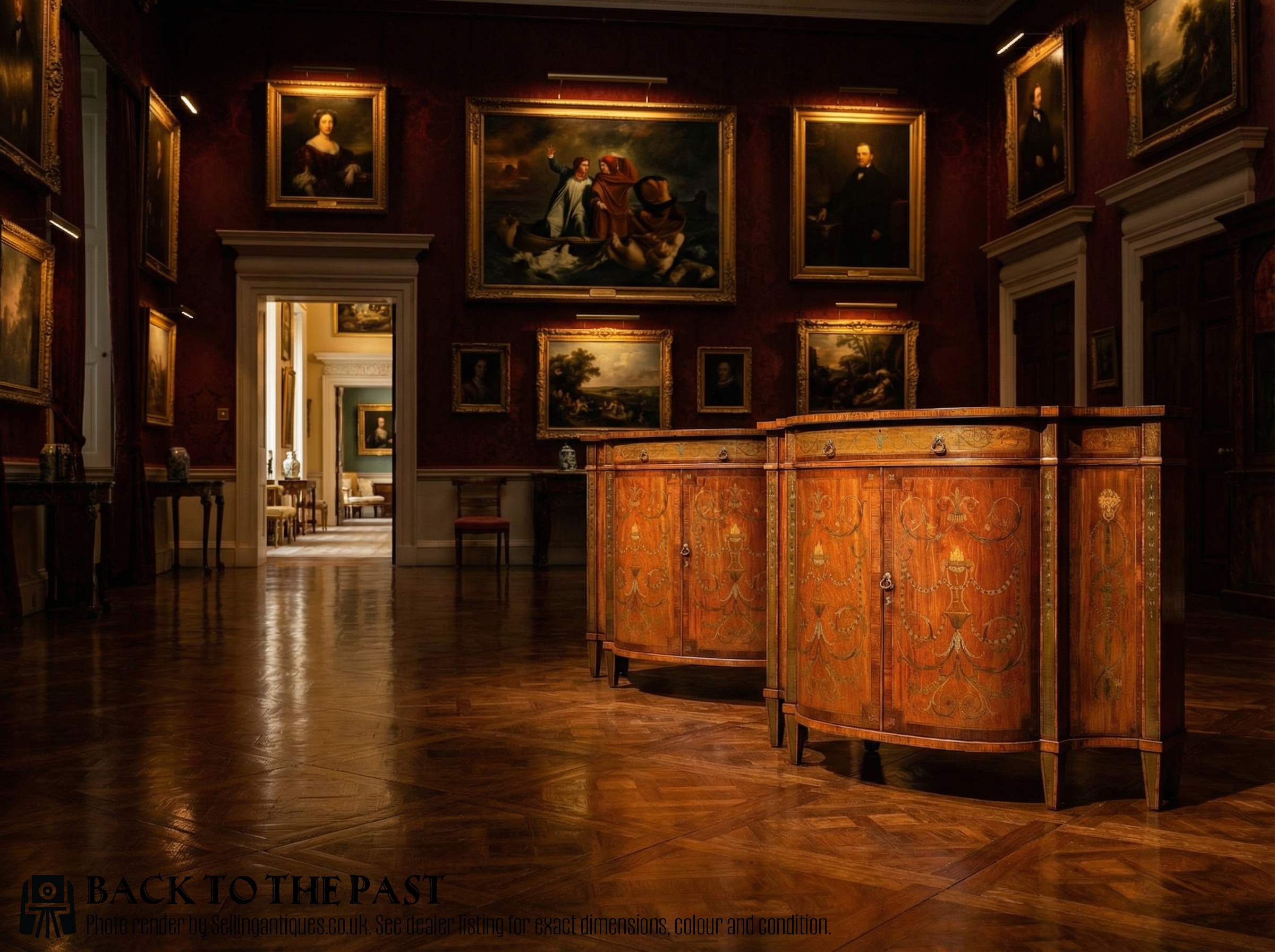
Fine Quality Pair of Sheraton Revival Bowed Side Cabinets, Circa 1890, 19th Century
Priced at £30,000 from Patrick Moorhead Antiques
The 2026 retail price guide for Antique Side Cabinets is drawn from a proprietary archive of over 1.1 million retail prices indexed by Sellingantiques since 2003. This guide relies exclusively on their own internal data; no external sources or auction records are used.
Analysing nearly 25 years of UK antique market history alongside current retail values, the data indicates that typical UK retail prices for Antique Side Cabinets range between £600 and £3,900. Entry-level prices generally fall under £600 and premium examples upwards of £3,900.
Look for shallow depth. A true antique side cabinet sits close to the wall so it avoids obstructing foot traffic.
Solid doors are common, though some feature pleated silk behind brass grilles. Dust stays out while air circulates inside.
Plinth bases tend to ground the heavier nineteenth-century examples. Earlier Georgian pieces often stand on turned or splayed bracket feet.
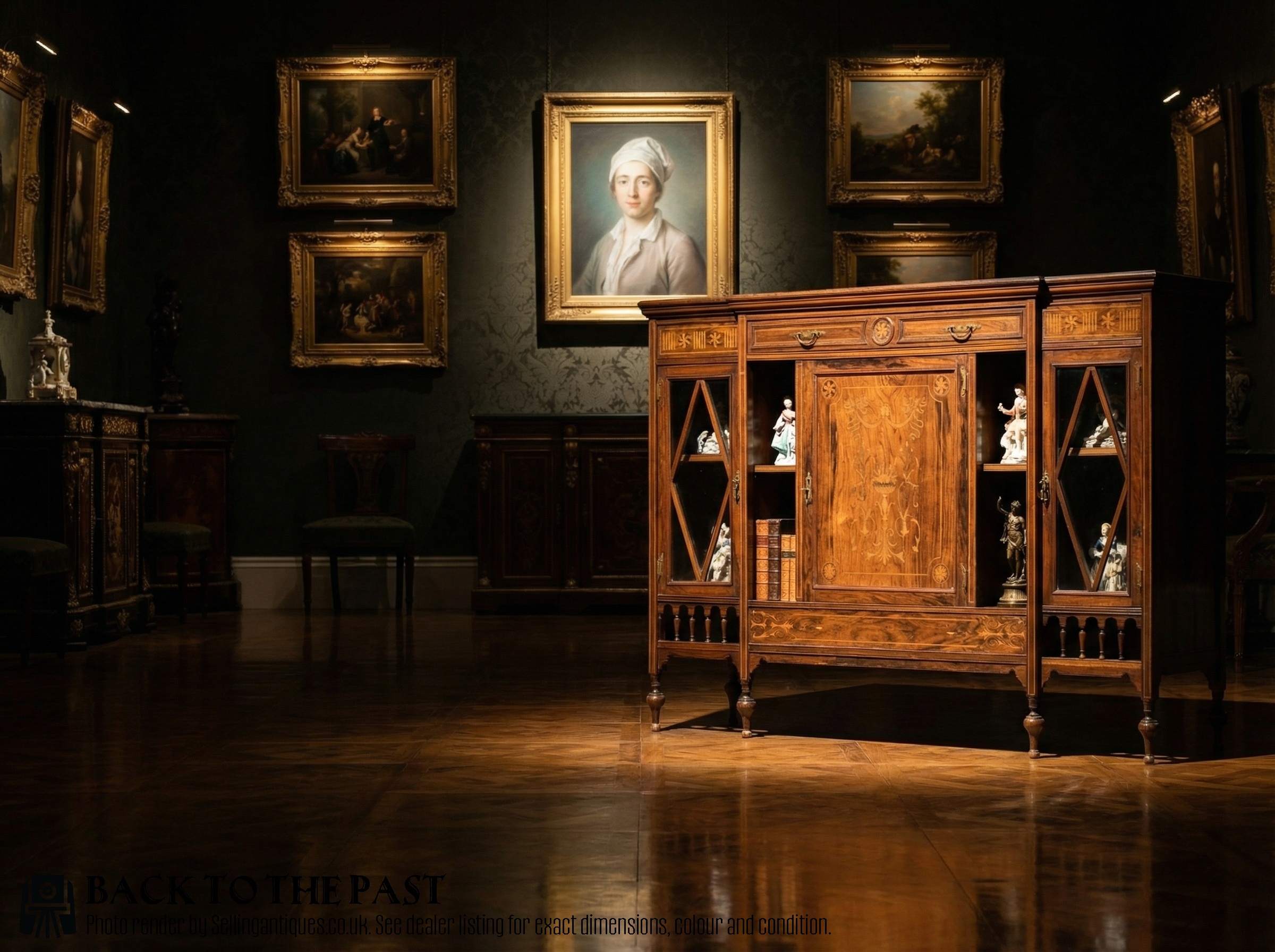
Edwardian Rosewood Inlaid Side Cabinet
, Edwardian
Priced at £595 from Penderyn Antiques
Hand-cut dovetails secure the drawer frames. The joints on eighteenth-century examples are usually narrower and finer than later Victorian work.
Inspect the backboards. Craftsmen fixed these rough-sawn panels using hand-forged iron nails that oxidise and stain the surrounding wood over time.
Veneer application required hot animal hide glue. Cabinet makers pressed thin sheets of expensive timber onto the cheap pine carcase.
"Brass grilles often hide folded fabric panels. These textiles added a splash of changing colour to match different room schemes."
"Turn the key to feel the mechanism. Many locks snap shut with a satisfying, heavy mechanical clunk that modern latches lack."
"Shallow proportions make them highly versatile today. They fit neatly into modern narrow hallways where standard storage units protrude too far."
Based on almost 25 years of Sellingantiques UK antique market data, Antique Side Cabinets appeared 6736 times (out of 1,100,000 antiques) which gives it a rarity score of 26/100.
This score measures scarcity within the Sellingantiques archive only and is not a survey of the entire antiques market, so these statistics may not be indicative of the general availability of Antique Side Cabinets elsewhere.
Leave them alone if possible. Old brass develops a dark, mellow surface that collectors prefer. Heavy polishing removes this historic finish and often leaves white residue trapped in the corners of the mesh.
If the metal is sticky, wipe it gently with a damp cloth and a mild soap. Dry the grille immediately. Never spray liquid metal polish directly onto the door because it damages the surrounding veneer.
Timber warps when it absorbs moisture unevenly. A thick mahogany door panel will bow if the room humidity fluctuates too wildly. Moving the piece away from direct heat sources often helps the wood settle back into shape over a few months.
Cabinet makers can correct severe warping. They remove the door and apply controlled heat and pressure over several weeks. Sometimes they inset a hidden metal rod or timber batten to pull the frame flat again.
Shallow frieze drawers sit directly beneath the top surface. Households used them to hold cutlery, napkins or serving tools when the piece stood in a dining room.
Sometimes these drawers are fitted with baize-lined compartments. This internal division stops silver from scratching as the drawer opens.
Replacing the fabric is a standard maintenance job. The textile panels are not structural and cabinet makers expected them to wear out long before the timber did. You can easily unpick the old material.
Look at the inside face of the door. You will usually find the fabric tacked to a removable wooden sub-frame or held in place by simple timber beadings. A restorer can stretch fresh pleated silk over this frame and slot it back behind the grille.
Please note: This Antique Side Cabinets guide and its associated pricing data are provided for general informational purposes only. It does not constitute formal financial, investment, or appraisal advice and should not be relied upon as the sole basis for any commercial activity, purchasing, or sales decisions. Sellingantiques.co.uk accepts no liability for any actions taken in reliance on this information. Always consult with a qualified professional or independent appraiser.
