


A 2026 Guide by Sellingantiques

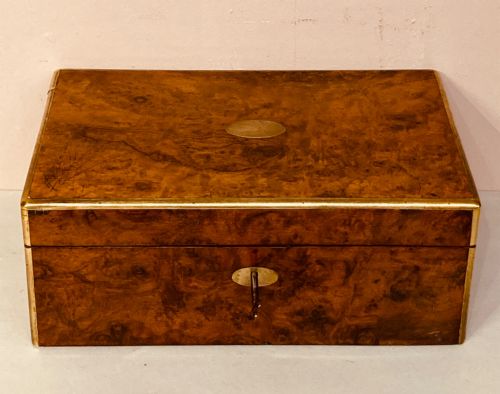
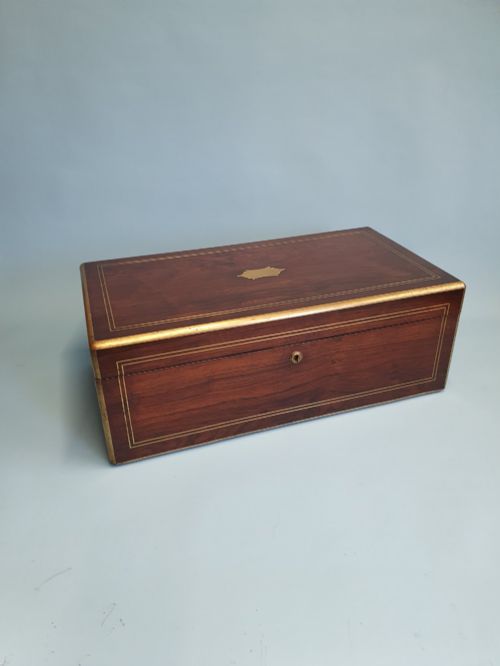
Antique Victorian Quality Rosewood Writing Box, 1860
Priced at £595 from London City Antiques
Developed in the late eighteenth century for a mobile military and mercantile class.
Notice how early examples have brass straps and flush handles to survive rough transport.
Demand peaked during the Victorian period before mass-produced tables reduced the need for personal boxes.
Some antique writing boxes even accompanied soldiers on campaign across India and the Crimea.
The need for these portable desks expanded with the postal reforms of the nineteenth century.
David Edwards worked in London during the early nineteenth century and supplied wooden campaign equipment.
Seek out stamped brass plates bearing the name of Thomas Lund of Cornhill.
Dalton of Soho also produced brass-bound antique writing boxes with complex secret drawer mechanisms.
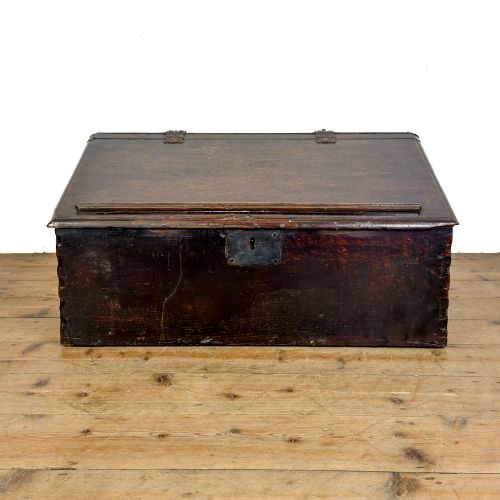
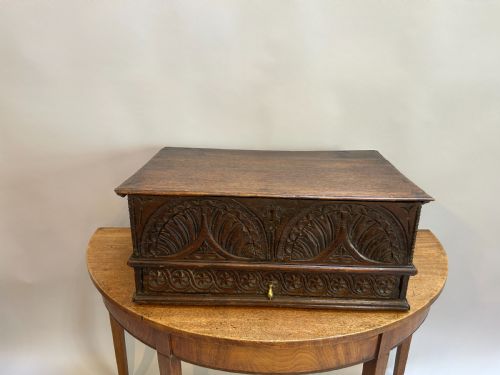
An Anglo Indian Campaign Writing Box, 19th Century
Priced at £425 from The Antique Partnership
The 2026 retail price guide for Antique Writing Boxes is drawn from a proprietary archive of over 1.1 million retail prices indexed by Sellingantiques since 2003. This guide relies exclusively on their own internal data; no external sources or auction records are used.
Analysing nearly 25 years of UK antique market history alongside current retail values, the data indicates that typical UK retail prices for Antique Writing Boxes range between £300 and £1,300. Entry-level prices generally fall under £300 and premium examples upwards of £1,300.
The folding surface usually splits into two sections covered in baize or leather.
Look under the slope for paper storage and a network of tiny drawers.
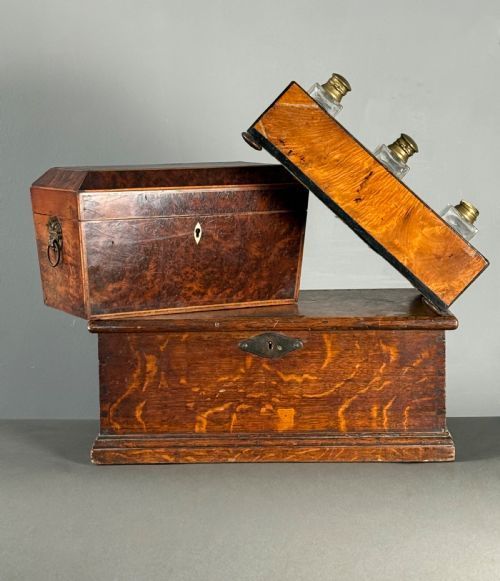
Small square divisions sit at the top edge to hold glass inkwells.
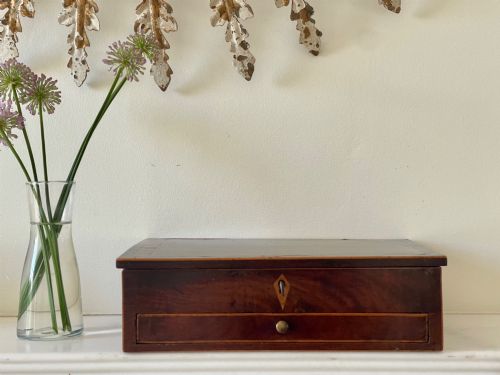
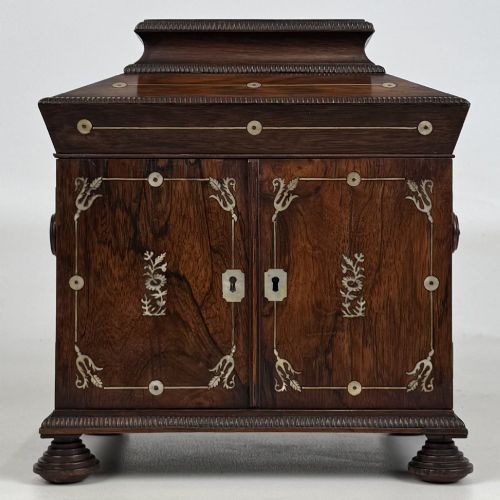
Unusual Antique Victorian Quality Rosewood Writing Box
, 1850
Priced at £1,185 from London City Antiques
Early carcases rely on tight hand-cut dovetails for strength before the brass straps are pinned on.
Note the brass stringing set into the veneer on mid-century domestic antique writing boxes.
Craftsmen cut mortise locks into the leading edges so the lid shut flush against the base.
"The paper storage area under the slope often includes a lattice of ribbon for holding letters."
"Lift the dividers between the inkwells to reveal a tiny hidden compartment for gold nibs."
"Some large examples have a threaded hole underneath for attaching to a separate tripod stand."
Based on almost 25 years of Sellingantiques UK antique market data, Antique Writing Boxes appeared 3196 times (out of 1,100,000 antiques) which gives it a rarity score of 53/100.
This score measures scarcity within the Sellingantiques archive only and is not a survey of the entire antiques market, so these statistics may not be indicative of the general availability of Antique Writing Boxes elsewhere.
Most stuck locks on these boxes suffer from dried oil and dust rather than broken mechanisms.
Try applying a single drop of graphite powder into the keyhole. Wiggle the key gently without forcing the turn.
If the brass pins inside are seized, a locksmith who handles older hardware can strip and clean the barrel.
The compartments usually take square glass bottles with brass screw caps.
You'll need to measure the base of the wooden divider. A tight fit risks splitting the timber.
That loose piece is often the retaining batten for the secret drawer panel. It sits behind the inkwell section and blocks the sprung cover.
When the box gets knocked around, the hide glue dries out and the batten falls away.
Look for an unvarnished rectangular patch of bare wood on the floor. Don't use modern wood glue to reattach it.
The lids on an antique writing box often warp over time due to central heating. The solid timber shrinks unevenly on the outside while the inside remains stable.
Sometimes the gap isn't warped wood. If the brass screws work loose, the lid drops back and fails to align with the front lock plate.
Check the hinge leaves first. If they're flush, the timber bowed.
Please note: This Antique Writing Boxes guide and its associated pricing data are provided for general informational purposes only. It does not constitute formal financial, investment, or appraisal advice and should not be relied upon as the sole basis for any commercial activity, purchasing, or sales decisions. Sellingantiques.co.uk accepts no liability for any actions taken in reliance on this information. Always consult with a qualified professional or independent appraiser.
