
A 2026 Guide by Sellingantiques
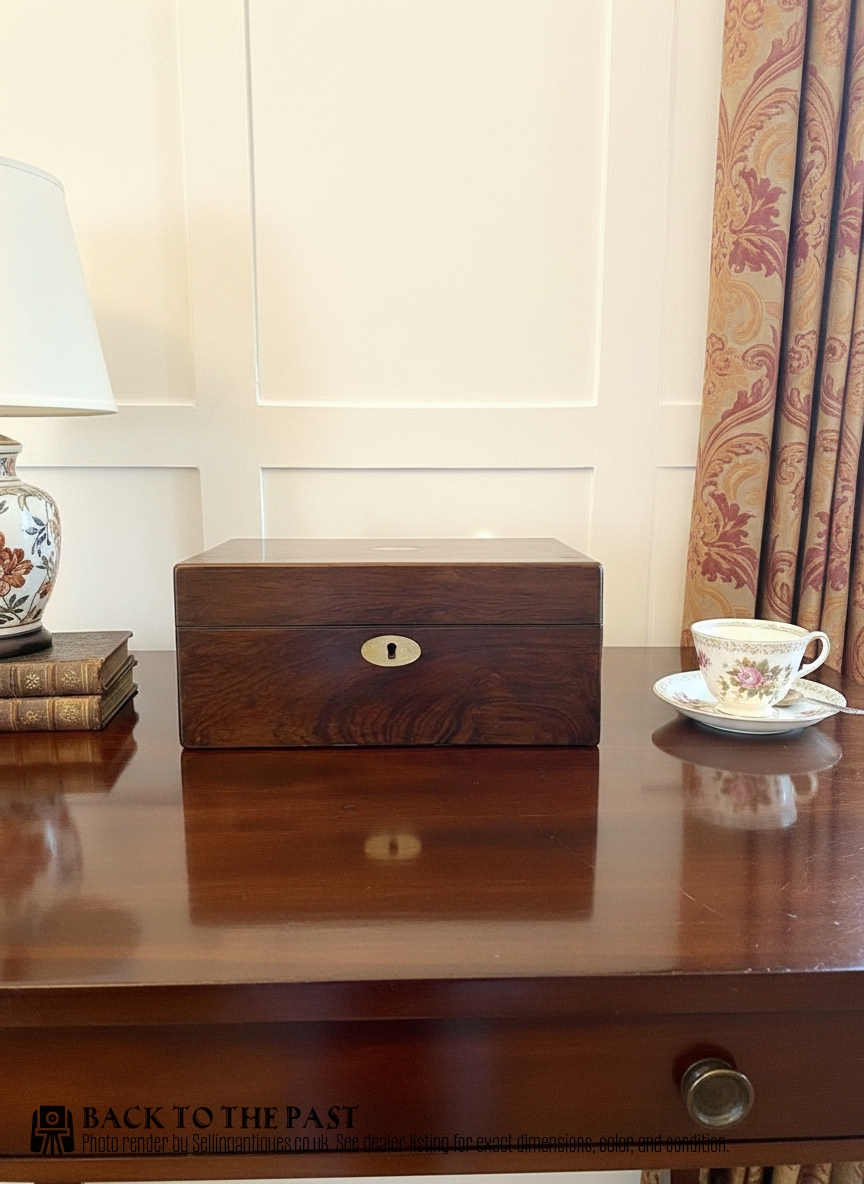
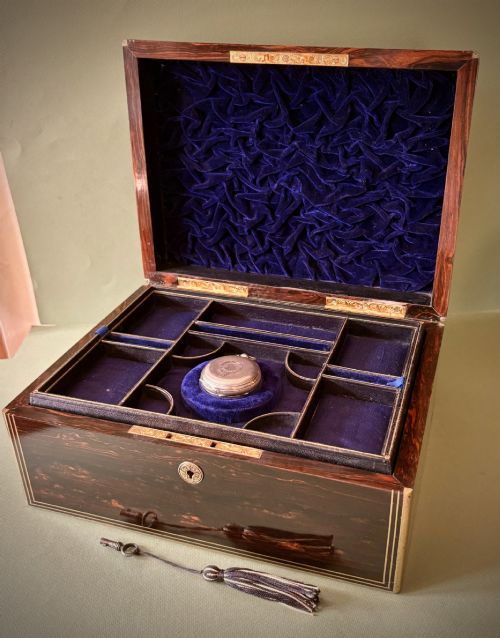
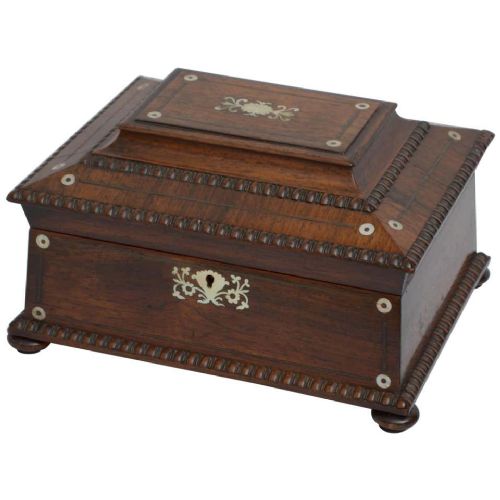
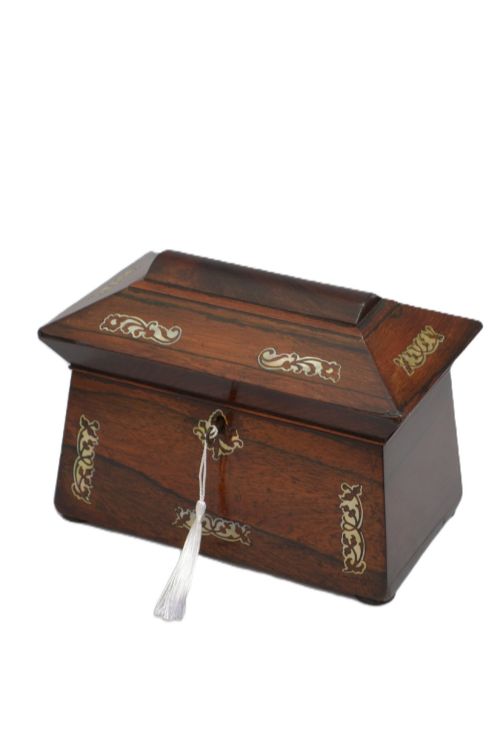
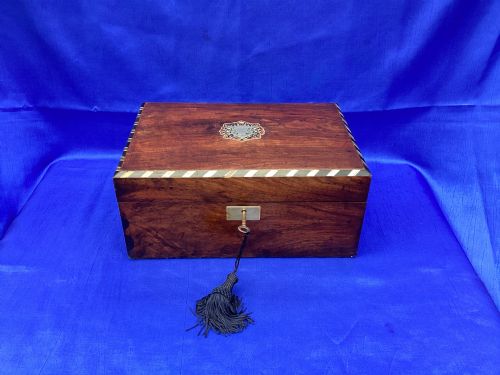
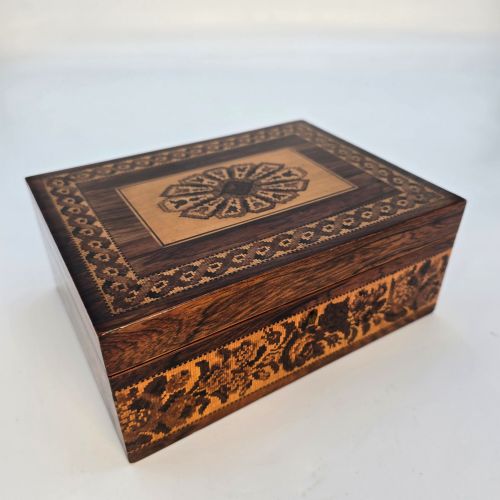
Antique Victorian Quality Rosewood Jewellery Box
, 1860
Priced at £395 from London City Antiques
Built for stagecoach journeys. Early designs featured thick brass binding to survive travel.
Look at the expanding middle class in the Victorian era. More people bought antique jewellery boxes as personal wealth increased.
Machine saws let workshops turn out decorative cases faster. This changed the trade across the nineteenth century.
Later Edwardian examples often shifted toward lighter designs suited for dressing tables.
David Edwards produced brass-bound dressing and jewellery cases in London during the early nineteenth century.
Paper labels survive inside some lids. You'll often find maker's marks stamped directly onto the brass lock plates.
Halstaff and Hannaford operated later. They supplied fitted boxes from their Regent Street shop.

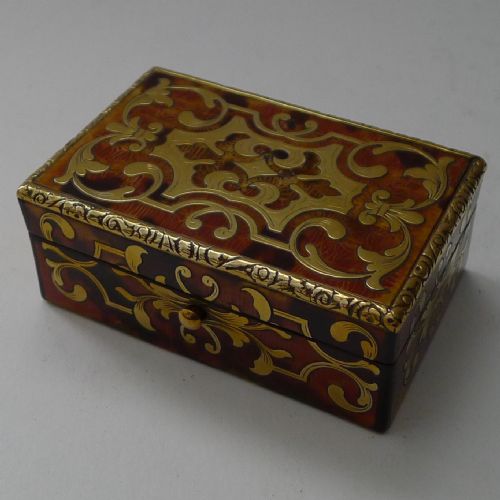
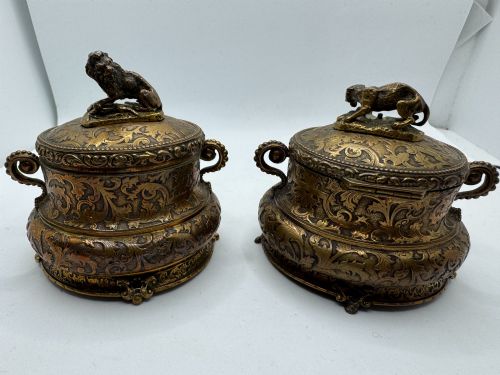
Indian Sandalwood Jewellery Box, 19th Century
Priced at £785 from Ropeworks Antiques
The 2026 retail price guide for Antique Jewellery Boxes is drawn from a proprietary archive of over 1.1 million retail prices indexed by Sellingantiques since 2003. This guide relies exclusively on their own internal data; no external sources or auction records are used.
Analysing nearly 25 years of UK antique market history alongside current retail values, the data indicates that typical UK retail prices for Antique Jewellery Boxes range between £200 and £1,100. Entry-level prices generally fall under £200 and premium examples upwards of £1,100.
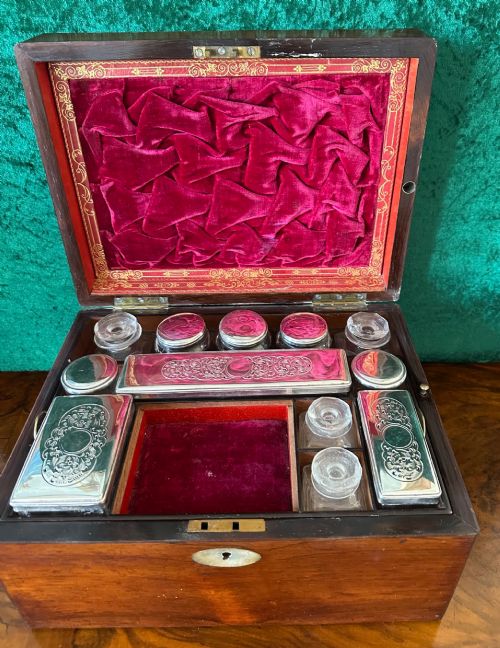
Removable trays sit on small internal ledges. These keep rings separated from bulkier items below.
Check for a concealed drawer. Many feature a hidden lower section triggered by a brass pin inside the main compartment.
Secure locks are standard. A quality antique jewellery box usually has a Bramah or Chubb lock installed.
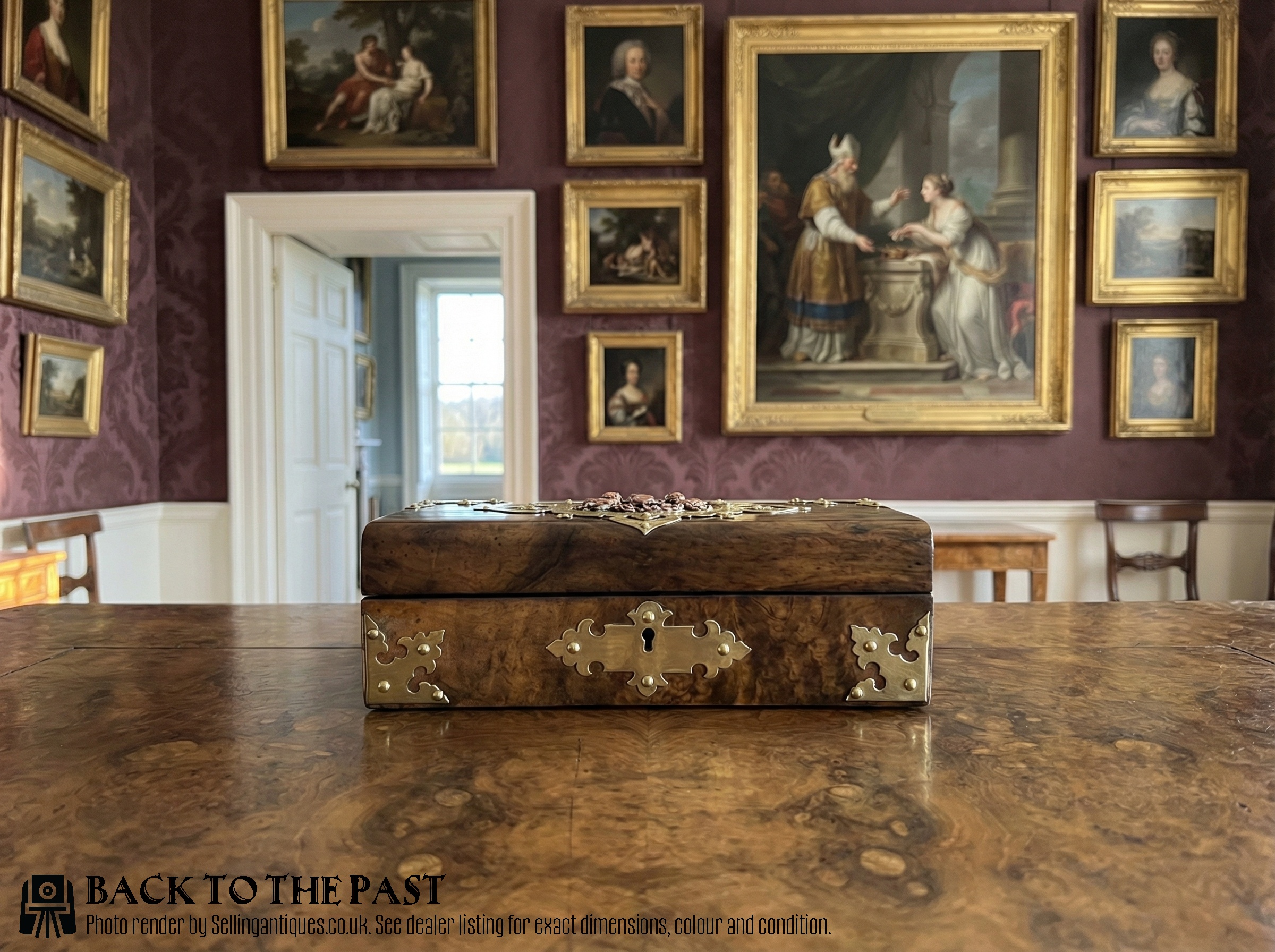
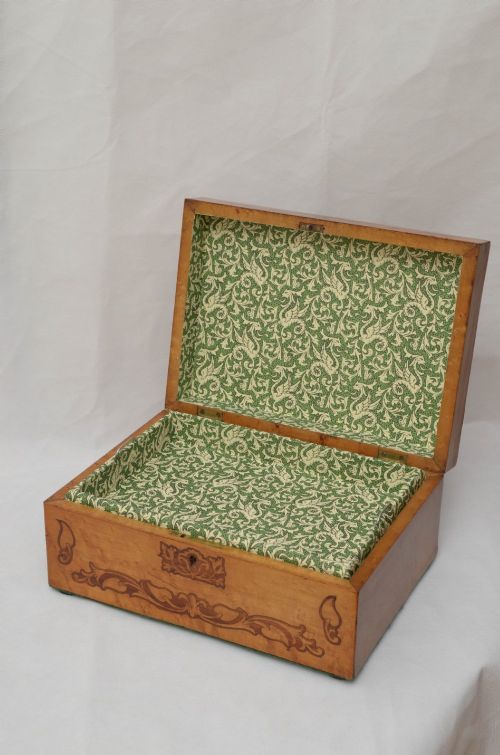
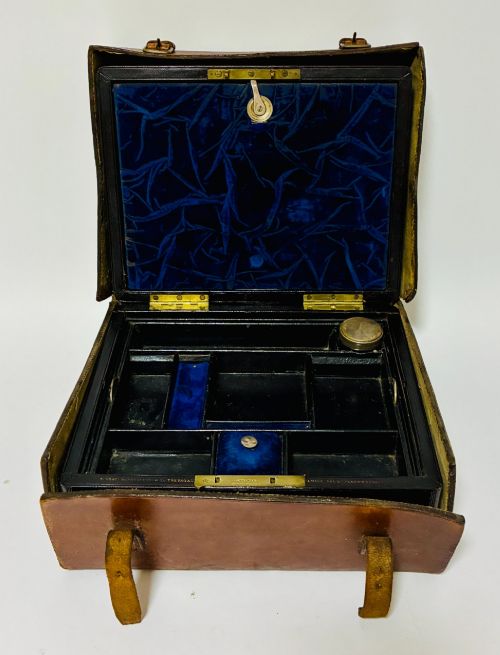
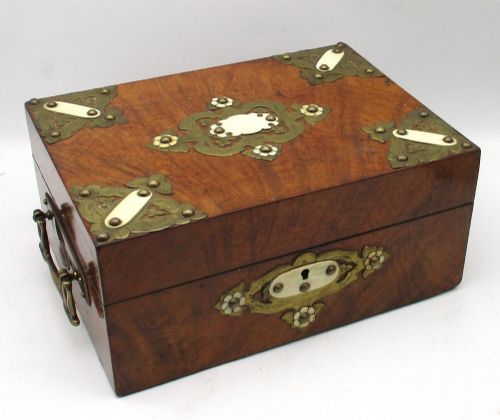
Outstanding Quality Antique Victorian Burr Walnut and Brass Mounted Jewellery Box, 1880
Priced at £595 from Unique Antiques by Emma Jade
Early pieces rely on thick hand-sawn veneers applied over hand-cut dovetail joints.
Brass edging requires careful pinning. Makers filed the metal flush with the wood to prevent catching.
By the late nineteenth century thinner veneers allowed for detailed marquetry patterns on the lids of antique jewellery boxes.
"Secret compartments were standard practice rather than novelties. Makers engineered clever spring-loaded panels to protect gold sovereigns."
"The cedar wood used inside some trays naturally deters insects from damaging silk linings."
"Empty slots originally held bespoke matching accessories. Silver-topped scent bottles or mother-of-pearl threading tools fitted the specific spaces."
Based on almost 25 years of Sellingantiques UK antique market data, Antique Jewellery Boxes appeared 7135 times (out of 1,100,000 antiques) which gives it a rarity score of 24/100.
This score measures scarcity within the Sellingantiques archive only and is not a survey of the entire antiques market, so these statistics may not be indicative of the general availability of Antique Jewellery Boxes elsewhere.
Replacing degraded lining is standard practice. Box restorers use modern silk velvet to recreate the original padded compartments.
Try to match the original colour if remnants survive under the trays. Deep blues and dark greens were standard for the period.
Keep any original brass hinges or pins during the process. They fit the existing recesses better than modern replacements.
Lifted brass edging happens as the wooden carcase shrinks over time. The metal stays the same length while the timber contracts, forcing the pins outward.
Securing it prevents further damage. Loose brass catches on clothing and bends easily. Once bent, the strips are difficult to flatten back into their original shape.
Damp weather swells secondary woods. Wait for a dry spell.
Don't force a tool into the gap. You'll damage the veneer.
High-security nineteenth-century locks require specialist knowledge. A standard high street locksmith may drill the mechanism and ruin the lock plate.
Seek out an antique furniture restorer. They keep stocks of antique keys and can carefully pick the lock or file a new key to fit the levers.
Please note: This Antique Jewellery Boxes guide and its associated pricing data are provided for general informational purposes only. It does not constitute formal financial, investment, or appraisal advice and should not be relied upon as the sole basis for any commercial activity, purchasing, or sales decisions. Sellingantiques.co.uk accepts no liability for any actions taken in reliance on this information. Always consult with a qualified professional or independent appraiser.
