29,123  PAGES BROWSED TODAY PAGES TODAY • 73 ANTIQUES UPLOADED TODAYNEW ARRIVALS
GIFTS
73 ITEMS ADDED TODAY
Sort Order
Items Per Page
Browse Categories
Sort order
Relevant Links
Items per page
ID #SA1245387
FOR SALE
£26,500
Email Phone
Save
An Important Late 17th Century Japanese Lacquered Cabinet Edo Period on Stand
For sale by Loveday Antiques
for sale €31,005     $33,655
£26,500
Loveday Antiques

Loveday Antiques

Sellingantiques Verified Since Mar 2012
Browse dealers 74 items
  • About Us
    Specialist furniture dealers 18th-20th century
  • Trade Associations
    Loveday Antiques is a registered member of LAPADA  BADA  CINOA
Id #SA1245387
PDF SHARE
SAVE

An Important Late 17th Century Japanese Lacquered Cabinet Edo Period on Stand

17th century
For Sale by Loveday Antiques
Description

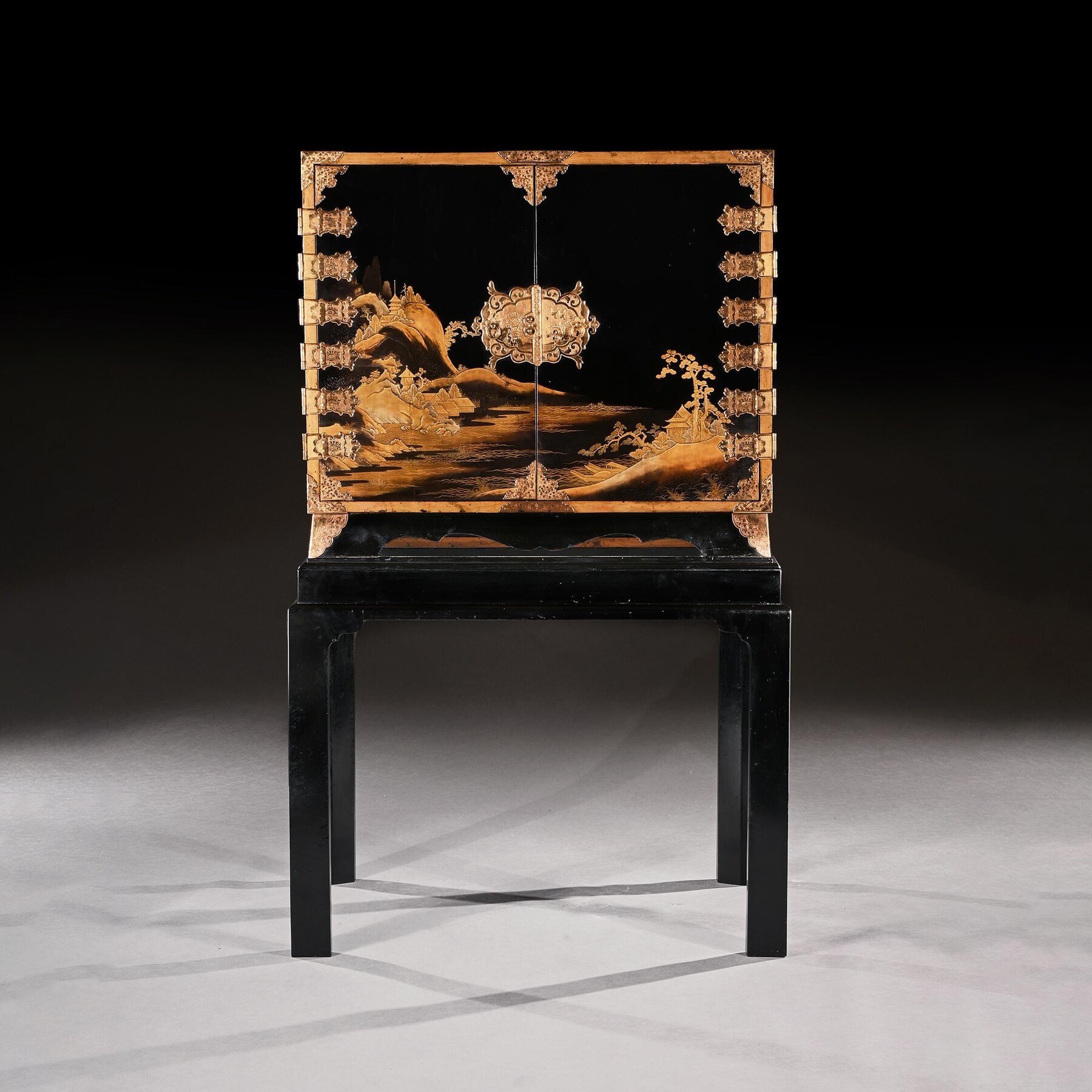
An extremely fine, elegant and rare late 17th Century Japanese lacquer cabinet, from the Eco period, on lacquered black stand.

Japanese circa 1690

Provenance

A private Scottish collection

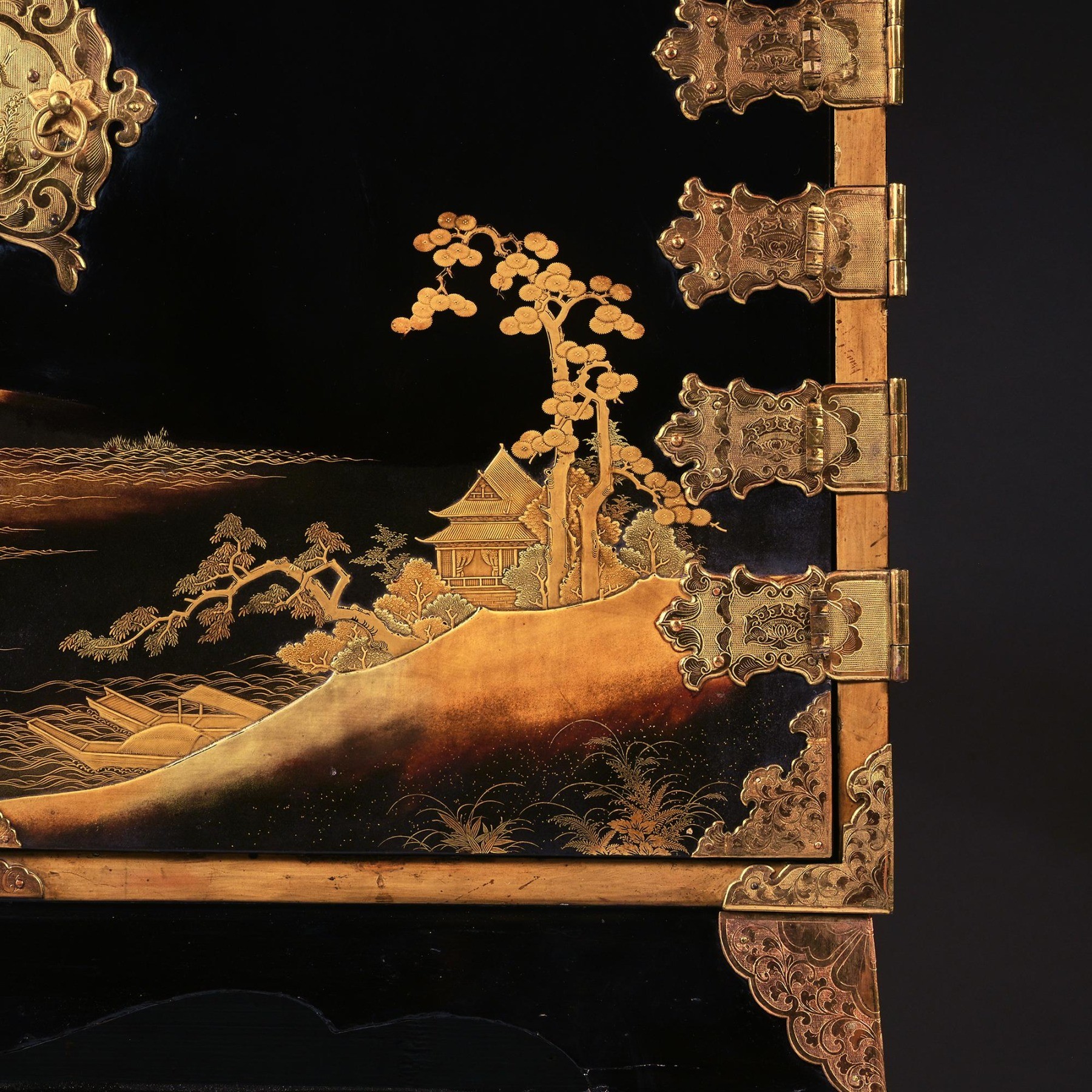
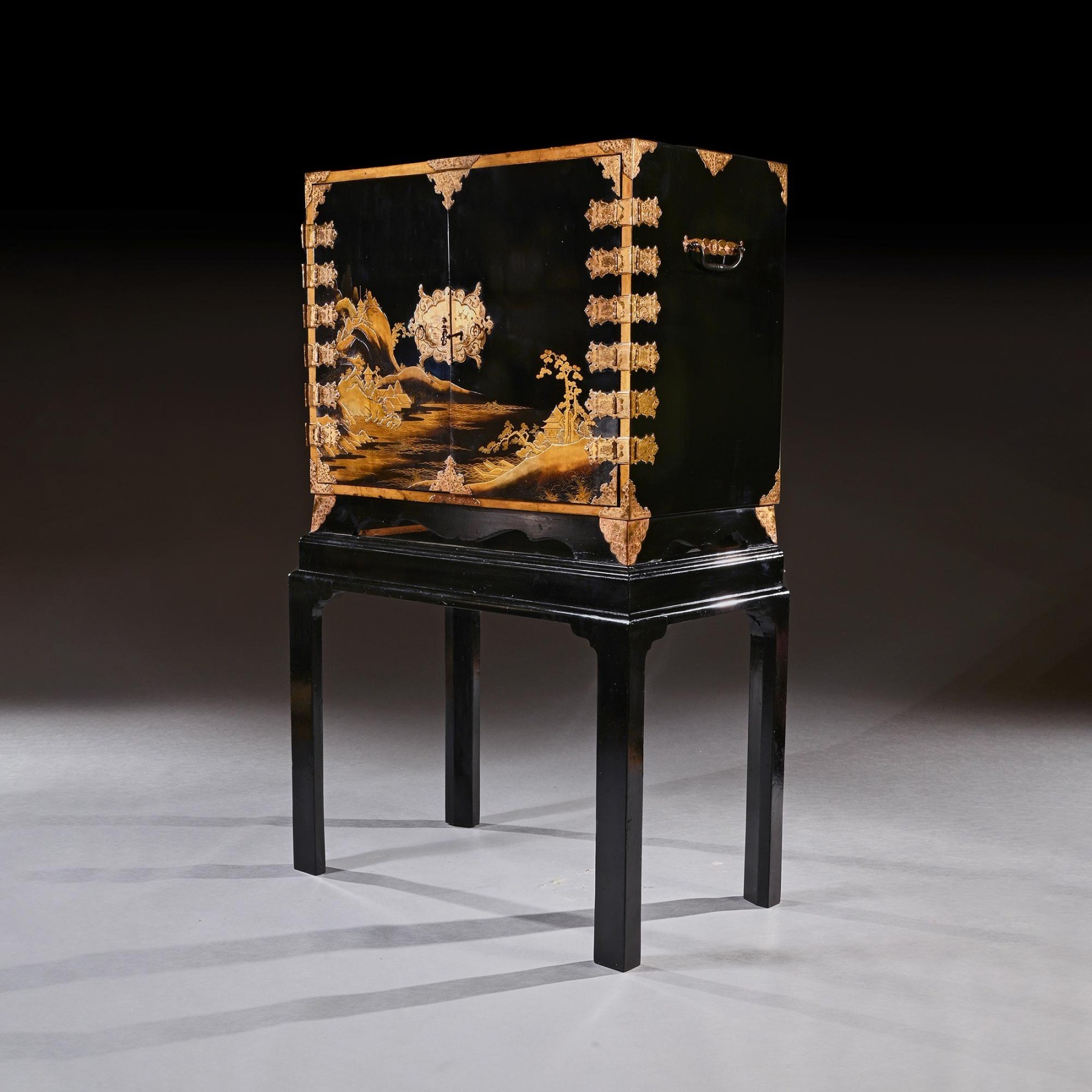
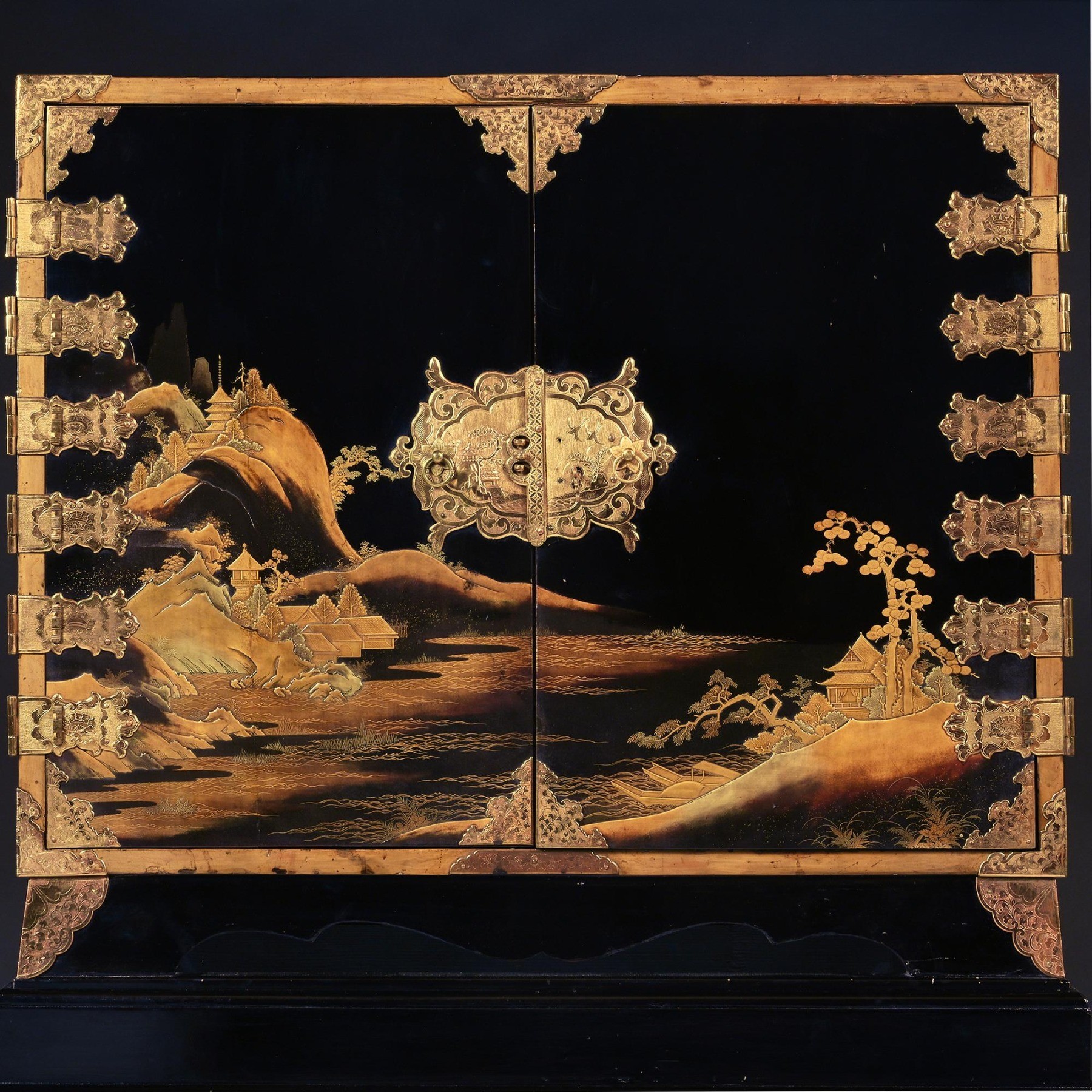
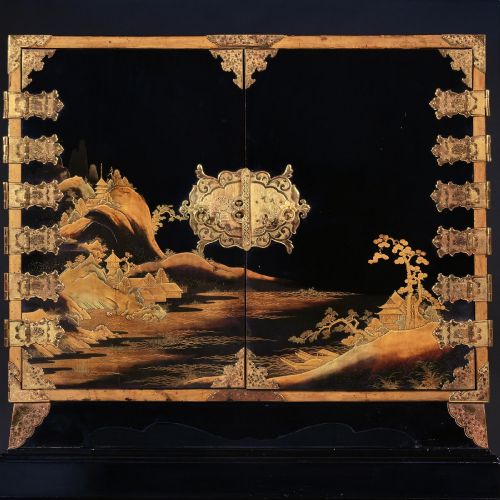
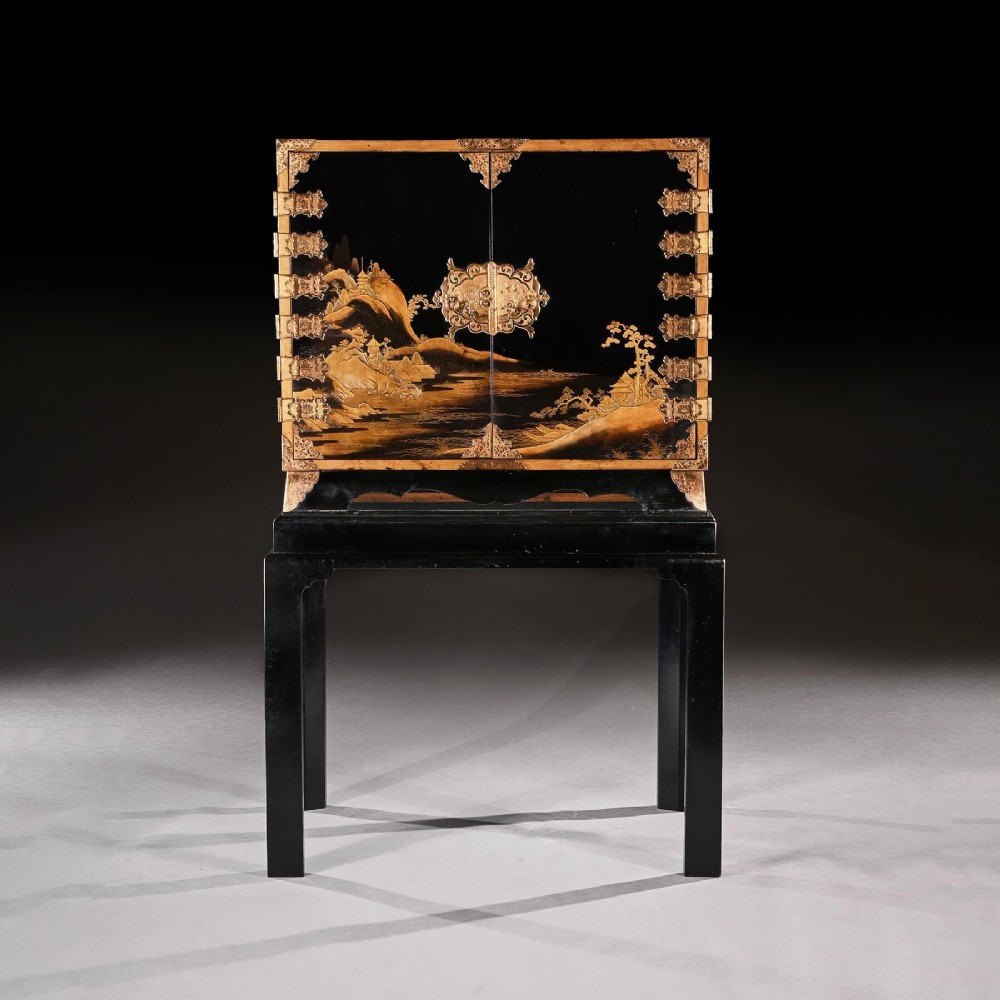
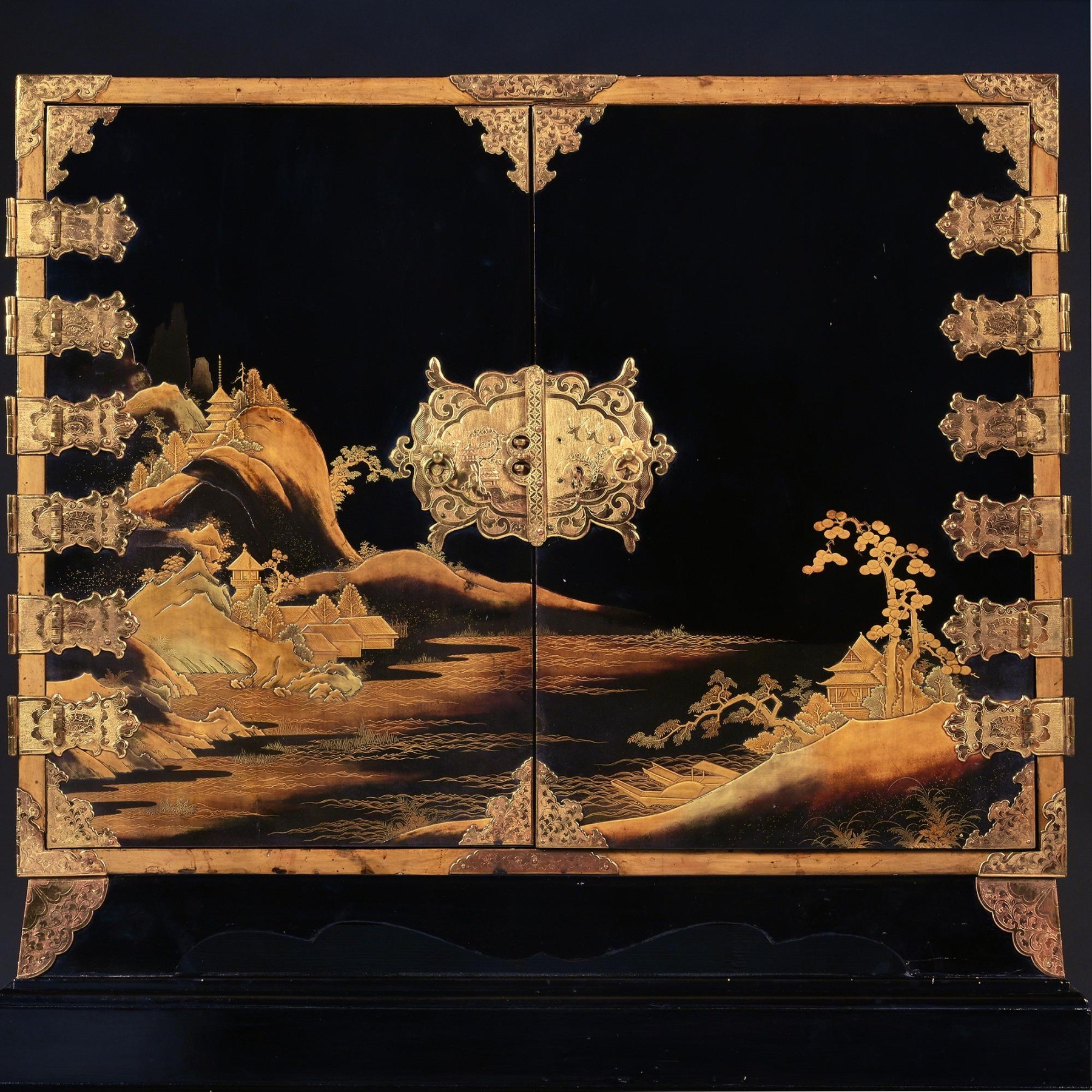
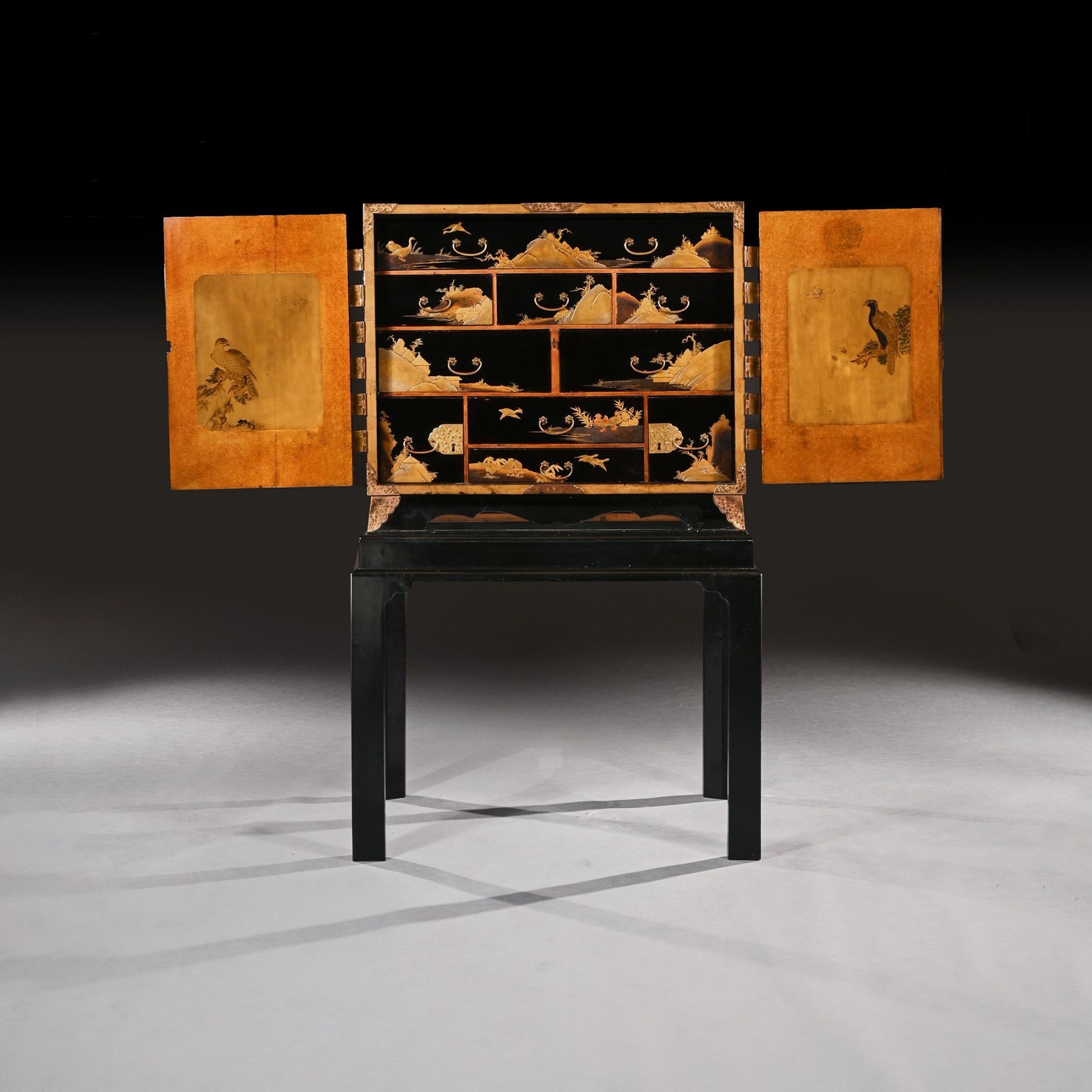
This outstanding cabinet is a fascinating fusion of east and west. The cabinet itself would have been made in Japan, c.1690, and is decorated to the outside with hiramaki-e lacquer. This technique involves the use of sprinkled gold powder which adheres to the lacquer surface. On the best pieces, as with this example, many layers are added in order to create areas of high relief and give depth to the surface decoration. The taste of the Japanese workshops in this period was often for quite restrained pieces with plenty of the black background visible, unlike some of the busier Chinese lacquer or European japanned examples produced around the same time. The Japanese makers seemed content to rely on the outstanding quality of the lacquer itself, regarded by most experts as the finest lacquer ever produced, and did not see the need to cover every surface believing that less was more in this respect. The lacquer here is used to produce a mountainous scene with temples on the bank of a river, the other side of the river with more temples and a contrasting flatter and forested landscape. The fine perspective achieved is the result of the clever use of raised and flatter areas in the lacquer itself in combination with the drawing of the design itself.
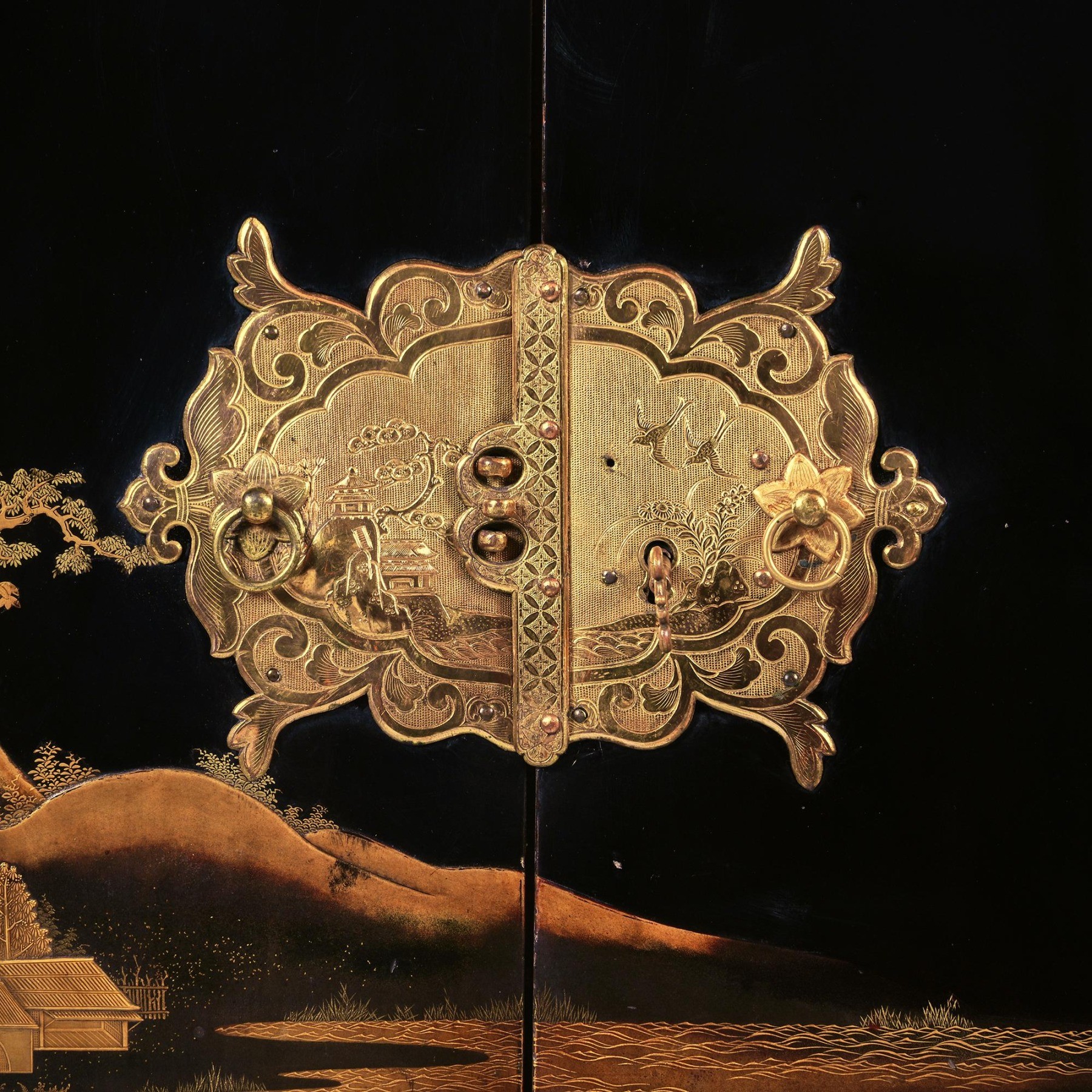
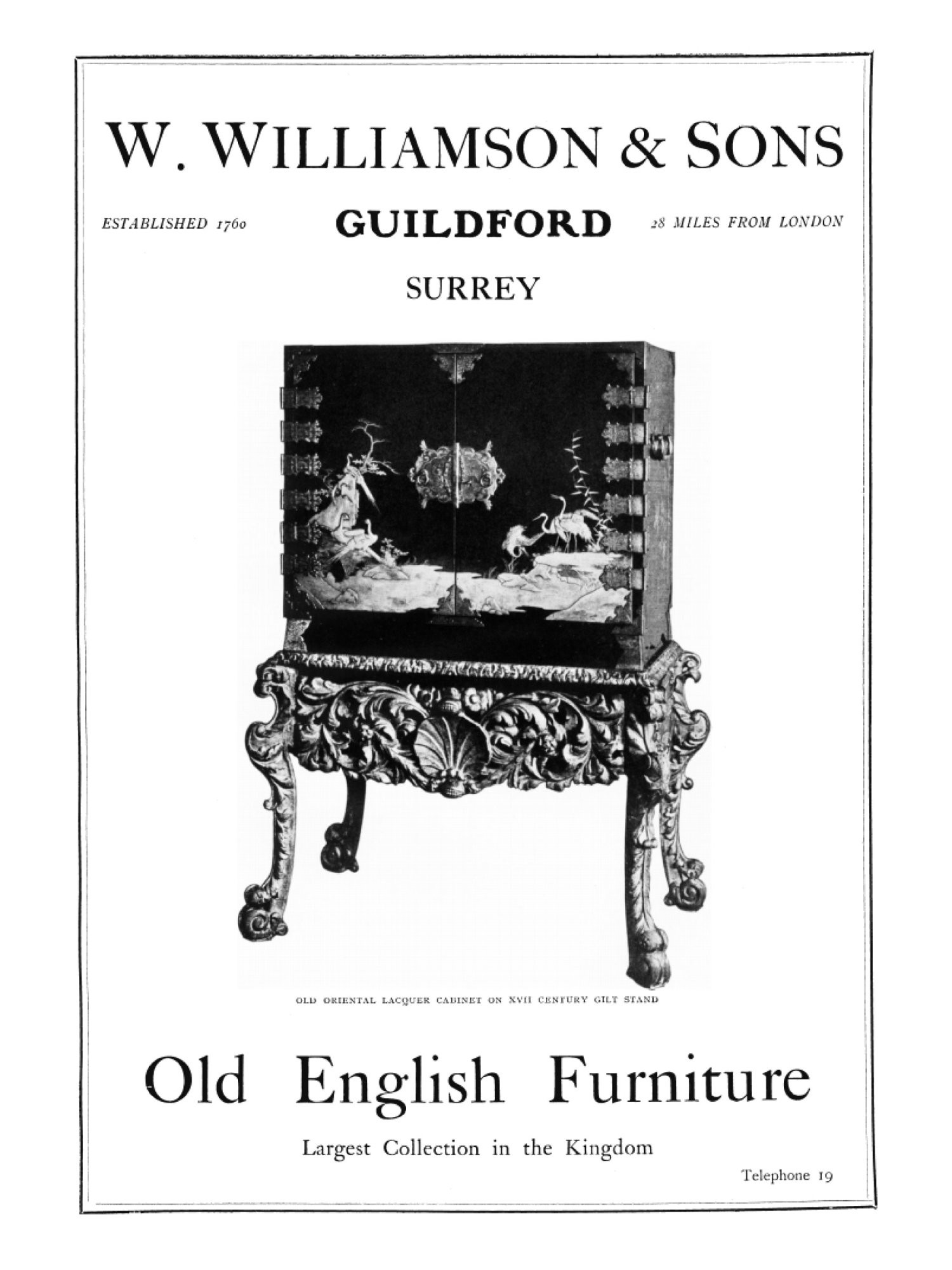
Another remarkable aspect of this piece is the fine metalware throughout, but particularly the lockplate / hasp, hinges and foot mounts to the front. This is all beautifully cast and engraved contrasting against the black background. Interestingly another cabinet on stand with near identical metalwork was advertised in the Burlington Magazine, November 1913, with the dealer W. Williamson and Sons of Guildford. The lacquer on that piece is similarly refined and it seems likely that both pieces came from the same workshop.
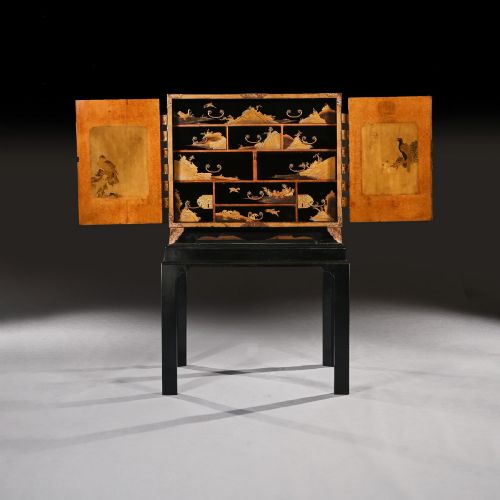
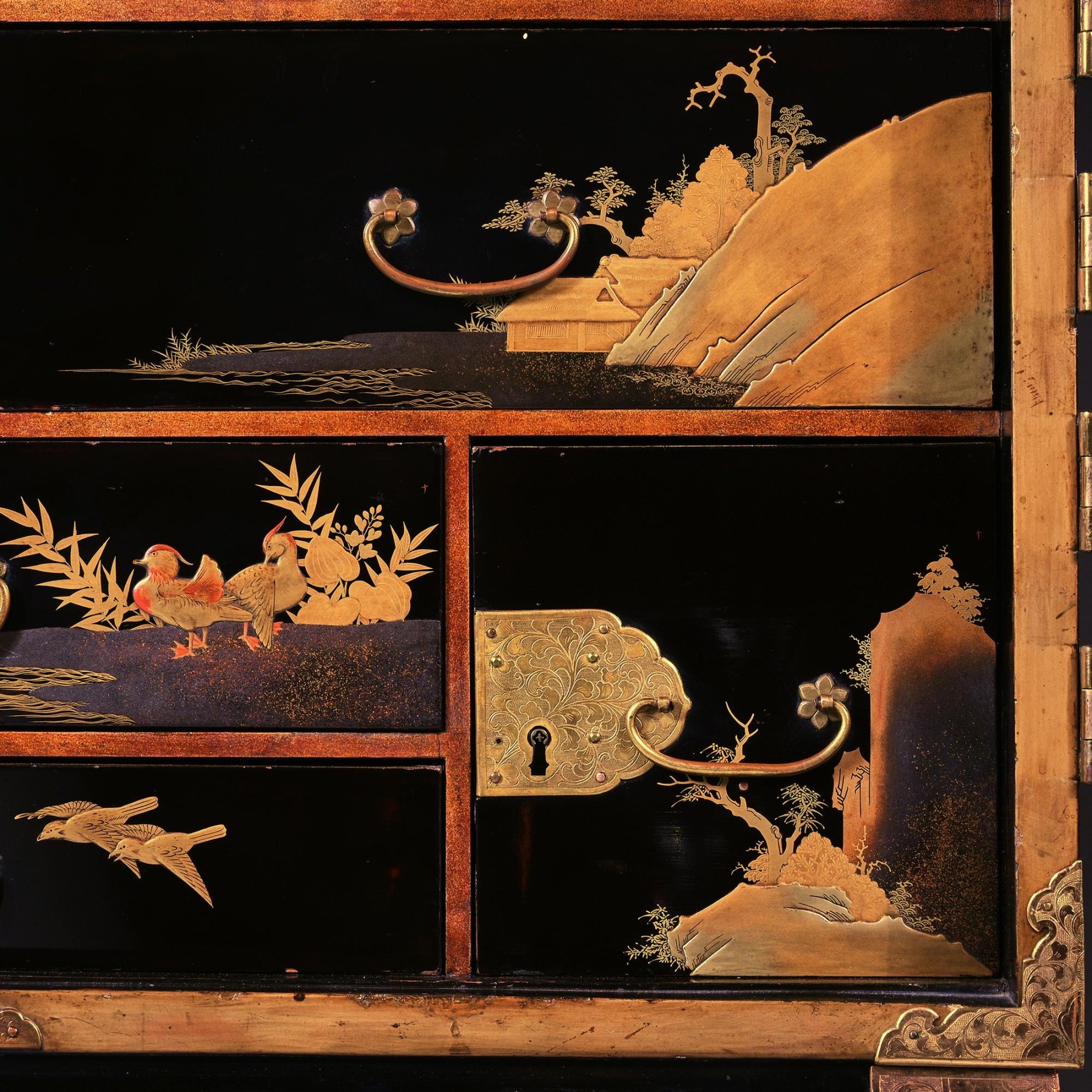
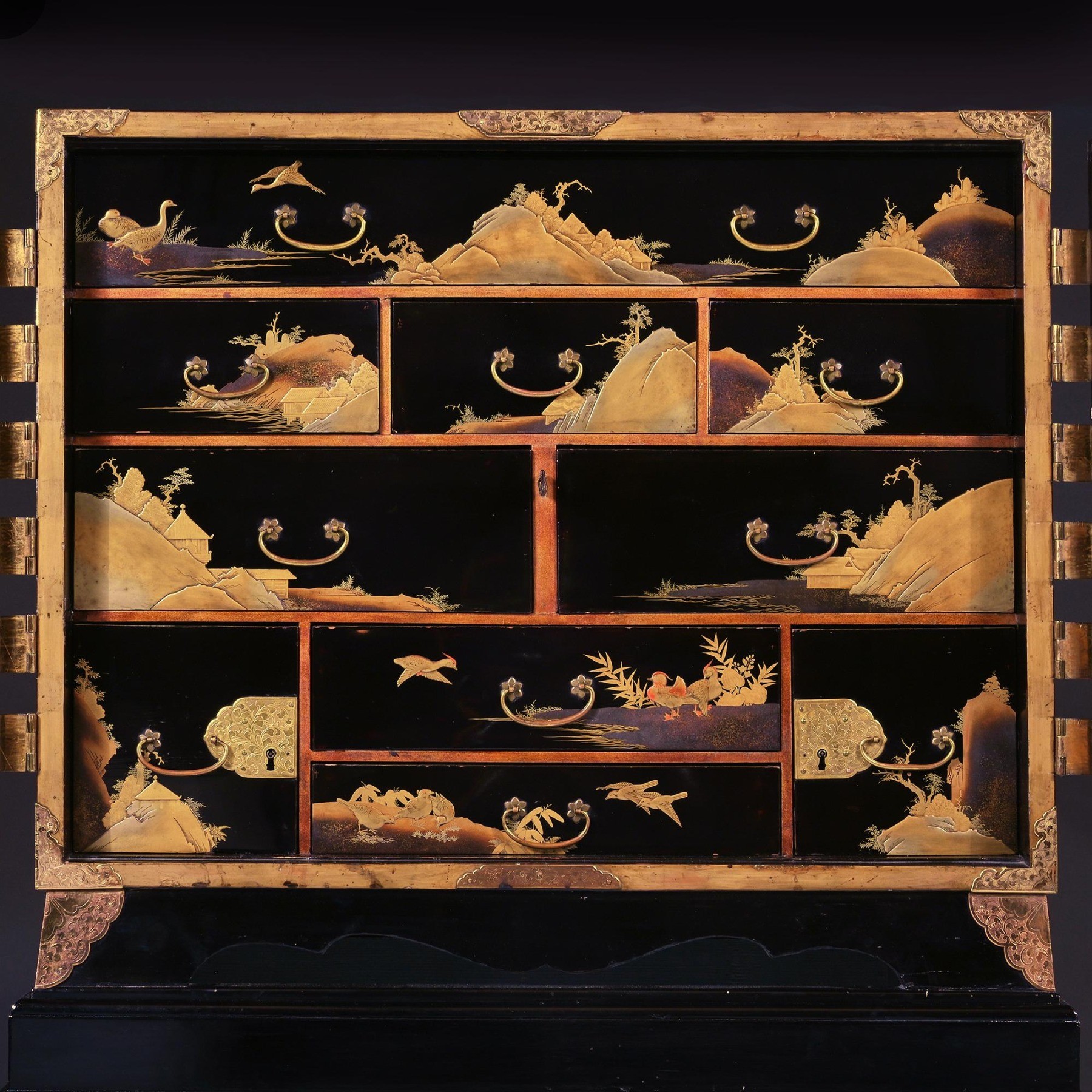
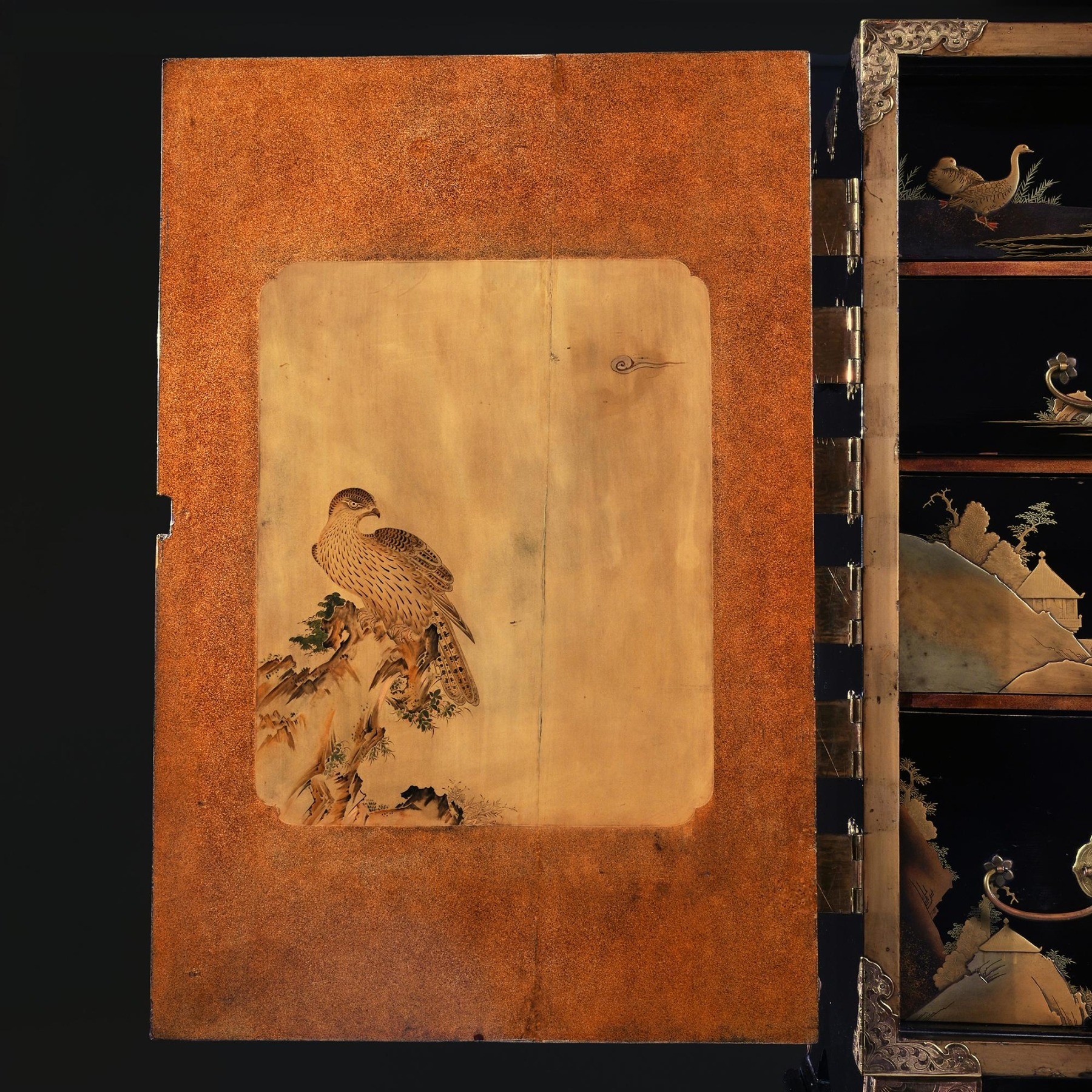
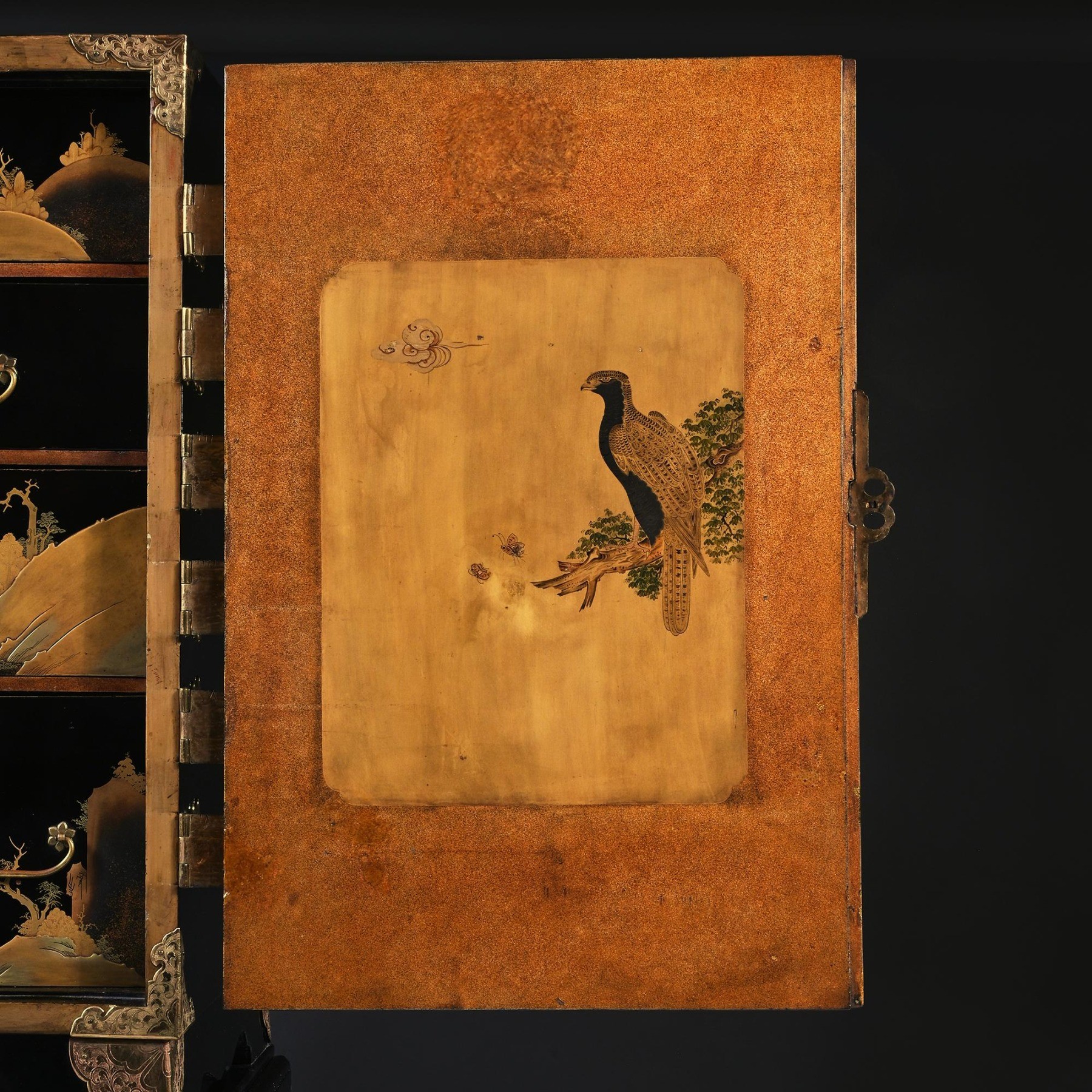
The European influence in our piece can be seen in the late 18th Century black Japanned stand which is designed in "the Modern" Chinese fashion popularised by Thomas Chippendale's, Gentleman and Cabinet-Maker's Director, 1754. The Japanning to the inside doors consists of two panels with birds of prey perched on branches in colours set against a golden background. The cabinet has a recent Scottish provenance and so it is likely that the ebonised stand was made in Britain after Chippendales 'The Modern' Chinese fashion. Inside the cabinet there is a combination of more Japanese lacquer and lock plates and European drawer handles. Most of the lacquer drawer fronts incorporate mountainous scenes and birds in combination, with a few purely one or the other of the two subjects. Again the lacquer is in excellent condition and is of exceptional quality with multiple layers of relief used in one single scene in many cases.
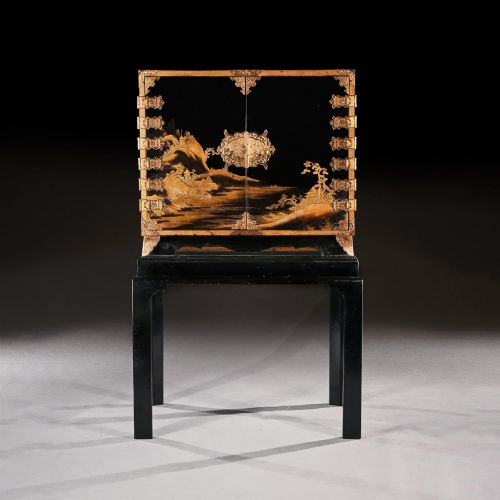
These early Japanese lacquer cabinets always have integral feet and were shipped to Europe without stands which were always manufactured for them when they arrived at their destination. Due to the Dutch control of the trade with Japan in the 17th century, purchases made by monarchs and leading connoisseurs throughout Europe would have been placed through agents in Amsterdam. Records survive relating to purchases of Japanese lacquer of this sort made by Louis XIII and Louis XIV and the high cost of shipping via another European country added to the luxurious nature of these pieces and the exclusivity attached to ownership of them. It also became increasingly clear to European connoisseurs that Japanese lacquer products were superior to their Chinese equivalents and, as such, the trade in Japanese lacquer became a highly profitable business for the Dutch VOC (East India Company) and the various allied businesses.

Date of Manufacture

Loveday Antiques has dated this Japanese Edo Lacquered Cabinet to the 17th Century.

Physical Dimensions
Height
157cm (61.81")
Width
98cm (38.58")
Depth
56cm (22.05")
Reference Numbers
Sellingantiques Reference
SA1245387
Dealers Internal Reference
3027
Dealers Notes

Loveday Antiques is a family run business originally established since 1969 in London.

Now in its second generation, Loveday Antiques specialises in an eclectic mix of 18th to 20th Century European furniture and works of art, with a strong emphasis on quality, uniqueness and colour.

As proud members of BADA & LAPADA, the largest association for professional art and antique dealers in the United Kingdom and members of CINOA, the worldwide association for antique dealers you can buy from us with 100% confidence and reassurance as we are committed to upholding and abiding by the strict standards of each association.

Our clients can rest assured that each item is as described and photographed.

All Items are sold with 100% satisfaction 14 day money back guarantee, return delivery will be charged for.

We deliver within the UK for usually between £60-£80 and ship worldwide with professional bespoke crating via air to almost all locations. Please contact us at Loveday Antiques with your full postal address for a very competitive quote.

Delivery within the mainland UK will usually be with 7 to 14 days but please allow up to 28 days. We also ship worldwide with a professional bespoke crating service and large International couriers via air and sea to almost all locations. Please contact us at Loveday Antiques with your full postal address for a very competitive quote.

GOODS

All items listed are in excellent condition having been restored using traditional methods by experienced cabinet makers and polishers keeping the original colour and patina wherever possible.

Please bear in mind you may find the usual markings with antique furniture that are commensurate with age which all add to beauty and uniqueness of the item.

VIEWINGS

We have a reputation for being long established antique dealers in London having had showrooms concurrently running in Islington, Chelsea and Ascot. We have relocated our new showroom, due to London overheads, easily reached between A1 or A10 to just outside of Hertford, Hertfordshire.

We will happily arrange for clients to be collected travelling via train. Local stations being Hertford North, Stevenage and Ware, all being a 10 minute drive from us.

Please contact us for location and appointments.

Telephone: 01438 869 819

Payments accepted are Bank Transfer, Cheque, Major Credit Cards or Cash.

Opening Times

Monday to Saturday 9.00am - 5.30pm Please email or call beforehand to make an appointment.

If outside of these times again please call to make an appointment

We have more than 40 years experience in supplying Antique furniture to the trade, public and interior designers from all parts of the world so please buy with confidence as we have passed the test of time.

Description
An extremely fine, elegant and rare late 17th Century Japanese lacquer cabinet, from the Eco period, on lacquered black stand.

Japanese circa 1690

Provenance

A private Scottish collection

This outstanding cabinet is a fascinating fusion of east and west. The cabinet itself would have been made in Japan, c.1690, and is decorated to the outside with hiramaki-e lacquer. This technique involves the use of sprinkled gold powder which adheres to the lacquer surface.

“
On the best pieces, as with this example, many layers are added in order to create areas of high relief and give depth to the surface decoration.
Loveday Antiques

The taste of the Japanese workshops in this period was often for quite restrained pieces with plenty of the black background visible, unlike some of the busier Chinese lacquer or European japanned examples produced around the same time. The Japanese makers seemed content to rely on the outstanding quality of the lacquer itself, regarded by most experts as the finest lacquer ever produced, and did not see the need to cover every surface believing that less was more in this respect. The lacquer here is used to produce a mountainous scene with temples on the bank of a river, the other side of the river with more temples and a contrasting flatter and forested landscape. The fine perspective achieved is the result of the clever use of raised and flatter areas in the lacquer itself in combination with the drawing of the design itself.

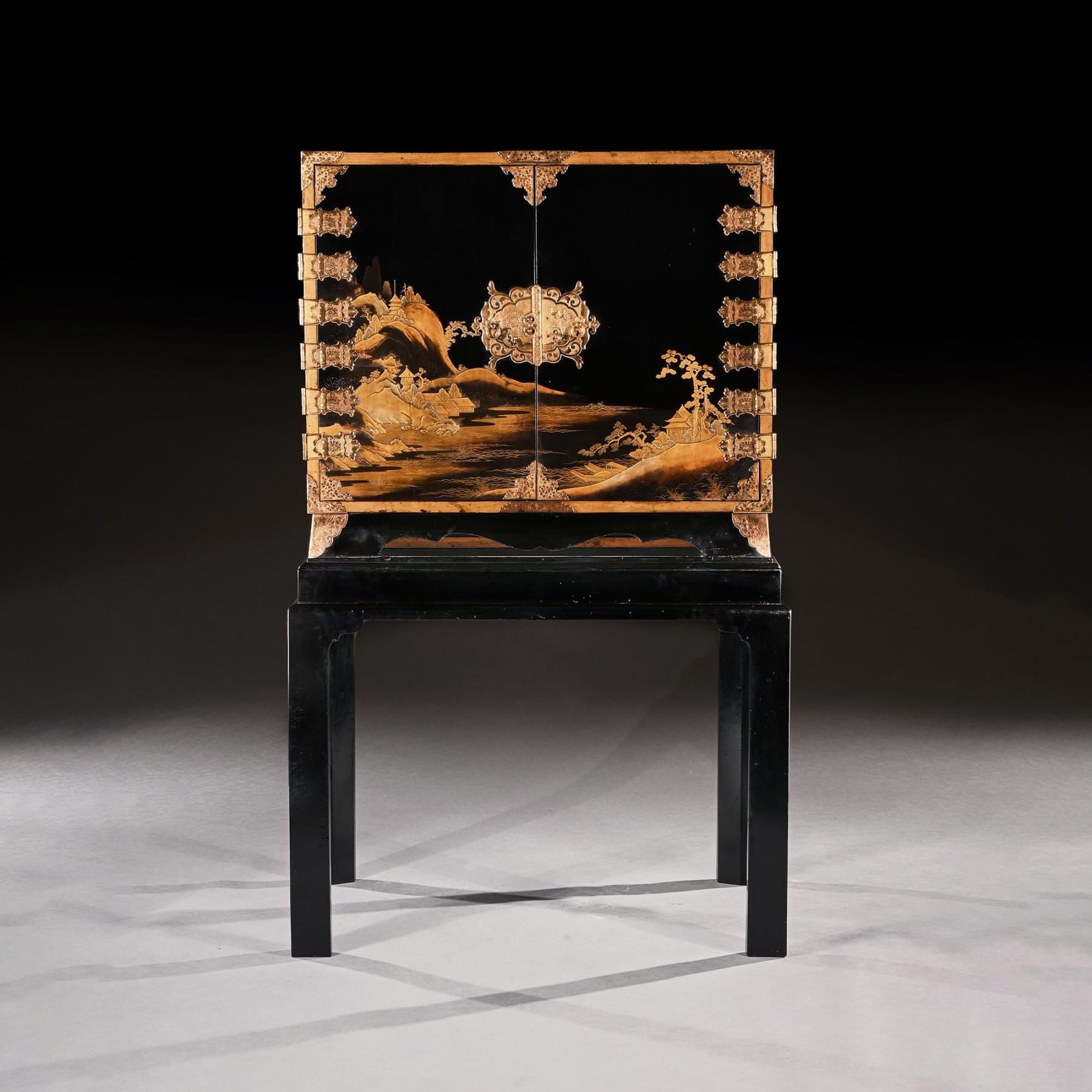
fig 1. A late seventeenth-century Japanese Edo period black lacquered cabinet decorated with gold landscape scenes and ornate brass mounts on a black wooden stand.
fig 1. An Important Late 17th Century Japanese Lacquered Cabinet Edo Period on Stand

Another remarkable aspect of this piece is the fine metalware throughout, but particularly the lockplate / hasp, hinges and foot mounts to the front. This is all beautifully cast and engraved contrasting against the black background. Interestingly another cabinet on stand with near identical metalwork was advertised in the Burlington Magazine, November 1913, with the dealer W. Williamson and Sons of Guildford. The lacquer on that piece is similarly refined and it seems likely that both pieces came from the same workshop.

fig 2. A late seventeenth-century Japanese Edo period black lacquered cabinet decorated with gold landscape scenes and ornate brass mounts on a black wooden stand.
fig 2. An Important Late 17th Century Japanese Lacquered Cabinet Edo Period on Stand

The European influence in our piece can be seen in the late 18th Century black Japanned stand which is designed in "the Modern" Chinese fashion popularised by Thomas Chippendale's, Gentleman and Cabinet-Maker's Director, 1754. The Japanning to the inside doors consists of two panels with birds of prey perched on branches in colours set against a golden background. The cabinet has a recent Scottish provenance and so it is likely that the ebonised stand was made in Britain after Chippendales 'The Modern' Chinese fashion. Inside the cabinet there is a combination of more Japanese lacquer and lock plates and European drawer handles. Most of the lacquer drawer fronts incorporate mountainous scenes and birds in combination, with a few purely one or the other of the two subjects. Again the lacquer is in excellent condition and is of exceptional quality with multiple layers of relief used in one single scene in many cases.

fig 3. A late seventeenth-century Japanese Edo period black lacquered cabinet decorated with gold landscape scenes and ornate brass mounts on a black wooden stand.
fig 3. An Important Late 17th Century Japanese Lacquered Cabinet Edo Period on Stand

These early Japanese lacquer cabinets always have integral feet and were shipped to Europe without stands which were always manufactured for them when they arrived at their destination. Due to the Dutch control of the trade with Japan in the 17th century, purchases made by monarchs and leading connoisseurs throughout Europe would have been placed through agents in Amsterdam. Records survive relating to purchases of Japanese lacquer of this sort made by Louis XIII and Louis XIV and the high cost of shipping via another European country added to the luxurious nature of these pieces and the exclusivity attached to ownership of them. It also became increasingly clear to European connoisseurs that Japanese lacquer products were superior to their Chinese equivalents and, as such, the trade in Japanese lacquer became a highly profitable business for the Dutch VOC (East India Company) and the various allied businesses.

Date of Manufacture

Loveday Antiques has dated this Japanese Edo Lacquered Cabinet to the 17th Century.

Height
157cm (61.81")
Width
98cm (38.58")
Depth
56cm (22.05")
Reference Numbers
Sellingantiques Ref
SA1245387
Dealers Internal Ref
3027
Loveday Antiques
Loveday Antiques
Sellingantiques verified Since Mar 2012

Specialist furniture dealers 18th-20th century

Dealer Profile

You can view the stock and full dealer information on the Loveday Antiques Profile Page

Trade Associations

Loveday Antiques is a registered member of LAPADA  BADA  CINOA
PDF SHARE
SAVE
A late seventeenth-century Japanese Edo period black lacquered cabinet decorated with gold landscape scenes and ornate brass mounts on a black wooden stand.
1 / 13
Archive I A late seventeenth-century Japanese Edo period black lacquered cabinet decorated with gold landscape scenes and ornate brass mounts on a black wooden stand.

An Important Late 17th Century Japanese Lacquered Cabinet Edo Period on Stand
Archive II A late seventeenth-century Japanese Edo period black lacquered cabinet decorated with gold landscape scenes and ornate brass mounts on a black wooden stand. View II
Archive III A late seventeenth-century Japanese Edo period black lacquered cabinet decorated with gold landscape scenes and ornate brass mounts on a black wooden stand. View III
Archive IV A late seventeenth-century Japanese Edo period black lacquered cabinet decorated with gold landscape scenes and ornate brass mounts on a black wooden stand. View IV
Archive V A late seventeenth-century Japanese Edo period black lacquered cabinet decorated with gold landscape scenes and ornate brass mounts on a black wooden stand. View V
Archive VI A late seventeenth-century Japanese Edo period black lacquered cabinet decorated with gold landscape scenes and ornate brass mounts on a black wooden stand. View VI
Archive VII A late seventeenth-century Japanese Edo period black lacquered cabinet decorated with gold landscape scenes and ornate brass mounts on a black wooden stand. View VII
Archive VIII A late seventeenth-century Japanese Edo period black lacquered cabinet decorated with gold landscape scenes and ornate brass mounts on a black wooden stand. View VIII
Archive IX A late seventeenth-century Japanese Edo period black lacquered cabinet decorated with gold landscape scenes and ornate brass mounts on a black wooden stand. View IX
Archive X A late seventeenth-century Japanese Edo period black lacquered cabinet decorated with gold landscape scenes and ornate brass mounts on a black wooden stand. View X
Archive XI A late seventeenth-century Japanese Edo period black lacquered cabinet decorated with gold landscape scenes and ornate brass mounts on a black wooden stand. View XI
Archive XII A late seventeenth-century Japanese Edo period black lacquered cabinet decorated with gold landscape scenes and ornate brass mounts on a black wooden stand. View XII
Archive XIII A late seventeenth-century Japanese Edo period black lacquered cabinet decorated with gold landscape scenes and ornate brass mounts on a black wooden stand. View XIII
Enlarged Archival View
Telephone 01438 869819
Location
Benington
Hertfordshire
United Kingdom
Verified Since Mar 2012
Items For Sale 74
Items Sold 949
Loveday Antiques
Loveday Antiques
Verified Since Mar 2012
View Dealer Info
Location: Benington, Hertfordshire, United Kingdom
Verified
Mar 2012
For Sale
74
Sold
949
A late seventeenth-century Japanese Edo period black lacquered cabinet decorated with gold landscape scenes and ornate brass mounts on a black wooden stand.
An Important Late 17th Century Japanese Lacquered Cabinet Edo Period on Stand
Ref: SA1245387
A late seventeenth-century Japanese Edo period black lacquered cabinet decorated with gold landscape scenes and ornate brass mounts on a black wooden stand.
Detail View 1
Detail View 2
Detail View 3
Detail View 4
Detail View 5
Detail View 6
Detail View 7
Detail View 8
Detail View 9
Detail View 10
Detail View 11
Detail View 12
Archival Detail
Every single antique dealer on our platform is individually approved by our internal team. We verify their professional trade history, ethical standards, and photographic quality to ensure a secure, high-standard buying environment. Upon joining, every dealer agrees to a strict 9-point code of conduct. While issues can occasionally arise, our dealers typically resolve them swiftly and directly with the buyer. In fact, since our founding in 2002, Sellingantiques has only had to step in to help resolve an issue on roughly five occasions—a true testament to the quality of our dealers and their dedication to your happiness.
Our dealers are highly experienced in packing and shipping fragile, high-value antiques. Because you are in direct contact with the dealer, you will be able to easily go through all available shipping and insurance options together to ensure your item arrives safely.
Antiques are the ultimate green purchase. By choosing historical pieces over newly manufactured goods, you completely eliminate the carbon footprint of modern mass production while preserving exceptional, timeless craftsmanship.
Written by Sellingantiques from the dealer’s photographs and listing
  • ObjectCabinets on Stands
  • Period17th century
  • StyleJapanese Edo Period
  • MaterialLacquer, Wood, Gilt Brass
  • ColourBlack and Gold
  • MotifsMaki-e landscape design, Engraved gilt-brass mounts, Double doors, Black lacquer finish
  • SizeH 157 cm (62 in) x W 98 cm (39 in) x D 56 cm (22 in)

This 17th century Japanese Edo period cabinet on stand is made from lacquer, wood, and gilt brass with a black and gold finish. The upper cabinet features double doors decorated with a maki-e landscape design depicting mountains, rivers, and trees against a black ground, complemented by ornate engraved gilt-brass mounts, hinges, corner brackets, and a central hasp. The cabinet rests on a black wooden stand with straight square-section legs and subtle corner spandrels. The entire piece measures 157 cm high, 98 cm wide, and 56 cm deep. In a contemporary home, this cabinet provides a striking focal point and functions well in a living room, study, or hallway as a display or storage piece. The combination of the dark glossy finish and the intricate metallic hardware offers a blend of Eastern and Western design elements, making it a distinct historical furnishing for formal interiors.

During the Edo period (16031867), Japanese craftsmen produced high-grade lacquerware specifically for European export. These pieces typically feature black urushi lacquer bases decorated with gold powder landscapes, flora, and architectural scenes, embellished with etched metal hinges and lockplates.

These cabinets were constructed from wooden frames, often softwoods like cedar or cypress, covered in multiple layers of natural sap from the Toxicodendron vernicifluum tree (urushi lacquer). Decorative elements incorporated gold and silver powder applied via the maki-e technique, along with hand-engraved gilt-brass mountings.

Authentic late seventeenth-century pieces display dense, hand-applied urushi lacquer showing fine surface craquelure, authentic oxidisation on gilt-brass hardware, and hand-carved joinery. The interior drawers typically feature refined lacquerwork or plain wood showing historic age and wear.

A black and gold lacquered cabinet functions well as a focal statement piece in modern, minimalist, or eclectic spaces. Placing it against neutral walls allows the dark tone and metallic detailing to anchor the rooms visual weight.

Keep lacquerware away from direct sunlight, central heating vents, and high humidity fluctuations, which cause wood movement and lacquer cracking. Clean gently using a soft, dry microfibre cloth without water, detergents, or commercial furniture polishes.
items
Add keywords to the filter
Price
£100
£250000
Era
Period
Style
Material
Origin
Stock Location
Recently Added
Online Payments
Categories