
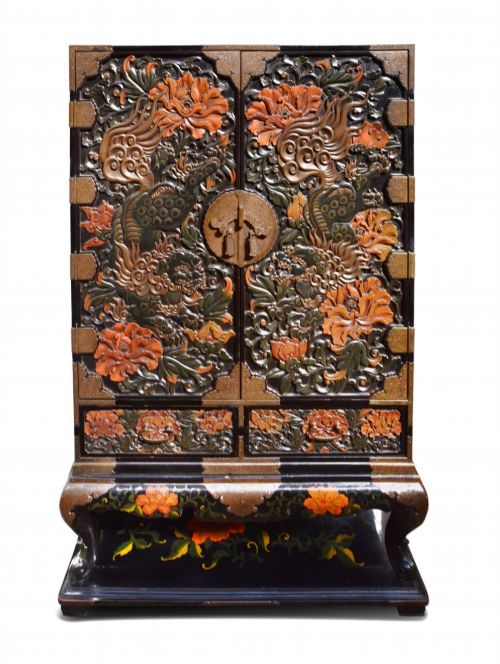


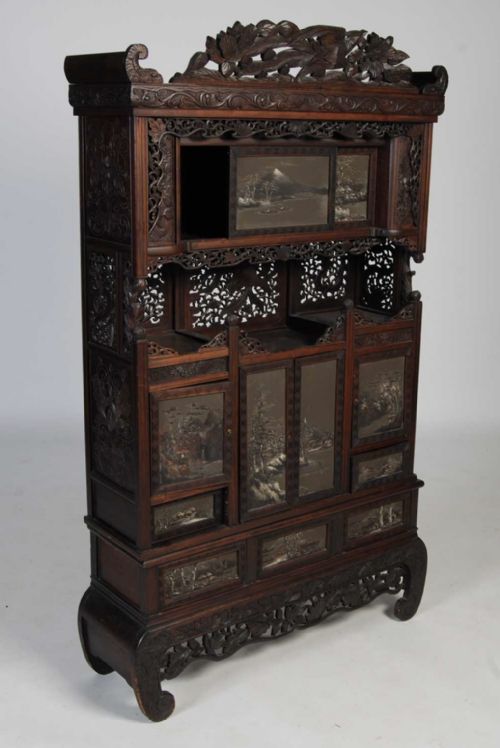


Japanese Export Cabinet
These japanese export cabinet pieces bring intricate lacquerwork and traditional stands into a room.
Japanese Export Cabinet
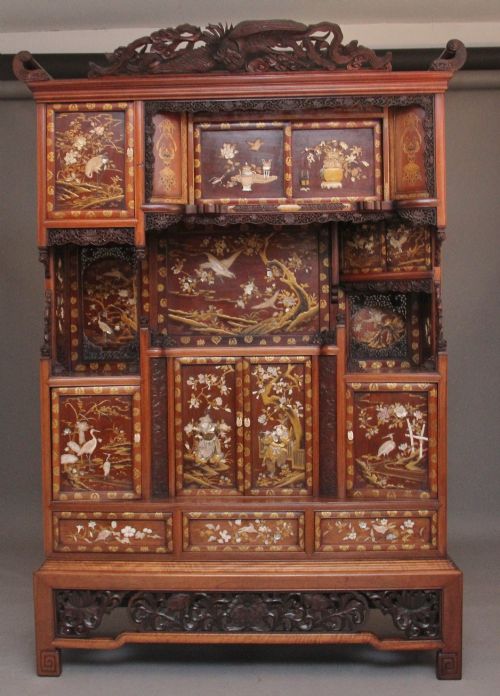
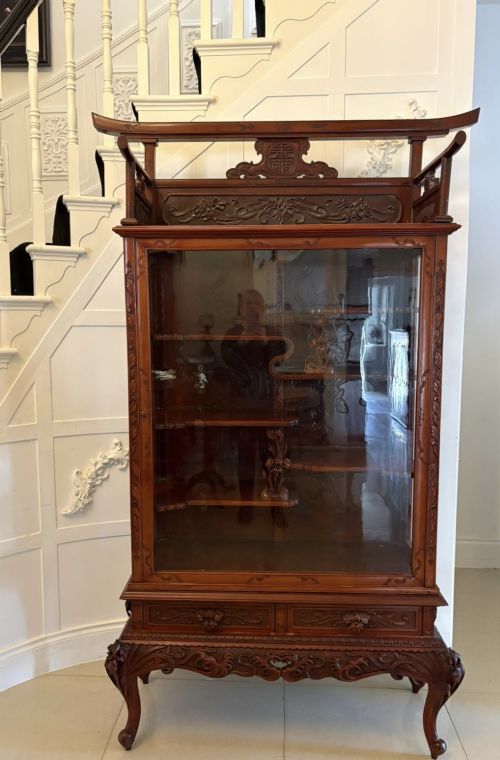
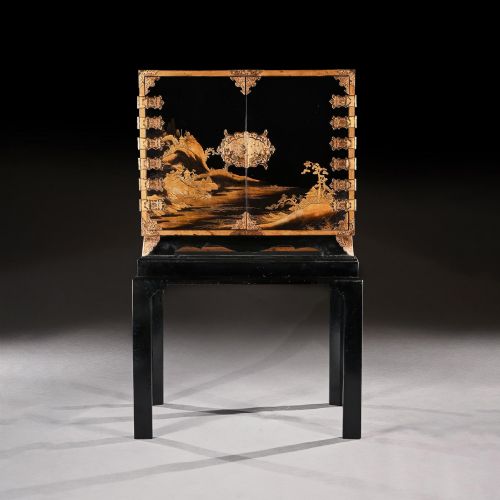
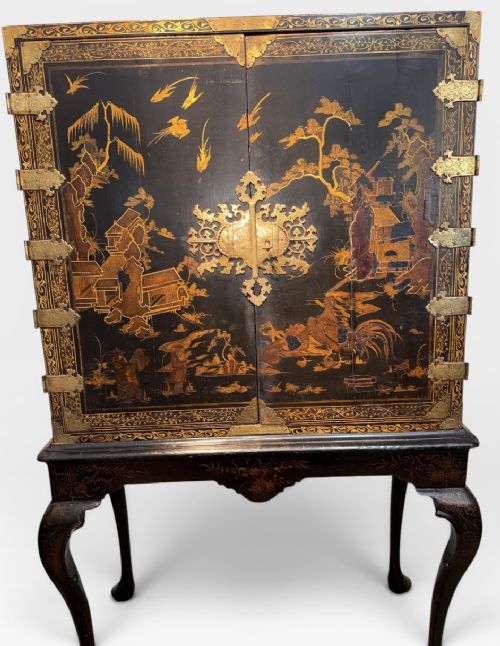
A japanese export cabinet encompasses intricate table cabinets, shodona display pieces, and larger cabinets on stands dating from the seventeenth century through to the early twentieth century. Buyers seeking a japanese export cabinet will find examples that range from Edo period lacquer to Meiji period display furniture.
Materials and construction
Craftsmen built these cabinets using hardwood frames finished with layers of lacquer, frequently enhanced with gold leaf details and brass fittings. The integration of porcelain panels, such as Imari plates, adds a distinct decorative dimension to the construction.
Makers employed traditional joinery techniques to support complex structures like the shodona and cabinets on stands. Surface decoration often involved meticulous carving and painting to achieve the characteristic aesthetic of the period.
Listings span from the 17th Century to 1920, incorporating lacquer, hardwood, and Imari porcelain.
Judging quality in these cabinets
The standard of a japanese export cabinet rests on the depth and preservation of the lacquerwork and the integrity of the underlying hardwood. Superior examples display crisp carving and harmonious integration of decorative elements like porcelain or brass.
The balance and proportion of cabinets on stands dictate much of their visual success, distinguishing finely balanced historical pieces from simpler decorative items.
The Japanese Export Cabinet Glossary
- Shodona
- A traditional Japanese tabletop display cabinet featuring multiple shelves and compartments for small objects. These pieces often showcase intricate woodwork and lacquer finishes.
- Imari
- A style of Japanese porcelain characterised by a palette of underglaze blue and reddish-orange, frequently highlighted with gold. It appears both as plates within collections and as decorative elements on furniture.
- Edo Period
- The period in Japanese history spanning from the early seventeenth century to the mid-nineteenth century, known for distinct artistic developments in lacquer and export goods.
- Meiji Period
- The era lasting from the late nineteenth century to the early twentieth century marked by a surge in decorative arts produced for international markets.
- Chinoiserie
- A European artistic style reflecting Chinese and broader East Asian artistic influences, often seen intersecting with export cabinet decoration from later centuries.
Japanese Export Cabinet: Frequently Asked Questions
How were japanese export cabinets used?
These cabinets served primarily to store and display small valuables, curiosities, and precious ceramics within a home.
They functioned as both practical storage units and significant decorative focal points in formal rooms.
What is a shodona?
A shodona is a specific form of Japanese display cabinet featuring asymmetrical shelving and compartments.
They were designed to showcase small decorative objects and works of art.
How do I distinguish Edo from Meiji pieces?
Edo period pieces originate from the seventeenth to mid-nineteenth centuries and generally reflect earlier traditional craftsmanship.
Meiji period pieces date from the late nineteenth century onwards, often showing increased elaboration for export markets.
Where should I place a cabinet on stand?
Cabinets on stands require a secure floor space where their height and structural support can be fully appreciated.
They work well against solid walls away from direct sunlight to protect the delicate lacquer surfaces.