2,083  PAGES BROWSED TODAY PAGES TODAY • 0 ANTIQUES UPLOADED TODAYNEW ARRIVALS
GIFTS
LATEST STOCK
Sort Order
Items Per Page
Browse Categories
Sort order
Relevant Links
Items per page
ID #SA1198215
FOR SALE
£3,750
Email Phone
Save
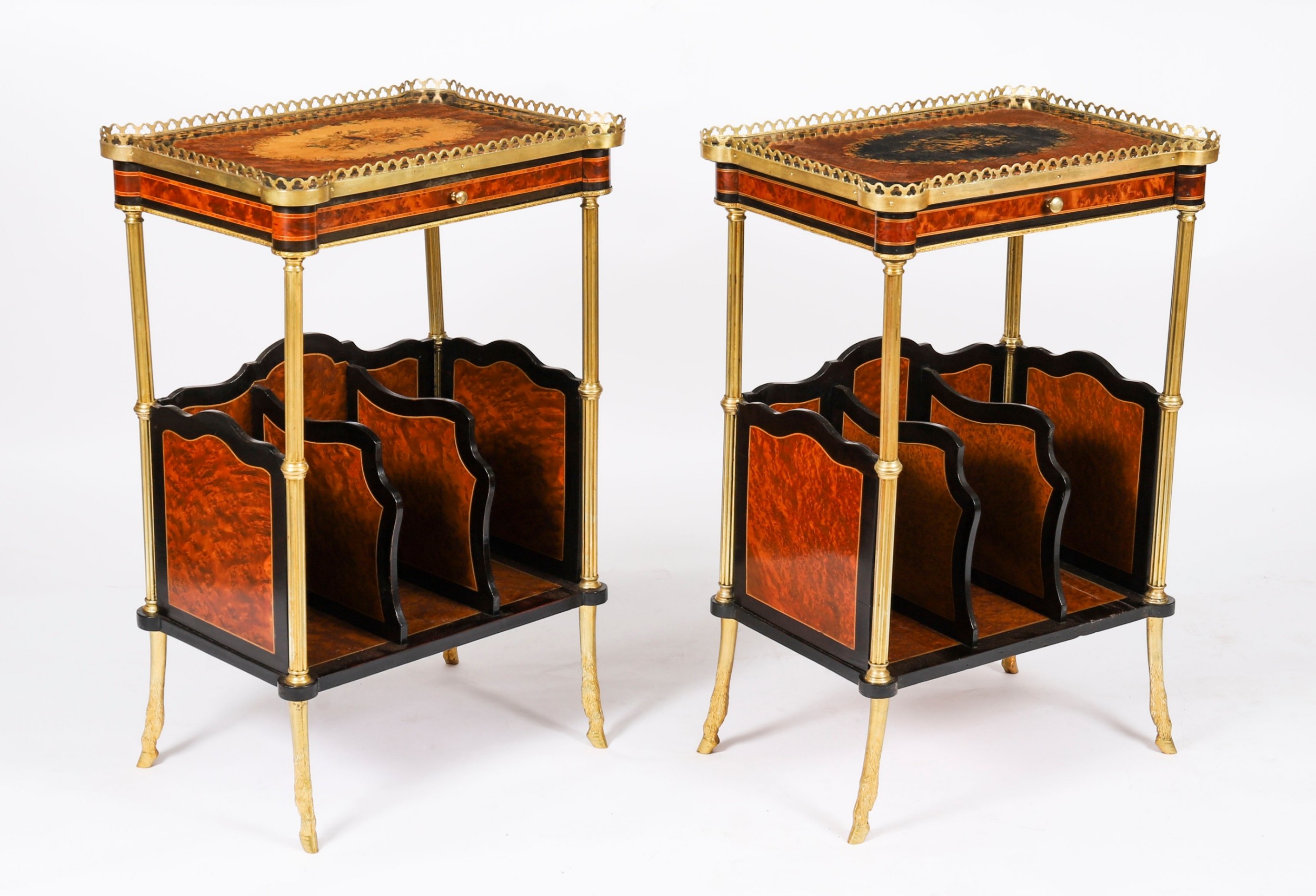
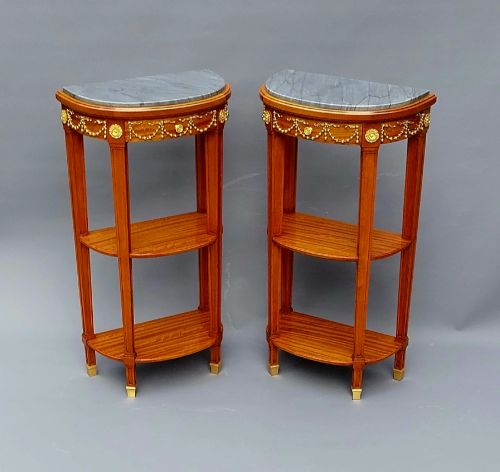
Antique Pair French Ormolu Mounted Occasional Side Tables 19th C
For sale by Regent Antiques
for sale €4,388     $4,763
£3,750
Regent Antiques

Regent Antiques

Sellingantiques Verified Since Sep 2016
Browse dealers 659 items
  • About Us
    We specialise in english and continental furniture, silver, porcelain and decorative items.
  • Trade Associations
    Regent Antiques is a registered member of LAPADA  CINOA
Id #SA1198215
PDF SHARE
SAVE

Antique Pair French Ormolu Mounted Occasional Side Tables 19th C

19th century
For Sale by Regent Antiques
Description

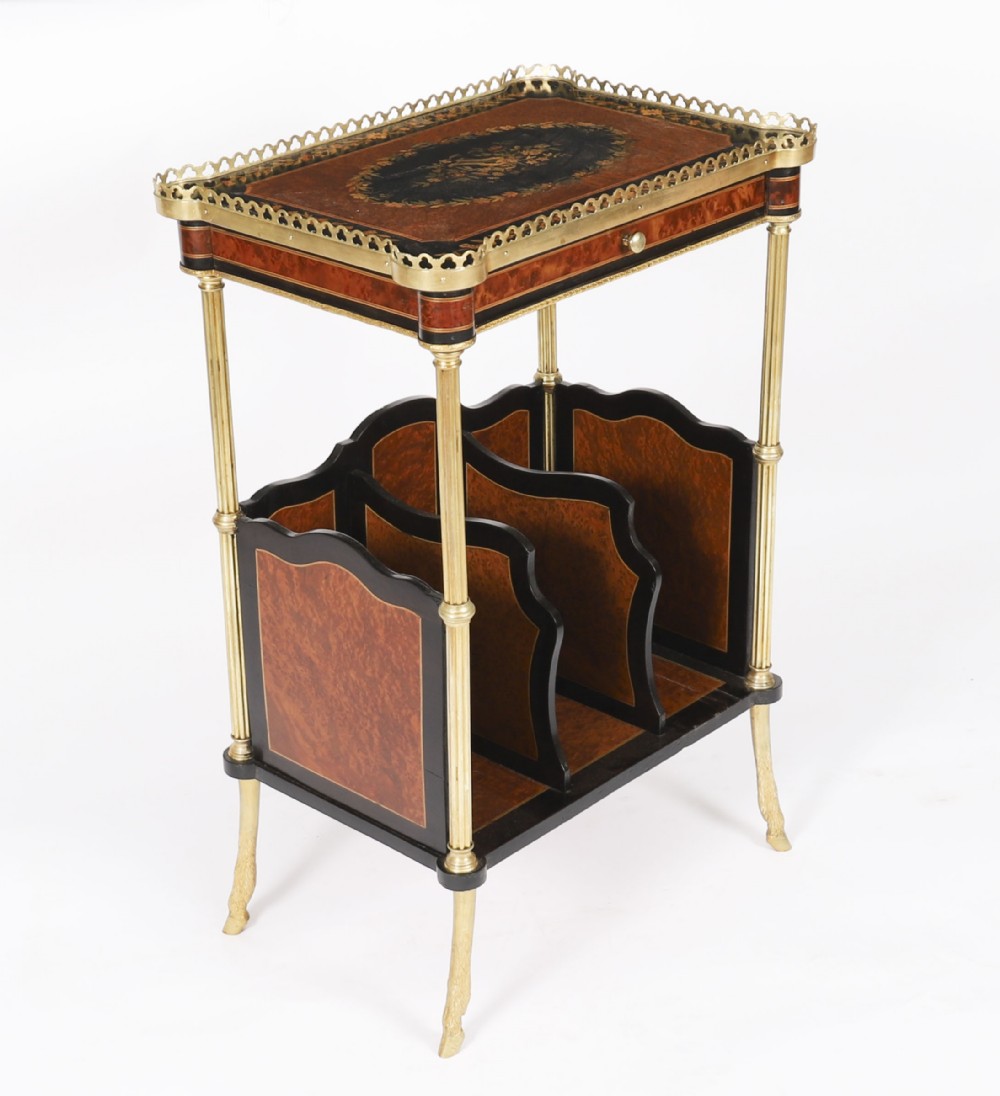
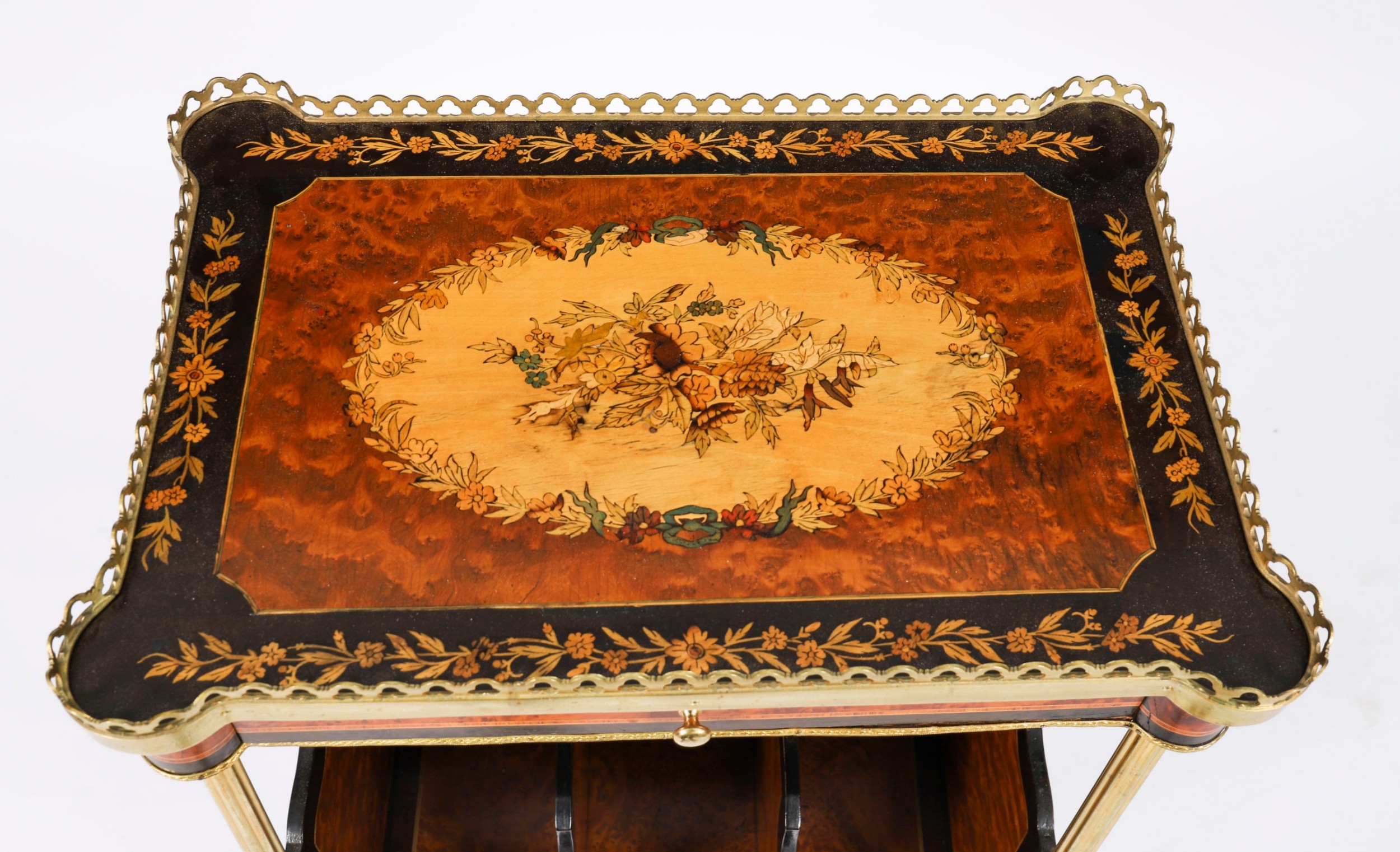
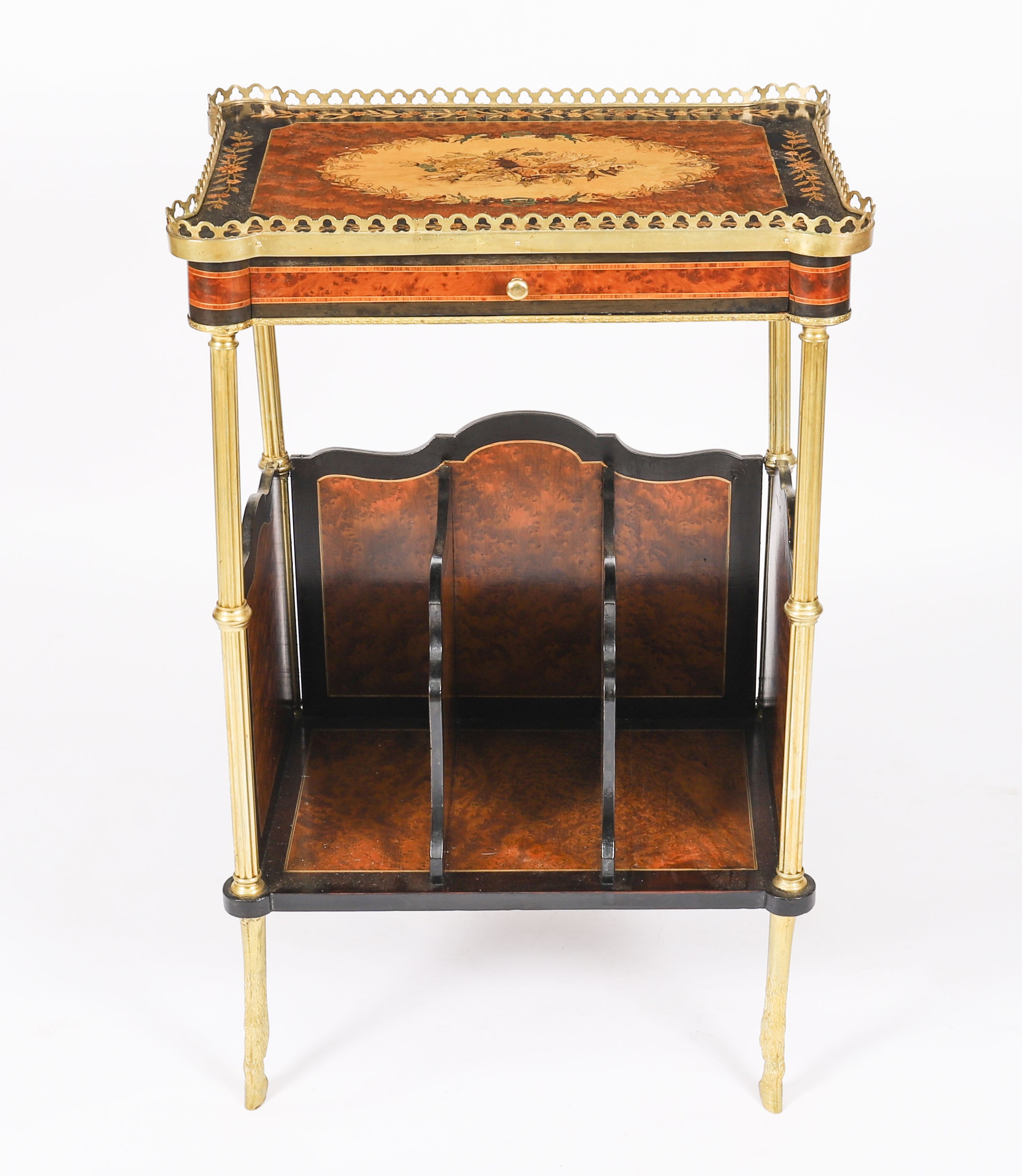
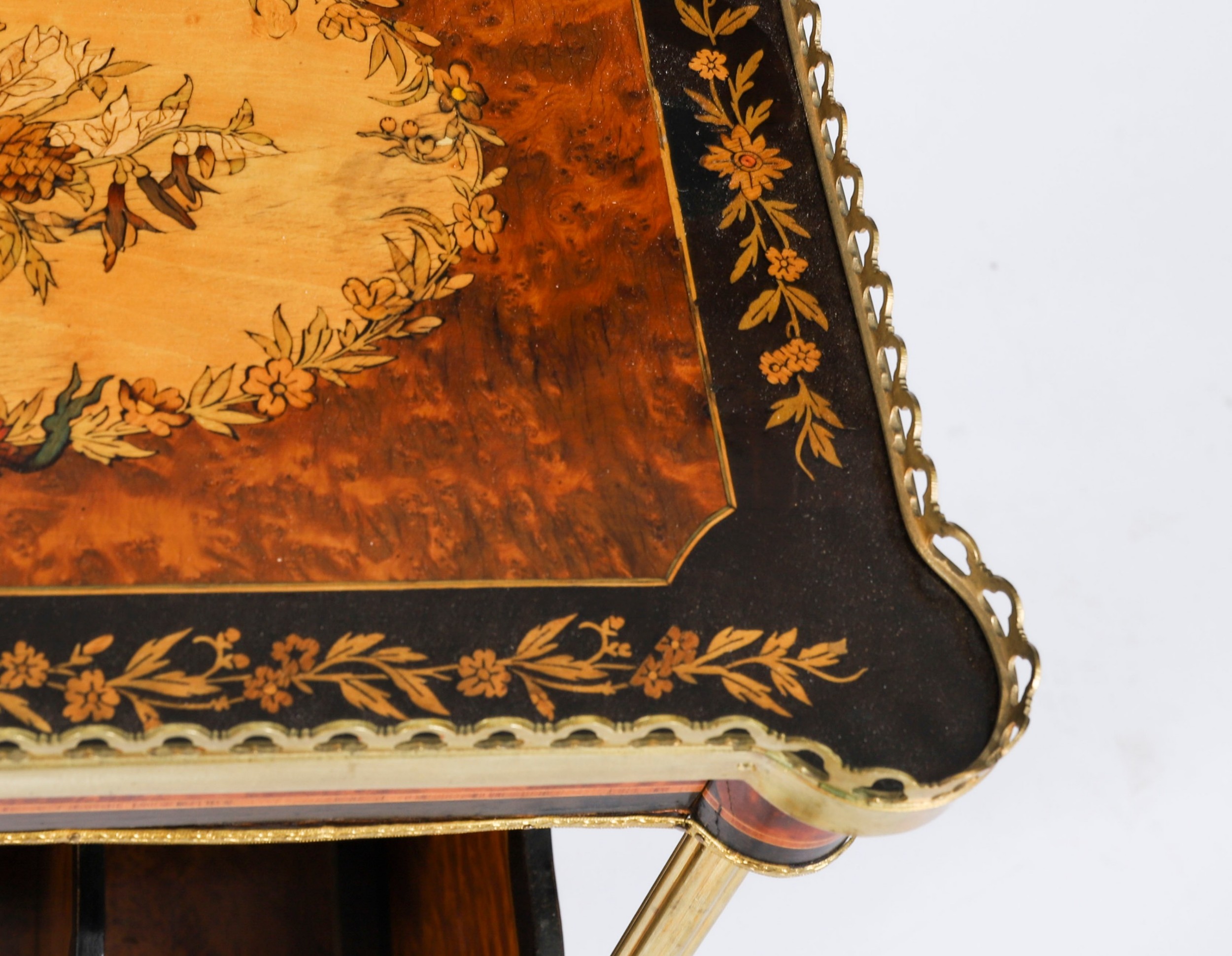
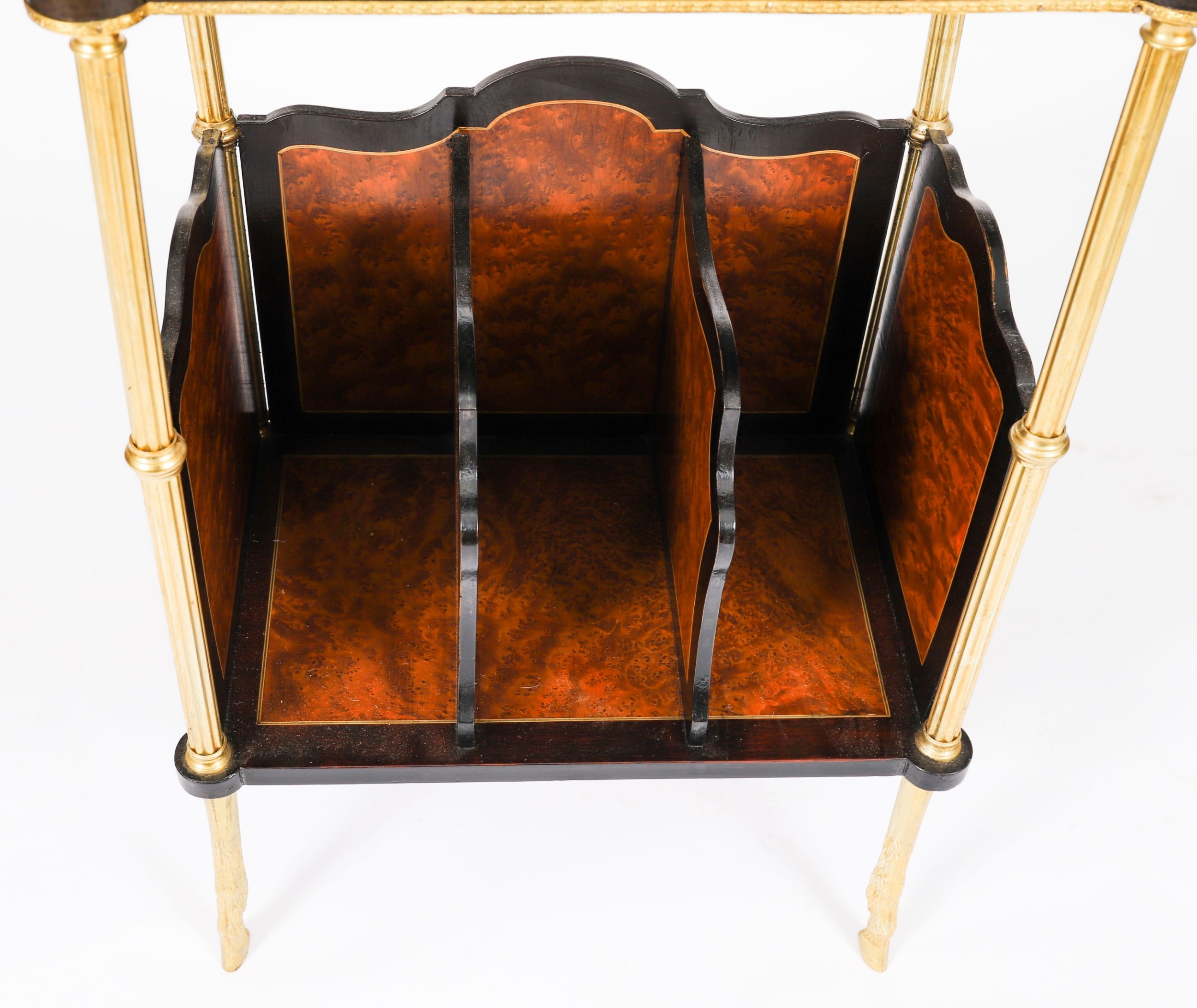
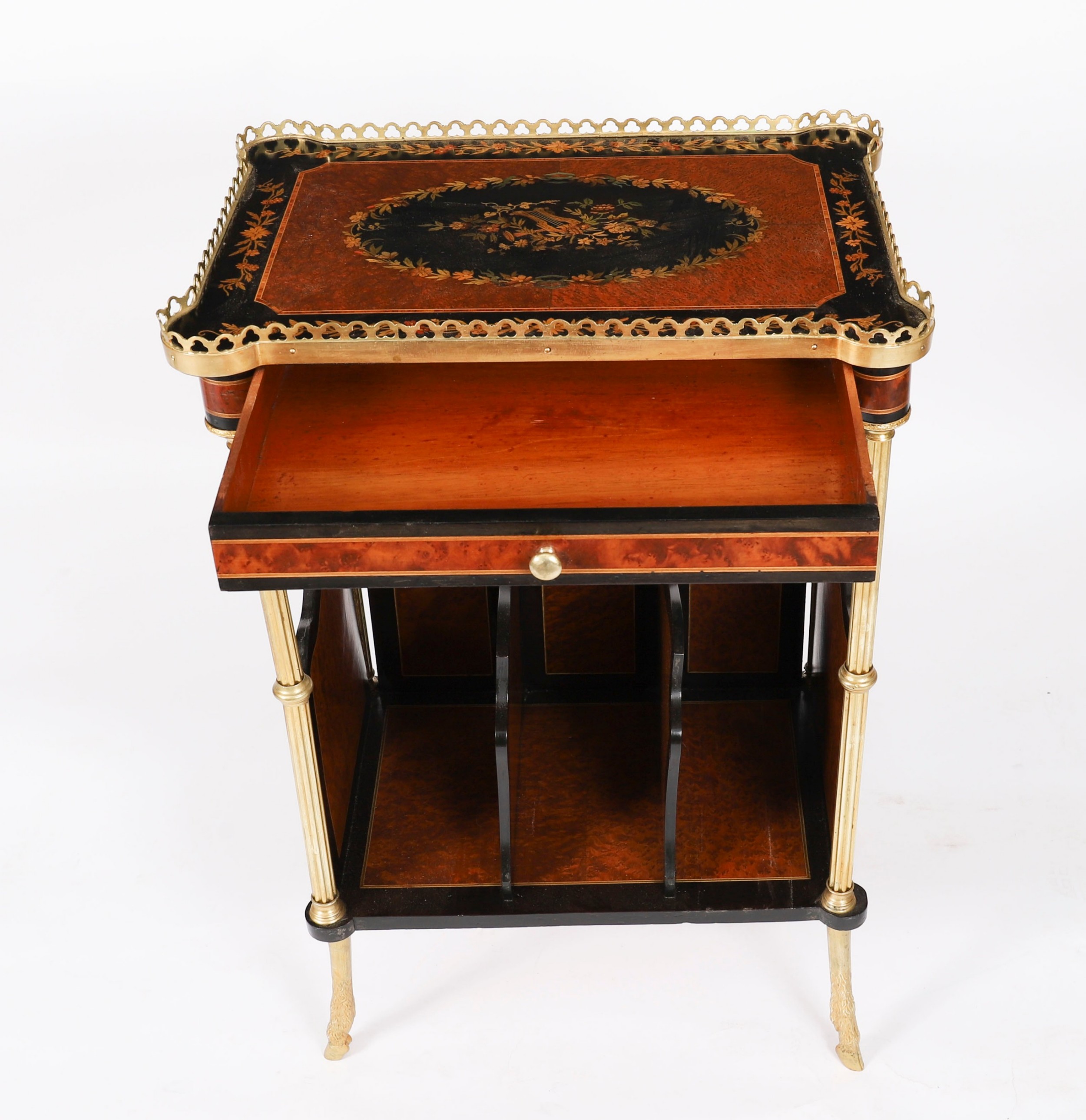
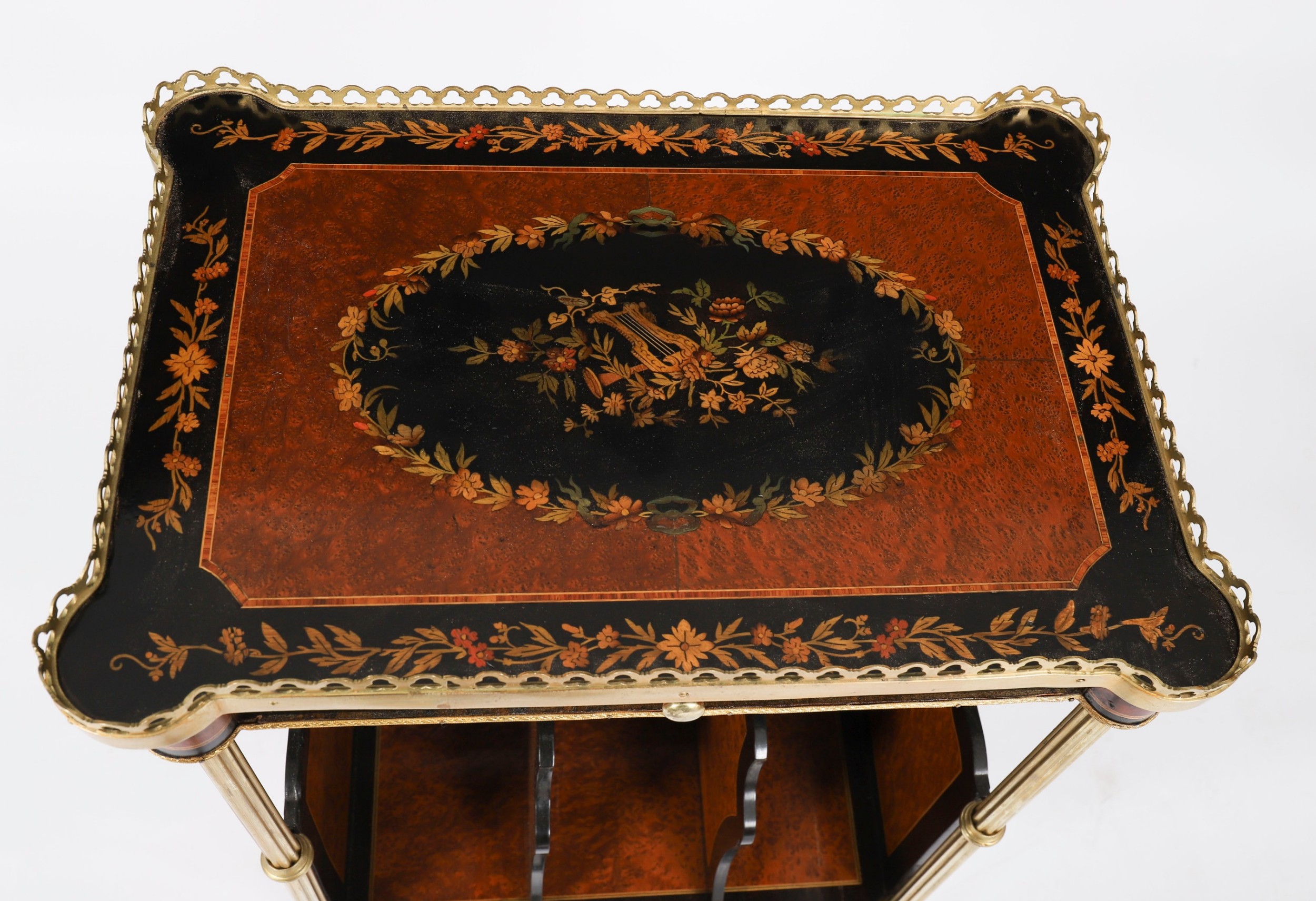
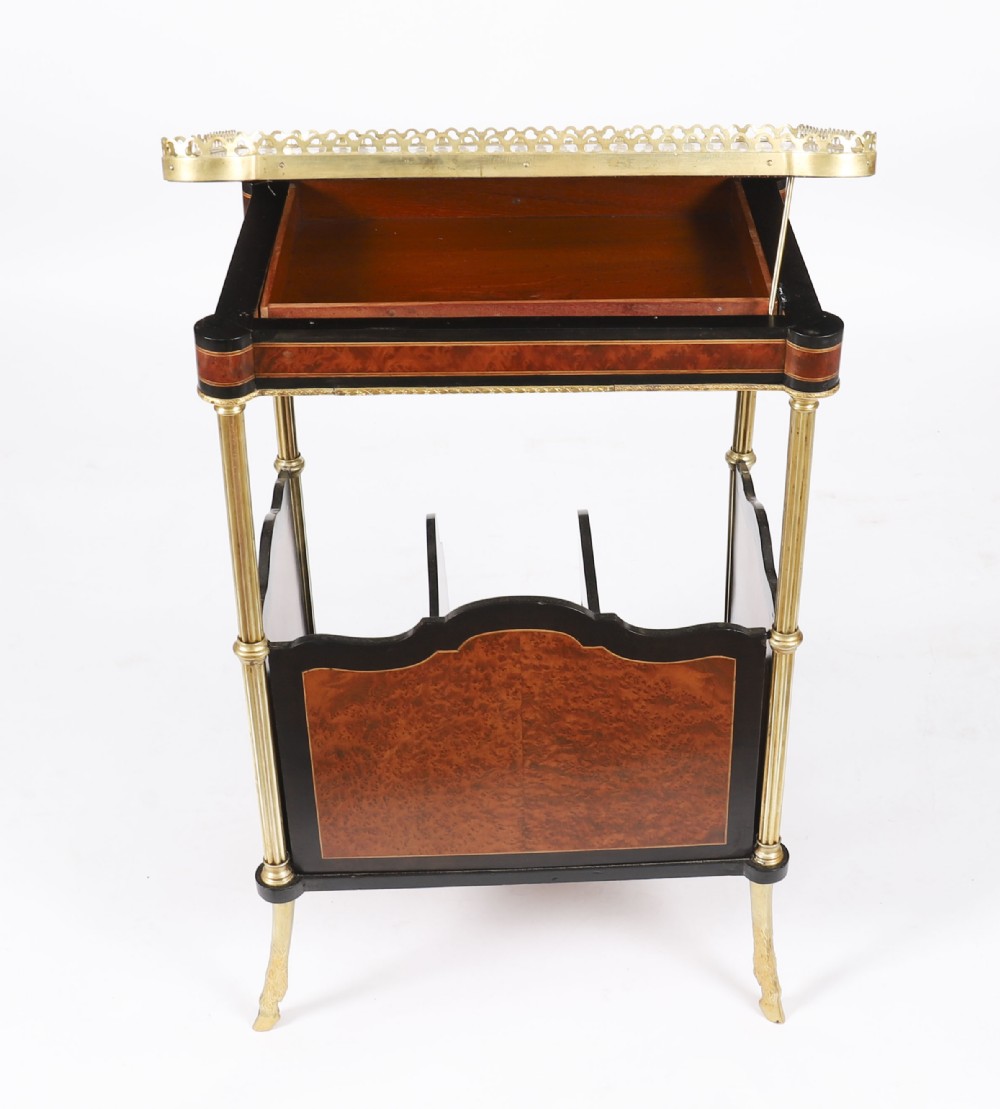
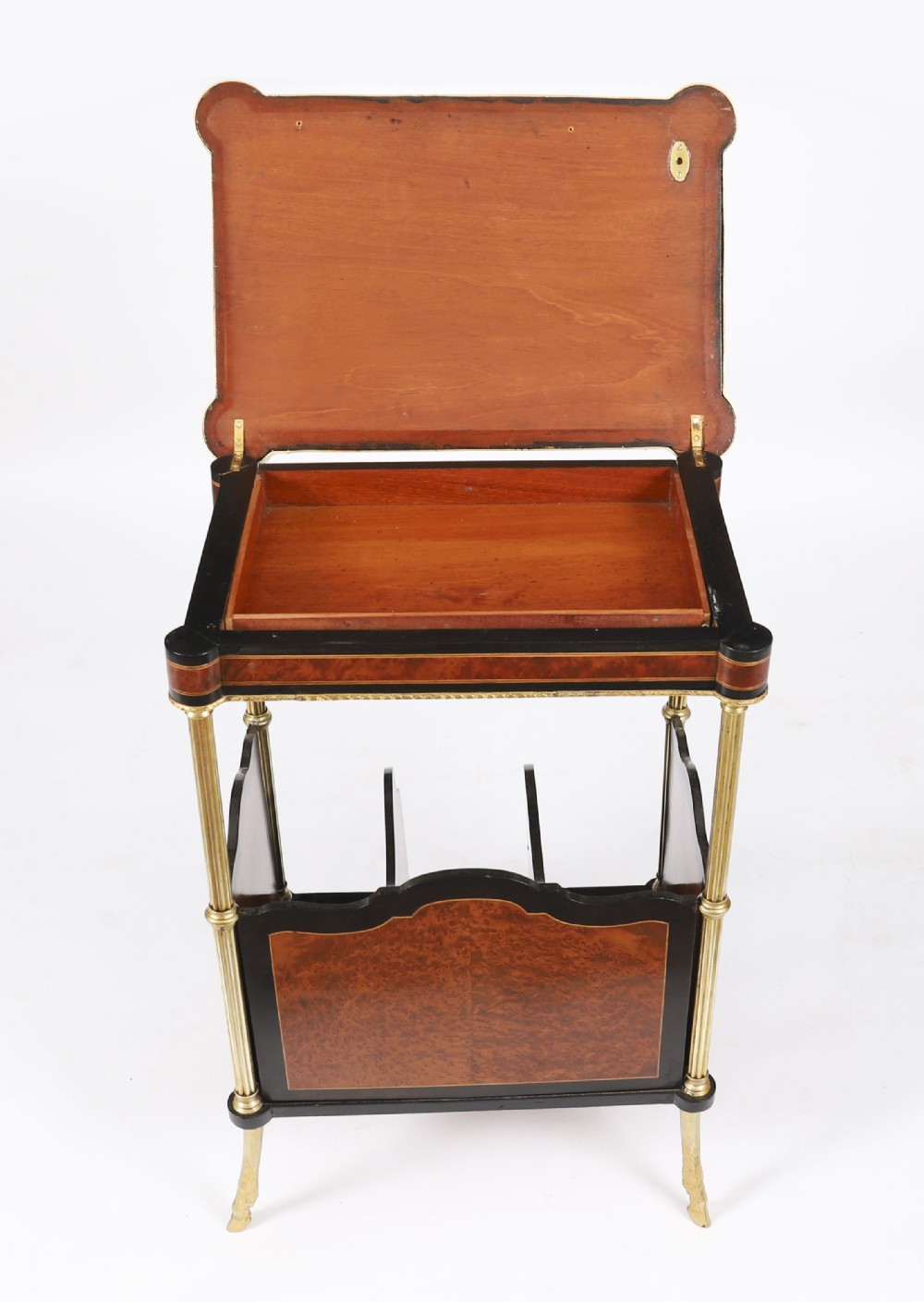
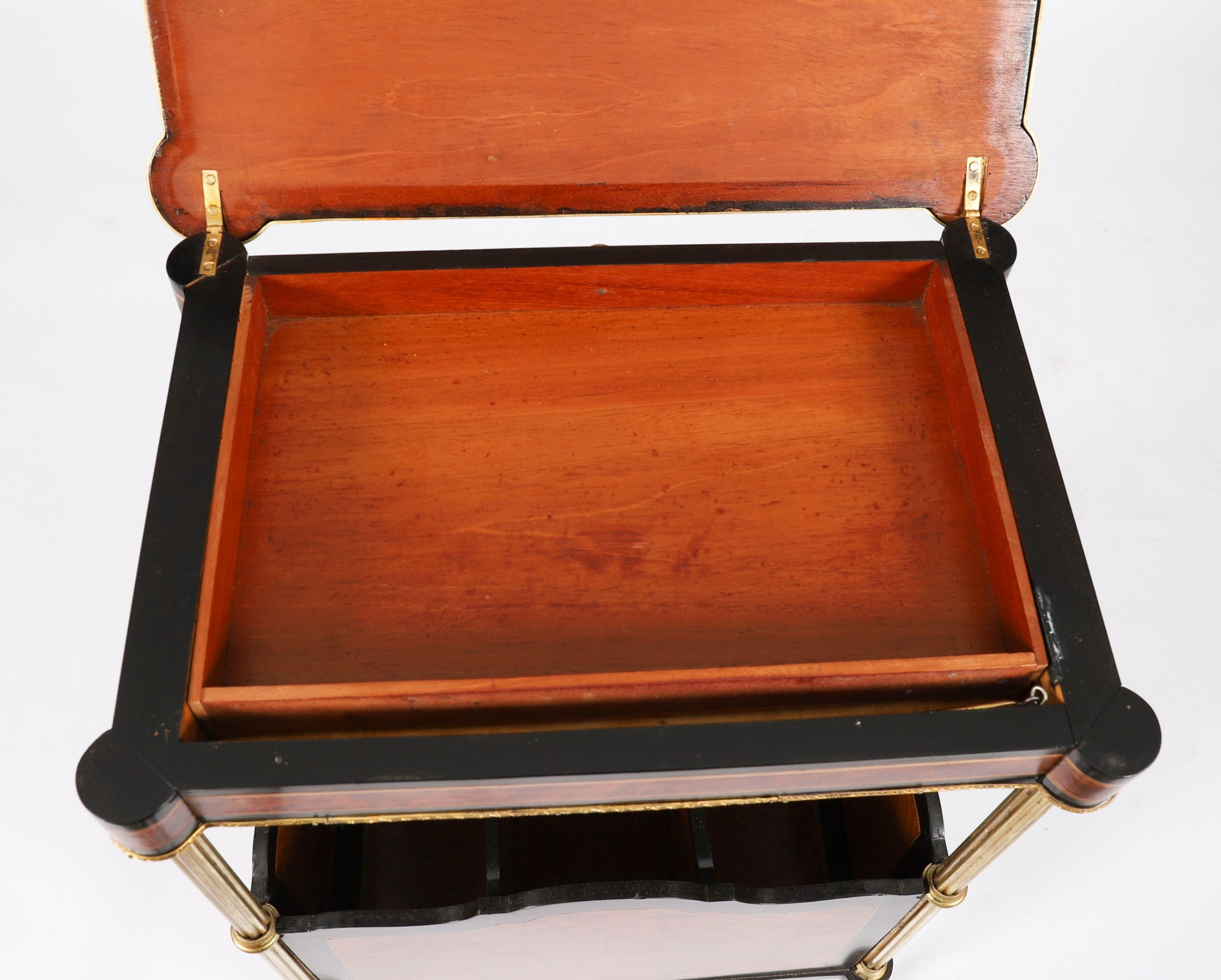
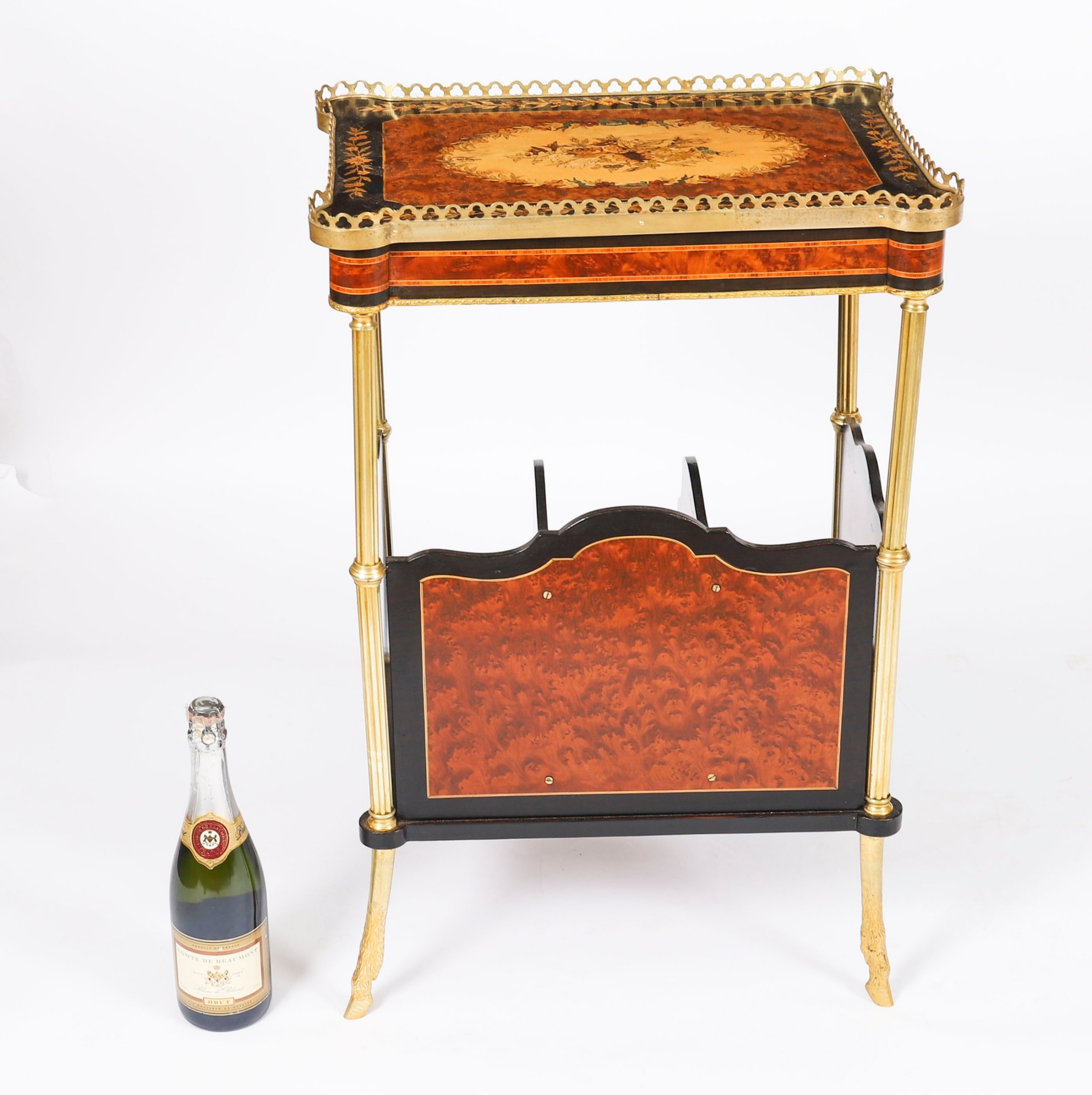
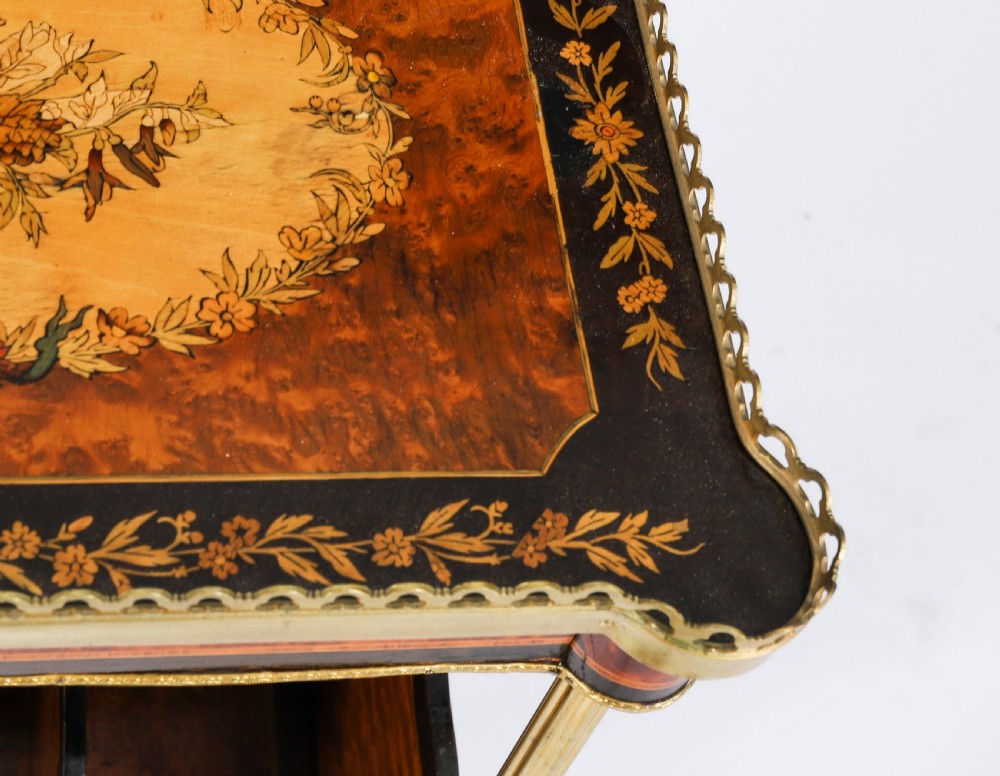
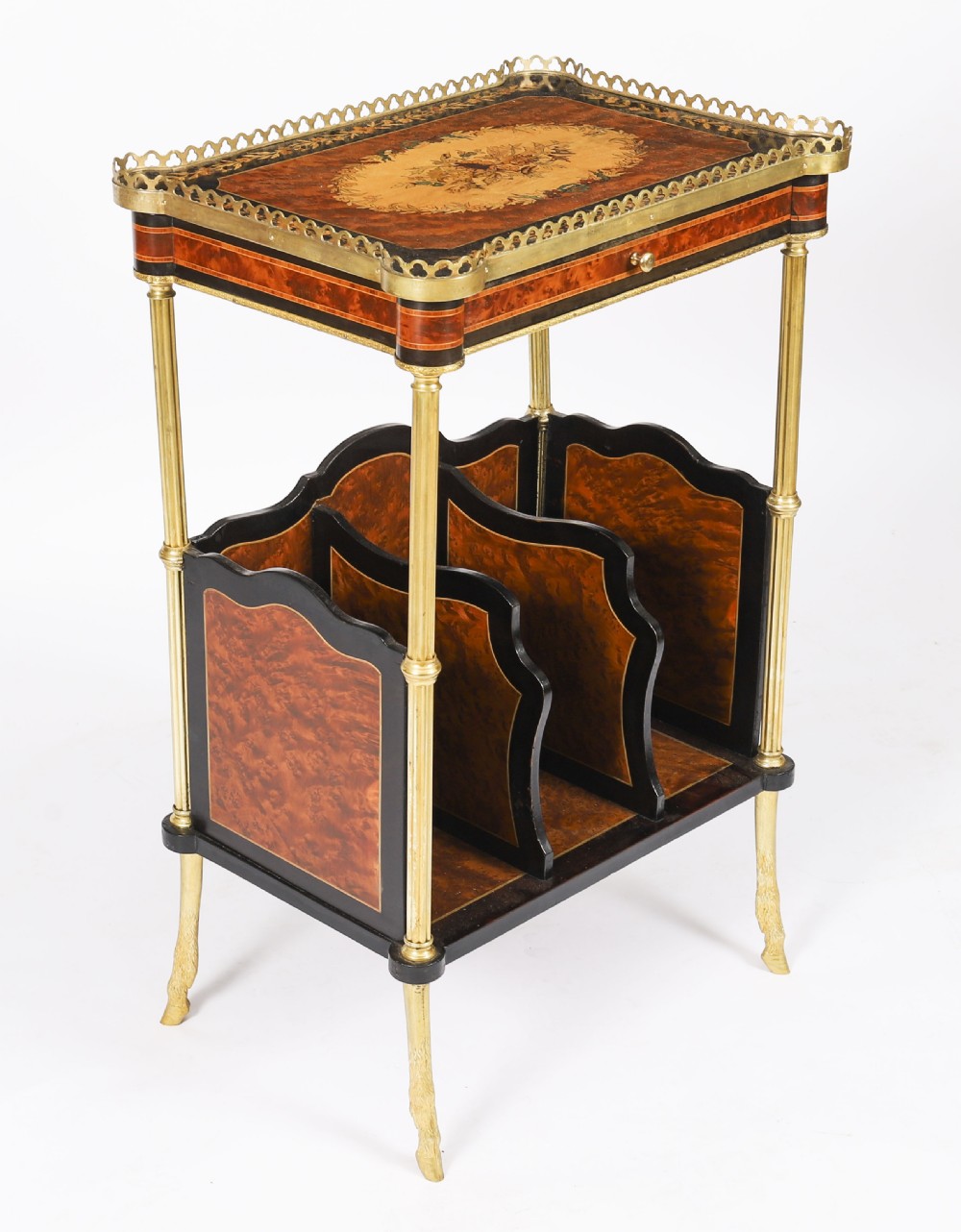
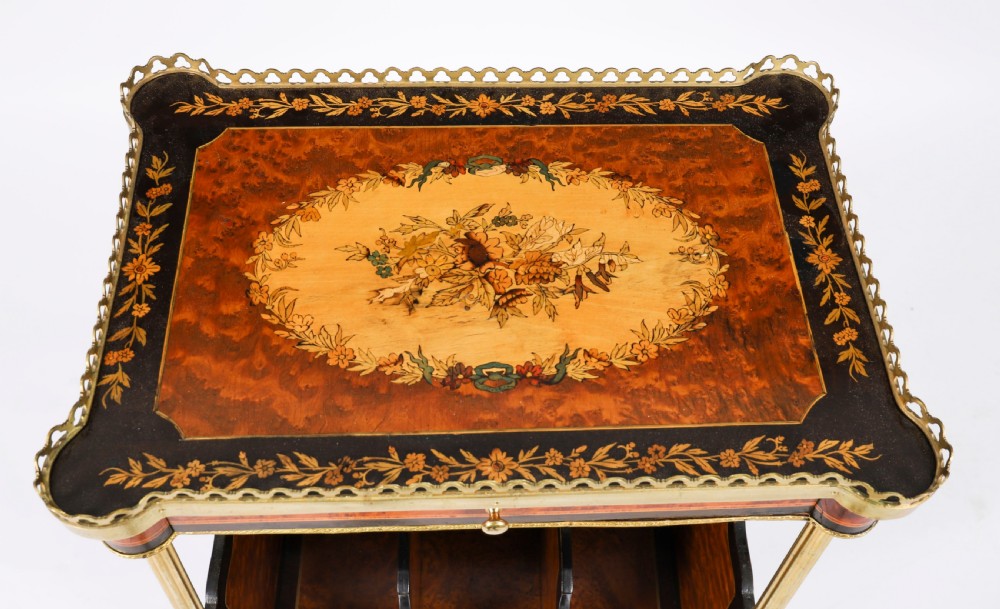
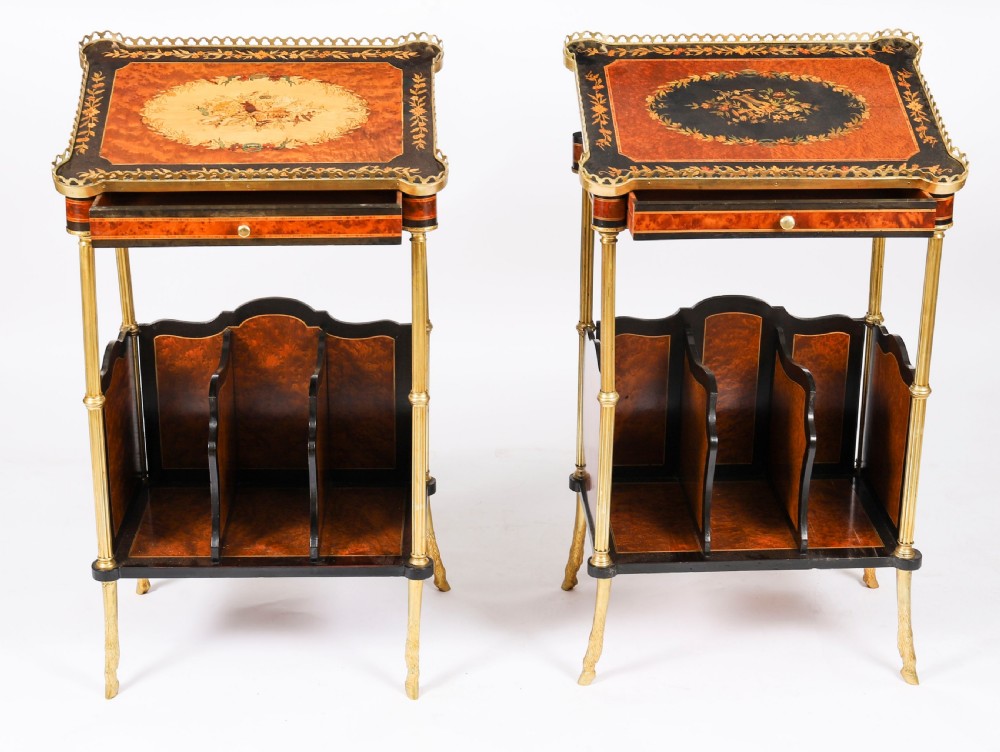
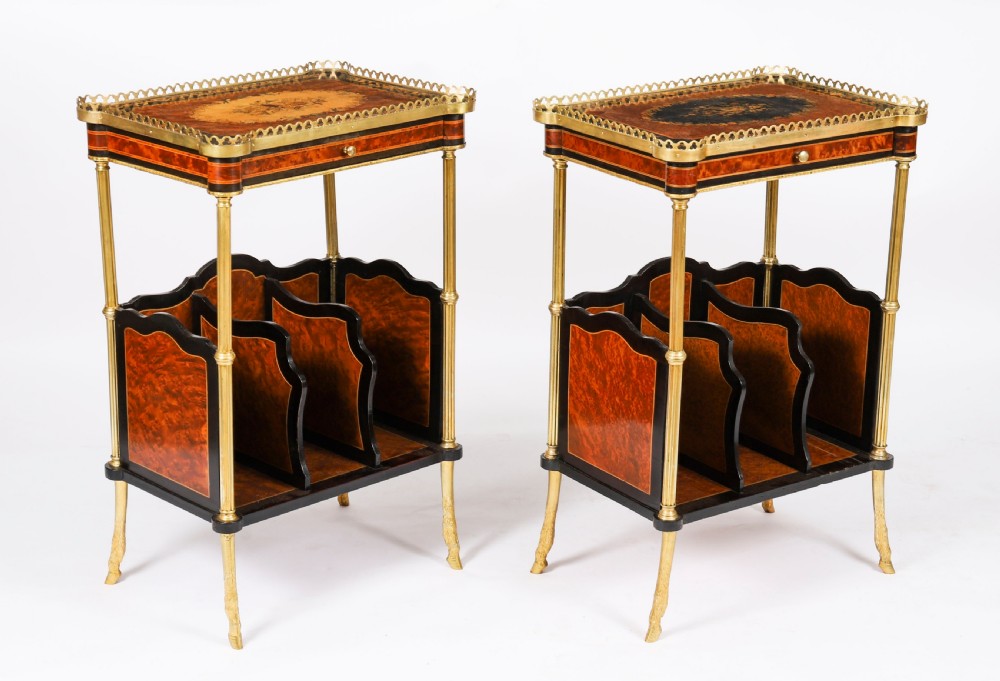
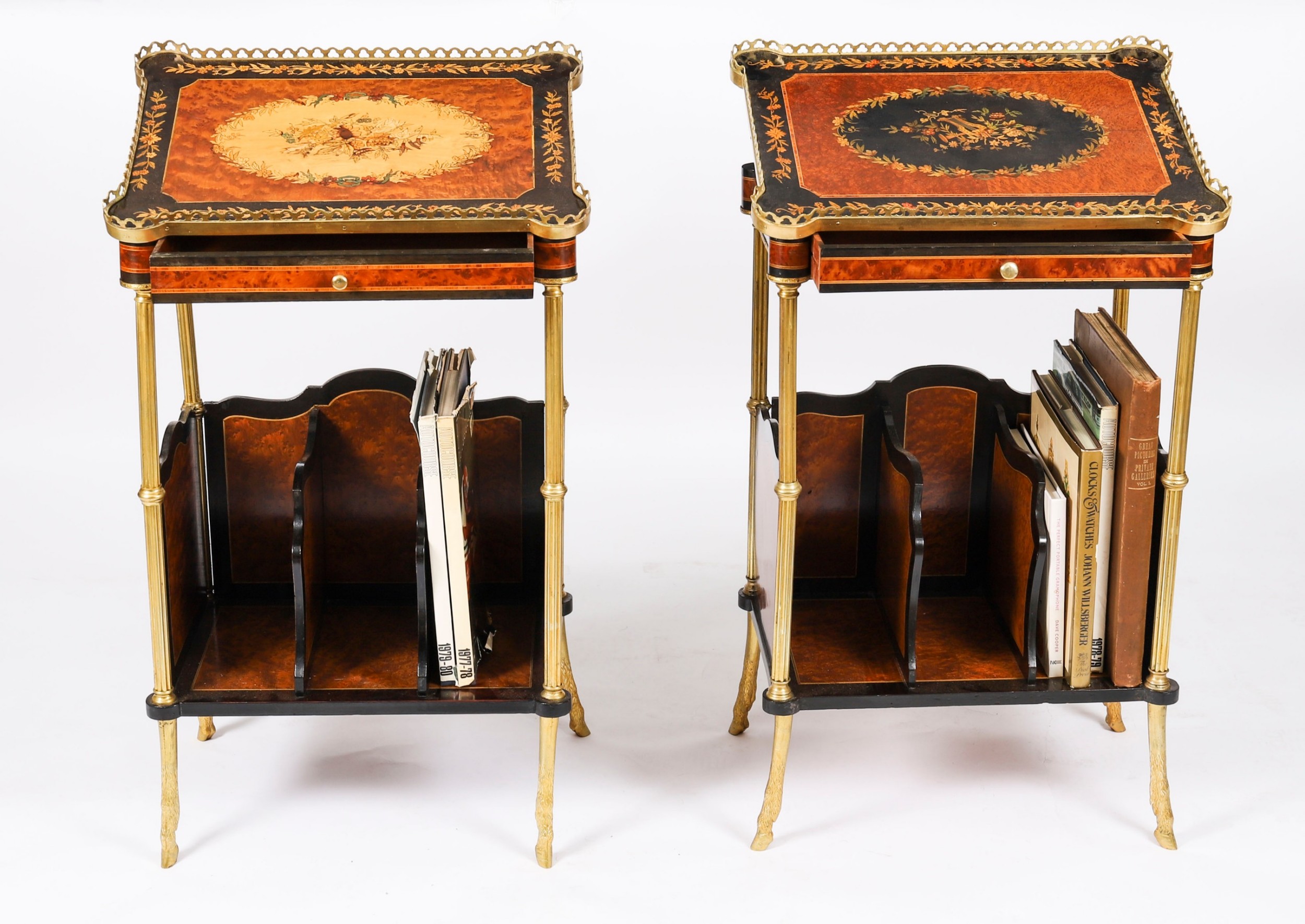
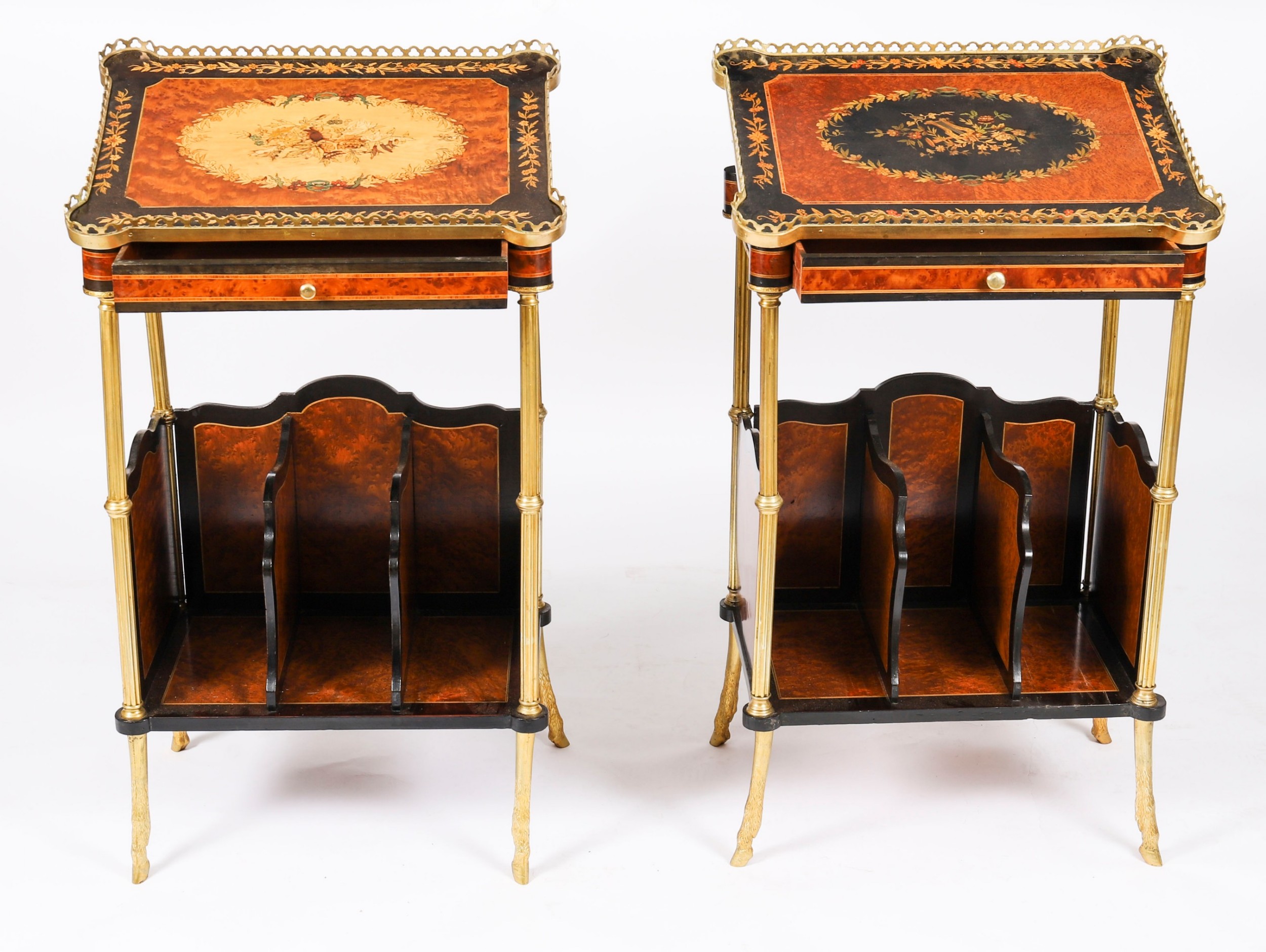
This is a beautiful pair of antique French Louis Philippe amboyna, ebonised, tulip wood-banded, floral marquetry and ormolu mounted side tables and canterburies, circa 1880 in date.

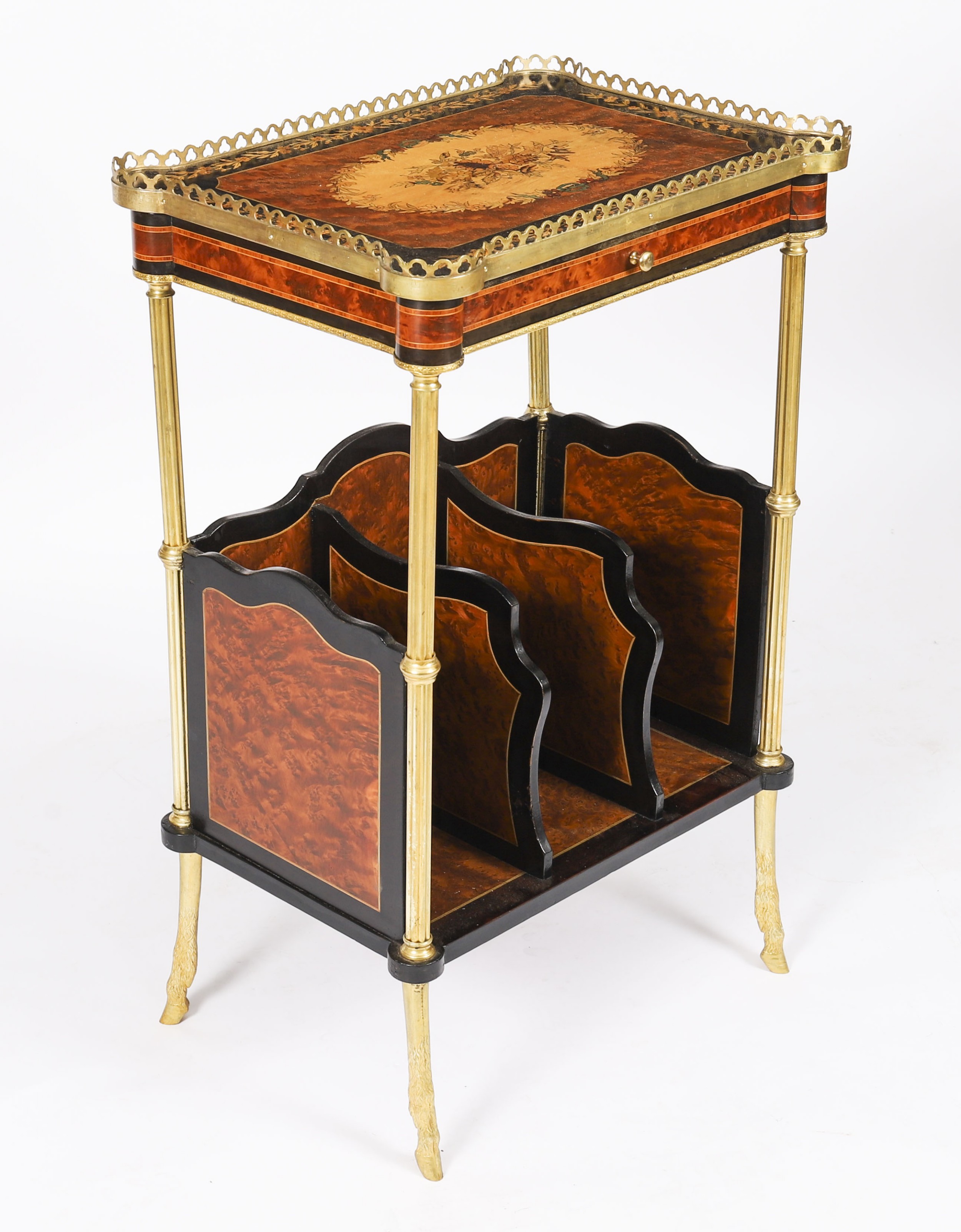
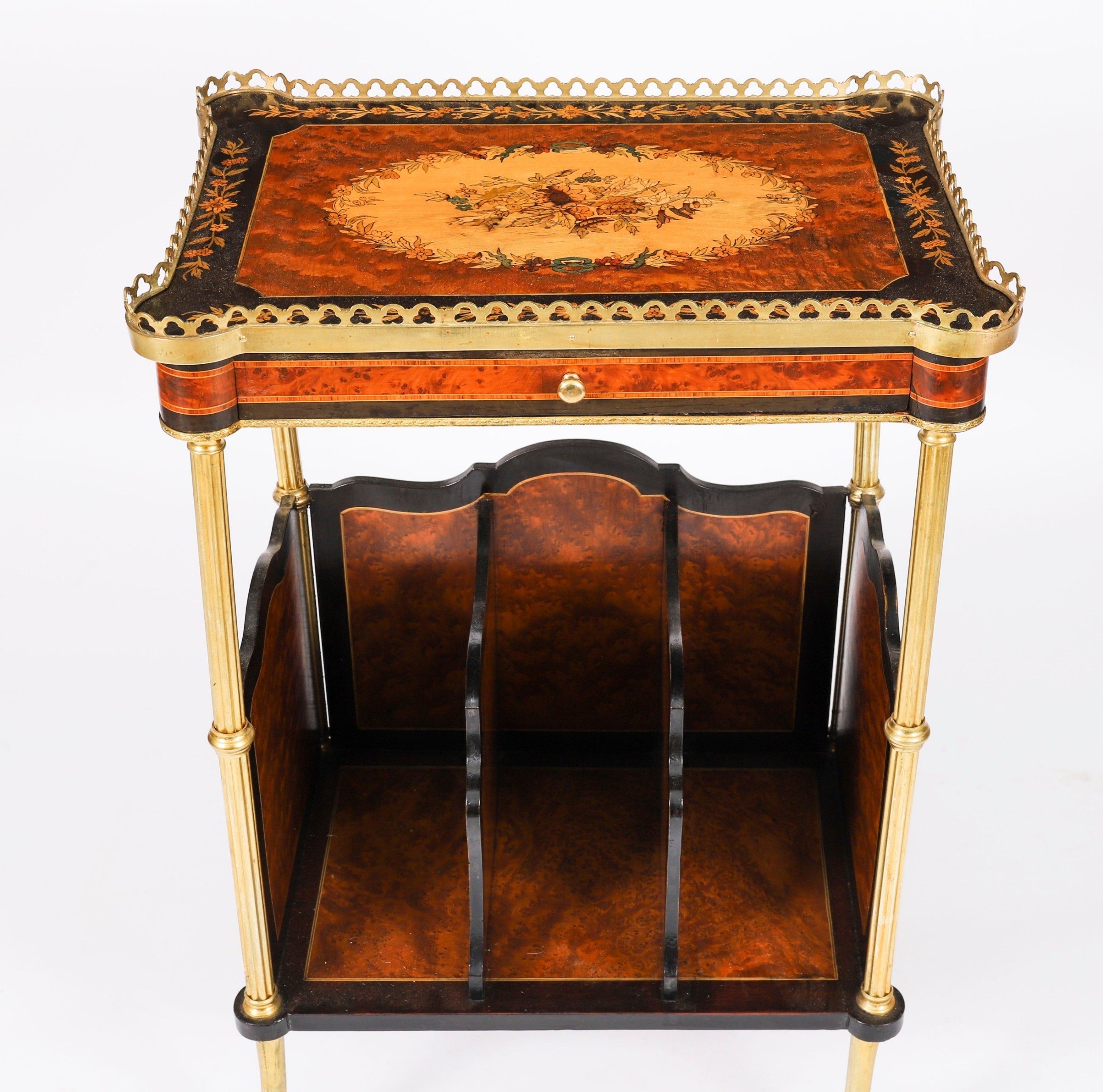
The decorative pierced brass galleries are above single frieze drawers, on reeded column supports joined by divided shelves and raised on ormolu hoof feet


Add an elegant touch to any room with this stylish pair of tables.

Provenance:

Corby Castle, Carlisle, England

Lord and Lady Ballyedmond


Condition:

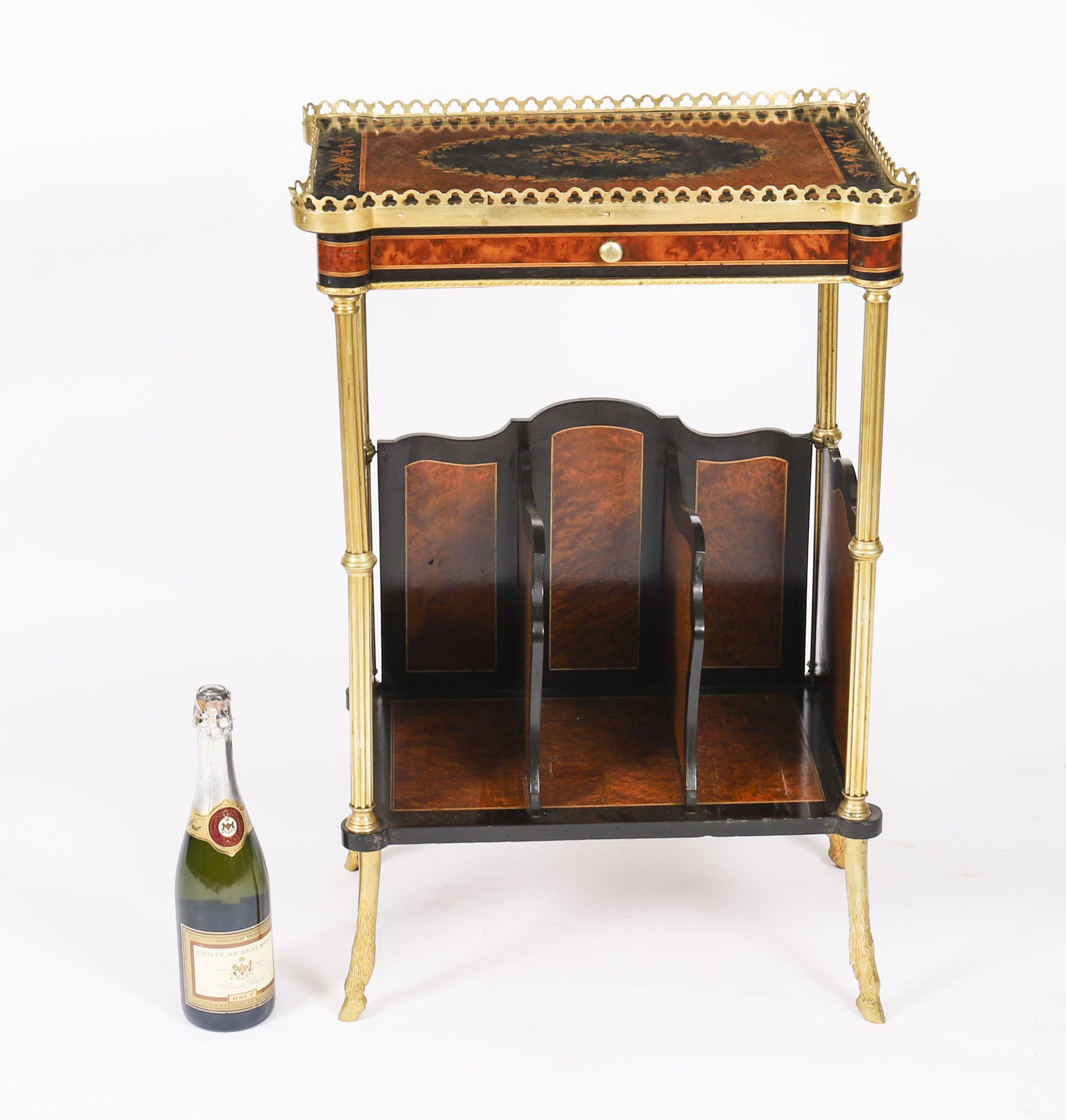
In excellent condition having been beautifully cleaned, French polished and waxed in our workshops, please see photos for confirmation.

Dimensions in cm:

Height 77 cm x Width 51 cm x Depth 35 cm

Dimensions in inches:

Height 2 foot, 6 inches x Width 1 foot, 8 inches x Depth 1 foot, 2 inches

Corby Castle

One of Cumbria’s most historically important mansion houses, grade I-listed Corby Castle sits on a plateau, rising above the picturesque River Eden to the east of Carlisle. The Manor of Corby was granted to Hubert de Vallibus by Henry II and passed to Andrew de Harcia, Earl of Carlisle before being given to Richard Salkeld in 1336. The estate remained in the hands of the Salkeld family until it was sold in 1611 to Lord William Howard, the third son of Thomas Howard, 4th Duke of Norfolk. The house is built around a red sandstone peel tower, or fortified tower house, built in the 13th century; William Howard added a two-storied L-shaped house to the peel tower, and the house was once again modified in the early 19th century by descendant Henry Howard. Between 1812 and 1814, Scottish architect Peter Nicholson gave the castle a new rectangular plan and the harmonious neo-classical façade in the distinctive local red sandstone that graces the building today. Corby Castle remained in the Howard family until 1994, when Lord and Lady Ballyedmond, as new owners, began an inspired revival of Corby, giving new life to one of the great Cumbrian mansions.

Canterbury is a piece of portable, occasional furniture, consisting of an open-topped rack with slatted compartments for sheet music, music books, magazines or newspapers and often a drawer underneath as well; rests on four legs, which are typically on casters.

It was developed in the 1780s in England (reputedly deriving its name from the Archbishop of Canterbury, who commissioned one), it grew increasingly ornate throughout the 19th century: Victorian pieces often have an upper galleried shelf, and panels shaped like lyres or treble clefs.    

Ormolu - Gilt Bronze (from French 'or moulu', signifying ground or pounded gold) is an 18th-century English term for applying finely ground, high-carat gold in a mercury amalgam to an object of bronze.The mercury is driven off in a kiln leaving behind a gold-coloured veneer known as 'gilt bronze'.

Amboyna 

is a type of wood which has its origins in Indonesia (the preferred veneer comes particularly from the Andaman Islands). The grain texture is one of the most seldom and exclusive on earth.

The burls are often very small, which is why the sheets of veneer come in small dimensions. The colours range from deep yellowish-orange to dark red.

After finishing the surface, the grain texture of amboyna wood has a depth and richness unmatched in other textured woods.

Tulip wood 

Brazilian tulip wood is a  classic high-quality wood, it is very dense with a lovely figure. It is used for inlays in furniture and for small turned items. Available only in small sizes, it is rarely used in the solid for luxury furniture. Like other woods with a pronounced figure it is rather strongly subject to fashion.

Marquetry

is decorative artistry where pieces of material of different colours are inserted into surface wood veneer to form intricate patterns such as scrolls or flowers.

The technique of veneered marquetry had its inspiration i

Date of Manufacture

Regent Antiques has dated these French Ormolu Side Tables to the 1880s.

Independent Date Check ID 09387505
Dealer's Item Date1880s
Sellingantiques Date1880s
Sellingantiques agingItem 125-160 years old
Test ResultsPassed dating check
Why Sellingantiques dated this piece to THE 1880s:
Slotted brass screws fixing the pierced galleries: metalwork made before modern cross-head fixings.
Cast ormolu hoof feet and reeded brass uprights: late nineteenth-century Louis XVI revival taste.
Fine floral marquetry medallions in stained timbers: traditional Parisian marquetry workshop practice.
Ratchet-supported tilting reading tops: specialised late Victorian drawing-room and music furniture.

This is an independent date report produced by Sellingantiques using its own proprietary system. The process uses the photographs shown on this page. The system is never told the date the dealer has declared. This report shows that the two dates corroborate.
Physical Dimensions
Height
77cm (30.31")
Width
51cm (20.08")
Depth
35cm (13.78")
Reference Numbers
Sellingantiques Reference
SA1198215
Dealers Internal Reference
A5065
Description
This is a beautiful pair of antique French Louis Philippe amboyna, ebonised, tulip wood-banded, floral marquetry and ormolu mounted side tables and canterburies, circa 1880 in date.
“
The decorative pierced brass galleries are above single frieze drawers, on reeded column supports joined by divided shelves and raised on ormolu hoof feet.
Regent Antiques
fig 1. A pair of 19th-century French occasional side tables featuring marquetry tops with brass gallery rails, lower partitioned racks, and gilt metal legs.
fig 1. Antique Pair French Ormolu Mounted Occasional Side Tables 19th C


Add an elegant touch to any room with this stylish pair of tables.

Provenance:

Corby Castle, Carlisle, England

Lord and Lady Ballyedmond


Condition:

In excellent condition having been beautifully cleaned, French polished and waxed in our workshops, please see photos for confirmation.
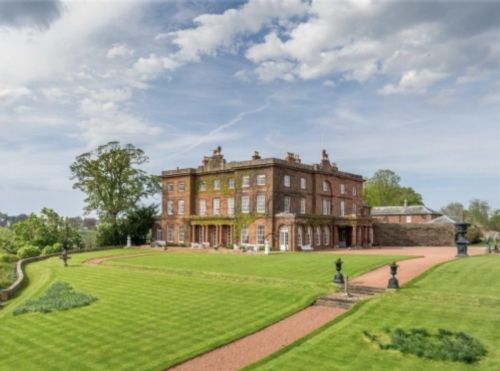
fig 2. A pair of 19th-century French occasional side tables featuring marquetry tops with brass gallery rails, lower partitioned racks, and gilt metal legs.
fig 2. Antique Pair French Ormolu Mounted Occasional Side Tables 19th C

Dimensions in cm:

Height 77 cm x Width 51 cm x Depth 35 cm

Dimensions in inches:

Height 2 foot, 6 inches x Width 1 foot, 8 inches x Depth 1 foot, 2 inches

Corby Castle

One of Cumbria’s most historically important mansion houses, grade I-listed Corby Castle sits on a plateau, rising above the picturesque River Eden to the east of Carlisle. The Manor of Corby was granted to Hubert de Vallibus by Henry II and passed to Andrew de Harcia, Earl of Carlisle before being given to Richard Salkeld in 1336. The estate remained in the hands of the Salkeld family until it was sold in 1611 to Lord William Howard, the third son of Thomas Howard, 4th Duke of Norfolk. The house is built around a red sandstone peel tower, or fortified tower house, built in the 13th century; William Howard added a two-storied L-shaped house to the peel tower, and the house was once again modified in the early 19th century by descendant Henry Howard. Between 1812 and 1814, Scottish architect Peter Nicholson gave the castle a new rectangular plan and the harmonious neo-classical façade in the distinctive local red sandstone that graces the building today. Corby Castle remained in the Howard family until 1994, when Lord and Lady Ballyedmond, as new owners, began an inspired revival of Corby, giving new life to one of the great Cumbrian mansions.
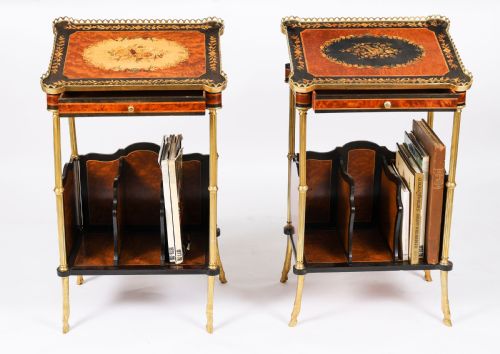
fig 3. A pair of 19th-century French occasional side tables featuring marquetry tops with brass gallery rails, lower partitioned racks, and gilt metal legs.
fig 3. Antique Pair French Ormolu Mounted Occasional Side Tables 19th C

Canterbury is a piece of portable, occasional furniture, consisting of an open-topped rack with slatted compartments for sheet music, music books, magazines or newspapers and often a drawer underneath as well; rests on four legs, which are typically on casters.
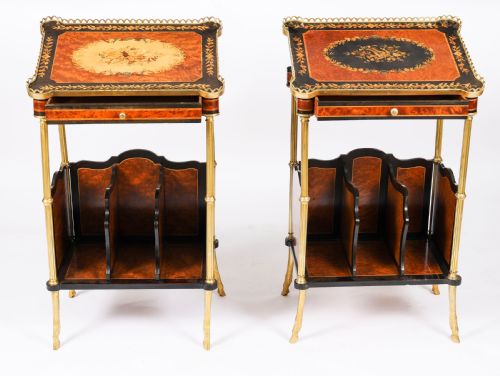
fig 4. A pair of 19th-century French occasional side tables featuring marquetry tops with brass gallery rails, lower partitioned racks, and gilt metal legs.
fig 4. Antique Pair French Ormolu Mounted Occasional Side Tables 19th C

It was developed in the 1780s in England (reputedly deriving its name from the Archbishop of Canterbury, who commissioned one), it grew increasingly ornate throughout the 19th century: Victorian pieces often have an upper galleried shelf, and panels shaped like lyres or treble clefs.    
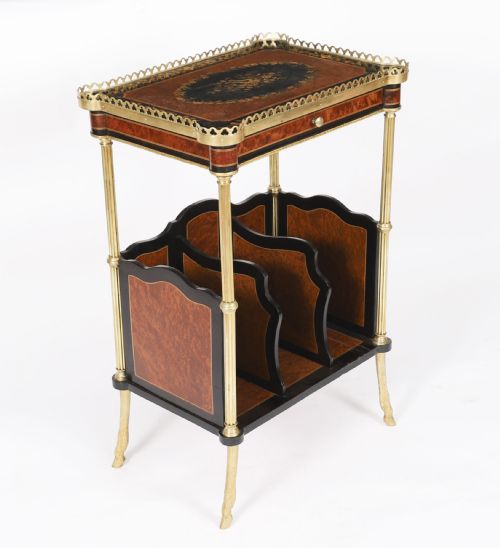
fig 5. A pair of 19th-century French occasional side tables featuring marquetry tops with brass gallery rails, lower partitioned racks, and gilt metal legs.
fig 5. Antique Pair French Ormolu Mounted Occasional Side Tables 19th C

Ormolu - Gilt Bronze (from French 'or moulu', signifying ground or pounded gold) is an 18th-century English term for applying finely ground, high-carat gold in a mercury amalgam to an object of bronze.The mercury is driven off in a kiln leaving behind a gold-coloured veneer known as 'gilt bronze'.
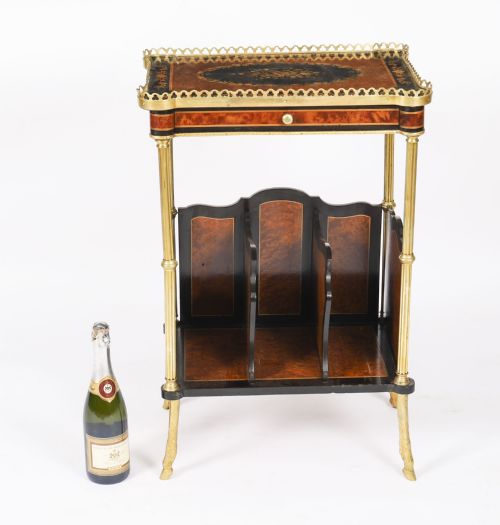
fig 6. A pair of 19th-century French occasional side tables featuring marquetry tops with brass gallery rails, lower partitioned racks, and gilt metal legs.
fig 6. Antique Pair French Ormolu Mounted Occasional Side Tables 19th C

Amboyna 

is a type of wood which has its origins in Indonesia (the preferred veneer comes particularly from the Andaman Islands). The grain texture is one of the most seldom and exclusive on earth.

The burls are often very small, which is why the sheets of veneer come in small dimensions. The colours range from deep yellowish-orange to dark red.
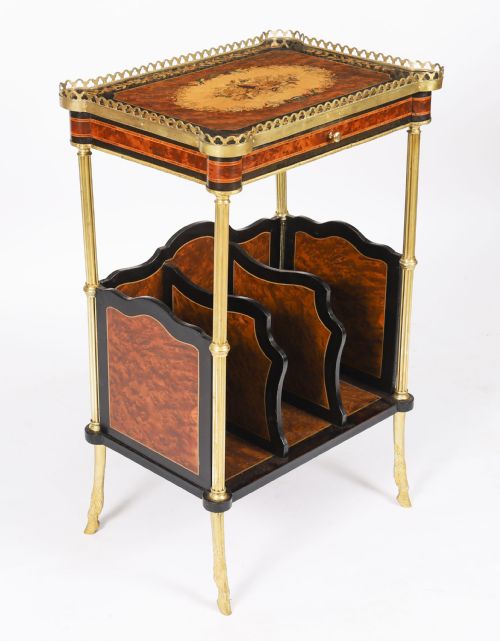
fig 7. A pair of 19th-century French occasional side tables featuring marquetry tops with brass gallery rails, lower partitioned racks, and gilt metal legs.
fig 7. Antique Pair French Ormolu Mounted Occasional Side Tables 19th C

After finishing the surface, the grain texture of amboyna wood has a depth and richness unmatched in other textured woods.

Tulip wood 

Brazilian tulip wood is a  classic high-quality wood, it is very dense with a lovely figure. It is used for inlays in furniture and for small turned items. Available only in small sizes, it is rarely used in the solid for luxury furniture. Like other woods with a pronounced figure it is rather strongly subject to fashion.
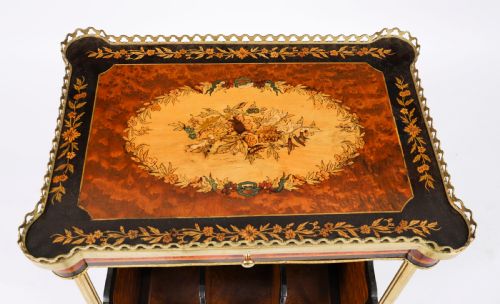
fig 8. A pair of 19th-century French occasional side tables featuring marquetry tops with brass gallery rails, lower partitioned racks, and gilt metal legs.
fig 8. Antique Pair French Ormolu Mounted Occasional Side Tables 19th C

Marquetry

is decorative artistry where pieces of material of different colours are inserted into surface wood veneer to form intricate patterns such as scrolls or flowers.

The technique of veneered marquetry had its inspiration i

Date of Manufacture

Regent Antiques has dated these French Ormolu Side Tables to the 1880s.

Independent Date Report ID 09387505
Dealer's Item Date1880s
Sellingantiques dating1880s
Sellingantiques agingItem 125-160 years old
Test ResultsPassed dating check
Why Sellingantiques dated this piece to the 1880s:
Slotted brass screws fixing the pierced galleries: metalwork made before modern cross-head fixings.
Cast ormolu hoof feet and reeded brass uprights: late nineteenth-century Louis XVI revival taste.
Fine floral marquetry medallions in stained timbers: traditional Parisian marquetry workshop practice.
Ratchet-supported tilting reading tops: specialised late Victorian drawing-room and music furniture.

This is an independent date report produced by Sellingantiques using its own proprietary system. The process uses the photographs shown on this page. The system is never told the date the dealer has declared. This report shows that the two dates corroborate.

Height
77cm (30.31")
Width
51cm (20.08")
Depth
35cm (13.78")
Reference Numbers
Sellingantiques Ref
SA1198215
Dealers Internal Ref
A5065
Regent Antiques
Regent Antiques
Sellingantiques verified Since Sep 2016

We specialise in english and continental furniture, silver, porcelain and decorative items.

Dealer Profile

You can view the stock and full dealer information on the Regent Antiques Profile Page

Trade Associations

Regent Antiques is a registered member of LAPADA  CINOA
PDF SHARE
SAVE
A pair of 19th-century French occasional side tables featuring marquetry tops with brass gallery rails, lower partitioned racks, and gilt metal legs.
1 / 19
Archive I A pair of 19th-century French occasional side tables featuring marquetry tops with brass gallery rails, lower partitioned racks, and gilt metal legs.

Antique Pair French Ormolu Mounted Occasional Side Tables 19th C
Archive II A pair of 19th-century French occasional side tables featuring marquetry tops with brass gallery rails, lower partitioned racks, and gilt metal legs. View II
Archive III A pair of 19th-century French occasional side tables featuring marquetry tops with brass gallery rails, lower partitioned racks, and gilt metal legs. View III
Archive IV A pair of 19th-century French occasional side tables featuring marquetry tops with brass gallery rails, lower partitioned racks, and gilt metal legs. View IV
Archive V A pair of 19th-century French occasional side tables featuring marquetry tops with brass gallery rails, lower partitioned racks, and gilt metal legs. View V
Archive VI A pair of 19th-century French occasional side tables featuring marquetry tops with brass gallery rails, lower partitioned racks, and gilt metal legs. View VI
Archive VII A pair of 19th-century French occasional side tables featuring marquetry tops with brass gallery rails, lower partitioned racks, and gilt metal legs. View VII
Archive VIII A pair of 19th-century French occasional side tables featuring marquetry tops with brass gallery rails, lower partitioned racks, and gilt metal legs. View VIII
Archive IX A pair of 19th-century French occasional side tables featuring marquetry tops with brass gallery rails, lower partitioned racks, and gilt metal legs. View IX
Archive X A pair of 19th-century French occasional side tables featuring marquetry tops with brass gallery rails, lower partitioned racks, and gilt metal legs. View X
Archive XI A pair of 19th-century French occasional side tables featuring marquetry tops with brass gallery rails, lower partitioned racks, and gilt metal legs. View XI
Archive XII A pair of 19th-century French occasional side tables featuring marquetry tops with brass gallery rails, lower partitioned racks, and gilt metal legs. View XII
Archive XIII A pair of 19th-century French occasional side tables featuring marquetry tops with brass gallery rails, lower partitioned racks, and gilt metal legs. View XIII
Archive XIV A pair of 19th-century French occasional side tables featuring marquetry tops with brass gallery rails, lower partitioned racks, and gilt metal legs. View XIV
Archive XV A pair of 19th-century French occasional side tables featuring marquetry tops with brass gallery rails, lower partitioned racks, and gilt metal legs. View XV
Archive XVI A pair of 19th-century French occasional side tables featuring marquetry tops with brass gallery rails, lower partitioned racks, and gilt metal legs. View XVI
Archive XVII A pair of 19th-century French occasional side tables featuring marquetry tops with brass gallery rails, lower partitioned racks, and gilt metal legs. View XVII
Archive XVIII A pair of 19th-century French occasional side tables featuring marquetry tops with brass gallery rails, lower partitioned racks, and gilt metal legs. View XVIII
Archive XIX A pair of 19th-century French occasional side tables featuring marquetry tops with brass gallery rails, lower partitioned racks, and gilt metal legs. View XIX
FURTHER BROWSING

Visitors also looked at these ⇣

Enlarged Archival View
Location
Manor Warehouse
318 Green Lanes
London
N4 1BX
United Kingdom
Verified Since Sep 2016
Items For Sale 659
Items Sold 2,693
Regent Antiques
Regent Antiques
Verified Since Sep 2016
View Dealer Info
Location: Manor Warehouse, 318 Green Lanes, London, N4 1BX, United Kingdom
Verified
Sep 2016
For Sale
659
Sold
2,693
A pair of 19th-century French occasional side tables featuring marquetry tops with brass gallery rails, lower partitioned racks, and gilt metal legs.
Antique Pair French Ormolu Mounted Occasional Side Tables 19th C
Ref: SA1198215
A pair of 19th-century French occasional side tables featuring marquetry tops with brass gallery rails, lower partitioned racks, and gilt metal legs.
Detail View 1
Detail View 2
Detail View 3
Detail View 4
Detail View 5
Detail View 6
Detail View 7
Detail View 8
Detail View 9
Detail View 10
Detail View 11
Detail View 12
Detail View 13
Detail View 14
Detail View 15
Detail View 16
Detail View 17
Detail View 18
Archival Detail
Every single antique dealer on our platform is individually approved by our internal team. We verify their professional trade history, ethical standards, and photographic quality to ensure a secure, high-standard buying environment. Upon joining, every dealer agrees to a strict 9-point code of conduct. While issues can occasionally arise, our dealers typically resolve them swiftly and directly with the buyer. In fact, since our founding in 2002, Sellingantiques has only had to step in to help resolve an issue on roughly five occasions—a true testament to the quality of our dealers and their dedication to your happiness.
Our dealers are highly experienced in packing and shipping fragile, high-value antiques. Because you are in direct contact with the dealer, you will be able to easily go through all available shipping and insurance options together to ensure your item arrives safely.
Antiques are the ultimate green purchase. By choosing historical pieces over newly manufactured goods, you completely eliminate the carbon footprint of modern mass production while preserving exceptional, timeless craftsmanship.
Written by Sellingantiques from the dealer’s photographs and listing
  • ObjectSide Tables
  • Period19th century
  • StyleFrench Chateau
  • MaterialOrmolu, Burr Wood, Marquetry, Ebonised Wood
  • ColourWarm Brown
  • MotifsPierced brass gallery, Floral marquetry, Partitioned rack, Fluted gilt legs
  • SizeH 77 cm (30 in) x W 51 cm (20 in) x D 35 cm (14 in)

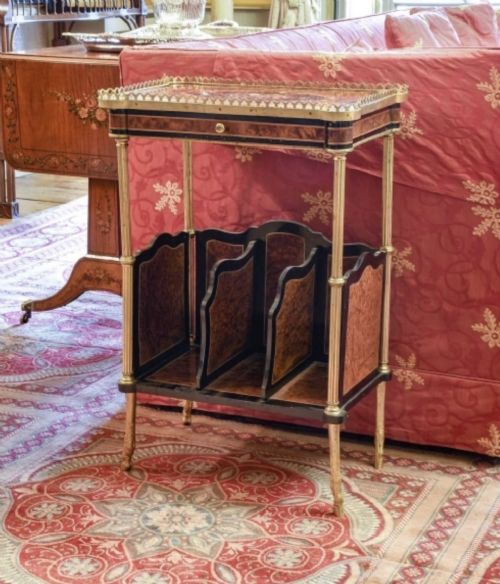
This pair of 19th-century French occasional side tables and canterburies belongs to the French Chateau style, originating around 1880. Constructed from amboyna, tulipwood, and ebonised wood, they display warm brown tones and feature floral marquetry tops bordered by pierced brass galleries. Each table incorporates a single frieze drawer with a small round knob, reeded column supports, and ormolu hoof feet. The lower section contains a partitioned rack with four vertical compartments, separated by shaped wooden dividers finished in black, set above a lower shelf. The timber displays a polished finish with prominent burr wood figuring on the top and lower panels. Measuring 77 cm high, 51 cm wide, and 35 cm deep, these practical items function as end tables placed beside a sofa or chair in a living room, study, or hallway. They hold books, magazines, or newspapers in the lower compartments while providing a surface for lamps, decorative objects, or drinks on the top tier.

Nineteenth-century French occasional tables frequently feature gilded bronze or brass mounts, delicate floral marquetry inlays, and multi-functional elements such as integrated partitioned racks or pierced galleries, drawing inspiration from classical Louis XV and Louis XVI designs.

Craftspeople traditionally utilised figured wood veneers such as burr walnut, amboyna, and kingwood, complemented by inlaid floral marquetry motifs, ebonised borders, and cast gilt-metal mounts.

Authentic period examples exhibit hand-cut timber joinery, hand-chased metal mounts showing age-appropriate oxidisation, original timber patination, and intricate veneer work on the surfaces and partitions.

Position them as flanking end tables beside a sofa or use them as accent bedside stands to introduce historic timber tones, structured storage, and metallic detailing into contemporary spaces.

Dust timber surfaces regularly with a dry microfiber cloth and apply natural wax polish sparingly, ensuring metal galleries and gilt mounts are kept clean without using abrasive chemical cleaners.
items
Add keywords to the filter
Price
£100
£250000
Era
Period
Style
Material
Origin
Stock Location
Recently Added
Online Payments
Categories