


Antique Silver Snuff Boxes
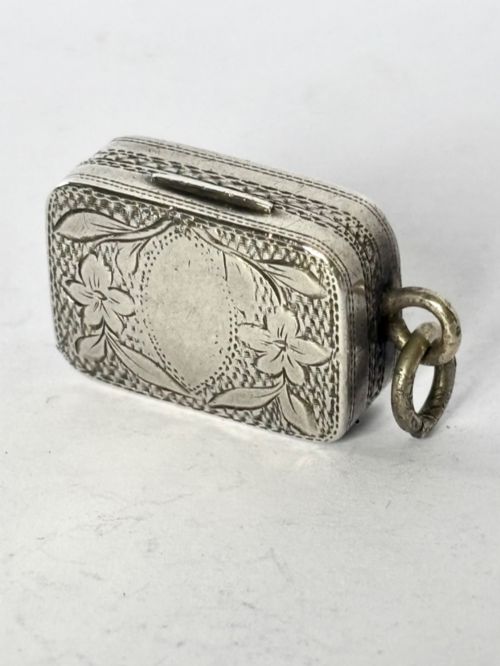
Small hinged-lid silver boxes made to keep a personal supply of powdered snuff dry, along with the larger flat table boxes that sat out after dinner and were passed round.
Antique Silver Snuff Boxes
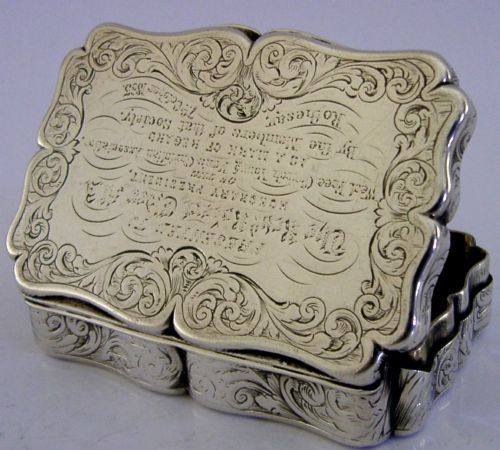
Snuff, powdered tobacco taken by the nose, caught on in Europe from the later 17th century, and tight-lidded boxes followed. The pocket sort is hand-sized and often weighs little; stated weights on silver boxes here run from around 14g to 162g. Table boxes are flatter and broader, meant to sit out rather than be carried.
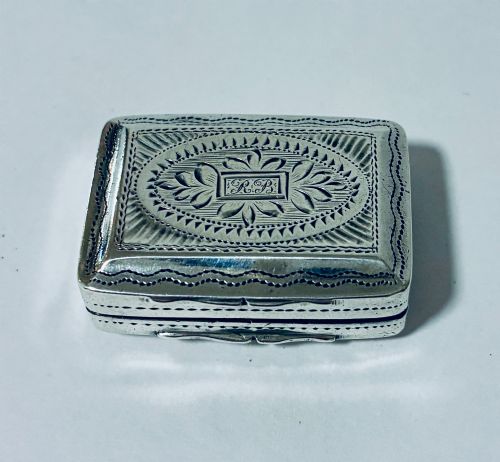
The form you'll meet most often is a plain or engraved British hallmarked box, rectangular or oval, with a gilded interior. Georgian and Victorian pieces together account for most of the dated stock, and the assay towns named in titles lean to Birmingham ahead of London and Chester, which reflects how much of this trade was Birmingham work.
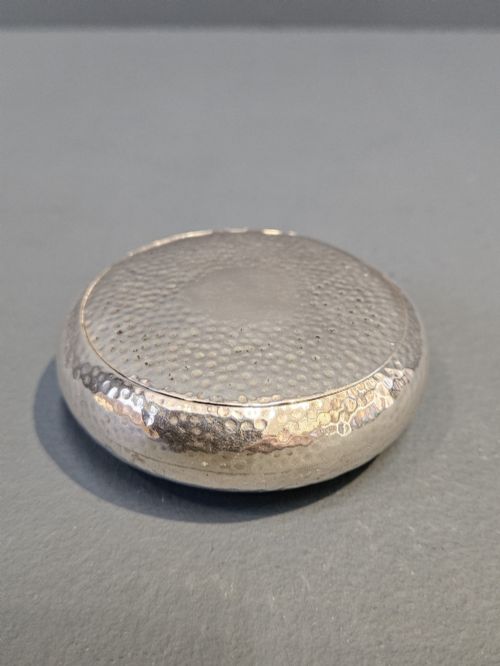
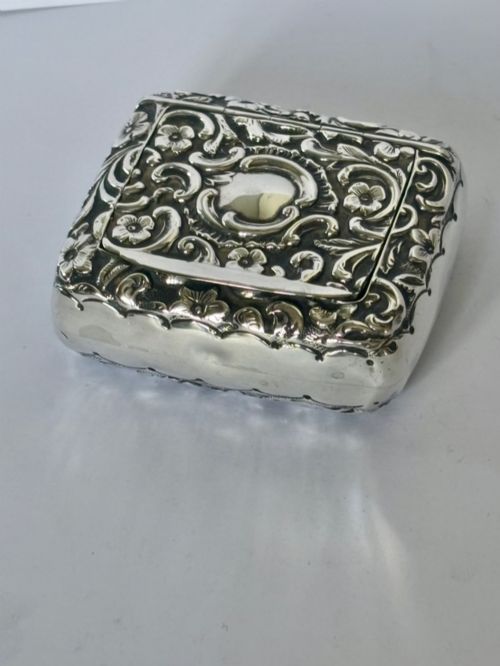
Three groups carry the category. British hallmarked boxes of the Georgian to William IV years, commonly dated in the title somewhere between 1781 and 1838, make up roughly a third. Late Victorian and Edwardian embossed or planished table and trinket boxes, clustering 1889 to 1906, make up roughly another third. Small pill and snuff boxes, many of them 20th century and including heart-shaped, ring and miniature forms, account for about a sixth.
Beyond those, Continental and import-marked boxes are a steady seam: German (a good number of them Hanau), French and Dutch, with Austrian, Italian, Spanish, Scandinavian and Russian niello and samorodok examples turning up. Hardstone, mother-of-pearl, cowrie shell, tortoiseshell and Scottish horn mulls appear throughout. The listings shade into their neighbours too, with the same box offered as snuff, pill, trinket, vinaigrette or tobacco.
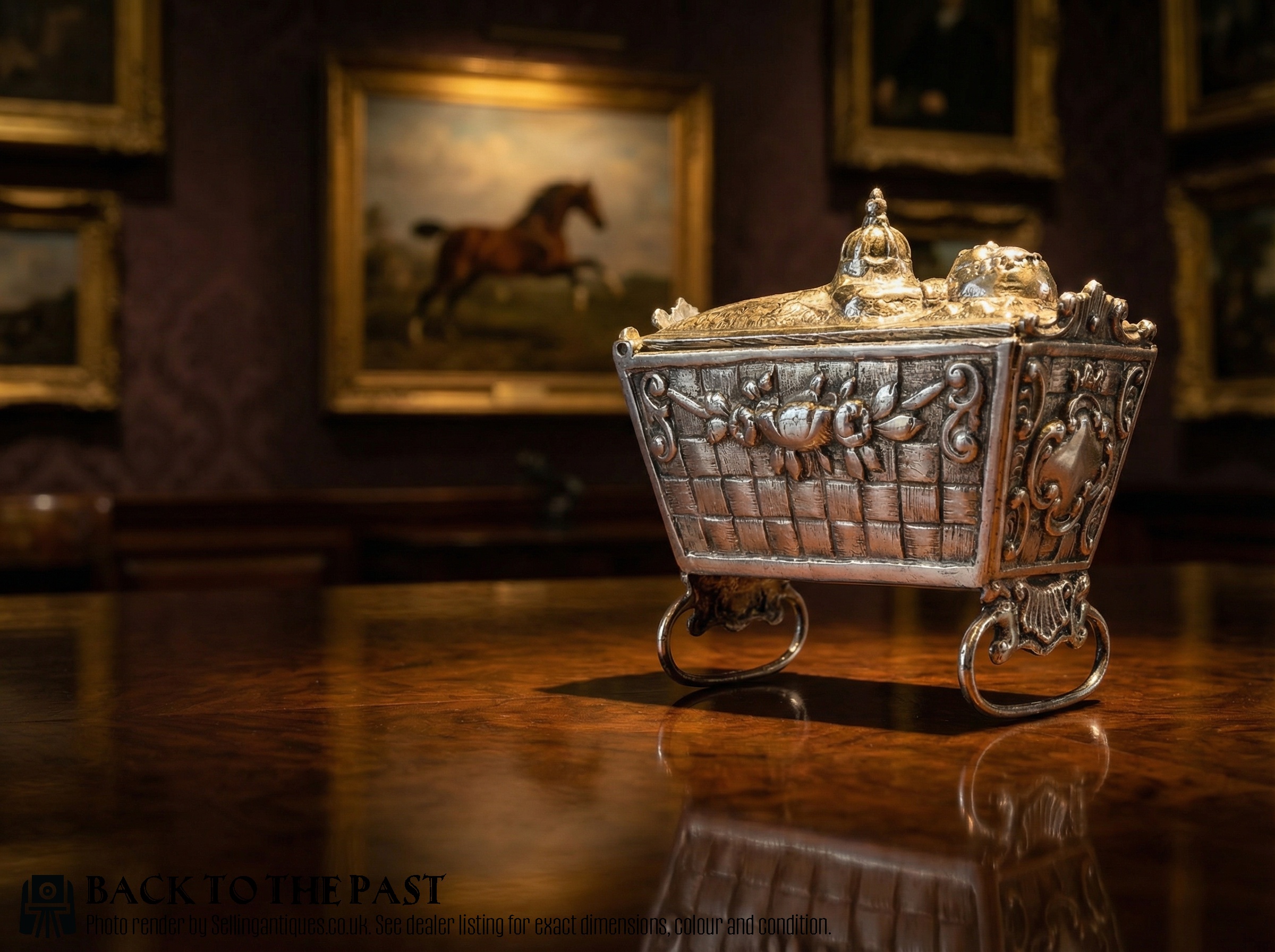
What Sets Them Apart
A name and a readable date do more than anything else. The upper part of the range is dominated by titles giving a maker and a year with a British assay office behind them; the lower part is largely "Antique Silver Snuff Box" and nothing further. Unmarked boxes, and those catalogued only as Continental or German 800, sit toward the bottom.
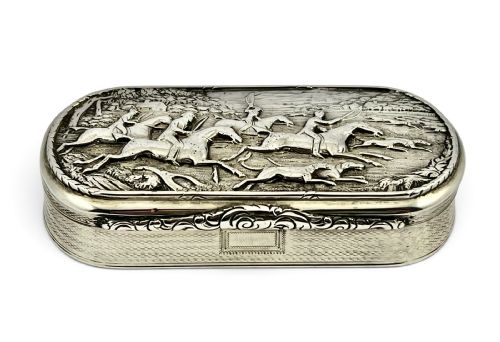
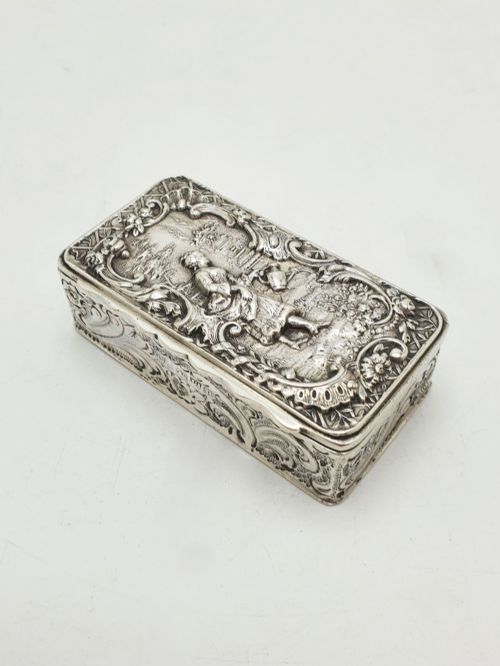
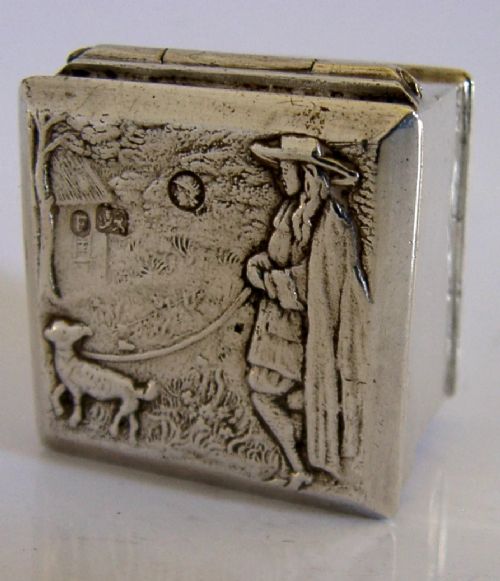
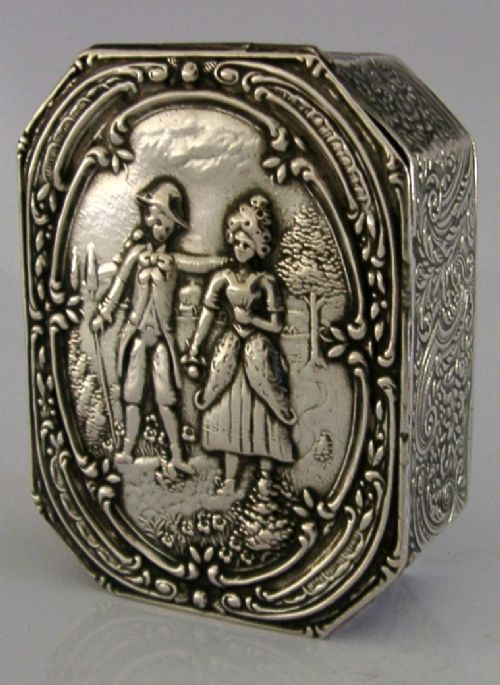
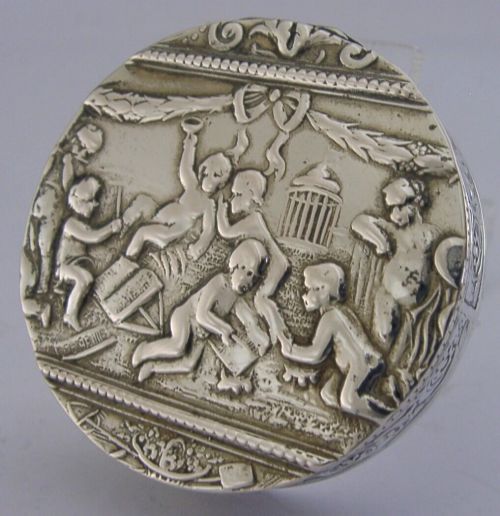
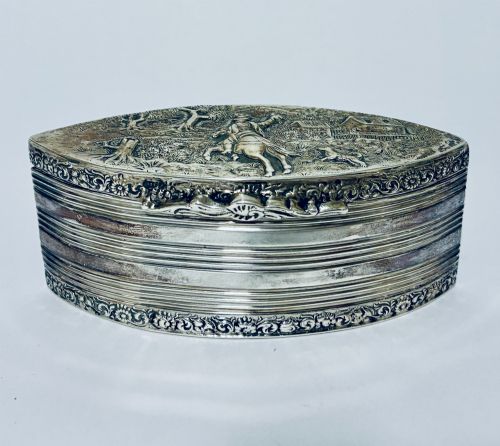
Then the lid. Plain and engine-turned lids are the common ground, and above them sit worked ones: chased or cast acanthus and floral borders, engraved scenes of battle, hunting and horse-racing, and castle tops carrying a high-relief view of a named building such as Windsor Castle or Abbotsford House.
Size, weight and gilding pull in the same direction. Table boxes sit distinctly above pocket and pill boxes, heavy is a word that earns its place in a title, and a gilt interior is standard on the better Georgian and Victorian boxes. Scottish, Irish and provincial work is scarce, with single pieces recorded from Cork, Newcastle and Perth.
Antique Silver Snuff Boxes Retail Price Guide 2026
Typical UK retail prices for silver snuff boxes, calculated from the Sellingantiques database of over a million retail prices indexed since 2003. This retail price guide relies exclusively on Sellingantiques data; no external sources or auction records are used, so the figures do not describe the wider market.
Birmingham is the assay town named most often in these titles on Sellingantiques, ahead of London and Chester.

Samuel Pemberton
The Antique Silver Snuff Boxes Glossary
- Table snuff box
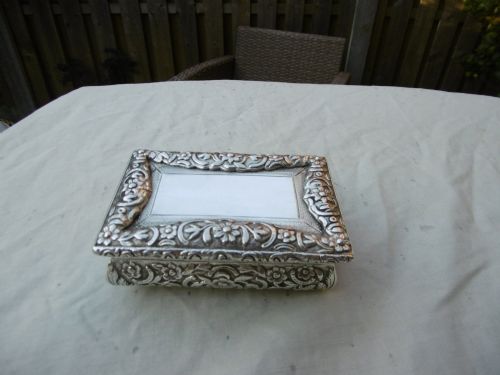
- A larger, flatter box meant to sit out and be passed round rather than pocketed. The phrase appears in 76 titles.
- Gilt interior
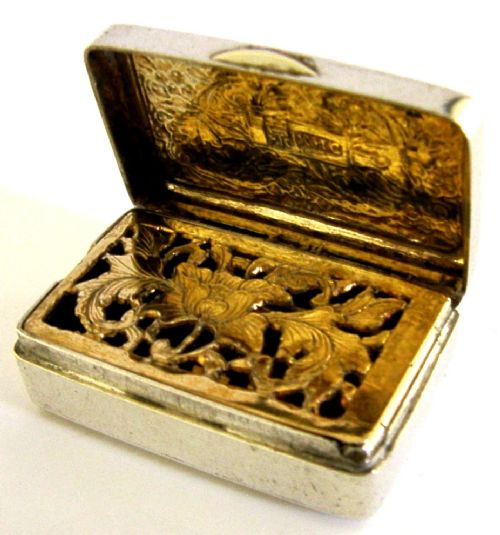
- Gold-washed inside to resist the snuff, standard on better boxes. "Gilt" turns up in 69 titles.
- Castle top
- A lid with a high-relief view of a named building, worked in repoussé. Abbotsford House and Windsor Castle both appear.
- Engine turned
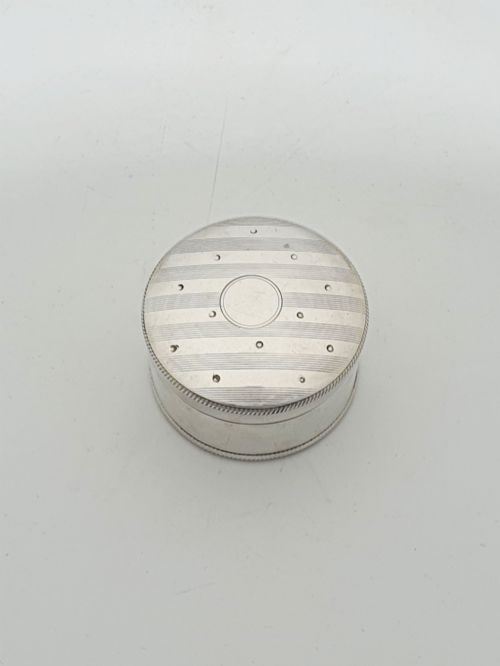
- Lathe-cut geometric patterning across the lid or body, seen on examples dated from 1814 right through to 1966.
- Thumbpiece
- The raised catch on the lid edge you press to open the box, often described as acanthus or floral.
- Samorodok
- A deliberately molten, crinkled silver surface, found on Russian boxes of around 1900.
Antique Silver Snuff Boxes: Frequently Asked Questions
What is a mull?
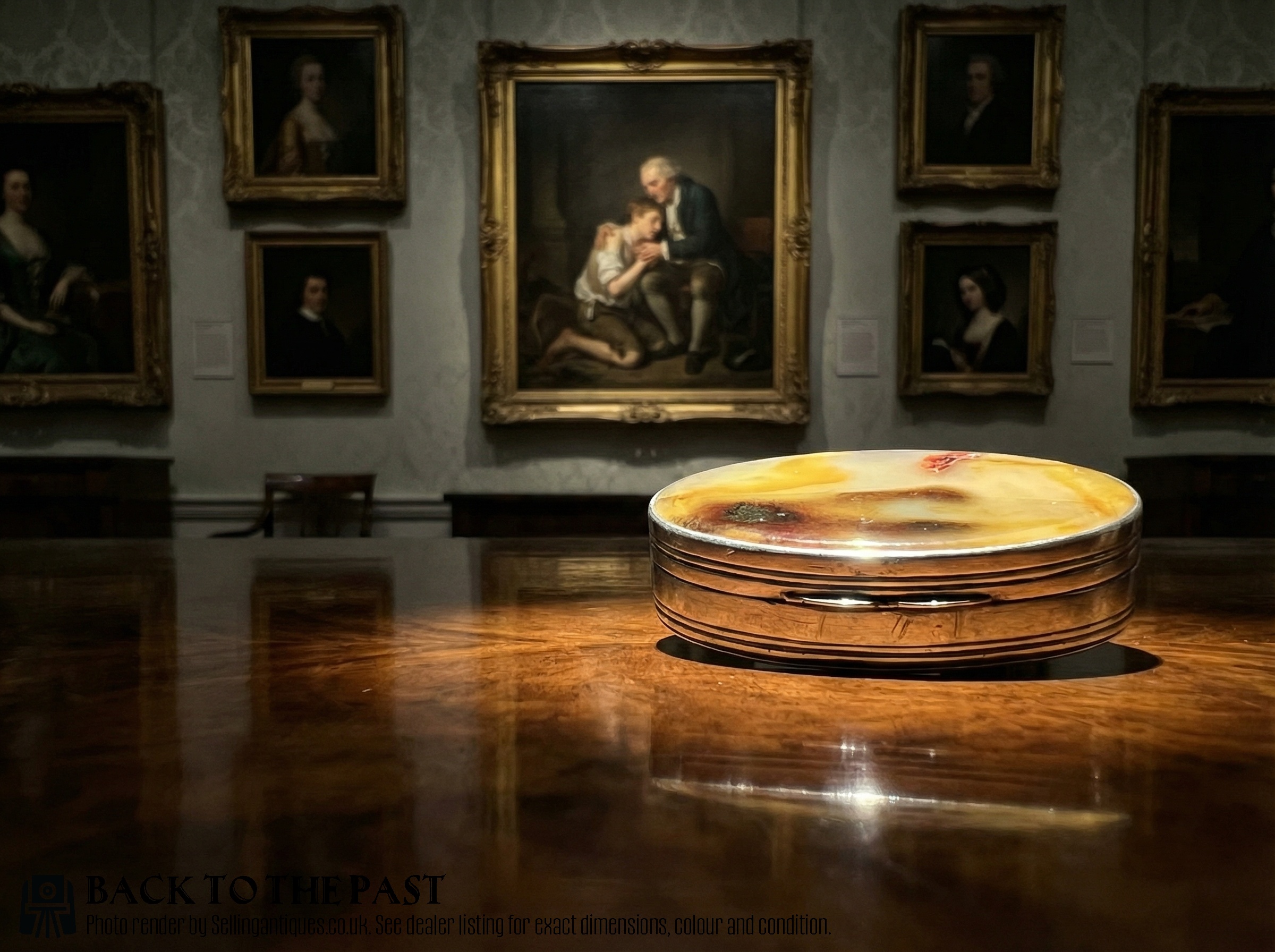
A Scottish snuff container, typically made from horn with a hinged silver lid. Some are pocket-sized, others are table pieces on a scale nothing else in the category matches.
The heaviest object in the Sellingantiques archive for this category is one of them: a Scottish horn table mull with agate mounts, weighing 1.4kg.
Why are so many boxes marked Birmingham?
Birmingham is named in 50 titles, against 36 for London and 17 for Chester. That weighting is unusual for silver generally.
It reflects where the trade sat. A large share of small boxes of this kind were Birmingham-made, and the town's mark follows them through the Georgian and Victorian runs.
Are snuff boxes and pill boxes the same thing?
In the listings they often are. Dealers catalogue the same object under two or three names at once: 61 titles say pill, 36 say trinket, 21 say vinaigrette and 21 say tobacco.
A vinaigrette is a distinct form, with a pierced inner grille that held a scented sponge. Pill and trinket, by contrast, describe use rather than construction, and small hinged silver boxes take all three labels.
How old are most of these boxes?
The dated field runs from 1700 to 1960. Georgian and Victorian pieces together account for most of the stock that carries a date.
Where titles give an actual year, they cluster in two bands: 1780 to 1860, and 1890 to 1930. Both ends are thin, with only a handful reaching back to around 1710 to 1750 and a few carrying mid-20th-century hallmarks such as 1946, 1964 and 1966.
Many period labels are buckets rather than readings, so "19th Century" or "Georgian" in a listing means a range.
Do novelty shapes come up?
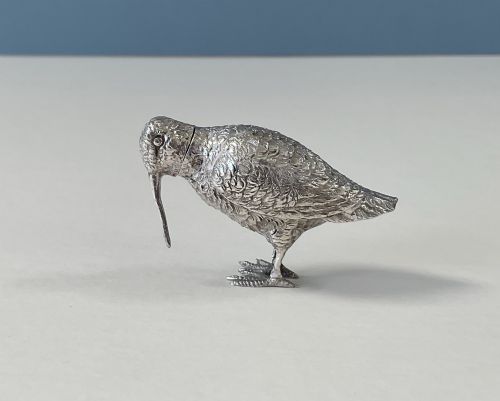
Once in a blue moon, and almost never twice. A snail, a fox head, a recumbent cow, a cockerel, a French bulldog, a Dutch clog, a Brazil nut, a terrapin and a roulette wheel each appear a single time in the archive.
The largest measurement recorded anywhere in the category is an 8.75-inch pheasant-shaped snuff bottle.
How often do silver snuff boxes come up for sale?
About 73 come to market on Sellingantiques in a year, listed by 62 different dealers.
That makes this one of the most widely stocked small-silver categories on the site, so the range on offer at any moment is broad rather than narrow.