
A 2026 Guide by Sellingantiques
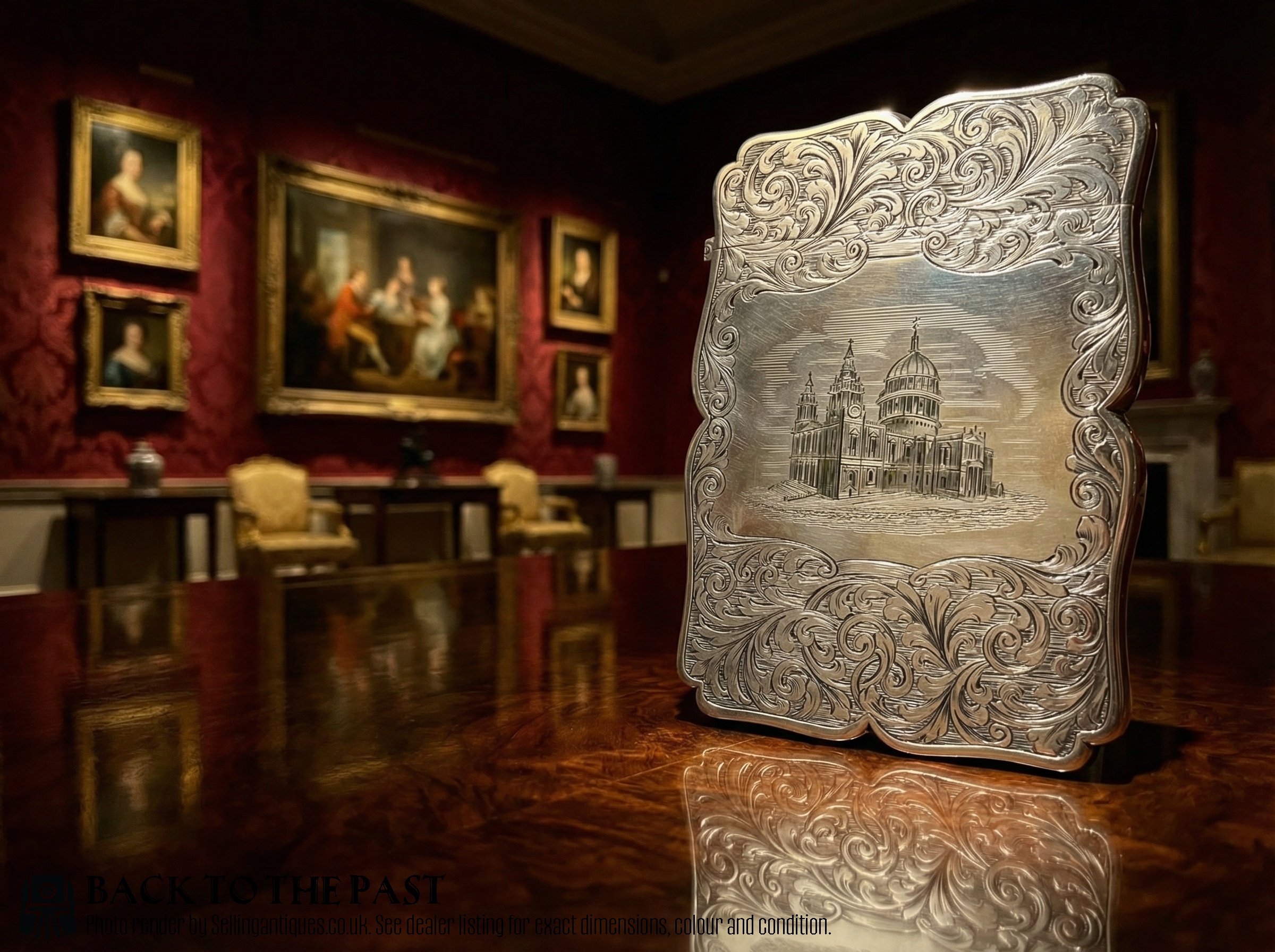
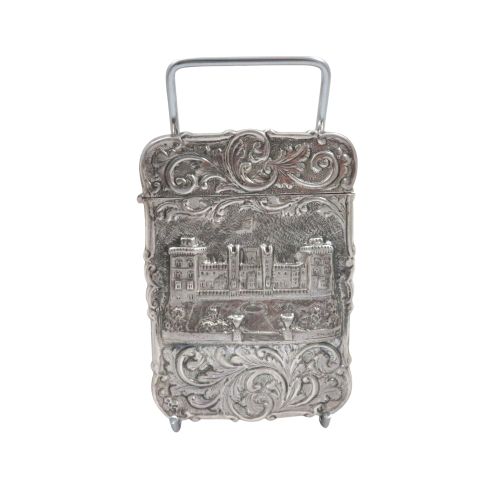
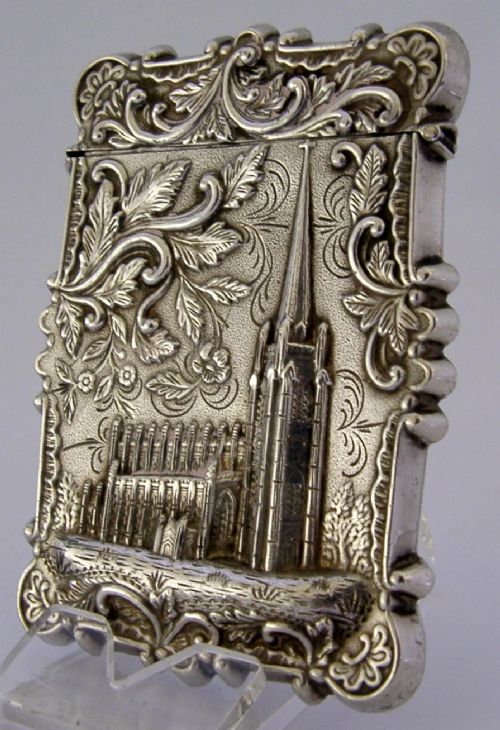
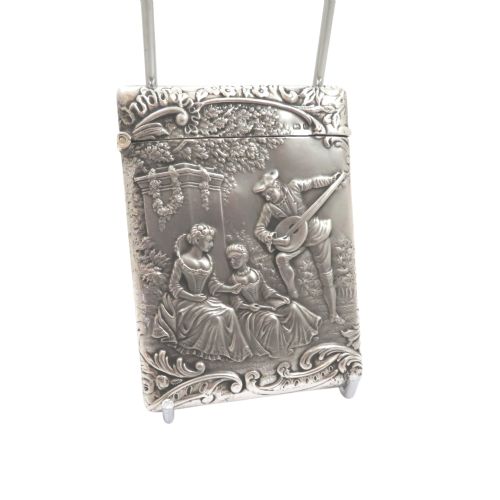
Victorian Antique Silver Card Case of St Paul’s Cathedral by Nathaniel Mills, Victorian
Priced at £1,995 from Highland Antiques Ltd
Visiting cards became essential for social introductions in early nineteenth-century polite society.
The earliest antique silver card cases appeared around the year 1830.
Demand peaked during the Victorian period when strict etiquette rules dictated regular calling routines for anyone moving in polite circles.
Check the hallmarks. Birmingham makers dominated the English trade for these items throughout the nineteenth century.
Production dropped off after the First World War. Social calling declined as telephones became more common.
Nathaniel Mills operated in Birmingham from 1825 to 1843. He produced some of the most recognisable castle-top examples showing national landmarks.
Taylor and Perry also worked in Birmingham during the early Victorian period, turning out embossed cases.
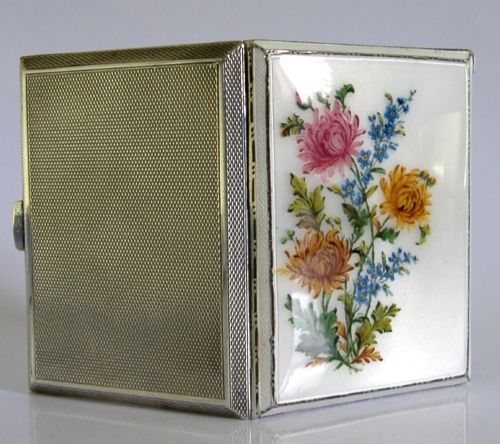
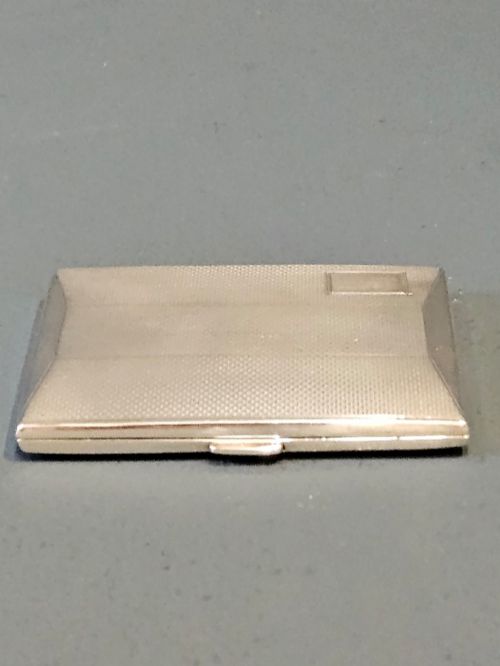
Yapp and Woodward stamped their mark on engine-turned antique silver card cases throughout the 1840s.
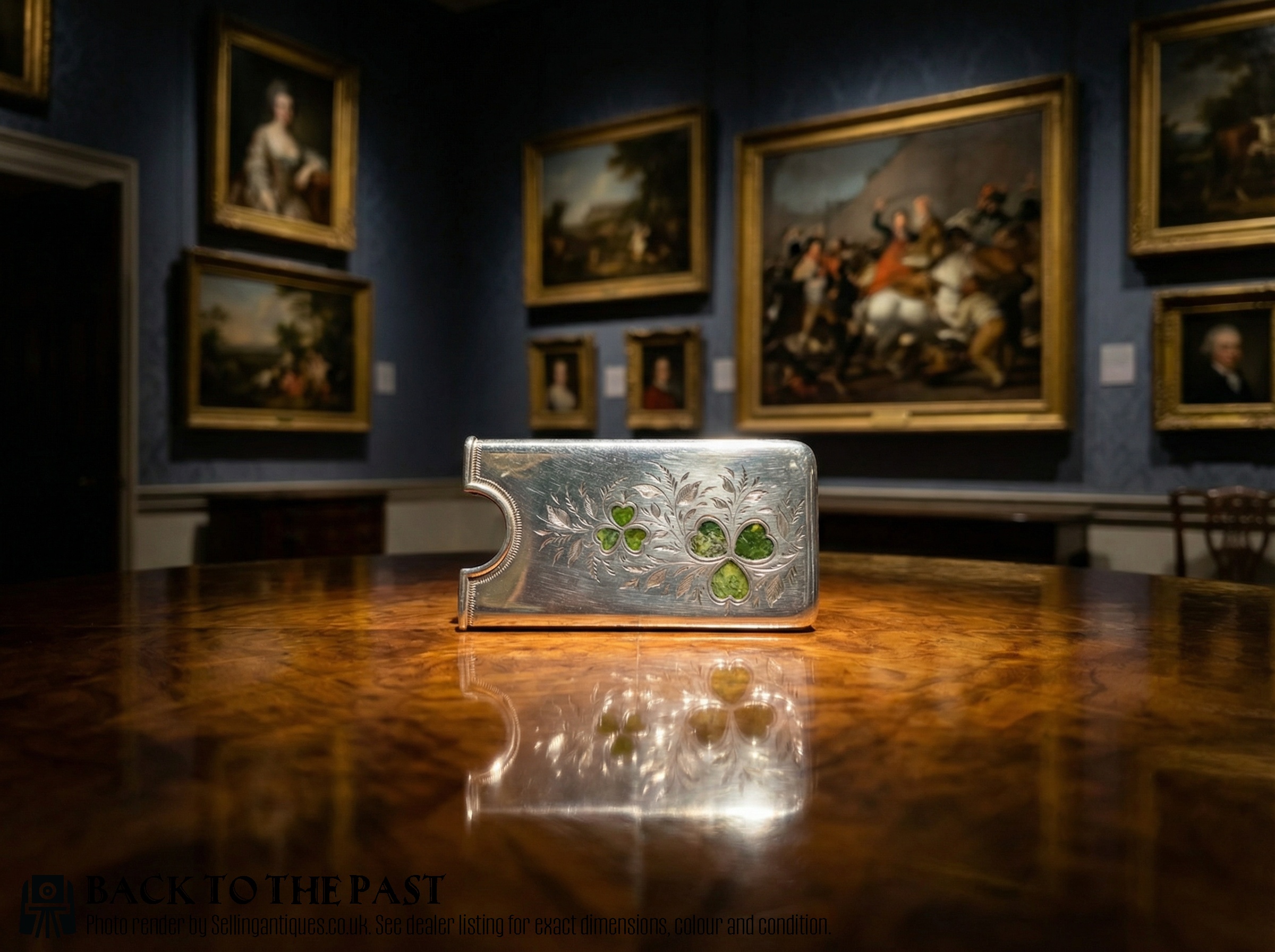
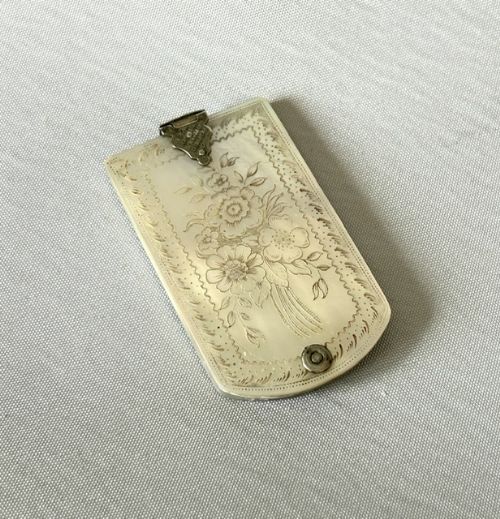
A Delightful Silver & Connemara Marble Card Case, Edwardian
Priced at £175 from Andrew Cox Antiques
The 2026 retail price guide for Antique Silver Card Cases is drawn from a proprietary archive of over 1.1 million retail prices indexed by Sellingantiques since 2003. This guide relies exclusively on their own internal data; no external sources or auction records are used.
Analysing nearly 25 years of UK antique market history alongside current retail values, the data indicates that typical UK retail prices for Antique Silver Card Cases range between £200 and £800. Entry-level prices generally fall under £200 and premium examples upwards of £800.
A flush hinge sits tight along the top edge, allowing the lid to spring open.
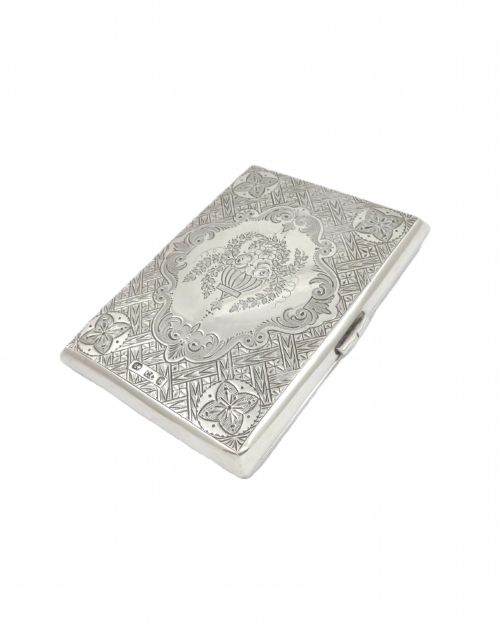
Engraved cartouches sit on the front faces. Most bear simple monograms.
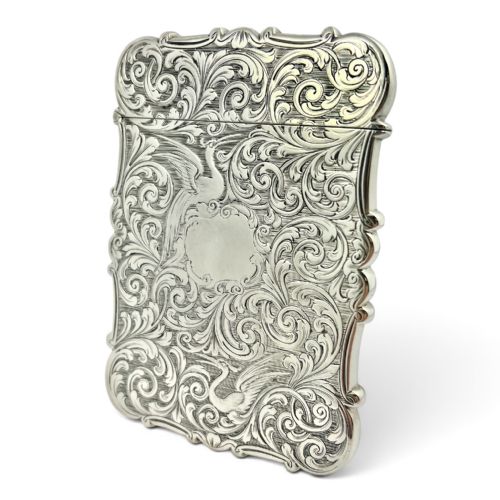
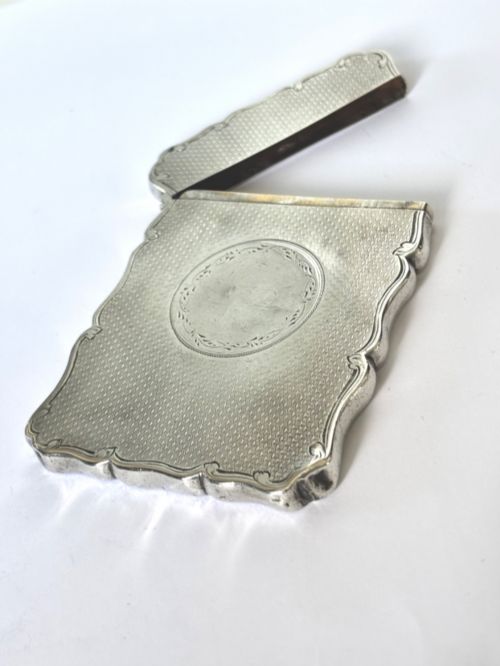
Look for shaped edges. Many examples feature scalloped or serpentine borders rather than straight sides.
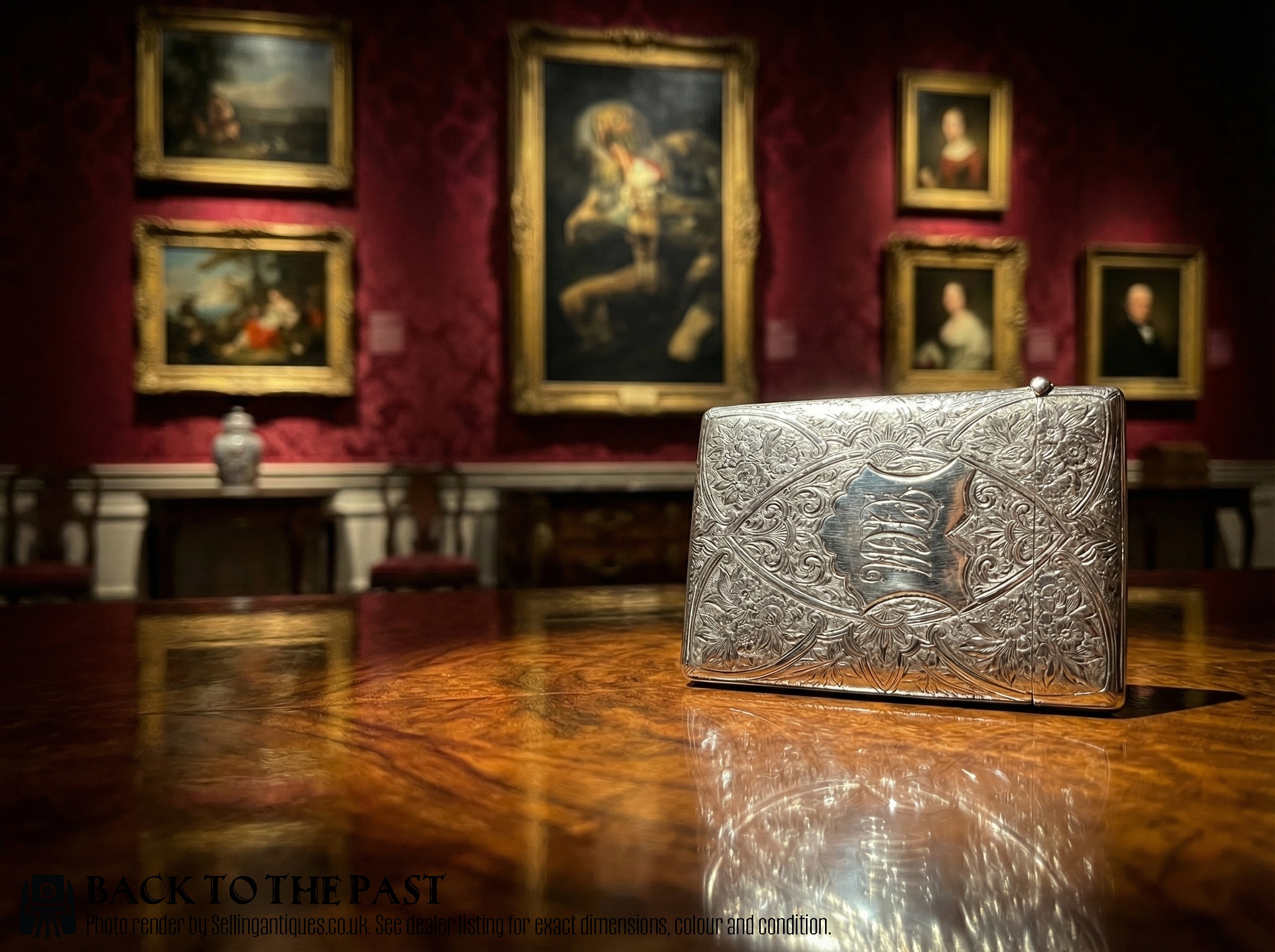
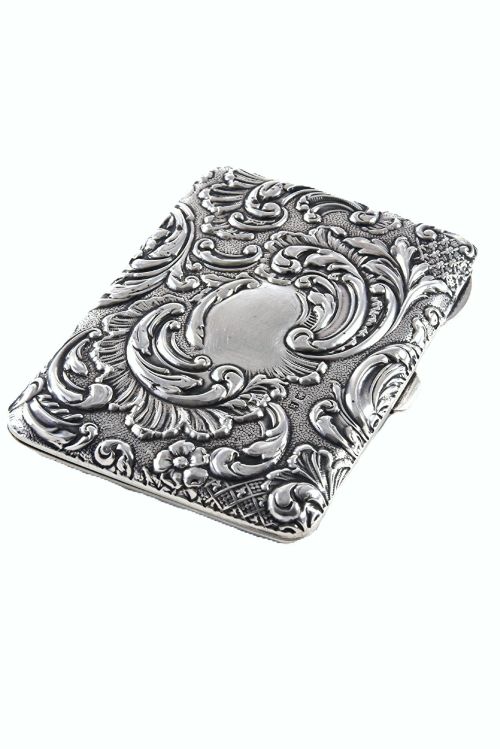
Beautiful Edwardian Solid Silver Card Case, Hallmarked Birmingham 1902 by Henry Matthews, Edwardian
Priced at £270 from William Rand Antiques
Silversmiths stamped the main panels in steel dies to create deep relief patterns across the surface.
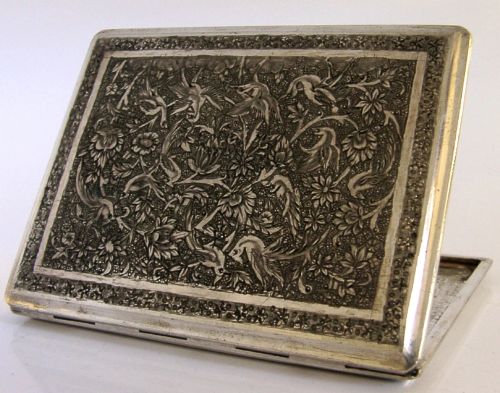
Engravers cut fine floral or scroll decoration by hand using sharp burins.
Soldering the thin side walls required strict heat control. A heavy hand could easily melt the chased silver.
"Some examples feature a hidden spring mechanism in the hinge to flip the lid open quickly."
"Craftsmen tailored the interior width to match specific regional variations in visiting card dimensions."
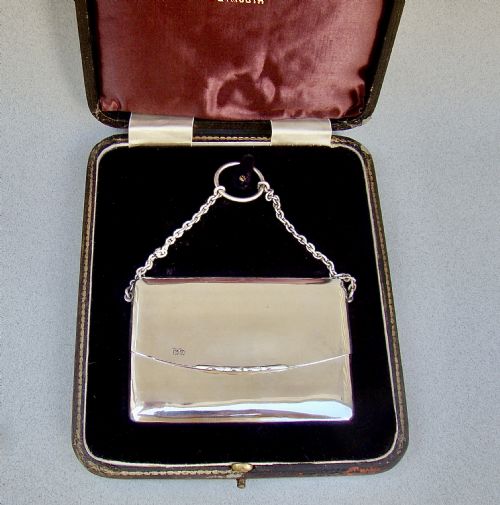
"Silversmiths occasionally added a tiny chain and ring so the piece could hang from a chatelaine."
Based on almost 25 years of Sellingantiques UK antique market data, Antique Silver Card Cases appeared 1309 times (out of 1,100,000 antiques) which gives it a rarity score of 77/100.
This score measures scarcity within the Sellingantiques archive only and is not a survey of the entire antiques market, so these statistics may not be indicative of the general availability of Antique Silver Card Cases elsewhere.
Don't use liquid polish. Liquid pastes dry white in the deep recesses of the engraving and ruin the appearance.
Brush out any accumulated dust first with a soft natural bristle brush. Gentle rubbing with a silver cloth brings up the high spots while leaving a sharp contrast in the cuts.
Most hold Victorian visiting cards which were smaller than modern business cards.
Measure the internal dimensions carefully before buying if you plan to use it today.
Broadly speaking, men used smaller rectangular cases designed to slip neatly into a waistcoat pocket without ruining the line of the cloth. Their cards were typically smaller too.
Women carried slightly larger examples, often in a reticule or purse. These larger antique silver card cases sometimes incorporated a small notebook and pencil for recording social engagements.
Don't apply oil or household lubricants to silver hinges. They attract grit and dust which will grind away the soft metal over time and damage the joint.
A stiff hinge usually means the silver pin is slightly bent or the knuckles have distorted. A working silversmith can often realign the hinge knuckles and replace the pin safely.
Please note: This Antique Silver Card Cases guide and its associated pricing data are provided for general informational purposes only. It does not constitute formal financial, investment, or appraisal advice and should not be relied upon as the sole basis for any commercial activity, purchasing, or sales decisions. Sellingantiques.co.uk accepts no liability for any actions taken in reliance on this information. Always consult with a qualified professional or independent appraiser.
