


A 2026 Guide by Sellingantiques
Marrow was a delicacy at Georgian dinner tables. People ate it spread hot on toast.
Earlier diners just used regular spoons. Dedicated marrow scoops appeared late in the seventeenth century.
Look for the shift in dining habits. The marrow craze died down by the Victorian period.
Very few turn up before 1690. Most surviving examples belong to the reigns of George II and George III.
Some were supplied as part of massive silver canteens. Others were bought singly to match existing flatware patterns.
Paul de Lamerie produced antique silver marrow scoops. His workshop supplied them to wealthy clients in early Georgian London.
Hester Bateman made these in the late eighteenth century. Her pieces often feature the plain styling typical of her workshop.
George Adams manufactured scoops during the early Victorian period. You will find his hallmark on pieces matching large flatware canteens.
The 2026 retail price guide for Antique Silver Marrow Scoops is drawn from a proprietary archive of over 1.1 million retail prices indexed by Sellingantiques since 2003. This guide relies exclusively on their own internal data; no external sources or auction records are used.
Analysing nearly 25 years of UK antique market history alongside current retail values, the data indicates that typical UK retail prices for Antique Silver Marrow Scoops range between £200 and £400. Entry-level prices generally fall under £200 and premium examples upwards of £400.
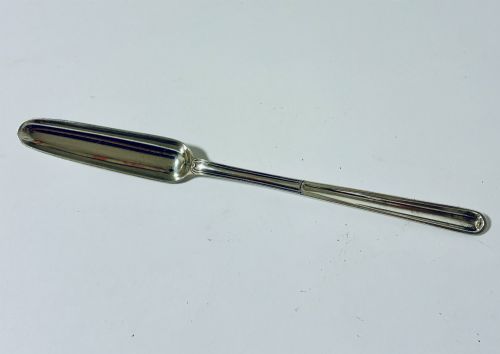
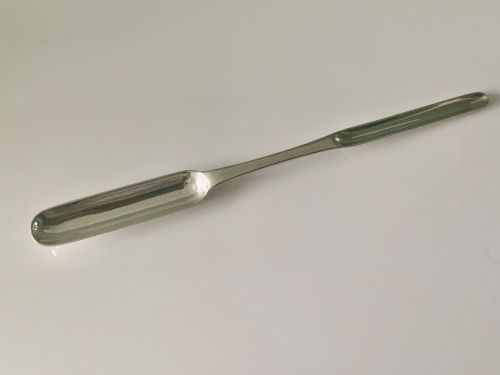
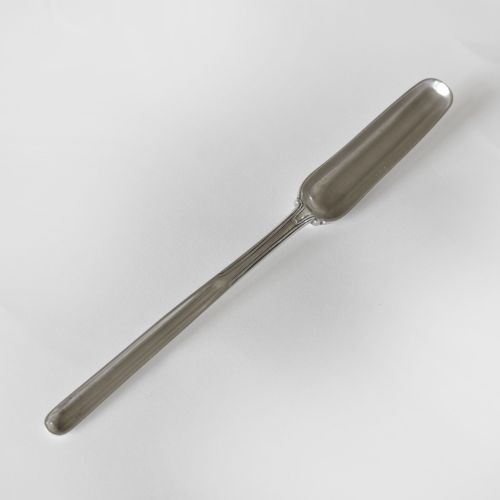
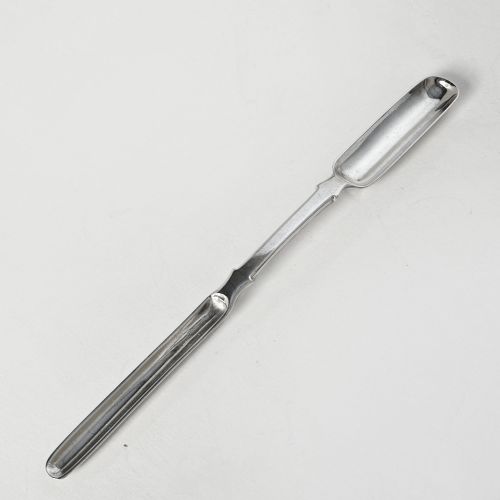
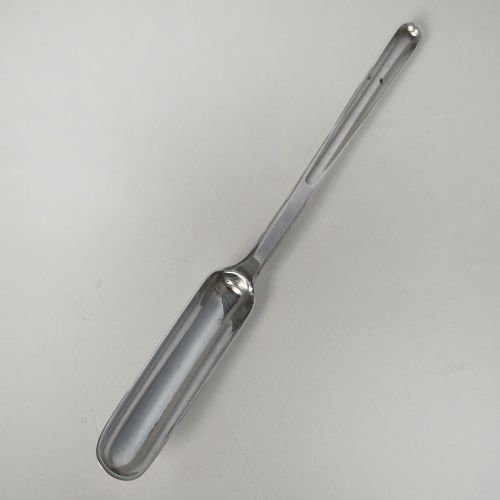
Double-ended construction defines the form. One end is wide for large beef bones, while the other handles narrow mutton cuts.
The central stem joins the two scoops. It often features a crest or coat of arms engraved in the middle.
Always check the bowl profiles. They should be shallow and elongated to scrape effectively without getting stuck in the bone.
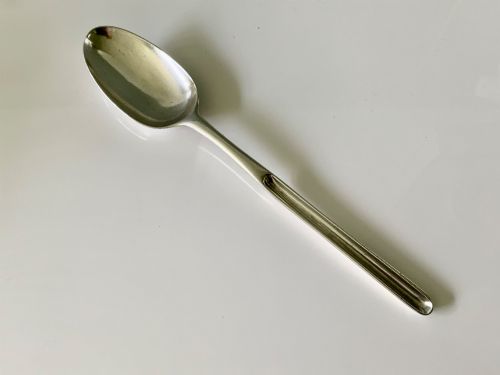
Early forms evolved directly from marrow spoons. Silversmiths simply replaced the conventional round spoon bowl with a second scoop.
Later pieces match specific flatware patterns. Makers started casting stems in Old English or Fiddle patterns to suit grand sets.
Feel the weight in your hand. Georgian scoops were forged from heavy gauge silver, while later examples often feel thinner.
"People now use antique silver marrow scoops as drinks stirrers. The long profile works well in tall cocktail glasses."
"They make excellent tools for extracting crab meat. The double-ended design reaches into tight claws and legs with ease."
"Some collectors use them for serving specialist mustards or chutneys. The narrow bowls portion out small amounts neatly."
Based on almost 25 years of Sellingantiques UK antique market data, Antique Silver Marrow Scoops appeared 188 times (out of 1,100,000 antiques) which gives it a rarity score of 96/100.
This score measures scarcity within the Sellingantiques archive only and is not a survey of the entire antiques market, so these statistics may not be indicative of the general availability of Antique Silver Marrow Scoops elsewhere.
Look at the central stem. Most makers stamped their marks right in the middle, between the two bowls. It was the only flat area wide enough to take a full set of punches.
Sometimes you find them on the back of the larger bowl. This is more common on very early eighteenth-century pieces.
Hand wash them in warm soapy water. Dishwasher detergents contain harsh chemicals that leave a dull grey film on antique silver over time.
The heat can also cause problems. It accelerates tarnishing and risks damaging delicate family crests engraved on the surface.
That is a marrow spoon. It is the immediate predecessor to the double-ended marrow scoop. Diners used the spoon bowl for gravy or soup, and the scoop end for extracting marrow.
They were popular from the late seventeenth century into the early Georgian period. Silversmiths eventually dropped the spoon bowl entirely to create the double-ended scoop form.
Wear on an engraving is a good sign. It shows the piece has been polished and handled over generations. A crisp, sharp engraving on an otherwise worn scoop suggests it was added recently.
Families frequently added crests to existing flatware. Worn crests usually date to the period of manufacture or shortly after.
Please note: This Antique Silver Marrow Scoops guide and its associated pricing data are provided for general informational purposes only. It does not constitute formal financial, investment, or appraisal advice and should not be relied upon as the sole basis for any commercial activity, purchasing, or sales decisions. Sellingantiques.co.uk accepts no liability for any actions taken in reliance on this information. Always consult with a qualified professional or independent appraiser.
