


A 2026 Guide by Sellingantiques
Georgian homes relied on fireplaces for heat. Early antique mantle mirrors sat low against the chimney breast, doubling the flickering firelight during dark winter afternoons.
Look at the glass itself. Plate glass casting improved across the nineteenth century, allowing Victorian makers to produce much wider continuous panes.
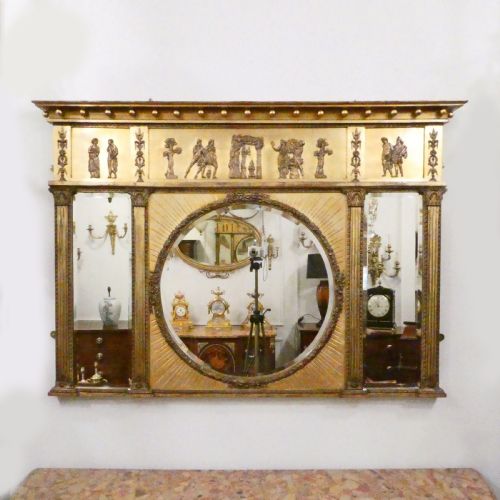
Tax laws restricted glass sizes for decades. Found a frame with a divided mirror? That three-part construction often points to early nineteenth-century attempts to dodge high duties.
Overmantles grew taller as ceilings lifted. Edwardian examples sometimes stretch almost to the cornice, dominating the upper wall space above the grate.
Thomas Chippendale supplied carved overmantles during the mid-eighteenth century. His workshop accounts detail elaborate rococo frames designed to match specific chimney pieces.
Finding a signed antique mantle mirror is rare. Most carving workshops and gilders operated as anonymous sub-contractors for larger retail furnishers.
Look out for stamped Victorian examples. Firms like Gillows of Lancaster occasionally marked their heavier mahogany overmantles along the top edge or backboard.
The 2026 retail price guide for Antique Mantle Mirrors is drawn from a proprietary archive of over 1.1 million retail prices indexed by Sellingantiques since 2003. This guide relies exclusively on their own internal data; no external sources or auction records are used.
Analysing nearly 25 years of UK antique market history alongside current retail values, the data indicates that typical UK retail prices for Antique Mantle Mirrors range between £600 and £2,500. Entry-level prices generally fall under £600 and premium examples upwards of £2,500.
A flattened base edge is the primary identifier. Unlike standard wall mirrors, an antique mantle mirror sits directly on the shelf rather than hanging from a cord.
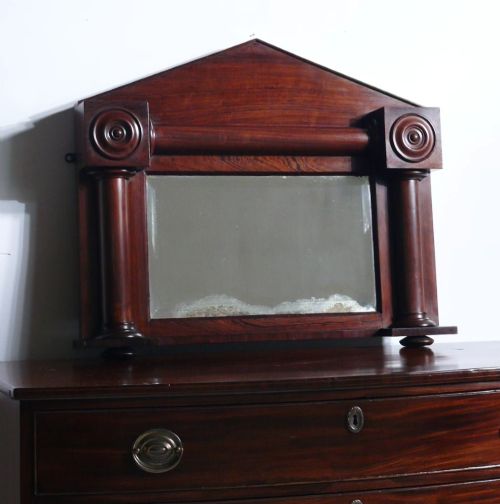
Classical columns often flank the side panels. Fluted pillars or turned pilasters frame the glass and support the projecting upper cornice.
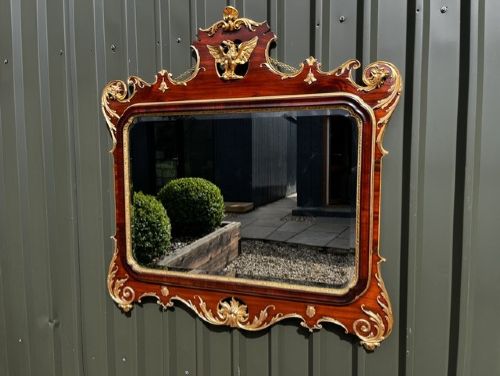
Expect some form of cresting on earlier frames. Carved eagles or trailing foliage typically break up the straight top line.
Water gilding requires specialist skill. Craftsmen applied gold leaf over red clay bole, burnishing the high points with agate stones to create a varied, bright surface.
Early silvering relies on mercury and tin foil. Workers slid glass plates over a flat table flooded with liquid mercury to create the reflective back.
Later frames incorporate composition ornament. Wire-reinforced putty replaced hand-carved wood, allowing makers to mass-produce decorative swags on late Victorian antique mantle mirrors.
"The wide shape altered room dynamics. Before they became standard, people had to cluster right by the windows to do close needlework or read."
"Some frames include hidden angled brackets. These allow the whole unit to tilt slightly forward, reflecting the decorated ceiling rather than the opposite wall."
"Original wavy glass softens the reflection of candlelight. The gentle ripples left by early casting methods create a moving reflection that modern flat glass fails to replicate."
Based on almost 25 years of Sellingantiques UK antique market data, Antique Mantle Mirrors appeared 1096 times (out of 1,100,000 antiques) which gives it a rarity score of 80/100.
This score measures scarcity within the Sellingantiques archive only and is not a survey of the entire antiques market, so these statistics may not be indicative of the general availability of Antique Mantle Mirrors elsewhere.
Yes, but you need heavy-duty fixings. Antique mantle mirrors carry weight due to the thick glass and dense wooden carcase.
Add proper D-rings to the solid side stiles. Avoid trusting the old backing boards or fragile upper frame to hold the load.
They fixed them directly to the wall behind. Even when sitting flush on a wide mantlepiece, these frames require wall anchors to remain stable.
Makers often fitted brass mirror plates to the side edges. You screw through these metal tabs straight into the brickwork, keeping the whole unit locked upright.
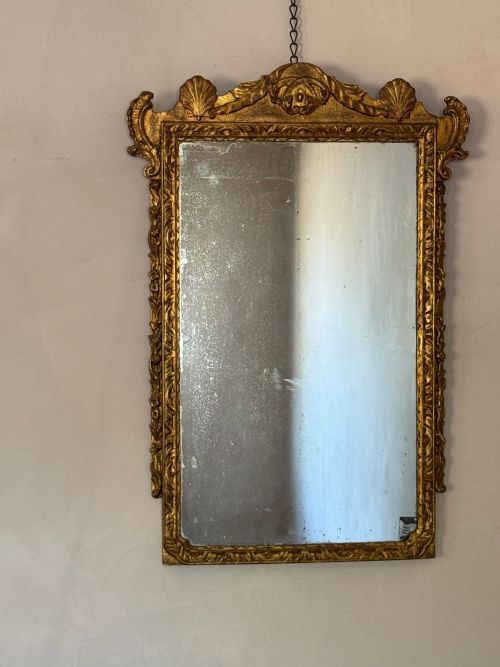
You cannot wash away the cloudiness. The grey haze sits behind the glass, caused by the chemical breakdown of the silvering itself.
A soft dry cloth removes surface dust.
Leave the finish as it is. That dull brown is the base clay bole showing through where the thin gold leaf has rubbed away over decades of dusting and handling.
Rubbing it will only strip more gold off the high spots. The varied surface forms part of the character and shining it up usually damages the surrounding gesso.
Please note: This Antique Mantle Mirrors guide and its associated pricing data are provided for general informational purposes only. It does not constitute formal financial, investment, or appraisal advice and should not be relied upon as the sole basis for any commercial activity, purchasing, or sales decisions. Sellingantiques.co.uk accepts no liability for any actions taken in reliance on this information. Always consult with a qualified professional or independent appraiser.
