
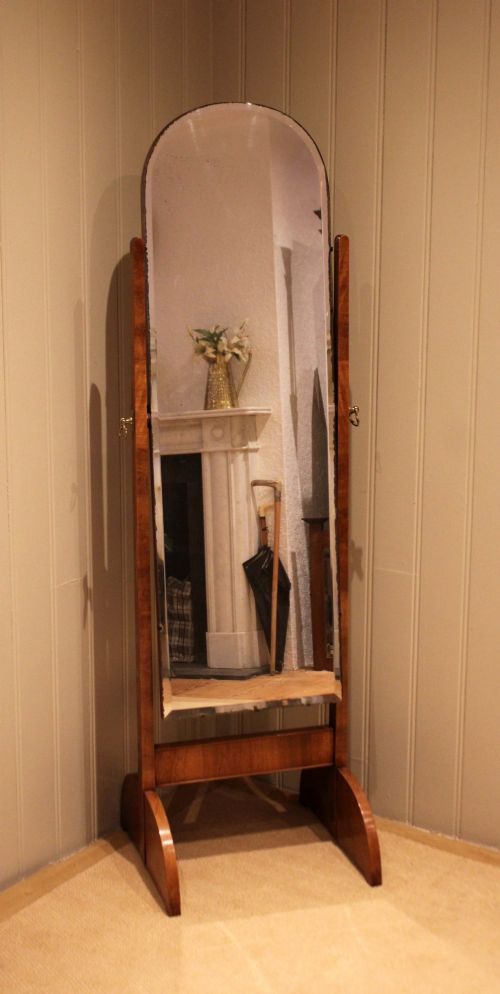


A 2026 Guide by Sellingantiques
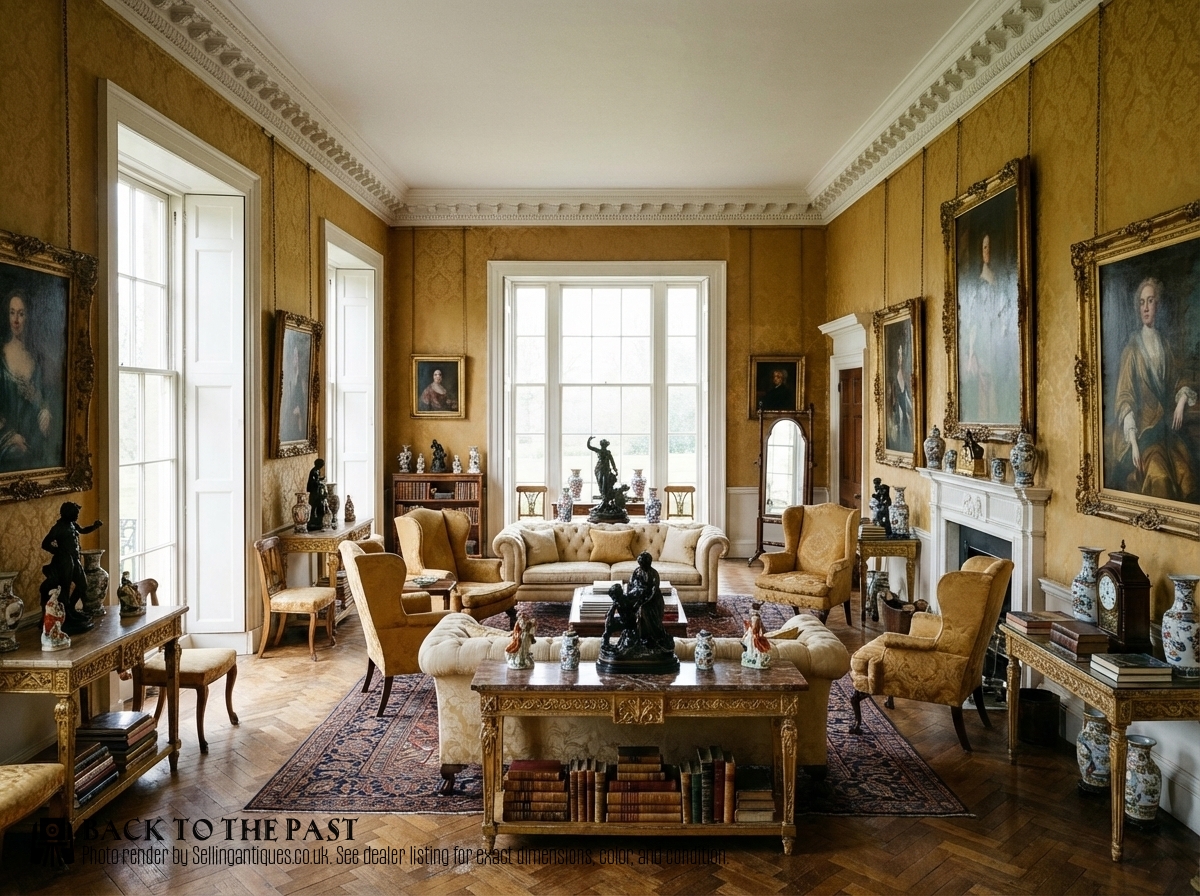
Regency Mahogany Cheval Mirror, Regency
Priced at £3,450 from Baggott & Co.
Late Georgian cabinetmakers first introduced these tall freestanding glasses into wealthy English bedrooms around 1790.
They were often known as 'horse dressing glasses' in early trade catalogues before the French term stuck.
Look for the shift from delicate neoclassical frames to heavy Victorian mahogany styles as glass plate technology improved.
Most early nineteenth-century examples sat directly on castors, making them easy to position near a window for better light.
Thomas Sheraton published specific designs for these swinging dressing glasses in his influential 1791 drawing book.
Gillow of Lancaster and London supplied various mahogany versions to prominent households throughout the Regency period.
Regional firms often copied London patterns, meaning many surviving antique cheval mirrors carry no identifiable mark.
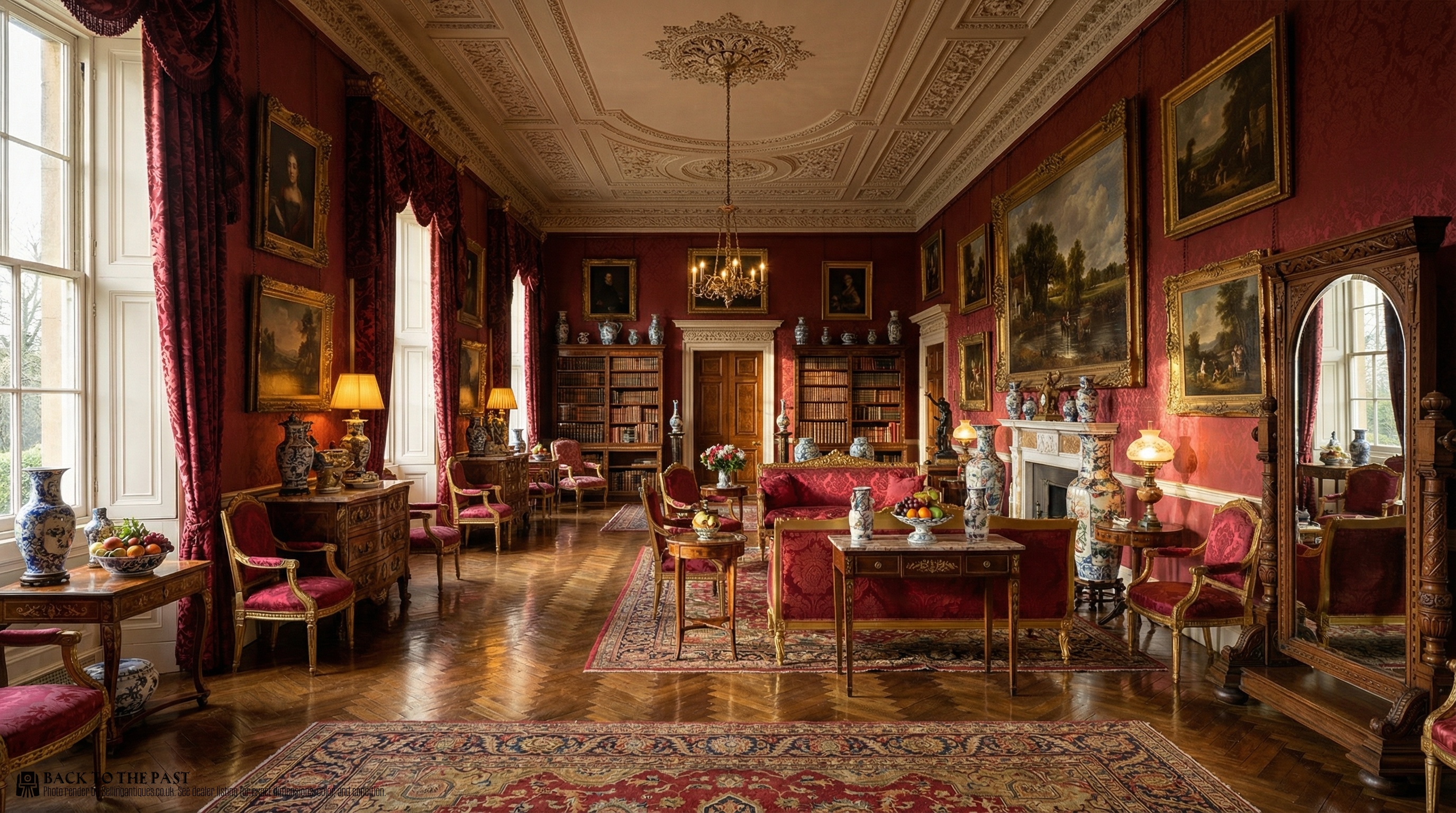
Carved Oak Cheval Mirror, 19th Century
Priced at £1,845 from Shackladys Antiques
The 2026 retail price guide for Antique Cheval Mirrors is drawn from a proprietary archive of over 1.1 million retail prices indexed by Sellingantiques since 2003. This guide relies exclusively on their own internal data; no external sources or auction records are used.
Analysing nearly 25 years of UK antique market history alongside current retail values, the data indicates that typical UK retail prices for Antique Cheval Mirrors range between £500 and £2,100. Entry-level prices generally fall under £500 and premium examples upwards of £2,100.
Splayed legs offer essential stability for an antique cheval mirror, stopping the tall frame tipping forward.
Turned wooden knobs often tighten the central glass, holding the chosen angle firmly in place during use.
Some bases feature a shaped platform connecting the upright posts to keep the whole structure rigid.
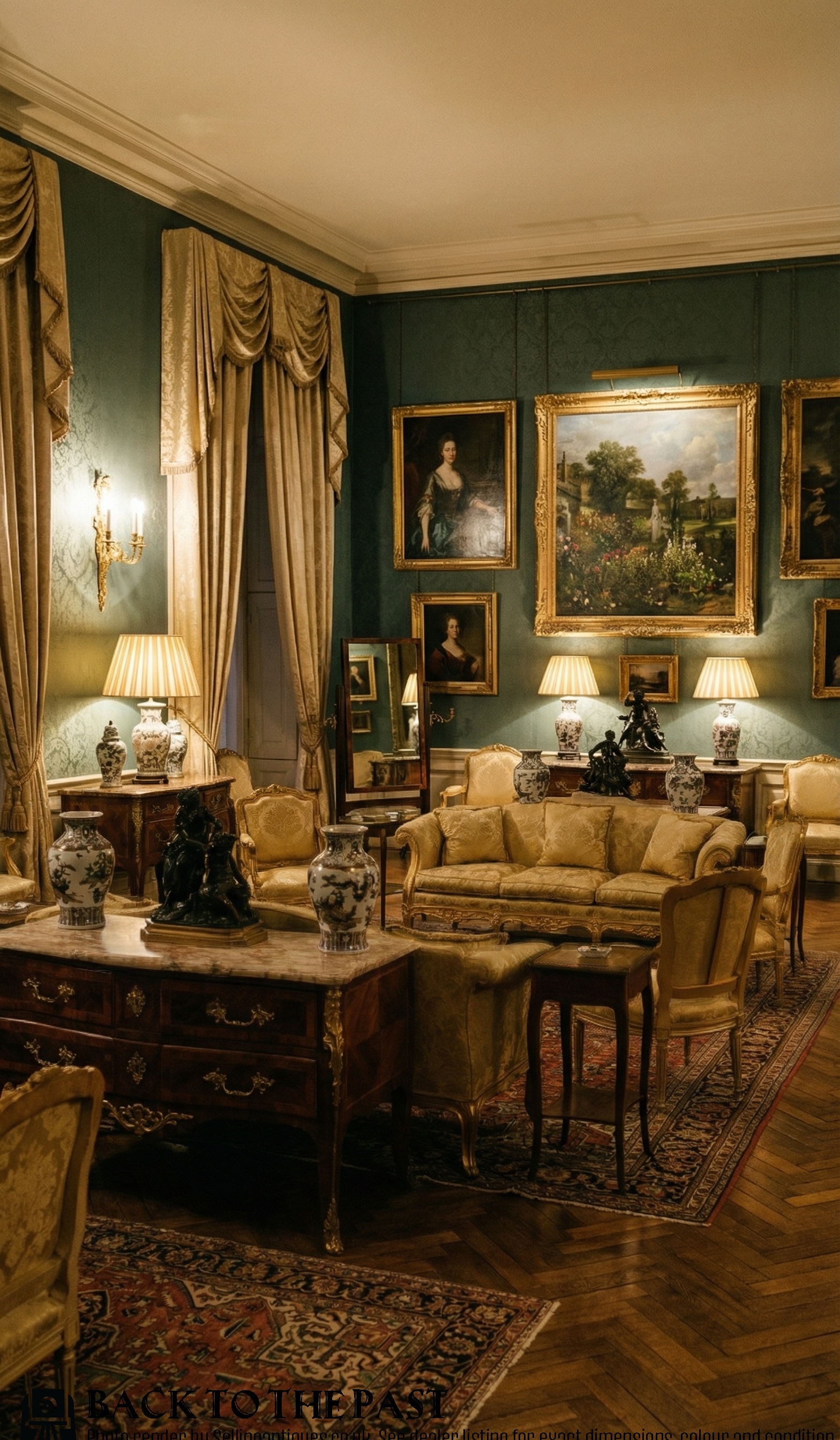
Early 19th Century Gillows Cheval Mirror, Regency
Priced at £595 from Mersham Manor Antiques
Early makers used hand-cut mortise and tenon joints to secure the heavy uprights into the base.
Veneering a curved top rail required highly skilled cabinetmakers to press thin timber over a shaped pine core.
Notice the thick bevelled glass on Edwardian examples. This detail was made possible by late nineteenth-century industrial grinding techniques.
"Hidden weights occasionally sit inside the hollowed wooden uprights to help balance the heavy swinging glass."
"Their name literally translates to 'horse' in French, referring to the stable four-legged stance of the supporting base."
"Many early designs included clever sliding panels or folding side wings to catch different viewing angles."
Based on almost 25 years of Sellingantiques UK antique market data, Antique Cheval Mirrors appeared 2315 times (out of 1,100,000 antiques) which gives it a rarity score of 63/100.
This score measures scarcity within the Sellingantiques archive only and is not a survey of the entire antiques market, so these statistics may not be indicative of the general availability of Antique Cheval Mirrors elsewhere.
Use a soft cotton cloth lightly dampened with water. Wipe the surface gently to remove dust and fingerprints, then dry it immediately with a second clean cloth.
Commercial window sprays often contain ammonia. This liquid can seep behind the wooden frame and damage the fragile historic silvering on the back of the plate.
The friction hinges on an antique cheval mirror rely on tight wooden threads or metal washers to hold the heavy plate at an angle. Over time, these components wear down from constant movement.
Sometimes a small felt or leather washer placed behind the brass knob provides enough grip to hold the glass steady.
Most plates sit on brass pivot pins slotted directly into the upright posts. You can usually lift the entire framed glass straight up and out of the supporting brackets.
This makes moving the heavy antique much safer. Always have a second person help lift the frame to avoid snapping the brass pins.
Antique cheval mirrors are heavy pieces of furniture with a high centre of gravity. A sloped floor can make them unstable, especially if the original brass castors run freely.
Positioning the base against a wall helps. You might also rest the castors in small rubber caster cups to level the stance and stop unwanted rolling.
Please note: This Antique Cheval Mirrors guide and its associated pricing data are provided for general informational purposes only. It does not constitute formal financial, investment, or appraisal advice and should not be relied upon as the sole basis for any commercial activity, purchasing, or sales decisions. Sellingantiques.co.uk accepts no liability for any actions taken in reliance on this information. Always consult with a qualified professional or independent appraiser.
