
There are no results to show on this page for that combination of filters:
Chippendale Shield Back Chairs
A 2026 Guide by Sellingantiques
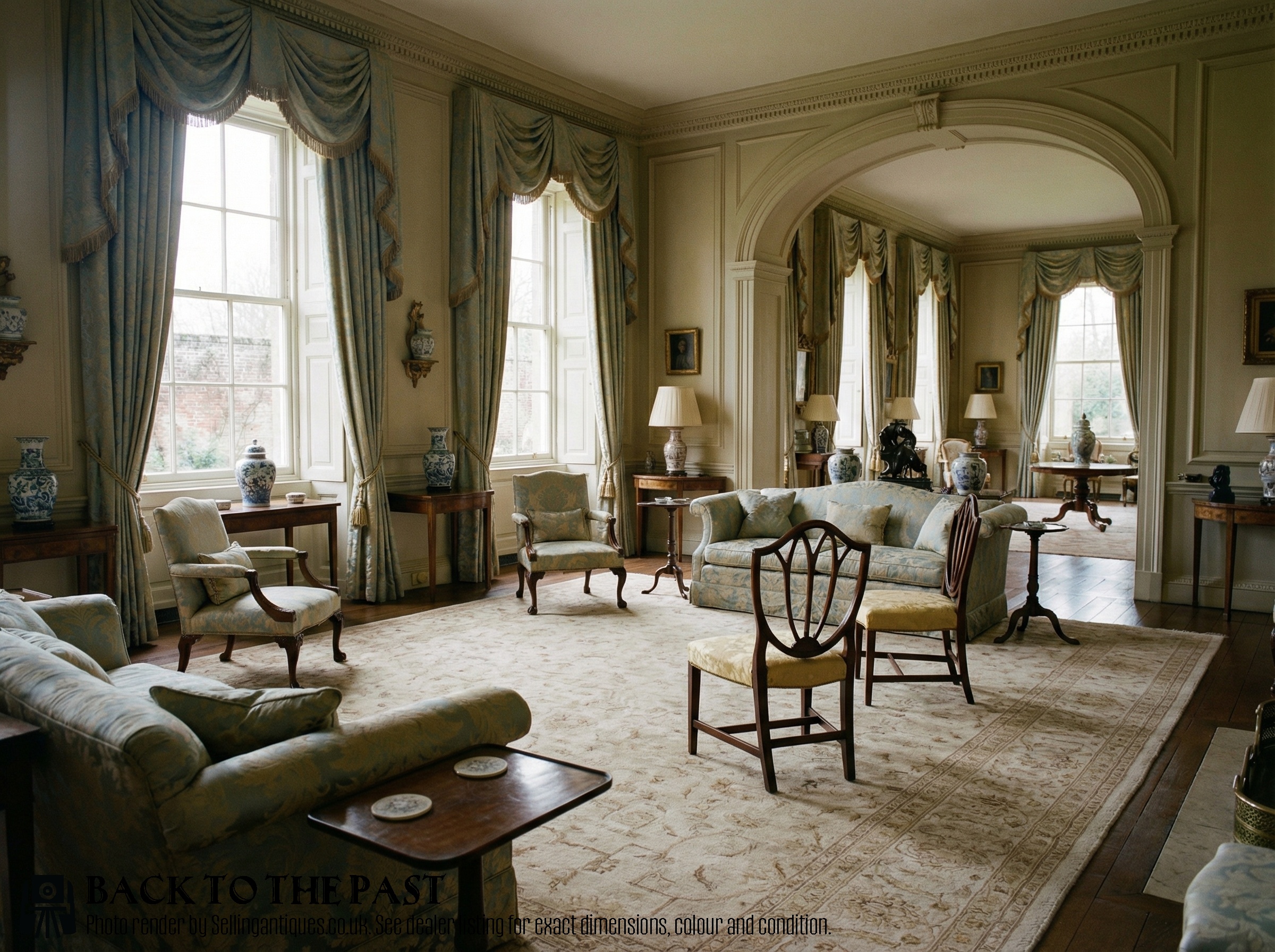
Pair of George III Mahogany Shield Back Chairs, Georgian
Priced at £425 from Walton House Antiques
George Hepplewhite popularised this design in the late eighteenth century.
Note the transition. They replaced the heavier, solid-backed seating of the earlier Georgian period, offering a lighter aesthetic.
Provincial craftsmen copied the printed plates extensively. You'll find that many unsigned chairs actually belong to regional workshops operating far from the London trade hubs.
Across the Atlantic, American makers adapted the form shortly after the pattern books arrived.
The Hepplewhite firm published the famous designs in 1788. They didn't usually stamp their own output, making direct attribution hard.
Thomas Sheraton included similar variations in his subsequent drawing books.
Don't ignore the wider trade. Hundreds of provincial makers supplied these chairs to wealthy rural clients who wanted the latest capital fashions.
The 2026 retail price guide for Antique Shield Back Chairs is drawn from a proprietary archive of over 1.1 million retail prices indexed by Sellingantiques since 2003. This guide relies exclusively on their own internal data; no external sources or auction records are used.
Analysing nearly 25 years of UK antique market history alongside current retail values, the data indicates that typical UK retail prices for Antique Shield Back Chairs range between £500 and £2,500. Entry-level prices generally fall under £500 and premium examples upwards of £2,500.
An open back resembling a pointed shield forms the core marker.
Tapered front legs usually support the seat. They often terminate in simple spade feet, keeping the profile sharp.
Examine the top rail. The gentle curve arches slightly to rest the shoulders comfortably, showing how cabinet makers balanced form with physical function.
Carving the shield back required immense skill to keep the slender wooden elements strong.
Mortise and tenon joints firmly secure the seat rails to the upright back legs, providing essential stability.
Turn the chair around. Makers either steam-bent the curved back or cut it from thick timber blocks. This shaping took considerable time at the workbench.
"Carvers sometimes incorporated Prince of Wales feathers into the splat to signal political loyalties."
"Painted variations exist. Workshops occasionally finished cheaper woods with floral motifs for bedrooms."
"The open design served a practical purpose. It made drawing rooms look larger by letting candlelight and shadows pass directly through the furniture."
Based on almost 25 years of Sellingantiques UK antique market data, Antique Shield Back Chairs appeared 504 times (out of 1,100,000 antiques) which gives it a rarity score of 90/100.
This score measures scarcity within the Sellingantiques archive only and is not a survey of the entire antiques market, so these statistics may not be indicative of the general availability of Antique Shield Back Chairs elsewhere.
Yes, provided the joints remain tight. You'll want to inspect the connection between the back uprights and the seat rails. If they feel firm and don't rock, they will serve well for regular family meals.
Keep them away from direct heat sources. Radiators dry out the old animal glue and cause the frame to wobble. A stable environment keeps the timber joints secure.
Seat covers change constantly. Upholstery is a wearing part and replacing it is standard practice in the trade. A fresh fabric actually protects the underlying seat frame from dirt and damage.
Dealers expect to see modern textiles on old frames. As long as the upholsterer avoided driving new tacks into fragile timber, the chair structure remains sound. It doesn't harm the historical integrity at all.
Silk damask was the standard choice for formal drawing rooms. It reflects light and complements the dark mahogany tones. Haircloth was another popular option for heavy daily wear, offering a tough surface.
Modern buyers often choose plain linens. A simple fabric draws the eye to the carved wooden splat rather than competing with it. You'll find cotton blends work well for frequent use.
Cabinet makers often fitted castors just to the front legs. This allowed servants to lift the back of the chair and wheel it easily into place.
It saves the rear legs from unnecessary wear.
Please note: This Antique Shield Back Chairs guide and its associated pricing data are provided for general informational purposes only. It does not constitute formal financial, investment, or appraisal advice and should not be relied upon as the sole basis for any commercial activity, purchasing, or sales decisions. Sellingantiques.co.uk accepts no liability for any actions taken in reliance on this information. Always consult with a qualified professional or independent appraiser.
