


A 2026 Guide by Sellingantiques
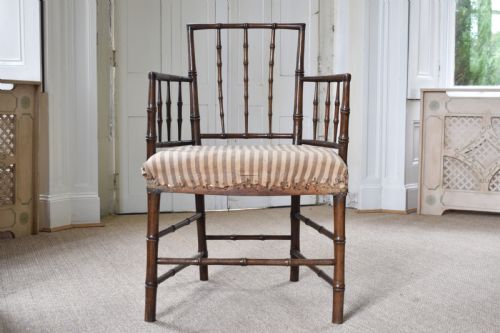
Late Regency Mahogany Desk Chair, Regency
Priced at £525 from Philip Hunt Antiques
Early iterations often evolved from standard library seating. They gradually adapted to match the specific demands of office work during the eighteenth and nineteenth centuries.
Look closely at the rise of commercial administration in Victorian Britain. This shift created a massive demand for purpose-built seating in banks and counting houses.
Swivel mechanisms started appearing regularly by the mid-nineteenth century. American patents influenced British production heavily during this period.
Captain's chairs became a popular offshoot. These sturdy wooden antique desk chairs moved quickly from ship cabins to provincial offices and home studies.
Thomas Warren patented the Centripetal Spring Armchair in the nineteenth century. His design allowed tilt and rotation while remaining grounded on castors.
Gillows of Lancaster produced various library and writing chairs. Their stamped examples often feature typical reeded legs and high-quality mahogany frames.
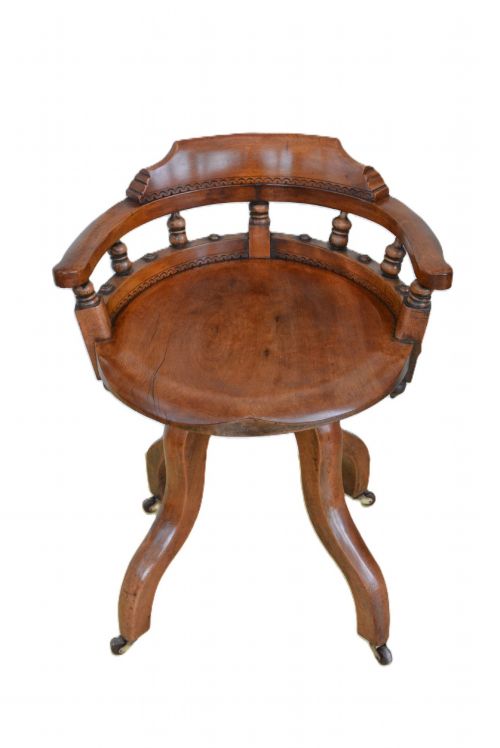
Victorian Walnut Bow Back Wide Desk Arm Chair, 1870
Priced at £825 from The Antique Furniture Company
The 2026 retail price guide for Antique Desk Chairs is drawn from a proprietary archive of over 1.1 million retail prices indexed by Sellingantiques since 2003. This guide relies exclusively on their own internal data; no external sources or auction records are used.
Analysing nearly 25 years of UK antique market history alongside current retail values, the data indicates that typical UK retail prices for Antique Desk Chairs range between £400 and £1,600. Entry-level prices generally fall under £400 and premium examples upwards of £1,600.
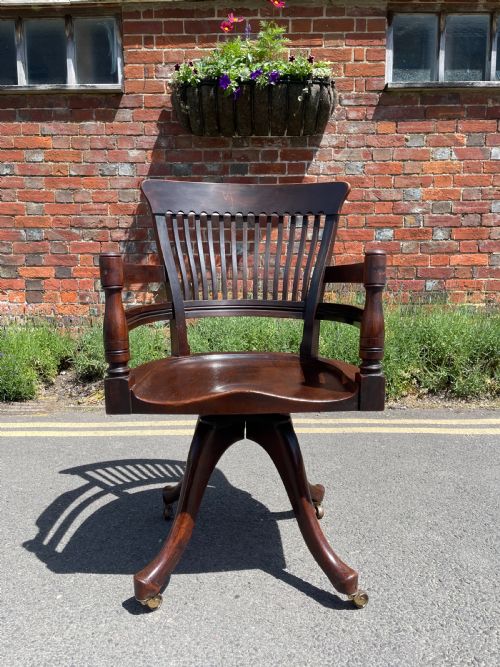
Curved backrests define the form. These wrap around the sitter to offer lumbar support without restricting arm movement across a ledger or writing slope.
Four splayed legs often terminate in castors. This configuration provides stability when leaning back and allows quick movement across a wooden floor.
Notice the height adjustment. A threaded iron column sits directly under the seat, letting the user raise or lower the frame to suit their desk.
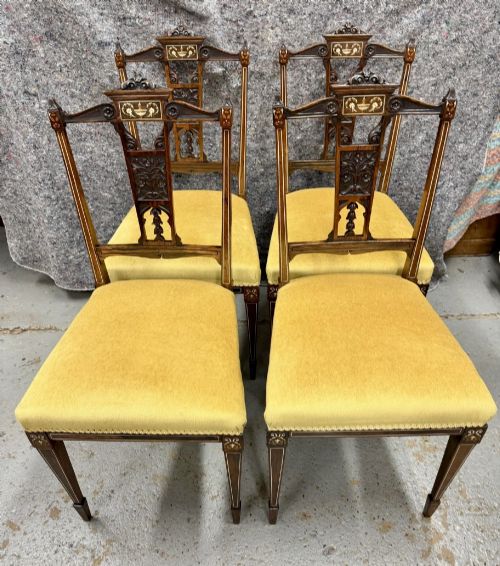
E W Godwin Desk Chair, 1880
Priced at £950 from Ropeworks Antiques
Steam bending shaped the continuous arm rails. Craftsmen exposed ash or elm to hot steam before clamping the softened timber around curved wooden formers.
Mortise and tenon joints secure the primary frame. Pegged construction often reinforces these connections on oak models built for heavy commercial use.
You'll see slight variations in the rings and balusters on the turned legs. Turners cut each profile by hand on a manual lathe.
"Many early mechanisms possess a self-centring action. The iron thread naturally drops back into a forward-facing position when the user stands up."
"Upholsterers often used tightly coiled horsehair to create a firm seating pad. This natural material retains its bounce and breathability for decades."
"Some Edwardian models include a hidden slide-out footrest. It tucks neatly under the seat frame until needed for reclining."
Based on almost 25 years of Sellingantiques UK antique market data, Antique Desk Chairs appeared 6078 times (out of 1,100,000 antiques) which gives it a rarity score of 30/100.
This score measures scarcity within the Sellingantiques archive only and is not a survey of the entire antiques market, so these statistics may not be indicative of the general availability of Antique Desk Chairs elsewhere.
You can lubricate the central spindle to stop grinding noises. A light application of machine oil or graphite powder works well on cast iron threads.
Wipe away any excess immediately. Old iron attracts dust, and a sticky residue will bind the thread further.
A completely split seat provides no support and will eventually damage the horsehair stuffing beneath. Having a professional replace the leather keeps the chair functional.
Keep the original brass studs if they are salvageable. A good restorer can colour-match new hide to suit the aged timber frame, preserving the overall character of the piece.
Most provincial examples use a mixture of native timbers. Elm provides a strong, wide plank for the saddle seat, while beech or ash works better for the turned legs and spindles.
High-end models for wealthy studies sometimes feature solid mahogany or oak throughout. The mixed-wood versions were usually stained or polished to give a uniform appearance.
Traditional brass castors fit onto the leg via a cup or a central screw peg. If the timber shrinks over time, the fitting becomes loose and drops out when lifted.
A brass cup castor needs its lateral securing screws tightened. If the screw holes are worn smooth, a restorer will plug the holes with small timber dowels and drill fresh pilot holes.
Don't glue the metal directly to the wood. The joint needs to allow for seasonal movement.
Please note: This Antique Desk Chairs guide and its associated pricing data are provided for general informational purposes only. It does not constitute formal financial, investment, or appraisal advice and should not be relied upon as the sole basis for any commercial activity, purchasing, or sales decisions. Sellingantiques.co.uk accepts no liability for any actions taken in reliance on this information. Always consult with a qualified professional or independent appraiser.
