


A 2026 Guide by Sellingantiques
Most early examples evolved from simple stools by adding a wooden backrest for support.
Regional traditions dictated the shape of antique country chairs rather than fashionable London trends.
Turners set up workshops near woodlands to shape the green timber right at the source.
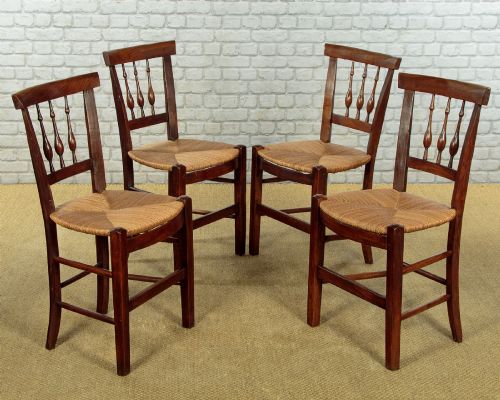
Look for variations in spindle shapes that hint at specific county origins.
Bodgers camped in beech woods to produce legs and stretchers for the larger provincial factories.
Names rarely survive on earlier pieces because local wheelwrights built them alongside carts and doors.
High Wycombe became the massive centre for this trade during the nineteenth century.
Stamped initials on the seat edge sometimes point to workshop owners in the Thames Valley.
The 2026 retail price guide for Antique Country Chairs is drawn from a proprietary archive of over 1.1 million retail prices indexed by Sellingantiques since 2003. This guide relies exclusively on their own internal data; no external sources or auction records are used.
Analysing nearly 25 years of UK antique market history alongside current retail values, the data indicates that typical UK retail prices for Antique Country Chairs range between £400 and £1,900. Entry-level prices generally fall under £400 and premium examples upwards of £1,900.
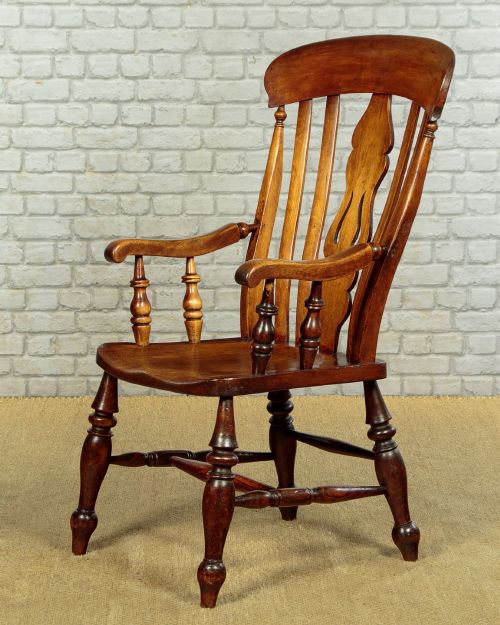
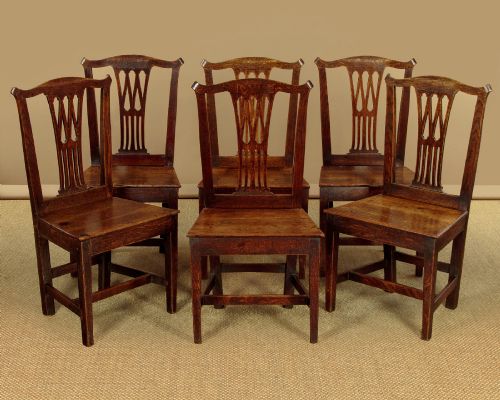
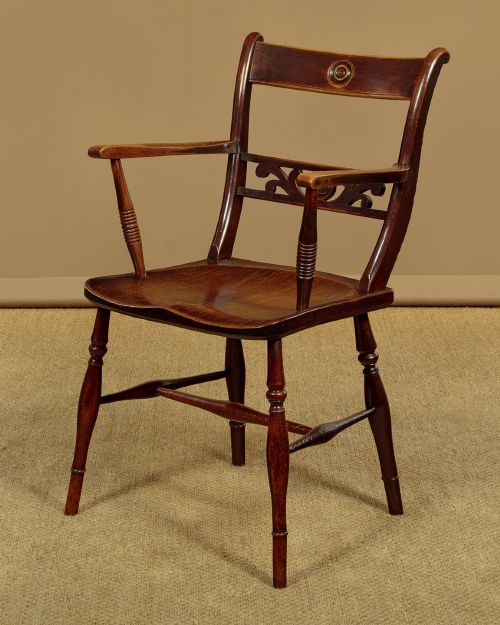
Solid wooden seats usually feature saddling to make sitting more comfortable.
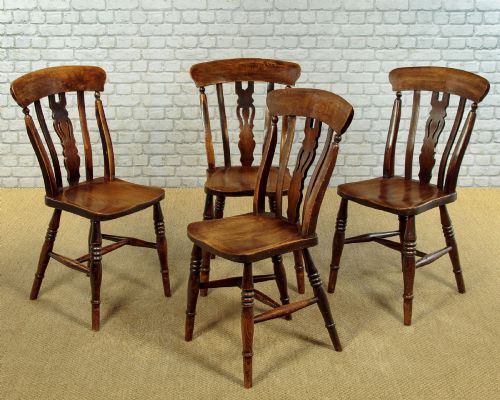
Splayed legs push outward to provide a wide, stable base on uneven stone floors.
Notice the arrangement of stretchers joining the legs low down.
Green woodworking techniques meant unseasoned legs shrank tight around dry stretchers for a tight joint.
Windsor construction drives all the back components directly into the solid wooden seat.
Earlier ladderbacks feature heavy turned posts, while later versions adopt a lighter profile.
"Regional variations stayed largely unchanged for generations because apprentices copied their masters exactly."
"The angle of the back tilt was carefully calculated to support a person resting after physical labour."
"Craftsmen shaped the elm seats using an adze to follow the human form."
Based on almost 25 years of Sellingantiques UK antique market data, Antique Country Chairs appeared 4818 times (out of 1,100,000 antiques) which gives it a rarity score of 38/100.
This score measures scarcity within the Sellingantiques archive only and is not a survey of the entire antiques market, so these statistics may not be indicative of the general availability of Antique Country Chairs elsewhere.
Most ladderback frames are ash. Ash bends well when steamed and takes the turning process without splitting. Sometimes you find oak in the earlier ones.
The horizontal slats might be a different timber. Makers often used whatever strong, straight-grained wood was stacked in the yard that season.
Sets naturally get split up or damaged over generations. When a chair broke beyond repair, the family would just buy a close match from a local maker to make up the numbers around the table.
Harlequin sets assembled from similar but distinct chairs are very common. Dealers put them together to create a full dining set. People accept slight variations in turnings or seat shapes in provincial furniture.
Just dust it and use a good beeswax polish once or twice a year. Keep it away from radiators.
Wood needs to breathe. Avoid silicone sprays because they build up a hard film that dulls the natural patina.
That dark ring is usually a sign of accumulated wax and dirt. Over decades, people polish the open areas but the duster never quite reaches into the tight corners of the joints.
It forms a natural dark crust. It shows the chair has age and has not been stripped back to bare wood in recent times. Collectors look for this.
Please note: This Antique Country Chairs guide and its associated pricing data are provided for general informational purposes only. It does not constitute formal financial, investment, or appraisal advice and should not be relied upon as the sole basis for any commercial activity, purchasing, or sales decisions. Sellingantiques.co.uk accepts no liability for any actions taken in reliance on this information. Always consult with a qualified professional or independent appraiser.
