
There are no results to show on this page for that combination of filters:
Antique Bobbin Chairs in Scotland
A 2026 Guide by Sellingantiques
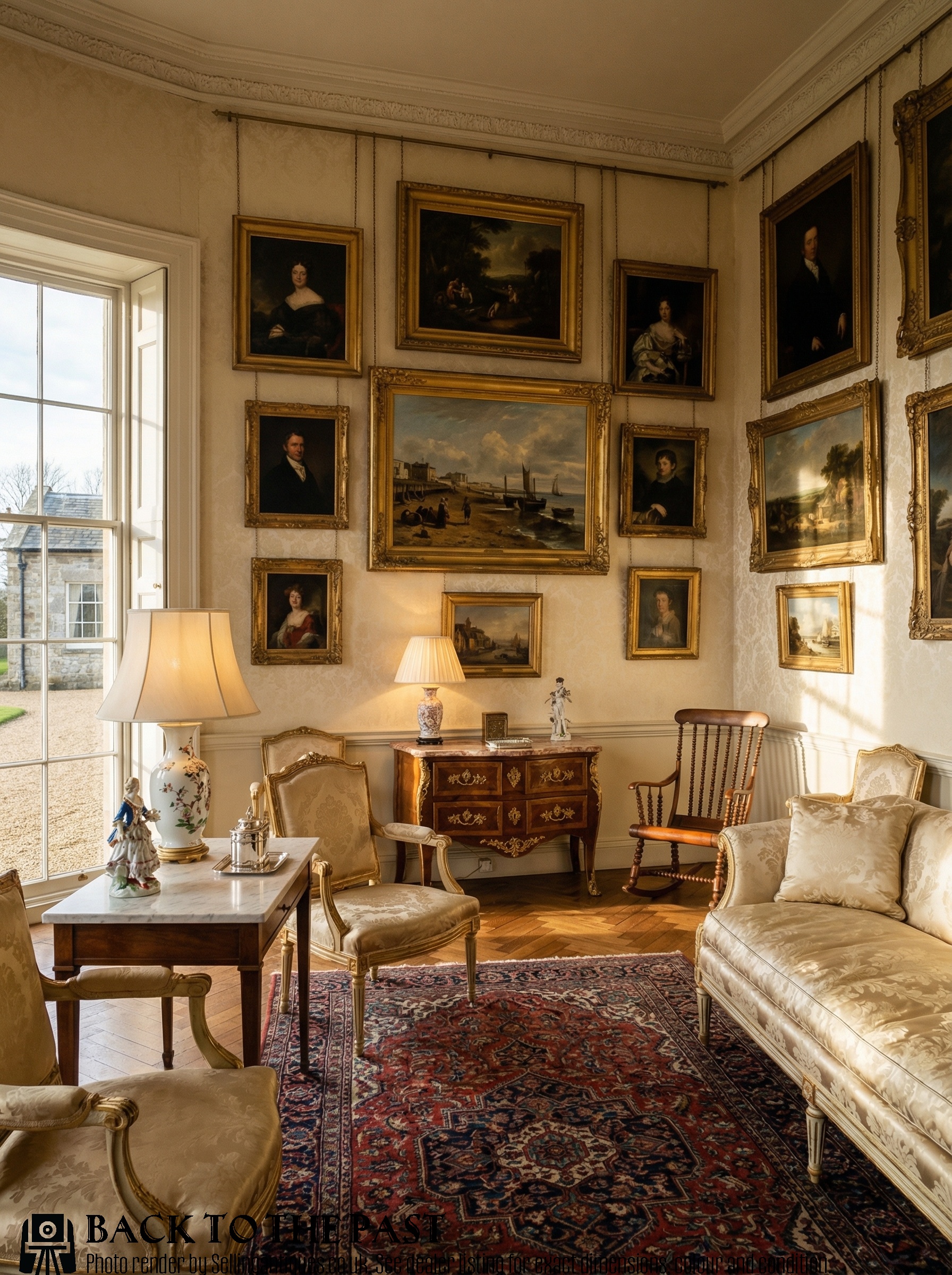
Scottish Vernacular Bobbin Rocking Chair, 1850
Priced at £475 from Millers Antiques
Emerging in the late seventeenth century, antique bobbin chairs first appeared in provincial English and American workshops.
Look at the nineteenth century and you'll see a massive revival. Workshops during the Arts and Crafts period embraced this older turned style.
The distinctive spool design relies on the use of a traditional pole lathe.
Demand for these chairs fell away as neoclassical tastes took over, returning strongly in the Victorian era.
Most early examples are the anonymous work of regional bodgers and rural chairmakers working in small local traditions.
Identify later nineteenth-century pieces through the retail stamps of large firms like Morris & Co, who championed traditional country seating.
Signed pieces are scarce. A few named regional makers appear in trade directories, but individual chairs rarely carry a mark.
The 2026 retail price guide for Antique Bobbin Chairs is drawn from a proprietary archive of over 1.1 million retail prices indexed by Sellingantiques since 2003. This guide relies exclusively on their own internal data; no external sources or auction records are used.
Analysing nearly 25 years of UK antique market history alongside current retail values, the data indicates that typical UK retail prices for Antique Bobbin Chairs range between £400 and £1,600. Entry-level prices generally fall under £400 and premium examples upwards of £1,600.
Legs and stretchers exhibit continuous spherical or oval turnings. This spool-like repetition is the defining trait of antique bobbin chairs.
Check the backrest framework. It usually matches the undercarriage, creating a unified grid of turned wood from the floor to the top rail.
Corner blocks are sometimes present in later pieces to support an upholstered seat frame, though early rush-seated chairs avoid them.
Turning green wood was a common early practice. As the unseasoned timber dried, it shrank tightly around the dry tenons to form a locked joint.
Notice the depth of the turning profiles. Early pole lathes produced slight irregularities, while steam-powered lathes created uniform bobbins.
Pegged mortise and tenon joints hold the main frames together. Wooden dowels are driven through the joint to secure the connection without glue.
"The bobbin motif served a practical purpose in early workshops. It allowed the turner to disguise small knots in the timber."
"Some regional variations feature varying bead sizes on a single chair. The largest bobbins sit at the centre of the stretcher."
"Turners could produce these components rapidly. A skilled operator working a simple treadle lathe could shape a chair leg in a matter of minutes."
Based on almost 25 years of Sellingantiques UK antique market data, Antique Bobbin Chairs appeared 514 times (out of 1,100,000 antiques) which gives it a rarity score of 90/100.
This score measures scarcity within the Sellingantiques archive only and is not a survey of the entire antiques market, so these statistics may not be indicative of the general availability of Antique Bobbin Chairs elsewhere.
They offer firm support. The backrests are upright and rigid, which suits occasional use or dining rather than lounging.
Adding a loose cushion improves comfort considerably. Many Victorian examples were designed to accommodate padded cushions tied to the stiles.
Most antique frames handle normal daily use without issue. Country chairs were built solidly for hard wear in busy domestic settings.
If the joints are tight, the chair is fit for purpose. You should check that the corner joints don't flex excessively when weight is applied.
A soft brush is the best tool for dusting. It reaches into the deep grooves of the turnings without catching.
Avoid liquid polishes. A light application of beeswax every few years preserves the patina.
Small gaps at the shoulder of a joint are common. Timber shrinks across the grain over time, pulling slightly away from the adjoining piece.
It doesn't require attention unless the joint is loose. If the stretcher rattles or twists in the socket, it needs dismantling and re-gluing by a restorer.
Please note: This Antique Bobbin Chairs guide and its associated pricing data are provided for general informational purposes only. It does not constitute formal financial, investment, or appraisal advice and should not be relied upon as the sole basis for any commercial activity, purchasing, or sales decisions. Sellingantiques.co.uk accepts no liability for any actions taken in reliance on this information. Always consult with a qualified professional or independent appraiser.
