



Antique Tambour Cabinets
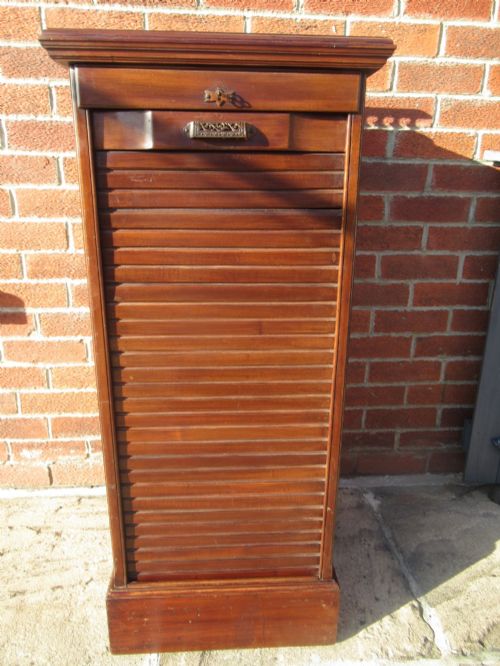
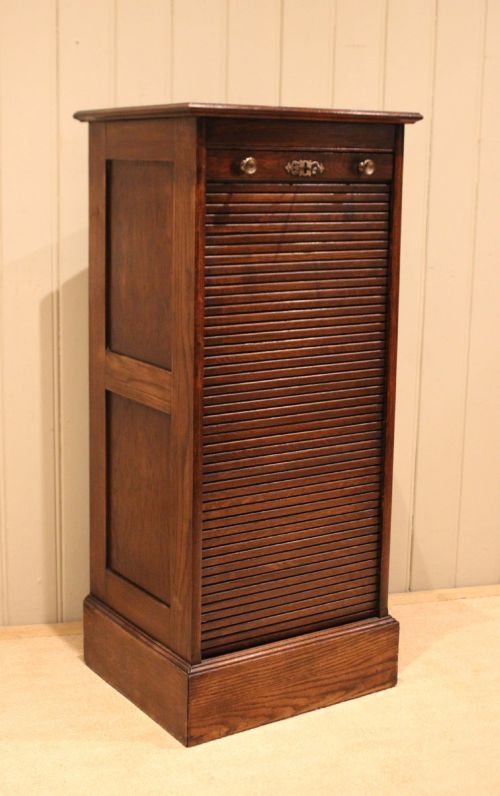
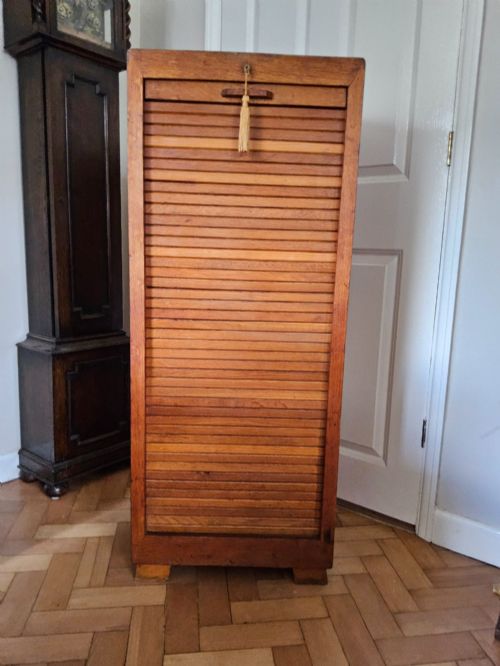
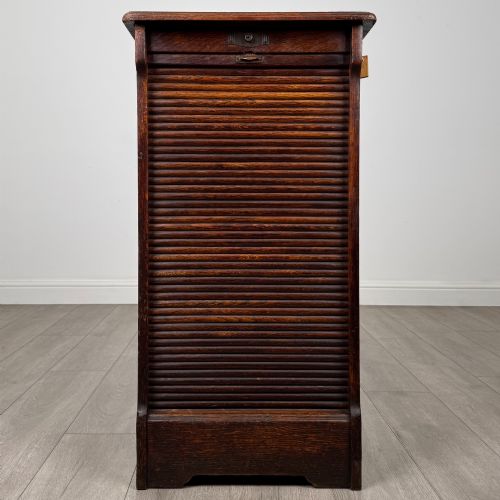
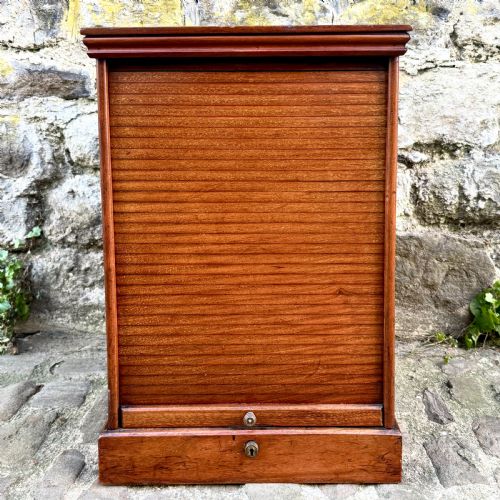
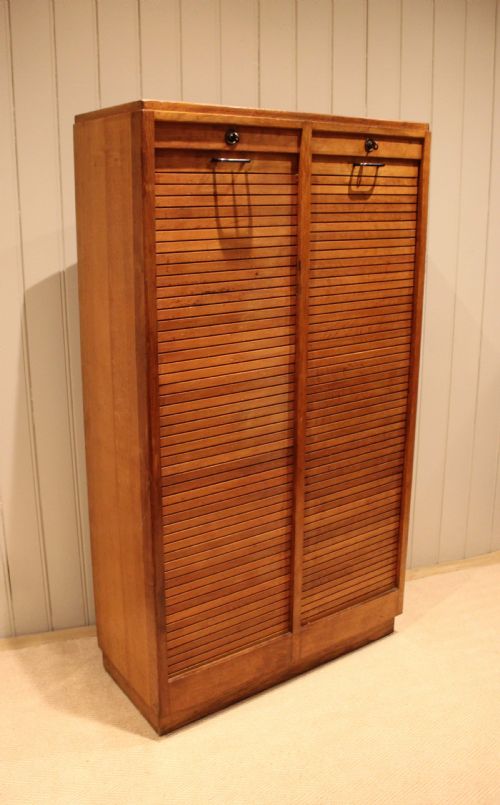
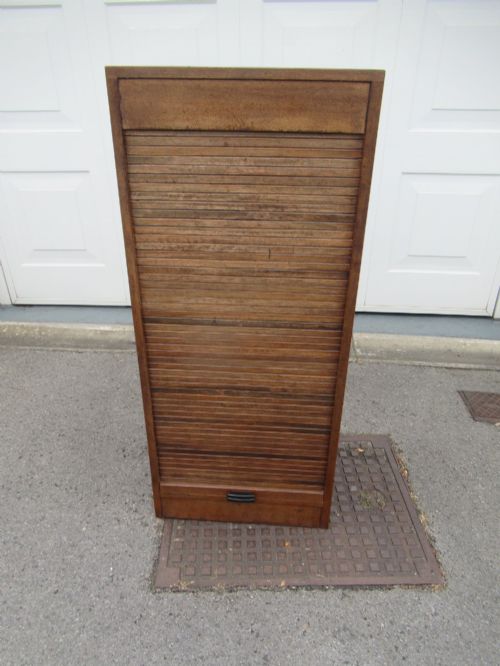
A cabinet closed by a tambour, a shutter of narrow slats that rolls back into the carcass instead of swinging open, used most often on early twentieth-century office filing cabinets.
Antique Tambour Cabinets
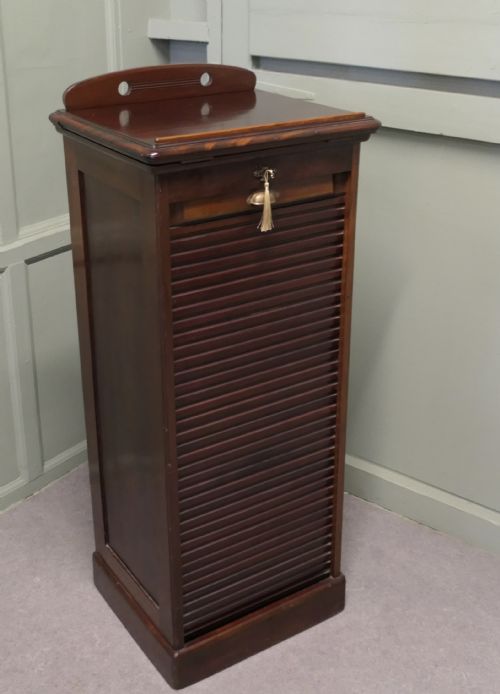
A tambour is a shutter built from narrow wooden slats glued to a fabric backing, so it can curve into grooves cut inside the carcass. Cabinetmakers took it up in the later eighteenth century for writing furniture and bedside cupboards, where a hinged door had nowhere to open.
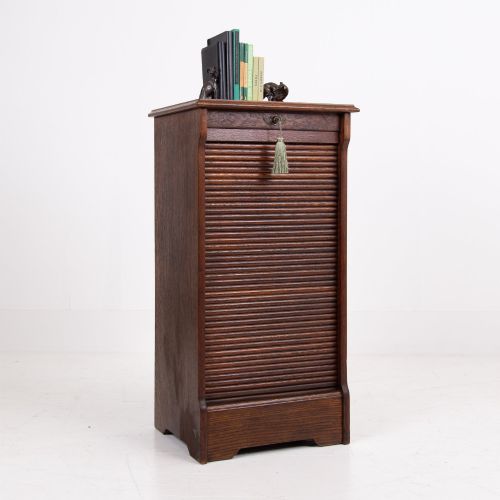
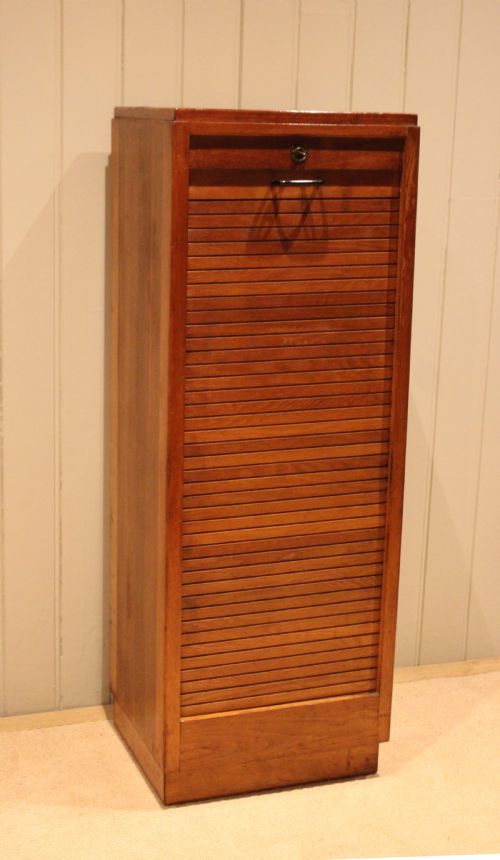
On Sellingantiques the word nearly always means an office cabinet. Of 249 titles, 173 say "filing" and another 22 say "file": a squat oak carcass of stacked drawers behind one, two or three roll-shutters. Oak appears in 155 titles, and the 1920s account for 97 of the dated listings, more than the 1910s, 1930s and 1900s put together.
Two large strands sit inside that. French oak cabinets are one: "French" turns up in 80 titles and "French oak" in 48, running from single-bank up to triple. The other is English oak, Edwardian through to the 1930s, with eight- and nine-drawer configurations named in titles. A smaller group is labelled Art Deco, often in golden oak, though the label is a dealer description rather than a dated one.
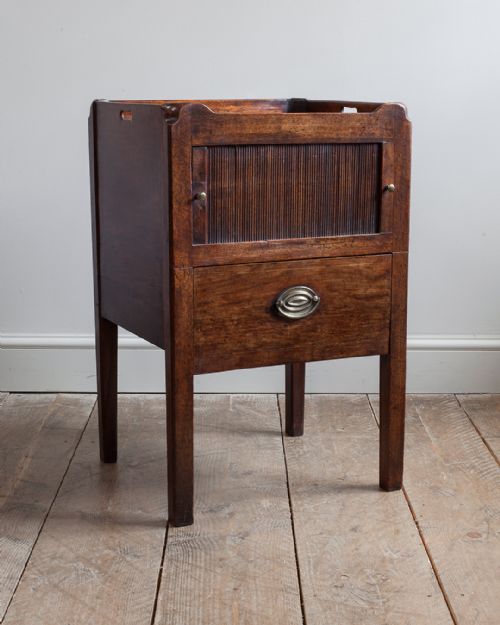
The domestic side is much thinner and much older. Georgian and nineteenth-century mahogany bedside cabinets, commodes and night stands with tambour fronts, plus the odd music, wall or cocktail cabinet. Mahogany appears in 43 titles and walnut in 10. The earliest sample is given as circa 1780; the dated field as a whole runs 1800 to 1940.
Where Value Sits
The clearest split is use. Plain single-shutter oak office cabinets hold the bottom of the range, while the highest-priced pieces sampled are Georgian mahogany bedside commodes, Dutch marquetry tambour cabinets and a brass-inlaid French one. The same word covers two separate worlds.
Within the office mass, count the shutters. Double-fronted cabinets sit consistently above singles, and triple-bank examples surface only a handful of times, always near the upper end. Timber pulls the same way: mahogany and walnut cabinets cluster above the oak bulk, and a single rosewood example sits near the top.
Two smaller things lift a cabinet. Pairs, described as such in eight titles, all sit well above the single-cabinet run. And a name in the title is unusual enough to matter: only three sampled listings carry one at all, each above the middle of the range.
Antique Tambour Cabinets Retail Price Guide 2026
Typical UK retail prices for tambour cabinets, calculated from the Sellingantiques database of over a million retail prices indexed since 2003. This retail price guide relies exclusively on Sellingantiques data; no external sources or auction records are used, so the figures do not describe the wider market.
The earliest tambour cabinet in the Sellingantiques archive is dated circa 1780, a George III mahogany bedside cabinet.
The Antique Tambour Cabinets Glossary
- Tambour
- A flexible shutter of narrow slats on a fabric backing, rolling into the carcass rather than hinging open.
- Tambour front, tambour fronted
- The commonest phrasing on the site, with 141 titles saying "front" and 43 "fronted". They mean the same thing.
- Single, double, triple
- How many shutters, and so how many banks of drawers, the carcass carries. 45 titles say double, 24 single, triple only occasionally.
- French oak
- In 48 titles. A large Continental strand of office cabinets, usually in pale to mid oak.
- Golden oak
- A dealer term for the warm honey-toned polished oak of the period, used in several titles.
- Roller shutter
- Used interchangeably with tambour in a few titles, as in "tambour roller shutter file cabinet".
Antique Tambour Cabinets: Frequently Asked Questions
How many tambour cabinets come up each year?
Around 21 reach the market on Sellingantiques in a year, and 58 different dealers have listed one.
That spread tells you something. The form is scattered thinly across the trade rather than held by a few specialists in office furniture.
Why are so many of them from the 1920s?
The tambour front suited offices. A shutter needs no clearance in front of it, so a cabinet could stand in a crowded room and still open. Office suppliers took the idea up on a large scale.
Of the dated listings, 97 fall in the 1920s, with 32 in the 1910s, 28 in the 1930s and 20 in the 1900s. Another 27 are given only as Edwardian.
What does French oak mean in these titles?
It marks a Continental office strand large enough to count as a sub-market. "French" appears in 80 titles and "French oak" in 48.
The sampled French cabinets run the full range of formats, from single-bank through double to triple, usually in pale to mid oak.
Are tambour cabinets always filing cabinets?
Not always, but usually. Two thirds of all titles say "filing" or "file", so the word tambour on this site nearly always signals an office piece.
The rest are domestic: Georgian and nineteenth-century mahogany bedside cabinets, commodes and night stands, with occasional music, wall and cocktail cabinets alongside.
Do dates in the listings mean exact years?
Sometimes. 191 of 249 listings carry a clean year, and the field runs 1800 to 1940.
The earlier material is looser. 14 listings say only "19th Century", 7 say "1800s", 4 "18th Century" and 3 "Georgian", which are period labels rather than precise years.
Dealers also mix the two schemes, so "Edwardian" and "1910" can describe the same cabinet.
Which unusual tambour pieces have turned up?
A few one-offs appear once and nowhere else. A nineteenth-century walnut conductor's cabinet with a reading slope, an ebonised tambour music cabinet and a serpentine-fronted example.
Others include a Dutch marquetry-inlaid tambour bedside table and a walnut Art Deco tambour cocktail cabinet.