
Antique Bedside Cabinets
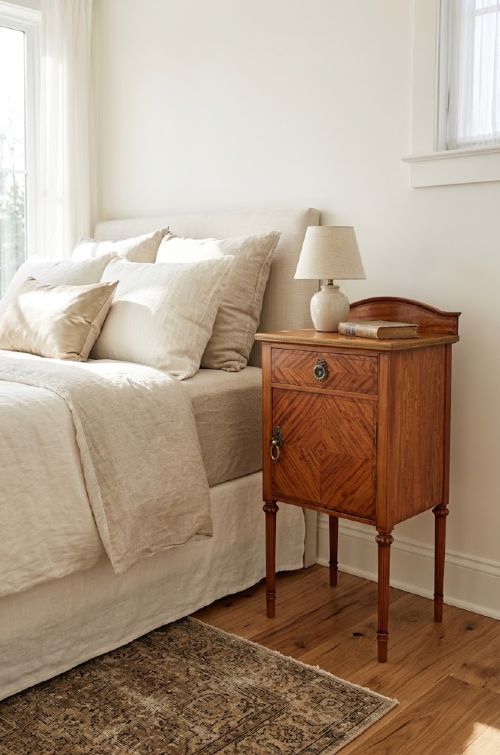
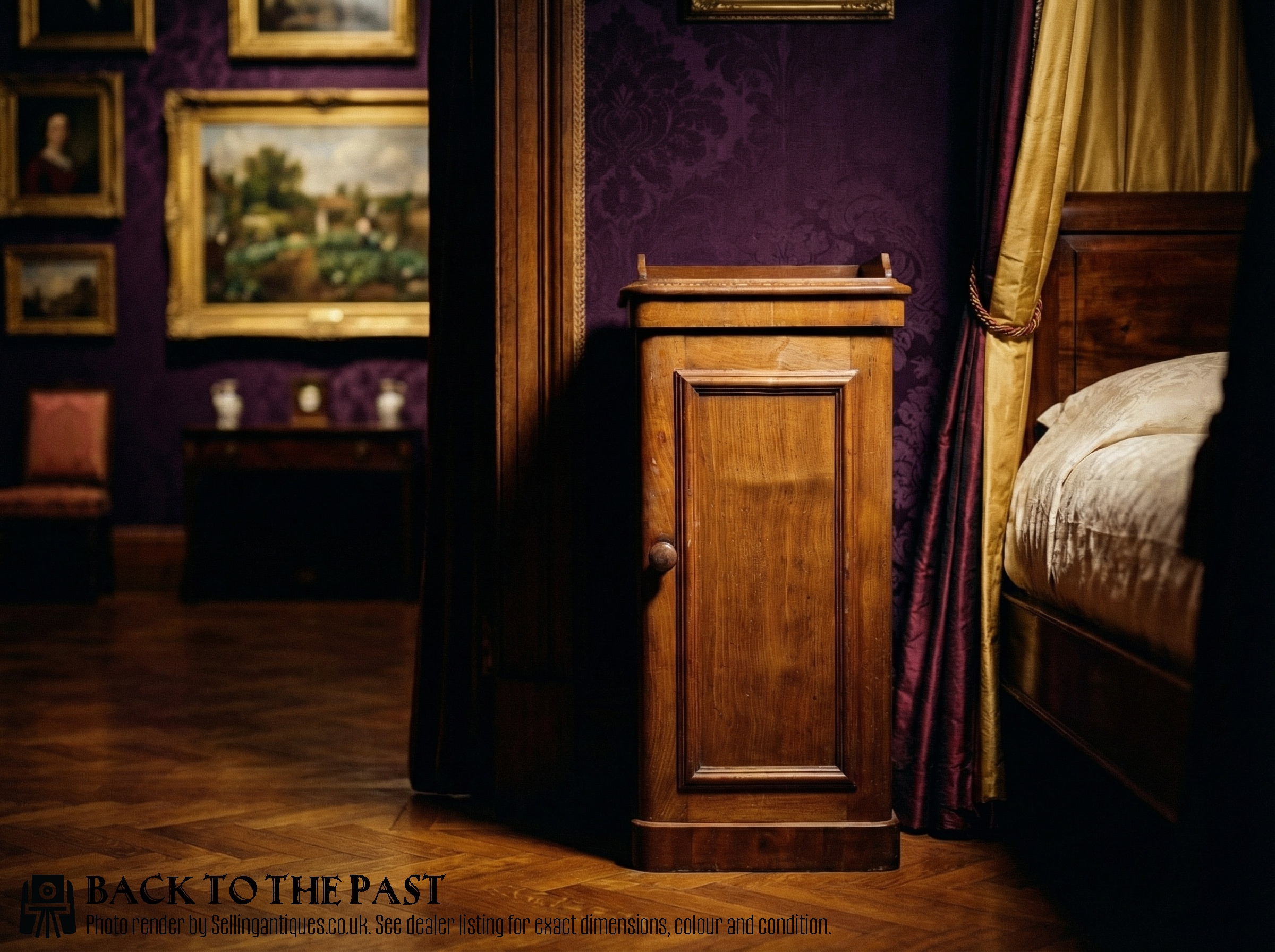
Small bedroom cupboards, one- or two-drawer chests and little tables made to stand at the head of a bed, first for a chamber pot and candle, later in pairs to flank a bed and carry a lamp.
Antique Bedside Cabinets
The names drift. Cabinet, table, cupboard, chest and night table all get used for what is functionally the same object, and dealers name the timber more consistently than the shape. Mahogany, walnut and oak lead the wood counts, with cherry, kingwood, satinwood, tulipwood, pine and maple in smaller numbers.
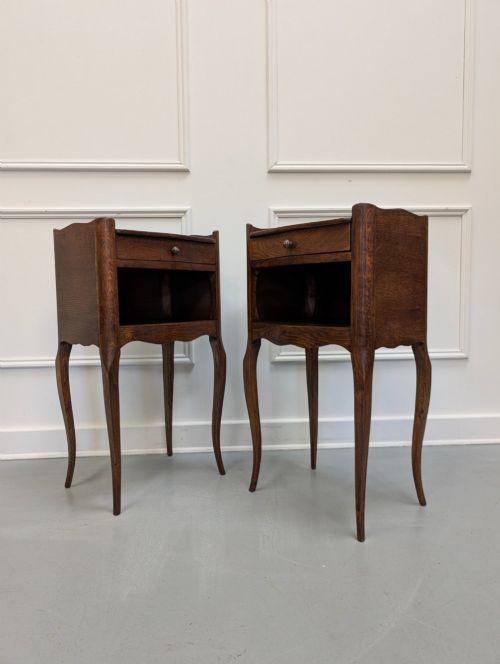
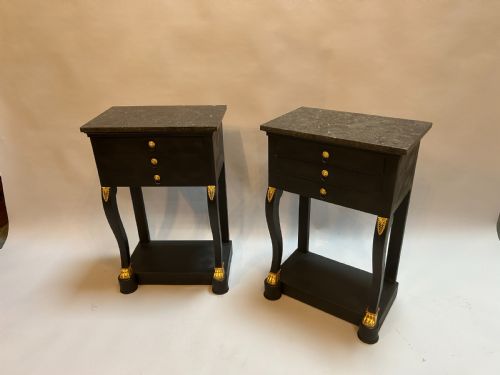
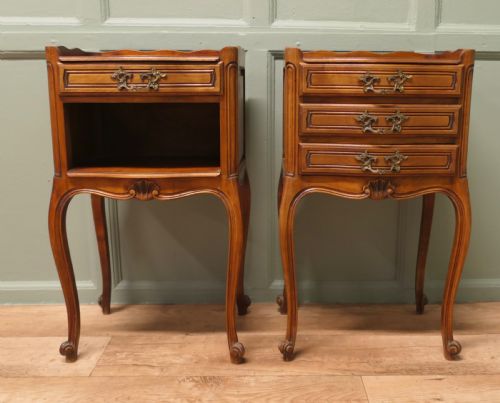
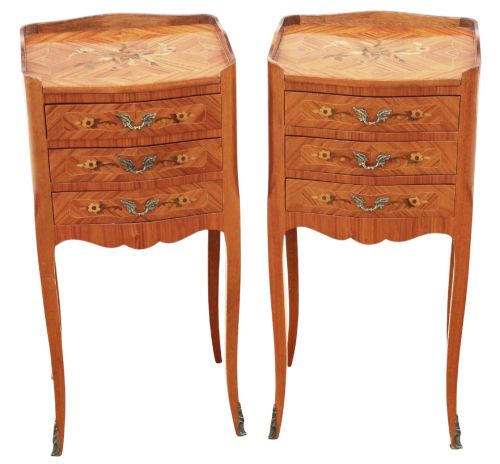
Two thirds of everything listed on Sellingantiques in this category is a pair rather than a single, which makes the pair the default unit of sale. The piece you are most likely to meet is a matched pair of small cupboard-form cabinets, French or French-styled, in oak or walnut, dated to the 1920s or 1930s. One dealer's stock alone produces long runs of near-identical French oak pairs dated 1900 to 1930.
The weight of the category sits in the twentieth century. The 1920s account for 640 dated listings and the 1930s a further 356, more than every nineteenth-century decade combined, so the interwar bedroom is the centre of gravity. Nineteenth-century pieces are often given as ranges rather than years, so a Georgian or Victorian label here is a statement about style and era.
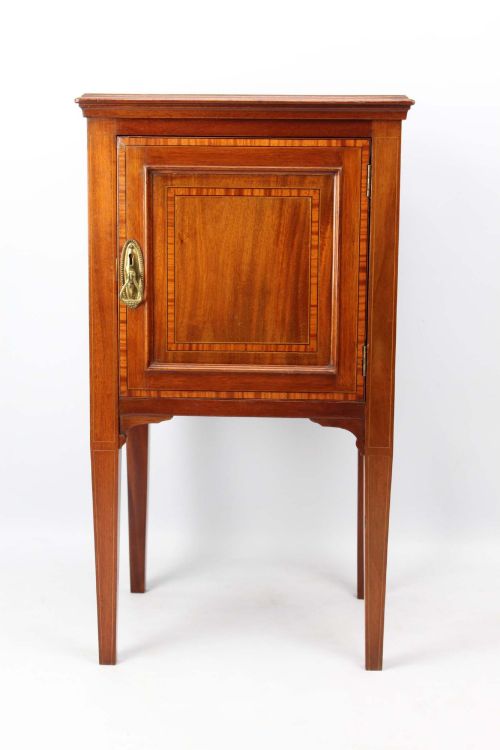
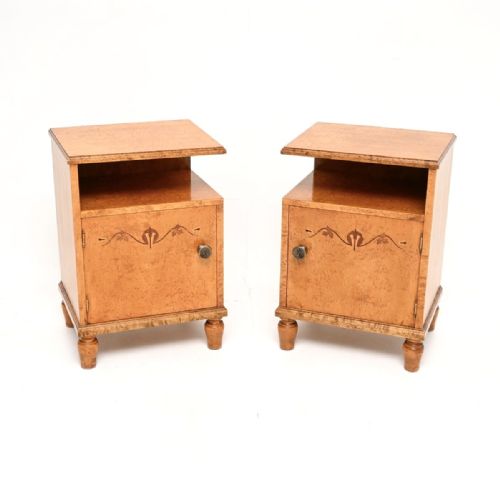
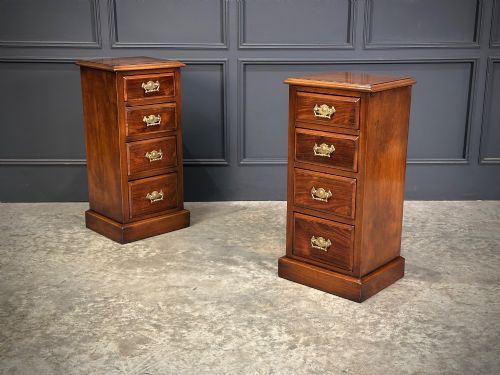
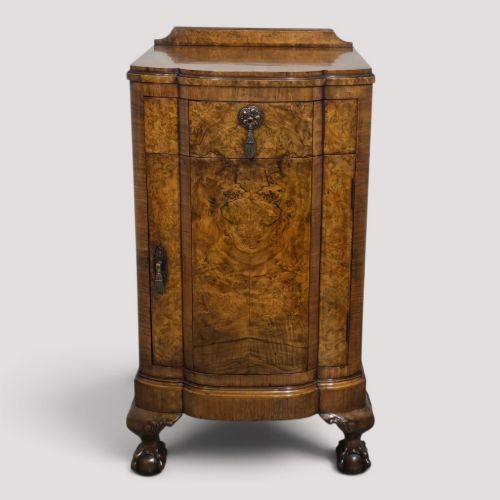
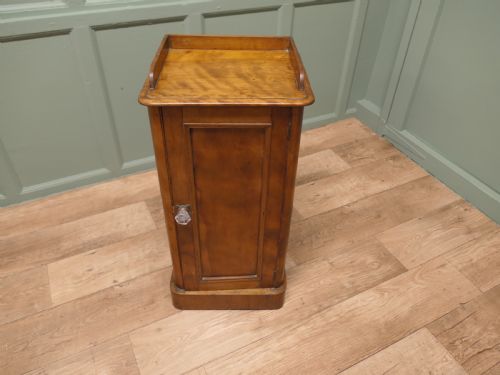
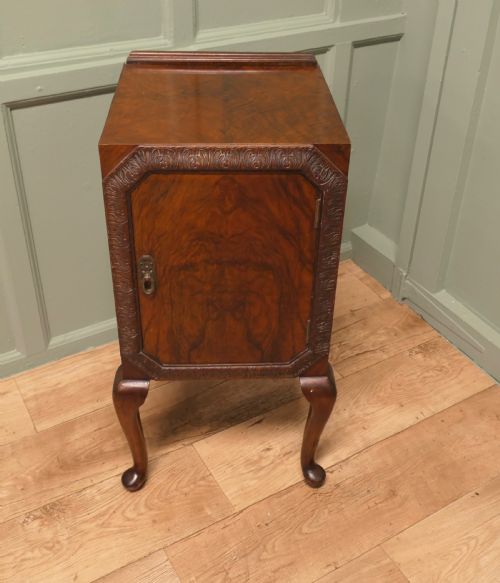
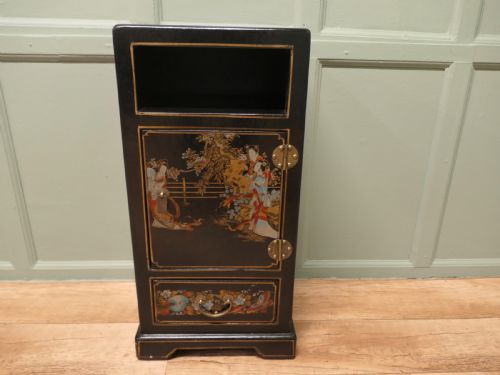
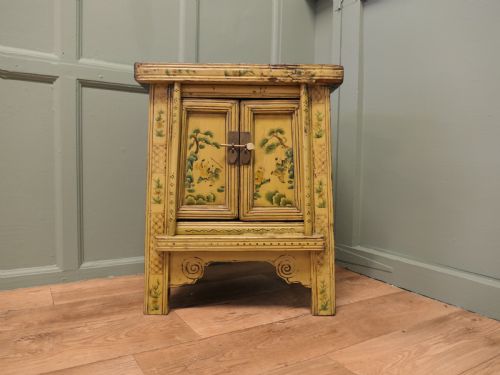
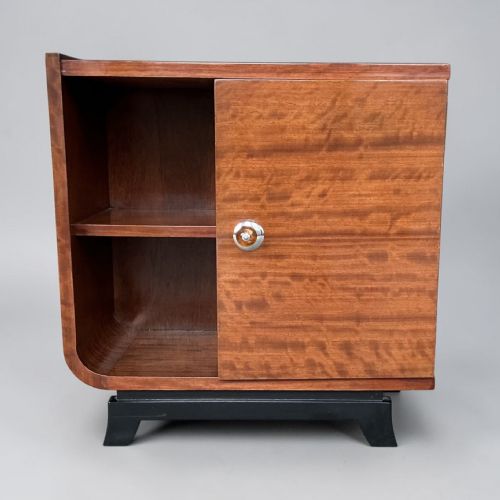
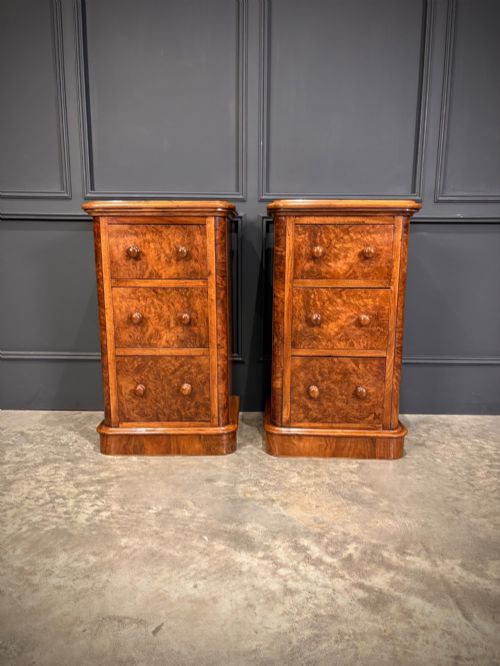
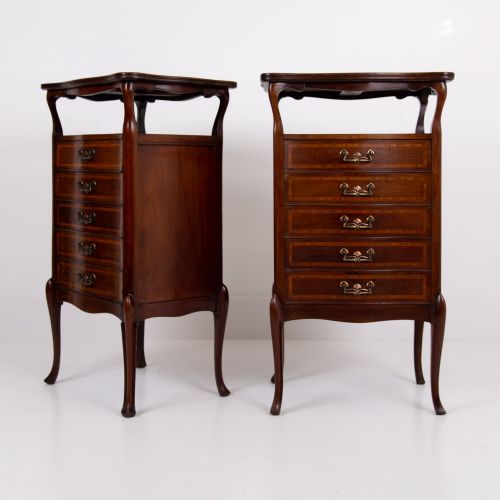
Around the French middle sit four other groups: Art Deco pairs in burr walnut and other figured timbers; Georgian mahogany night tables with tray tops or tambour fronts, dated 1750 to 1830; Victorian and Edwardian bedside chests and pot cupboards, some cylindrical; and a steady slice of painted and country pieces in pine, elm, ash and limed oak.
What Sets Them Apart
The pair is the first thing that moves a bedside cabinet up or down the range. Singles cluster at the bottom, pairs dominate the whole upper half, and the hedged wording tells you which you have: "matched pair", "near pair", "two similar", "almost pair", or a note that one is an early twentieth-century copy of the other.
After that it is timber and figure. Burr walnut, satinwood, kingwood, tulipwood, amboyna, coromandel, rosewood, satin birch and birds eye or fiddle-back maple gather in the upper part of the range. Pine, beech and plain oak sit low. Decorative work pushes the same way, with marquetry, parquetry, inlay, ormolu and gilt-metal mounts and brass galleries appearing on the higher-priced pieces while undecorated French oak pairs fill the middle.
Date and attribution do the rest. Eighteenth-century mahogany night tables in their original tray-top, tambour or commode form reach the top of the range, whereas "Georgian Style" and "Georgian Revival" pieces dated 1900 to 1930 sit lower. A named maker or retailer in the title lifts a pair too, and the highest-priced piece in the sample is a Regency mahogany bowfronted pair.
Antique Bedside Cabinets Retail Price Guide 2026
Typical UK retail prices for bedside cabinets, calculated from the Sellingantiques database of over a million retail prices indexed since 2003. This retail price guide relies exclusively on Sellingantiques data; no external sources or auction records are used, so the figures do not describe the wider market.
Two thirds of the bedside cabinets listed on Sellingantiques are pairs rather than singles, so the pair is the usual unit of sale.
Heal's of London·Maple & Co·Epstein·Gillows·Holland and Sons·Howard & Sons·Whytock & Reid·Morison & Co·E Goodall & Co·Betty Joel·Brynmawr Furniture
The Antique Bedside Cabinets Glossary
- Pair, matched pair, near pair
- Two cabinets sold together. "Matched" or "near pair" signals they were assembled rather than made as a set.
- Pot cupboard
- A small enclosed bedside cupboard for a chamber pot, often cylindrical or columnar. Thirty-six titles use the term.
- Night table, nightstand, locker
- Older and trade names for the same bedside form. "Locker" turns up in Victorian and Scottish listings.
- Tray top
- A raised gallery rim around the top, common on Georgian mahogany night tables.
- Tambour
- A flexible slatted front or door that rolls back rather than swinging open.
- Burr
- Timber cut from a knotty growth for its swirling figure. Burr walnut alone appears in 150 titles, with burr elm and burr yew in small numbers.
Antique Bedside Cabinets: Frequently Asked Questions
Why are so many sold in pairs?
Once bedrooms had plumbing and electric light, the bedside cupboard stopped holding a chamber pot and washing water and started carrying a lamp. Making them in twos to flank a bed followed.
On Sellingantiques the pair is the default unit of sale: 1,685 of 2,526 titles say pair. Singles cluster at the bottom of the range.
What period do most of them come from?
The dated field runs from 1750 to 1960, with 1,814 listings carrying a clean year. The interwar decades dominate, the 1920s with 640 listings and the 1930s with 356.
Earlier pieces are often given as ranges instead of years, so "19th Century", "Victorian", "Georgian" and "Edwardian" appear as era labels rather than datable dates.
Are French bedside cabinets common?
Yes. "French" appears in 765 titles, roughly a third of the category, and "french oak" alone in 161. French pairs in oak, cherry, walnut and mahogany, many with marble tops, make up the bulk of the middle range.
Origins other than British or French are thin on the ground. Italian, Swedish, Dutch, Hungarian and Scottish examples turn up only a handful of times each.
What does a marble top mean on these?
It is a separate stone slab laid on the cabinet, standard on many French pairs. Marble is named in 194 titles, with "marble top" in 120 of them.
Marble also shows up on Victorian mahogany cupboards, including one cabinet in the archive that houses a safe.
Which timbers turn up most often?
Mahogany leads with 648 titles, then walnut at 474 and oak at 373. Titles name the wood more consistently than they name the shape.
The smaller counts are where the figured and exotic veneers sit: kingwood, satinwood, tulipwood, amboyna, coromandel, satin birch, and birds eye and fiddle-back maple.
How many come to market each year?
Around 161 listings a year, from a pool of 224 dealers.
The range runs from a nominal figure at the very bottom to a Regency mahogany bowfronted pair at the top. Long runs of near-identical French oak pairs sit through the middle.